
Key Insights
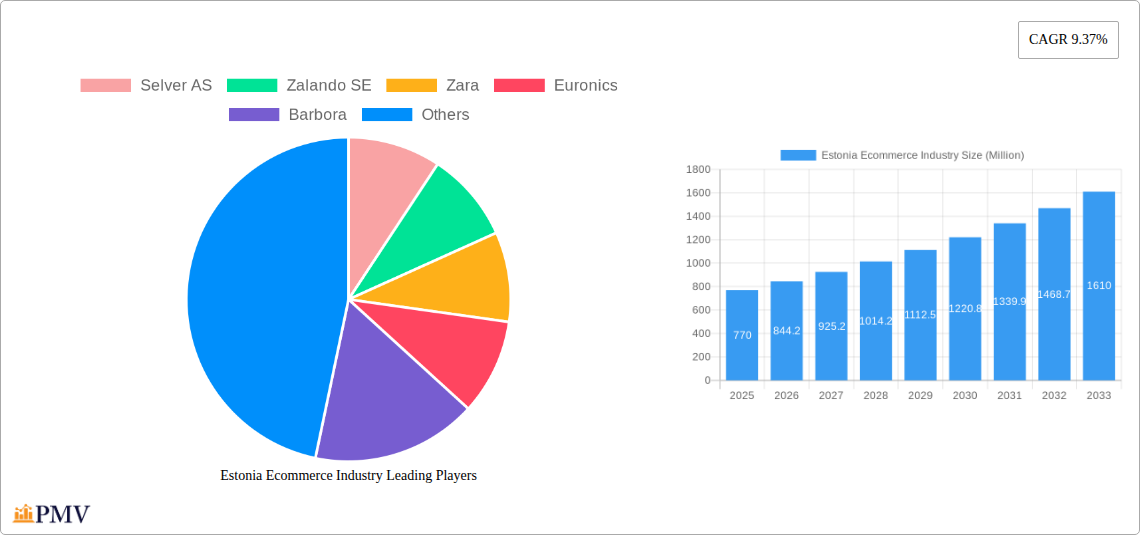
The Estonian e-commerce market, valued at €770 million in 2025, is experiencing robust growth, projected to expand at a compound annual growth rate (CAGR) of 9.37% from 2025 to 2033. This expansion is fueled by increasing internet and smartphone penetration, rising consumer preference for online shopping convenience, and the expanding logistics infrastructure within Estonia. Key drivers include the growing adoption of mobile commerce, the increasing popularity of online marketplaces like Amazon and Alibaba, and a rising younger population comfortable with digital transactions. While challenges exist, such as potential cybersecurity concerns and the need for improved digital literacy amongst older demographics, these are being actively addressed by both businesses and the government. The market's segmentation by application shows strong growth across various sectors, including apparel (driven by companies like Zalando and Zara), electronics (Euronics), groceries (Barbora, Selver), and others. The presence of both international giants and strong domestic players indicates a dynamic and competitive landscape.
The forecast for 2026-2033 anticipates continued strong growth, with the market size exceeding €1.5 billion by 2033, based on the projected CAGR. This growth will be further propelled by advancements in e-commerce technologies, such as improved payment gateways and personalized shopping experiences. The Estonian government's focus on digitalization initiatives will also play a crucial role in supporting the sector's expansion. Competition will likely intensify as more businesses enter the market, and success will depend on factors like efficient logistics, customer service excellence, and effective digital marketing strategies. Companies like Selver, Zalando, and Amazon will need to adapt to evolving consumer preferences and technological advancements to maintain their market share.
This comprehensive report provides an in-depth analysis of the Estonian ecommerce industry, covering market structure, competitive dynamics, growth drivers, challenges, and future outlook. The report utilizes data from the historical period (2019-2024), base year (2025), and estimated year (2025) to forecast market trends until 2033. The study offers actionable insights for businesses, investors, and stakeholders seeking to understand and capitalize on the opportunities within this dynamic market. The total market size is projected to reach xx Million by 2033, presenting substantial growth potential.
Estonia Ecommerce Industry Market Structure & Competitive Dynamics
The Estonian ecommerce market exhibits a moderately concentrated structure, with a few dominant players alongside numerous smaller businesses. Selver AS, Zalando SE, and Amazon com Inc. hold significant market share, while other players like Zara, Euronics, Barbora, Alibaba Group, Next Germany GMBH, Cellebes, and DenimDream contribute to the competitive landscape. Market share data for 2024 indicates Selver AS holds approximately xx% market share, followed by Zalando SE at xx%, and Amazon com Inc. at xx%. The remaining market share is distributed among smaller players.
The Estonian ecommerce ecosystem benefits from a supportive regulatory framework, encouraging innovation and digital adoption. However, the market also faces pressure from established international players and experiences periodic fluctuations influenced by global economic trends. M&A activity has been moderate in recent years, with several smaller acquisitions aimed at consolidating market share and expanding product offerings. Total M&A deal value in 2024 is estimated at xx Million. Innovation ecosystems are developing with a focus on fintech and logistics solutions. End-user trends show a preference for convenient, omnichannel experiences, emphasizing the need for seamless integration across online and offline platforms. Product substitutes, primarily in the form of traditional brick-and-mortar retail, continue to exert competitive pressure, albeit diminishing due to the rising popularity of ecommerce.
Estonia Ecommerce Industry Industry Trends & Insights
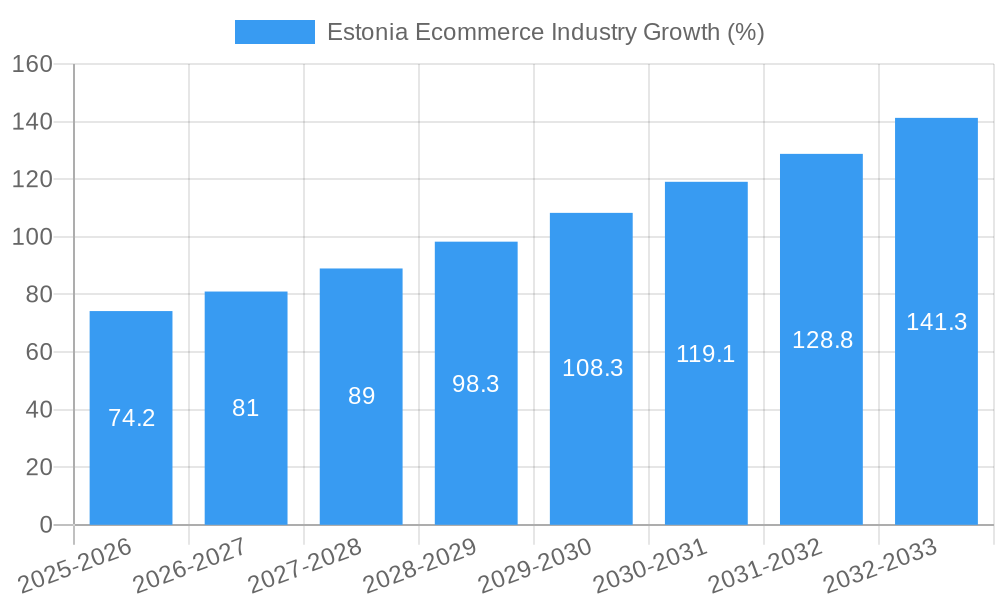
The Estonian ecommerce industry has experienced robust growth, with a Compound Annual Growth Rate (CAGR) of xx% during the historical period (2019-2024). Market penetration is currently estimated at xx%, indicating significant room for future expansion. Key growth drivers include rising internet and smartphone penetration, increasing consumer confidence in online transactions, and the growing adoption of mobile commerce. Technological disruptions such as the rise of mobile payments, AI-powered personalization, and the increasing sophistication of logistics networks are shaping the industry. Consumer preferences are shifting towards personalized experiences, faster delivery options, and enhanced customer service. The competitive dynamics are characterized by intense price competition, a focus on product diversification, and ongoing efforts to enhance brand loyalty.
Dominant Markets & Segments in Estonia Ecommerce Industry
The Estonian ecommerce market demonstrates strength across various segments. The fastest-growing segment is currently estimated to be [Specify Segment based on "Market Segmentation - by Application"], with a projected CAGR of xx% during the forecast period (2025-2033). This segment's dominance is fueled by several key drivers:
- Economic Policies: Government initiatives supporting digitalization and ecommerce have fostered growth within this segment.
- Infrastructure: Improved digital infrastructure, including high-speed internet access and reliable logistics networks, provides a strong foundation for expansion.
- Consumer Preferences: A growing preference for [Specific characteristics of the dominant segment] is driving demand within this area.
The dominance of this segment is further reinforced by the presence of key players like [List dominant companies in this segment], who leverage their strong brand recognition, extensive product offerings, and effective marketing strategies to maintain their market leadership.
Estonia Ecommerce Industry Product Innovations
Recent product innovations in the Estonian ecommerce industry focus on enhancing the customer experience through personalized recommendations, improved search functionality, and streamlined checkout processes. The adoption of augmented reality (AR) and virtual reality (VR) technologies is also gaining traction, enabling consumers to visualize products before purchase. These innovations align with broader technological trends, including the increased use of mobile devices and the growing demand for personalized online shopping experiences. The market fit for these innovations appears strong, with consumers increasingly receptive to technologies that enhance convenience and personalization.
Report Segmentation & Scope
This report segments the Estonian ecommerce market by application. [Detailed description of each segment from "Market Segmentation - by Application" needed here. For each segment, include growth projections, market sizes (in Millions), and competitive dynamics. Example below].
Example Segment: [Segment Name] - This segment is projected to grow at a CAGR of xx% from 2025 to 2033, reaching a market size of xx Million by 2033. Key players in this segment include [Company Names], and competition is characterized by [description of competitive landscape].
Key Drivers of Estonia Ecommerce Industry Growth
Several key factors propel the growth of the Estonian ecommerce sector. Firstly, the increasing penetration of the internet and smartphones provides wider access to online platforms. Secondly, robust government support for digitalization and ecommerce initiatives fosters a favorable business environment. Thirdly, rising consumer confidence in online transactions, fueled by improved security measures and payment gateways, encourages greater adoption. Finally, advancements in logistics and delivery networks are enhancing the convenience and speed of online shopping, further bolstering industry growth.
Challenges in the Estonia Ecommerce Industry Sector
Despite its significant growth potential, the Estonian ecommerce industry faces several challenges. Regulatory hurdles related to data privacy and consumer protection can hinder market expansion. Supply chain disruptions, particularly those stemming from global events, can negatively impact the availability of products and lead to increased costs. Intense competition from established international players also creates pressure on pricing and profitability. These factors collectively limit market expansion, requiring businesses to adopt agile strategies to mitigate these risks.
Leading Players in the Estonia Ecommerce Industry Market
- Selver AS
- Zalando SE
- Zara
- Euronics
- Barbora
- Amazon com Inc
- Alibaba Group
- Next Germany GMBH
- Cellebes
- DenimDream
Key Developments in Estonia Ecommerce Industry Sector
- January 2023: Zalando introduced a new brand identity for Lounge by Zalando, enhancing its shopping club proposition and strengthening its brand connection with the Zalando Group. This reflects a focus on improving the customer experience and strengthening brand recognition.
Strategic Estonia Ecommerce Industry Market Outlook
The Estonian ecommerce industry is poised for continued growth, driven by increasing digital adoption, supportive government policies, and technological advancements. Future opportunities lie in leveraging AI-powered personalization, expanding omnichannel strategies, and enhancing logistics networks to meet the evolving needs of consumers. Companies that prioritize customer experience, embrace innovation, and adapt to changing market dynamics will be best positioned to succeed in this dynamic environment. Strategic investments in technology, marketing, and supply chain optimization will be critical for capturing market share and achieving sustainable growth.
Estonia Ecommerce Industry Segmentation
-
1. Application
- 1.1. Beauty & Personal Care
- 1.2. Consumer Electronics
- 1.3. Fashion & Apparel
- 1.4. Food & Beverage
- 1.5. Furniture & Home
- 1.6. Other Market Segments (Toys, DIY, Media, etc.)
Estonia Ecommerce Industry Segmentation By Geography
- 1. Estonia
Estonia Ecommerce Industry REPORT HIGHLIGHTS
| Aspects | Details |
|---|---|
| Study Period | 2019-2033 |
| Base Year | 2024 |
| Estimated Year | 2025 |
| Forecast Period | 2025-2033 |
| Historical Period | 2019-2024 |
| Growth Rate | CAGR of 9.37% from 2019-2033 |
| Segmentation |
|
Table of Contents
- 1. Introduction
- 1.1. Research Scope
- 1.2. Market Segmentation
- 1.3. Research Methodology
- 1.4. Definitions and Assumptions
- 2. Executive Summary
- 2.1. Introduction
- 3. Market Dynamics
- 3.1. Introduction
- 3.2. Market Drivers
- 3.2.1. Increased adoption of Digital Solutions; Adoption of Omnichannel Innovative Solutions
- 3.3. Market Restrains
- 3.3.1. High Dependence on External Source to Balance the Skill Deficit; Heavy Dependence on Oil and Gas Sector
- 3.4. Market Trends
- 3.4.1. Increased Adoption of Digital Solutions
- 4. Market Factor Analysis
- 4.1. Porters Five Forces
- 4.2. Supply/Value Chain
- 4.3. PESTEL analysis
- 4.4. Market Entropy
- 4.5. Patent/Trademark Analysis
- 5. Estonia Ecommerce Industry Analysis, Insights and Forecast, 2019-2031
- 5.1. Market Analysis, Insights and Forecast - by Application
- 5.1.1. Beauty & Personal Care
- 5.1.2. Consumer Electronics
- 5.1.3. Fashion & Apparel
- 5.1.4. Food & Beverage
- 5.1.5. Furniture & Home
- 5.1.6. Other Market Segments (Toys, DIY, Media, etc.)
- 5.2. Market Analysis, Insights and Forecast - by Region
- 5.2.1. Estonia
- 5.1. Market Analysis, Insights and Forecast - by Application
- 6. Competitive Analysis
- 6.1. Market Share Analysis 2024
- 6.2. Company Profiles
- 6.2.1 Selver AS
- 6.2.1.1. Overview
- 6.2.1.2. Products
- 6.2.1.3. SWOT Analysis
- 6.2.1.4. Recent Developments
- 6.2.1.5. Financials (Based on Availability)
- 6.2.2 Zalando SE
- 6.2.2.1. Overview
- 6.2.2.2. Products
- 6.2.2.3. SWOT Analysis
- 6.2.2.4. Recent Developments
- 6.2.2.5. Financials (Based on Availability)
- 6.2.3 Zara
- 6.2.3.1. Overview
- 6.2.3.2. Products
- 6.2.3.3. SWOT Analysis
- 6.2.3.4. Recent Developments
- 6.2.3.5. Financials (Based on Availability)
- 6.2.4 Euronics
- 6.2.4.1. Overview
- 6.2.4.2. Products
- 6.2.4.3. SWOT Analysis
- 6.2.4.4. Recent Developments
- 6.2.4.5. Financials (Based on Availability)
- 6.2.5 Barbora
- 6.2.5.1. Overview
- 6.2.5.2. Products
- 6.2.5.3. SWOT Analysis
- 6.2.5.4. Recent Developments
- 6.2.5.5. Financials (Based on Availability)
- 6.2.6 Amazon com Inc
- 6.2.6.1. Overview
- 6.2.6.2. Products
- 6.2.6.3. SWOT Analysis
- 6.2.6.4. Recent Developments
- 6.2.6.5. Financials (Based on Availability)
- 6.2.7 Alibaba Group
- 6.2.7.1. Overview
- 6.2.7.2. Products
- 6.2.7.3. SWOT Analysis
- 6.2.7.4. Recent Developments
- 6.2.7.5. Financials (Based on Availability)
- 6.2.8 Next Germany GMBH
- 6.2.8.1. Overview
- 6.2.8.2. Products
- 6.2.8.3. SWOT Analysis
- 6.2.8.4. Recent Developments
- 6.2.8.5. Financials (Based on Availability)
- 6.2.9 Cellebes
- 6.2.9.1. Overview
- 6.2.9.2. Products
- 6.2.9.3. SWOT Analysis
- 6.2.9.4. Recent Developments
- 6.2.9.5. Financials (Based on Availability)
- 6.2.10 DenimDream
- 6.2.10.1. Overview
- 6.2.10.2. Products
- 6.2.10.3. SWOT Analysis
- 6.2.10.4. Recent Developments
- 6.2.10.5. Financials (Based on Availability)
- 6.2.1 Selver AS
List of Figures
- Figure 1: Estonia Ecommerce Industry Revenue Breakdown (Million, %) by Product 2024 & 2032
- Figure 2: Estonia Ecommerce Industry Share (%) by Company 2024
List of Tables
- Table 1: Estonia Ecommerce Industry Revenue Million Forecast, by Region 2019 & 2032
- Table 2: Estonia Ecommerce Industry Revenue Million Forecast, by Application 2019 & 2032
- Table 3: Estonia Ecommerce Industry Revenue Million Forecast, by Region 2019 & 2032
- Table 4: Estonia Ecommerce Industry Revenue Million Forecast, by Country 2019 & 2032
- Table 5: Estonia Ecommerce Industry Revenue Million Forecast, by Application 2019 & 2032
- Table 6: Estonia Ecommerce Industry Revenue Million Forecast, by Country 2019 & 2032
Frequently Asked Questions
1. What is the projected Compound Annual Growth Rate (CAGR) of the Estonia Ecommerce Industry?
The projected CAGR is approximately 9.37%.
2. Which companies are prominent players in the Estonia Ecommerce Industry?
Key companies in the market include Selver AS, Zalando SE, Zara, Euronics, Barbora, Amazon com Inc, Alibaba Group, Next Germany GMBH, Cellebes, DenimDream.
3. What are the main segments of the Estonia Ecommerce Industry?
The market segments include Application.
4. Can you provide details about the market size?
The market size is estimated to be USD 0.77 Million as of 2022.
5. What are some drivers contributing to market growth?
Increased adoption of Digital Solutions; Adoption of Omnichannel Innovative Solutions.
6. What are the notable trends driving market growth?
Increased Adoption of Digital Solutions.
7. Are there any restraints impacting market growth?
High Dependence on External Source to Balance the Skill Deficit; Heavy Dependence on Oil and Gas Sector.
8. Can you provide examples of recent developments in the market?
January 2023: Zalando introduced the new brand identity. The new look and feel of the website and app reflect the distinct proposition of Lounge by Zalando as a shopping club while bringing its brand closer to the Zalando Group; The new brand identity mirrors the joyful treasure hunt experience that Lounge by Zalando offers to members and makes a clear link to the Zalando brand.
9. What pricing options are available for accessing the report?
Pricing options include single-user, multi-user, and enterprise licenses priced at USD 3800, USD 4500, and USD 5800 respectively.
10. Is the market size provided in terms of value or volume?
The market size is provided in terms of value, measured in Million.
11. Are there any specific market keywords associated with the report?
Yes, the market keyword associated with the report is "Estonia Ecommerce Industry," which aids in identifying and referencing the specific market segment covered.
12. How do I determine which pricing option suits my needs best?
The pricing options vary based on user requirements and access needs. Individual users may opt for single-user licenses, while businesses requiring broader access may choose multi-user or enterprise licenses for cost-effective access to the report.
13. Are there any additional resources or data provided in the Estonia Ecommerce Industry report?
While the report offers comprehensive insights, it's advisable to review the specific contents or supplementary materials provided to ascertain if additional resources or data are available.
14. How can I stay updated on further developments or reports in the Estonia Ecommerce Industry?
To stay informed about further developments, trends, and reports in the Estonia Ecommerce Industry, consider subscribing to industry newsletters, following relevant companies and organizations, or regularly checking reputable industry news sources and publications.
Methodology
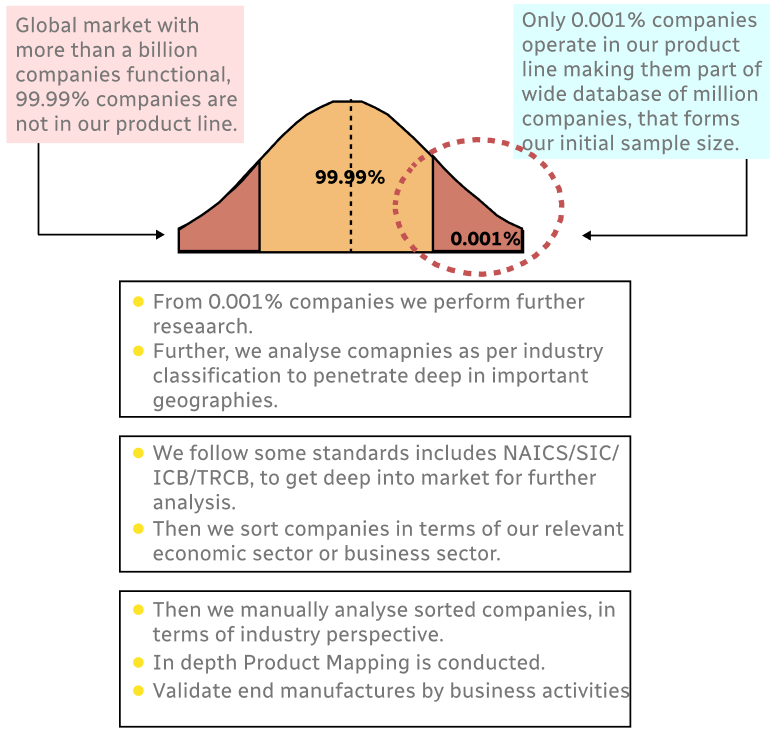
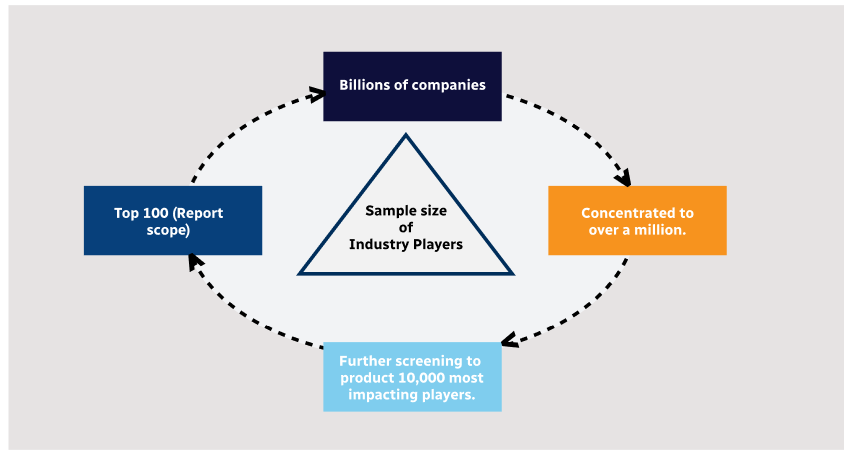
Step 1 - Identification of Relevant Samples Size from Population Database
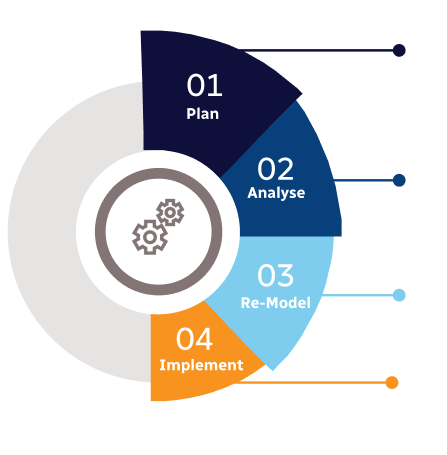
Step 2 - Approaches for Defining Global Market Size (Value, Volume* & Price*)
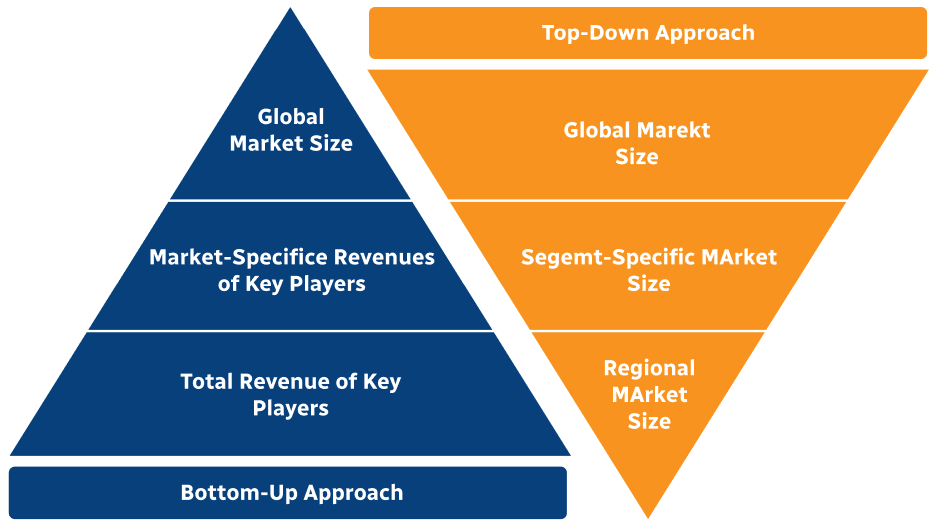
Note*: In applicable scenarios
Step 3 - Data Sources
Primary Research
- Web Analytics
- Survey Reports
- Research Institute
- Latest Research Reports
- Opinion Leaders
Secondary Research
- Annual Reports
- White Paper
- Latest Press Release
- Industry Association
- Paid Database
- Investor Presentations
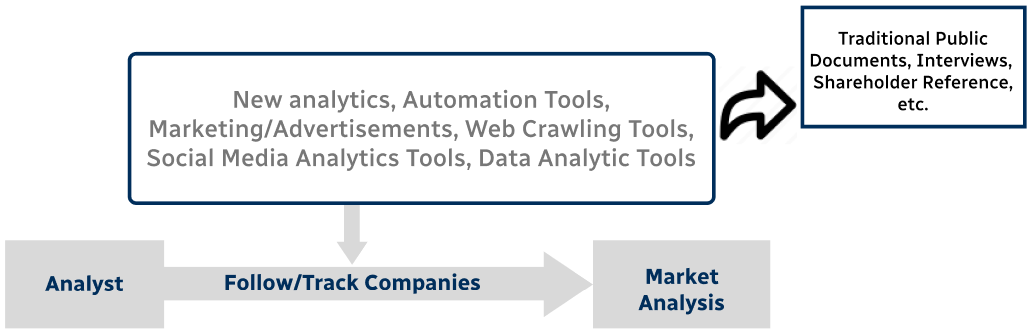
Step 4 - Data Triangulation
Involves using different sources of information in order to increase the validity of a study
These sources are likely to be stakeholders in a program - participants, other researchers, program staff, other community members, and so on.
Then we put all data in single framework & apply various statistical tools to find out the dynamic on the market.
During the analysis stage, feedback from the stakeholder groups would be compared to determine areas of agreement as well as areas of divergence