



Key Insights
The Latin America LiDAR market is poised for substantial growth, projected to reach a significant valuation of approximately $1.48 billion in 2025, with a robust Compound Annual Growth Rate (CAGR) of 9.26% expected to continue through 2033. This impressive expansion is primarily driven by the escalating adoption of LiDAR technology across various sectors, including engineering and construction for detailed surveying and mapping, the rapidly evolving automotive industry for autonomous driving systems and advanced driver-assistance systems (ADAS), and the crucial aerospace and defense sectors for reconnaissance and environmental monitoring. The increasing demand for high-precision geospatial data, coupled with advancements in sensor technology making LiDAR more affordable and accessible, are key catalysts for this market surge. Furthermore, government initiatives promoting smart city development and infrastructure upgrades across Latin America are also fueling the uptake of LiDAR solutions.
The market segmentation reveals a dynamic landscape. Aerial LiDAR is expected to lead in adoption due to its efficiency in large-scale surveys, while ground-based LiDAR is gaining traction for its precision in localized applications. Within components, GPS, laser scanners, and inertial measurement units are foundational, with ongoing innovation in these areas directly impacting market growth. The automotive sector is emerging as a major end-user, driven by the global push towards autonomous vehicles. The industrial sector also presents significant opportunities for process optimization and automation. Despite the strong growth trajectory, certain restraints such as the initial high cost of some LiDAR systems and the need for skilled personnel for data processing and interpretation may pose localized challenges. However, the overwhelming market potential and the continuous decline in technology costs are expected to mitigate these concerns, positioning Latin America as a key growth region for the global LiDAR industry.
Latin America LiDAR Industry Market Structure & Competitive Dynamics
The Latin America LiDAR industry is characterized by a moderate to high market concentration, driven by a few dominant players and a growing number of specialized LiDAR technology providers. Innovation ecosystems are flourishing, with an increasing focus on developing cost-effective and robust LiDAR solutions tailored for the region's unique geographical and economic landscapes. Regulatory frameworks are still evolving, with governments increasingly recognizing the importance of LiDAR for infrastructure development, urban planning, and environmental monitoring, which is positively impacting market adoption. Product substitutes exist, primarily traditional surveying methods, but LiDAR offers superior accuracy, efficiency, and data richness, making it increasingly indispensable. End-user trends are strongly influenced by burgeoning infrastructure projects, the automotive sector's adoption of Advanced Driver-Assistance Systems (ADAS), and the growing demand for precise geospatial data in engineering and industrial applications. Mergers & Acquisitions (M&A) activities are on the rise as larger companies seek to expand their regional footprint and acquire cutting-edge LiDAR technologies. For instance, recent M&A deals in the global LiDAR market, while not always directly in Latin America, indicate a strategic consolidation valued in the hundreds of millions of dollars, signaling a trend that will likely influence the regional landscape. Companies like Denso Corporation, Aerovehicles Airborne Solutions, Jenoptik AG, Velodyne Lidar Inc., Sick AG, Trimble Inc., Neptec Technologies Corp, and Leica Geosystems AG are key contributors to this dynamic market, with varying market shares depending on their specific product portfolios and regional presence. The overall market share distribution is shifting as new entrants and technological advancements disrupt established positions, fostering a competitive environment geared towards driving down costs and increasing accessibility of LiDAR solutions across Latin America.
Latin America LiDAR Industry Industry Trends & Insights
The Latin America LiDAR industry is poised for significant growth, driven by a confluence of factors including rapid urbanization, substantial infrastructure investments, and the increasing demand for high-precision data across various sectors. The Compound Annual Growth Rate (CAGR) is projected to be robust, estimated at approximately 18.5% during the forecast period of 2025–2033. This surge is primarily fueled by governments' commitment to developing smart cities, improving transportation networks, and enhancing disaster management capabilities, all of which heavily rely on accurate 3D geospatial data generated by LiDAR. The market penetration of LiDAR technology is steadily increasing, moving beyond niche applications to become a mainstream tool for surveying, mapping, and autonomous systems. Technological disruptions are a key trend, with advancements in solid-state LiDAR, reduced sensor costs, and the integration of artificial intelligence (AI) for data processing further accelerating adoption. Consumers, or rather end-users, are increasingly preferring LiDAR solutions that offer real-time data acquisition, higher point cloud densities, and seamless integration with existing workflows. The automotive sector is a significant growth driver, with the implementation of ADAS and the future vision of autonomous vehicles necessitating sophisticated LiDAR sensors for environmental perception. In the engineering and construction domain, LiDAR is revolutionizing project planning, progress monitoring, and asset management, leading to greater efficiency and reduced costs. The aerospace & defense sector continues to be a strong adopter, leveraging LiDAR for aerial surveying, surveillance, and terrain mapping. Emerging applications in agriculture for precision farming and in mining for resource exploration are also contributing to market diversification. The competitive dynamics are intensifying, with established players expanding their offerings and new entrants focusing on specific market needs, such as drone-based LiDAR solutions. The overall trend indicates a shift towards more integrated and intelligent LiDAR systems, capable of delivering actionable insights from vast amounts of data.
Dominant Markets & Segments in Latin America LiDAR Industry
The Latin America LiDAR Industry is experiencing robust growth across multiple segments, with certain regions and product categories showing particular dominance. Brazil and Mexico are emerging as leading markets, driven by significant government investment in infrastructure projects, smart city initiatives, and the automotive industry's expansion.
Product Dominance:
- Aerial LiDAR: This segment is currently dominant due to its effectiveness in large-scale mapping, infrastructure inspection (e.g., power lines, pipelines), and environmental monitoring across vast territories. Economic policies promoting infrastructure development and the need for efficient land surveying for agriculture and urban planning are key drivers.
- Key Drivers: Large-scale infrastructure projects, environmental conservation efforts, agricultural modernization, efficient land use planning.
- Ground-based LiDAR: While smaller in market share compared to aerial LiDAR, this segment is experiencing rapid growth, particularly for detailed site surveys, construction progress monitoring, and industrial asset management.
- Key Drivers: Precision engineering requirements, detailed urban planning, asset integrity management, tunnel and bridge inspection.
Component Dominance:
- Laser Scanners: As the core component of any LiDAR system, laser scanners are central to the market's growth. Innovations leading to higher resolution, longer range, and increased durability are key factors.
- Key Drivers: Technological advancements in laser beam steering and detection, miniaturization for mobile applications.
- GPS (Global Positioning System): Essential for accurate georeferencing, GPS integration continues to be a critical component, with advancements in GNSS (Global Navigation Satellite System) receivers enhancing positional accuracy.
- Key Drivers: Demand for high positional accuracy in surveying and mapping, integration with other sensor technologies.
- Inertial Measurement Unit (IMU): Crucial for motion compensation and stabilization, especially in mobile LiDAR platforms, IMUs are seeing increased adoption and sophistication.
- Key Drivers: Need for stable and accurate data acquisition in dynamic environments, advancements in MEMS technology.
End-User Dominance:
- Engineering: This sector is a primary driver of LiDAR adoption, utilizing it extensively for topographic surveys, civil engineering projects, BIM (Building Information Modeling), and infrastructure design. The demand for precise data to reduce design errors and construction costs is paramount.
- Key Drivers: BIM integration, infrastructure modernization mandates, increased project complexity, need for accurate as-built documentation.
- Automotive: The burgeoning automotive sector, with its focus on ADAS and the pursuit of autonomous driving, is a rapidly growing end-user. LiDAR sensors are crucial for object detection, collision avoidance, and navigation.
- Key Drivers: Development of autonomous vehicle technology, government mandates for vehicle safety features, competition in the automotive market.
- Industrial: Applications in manufacturing, logistics, and asset management are expanding, with LiDAR used for quality control, inventory management, and robot navigation.
- Key Drivers: Automation in manufacturing processes, supply chain optimization, predictive maintenance.
- Aerospace & Defense: This sector has historically been a strong adopter, using LiDAR for aerial reconnaissance, terrain mapping, and intelligence gathering. Continued investment in defense and surveillance technologies sustains its importance.
- Key Drivers: National security concerns, advanced surveillance requirements, remote sensing capabilities.
Latin America LiDAR Industry Product Innovations
- Key Drivers: Large-scale infrastructure projects, environmental conservation efforts, agricultural modernization, efficient land use planning.
- Key Drivers: Precision engineering requirements, detailed urban planning, asset integrity management, tunnel and bridge inspection.
- Laser Scanners: As the core component of any LiDAR system, laser scanners are central to the market's growth. Innovations leading to higher resolution, longer range, and increased durability are key factors.
- Key Drivers: Technological advancements in laser beam steering and detection, miniaturization for mobile applications.
- GPS (Global Positioning System): Essential for accurate georeferencing, GPS integration continues to be a critical component, with advancements in GNSS (Global Navigation Satellite System) receivers enhancing positional accuracy.
- Key Drivers: Demand for high positional accuracy in surveying and mapping, integration with other sensor technologies.
- Inertial Measurement Unit (IMU): Crucial for motion compensation and stabilization, especially in mobile LiDAR platforms, IMUs are seeing increased adoption and sophistication.
- Key Drivers: Need for stable and accurate data acquisition in dynamic environments, advancements in MEMS technology.
End-User Dominance:
- Engineering: This sector is a primary driver of LiDAR adoption, utilizing it extensively for topographic surveys, civil engineering projects, BIM (Building Information Modeling), and infrastructure design. The demand for precise data to reduce design errors and construction costs is paramount.
- Key Drivers: BIM integration, infrastructure modernization mandates, increased project complexity, need for accurate as-built documentation.
- Automotive: The burgeoning automotive sector, with its focus on ADAS and the pursuit of autonomous driving, is a rapidly growing end-user. LiDAR sensors are crucial for object detection, collision avoidance, and navigation.
- Key Drivers: Development of autonomous vehicle technology, government mandates for vehicle safety features, competition in the automotive market.
- Industrial: Applications in manufacturing, logistics, and asset management are expanding, with LiDAR used for quality control, inventory management, and robot navigation.
- Key Drivers: Automation in manufacturing processes, supply chain optimization, predictive maintenance.
- Aerospace & Defense: This sector has historically been a strong adopter, using LiDAR for aerial reconnaissance, terrain mapping, and intelligence gathering. Continued investment in defense and surveillance technologies sustains its importance.
- Key Drivers: National security concerns, advanced surveillance requirements, remote sensing capabilities.
Latin America LiDAR Industry Product Innovations
- Key Drivers: BIM integration, infrastructure modernization mandates, increased project complexity, need for accurate as-built documentation.
- Key Drivers: Development of autonomous vehicle technology, government mandates for vehicle safety features, competition in the automotive market.
- Key Drivers: Automation in manufacturing processes, supply chain optimization, predictive maintenance.
- Key Drivers: National security concerns, advanced surveillance requirements, remote sensing capabilities.
Product innovations in the Latin America LiDAR industry are centered on enhancing efficiency, reducing costs, and expanding application versatility. Companies are focusing on miniaturizing components for drone and mobile mapping, developing solid-state LiDAR for greater reliability and lower power consumption, and integrating AI for advanced point cloud analysis. Innovations in multi-spectral and hyperspectral LiDAR are also emerging, enabling richer data acquisition for environmental monitoring and agriculture. These developments provide competitive advantages by offering more comprehensive, precise, and actionable geospatial data solutions tailored to the specific needs of the Latin American market, from dense urban environments to challenging terrains.
Report Segmentation & Scope
This report provides a comprehensive analysis of the Latin America LiDAR Industry, segmented across key product types, essential components, and critical end-user industries.
- Product Segmentation: The report covers Aerial LiDAR, vital for large-scale mapping and infrastructure projects, and Ground-based LiDAR, crucial for detailed site surveys and industrial applications. Growth projections and market sizes for each are meticulously detailed, with competitive dynamics analyzed for their respective market niches.
- Component Segmentation: Analysis extends to key components including GPS, essential for accurate positioning; Laser Scanners, the core of LiDAR technology; Inertial Measurement Units (IMU), critical for data stability; and Other Components, encompassing processing units and software. Market sizes and growth forecasts for each component are provided, alongside an assessment of their impact on the overall LiDAR ecosystem.
- End-User Segmentation: The report delves into the Engineering sector, a primary driver of LiDAR adoption; the rapidly expanding Automotive industry, particularly for ADAS and autonomous driving; the Industrial sector, for automation and asset management; and the Aerospace & Defense industry, for surveillance and mapping. Detailed analysis of market sizes, growth projections, and competitive landscapes within each end-user segment is presented.
Key Drivers of Latin America LiDAR Industry Growth
The Latin America LiDAR industry's growth is propelled by several interconnected factors. Foremost is the significant increase in infrastructure development, with governments prioritizing the modernization of transportation networks, urban expansion, and smart city initiatives, all of which demand high-precision geospatial data. Secondly, the automotive sector's rapid adoption of Advanced Driver-Assistance Systems (ADAS) and the progression towards autonomous vehicles are creating substantial demand for LiDAR sensors for environmental perception. Technological advancements, such as the development of more affordable and robust LiDAR sensors, along with miniaturization for drone applications, are expanding the accessibility and applicability of the technology. Furthermore, increasing environmental awareness and the need for effective disaster management are driving the adoption of LiDAR for mapping flood plains, monitoring deforestation, and assessing geological risks.
Challenges in the Latin America LiDAR Industry Sector
Despite its strong growth trajectory, the Latin America LiDAR industry faces notable challenges. High initial investment costs for advanced LiDAR systems can be a barrier for smaller enterprises and some government agencies, limiting broader market penetration. A shortage of skilled professionals proficient in operating LiDAR equipment and processing the resulting complex data can also hinder adoption and the full utilization of the technology. Regulatory frameworks for LiDAR data acquisition and usage are still developing in many countries, creating uncertainty and potential compliance hurdles. Supply chain complexities, particularly for specialized components, can lead to extended lead times and increased costs. Finally, competition from alternative surveying technologies, although less precise, continues to present a competitive pressure, especially in price-sensitive markets.
Leading Players in the Latin America LiDAR Industry Market
- Denso Corporation
- Aerovehicles Airborne Solutions
- Jenoptik AG
- Velodyne Lidar Inc.
- Sick AG
- Trimble Inc.
- Neptec Technologies Corp
- Leica Geosystems AG
Key Developments in Latin America LiDAR Industry Sector
- 2023/Q4: Launch of new compact, cost-effective LiDAR sensors optimized for drone integration, targeting the burgeoning surveying and mapping needs in Brazil and Mexico.
- 2024/Q1: Strategic partnerships formed between LiDAR manufacturers and automotive component suppliers to accelerate the integration of LiDAR into ADAS for regional vehicle production.
- 2024/Q2: Increased investment in LiDAR-based infrastructure monitoring projects in Colombia, focusing on bridges, tunnels, and power grids to enhance safety and maintenance.
- 2024/Q3: Growing adoption of LiDAR in agricultural surveying for precision farming initiatives across Argentina and Chile, leading to improved crop yield prediction and resource management.
- 2024/Q4: Introduction of AI-powered LiDAR data processing software tailored for Latin American terrain, enabling faster and more accurate analysis for urban planning and geological surveys.
Strategic Latin America LiDAR Industry Market Outlook
The strategic outlook for the Latin America LiDAR industry is exceptionally positive, characterized by strong growth accelerators. The continued push for digital transformation across all key sectors, coupled with sustained government investment in smart infrastructure and sustainable development, will serve as primary growth engines. The increasing maturity of autonomous vehicle technology and its projected integration into Latin American transportation systems presents a significant future market opportunity. Furthermore, the growing emphasis on environmental resilience and disaster preparedness will drive demand for LiDAR in climate-sensitive applications. Strategic opportunities lie in developing localized LiDAR solutions, offering flexible financing models, and investing in local training programs to address the skills gap. Collaboration between technology providers, end-users, and governmental bodies will be crucial for unlocking the full potential of this dynamic and rapidly evolving market.
Latin America LiDAR Industry Segmentation
-
1. Product
- 1.1. Aerial LiDAR
- 1.2. Ground-based LiDAR
-
2. Components
- 2.1. GPS
- 2.2. Laser Scanners
- 2.3. Inertial Measurement Unit
- 2.4. Other Components
-
3. End-User
- 3.1. Engineering
- 3.2. Automotive
- 3.3. Industrial
- 3.4. Aerospace & Defense
Latin America LiDAR Industry Segmentation By Geography
-
1. Latin America
- 1.1. Brazil
- 1.2. Argentina
- 1.3. Chile
- 1.4. Colombia
- 1.5. Mexico
- 1.6. Peru
- 1.7. Venezuela
- 1.8. Ecuador
- 1.9. Bolivia
- 1.10. Paraguay
Latin America LiDAR Industry REPORT HIGHLIGHTS
| Aspects | Details |
|---|---|
| Study Period | 2019-2033 |
| Base Year | 2024 |
| Estimated Year | 2025 |
| Forecast Period | 2025-2033 |
| Historical Period | 2019-2024 |
| Growth Rate | CAGR of 9.26% from 2019-2033 |
| Segmentation |
|
Table of Contents
- 1. Introduction
- 1.1. Research Scope
- 1.2. Market Segmentation
- 1.3. Research Methodology
- 1.4. Definitions and Assumptions
- 2. Executive Summary
- 2.1. Introduction
- 3. Market Dynamics
- 3.1. Introduction
- 3.2. Market Drivers
- 3.2.1. ; Fast Paced Developments And Increasing Applications Of Drones; Growing Applications In Government Sector; Increasing Adoption In Automotive Industry
- 3.3. Market Restrains
- 3.3.1. ; High Cost of The LiDAR Systems
- 3.4. Market Trends
- 3.4.1. The Growing demand of Laser Scanner will Drive the Growth of this Market
- 4. Market Factor Analysis
- 4.1. Porters Five Forces
- 4.2. Supply/Value Chain
- 4.3. PESTEL analysis
- 4.4. Market Entropy
- 4.5. Patent/Trademark Analysis
- 5. Latin America LiDAR Industry Analysis, Insights and Forecast, 2019-2031
- 5.1. Market Analysis, Insights and Forecast - by Product
- 5.1.1. Aerial LiDAR
- 5.1.2. Ground-based LiDAR
- 5.2. Market Analysis, Insights and Forecast - by Components
- 5.2.1. GPS
- 5.2.2. Laser Scanners
- 5.2.3. Inertial Measurement Unit
- 5.2.4. Other Components
- 5.3. Market Analysis, Insights and Forecast - by End-User
- 5.3.1. Engineering
- 5.3.2. Automotive
- 5.3.3. Industrial
- 5.3.4. Aerospace & Defense
- 5.4. Market Analysis, Insights and Forecast - by Region
- 5.4.1. Latin America
- 5.1. Market Analysis, Insights and Forecast - by Product
- 6. Brazil Latin America LiDAR Industry Analysis, Insights and Forecast, 2019-2031
- 7. Argentina Latin America LiDAR Industry Analysis, Insights and Forecast, 2019-2031
- 8. Mexico Latin America LiDAR Industry Analysis, Insights and Forecast, 2019-2031
- 9. Peru Latin America LiDAR Industry Analysis, Insights and Forecast, 2019-2031
- 10. Chile Latin America LiDAR Industry Analysis, Insights and Forecast, 2019-2031
- 11. Rest of Latin America Latin America LiDAR Industry Analysis, Insights and Forecast, 2019-2031
- 12. Competitive Analysis
- 12.1. Market Share Analysis 2024
- 12.2. Company Profiles
- 12.2.1 Denso Corporation
- 12.2.1.1. Overview
- 12.2.1.2. Products
- 12.2.1.3. SWOT Analysis
- 12.2.1.4. Recent Developments
- 12.2.1.5. Financials (Based on Availability)
- 12.2.2 Aerovehicles Airbrone Solutions*List Not Exhaustive
- 12.2.2.1. Overview
- 12.2.2.2. Products
- 12.2.2.3. SWOT Analysis
- 12.2.2.4. Recent Developments
- 12.2.2.5. Financials (Based on Availability)
- 12.2.3 Jenoptik AG
- 12.2.3.1. Overview
- 12.2.3.2. Products
- 12.2.3.3. SWOT Analysis
- 12.2.3.4. Recent Developments
- 12.2.3.5. Financials (Based on Availability)
- 12.2.4 Velodyne Lidar Inc
- 12.2.4.1. Overview
- 12.2.4.2. Products
- 12.2.4.3. SWOT Analysis
- 12.2.4.4. Recent Developments
- 12.2.4.5. Financials (Based on Availability)
- 12.2.5 Sick AG
- 12.2.5.1. Overview
- 12.2.5.2. Products
- 12.2.5.3. SWOT Analysis
- 12.2.5.4. Recent Developments
- 12.2.5.5. Financials (Based on Availability)
- 12.2.6 Trimble Inc
- 12.2.6.1. Overview
- 12.2.6.2. Products
- 12.2.6.3. SWOT Analysis
- 12.2.6.4. Recent Developments
- 12.2.6.5. Financials (Based on Availability)
- 12.2.7 Neptec Technologies Corp
- 12.2.7.1. Overview
- 12.2.7.2. Products
- 12.2.7.3. SWOT Analysis
- 12.2.7.4. Recent Developments
- 12.2.7.5. Financials (Based on Availability)
- 12.2.8 Leica Geosystems Ag
- 12.2.8.1. Overview
- 12.2.8.2. Products
- 12.2.8.3. SWOT Analysis
- 12.2.8.4. Recent Developments
- 12.2.8.5. Financials (Based on Availability)
- 12.2.1 Denso Corporation
List of Figures
- Figure 1: Latin America LiDAR Industry Revenue Breakdown (Million, %) by Product 2024 & 2032
- Figure 2: Latin America LiDAR Industry Share (%) by Company 2024
List of Tables
- Table 1: Latin America LiDAR Industry Revenue Million Forecast, by Region 2019 & 2032
- Table 2: Latin America LiDAR Industry Revenue Million Forecast, by Product 2019 & 2032
- Table 3: Latin America LiDAR Industry Revenue Million Forecast, by Components 2019 & 2032
- Table 4: Latin America LiDAR Industry Revenue Million Forecast, by End-User 2019 & 2032
- Table 5: Latin America LiDAR Industry Revenue Million Forecast, by Region 2019 & 2032
- Table 6: Latin America LiDAR Industry Revenue Million Forecast, by Country 2019 & 2032
- Table 7: Brazil Latin America LiDAR Industry Revenue (Million) Forecast, by Application 2019 & 2032
- Table 8: Argentina Latin America LiDAR Industry Revenue (Million) Forecast, by Application 2019 & 2032
- Table 9: Mexico Latin America LiDAR Industry Revenue (Million) Forecast, by Application 2019 & 2032
- Table 10: Peru Latin America LiDAR Industry Revenue (Million) Forecast, by Application 2019 & 2032
- Table 11: Chile Latin America LiDAR Industry Revenue (Million) Forecast, by Application 2019 & 2032
- Table 12: Rest of Latin America Latin America LiDAR Industry Revenue (Million) Forecast, by Application 2019 & 2032
- Table 13: Latin America LiDAR Industry Revenue Million Forecast, by Product 2019 & 2032
- Table 14: Latin America LiDAR Industry Revenue Million Forecast, by Components 2019 & 2032
- Table 15: Latin America LiDAR Industry Revenue Million Forecast, by End-User 2019 & 2032
- Table 16: Latin America LiDAR Industry Revenue Million Forecast, by Country 2019 & 2032
- Table 17: Brazil Latin America LiDAR Industry Revenue (Million) Forecast, by Application 2019 & 2032
- Table 18: Argentina Latin America LiDAR Industry Revenue (Million) Forecast, by Application 2019 & 2032
- Table 19: Chile Latin America LiDAR Industry Revenue (Million) Forecast, by Application 2019 & 2032
- Table 20: Colombia Latin America LiDAR Industry Revenue (Million) Forecast, by Application 2019 & 2032
- Table 21: Mexico Latin America LiDAR Industry Revenue (Million) Forecast, by Application 2019 & 2032
- Table 22: Peru Latin America LiDAR Industry Revenue (Million) Forecast, by Application 2019 & 2032
- Table 23: Venezuela Latin America LiDAR Industry Revenue (Million) Forecast, by Application 2019 & 2032
- Table 24: Ecuador Latin America LiDAR Industry Revenue (Million) Forecast, by Application 2019 & 2032
- Table 25: Bolivia Latin America LiDAR Industry Revenue (Million) Forecast, by Application 2019 & 2032
- Table 26: Paraguay Latin America LiDAR Industry Revenue (Million) Forecast, by Application 2019 & 2032
Frequently Asked Questions
1. What is the projected Compound Annual Growth Rate (CAGR) of the Latin America LiDAR Industry?
The projected CAGR is approximately 9.26%.
2. Which companies are prominent players in the Latin America LiDAR Industry?
Key companies in the market include Denso Corporation, Aerovehicles Airbrone Solutions*List Not Exhaustive, Jenoptik AG, Velodyne Lidar Inc, Sick AG, Trimble Inc, Neptec Technologies Corp, Leica Geosystems Ag.
3. What are the main segments of the Latin America LiDAR Industry?
The market segments include Product, Components, End-User.
4. Can you provide details about the market size?
The market size is estimated to be USD 1.48 Million as of 2022.
5. What are some drivers contributing to market growth?
; Fast Paced Developments And Increasing Applications Of Drones; Growing Applications In Government Sector; Increasing Adoption In Automotive Industry.
6. What are the notable trends driving market growth?
The Growing demand of Laser Scanner will Drive the Growth of this Market.
7. Are there any restraints impacting market growth?
; High Cost of The LiDAR Systems.
8. Can you provide examples of recent developments in the market?
N/A
9. What pricing options are available for accessing the report?
Pricing options include single-user, multi-user, and enterprise licenses priced at USD 4750, USD 5250, and USD 8750 respectively.
10. Is the market size provided in terms of value or volume?
The market size is provided in terms of value, measured in Million.
11. Are there any specific market keywords associated with the report?
Yes, the market keyword associated with the report is "Latin America LiDAR Industry," which aids in identifying and referencing the specific market segment covered.
12. How do I determine which pricing option suits my needs best?
The pricing options vary based on user requirements and access needs. Individual users may opt for single-user licenses, while businesses requiring broader access may choose multi-user or enterprise licenses for cost-effective access to the report.
13. Are there any additional resources or data provided in the Latin America LiDAR Industry report?
While the report offers comprehensive insights, it's advisable to review the specific contents or supplementary materials provided to ascertain if additional resources or data are available.
14. How can I stay updated on further developments or reports in the Latin America LiDAR Industry?
To stay informed about further developments, trends, and reports in the Latin America LiDAR Industry, consider subscribing to industry newsletters, following relevant companies and organizations, or regularly checking reputable industry news sources and publications.
Methodology
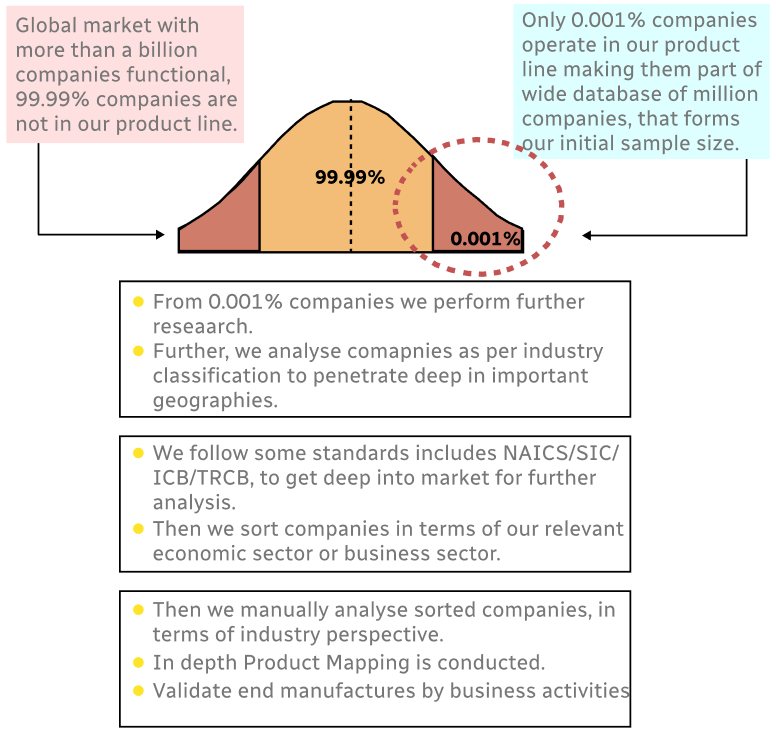
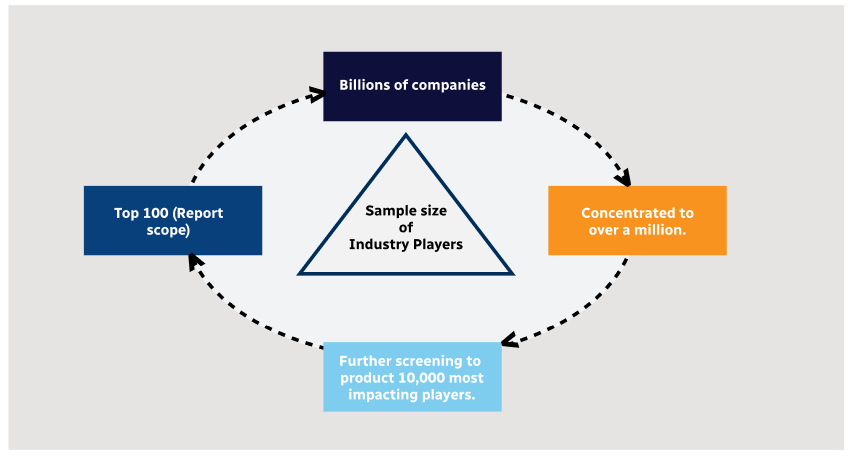
Step 1 - Identification of Relevant Samples Size from Population Database
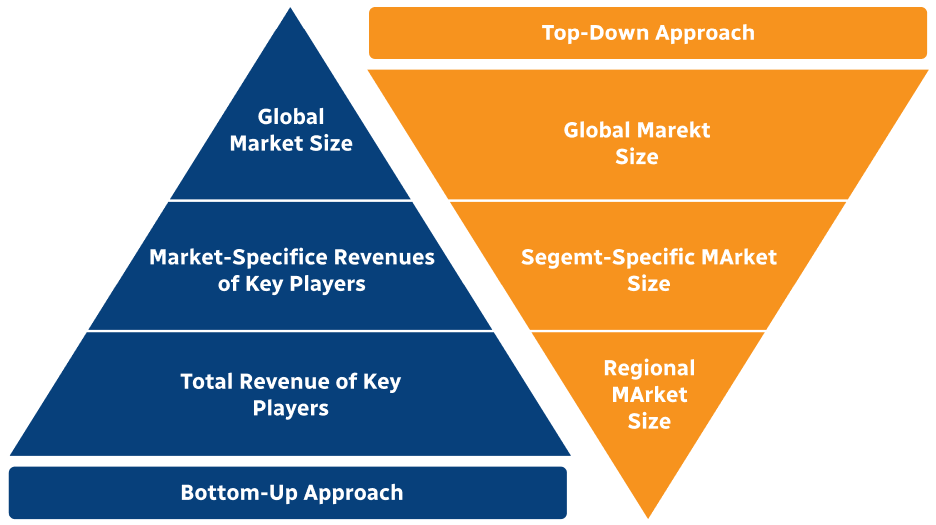
Step 2 - Approaches for Defining Global Market Size (Value, Volume* & Price*)
Note*: In applicable scenarios
Step 3 - Data Sources
Primary Research
- Web Analytics
- Survey Reports
- Research Institute
- Latest Research Reports
- Opinion Leaders
Secondary Research
- Annual Reports
- White Paper
- Latest Press Release
- Industry Association
- Paid Database
- Investor Presentations
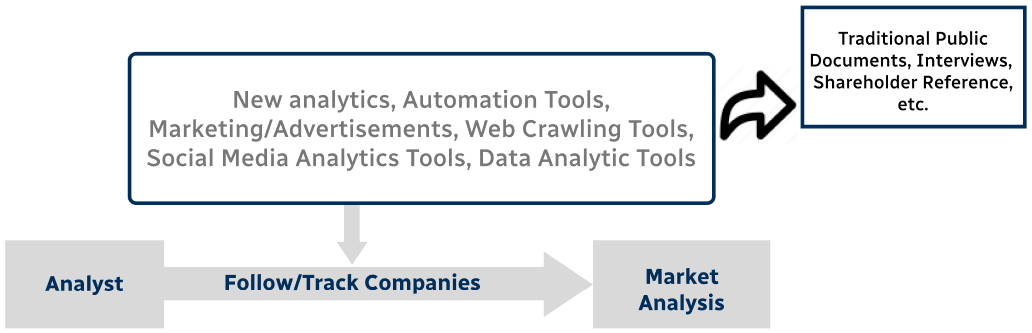
Step 4 - Data Triangulation
Involves using different sources of information in order to increase the validity of a study
These sources are likely to be stakeholders in a program - participants, other researchers, program staff, other community members, and so on.
Then we put all data in single framework & apply various statistical tools to find out the dynamic on the market.
During the analysis stage, feedback from the stakeholder groups would be compared to determine areas of agreement as well as areas of divergence


