
Key Insights
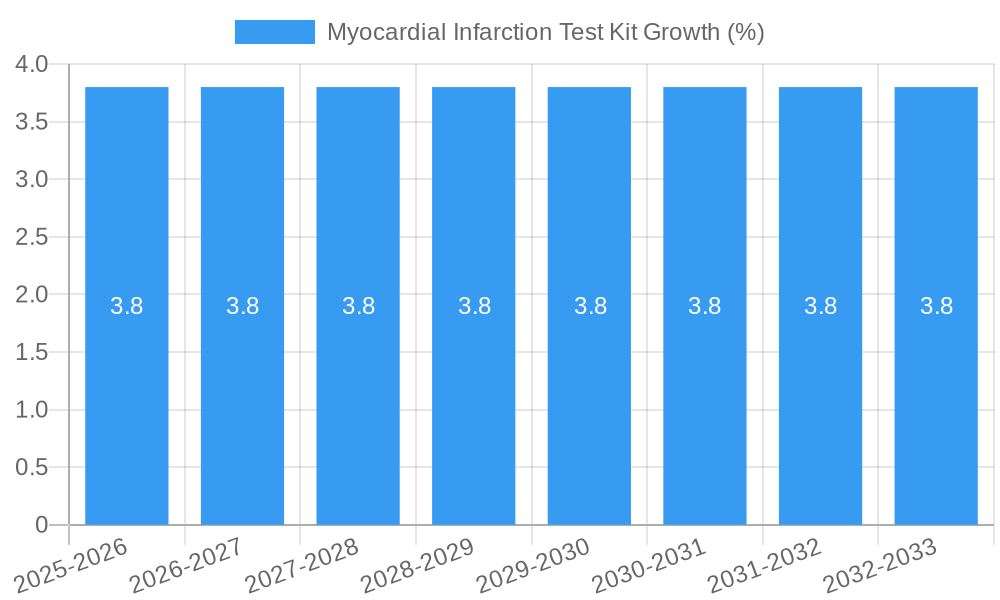
The global Myocardial Infarction Test Kit market is poised for steady growth, projected to reach a substantial USD 84.3 million by 2025, with a Compound Annual Growth Rate (CAGR) of 3.8% anticipated between 2025 and 2033. This expansion is primarily fueled by a growing awareness of cardiovascular diseases, an increasing incidence of heart attacks globally, and the rising demand for rapid and accurate diagnostic solutions in both hospital and clinical settings. Advancements in diagnostic technology, leading to more sensitive and specific test kits, further contribute to market momentum. The increasing adoption of point-of-care testing (POCT) devices, offering faster turnaround times and improved patient outcomes, is also a significant driver. Furthermore, supportive government initiatives aimed at improving healthcare infrastructure and early disease detection are expected to bolster market expansion.
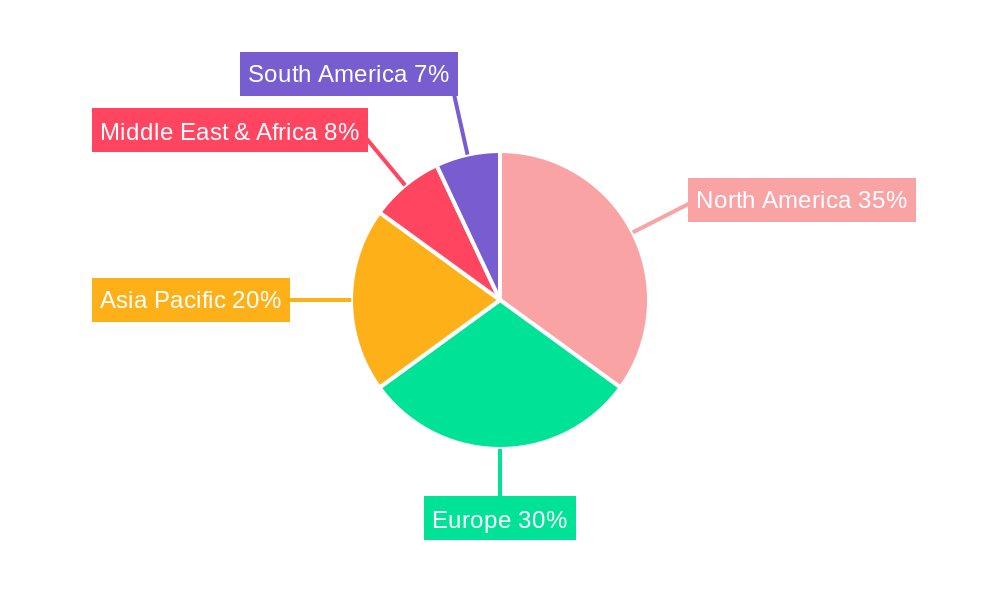
The market is segmented by application, with hospitals and clinics representing the largest share due to their higher patient volumes and established diagnostic infrastructure. Pharmacies are also emerging as a significant channel, driven by the increasing availability of over-the-counter diagnostic tests. In terms of type, serum and plasma samples dominate the market, leveraging well-established analytical platforms. However, the growing use of whole blood samples in rapid diagnostic kits, particularly for point-of-care applications, presents a promising growth avenue. Geographically, North America and Europe currently lead the market, driven by advanced healthcare systems and higher healthcare expenditure. The Asia Pacific region is expected to witness the fastest growth, propelled by rising disposable incomes, improving healthcare access, and a burgeoning patient population susceptible to cardiovascular ailments. Key players are actively investing in research and development to introduce innovative and cost-effective solutions, thereby enhancing diagnostic capabilities and addressing unmet clinical needs.
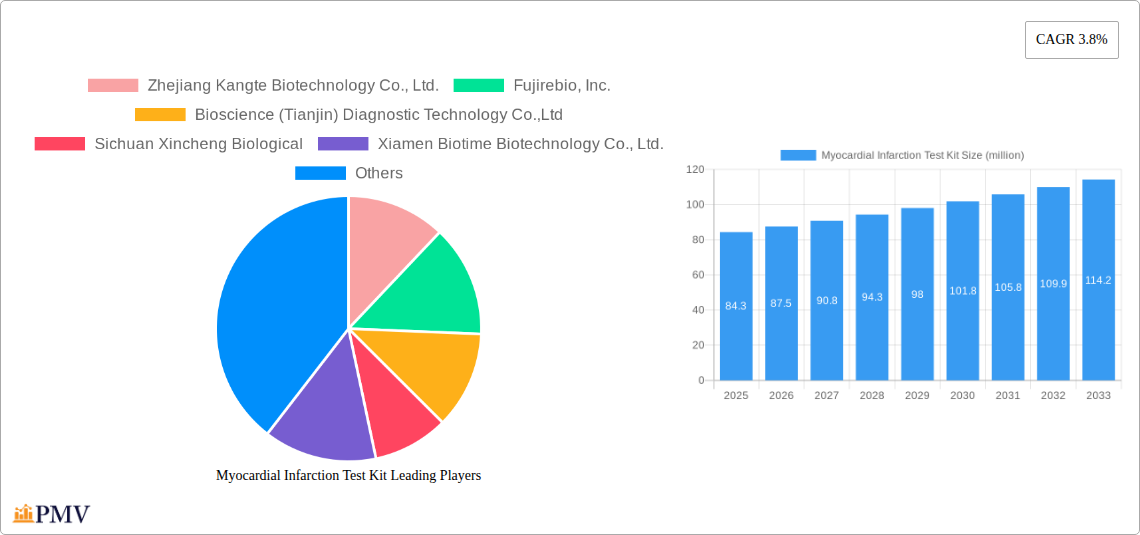
Myocardial Infarction Test Kit Market Structure & Competitive Dynamics
The Myocardial Infarction (MI) test kit market exhibits a moderately concentrated structure, with key players like Fujirebio, Inc., Boditech Med Inc., and Getein Biotech holding significant market shares, estimated to be over 40% combined in the current landscape. Innovation ecosystems are thriving, driven by continuous research and development in cardiac biomarker detection. Regulatory frameworks, particularly those from the FDA and EMA, play a crucial role in shaping product approvals and market access. The presence of product substitutes, such as advanced cardiac imaging techniques, necessitates a constant focus on cost-effectiveness and rapid diagnostic capabilities for MI test kits. End-user trends are leaning towards point-of-care (POC) testing and home-use diagnostics, demanding user-friendly and highly sensitive kits. Merger and acquisition (M&A) activities, while not extensive in the historical period, are anticipated to increase, with estimated deal values potentially reaching hundreds of millions of dollars as larger diagnostics companies seek to expand their portfolios.
- Market Concentration: Moderately concentrated, with a few key players dominating market share.
- Innovation Ecosystems: Driven by R&D in cardiac biomarkers and POC technologies.
- Regulatory Frameworks: FDA, EMA, and other regional regulatory bodies significantly influence market entry and product standards.
- Product Substitutes: Advanced imaging techniques and alternative diagnostic methods.
- End-User Trends: Growing demand for POC and home-use diagnostics.
- M&A Activities: Anticipated to increase, with potential deal values in the millions of dollars.
Myocardial Infarction Test Kit Industry Trends & Insights
The Myocardial Infarction (MI) test kit industry is poised for substantial growth, driven by an escalating global burden of cardiovascular diseases and an increasing emphasis on early and accurate diagnosis. The market is projected to witness a Compound Annual Growth Rate (CAGR) of approximately 7.5% during the forecast period of 2025–2033. This robust expansion is fueled by several interconnected trends. Technological disruptions are a significant factor, with advancements in immunoassay technology, microfluidics, and biosensing leading to the development of more sensitive, specific, and rapid MI test kits. The shift towards point-of-care (POC) diagnostics, enabling faster results at the patient's bedside or in decentralized settings like clinics and pharmacies, is a paramount trend. This allows for quicker treatment decisions, significantly improving patient outcomes and reducing hospitalization durations. Consumer preferences are increasingly aligned with convenience and accessibility, further bolstering the demand for POC and even potential home-use MI diagnostic solutions. The competitive dynamics are characterized by intense R&D efforts, strategic partnerships, and a growing presence of emerging players from Asia-Pacific, particularly China, contributing to a more diversified market landscape. Market penetration is expected to deepen as healthcare systems prioritize cost-effective and efficient diagnostic tools for managing cardiac emergencies. The rising prevalence of risk factors for MI, such as diabetes, hypertension, and obesity, across aging populations worldwide, directly translates to a higher demand for reliable diagnostic tools, making MI test kits an essential component of modern healthcare. Furthermore, the increasing awareness among both healthcare professionals and the general public regarding the critical nature of timely MI diagnosis is another significant growth driver. Reimbursement policies and the integration of MI test kits into routine cardiac care protocols within hospitals and clinics are also crucial for sustained market growth, contributing to an estimated market value that could reach several billion dollars by 2033.
Dominant Markets & Segments in Myocardial Infarction Test Kit
The Myocardial Infarction (MI) test kit market demonstrates significant regional dominance, with North America and Europe currently leading in market share, projected to account for over 50% of the global market by 2025. This dominance is attributed to several factors, including advanced healthcare infrastructure, high per capita healthcare spending, and a well-established regulatory environment that fosters innovation and adoption of new diagnostic technologies. Economic policies in these regions often prioritize preventative healthcare and early disease detection, leading to increased uptake of MI test kits.
Within the Application segment, Hospitals represent the largest and most dominant market. This is due to the critical need for rapid and accurate MI diagnosis in emergency departments, intensive care units (ICUs), and cardiology wards. Hospitals are equipped with the necessary infrastructure and trained personnel to utilize sophisticated MI test kits, and their patient volume directly translates to higher demand. The projected growth in this segment is substantial, driven by increasing hospital admissions for cardiac events and the integration of advanced diagnostic solutions.
The Clinic segment is also experiencing robust growth, fueled by the decentralization of diagnostic services and the increasing role of outpatient cardiac care. Clinics offer a more accessible and cost-effective alternative for initial screening and monitoring of cardiac health. Economic policies supporting primary care and early intervention further bolster this segment's expansion.
The Pharmacy segment, while currently smaller, holds significant future growth potential, especially with the development of user-friendly, over-the-counter (OTC) or prescription-based MI self-testing kits. Consumer demand for convenient health monitoring and the push for telehealth integration are key drivers here. Regulatory approvals for home-use diagnostic devices will be crucial for this segment's widespread adoption.
Regarding the Type segment, Serum Sample based MI test kits currently hold the largest market share. This is due to the well-established diagnostic protocols for measuring cardiac biomarkers like troponin and CK-MB in serum. The high sensitivity and specificity of serum-based assays have made them the gold standard in clinical settings.
Plasma Sample based kits are gaining traction due to the convenience of processing plasma directly from anticoagulated blood. This can lead to faster turnaround times compared to serum, which requires a clotting step. Technological advancements in plasma separation and assay development are contributing to its growing market presence.
Whole Blood Sample based test kits offer the ultimate convenience, eliminating the need for sample processing steps. These are particularly advantageous for point-of-care (POC) and rapid diagnostic applications where immediate results are paramount. The development of sensitive and reliable whole blood assays is a key area of innovation, driving its increasing market penetration, especially in emergency settings and remote areas.
- Leading Regions: North America and Europe dominate due to advanced infrastructure and high healthcare spending.
- Dominant Application: Hospitals, driven by emergency care and specialized cardiology departments.
- Growing Application: Clinics, due to decentralization and outpatient care expansion.
- Emerging Application: Pharmacies, with potential for home-use diagnostics.
- Dominant Type: Serum Sample, owing to established protocols and high accuracy.
- Growing Type: Plasma Sample, offering faster processing and convenience.
- High Potential Type: Whole Blood Sample, ideal for POC and rapid diagnostics.
Myocardial Infarction Test Kit Product Innovations
Product innovations in the Myocardial Infarction (MI) test kit market are centered on enhancing diagnostic speed, accuracy, and user-friendliness. Emerging trends include the development of highly sensitive troponin assays capable of detecting MI earlier and with greater precision, often achieving results in under fifteen minutes. Advancements in multiplexing technologies allow for the simultaneous detection of multiple cardiac biomarkers, providing a more comprehensive assessment of cardiac damage and aiding in differential diagnosis. The integration of microfluidics and biosensor technology is enabling the creation of portable, point-of-care (POC) devices suitable for use in clinics, pharmacies, and even potentially at home. These innovations offer significant competitive advantages by reducing turnaround times, minimizing sample volume requirements, and improving accessibility to critical diagnostic information for healthcare professionals and patients alike.
Report Segmentation & Scope
This report meticulously segments the Myocardial Infarction (MI) test kit market across key parameters to provide actionable insights. The Application segment is categorized into Hospital, Clinic, Pharmacy, and Others, with Hospitals expected to lead the market due to immediate diagnostic needs, followed by a strong growth trajectory for Clinics and an emerging potential for Pharmacies. The Type segment is further divided into Serum Sample, Plasma Sample, and Whole Blood Sample. Serum samples currently dominate due to established protocols, while plasma and whole blood samples are showing significant growth driven by the demand for faster turnaround times and point-of-care applications. Each segment is analyzed for its market size, growth projections, and competitive dynamics within the study period of 2019–2033.
Key Drivers of Myocardial Infarction Test Kit Growth
The Myocardial Infarction (MI) test kit market is propelled by several key drivers. Technologically, advancements in cardiac biomarker detection, including highly sensitive troponin assays and the development of multiplexed diagnostic panels, are enhancing diagnostic accuracy and speed. Economically, the rising global incidence of cardiovascular diseases, coupled with increasing healthcare expenditure and a growing emphasis on early diagnosis and preventative care, fuels demand. Regulatory support for faster diagnostic tools and the increasing adoption of point-of-care testing within healthcare systems are also significant growth accelerators, making MI test kits indispensable in modern cardiac care.
Challenges in the Myocardial Infarction Test Kit Sector
Despite robust growth, the Myocardial Infarction (MI) test kit sector faces several challenges. Regulatory hurdles and lengthy approval processes for new diagnostic technologies can impede market entry and innovation. The high cost of advanced immunoassay and molecular diagnostic equipment can be a barrier to adoption, particularly in resource-limited settings. Intense competition among established players and emerging manufacturers leads to price pressures, impacting profit margins. Furthermore, issues related to supply chain disruptions for critical raw materials and reagents can affect production and availability, potentially leading to shortages and impacting patient care.
Leading Players in the Myocardial Infarction Test Kit Market
- Zhejiang Kangte Biotechnology Co., Ltd.
- Fujirebio, Inc.
- Bioscience (Tianjin) Diagnostic Technology Co.,Ltd
- Sichuan Xincheng Biological
- Xiamen Biotime Biotechnology Co., Ltd.
- Guangzhou KOFA Biotechnology Co.,Ltd.
- Getein Biotech
- OptiBio Co., Ltd.
- Shenzhen Kindmay Medical Co.,Ltd.
- Jinan Babio Biotech
- Tianjin Yuehekang Biotechnology Co., Ltd.
- Eurolyser Diagnostica
- BIOMERICA
- Boditech Med Inc.
Key Developments in Myocardial Infarction Test Kit Sector
- 2023/08: Fujirebio, Inc. launched a new high-sensitivity troponin assay, significantly improving early MI detection capabilities.
- 2024/01: Getein Biotech received FDA clearance for its point-of-care MI diagnostic platform, expanding its market reach.
- 2024/03: Boditech Med Inc. announced strategic partnerships to enhance its distribution network in emerging markets, anticipating a 15% market share increase.
- 2024/06: Shenzhen Kindmay Medical Co.,Ltd. showcased its innovative whole-blood MI test kit at a major industry conference, receiving positive feedback for its rapid results and ease of use.
- 2024/10: Eurolyser Diagnostica introduced a multiplex panel for cardiac biomarker testing, aiming to capture a larger share of the hospital segment.
Strategic Myocardial Infarction Test Kit Market Outlook
The strategic outlook for the Myocardial Infarction (MI) test kit market is highly promising, driven by continued advancements in diagnostic technology and an increasing global focus on cardiovascular health. Key growth accelerators include the expansion of point-of-care (POC) testing capabilities, enabling faster and more accessible diagnosis, and the development of more sensitive assays that can detect MI at earlier stages. The rising demand for home-use diagnostic solutions and the integration of AI in diagnostic interpretation present significant future opportunities. Strategic initiatives for market players will involve strengthening R&D pipelines, expanding geographical reach through partnerships and acquisitions, and focusing on cost-effective solutions to penetrate emerging markets and address the growing burden of cardiovascular disease globally.
Myocardial Infarction Test Kit Segmentation
-
1. Application
- 1.1. Hospital
- 1.2. Clinic
- 1.3. Pharmacy
- 1.4. Others
-
2. Type
- 2.1. Serum Sample
- 2.2. Plasma Sample
- 2.3. Whole Blood Sample
Myocardial Infarction Test Kit Segmentation By Geography
-
1. North America
- 1.1. United States
- 1.2. Canada
- 1.3. Mexico
-
2. South America
- 2.1. Brazil
- 2.2. Argentina
- 2.3. Rest of South America
-
3. Europe
- 3.1. United Kingdom
- 3.2. Germany
- 3.3. France
- 3.4. Italy
- 3.5. Spain
- 3.6. Russia
- 3.7. Benelux
- 3.8. Nordics
- 3.9. Rest of Europe
-
4. Middle East & Africa
- 4.1. Turkey
- 4.2. Israel
- 4.3. GCC
- 4.4. North Africa
- 4.5. South Africa
- 4.6. Rest of Middle East & Africa
-
5. Asia Pacific
- 5.1. China
- 5.2. India
- 5.3. Japan
- 5.4. South Korea
- 5.5. ASEAN
- 5.6. Oceania
- 5.7. Rest of Asia Pacific
Myocardial Infarction Test Kit REPORT HIGHLIGHTS
| Aspects | Details |
|---|---|
| Study Period | 2019-2033 |
| Base Year | 2024 |
| Estimated Year | 2025 |
| Forecast Period | 2025-2033 |
| Historical Period | 2019-2024 |
| Growth Rate | CAGR of 3.8% from 2019-2033 |
| Segmentation |
|
Table of Contents
- 1. Introduction
- 1.1. Research Scope
- 1.2. Market Segmentation
- 1.3. Research Methodology
- 1.4. Definitions and Assumptions
- 2. Executive Summary
- 2.1. Introduction
- 3. Market Dynamics
- 3.1. Introduction
- 3.2. Market Drivers
- 3.3. Market Restrains
- 3.4. Market Trends
- 4. Market Factor Analysis
- 4.1. Porters Five Forces
- 4.2. Supply/Value Chain
- 4.3. PESTEL analysis
- 4.4. Market Entropy
- 4.5. Patent/Trademark Analysis
- 5. Global Myocardial Infarction Test Kit Analysis, Insights and Forecast, 2019-2031
- 5.1. Market Analysis, Insights and Forecast - by Application
- 5.1.1. Hospital
- 5.1.2. Clinic
- 5.1.3. Pharmacy
- 5.1.4. Others
- 5.2. Market Analysis, Insights and Forecast - by Type
- 5.2.1. Serum Sample
- 5.2.2. Plasma Sample
- 5.2.3. Whole Blood Sample
- 5.3. Market Analysis, Insights and Forecast - by Region
- 5.3.1. North America
- 5.3.2. South America
- 5.3.3. Europe
- 5.3.4. Middle East & Africa
- 5.3.5. Asia Pacific
- 5.1. Market Analysis, Insights and Forecast - by Application
- 6. North America Myocardial Infarction Test Kit Analysis, Insights and Forecast, 2019-2031
- 6.1. Market Analysis, Insights and Forecast - by Application
- 6.1.1. Hospital
- 6.1.2. Clinic
- 6.1.3. Pharmacy
- 6.1.4. Others
- 6.2. Market Analysis, Insights and Forecast - by Type
- 6.2.1. Serum Sample
- 6.2.2. Plasma Sample
- 6.2.3. Whole Blood Sample
- 6.1. Market Analysis, Insights and Forecast - by Application
- 7. South America Myocardial Infarction Test Kit Analysis, Insights and Forecast, 2019-2031
- 7.1. Market Analysis, Insights and Forecast - by Application
- 7.1.1. Hospital
- 7.1.2. Clinic
- 7.1.3. Pharmacy
- 7.1.4. Others
- 7.2. Market Analysis, Insights and Forecast - by Type
- 7.2.1. Serum Sample
- 7.2.2. Plasma Sample
- 7.2.3. Whole Blood Sample
- 7.1. Market Analysis, Insights and Forecast - by Application
- 8. Europe Myocardial Infarction Test Kit Analysis, Insights and Forecast, 2019-2031
- 8.1. Market Analysis, Insights and Forecast - by Application
- 8.1.1. Hospital
- 8.1.2. Clinic
- 8.1.3. Pharmacy
- 8.1.4. Others
- 8.2. Market Analysis, Insights and Forecast - by Type
- 8.2.1. Serum Sample
- 8.2.2. Plasma Sample
- 8.2.3. Whole Blood Sample
- 8.1. Market Analysis, Insights and Forecast - by Application
- 9. Middle East & Africa Myocardial Infarction Test Kit Analysis, Insights and Forecast, 2019-2031
- 9.1. Market Analysis, Insights and Forecast - by Application
- 9.1.1. Hospital
- 9.1.2. Clinic
- 9.1.3. Pharmacy
- 9.1.4. Others
- 9.2. Market Analysis, Insights and Forecast - by Type
- 9.2.1. Serum Sample
- 9.2.2. Plasma Sample
- 9.2.3. Whole Blood Sample
- 9.1. Market Analysis, Insights and Forecast - by Application
- 10. Asia Pacific Myocardial Infarction Test Kit Analysis, Insights and Forecast, 2019-2031
- 10.1. Market Analysis, Insights and Forecast - by Application
- 10.1.1. Hospital
- 10.1.2. Clinic
- 10.1.3. Pharmacy
- 10.1.4. Others
- 10.2. Market Analysis, Insights and Forecast - by Type
- 10.2.1. Serum Sample
- 10.2.2. Plasma Sample
- 10.2.3. Whole Blood Sample
- 10.1. Market Analysis, Insights and Forecast - by Application
- 11. Competitive Analysis
- 11.1. Global Market Share Analysis 2024
- 11.2. Company Profiles
- 11.2.1 Zhejiang Kangte Biotechnology Co. Ltd.
- 11.2.1.1. Overview
- 11.2.1.2. Products
- 11.2.1.3. SWOT Analysis
- 11.2.1.4. Recent Developments
- 11.2.1.5. Financials (Based on Availability)
- 11.2.2 Fujirebio Inc.
- 11.2.2.1. Overview
- 11.2.2.2. Products
- 11.2.2.3. SWOT Analysis
- 11.2.2.4. Recent Developments
- 11.2.2.5. Financials (Based on Availability)
- 11.2.3 Bioscience (Tianjin) Diagnostic Technology Co.Ltd
- 11.2.3.1. Overview
- 11.2.3.2. Products
- 11.2.3.3. SWOT Analysis
- 11.2.3.4. Recent Developments
- 11.2.3.5. Financials (Based on Availability)
- 11.2.4 Sichuan Xincheng Biological
- 11.2.4.1. Overview
- 11.2.4.2. Products
- 11.2.4.3. SWOT Analysis
- 11.2.4.4. Recent Developments
- 11.2.4.5. Financials (Based on Availability)
- 11.2.5 Xiamen Biotime Biotechnology Co. Ltd.
- 11.2.5.1. Overview
- 11.2.5.2. Products
- 11.2.5.3. SWOT Analysis
- 11.2.5.4. Recent Developments
- 11.2.5.5. Financials (Based on Availability)
- 11.2.6 Guangzhou KOFA Biotechnology Co.Ltd.
- 11.2.6.1. Overview
- 11.2.6.2. Products
- 11.2.6.3. SWOT Analysis
- 11.2.6.4. Recent Developments
- 11.2.6.5. Financials (Based on Availability)
- 11.2.7 Getein Biotech
- 11.2.7.1. Overview
- 11.2.7.2. Products
- 11.2.7.3. SWOT Analysis
- 11.2.7.4. Recent Developments
- 11.2.7.5. Financials (Based on Availability)
- 11.2.8 OptiBio Co. Ltd.
- 11.2.8.1. Overview
- 11.2.8.2. Products
- 11.2.8.3. SWOT Analysis
- 11.2.8.4. Recent Developments
- 11.2.8.5. Financials (Based on Availability)
- 11.2.9 Shenzhen Kindmay Medical Co.Ltd.
- 11.2.9.1. Overview
- 11.2.9.2. Products
- 11.2.9.3. SWOT Analysis
- 11.2.9.4. Recent Developments
- 11.2.9.5. Financials (Based on Availability)
- 11.2.10 Jinan Babio Biotech
- 11.2.10.1. Overview
- 11.2.10.2. Products
- 11.2.10.3. SWOT Analysis
- 11.2.10.4. Recent Developments
- 11.2.10.5. Financials (Based on Availability)
- 11.2.11 Tianjin Yuehekang Biotechnology Co. Ltd.
- 11.2.11.1. Overview
- 11.2.11.2. Products
- 11.2.11.3. SWOT Analysis
- 11.2.11.4. Recent Developments
- 11.2.11.5. Financials (Based on Availability)
- 11.2.12 Eurolyser Diagnostica
- 11.2.12.1. Overview
- 11.2.12.2. Products
- 11.2.12.3. SWOT Analysis
- 11.2.12.4. Recent Developments
- 11.2.12.5. Financials (Based on Availability)
- 11.2.13 BIOMERICA
- 11.2.13.1. Overview
- 11.2.13.2. Products
- 11.2.13.3. SWOT Analysis
- 11.2.13.4. Recent Developments
- 11.2.13.5. Financials (Based on Availability)
- 11.2.14 Boditech Med Inc.
- 11.2.14.1. Overview
- 11.2.14.2. Products
- 11.2.14.3. SWOT Analysis
- 11.2.14.4. Recent Developments
- 11.2.14.5. Financials (Based on Availability)
- 11.2.1 Zhejiang Kangte Biotechnology Co. Ltd.
List of Figures
- Figure 1: Global Myocardial Infarction Test Kit Revenue Breakdown (million, %) by Region 2024 & 2032
- Figure 2: Global Myocardial Infarction Test Kit Volume Breakdown (K, %) by Region 2024 & 2032
- Figure 3: North America Myocardial Infarction Test Kit Revenue (million), by Application 2024 & 2032
- Figure 4: North America Myocardial Infarction Test Kit Volume (K), by Application 2024 & 2032
- Figure 5: North America Myocardial Infarction Test Kit Revenue Share (%), by Application 2024 & 2032
- Figure 6: North America Myocardial Infarction Test Kit Volume Share (%), by Application 2024 & 2032
- Figure 7: North America Myocardial Infarction Test Kit Revenue (million), by Type 2024 & 2032
- Figure 8: North America Myocardial Infarction Test Kit Volume (K), by Type 2024 & 2032
- Figure 9: North America Myocardial Infarction Test Kit Revenue Share (%), by Type 2024 & 2032
- Figure 10: North America Myocardial Infarction Test Kit Volume Share (%), by Type 2024 & 2032
- Figure 11: North America Myocardial Infarction Test Kit Revenue (million), by Country 2024 & 2032
- Figure 12: North America Myocardial Infarction Test Kit Volume (K), by Country 2024 & 2032
- Figure 13: North America Myocardial Infarction Test Kit Revenue Share (%), by Country 2024 & 2032
- Figure 14: North America Myocardial Infarction Test Kit Volume Share (%), by Country 2024 & 2032
- Figure 15: South America Myocardial Infarction Test Kit Revenue (million), by Application 2024 & 2032
- Figure 16: South America Myocardial Infarction Test Kit Volume (K), by Application 2024 & 2032
- Figure 17: South America Myocardial Infarction Test Kit Revenue Share (%), by Application 2024 & 2032
- Figure 18: South America Myocardial Infarction Test Kit Volume Share (%), by Application 2024 & 2032
- Figure 19: South America Myocardial Infarction Test Kit Revenue (million), by Type 2024 & 2032
- Figure 20: South America Myocardial Infarction Test Kit Volume (K), by Type 2024 & 2032
- Figure 21: South America Myocardial Infarction Test Kit Revenue Share (%), by Type 2024 & 2032
- Figure 22: South America Myocardial Infarction Test Kit Volume Share (%), by Type 2024 & 2032
- Figure 23: South America Myocardial Infarction Test Kit Revenue (million), by Country 2024 & 2032
- Figure 24: South America Myocardial Infarction Test Kit Volume (K), by Country 2024 & 2032
- Figure 25: South America Myocardial Infarction Test Kit Revenue Share (%), by Country 2024 & 2032
- Figure 26: South America Myocardial Infarction Test Kit Volume Share (%), by Country 2024 & 2032
- Figure 27: Europe Myocardial Infarction Test Kit Revenue (million), by Application 2024 & 2032
- Figure 28: Europe Myocardial Infarction Test Kit Volume (K), by Application 2024 & 2032
- Figure 29: Europe Myocardial Infarction Test Kit Revenue Share (%), by Application 2024 & 2032
- Figure 30: Europe Myocardial Infarction Test Kit Volume Share (%), by Application 2024 & 2032
- Figure 31: Europe Myocardial Infarction Test Kit Revenue (million), by Type 2024 & 2032
- Figure 32: Europe Myocardial Infarction Test Kit Volume (K), by Type 2024 & 2032
- Figure 33: Europe Myocardial Infarction Test Kit Revenue Share (%), by Type 2024 & 2032
- Figure 34: Europe Myocardial Infarction Test Kit Volume Share (%), by Type 2024 & 2032
- Figure 35: Europe Myocardial Infarction Test Kit Revenue (million), by Country 2024 & 2032
- Figure 36: Europe Myocardial Infarction Test Kit Volume (K), by Country 2024 & 2032
- Figure 37: Europe Myocardial Infarction Test Kit Revenue Share (%), by Country 2024 & 2032
- Figure 38: Europe Myocardial Infarction Test Kit Volume Share (%), by Country 2024 & 2032
- Figure 39: Middle East & Africa Myocardial Infarction Test Kit Revenue (million), by Application 2024 & 2032
- Figure 40: Middle East & Africa Myocardial Infarction Test Kit Volume (K), by Application 2024 & 2032
- Figure 41: Middle East & Africa Myocardial Infarction Test Kit Revenue Share (%), by Application 2024 & 2032
- Figure 42: Middle East & Africa Myocardial Infarction Test Kit Volume Share (%), by Application 2024 & 2032
- Figure 43: Middle East & Africa Myocardial Infarction Test Kit Revenue (million), by Type 2024 & 2032
- Figure 44: Middle East & Africa Myocardial Infarction Test Kit Volume (K), by Type 2024 & 2032
- Figure 45: Middle East & Africa Myocardial Infarction Test Kit Revenue Share (%), by Type 2024 & 2032
- Figure 46: Middle East & Africa Myocardial Infarction Test Kit Volume Share (%), by Type 2024 & 2032
- Figure 47: Middle East & Africa Myocardial Infarction Test Kit Revenue (million), by Country 2024 & 2032
- Figure 48: Middle East & Africa Myocardial Infarction Test Kit Volume (K), by Country 2024 & 2032
- Figure 49: Middle East & Africa Myocardial Infarction Test Kit Revenue Share (%), by Country 2024 & 2032
- Figure 50: Middle East & Africa Myocardial Infarction Test Kit Volume Share (%), by Country 2024 & 2032
- Figure 51: Asia Pacific Myocardial Infarction Test Kit Revenue (million), by Application 2024 & 2032
- Figure 52: Asia Pacific Myocardial Infarction Test Kit Volume (K), by Application 2024 & 2032
- Figure 53: Asia Pacific Myocardial Infarction Test Kit Revenue Share (%), by Application 2024 & 2032
- Figure 54: Asia Pacific Myocardial Infarction Test Kit Volume Share (%), by Application 2024 & 2032
- Figure 55: Asia Pacific Myocardial Infarction Test Kit Revenue (million), by Type 2024 & 2032
- Figure 56: Asia Pacific Myocardial Infarction Test Kit Volume (K), by Type 2024 & 2032
- Figure 57: Asia Pacific Myocardial Infarction Test Kit Revenue Share (%), by Type 2024 & 2032
- Figure 58: Asia Pacific Myocardial Infarction Test Kit Volume Share (%), by Type 2024 & 2032
- Figure 59: Asia Pacific Myocardial Infarction Test Kit Revenue (million), by Country 2024 & 2032
- Figure 60: Asia Pacific Myocardial Infarction Test Kit Volume (K), by Country 2024 & 2032
- Figure 61: Asia Pacific Myocardial Infarction Test Kit Revenue Share (%), by Country 2024 & 2032
- Figure 62: Asia Pacific Myocardial Infarction Test Kit Volume Share (%), by Country 2024 & 2032
List of Tables
- Table 1: Global Myocardial Infarction Test Kit Revenue million Forecast, by Region 2019 & 2032
- Table 2: Global Myocardial Infarction Test Kit Volume K Forecast, by Region 2019 & 2032
- Table 3: Global Myocardial Infarction Test Kit Revenue million Forecast, by Application 2019 & 2032
- Table 4: Global Myocardial Infarction Test Kit Volume K Forecast, by Application 2019 & 2032
- Table 5: Global Myocardial Infarction Test Kit Revenue million Forecast, by Type 2019 & 2032
- Table 6: Global Myocardial Infarction Test Kit Volume K Forecast, by Type 2019 & 2032
- Table 7: Global Myocardial Infarction Test Kit Revenue million Forecast, by Region 2019 & 2032
- Table 8: Global Myocardial Infarction Test Kit Volume K Forecast, by Region 2019 & 2032
- Table 9: Global Myocardial Infarction Test Kit Revenue million Forecast, by Application 2019 & 2032
- Table 10: Global Myocardial Infarction Test Kit Volume K Forecast, by Application 2019 & 2032
- Table 11: Global Myocardial Infarction Test Kit Revenue million Forecast, by Type 2019 & 2032
- Table 12: Global Myocardial Infarction Test Kit Volume K Forecast, by Type 2019 & 2032
- Table 13: Global Myocardial Infarction Test Kit Revenue million Forecast, by Country 2019 & 2032
- Table 14: Global Myocardial Infarction Test Kit Volume K Forecast, by Country 2019 & 2032
- Table 15: United States Myocardial Infarction Test Kit Revenue (million) Forecast, by Application 2019 & 2032
- Table 16: United States Myocardial Infarction Test Kit Volume (K) Forecast, by Application 2019 & 2032
- Table 17: Canada Myocardial Infarction Test Kit Revenue (million) Forecast, by Application 2019 & 2032
- Table 18: Canada Myocardial Infarction Test Kit Volume (K) Forecast, by Application 2019 & 2032
- Table 19: Mexico Myocardial Infarction Test Kit Revenue (million) Forecast, by Application 2019 & 2032
- Table 20: Mexico Myocardial Infarction Test Kit Volume (K) Forecast, by Application 2019 & 2032
- Table 21: Global Myocardial Infarction Test Kit Revenue million Forecast, by Application 2019 & 2032
- Table 22: Global Myocardial Infarction Test Kit Volume K Forecast, by Application 2019 & 2032
- Table 23: Global Myocardial Infarction Test Kit Revenue million Forecast, by Type 2019 & 2032
- Table 24: Global Myocardial Infarction Test Kit Volume K Forecast, by Type 2019 & 2032
- Table 25: Global Myocardial Infarction Test Kit Revenue million Forecast, by Country 2019 & 2032
- Table 26: Global Myocardial Infarction Test Kit Volume K Forecast, by Country 2019 & 2032
- Table 27: Brazil Myocardial Infarction Test Kit Revenue (million) Forecast, by Application 2019 & 2032
- Table 28: Brazil Myocardial Infarction Test Kit Volume (K) Forecast, by Application 2019 & 2032
- Table 29: Argentina Myocardial Infarction Test Kit Revenue (million) Forecast, by Application 2019 & 2032
- Table 30: Argentina Myocardial Infarction Test Kit Volume (K) Forecast, by Application 2019 & 2032
- Table 31: Rest of South America Myocardial Infarction Test Kit Revenue (million) Forecast, by Application 2019 & 2032
- Table 32: Rest of South America Myocardial Infarction Test Kit Volume (K) Forecast, by Application 2019 & 2032
- Table 33: Global Myocardial Infarction Test Kit Revenue million Forecast, by Application 2019 & 2032
- Table 34: Global Myocardial Infarction Test Kit Volume K Forecast, by Application 2019 & 2032
- Table 35: Global Myocardial Infarction Test Kit Revenue million Forecast, by Type 2019 & 2032
- Table 36: Global Myocardial Infarction Test Kit Volume K Forecast, by Type 2019 & 2032
- Table 37: Global Myocardial Infarction Test Kit Revenue million Forecast, by Country 2019 & 2032
- Table 38: Global Myocardial Infarction Test Kit Volume K Forecast, by Country 2019 & 2032
- Table 39: United Kingdom Myocardial Infarction Test Kit Revenue (million) Forecast, by Application 2019 & 2032
- Table 40: United Kingdom Myocardial Infarction Test Kit Volume (K) Forecast, by Application 2019 & 2032
- Table 41: Germany Myocardial Infarction Test Kit Revenue (million) Forecast, by Application 2019 & 2032
- Table 42: Germany Myocardial Infarction Test Kit Volume (K) Forecast, by Application 2019 & 2032
- Table 43: France Myocardial Infarction Test Kit Revenue (million) Forecast, by Application 2019 & 2032
- Table 44: France Myocardial Infarction Test Kit Volume (K) Forecast, by Application 2019 & 2032
- Table 45: Italy Myocardial Infarction Test Kit Revenue (million) Forecast, by Application 2019 & 2032
- Table 46: Italy Myocardial Infarction Test Kit Volume (K) Forecast, by Application 2019 & 2032
- Table 47: Spain Myocardial Infarction Test Kit Revenue (million) Forecast, by Application 2019 & 2032
- Table 48: Spain Myocardial Infarction Test Kit Volume (K) Forecast, by Application 2019 & 2032
- Table 49: Russia Myocardial Infarction Test Kit Revenue (million) Forecast, by Application 2019 & 2032
- Table 50: Russia Myocardial Infarction Test Kit Volume (K) Forecast, by Application 2019 & 2032
- Table 51: Benelux Myocardial Infarction Test Kit Revenue (million) Forecast, by Application 2019 & 2032
- Table 52: Benelux Myocardial Infarction Test Kit Volume (K) Forecast, by Application 2019 & 2032
- Table 53: Nordics Myocardial Infarction Test Kit Revenue (million) Forecast, by Application 2019 & 2032
- Table 54: Nordics Myocardial Infarction Test Kit Volume (K) Forecast, by Application 2019 & 2032
- Table 55: Rest of Europe Myocardial Infarction Test Kit Revenue (million) Forecast, by Application 2019 & 2032
- Table 56: Rest of Europe Myocardial Infarction Test Kit Volume (K) Forecast, by Application 2019 & 2032
- Table 57: Global Myocardial Infarction Test Kit Revenue million Forecast, by Application 2019 & 2032
- Table 58: Global Myocardial Infarction Test Kit Volume K Forecast, by Application 2019 & 2032
- Table 59: Global Myocardial Infarction Test Kit Revenue million Forecast, by Type 2019 & 2032
- Table 60: Global Myocardial Infarction Test Kit Volume K Forecast, by Type 2019 & 2032
- Table 61: Global Myocardial Infarction Test Kit Revenue million Forecast, by Country 2019 & 2032
- Table 62: Global Myocardial Infarction Test Kit Volume K Forecast, by Country 2019 & 2032
- Table 63: Turkey Myocardial Infarction Test Kit Revenue (million) Forecast, by Application 2019 & 2032
- Table 64: Turkey Myocardial Infarction Test Kit Volume (K) Forecast, by Application 2019 & 2032
- Table 65: Israel Myocardial Infarction Test Kit Revenue (million) Forecast, by Application 2019 & 2032
- Table 66: Israel Myocardial Infarction Test Kit Volume (K) Forecast, by Application 2019 & 2032
- Table 67: GCC Myocardial Infarction Test Kit Revenue (million) Forecast, by Application 2019 & 2032
- Table 68: GCC Myocardial Infarction Test Kit Volume (K) Forecast, by Application 2019 & 2032
- Table 69: North Africa Myocardial Infarction Test Kit Revenue (million) Forecast, by Application 2019 & 2032
- Table 70: North Africa Myocardial Infarction Test Kit Volume (K) Forecast, by Application 2019 & 2032
- Table 71: South Africa Myocardial Infarction Test Kit Revenue (million) Forecast, by Application 2019 & 2032
- Table 72: South Africa Myocardial Infarction Test Kit Volume (K) Forecast, by Application 2019 & 2032
- Table 73: Rest of Middle East & Africa Myocardial Infarction Test Kit Revenue (million) Forecast, by Application 2019 & 2032
- Table 74: Rest of Middle East & Africa Myocardial Infarction Test Kit Volume (K) Forecast, by Application 2019 & 2032
- Table 75: Global Myocardial Infarction Test Kit Revenue million Forecast, by Application 2019 & 2032
- Table 76: Global Myocardial Infarction Test Kit Volume K Forecast, by Application 2019 & 2032
- Table 77: Global Myocardial Infarction Test Kit Revenue million Forecast, by Type 2019 & 2032
- Table 78: Global Myocardial Infarction Test Kit Volume K Forecast, by Type 2019 & 2032
- Table 79: Global Myocardial Infarction Test Kit Revenue million Forecast, by Country 2019 & 2032
- Table 80: Global Myocardial Infarction Test Kit Volume K Forecast, by Country 2019 & 2032
- Table 81: China Myocardial Infarction Test Kit Revenue (million) Forecast, by Application 2019 & 2032
- Table 82: China Myocardial Infarction Test Kit Volume (K) Forecast, by Application 2019 & 2032
- Table 83: India Myocardial Infarction Test Kit Revenue (million) Forecast, by Application 2019 & 2032
- Table 84: India Myocardial Infarction Test Kit Volume (K) Forecast, by Application 2019 & 2032
- Table 85: Japan Myocardial Infarction Test Kit Revenue (million) Forecast, by Application 2019 & 2032
- Table 86: Japan Myocardial Infarction Test Kit Volume (K) Forecast, by Application 2019 & 2032
- Table 87: South Korea Myocardial Infarction Test Kit Revenue (million) Forecast, by Application 2019 & 2032
- Table 88: South Korea Myocardial Infarction Test Kit Volume (K) Forecast, by Application 2019 & 2032
- Table 89: ASEAN Myocardial Infarction Test Kit Revenue (million) Forecast, by Application 2019 & 2032
- Table 90: ASEAN Myocardial Infarction Test Kit Volume (K) Forecast, by Application 2019 & 2032
- Table 91: Oceania Myocardial Infarction Test Kit Revenue (million) Forecast, by Application 2019 & 2032
- Table 92: Oceania Myocardial Infarction Test Kit Volume (K) Forecast, by Application 2019 & 2032
- Table 93: Rest of Asia Pacific Myocardial Infarction Test Kit Revenue (million) Forecast, by Application 2019 & 2032
- Table 94: Rest of Asia Pacific Myocardial Infarction Test Kit Volume (K) Forecast, by Application 2019 & 2032
Frequently Asked Questions
1. What is the projected Compound Annual Growth Rate (CAGR) of the Myocardial Infarction Test Kit?
The projected CAGR is approximately 3.8%.
2. Which companies are prominent players in the Myocardial Infarction Test Kit?
Key companies in the market include Zhejiang Kangte Biotechnology Co., Ltd., Fujirebio, Inc., Bioscience (Tianjin) Diagnostic Technology Co.,Ltd, Sichuan Xincheng Biological, Xiamen Biotime Biotechnology Co., Ltd., Guangzhou KOFA Biotechnology Co.,Ltd., Getein Biotech, OptiBio Co., Ltd., Shenzhen Kindmay Medical Co.,Ltd., Jinan Babio Biotech, Tianjin Yuehekang Biotechnology Co., Ltd., Eurolyser Diagnostica, BIOMERICA, Boditech Med Inc..
3. What are the main segments of the Myocardial Infarction Test Kit?
The market segments include Application, Type.
4. Can you provide details about the market size?
The market size is estimated to be USD 84.3 million as of 2022.
5. What are some drivers contributing to market growth?
N/A
6. What are the notable trends driving market growth?
N/A
7. Are there any restraints impacting market growth?
N/A
8. Can you provide examples of recent developments in the market?
N/A
9. What pricing options are available for accessing the report?
Pricing options include single-user, multi-user, and enterprise licenses priced at USD 3950.00, USD 5925.00, and USD 7900.00 respectively.
10. Is the market size provided in terms of value or volume?
The market size is provided in terms of value, measured in million and volume, measured in K.
11. Are there any specific market keywords associated with the report?
Yes, the market keyword associated with the report is "Myocardial Infarction Test Kit," which aids in identifying and referencing the specific market segment covered.
12. How do I determine which pricing option suits my needs best?
The pricing options vary based on user requirements and access needs. Individual users may opt for single-user licenses, while businesses requiring broader access may choose multi-user or enterprise licenses for cost-effective access to the report.
13. Are there any additional resources or data provided in the Myocardial Infarction Test Kit report?
While the report offers comprehensive insights, it's advisable to review the specific contents or supplementary materials provided to ascertain if additional resources or data are available.
14. How can I stay updated on further developments or reports in the Myocardial Infarction Test Kit?
To stay informed about further developments, trends, and reports in the Myocardial Infarction Test Kit, consider subscribing to industry newsletters, following relevant companies and organizations, or regularly checking reputable industry news sources and publications.
Methodology
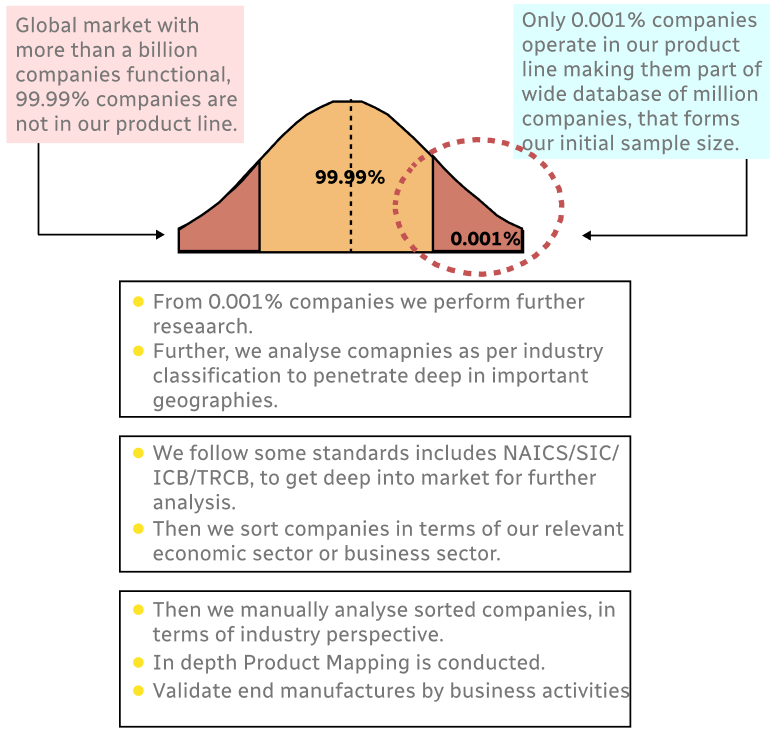
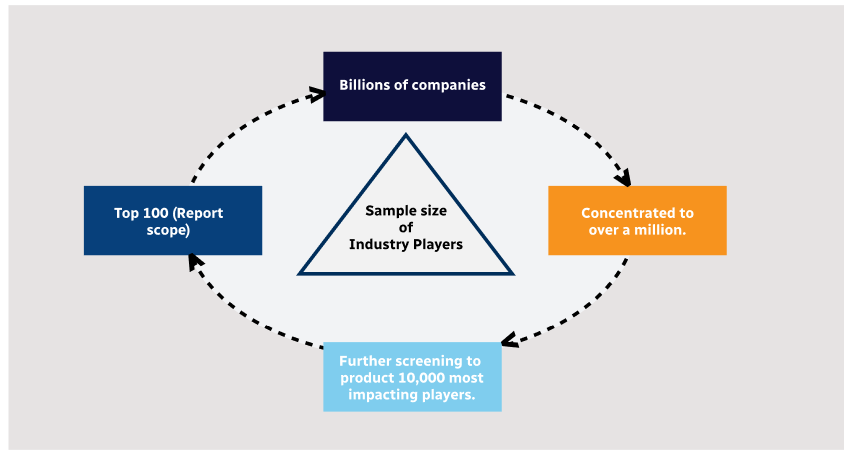
Step 1 - Identification of Relevant Samples Size from Population Database
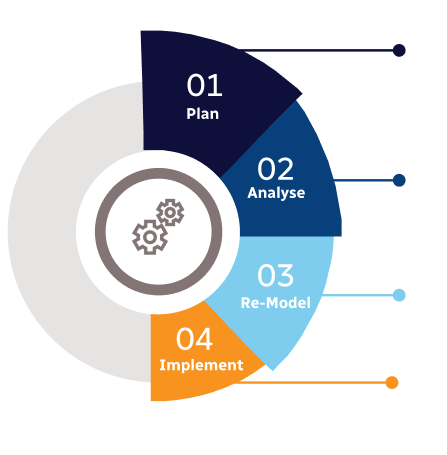
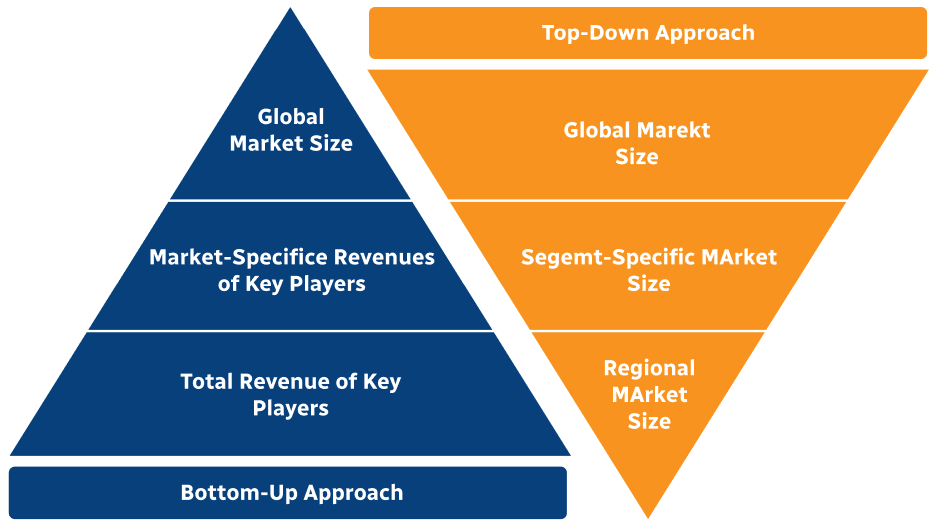
Step 2 - Approaches for Defining Global Market Size (Value, Volume* & Price*)
Note*: In applicable scenarios
Step 3 - Data Sources
Primary Research
- Web Analytics
- Survey Reports
- Research Institute
- Latest Research Reports
- Opinion Leaders
Secondary Research
- Annual Reports
- White Paper
- Latest Press Release
- Industry Association
- Paid Database
- Investor Presentations
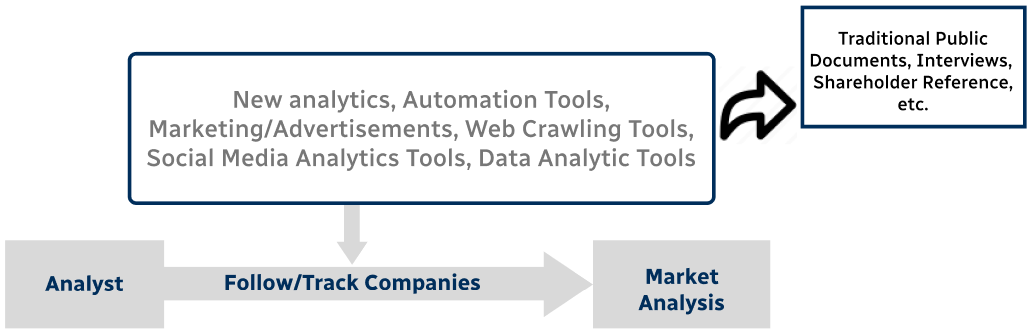
Step 4 - Data Triangulation
Involves using different sources of information in order to increase the validity of a study
These sources are likely to be stakeholders in a program - participants, other researchers, program staff, other community members, and so on.
Then we put all data in single framework & apply various statistical tools to find out the dynamic on the market.
During the analysis stage, feedback from the stakeholder groups would be compared to determine areas of agreement as well as areas of divergence