
Key Insights
The Iranian renewable energy market, poised for significant growth, is projected to experience a Compound Annual Growth Rate (CAGR) exceeding 10% from 2025 to 2033. This expansion is driven by several factors. Firstly, the country's substantial energy demand necessitates diversification away from fossil fuels, fostering government initiatives and substantial investments in renewable energy sources. Secondly, Iran's abundant solar and wind resources, particularly in the vast desert regions and along its coastlines, provide a compelling foundation for large-scale renewable energy projects. Furthermore, increasing awareness of environmental concerns and the global push towards carbon neutrality are fueling further market momentum. Technological advancements, including improved efficiency and reduced costs of solar panels and wind turbines, are also contributing to market growth. However, challenges remain. These include the need for improved grid infrastructure to effectively integrate renewable energy sources, securing sufficient financing for large-scale projects, and navigating potential geopolitical complexities.
Market segmentation reveals hydropower, wind, and solar as the leading contributors, with "others" encompassing geothermal and biomass. Key players like International Persian Group, KPV Solar GmbH, Noursun Energy Aria, Durion Energy AG, Mapna Group, and Poyry Plc are actively shaping the market landscape through project development, technology deployment, and investment. Regional variations exist, with northern and southern regions likely showing stronger growth due to higher solar irradiance and wind speeds. The market's historical period (2019-2024) likely reflects a slower growth rate than the projected future CAGR, indicating a period of market maturation and preparation for substantial expansion in the forecast period (2025-2033). This forecast anticipates continued investment and policy support leading to a substantial increase in installed renewable energy capacity.

Iran Renewable Energy Industry: 2019-2033 Market Analysis & Forecast Report
This comprehensive report provides a detailed analysis of the Iranian renewable energy industry, covering the period 2019-2033. It offers in-depth insights into market structure, competitive dynamics, growth drivers, challenges, and future outlook, equipping stakeholders with actionable intelligence for strategic decision-making. The report utilizes data from the historical period (2019-2024), base year (2025), and estimated year (2025) to forecast market trends until 2033. The study segments the market by technology type: Hydropower, Wind, Solar, and Others. Key players analyzed include International Persian Group, KPV Solar GmbH, Noursun Energy Aria, Durion Energy AG, Mapna Group, and Poyry Plc.
Iran Renewable Energy Industry Market Structure & Competitive Dynamics
Iran's renewable energy market presents a moderately concentrated landscape, with a few dominant players shaping key segments. While precise market share figures for 2025 remain dynamic, the top three players are estimated to hold a significant portion. Innovation is fueled by a blend of domestic expertise and international collaborations, although sanctions and regulatory intricacies continue to pose obstacles. The regulatory framework, while ostensibly supportive, faces hurdles in consistent implementation and enforcement. Fossil fuels, backed by established infrastructure and fluctuating prices, remain a strong competitive force. However, end-user demand for sustainable energy solutions is steadily increasing, particularly within the industrial and commercial sectors. Mergers and acquisitions (M&A) activity has been relatively subdued in recent years (2019-2024), with a total estimated value of $XX Million, largely attributed to economic sanctions and geopolitical factors. This limited M&A activity reflects the cautious investment climate.
- Market Concentration (Est. 2025): Significant share held by top 3 players (precise figures subject to ongoing market analysis).
- M&A Deal Value (2019-2024): Approximately $XX Million, reflecting the impact of sanctions and geopolitical instability.
- Key Regulatory Hurdles: Sanctions significantly impact international collaboration; inconsistent policy implementation hinders project development and investor confidence.
Iran Renewable Energy Industry Industry Trends & Insights
The Iranian renewable energy market is projected to experience significant growth during the forecast period (2025-2033), driven by government initiatives promoting energy diversification, increasing energy demand, and growing awareness of climate change. The Compound Annual Growth Rate (CAGR) is estimated at xx% during this period. Technological disruptions, such as advancements in solar PV technology and improvements in wind turbine efficiency, are further fueling market expansion. Consumer preferences are shifting toward cleaner energy sources, creating new opportunities for renewable energy providers. Competitive dynamics are shaped by factors such as technology leadership, pricing strategies, and access to financing. Market penetration of renewable energy in the overall energy mix is projected to reach xx% by 2033.

Dominant Markets & Segments in Iran Renewable Energy Industry
The hydropower segment currently dominates the Iranian renewable energy market, accounting for xx% of the total installed capacity in 2025. This dominance stems from Iran's substantial hydropower resources and existing infrastructure. The solar segment is projected to witness the fastest growth rate, driven by decreasing solar PV costs and government support programs.
Hydropower:
- Abundant water resources.
- Existing infrastructure.
- Government support for large-scale projects.
Solar:
- High solar irradiance levels.
- Decreasing solar PV technology costs.
- Government incentives for distributed generation.
Wind:
- Significant wind resources, particularly in coastal and mountainous regions.
- Potential for large-scale wind farms.
- Challenges related to grid infrastructure development.
Others (Geothermal, Biomass):
- Limited development due to technological and resource constraints.
Iran Renewable Energy Industry Product Innovations
The Iranian renewable energy sector is witnessing notable product innovations. These include the deployment of highly efficient solar panels boasting superior energy conversion rates and advanced wind turbine designs capable of functioning effectively across diverse wind conditions. These advancements are bolstering the economic viability and performance of renewable energy systems, driving broader adoption across various sectors. A growing trend is the integration of hybrid renewable energy systems, combining solar and wind power to enhance energy reliability and reduce dependence on fossil fuels, thereby improving energy security.
Report Segmentation & Scope
This report segments the Iranian renewable energy market by technology type: Hydropower, Wind, Solar, and Others. Each segment’s market size, growth projections, and competitive landscape are analyzed. Hydropower is projected to maintain a significant share, while Solar and Wind are poised for rapid growth. The "Others" segment encompasses smaller technologies with limited market penetration currently. Detailed competitive analysis within each segment assesses market share, strategic initiatives, and growth prospects of key players.
Key Drivers of Iran Renewable Energy Industry Growth
The growth trajectory of Iran's renewable energy industry is propelled by several key factors: Government initiatives promoting energy diversification and renewable energy adoption; rising energy demand driven by economic expansion; the declining cost of renewable energy technologies; and a growing awareness of environmental concerns. The government's commitment to curbing greenhouse gas emissions serves as a powerful catalyst for sustainable energy development.
Challenges in the Iran Renewable Energy Industry Sector
Despite its potential, the Iranian renewable energy sector grapples with significant challenges. These include financial constraints stemming from economic sanctions, limitations in grid infrastructure, and regulatory complexities. Supply chain disruptions further impede the timely execution of projects. These obstacles impact project timelines and overall market expansion, necessitating effective policy interventions and innovative financing mechanisms to attract investment and overcome infrastructural limitations.
Leading Players in the Iran Renewable Energy Industry Market
- Mapna Group
- International Persian Group
- KPV Solar GmbH
- Noursun Energy Aria
- Durion Energy AG
- Poyry Plc
Key Developments in Iran Renewable Energy Industry Sector
- Jan 2023: Launch of a new large-scale solar PV plant in the central region.
- Mar 2022: Government announcement of increased funding for renewable energy projects.
- Oct 2021: Partnership between Mapna Group and a European company to develop wind energy projects.
Strategic Iran Renewable Energy Industry Market Outlook
The Iranian renewable energy industry is poised for substantial growth over the next decade. Strategic opportunities abound in the development of large-scale renewable energy projects, the upgrade and expansion of grid infrastructure, and the advancement of energy storage technologies. Government support, technological breakthroughs, and increased private sector investment are paramount to unlocking this significant potential. The market presents compelling opportunities for both domestic and international stakeholders willing to navigate the inherent challenges and contribute to a sustainable energy future for Iran.
Iran Renewable Energy Industry Segmentation
-
1. Type
- 1.1. Hydropower
- 1.2. Wind
- 1.3. Solar
- 1.4. Others
Iran Renewable Energy Industry Segmentation By Geography
- 1. Iran

Iran Renewable Energy Industry REPORT HIGHLIGHTS
| Aspects | Details |
|---|---|
| Study Period | 2019-2033 |
| Base Year | 2024 |
| Estimated Year | 2025 |
| Forecast Period | 2025-2033 |
| Historical Period | 2019-2024 |
| Growth Rate | CAGR of > 10.00% from 2019-2033 |
| Segmentation |
|
Table of Contents
- 1. Introduction
- 1.1. Research Scope
- 1.2. Market Segmentation
- 1.3. Research Methodology
- 1.4. Definitions and Assumptions
- 2. Executive Summary
- 2.1. Introduction
- 3. Market Dynamics
- 3.1. Introduction
- 3.2. Market Drivers
- 3.2.1. 4.; Increasing Sales of Automobiles4.; Growing Adoption of Battery Energy Storage Systems (BESS)
- 3.3. Market Restrains
- 3.3.1. 4.; Rising Emphasis on Lithium-Ion Batteries
- 3.4. Market Trends
- 3.4.1. Upcoming Hydropower Projects to Drive the Market
- 4. Market Factor Analysis
- 4.1. Porters Five Forces
- 4.2. Supply/Value Chain
- 4.3. PESTEL analysis
- 4.4. Market Entropy
- 4.5. Patent/Trademark Analysis
- 5. Iran Renewable Energy Industry Analysis, Insights and Forecast, 2019-2031
- 5.1. Market Analysis, Insights and Forecast - by Type
- 5.1.1. Hydropower
- 5.1.2. Wind
- 5.1.3. Solar
- 5.1.4. Others
- 5.2. Market Analysis, Insights and Forecast - by Region
- 5.2.1. Iran
- 5.1. Market Analysis, Insights and Forecast - by Type
- 6. North Iran Renewable Energy Industry Analysis, Insights and Forecast, 2019-2031
- 7. South Iran Renewable Energy Industry Analysis, Insights and Forecast, 2019-2031
- 8. East Iran Renewable Energy Industry Analysis, Insights and Forecast, 2019-2031
- 9. West Iran Renewable Energy Industry Analysis, Insights and Forecast, 2019-2031
- 10. Competitive Analysis
- 10.1. Market Share Analysis 2024
- 10.2. Company Profiles
- 10.2.1 International Persian Group
- 10.2.1.1. Overview
- 10.2.1.2. Products
- 10.2.1.3. SWOT Analysis
- 10.2.1.4. Recent Developments
- 10.2.1.5. Financials (Based on Availability)
- 10.2.2 KPV Solar GmbH
- 10.2.2.1. Overview
- 10.2.2.2. Products
- 10.2.2.3. SWOT Analysis
- 10.2.2.4. Recent Developments
- 10.2.2.5. Financials (Based on Availability)
- 10.2.3 Noursun Energy Aria
- 10.2.3.1. Overview
- 10.2.3.2. Products
- 10.2.3.3. SWOT Analysis
- 10.2.3.4. Recent Developments
- 10.2.3.5. Financials (Based on Availability)
- 10.2.4 Durion Energy AG
- 10.2.4.1. Overview
- 10.2.4.2. Products
- 10.2.4.3. SWOT Analysis
- 10.2.4.4. Recent Developments
- 10.2.4.5. Financials (Based on Availability)
- 10.2.5 Mapna Group company
- 10.2.5.1. Overview
- 10.2.5.2. Products
- 10.2.5.3. SWOT Analysis
- 10.2.5.4. Recent Developments
- 10.2.5.5. Financials (Based on Availability)
- 10.2.6 Poyry Plc
- 10.2.6.1. Overview
- 10.2.6.2. Products
- 10.2.6.3. SWOT Analysis
- 10.2.6.4. Recent Developments
- 10.2.6.5. Financials (Based on Availability)
- 10.2.1 International Persian Group
List of Figures
- Figure 1: Iran Renewable Energy Industry Revenue Breakdown (Million, %) by Product 2024 & 2032
- Figure 2: Iran Renewable Energy Industry Share (%) by Company 2024
List of Tables
- Table 1: Iran Renewable Energy Industry Revenue Million Forecast, by Region 2019 & 2032
- Table 2: Iran Renewable Energy Industry Volume Gigawatt Forecast, by Region 2019 & 2032
- Table 3: Iran Renewable Energy Industry Revenue Million Forecast, by Type 2019 & 2032
- Table 4: Iran Renewable Energy Industry Volume Gigawatt Forecast, by Type 2019 & 2032
- Table 5: Iran Renewable Energy Industry Revenue Million Forecast, by Region 2019 & 2032
- Table 6: Iran Renewable Energy Industry Volume Gigawatt Forecast, by Region 2019 & 2032
- Table 7: Iran Renewable Energy Industry Revenue Million Forecast, by Country 2019 & 2032
- Table 8: Iran Renewable Energy Industry Volume Gigawatt Forecast, by Country 2019 & 2032
- Table 9: North Iran Renewable Energy Industry Revenue (Million) Forecast, by Application 2019 & 2032
- Table 10: North Iran Renewable Energy Industry Volume (Gigawatt) Forecast, by Application 2019 & 2032
- Table 11: South Iran Renewable Energy Industry Revenue (Million) Forecast, by Application 2019 & 2032
- Table 12: South Iran Renewable Energy Industry Volume (Gigawatt) Forecast, by Application 2019 & 2032
- Table 13: East Iran Renewable Energy Industry Revenue (Million) Forecast, by Application 2019 & 2032
- Table 14: East Iran Renewable Energy Industry Volume (Gigawatt) Forecast, by Application 2019 & 2032
- Table 15: West Iran Renewable Energy Industry Revenue (Million) Forecast, by Application 2019 & 2032
- Table 16: West Iran Renewable Energy Industry Volume (Gigawatt) Forecast, by Application 2019 & 2032
- Table 17: Iran Renewable Energy Industry Revenue Million Forecast, by Type 2019 & 2032
- Table 18: Iran Renewable Energy Industry Volume Gigawatt Forecast, by Type 2019 & 2032
- Table 19: Iran Renewable Energy Industry Revenue Million Forecast, by Country 2019 & 2032
- Table 20: Iran Renewable Energy Industry Volume Gigawatt Forecast, by Country 2019 & 2032
Frequently Asked Questions
1. What is the projected Compound Annual Growth Rate (CAGR) of the Iran Renewable Energy Industry?
The projected CAGR is approximately > 10.00%.
2. Which companies are prominent players in the Iran Renewable Energy Industry?
Key companies in the market include International Persian Group, KPV Solar GmbH, Noursun Energy Aria, Durion Energy AG, Mapna Group company, Poyry Plc.
3. What are the main segments of the Iran Renewable Energy Industry?
The market segments include Type.
4. Can you provide details about the market size?
The market size is estimated to be USD XX Million as of 2022.
5. What are some drivers contributing to market growth?
4.; Increasing Sales of Automobiles4.; Growing Adoption of Battery Energy Storage Systems (BESS).
6. What are the notable trends driving market growth?
Upcoming Hydropower Projects to Drive the Market.
7. Are there any restraints impacting market growth?
4.; Rising Emphasis on Lithium-Ion Batteries.
8. Can you provide examples of recent developments in the market?
N/A
9. What pricing options are available for accessing the report?
Pricing options include single-user, multi-user, and enterprise licenses priced at USD 3800, USD 4500, and USD 5800 respectively.
10. Is the market size provided in terms of value or volume?
The market size is provided in terms of value, measured in Million and volume, measured in Gigawatt.
11. Are there any specific market keywords associated with the report?
Yes, the market keyword associated with the report is "Iran Renewable Energy Industry," which aids in identifying and referencing the specific market segment covered.
12. How do I determine which pricing option suits my needs best?
The pricing options vary based on user requirements and access needs. Individual users may opt for single-user licenses, while businesses requiring broader access may choose multi-user or enterprise licenses for cost-effective access to the report.
13. Are there any additional resources or data provided in the Iran Renewable Energy Industry report?
While the report offers comprehensive insights, it's advisable to review the specific contents or supplementary materials provided to ascertain if additional resources or data are available.
14. How can I stay updated on further developments or reports in the Iran Renewable Energy Industry?
To stay informed about further developments, trends, and reports in the Iran Renewable Energy Industry, consider subscribing to industry newsletters, following relevant companies and organizations, or regularly checking reputable industry news sources and publications.
Methodology
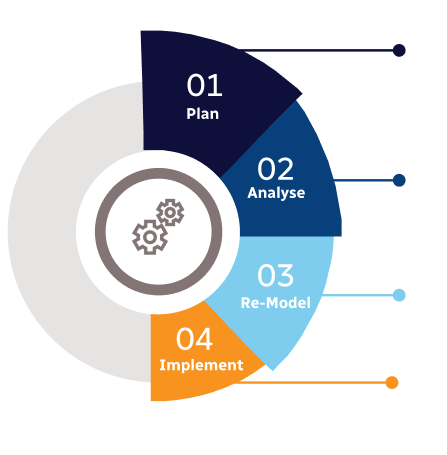
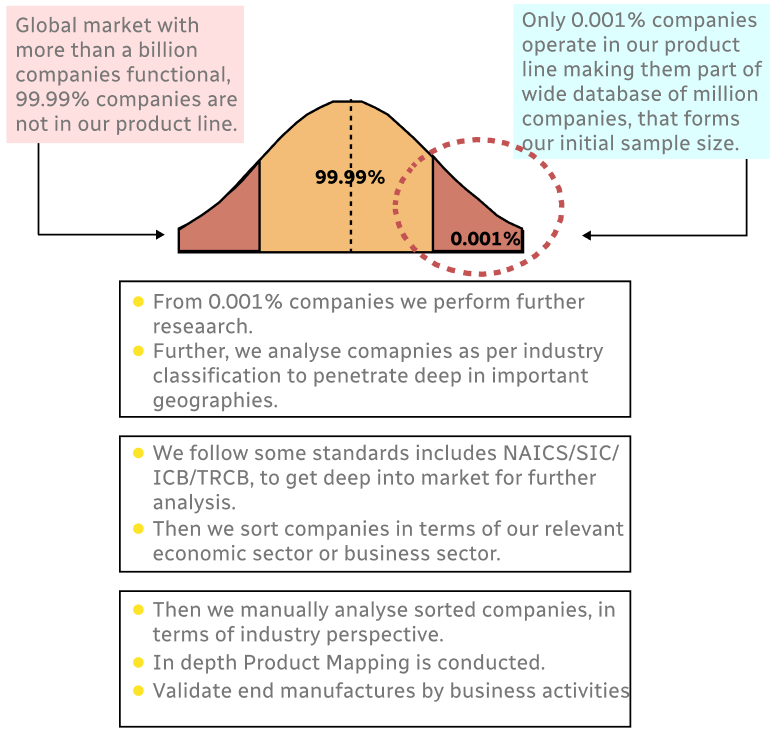
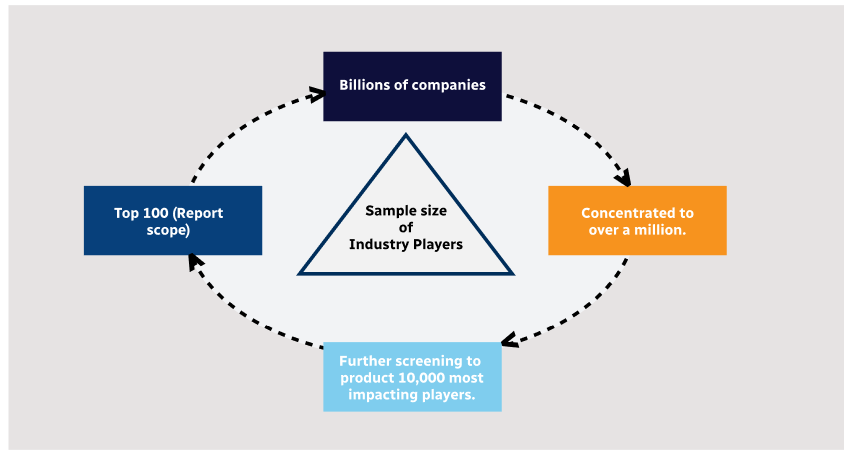
Step 1 - Identification of Relevant Samples Size from Population Database
Step 2 - Approaches for Defining Global Market Size (Value, Volume* & Price*)
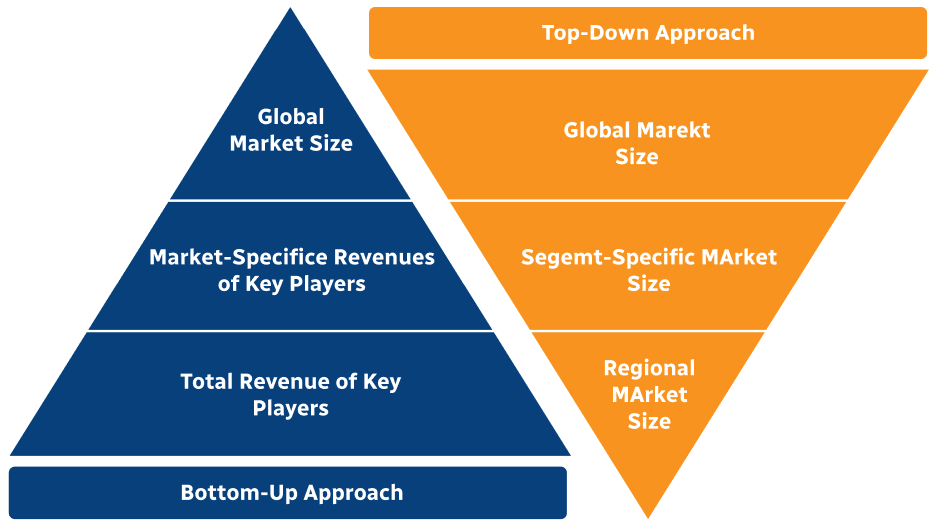
Note*: In applicable scenarios
Step 3 - Data Sources
Primary Research
- Web Analytics
- Survey Reports
- Research Institute
- Latest Research Reports
- Opinion Leaders
Secondary Research
- Annual Reports
- White Paper
- Latest Press Release
- Industry Association
- Paid Database
- Investor Presentations
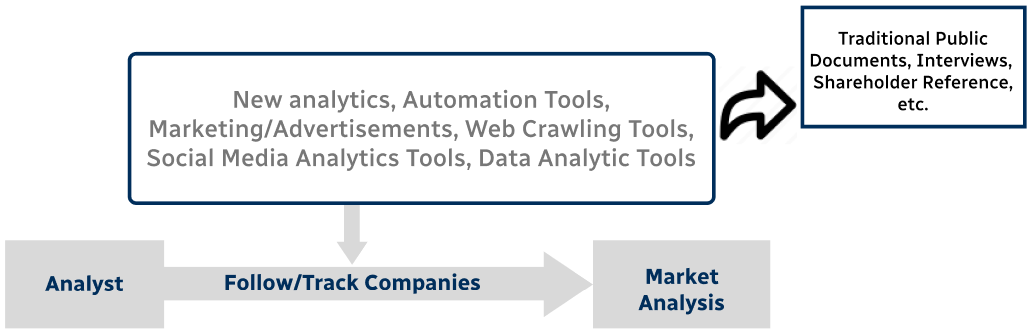
Step 4 - Data Triangulation
Involves using different sources of information in order to increase the validity of a study
These sources are likely to be stakeholders in a program - participants, other researchers, program staff, other community members, and so on.
Then we put all data in single framework & apply various statistical tools to find out the dynamic on the market.
During the analysis stage, feedback from the stakeholder groups would be compared to determine areas of agreement as well as areas of divergence