



Key Insights
The global LNG infrastructure market is experiencing robust expansion, projected to reach a substantial market size of approximately $75,000 million by the end of 2025. With a Compound Annual Growth Rate (CAGR) exceeding 6.00%, this growth is underpinned by a confluence of strategic drivers and evolving global energy demands. Key among these drivers is the increasing global reliance on natural gas as a cleaner alternative to traditional fossil fuels, spurred by stringent environmental regulations and a growing commitment to decarbonization efforts. The expansion of regasification terminals is a critical component, enabling countries to import liquefied natural gas (LNG) and thereby enhance their energy security and diversify supply sources. Similarly, the development of liquefaction terminals is crucial for unlocking new export markets and optimizing the global distribution of LNG. Technological advancements in LNG containment, transportation, and handling are further facilitating market growth by improving efficiency and reducing costs. Emerging economies, in particular, are investing heavily in LNG infrastructure to meet rising industrial and residential energy needs, driving significant demand across various segments.
The market's trajectory is further shaped by several prevailing trends. The surge in floating liquefaction and regasification units (FLNG and FSRUs) offers a more flexible and cost-effective solution for developing remote or smaller-scale LNG projects, circumventing the need for extensive land-based infrastructure. Furthermore, there's a discernible trend towards modular and standardized LNG facilities, which accelerate project execution and reduce capital expenditure. However, the market is not without its restraints. High upfront capital investment for large-scale LNG projects remains a significant barrier, alongside complex regulatory approvals and the long lead times associated with construction. Geopolitical uncertainties and fluctuating natural gas prices can also introduce volatility. Despite these challenges, the consistent demand for reliable and cleaner energy sources, coupled with ongoing investments in global trade networks, positions the LNG infrastructure market for sustained and significant growth throughout the forecast period of 2025-2033.
This comprehensive report provides an in-depth analysis of the global LNG infrastructure market, offering critical insights into its dynamic evolution, LNG terminal development, regasification terminal market, and liquefaction terminal market growth. Covering the study period 2019–2033, with a base year 2025 and forecast period 2025–2033, this report is an essential resource for stakeholders seeking to understand market trends, LNG project investment, and energy security solutions. We explore key LNG infrastructure companies, emerging technologies, and regional dominance, providing actionable intelligence for strategic decision-making in this vital sector of the global energy landscape. The historical period 2019–2024 data sets the foundation for our forward-looking projections, ensuring a complete market overview.
LNG Infrastructure Market Market Structure & Competitive Dynamics
The LNG infrastructure market exhibits a moderately concentrated structure, with a few major global players dominating large-scale project development and EPC (Engineering, Procurement, and Construction) services. Companies such as JGC Holdings Corporation, Bechtel Corporation, and Saipem SpA command significant market share due to their extensive experience, technological expertise, and financial capabilities in building complex LNG liquefaction plants and LNG regasification terminals. Innovation ecosystems are driven by advancements in liquefaction technologies, such as modular and floating liquefaction units, and enhanced safety and efficiency protocols for LNG import terminals. Regulatory frameworks play a pivotal role, with governments worldwide implementing policies to promote energy independence, streamline permitting processes for LNG export facilities, and encourage investment in LNG storage solutions. Product substitutes, while limited for the direct transport and storage of LNG, include pipeline natural gas for certain landlocked regions, though the growing demand for flexible LNG supply chains is diminishing this impact. End-user trends are shifting towards increased demand for smaller-scale LNG infrastructure to serve diverse applications, including marine bunkering and industrial fuel switching. Mergers and acquisitions (M&A) activities, with deal values often reaching hundreds of millions to billions of US dollars, are strategically aimed at consolidating capabilities, expanding geographical reach, and acquiring specialized technological assets in the LNG market. For instance, Fluor Corporation’s acquisition of an LNG business segment in 20XX for approximately $XXX million underscored the trend of strategic consolidation.
LNG Infrastructure Market Industry Trends & Insights
The global LNG infrastructure market is experiencing robust growth, propelled by a confluence of factors including increasing global energy demand, the ongoing transition towards cleaner fuels, and the imperative for enhanced energy security. The CAGR of the market is projected to be approximately 5.5% during the forecast period, indicating substantial expansion. A key driver is the strategic importance of LNG in diversifying energy sources, particularly for regions heavily reliant on pipeline gas or seeking alternatives to volatile fossil fuels. Technological disruptions are continuously reshaping the landscape. Advancements in floating liquefaction storage and regasification units (FLRSUs) are making LNG accessible to regions lacking onshore terminal development potential. Furthermore, innovations in cryogenic containment, materials science for extreme temperatures, and automated loading/unloading systems are improving operational efficiency and safety for LNG carrier management and LNG terminal operations. Consumer preferences are evolving, with an increasing demand for smaller-scale, modular LNG solutions to cater to niche markets such as transportation fuels, remote power generation, and industrial applications. This shift necessitates the development of more agile and cost-effective small-scale LNG plants and distribution networks. Competitive dynamics are characterized by intense competition among EPC contractors and technology providers, as well as significant investment from national oil companies and private energy firms in LNG terminal construction and expansion projects. The market penetration of LNG as a fuel for shipping and heavy-duty transport is a growing trend, further stimulating the demand for specialized LNG bunkering infrastructure. The geopolitical landscape also plays a crucial role, with nations actively investing in LNG import and export terminals to bolster their energy resilience and strategic positioning in the global energy trade.
Dominant Markets & Segments in LNG Infrastructure Market
The Regasification Terminal segment currently holds a dominant position in the global LNG infrastructure market, driven by its critical role in enabling countries to import and utilize liquefied natural gas. This dominance is largely attributed to the strategic need for nations to secure diverse energy supplies and reduce reliance on single-source pipelines, especially in Europe and Asia. Economic policies worldwide, including government mandates for energy diversification and incentives for LNG import infrastructure development, are key drivers. For example, Germany's recent push to rapidly expand its LNG import capacity underscores this trend. Infrastructure development plays a paramount role, with significant investments in constructing and expanding FSRUs (Floating Storage and Regasification Units) and onshore terminals to meet rising demand.
- Europe: Continues to be a dominant region for regasification terminals, driven by efforts to reduce dependence on Russian gas supplies. The urgency for energy security has led to a surge in FSRU deployments and plans for new onshore facilities.
- Asia-Pacific: Remains a significant market due to robust economic growth and increasing natural gas consumption. Countries like China, India, and South Korea are continuously expanding their LNG import capacity.
- Key Drivers for Regasification Dominance:
- Energy Security: Diversification from traditional gas suppliers.
- Environmental Regulations: Shifting towards cleaner fuels like natural gas.
- Economic Growth: Rising energy needs in developing economies.
- Strategic Location: Proximity to LNG supply sources and major consumption hubs.
The Liquefaction Terminal segment is also experiencing substantial growth, albeit often tied to the development of upstream natural gas reserves and the desire for nations to become LNG exporters. The construction of large-scale LNG export facilities represents billions of dollars in investment and is a complex, multi-year undertaking.
- North America: The United States, with its abundant shale gas resources, is a leading player in LNG liquefaction, with numerous export terminals operational and under construction.
- Middle East: Remains a traditional stronghold for LNG exports, with established players like Qatar investing heavily in expanding their liquefaction capabilities.
- Key Drivers for Liquefaction Growth:
- Abundant Gas Reserves: Availability of competitive feedstock.
- Global LNG Demand: Growing export markets seeking reliable supply.
- Technological Advancements: Enabling more efficient and larger-scale liquefaction.
- Government Support: Favorable policies for LNG export project development.
While regasification currently leads in terms of the number of operational facilities and immediate deployment needs, the strategic importance and monumental investments in liquefaction capacity indicate its critical role in shaping the future global LNG trade balance.
LNG Infrastructure Market Product Innovations
Innovation in the LNG infrastructure market is significantly driven by the need for greater efficiency, cost-effectiveness, and environmental sustainability. Product developments are focused on enhancing the modularity and scalability of LNG facilities, enabling quicker deployment and adaptation to varying market demands. Advances in cryogenic technologies are leading to more efficient LNG liquefaction processes, reducing energy consumption and operational costs. Furthermore, the development of specialized LNG carriers with improved containment systems and reduced boil-off rates is enhancing the overall LNG supply chain. For regasification terminals, innovations include more compact and efficient designs for both floating and onshore units, as well as advanced systems for odorization and pressure regulation. The competitive advantage of these innovations lies in their ability to lower the cost of LNG access, expand its applicability to new markets, and improve the safety and environmental footprint of LNG operations.
Report Segmentation & Scope
This report meticulously segments the LNG infrastructure market by Type, offering granular analysis of two primary categories: Regasification Terminals and Liquefaction Terminals.
Regasification Terminals constitute a crucial segment of the market, facilitating the conversion of imported LNG back into its gaseous state for distribution. This segment is projected to witness substantial growth, driven by increasing global demand for natural gas and the strategic imperative for energy diversification in numerous importing nations. Market sizes for regasification projects are substantial, often involving billions of US dollars in investment for both onshore and floating units. Competitive dynamics within this segment are characterized by strong demand for FSRUs and the ongoing development of new onshore import facilities.
Liquefaction Terminals represent the other pivotal segment, responsible for converting natural gas into LNG for efficient transportation. This segment's growth is intrinsically linked to the availability of competitive natural gas feedstock and the expansion of global export markets. The development of large-scale liquefaction projects involves significant capital expenditure, often in the tens of billions of US dollars. The competitive landscape for liquefaction is driven by technological prowess in designing and constructing highly complex facilities, alongside access to ample natural gas reserves.
Key Drivers of LNG Infrastructure Market Growth
The LNG infrastructure market is propelled by several interconnected growth drivers. Firstly, the escalating global demand for energy, coupled with the growing recognition of natural gas as a cleaner-burning transition fuel, significantly boosts demand for LNG. Secondly, the imperative for enhanced energy security and diversification of energy sources by many nations, particularly in light of geopolitical uncertainties, is a primary catalyst for investment in both import and export LNG infrastructure. Thirdly, technological advancements in liquefaction and regasification processes, including the development of more efficient and modular solutions like FLNG (Floating Liquefied Natural Gas) and FSRUs, are reducing project costs and expanding accessibility. Fourthly, supportive government policies and regulatory frameworks worldwide, aimed at fostering LNG trade and infrastructure development, are crucial enablers. Finally, the increasing use of LNG as a fuel for transportation, particularly in the shipping and heavy-duty trucking sectors, is creating new demand for LNG bunkering infrastructure and associated supply chains.
Challenges in the LNG Infrastructure Market Sector
Despite its strong growth trajectory, the LNG infrastructure market faces several significant challenges. High capital expenditure for the construction of large-scale LNG facilities, often running into billions of dollars, poses a considerable financial hurdle. Long project development timelines and complex permitting processes can also lead to delays and increased costs. Volatility in natural gas prices and geopolitical risks can impact the economic viability of new projects and the demand for LNG. Furthermore, environmental concerns related to methane emissions and the carbon footprint of LNG production and transportation necessitate continuous technological innovation and stringent regulatory compliance. Supply chain disruptions and the availability of skilled labor for construction and operation can also present challenges. Lastly, competition from alternative energy sources and evolving energy policies in key consuming nations can create market uncertainties.
Leading Players in the LNG Infrastructure Market Market
- JGC Holdings Corporation
- Bechtel Corporation
- Vinci Construction
- Royal Haskoning DHV
- Saipem SpA
- Chiyoda Corporation
- Technip FMC plc
- Fluor Corporation
- McDermott International Inc
- John Wood Group PLC
Key Developments in LNG Infrastructure Market Sector
- March 2023: The German government announced plans to build massive LNG infrastructure to maintain European supply security. This initiative aims to create significant overcapacity in LNG imports to safeguard the region’s supply against potential disruptions to existing infrastructure, such as pipelines from Norway, emphasizing a strategic focus on energy independence and resilience.
- January 2023: BP deployed a floating processing center for liquefied natural gas from a Chinese shipyard to the coast of West Africa. This floating production, storage, and offloading (FPSO) vessel is positioned offshore to process LNG, showcasing innovation in remote LNG processing and offshore LNG infrastructure.
- June 2022: Novatek signed small-scale LNG cooperation agreements with regional governments in Russia as part of the St. Petersburg International Economic Forum. The focus is on expanding the use of LNG as motor fuel and for gas supply to off-grid customers, including the construction of small-scale LNG plants and related sales infrastructure, highlighting a growing trend in decentralized LNG solutions.
Strategic LNG Infrastructure Market Market Outlook
The strategic LNG infrastructure market outlook is exceptionally positive, driven by the global energy transition and the indispensable role of LNG in ensuring energy security. Future growth will be significantly accelerated by the increasing demand for flexible and diversified energy supplies, particularly in emerging economies. Strategic opportunities lie in the development of innovative and sustainable LNG technologies, including advanced liquefaction processes and more efficient storage solutions. The expansion of small-scale LNG applications and the burgeoning LNG bunkering market for maritime transport represent significant growth avenues. Furthermore, governments worldwide are expected to continue investing in robust LNG import and export infrastructure to enhance their energy resilience. Companies that can offer integrated solutions, from project development and engineering to construction and operational support, will be well-positioned to capitalize on the projected market expansion and secure substantial LNG project investment.
LNG Infrastructure Market Segmentation
-
1. Type
- 1.1. Regasification Terminal
- 1.2. Liquefication Terminal
LNG Infrastructure Market Segmentation By Geography
-
1. North America
- 1.1. United States
- 1.2. Canada
- 1.3. Mexico
-
2. Europe
- 2.1. Germany
- 2.2. France
- 2.3. Spain
- 2.4. United Kingdom
- 2.5. Rest of Europe
-
3. Asia Pacifc
- 3.1. China
- 3.2. India
- 3.3. Japan
- 3.4. South Korea
- 3.5. Rest of Asia Pacifc
-
4. South America
- 4.1. Brazil
- 4.2. Argentina
- 4.3. Rest of South America
-
5. Middle East and Africa
- 5.1. United Arab Emirates
- 5.2. Saudi Arabia
- 5.3. Rest of Middle East and Africa
LNG Infrastructure Market REPORT HIGHLIGHTS
| Aspects | Details |
|---|---|
| Study Period | 2019-2033 |
| Base Year | 2024 |
| Estimated Year | 2025 |
| Forecast Period | 2025-2033 |
| Historical Period | 2019-2024 |
| Growth Rate | CAGR of > 6.00% from 2019-2033 |
| Segmentation |
|
Table of Contents
- 1. Introduction
- 1.1. Research Scope
- 1.2. Market Segmentation
- 1.3. Research Methodology
- 1.4. Definitions and Assumptions
- 2. Executive Summary
- 2.1. Introduction
- 3. Market Dynamics
- 3.1. Introduction
- 3.2. Market Drivers
- 3.2.1. 4.; Growing Vehicle Ownership4.; Government Initiatives
- 3.3. Market Restrains
- 3.3.1. 4.; Volatile Crude Oil Prices
- 3.4. Market Trends
- 3.4.1. Regasification LNG Terminals is Expected to Dominate the Market
- 4. Market Factor Analysis
- 4.1. Porters Five Forces
- 4.2. Supply/Value Chain
- 4.3. PESTEL analysis
- 4.4. Market Entropy
- 4.5. Patent/Trademark Analysis
- 5. Global LNG Infrastructure Market Analysis, Insights and Forecast, 2019-2031
- 5.1. Market Analysis, Insights and Forecast - by Type
- 5.1.1. Regasification Terminal
- 5.1.2. Liquefication Terminal
- 5.2. Market Analysis, Insights and Forecast - by Region
- 5.2.1. North America
- 5.2.2. Europe
- 5.2.3. Asia Pacifc
- 5.2.4. South America
- 5.2.5. Middle East and Africa
- 5.1. Market Analysis, Insights and Forecast - by Type
- 6. North America LNG Infrastructure Market Analysis, Insights and Forecast, 2019-2031
- 6.1. Market Analysis, Insights and Forecast - by Type
- 6.1.1. Regasification Terminal
- 6.1.2. Liquefication Terminal
- 6.1. Market Analysis, Insights and Forecast - by Type
- 7. Europe LNG Infrastructure Market Analysis, Insights and Forecast, 2019-2031
- 7.1. Market Analysis, Insights and Forecast - by Type
- 7.1.1. Regasification Terminal
- 7.1.2. Liquefication Terminal
- 7.1. Market Analysis, Insights and Forecast - by Type
- 8. Asia Pacifc LNG Infrastructure Market Analysis, Insights and Forecast, 2019-2031
- 8.1. Market Analysis, Insights and Forecast - by Type
- 8.1.1. Regasification Terminal
- 8.1.2. Liquefication Terminal
- 8.1. Market Analysis, Insights and Forecast - by Type
- 9. South America LNG Infrastructure Market Analysis, Insights and Forecast, 2019-2031
- 9.1. Market Analysis, Insights and Forecast - by Type
- 9.1.1. Regasification Terminal
- 9.1.2. Liquefication Terminal
- 9.1. Market Analysis, Insights and Forecast - by Type
- 10. Middle East and Africa LNG Infrastructure Market Analysis, Insights and Forecast, 2019-2031
- 10.1. Market Analysis, Insights and Forecast - by Type
- 10.1.1. Regasification Terminal
- 10.1.2. Liquefication Terminal
- 10.1. Market Analysis, Insights and Forecast - by Type
- 11. North America LNG Infrastructure Market Analysis, Insights and Forecast, 2019-2031
- 11.1. Market Analysis, Insights and Forecast - By Country/Sub-region
- 11.1.1 United States
- 11.1.2 Canada
- 11.1.3 Mexico
- 12. Europe LNG Infrastructure Market Analysis, Insights and Forecast, 2019-2031
- 12.1. Market Analysis, Insights and Forecast - By Country/Sub-region
- 12.1.1 Germany
- 12.1.2 France
- 12.1.3 Spain
- 12.1.4 United Kingdom
- 12.1.5 Rest of Europe
- 13. Asia Pacifc LNG Infrastructure Market Analysis, Insights and Forecast, 2019-2031
- 13.1. Market Analysis, Insights and Forecast - By Country/Sub-region
- 13.1.1 China
- 13.1.2 India
- 13.1.3 Japan
- 13.1.4 South Korea
- 13.1.5 Rest of Asia Pacifc
- 14. South America LNG Infrastructure Market Analysis, Insights and Forecast, 2019-2031
- 14.1. Market Analysis, Insights and Forecast - By Country/Sub-region
- 14.1.1 Brazil
- 14.1.2 Argentina
- 14.1.3 Rest of South America
- 15. Middle East and Africa LNG Infrastructure Market Analysis, Insights and Forecast, 2019-2031
- 15.1. Market Analysis, Insights and Forecast - By Country/Sub-region
- 15.1.1 United Arab Emirates
- 15.1.2 Saudi Arabia
- 15.1.3 Rest of Middle East and Africa
- 16. Competitive Analysis
- 16.1. Global Market Share Analysis 2024
- 16.2. Company Profiles
- 16.2.1 JGC Holdings Corporation
- 16.2.1.1. Overview
- 16.2.1.2. Products
- 16.2.1.3. SWOT Analysis
- 16.2.1.4. Recent Developments
- 16.2.1.5. Financials (Based on Availability)
- 16.2.2 Bechtel Corporation
- 16.2.2.1. Overview
- 16.2.2.2. Products
- 16.2.2.3. SWOT Analysis
- 16.2.2.4. Recent Developments
- 16.2.2.5. Financials (Based on Availability)
- 16.2.3 Vinci Construction
- 16.2.3.1. Overview
- 16.2.3.2. Products
- 16.2.3.3. SWOT Analysis
- 16.2.3.4. Recent Developments
- 16.2.3.5. Financials (Based on Availability)
- 16.2.4 Royal Haskoning DHV
- 16.2.4.1. Overview
- 16.2.4.2. Products
- 16.2.4.3. SWOT Analysis
- 16.2.4.4. Recent Developments
- 16.2.4.5. Financials (Based on Availability)
- 16.2.5 Saipem SpA
- 16.2.5.1. Overview
- 16.2.5.2. Products
- 16.2.5.3. SWOT Analysis
- 16.2.5.4. Recent Developments
- 16.2.5.5. Financials (Based on Availability)
- 16.2.6 Chiyoda Corporation
- 16.2.6.1. Overview
- 16.2.6.2. Products
- 16.2.6.3. SWOT Analysis
- 16.2.6.4. Recent Developments
- 16.2.6.5. Financials (Based on Availability)
- 16.2.7 Technip FMC plc
- 16.2.7.1. Overview
- 16.2.7.2. Products
- 16.2.7.3. SWOT Analysis
- 16.2.7.4. Recent Developments
- 16.2.7.5. Financials (Based on Availability)
- 16.2.8 Fluor Corporation
- 16.2.8.1. Overview
- 16.2.8.2. Products
- 16.2.8.3. SWOT Analysis
- 16.2.8.4. Recent Developments
- 16.2.8.5. Financials (Based on Availability)
- 16.2.9 McDermott International Inc
- 16.2.9.1. Overview
- 16.2.9.2. Products
- 16.2.9.3. SWOT Analysis
- 16.2.9.4. Recent Developments
- 16.2.9.5. Financials (Based on Availability)
- 16.2.10 John Wood Group PLC
- 16.2.10.1. Overview
- 16.2.10.2. Products
- 16.2.10.3. SWOT Analysis
- 16.2.10.4. Recent Developments
- 16.2.10.5. Financials (Based on Availability)
- 16.2.1 JGC Holdings Corporation
List of Figures
- Figure 1: Global LNG Infrastructure Market Revenue Breakdown (Million, %) by Region 2024 & 2032
- Figure 2: North America LNG Infrastructure Market Revenue (Million), by Country 2024 & 2032
- Figure 3: North America LNG Infrastructure Market Revenue Share (%), by Country 2024 & 2032
- Figure 4: Europe LNG Infrastructure Market Revenue (Million), by Country 2024 & 2032
- Figure 5: Europe LNG Infrastructure Market Revenue Share (%), by Country 2024 & 2032
- Figure 6: Asia Pacifc LNG Infrastructure Market Revenue (Million), by Country 2024 & 2032
- Figure 7: Asia Pacifc LNG Infrastructure Market Revenue Share (%), by Country 2024 & 2032
- Figure 8: South America LNG Infrastructure Market Revenue (Million), by Country 2024 & 2032
- Figure 9: South America LNG Infrastructure Market Revenue Share (%), by Country 2024 & 2032
- Figure 10: Middle East and Africa LNG Infrastructure Market Revenue (Million), by Country 2024 & 2032
- Figure 11: Middle East and Africa LNG Infrastructure Market Revenue Share (%), by Country 2024 & 2032
- Figure 12: North America LNG Infrastructure Market Revenue (Million), by Type 2024 & 2032
- Figure 13: North America LNG Infrastructure Market Revenue Share (%), by Type 2024 & 2032
- Figure 14: North America LNG Infrastructure Market Revenue (Million), by Country 2024 & 2032
- Figure 15: North America LNG Infrastructure Market Revenue Share (%), by Country 2024 & 2032
- Figure 16: Europe LNG Infrastructure Market Revenue (Million), by Type 2024 & 2032
- Figure 17: Europe LNG Infrastructure Market Revenue Share (%), by Type 2024 & 2032
- Figure 18: Europe LNG Infrastructure Market Revenue (Million), by Country 2024 & 2032
- Figure 19: Europe LNG Infrastructure Market Revenue Share (%), by Country 2024 & 2032
- Figure 20: Asia Pacifc LNG Infrastructure Market Revenue (Million), by Type 2024 & 2032
- Figure 21: Asia Pacifc LNG Infrastructure Market Revenue Share (%), by Type 2024 & 2032
- Figure 22: Asia Pacifc LNG Infrastructure Market Revenue (Million), by Country 2024 & 2032
- Figure 23: Asia Pacifc LNG Infrastructure Market Revenue Share (%), by Country 2024 & 2032
- Figure 24: South America LNG Infrastructure Market Revenue (Million), by Type 2024 & 2032
- Figure 25: South America LNG Infrastructure Market Revenue Share (%), by Type 2024 & 2032
- Figure 26: South America LNG Infrastructure Market Revenue (Million), by Country 2024 & 2032
- Figure 27: South America LNG Infrastructure Market Revenue Share (%), by Country 2024 & 2032
- Figure 28: Middle East and Africa LNG Infrastructure Market Revenue (Million), by Type 2024 & 2032
- Figure 29: Middle East and Africa LNG Infrastructure Market Revenue Share (%), by Type 2024 & 2032
- Figure 30: Middle East and Africa LNG Infrastructure Market Revenue (Million), by Country 2024 & 2032
- Figure 31: Middle East and Africa LNG Infrastructure Market Revenue Share (%), by Country 2024 & 2032
List of Tables
- Table 1: Global LNG Infrastructure Market Revenue Million Forecast, by Region 2019 & 2032
- Table 2: Global LNG Infrastructure Market Revenue Million Forecast, by Type 2019 & 2032
- Table 3: Global LNG Infrastructure Market Revenue Million Forecast, by Region 2019 & 2032
- Table 4: Global LNG Infrastructure Market Revenue Million Forecast, by Country 2019 & 2032
- Table 5: United States LNG Infrastructure Market Revenue (Million) Forecast, by Application 2019 & 2032
- Table 6: Canada LNG Infrastructure Market Revenue (Million) Forecast, by Application 2019 & 2032
- Table 7: Mexico LNG Infrastructure Market Revenue (Million) Forecast, by Application 2019 & 2032
- Table 8: Global LNG Infrastructure Market Revenue Million Forecast, by Country 2019 & 2032
- Table 9: Germany LNG Infrastructure Market Revenue (Million) Forecast, by Application 2019 & 2032
- Table 10: France LNG Infrastructure Market Revenue (Million) Forecast, by Application 2019 & 2032
- Table 11: Spain LNG Infrastructure Market Revenue (Million) Forecast, by Application 2019 & 2032
- Table 12: United Kingdom LNG Infrastructure Market Revenue (Million) Forecast, by Application 2019 & 2032
- Table 13: Rest of Europe LNG Infrastructure Market Revenue (Million) Forecast, by Application 2019 & 2032
- Table 14: Global LNG Infrastructure Market Revenue Million Forecast, by Country 2019 & 2032
- Table 15: China LNG Infrastructure Market Revenue (Million) Forecast, by Application 2019 & 2032
- Table 16: India LNG Infrastructure Market Revenue (Million) Forecast, by Application 2019 & 2032
- Table 17: Japan LNG Infrastructure Market Revenue (Million) Forecast, by Application 2019 & 2032
- Table 18: South Korea LNG Infrastructure Market Revenue (Million) Forecast, by Application 2019 & 2032
- Table 19: Rest of Asia Pacifc LNG Infrastructure Market Revenue (Million) Forecast, by Application 2019 & 2032
- Table 20: Global LNG Infrastructure Market Revenue Million Forecast, by Country 2019 & 2032
- Table 21: Brazil LNG Infrastructure Market Revenue (Million) Forecast, by Application 2019 & 2032
- Table 22: Argentina LNG Infrastructure Market Revenue (Million) Forecast, by Application 2019 & 2032
- Table 23: Rest of South America LNG Infrastructure Market Revenue (Million) Forecast, by Application 2019 & 2032
- Table 24: Global LNG Infrastructure Market Revenue Million Forecast, by Country 2019 & 2032
- Table 25: United Arab Emirates LNG Infrastructure Market Revenue (Million) Forecast, by Application 2019 & 2032
- Table 26: Saudi Arabia LNG Infrastructure Market Revenue (Million) Forecast, by Application 2019 & 2032
- Table 27: Rest of Middle East and Africa LNG Infrastructure Market Revenue (Million) Forecast, by Application 2019 & 2032
- Table 28: Global LNG Infrastructure Market Revenue Million Forecast, by Type 2019 & 2032
- Table 29: Global LNG Infrastructure Market Revenue Million Forecast, by Country 2019 & 2032
- Table 30: United States LNG Infrastructure Market Revenue (Million) Forecast, by Application 2019 & 2032
- Table 31: Canada LNG Infrastructure Market Revenue (Million) Forecast, by Application 2019 & 2032
- Table 32: Mexico LNG Infrastructure Market Revenue (Million) Forecast, by Application 2019 & 2032
- Table 33: Global LNG Infrastructure Market Revenue Million Forecast, by Type 2019 & 2032
- Table 34: Global LNG Infrastructure Market Revenue Million Forecast, by Country 2019 & 2032
- Table 35: Germany LNG Infrastructure Market Revenue (Million) Forecast, by Application 2019 & 2032
- Table 36: France LNG Infrastructure Market Revenue (Million) Forecast, by Application 2019 & 2032
- Table 37: Spain LNG Infrastructure Market Revenue (Million) Forecast, by Application 2019 & 2032
- Table 38: United Kingdom LNG Infrastructure Market Revenue (Million) Forecast, by Application 2019 & 2032
- Table 39: Rest of Europe LNG Infrastructure Market Revenue (Million) Forecast, by Application 2019 & 2032
- Table 40: Global LNG Infrastructure Market Revenue Million Forecast, by Type 2019 & 2032
- Table 41: Global LNG Infrastructure Market Revenue Million Forecast, by Country 2019 & 2032
- Table 42: China LNG Infrastructure Market Revenue (Million) Forecast, by Application 2019 & 2032
- Table 43: India LNG Infrastructure Market Revenue (Million) Forecast, by Application 2019 & 2032
- Table 44: Japan LNG Infrastructure Market Revenue (Million) Forecast, by Application 2019 & 2032
- Table 45: South Korea LNG Infrastructure Market Revenue (Million) Forecast, by Application 2019 & 2032
- Table 46: Rest of Asia Pacifc LNG Infrastructure Market Revenue (Million) Forecast, by Application 2019 & 2032
- Table 47: Global LNG Infrastructure Market Revenue Million Forecast, by Type 2019 & 2032
- Table 48: Global LNG Infrastructure Market Revenue Million Forecast, by Country 2019 & 2032
- Table 49: Brazil LNG Infrastructure Market Revenue (Million) Forecast, by Application 2019 & 2032
- Table 50: Argentina LNG Infrastructure Market Revenue (Million) Forecast, by Application 2019 & 2032
- Table 51: Rest of South America LNG Infrastructure Market Revenue (Million) Forecast, by Application 2019 & 2032
- Table 52: Global LNG Infrastructure Market Revenue Million Forecast, by Type 2019 & 2032
- Table 53: Global LNG Infrastructure Market Revenue Million Forecast, by Country 2019 & 2032
- Table 54: United Arab Emirates LNG Infrastructure Market Revenue (Million) Forecast, by Application 2019 & 2032
- Table 55: Saudi Arabia LNG Infrastructure Market Revenue (Million) Forecast, by Application 2019 & 2032
- Table 56: Rest of Middle East and Africa LNG Infrastructure Market Revenue (Million) Forecast, by Application 2019 & 2032
Frequently Asked Questions
1. What is the projected Compound Annual Growth Rate (CAGR) of the LNG Infrastructure Market?
The projected CAGR is approximately > 6.00%.
2. Which companies are prominent players in the LNG Infrastructure Market?
Key companies in the market include JGC Holdings Corporation, Bechtel Corporation, Vinci Construction, Royal Haskoning DHV, Saipem SpA, Chiyoda Corporation, Technip FMC plc, Fluor Corporation, McDermott International Inc, John Wood Group PLC.
3. What are the main segments of the LNG Infrastructure Market?
The market segments include Type.
4. Can you provide details about the market size?
The market size is estimated to be USD XX Million as of 2022.
5. What are some drivers contributing to market growth?
4.; Growing Vehicle Ownership4.; Government Initiatives.
6. What are the notable trends driving market growth?
Regasification LNG Terminals is Expected to Dominate the Market.
7. Are there any restraints impacting market growth?
4.; Volatile Crude Oil Prices.
8. Can you provide examples of recent developments in the market?
March 2023: The German government intends to build massive LNG infrastructure to maintain European supply security. The German government sees a need for large overcapacity in LNG imports to ensure the region's supply in the event of accidents or sabotage to any of its infrastructure, such as pipelines from Norway.
9. What pricing options are available for accessing the report?
Pricing options include single-user, multi-user, and enterprise licenses priced at USD 4750, USD 5250, and USD 8750 respectively.
10. Is the market size provided in terms of value or volume?
The market size is provided in terms of value, measured in Million.
11. Are there any specific market keywords associated with the report?
Yes, the market keyword associated with the report is "LNG Infrastructure Market," which aids in identifying and referencing the specific market segment covered.
12. How do I determine which pricing option suits my needs best?
The pricing options vary based on user requirements and access needs. Individual users may opt for single-user licenses, while businesses requiring broader access may choose multi-user or enterprise licenses for cost-effective access to the report.
13. Are there any additional resources or data provided in the LNG Infrastructure Market report?
While the report offers comprehensive insights, it's advisable to review the specific contents or supplementary materials provided to ascertain if additional resources or data are available.
14. How can I stay updated on further developments or reports in the LNG Infrastructure Market?
To stay informed about further developments, trends, and reports in the LNG Infrastructure Market, consider subscribing to industry newsletters, following relevant companies and organizations, or regularly checking reputable industry news sources and publications.
Methodology
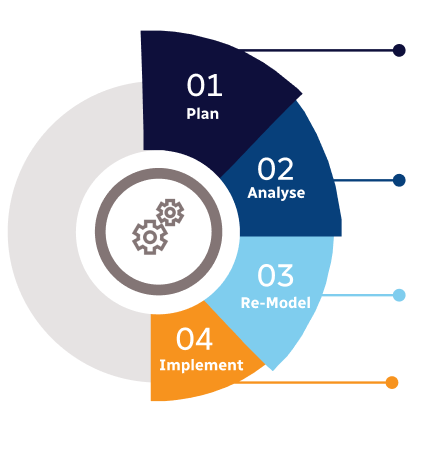
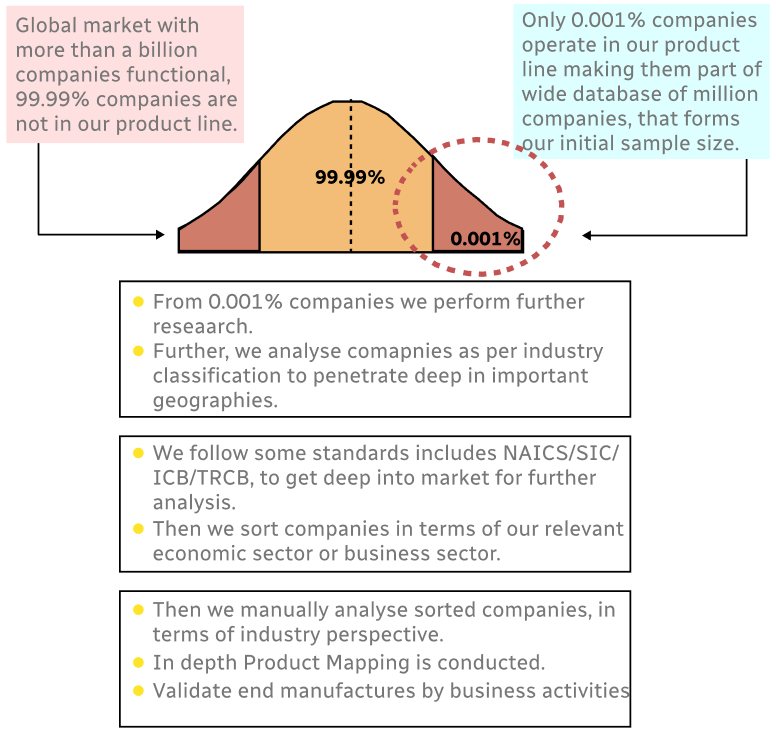
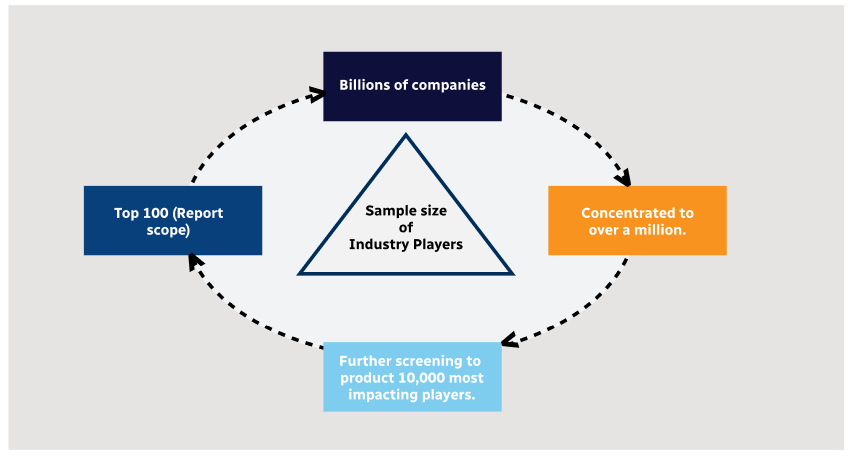
Step 1 - Identification of Relevant Samples Size from Population Database
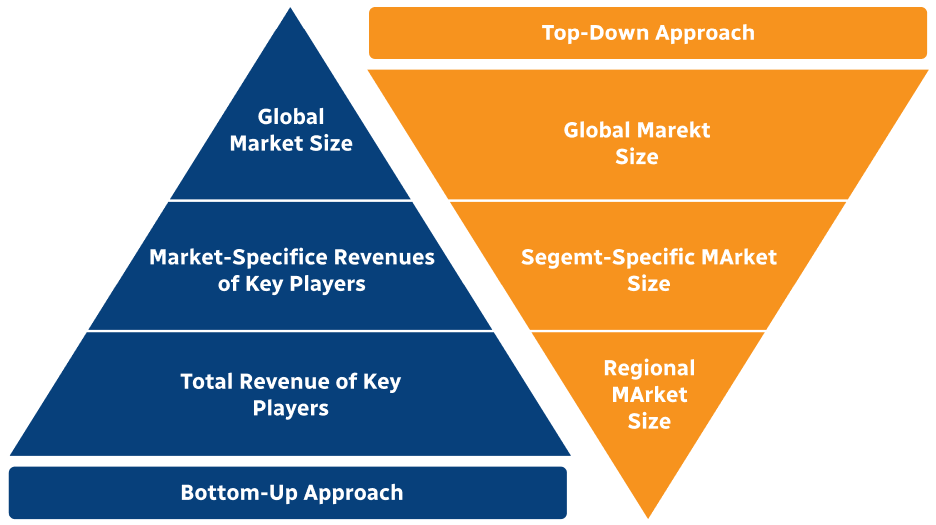
Step 2 - Approaches for Defining Global Market Size (Value, Volume* & Price*)
Note*: In applicable scenarios
Step 3 - Data Sources
Primary Research
- Web Analytics
- Survey Reports
- Research Institute
- Latest Research Reports
- Opinion Leaders
Secondary Research
- Annual Reports
- White Paper
- Latest Press Release
- Industry Association
- Paid Database
- Investor Presentations
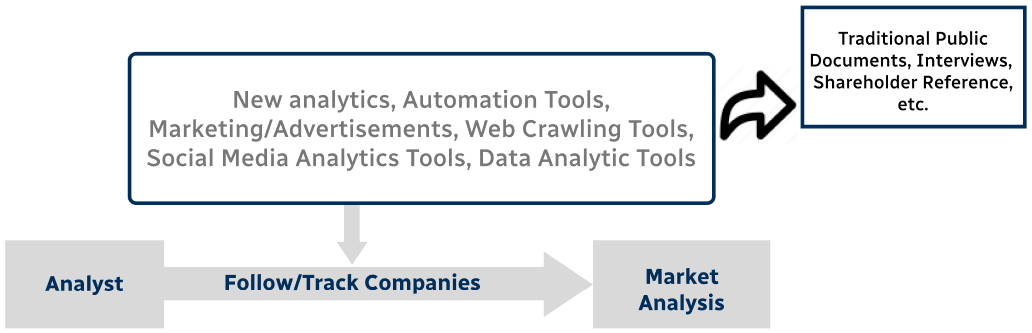
Step 4 - Data Triangulation
Involves using different sources of information in order to increase the validity of a study
These sources are likely to be stakeholders in a program - participants, other researchers, program staff, other community members, and so on.
Then we put all data in single framework & apply various statistical tools to find out the dynamic on the market.
During the analysis stage, feedback from the stakeholder groups would be compared to determine areas of agreement as well as areas of divergence


