
Key Insights
The Bangladesh starch and starch derivative industry is experiencing robust growth, fueled by increasing demand across diverse sectors. The market, valued at approximately $XX million in 2025, is projected to maintain a Compound Annual Growth Rate (CAGR) of 6.21% from 2025 to 2033. This expansion is driven primarily by the burgeoning textile industry, which utilizes starch as a sizing agent, and the growing food and beverage sector, employing starch as a thickener and stabilizer. Furthermore, the pharmaceutical industry's demand for starch-based excipients contributes significantly to market growth. While the availability of domestic maize, a key raw material, presents an opportunity, challenges such as fluctuating raw material prices and potential supply chain disruptions need careful consideration. Technological advancements in starch modification are creating new avenues for product diversification, leading to the development of high-value starch derivatives catering to specialized applications. The regional concentration of production within Bangladesh necessitates improvements in infrastructure and logistics to support efficient distribution and expansion into other South Asian markets. Key players, including Flamingo Agro-Tech Ltd, Maize Advanced Agro Refinery, and Cargill Inc., are strategically positioning themselves to capitalize on this burgeoning market, investing in capacity expansion and product innovation. The competitive landscape is expected to remain dynamic with both domestic and international players vying for market share.
The segmentation of the market highlights significant opportunities within various application areas. The textile industry remains a dominant consumer, owing to the substantial textile manufacturing activities within Bangladesh. The food and beverage industry presents strong growth potential, driven by rising consumer demand for processed foods. Paper and corrugation, pharmaceuticals, and other applications also contribute significantly to market demand. Geographically, the market is primarily concentrated within Bangladesh, although export opportunities exist within South Asia and beyond. The diversity of product types, including native starch, modified starch, glucose, and fructose, reflects the industry's adaptability and capability to meet the diverse needs of various industries. Growth in the coming years will be contingent on effective management of raw material sourcing, technological advancement, and strategic market penetration.
This comprehensive report provides an in-depth analysis of the Bangladesh starch and starch derivative industry, offering valuable insights for businesses, investors, and stakeholders. The study period covers 2019-2033, with 2025 as the base and estimated year. The forecast period spans 2025-2033, while the historical period encompasses 2019-2024. The report covers key market segments, competitive dynamics, growth drivers, and challenges, presenting a detailed picture of this dynamic industry. We analyze the market across various product types (starch, modified starch, glucose, fructose), applications (textile, food and beverage, paper and corrugation, pharmaceuticals, other applications), and geographic regions (Bangladesh, India, China, Southeast Asia, Africa). Key players like FLAMINGO AGRO-TECH LTD, Maize Advanced Agro Refinery, Paperex BD, Biswas Agro, Cargill Inc, KMC, Bangladesh Maize Products Limited, Gulshan Polyols Limited, and JTA Group are profiled.

Bangladesh Starch and Starch Derivative Industry Market Structure & Competitive Dynamics
The Bangladesh starch and starch derivative market exhibits a moderately concentrated structure, with a few major players holding significant market share. The exact market share distribution is dynamic, with xx% held by the top three players in 2025 (estimated). Cargill Inc., with its global reach and established infrastructure, commands a substantial share. Smaller domestic players like FLAMINGO AGRO-TECH LTD and Maize Advanced Agro Refinery compete intensely on pricing and product differentiation. The innovation ecosystem is relatively nascent, though investment in R&D is gradually increasing. Regulatory frameworks concerning food safety and environmental standards influence industry practices. Substitutes like other natural polymers and synthetic materials present competitive pressure, particularly in specific application segments. End-user trends show a growing demand for modified starches with improved functionalities, driving product innovation. M&A activity in the past five years has been relatively low, with a total estimated deal value of approximately xx Million USD. However, future consolidation is anticipated as larger players seek to expand their market share.
Bangladesh Starch and Starch Derivative Industry Industry Trends & Insights
The Bangladesh starch and starch derivative industry is experiencing robust growth, driven by a confluence of factors. The burgeoning demand for processed food and beverages, the expanding textile and apparel sector, and the growth of the paper and packaging industries are significant contributors. The industry's Compound Annual Growth Rate (CAGR) is projected at [Insert updated CAGR percentage]% for the forecast period (2025-2033), fueled by rising disposable incomes, evolving consumer preferences towards convenience foods, and a growing middle class. Technological advancements, including the adoption of sophisticated processing techniques like enzyme modification and cross-linking, and the implementation of rigorous quality control measures, are significantly enhancing efficiency and product quality. This has led to an estimated [Insert updated percentage]% market penetration of modified starches in the food and beverage sector by 2025. The competitive landscape is dynamic, with a mix of established domestic players and international corporations vying for market share. This competition fosters innovation and drives price optimization, benefiting end-users. However, the industry faces challenges such as rising raw material costs (particularly maize and tapioca), fluctuating energy prices, and potential supply chain disruptions, requiring strategic management for sustained profitability.
Dominant Markets & Segments in Bangladesh Starch and Starch Derivative Industry
Leading Region: Bangladesh dominates the regional market due to its large and growing domestic demand across various application segments. Key drivers include a burgeoning population, expanding industrialization, and increasing government support for the agro-processing industry.
Leading Country: Bangladesh holds the largest market share in the region, with xx Million USD in revenue in 2025 (estimated). Its favorable geographic location and relatively low labor costs offer competitive advantages.
Leading Application Segment: The food and beverage segment is the largest application area for starches and starch derivatives in Bangladesh, accounting for xx% of total market revenue in 2025 (estimated). The increasing consumption of processed foods and beverages fuels this sector’s growth.
Leading Product Type: Modified starch commands a significant market share, driven by its versatility and functional properties which are highly valued in the food and beverage and textile industries. Growth is expected to be higher than that of native starch due to increasing applications in specialty food items.
Key Drivers (Bullet Points):
- Government initiatives promoting agricultural development and industrialization.
- Rising disposable income levels amongst the population.
- Robust growth of related industries such as food processing and textiles.
- Improving infrastructure in transportation and logistics.
Bangladesh Starch and Starch Derivative Industry Product Innovations
Recent innovations center on developing modified starches with enhanced functionalities tailored to specific applications across various sectors. This includes starches with optimized viscosity, texture, and stability for food products; improved binding and adhesive properties for textiles and paper; and specialized starches for pharmaceuticals and other industrial applications. Technological advancements in enzymatic modification, cross-linking, and the use of natural additives are driving this trend. These innovations are enhancing the competitiveness of Bangladesh's starch industry both domestically and internationally, by providing superior product performance and value addition.
Report Segmentation & Scope
The report segments the Bangladesh starch and starch derivative market across three key dimensions: product type, application, and geography.
Product Type: Starch, Modified Starch, Glucose, Fructose. Growth projections vary significantly across these segments, with modified starch expected to show the highest growth rate due to its diverse applications. Market sizes for each segment are detailed in the full report.
Application: Textile, Food and Beverage, Paper and Corrugation, Pharmaceuticals, Other Applications. The food and beverage segment holds the largest market share, driven by increasing demand for processed foods. Growth projections are provided for each application segment based on industry trends and end-user demand.
Geography: Bangladesh, India, China, Southeast Asia, Africa. The report provides regional market size estimates and growth forecasts for each area. Competitive dynamics vary across regions, with the Bangladesh market having a unique mix of domestic and international players.
Key Drivers of Bangladesh Starch and Starch Derivative Industry Growth
The industry's growth is propelled by several factors: the increasing demand for processed foods and beverages, driven by rising disposable incomes; the expansion of the textile and paper industries; government initiatives promoting agro-processing; and technological advancements enhancing production efficiency and product quality. The availability of raw materials such as maize and cassava further contributes to the industry's growth trajectory. The government’s focus on infrastructure development is also playing a crucial role.
Challenges in the Bangladesh Starch and Starch Derivative Industry Sector
Challenges include the volatility of raw material prices, dependence on imported technology in some segments, and increasing competition from regional and international players. Stringent quality standards and regulations can also impact profitability. The lack of skilled manpower and efficient supply chains present further hurdles to sustainable growth. In addition, fluctuations in energy prices can significantly impact operational costs.
Leading Players in the Bangladesh Starch and Starch Derivative Industry Market
- FLAMINGO AGRO-TECH LTD
- Maize Advanced Agro Refinery
- Paperex BD
- Biswas Agro
- Cargill Inc. [Cargill Inc.]
- KMC
- Bangladesh Maize Products Limited
- Gulshan Polyols Limited
- JTA Group
- [Add other relevant players if available]
Key Developments in Bangladesh Starch and Starch Derivative Industry Sector
- 2022 Q4: FLAMINGO AGRO-TECH LTD announced a significant expansion of its production capacity, enhancing its market position. [Add details if available, e.g., capacity increase percentage]
- 2023 Q1: A joint venture was formed between Maize Advanced Agro Refinery and a Chinese starch producer, potentially bringing in advanced technology and market access. [Add details if available, e.g., name of Chinese partner]
- 2023 Q3: Paperex BD invested in new R&D facilities, focusing on modified starch innovation to drive product differentiation and value addition. [Add details if available, e.g., focus areas of R&D]
- Ongoing: Several players are actively investing in improving supply chain efficiency, adopting sustainable sourcing practices, and enhancing traceability to meet growing consumer demands for transparency and ethical production. [Add details if available, e.g., specific initiatives]
- [Add other relevant key developments]
Strategic Bangladesh Starch and Starch Derivative Industry Market Outlook
The Bangladesh starch and starch derivative market presents a promising outlook for continued growth over the coming decade. Significant opportunities exist in developing innovative modified starches for niche applications within burgeoning sectors like food processing, pharmaceuticals, and personal care; actively pursuing export market expansion, leveraging the country's strategic location and growing manufacturing base; and further strengthening domestic supply chains to ensure resilience and efficiency. Strategic investments in research and development, forging strategic partnerships (both domestic and international), focusing on sustainability initiatives, and proactively addressing challenges related to raw material price volatility and infrastructure limitations will be crucial for realizing the industry's full growth potential. A focus on regulatory compliance and adherence to international quality standards will also be key for accessing wider markets and building consumer trust.
Bangladesh Starch and Starch Derivative Industry Segmentation
-
1. Application
- 1.1. Textile
- 1.2. Food and Beverage
- 1.3. Paper and Corrugation
- 1.4. Pharmaceuticals
- 1.5. Other Applications
Bangladesh Starch and Starch Derivative Industry Segmentation By Geography
- 1. Bangladesh

Bangladesh Starch and Starch Derivative Industry REPORT HIGHLIGHTS
| Aspects | Details |
|---|---|
| Study Period | 2019-2033 |
| Base Year | 2024 |
| Estimated Year | 2025 |
| Forecast Period | 2025-2033 |
| Historical Period | 2019-2024 |
| Growth Rate | CAGR of 6.21% from 2019-2033 |
| Segmentation |
|
Table of Contents
- 1. Introduction
- 1.1. Research Scope
- 1.2. Market Segmentation
- 1.3. Research Methodology
- 1.4. Definitions and Assumptions
- 2. Executive Summary
- 2.1. Introduction
- 3. Market Dynamics
- 3.1. Introduction
- 3.2. Market Drivers
- 3.2.1. Wide Applications and Functionality; Demand For Gluten-Free Products
- 3.3. Market Restrains
- 3.3.1. Easy Availability of Economically Feasible Alternatives
- 3.4. Market Trends
- 3.4.1. Food and Beverage is the Fastest Growing Segment
- 4. Market Factor Analysis
- 4.1. Porters Five Forces
- 4.2. Supply/Value Chain
- 4.3. PESTEL analysis
- 4.4. Market Entropy
- 4.5. Patent/Trademark Analysis
- 5. Bangladesh Starch and Starch Derivative Industry Analysis, Insights and Forecast, 2019-2031
- 5.1. Market Analysis, Insights and Forecast - by Application
- 5.1.1. Textile
- 5.1.2. Food and Beverage
- 5.1.3. Paper and Corrugation
- 5.1.4. Pharmaceuticals
- 5.1.5. Other Applications
- 5.2. Market Analysis, Insights and Forecast - by Region
- 5.2.1. Bangladesh
- 5.1. Market Analysis, Insights and Forecast - by Application
- 6. Competitive Analysis
- 6.1. Market Share Analysis 2024
- 6.2. Company Profiles
- 6.2.1 FLAMINGO AGRO-TECH LTD
- 6.2.1.1. Overview
- 6.2.1.2. Products
- 6.2.1.3. SWOT Analysis
- 6.2.1.4. Recent Developments
- 6.2.1.5. Financials (Based on Availability)
- 6.2.2 Maize Advanced Agro Refinery
- 6.2.2.1. Overview
- 6.2.2.2. Products
- 6.2.2.3. SWOT Analysis
- 6.2.2.4. Recent Developments
- 6.2.2.5. Financials (Based on Availability)
- 6.2.3 Paperex BD
- 6.2.3.1. Overview
- 6.2.3.2. Products
- 6.2.3.3. SWOT Analysis
- 6.2.3.4. Recent Developments
- 6.2.3.5. Financials (Based on Availability)
- 6.2.4 Biswas Agro
- 6.2.4.1. Overview
- 6.2.4.2. Products
- 6.2.4.3. SWOT Analysis
- 6.2.4.4. Recent Developments
- 6.2.4.5. Financials (Based on Availability)
- 6.2.5 Cargill Inc
- 6.2.5.1. Overview
- 6.2.5.2. Products
- 6.2.5.3. SWOT Analysis
- 6.2.5.4. Recent Developments
- 6.2.5.5. Financials (Based on Availability)
- 6.2.6 KMC
- 6.2.6.1. Overview
- 6.2.6.2. Products
- 6.2.6.3. SWOT Analysis
- 6.2.6.4. Recent Developments
- 6.2.6.5. Financials (Based on Availability)
- 6.2.7 Bangladesh Maize Products Limited*List Not Exhaustive
- 6.2.7.1. Overview
- 6.2.7.2. Products
- 6.2.7.3. SWOT Analysis
- 6.2.7.4. Recent Developments
- 6.2.7.5. Financials (Based on Availability)
- 6.2.8 Gulshan Polyols Limited
- 6.2.8.1. Overview
- 6.2.8.2. Products
- 6.2.8.3. SWOT Analysis
- 6.2.8.4. Recent Developments
- 6.2.8.5. Financials (Based on Availability)
- 6.2.9 JTA Group
- 6.2.9.1. Overview
- 6.2.9.2. Products
- 6.2.9.3. SWOT Analysis
- 6.2.9.4. Recent Developments
- 6.2.9.5. Financials (Based on Availability)
- 6.2.1 FLAMINGO AGRO-TECH LTD
List of Figures
- Figure 1: Bangladesh Starch and Starch Derivative Industry Revenue Breakdown (Million, %) by Product 2024 & 2032
- Figure 2: Bangladesh Starch and Starch Derivative Industry Share (%) by Company 2024
List of Tables
- Table 1: Bangladesh Starch and Starch Derivative Industry Revenue Million Forecast, by Region 2019 & 2032
- Table 2: Bangladesh Starch and Starch Derivative Industry Revenue Million Forecast, by Application 2019 & 2032
- Table 3: Bangladesh Starch and Starch Derivative Industry Revenue Million Forecast, by Region 2019 & 2032
- Table 4: Bangladesh Starch and Starch Derivative Industry Revenue Million Forecast, by Country 2019 & 2032
- Table 5: Bangladesh Starch and Starch Derivative Industry Revenue Million Forecast, by Application 2019 & 2032
- Table 6: Bangladesh Starch and Starch Derivative Industry Revenue Million Forecast, by Country 2019 & 2032
Frequently Asked Questions
1. What is the projected Compound Annual Growth Rate (CAGR) of the Bangladesh Starch and Starch Derivative Industry?
The projected CAGR is approximately 6.21%.
2. Which companies are prominent players in the Bangladesh Starch and Starch Derivative Industry?
Key companies in the market include FLAMINGO AGRO-TECH LTD, Maize Advanced Agro Refinery, Paperex BD, Biswas Agro, Cargill Inc, KMC, Bangladesh Maize Products Limited*List Not Exhaustive, Gulshan Polyols Limited, JTA Group.
3. What are the main segments of the Bangladesh Starch and Starch Derivative Industry?
The market segments include Application.
4. Can you provide details about the market size?
The market size is estimated to be USD XX Million as of 2022.
5. What are some drivers contributing to market growth?
Wide Applications and Functionality; Demand For Gluten-Free Products.
6. What are the notable trends driving market growth?
Food and Beverage is the Fastest Growing Segment.
7. Are there any restraints impacting market growth?
Easy Availability of Economically Feasible Alternatives.
8. Can you provide examples of recent developments in the market?
1. Expansion of production capacities by leading players 2. Joint ventures and partnerships for market expansion 3. Investment in research and development for product innovation
9. What pricing options are available for accessing the report?
Pricing options include single-user, multi-user, and enterprise licenses priced at USD 3800, USD 4500, and USD 5800 respectively.
10. Is the market size provided in terms of value or volume?
The market size is provided in terms of value, measured in Million.
11. Are there any specific market keywords associated with the report?
Yes, the market keyword associated with the report is "Bangladesh Starch and Starch Derivative Industry," which aids in identifying and referencing the specific market segment covered.
12. How do I determine which pricing option suits my needs best?
The pricing options vary based on user requirements and access needs. Individual users may opt for single-user licenses, while businesses requiring broader access may choose multi-user or enterprise licenses for cost-effective access to the report.
13. Are there any additional resources or data provided in the Bangladesh Starch and Starch Derivative Industry report?
While the report offers comprehensive insights, it's advisable to review the specific contents or supplementary materials provided to ascertain if additional resources or data are available.
14. How can I stay updated on further developments or reports in the Bangladesh Starch and Starch Derivative Industry?
To stay informed about further developments, trends, and reports in the Bangladesh Starch and Starch Derivative Industry, consider subscribing to industry newsletters, following relevant companies and organizations, or regularly checking reputable industry news sources and publications.
Methodology
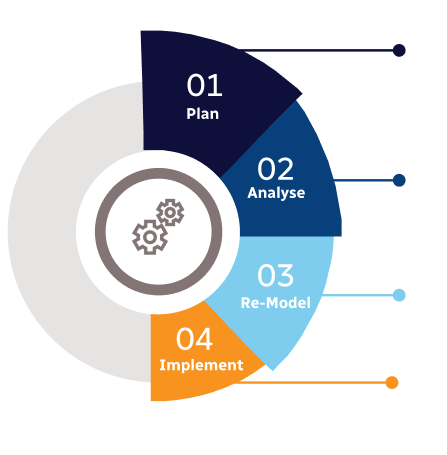
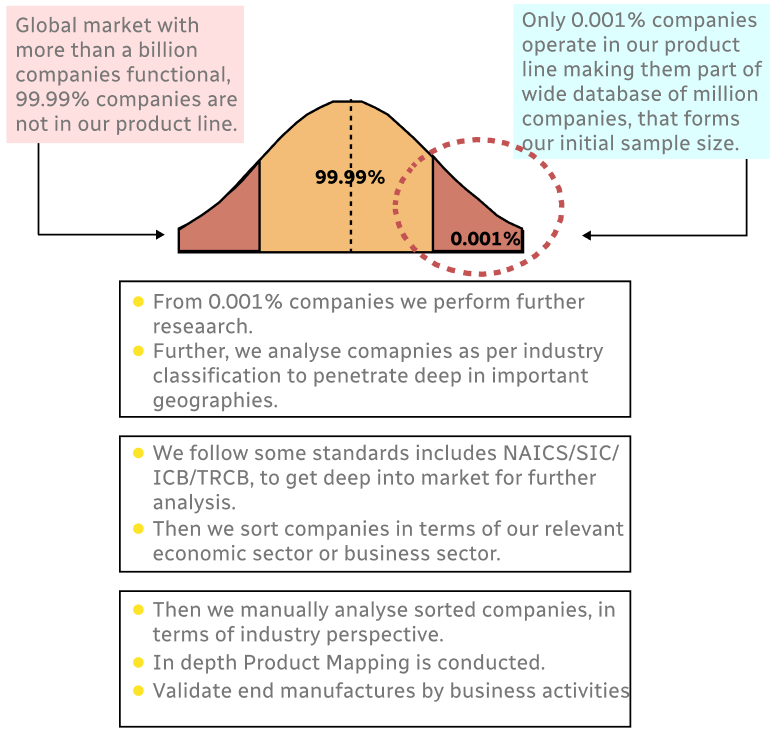
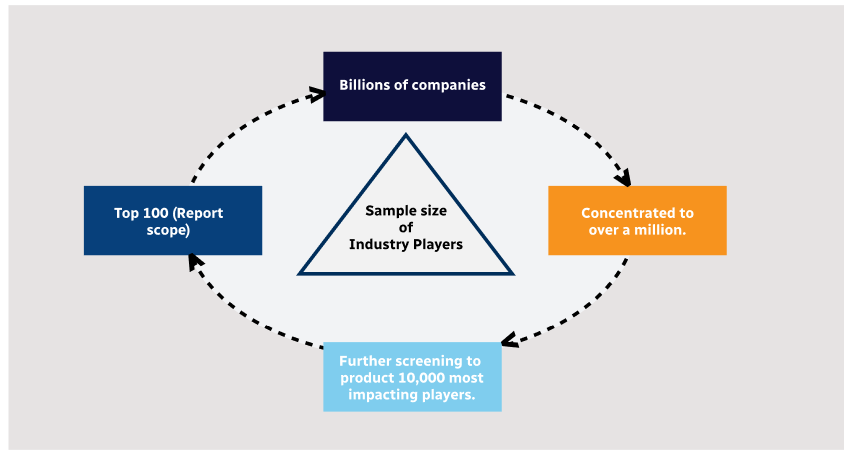
Step 1 - Identification of Relevant Samples Size from Population Database
Step 2 - Approaches for Defining Global Market Size (Value, Volume* & Price*)
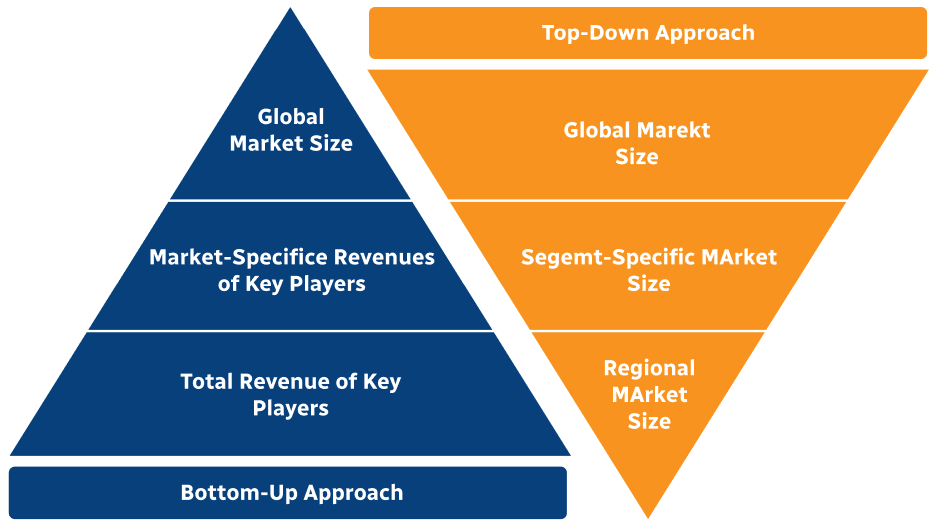
Note*: In applicable scenarios
Step 3 - Data Sources
Primary Research
- Web Analytics
- Survey Reports
- Research Institute
- Latest Research Reports
- Opinion Leaders
Secondary Research
- Annual Reports
- White Paper
- Latest Press Release
- Industry Association
- Paid Database
- Investor Presentations
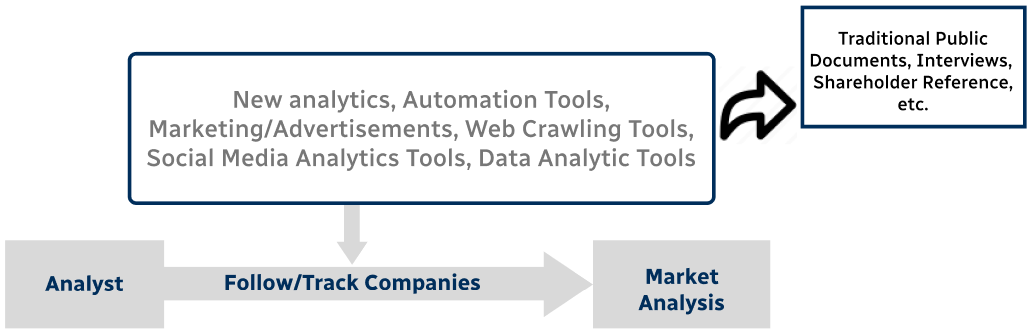
Step 4 - Data Triangulation
Involves using different sources of information in order to increase the validity of a study
These sources are likely to be stakeholders in a program - participants, other researchers, program staff, other community members, and so on.
Then we put all data in single framework & apply various statistical tools to find out the dynamic on the market.
During the analysis stage, feedback from the stakeholder groups would be compared to determine areas of agreement as well as areas of divergence