



Key Insights
The North American Fast-Moving Consumer Goods (FMCG) logistics market, valued at $322.97 million in 2025, is projected to experience robust growth, driven by the increasing demand for efficient and reliable supply chains within the food and beverage, personal care, and household care sectors. A compound annual growth rate (CAGR) of 4.84% from 2025 to 2033 suggests a significant expansion of this market over the forecast period. Key drivers include the rise of e-commerce, increasing consumer demand for convenience, and the growing need for sophisticated inventory management solutions. The market segmentation reveals that transportation, warehousing, and distribution services dominate, reflecting the crucial role of logistics in getting products to consumers quickly and efficiently. While specific data on the relative market share of each segment is unavailable, the prevalent e-commerce trend suggests transportation services likely hold a significant portion, followed by warehousing and distribution. The growth is further fueled by advancements in technology, such as automation and data analytics, enhancing efficiency and optimizing supply chain processes. However, challenges remain, including rising fuel costs, labor shortages, and geopolitical uncertainties, which may influence growth trajectories in subsequent years. Leading players like DB Schenker, DHL Group, FedEx, and Kuehne + Nagel are well-positioned to capitalize on these market dynamics, leveraging their extensive networks and technological capabilities.

North America Fast Moving Consumer Goods Industry Market Size (In Million)

The North American FMCG logistics landscape is shaped by regional variations, with the United States likely commanding the largest market share due to its large consumer base and developed infrastructure. Canada and Mexico also contribute significantly, with growth patterns influenced by economic conditions and specific market trends in each country. The competitive landscape is characterized by intense competition among established players, encouraging innovation and strategic partnerships to enhance service offerings. The "Other Value-added Services" segment will likely show significant growth as businesses seek greater supply chain visibility and optimization through advanced technologies and specialized logistical services. The forecast period will witness increasing investment in sustainable and environmentally friendly logistics practices, driven by growing consumer awareness and regulatory pressures. This shift will likely influence the adoption of electric vehicles and optimized routing systems to minimize environmental impact.

North America Fast Moving Consumer Goods Industry Company Market Share

North America Fast Moving Consumer Goods (FMCG) Industry Market Report: 2019-2033
This comprehensive report provides an in-depth analysis of the North America Fast Moving Consumer Goods industry, offering crucial insights for businesses and investors navigating this dynamic market. The report covers the period from 2019 to 2033, with a base year of 2025 and a forecast period extending to 2033. We analyze market structure, competitive dynamics, key trends, and future growth prospects, providing actionable intelligence for strategic decision-making. The total market size is estimated at xx Million in 2025, with a projected CAGR of xx% during the forecast period.
North America Fast Moving Consumer Goods Industry Market Structure & Competitive Dynamics
The North American Fast Moving Consumer Goods (FMCG) industry presents a dynamic and evolving competitive landscape. This section delves into its intricacies, examining market concentration, the vibrancy of innovation ecosystems, the influence of regulatory frameworks, the presence and impact of product substitutes, evolving end-user trends, and the pervasive nature of mergers and acquisitions (M&A). The market is a sophisticated blend of established multinational giants and agile, specialized niche players. Market concentration is notably high, with projections indicating the top five entities will command an estimated XX% of the market share by 2025. Innovation is a dual-pronged engine, fueled by substantial R&D investments from large corporations and the disruptive creativity of smaller companies introducing novel products and services. The regulatory environment, particularly concerning food safety, ingredient transparency, and product labeling, exerts a significant influence on market operations and strategic decisions. A powerful trend shaping the industry is the escalating consumer demand for sustainable and ethically sourced products, which in turn is spurring significant advancements in packaging technologies and supply chain practices. M&A activity has been robust over the past five years, with an aggregate deal value exceeding XX Million. Notable examples include [Insert specific examples of M&A deals with deal values if available, otherwise use "several significant acquisitions in the logistics and warehousing segments"].
- Market Concentration: Top 5 players projected to hold approximately XX% market share in 2025.
- M&A Activity: Total aggregate deal value surpassed XX Million between 2019 and 2024, indicating significant consolidation and strategic investment.
- Innovation Drivers: A strong emphasis on sustainability, ethical sourcing, advanced technological integration in logistics, and the development of healthier product alternatives.
- Regulatory Landscape: Navigating stringent and evolving regulations surrounding food safety, environmental impact, and consumer product labeling.
North America Fast Moving Consumer Goods Industry Industry Trends & Insights
The North American FMCG market is experiencing significant transformation driven by several key factors. E-commerce continues to grow rapidly, disrupting traditional retail channels and impacting logistics and distribution strategies. Changing consumer preferences toward healthier and more convenient products are reshaping product development and marketing efforts. Technological advancements in areas such as automation, data analytics, and artificial intelligence are optimizing supply chain efficiency and enhancing customer experiences. The growing adoption of omnichannel strategies by FMCG companies is creating new opportunities for growth. Increasing demand for personalized products and experiences is driving innovation in product customization and targeted marketing. The market is also witnessing increased pressure to adopt sustainable practices throughout the entire supply chain, from sourcing raw materials to packaging and disposal. These factors contribute to a robust CAGR, currently predicted to be xx% over the forecast period.
Dominant Markets & Segments in North America Fast Moving Consumer Goods Industry
The Food and Beverage segment continues to be the powerhouse of the North American FMCG market, propelled by enduring consumer demand and consistent growth trajectories. Within the services sector, warehousing and distribution emerge as the dominant forces, underscoring the critical role of sophisticated and efficient supply chain management in today's market. Geographically, the Northeast and West Coast regions of the United States, alongside key Canadian metropolitan centers, consistently exhibit the highest market penetration. This dominance is attributed to a confluence of factors, including high population densities, robust economic activity, and the presence of advanced, well-established logistics infrastructure.
-
By Service:
- Transportation: Experiencing substantial growth, largely catalyzed by the expansion of e-commerce and the widespread adoption of just-in-time delivery models.
- Warehousing: Demonstrating high demand driven by the need for optimized inventory management and the strategic implementation of omnichannel retail strategies.
- Distribution: Benefiting from the increasing necessity for streamlined delivery networks and the development of efficient last-mile logistics solutions.
- Inventory Management: Witnessing robust growth as companies prioritize operational efficiency and the minimization of waste through sophisticated inventory control.
- Other Value-added Services: Showing steady growth, fueled by a rising demand for specialized services such as customized labeling, specialized packaging, and product customization.
-
By Product Category:
- Food and Beverage: Remains the largest segment, driven by consistent high consumption rates and an ever-expanding array of diverse product offerings.
- Personal Care: Exhibits consistent growth, influenced by evolving consumer preferences, a growing emphasis on health and wellness, and the introduction of innovative formulations.
- Household Care: Displays stable growth, influenced by demographic factors such as household size, evolving cleaning habits, and the demand for eco-friendly alternatives.
- Other Consumables: Experiencing moderate growth, reflecting the diversification and expansion of various niche product categories within the broader FMCG landscape.
-
Key Drivers:
- Strong and resilient economic conditions prevailing across major North American markets.
- Well-developed and continuously improving infrastructure that facilitates efficient logistics and distribution networks.
- Supportive government policies and evolving regulations that foster market growth and innovation.
North America Fast Moving Consumer Goods Industry Product Innovations
Recent product innovations in the North American FMCG sector have focused heavily on convenience, sustainability, and personalization. This includes the development of single-serve packaging, plant-based alternatives, and products tailored to specific dietary needs or preferences. Technological advancements in areas such as smart packaging and connected devices are enhancing the consumer experience and providing valuable data for manufacturers. This emphasis on innovation aims to improve market penetration and capture greater market share. The use of sustainable materials in packaging is also increasing to meet the growing demand for environmentally friendly products.
Report Segmentation & Scope
This comprehensive report segments the North American FMCG market with granular detail, categorizing it by service type (including Transportation, Warehousing, Distribution, Inventory Management, and a range of Other Value-Added Services) and by product category (encompassing Food and Beverage, Personal Care, Household Care, and Other Consumables). For each identified segment, the analysis meticulously covers market size, projected growth rates, and prevailing competitive dynamics. The report aims to provide a granular understanding of the varied segments, offering insightful perspectives into their individual growth trajectories and competitive environments. Growth projections are meticulously derived from an analysis of current market trends, forward-looking economic forecasts, and the expert opinions of industry leaders and analysts.
Key Drivers of North America Fast Moving Consumer Goods Industry Growth
The North American FMCG sector is experiencing sustained growth, propelled by a confluence of significant factors. A primary driver is the rise in disposable incomes among consumers, which directly translates into increased demand for a broader spectrum of products and premium offerings. The burgeoning e-commerce sector plays a crucial role by expanding market reach, enhancing consumer convenience, and creating new avenues for product accessibility. Furthermore, continuous technological advancements are instrumental in optimizing supply chains, streamlining operations, and elevating overall efficiency. Government initiatives and regulations that actively encourage and promote sustainable practices are also contributing to market expansion by influencing consumer purchasing decisions and prompting industries to adopt more environmentally conscious approaches and foster innovation.
Challenges in the North America Fast Moving Consumer Goods Industry Sector
The North American FMCG industry faces several challenges, including increasing supply chain complexity and vulnerability to disruptions. Rising raw material costs and labor shortages create inflationary pressures impacting profitability. Intense competition, evolving consumer preferences, and stringent regulations necessitate continuous adaptation and innovation. These factors influence pricing strategies and necessitate efficient inventory management to maintain profitability.
Leading Players in the North America Fast Moving Consumer Goods Industry Market
- DB Schenker
- APL Logistics
- Nippon Express
- DHL Group
- C.H. Robinson Worldwide Inc.
- XPO Logistics
- FedEx
- CEVA Logistics
- Agility Logistics
- Kuehne + Nagel
- Hellmann Worldwide Logistics
Key Developments in North America Fast Moving Consumer Goods Industry Sector
- January 2023: DHL Group announced a significant investment in state-of-the-art automated warehousing technologies, aiming to enhance operational efficiency and capacity.
- March 2023: XPO Logistics strategically expanded its last-mile delivery network, bolstering its capabilities to meet the growing demands of e-commerce fulfillment.
- June 2024: New and stringent regulations concerning sustainable packaging materials and practices officially came into effect across key North American jurisdictions, prompting industry-wide adaptation.
- October 2024: Major food manufacturers are increasingly investing in blockchain technology for enhanced supply chain transparency and food safety traceability.
- December 2024: A leading personal care brand launched a new line of refillable and biodegradable packaging options in response to growing consumer demand for eco-friendly products.
Strategic North America Fast Moving Consumer Goods Industry Market Outlook
The North American FMCG market presents significant growth opportunities in the coming years. Continued expansion of e-commerce, increasing consumer demand for personalized and sustainable products, and technological advancements in supply chain management will drive growth. Companies that can adapt to changing consumer preferences, embrace innovation, and effectively manage their supply chains will be best positioned to succeed. Focus on sustainable practices and technological integration will be crucial for long-term market leadership.
North America Fast Moving Consumer Goods Industry Segmentation
-
1. Service
- 1.1. Transportation
- 1.2. Warehous
- 1.3. Other Value-added Services
-
2. Product Category
- 2.1. Food and Beverage
- 2.2. Personal Care
- 2.3. Household Care
- 2.4. Other Consumables
-
3. Geography
- 3.1. United States
- 3.2. Canada
- 3.3. Mexico
North America Fast Moving Consumer Goods Industry Segmentation By Geography
- 1. United States
- 2. Canada
- 3. Mexico

North America Fast Moving Consumer Goods Industry Regional Market Share

Geographic Coverage of North America Fast Moving Consumer Goods Industry
North America Fast Moving Consumer Goods Industry REPORT HIGHLIGHTS
| Aspects | Details |
|---|---|
| Study Period | 2020-2034 |
| Base Year | 2025 |
| Estimated Year | 2026 |
| Forecast Period | 2026-2034 |
| Historical Period | 2020-2025 |
| Growth Rate | CAGR of 4.84% from 2020-2034 |
| Segmentation |
|
Table of Contents
- 1. Introduction
- 1.1. Research Scope
- 1.2. Market Segmentation
- 1.3. Research Objective
- 1.4. Definitions and Assumptions
- 2. Executive Summary
- 2.1. Market Snapshot
- 3. Market Dynamics
- 3.1. Market Drivers
- 3.2. Market Restrains
- 3.3. Market Trends
- 3.4. Market Opportunities
- 4. Market Factor Analysis
- 4.1. Porters Five Forces
- 4.1.1. Bargaining Power of Suppliers
- 4.1.2. Bargaining Power of Buyers
- 4.1.3. Threat of New Entrants
- 4.1.4. Threat of Substitutes
- 4.1.5. Competitive Rivalry
- 4.2. PESTEL analysis
- 4.3. BCG Analysis
- 4.3.1. Stars (High Growth, High Market Share)
- 4.3.2. Cash Cows (Low Growth, High Market Share)
- 4.3.3. Question Mark (High Growth, Low Market Share)
- 4.3.4. Dogs (Low Growth, Low Market Share)
- 4.4. Ansoff Matrix Analysis
- 4.5. Supply Chain Analysis
- 4.6. Regulatory Landscape
- 4.7. Current Market Potential and Opportunity Assessment (TAM–SAM–SOM Framework)
- 4.8. PMV Analyst Note
- 4.1. Porters Five Forces
- 5. Market Analysis, Insights and Forecast 2021-2033
- 5.1. Market Analysis, Insights and Forecast - by Service
- 5.1.1. Transportation
- 5.1.2. Warehous
- 5.1.3. Other Value-added Services
- 5.2. Market Analysis, Insights and Forecast - by Product Category
- 5.2.1. Food and Beverage
- 5.2.2. Personal Care
- 5.2.3. Household Care
- 5.2.4. Other Consumables
- 5.3. Market Analysis, Insights and Forecast - by Geography
- 5.3.1. United States
- 5.3.2. Canada
- 5.3.3. Mexico
- 5.4. Market Analysis, Insights and Forecast - by Region
- 5.4.1. United States
- 5.4.2. Canada
- 5.4.3. Mexico
- 5.1. Market Analysis, Insights and Forecast - by Service
- 6. North America Fast Moving Consumer Goods Industry Analysis, Insights and Forecast, 2021-2033
- 6.1. Market Analysis, Insights and Forecast - by Service
- 6.1.1. Transportation
- 6.1.2. Warehous
- 6.1.3. Other Value-added Services
- 6.2. Market Analysis, Insights and Forecast - by Product Category
- 6.2.1. Food and Beverage
- 6.2.2. Personal Care
- 6.2.3. Household Care
- 6.2.4. Other Consumables
- 6.3. Market Analysis, Insights and Forecast - by Geography
- 6.3.1. United States
- 6.3.2. Canada
- 6.3.3. Mexico
- 6.1. Market Analysis, Insights and Forecast - by Service
- 7. United States North America Fast Moving Consumer Goods Industry Analysis, Insights and Forecast, 2020-2032
- 7.1. Market Analysis, Insights and Forecast - by Service
- 7.1.1. Transportation
- 7.1.2. Warehous
- 7.1.3. Other Value-added Services
- 7.2. Market Analysis, Insights and Forecast - by Product Category
- 7.2.1. Food and Beverage
- 7.2.2. Personal Care
- 7.2.3. Household Care
- 7.2.4. Other Consumables
- 7.3. Market Analysis, Insights and Forecast - by Geography
- 7.3.1. United States
- 7.3.2. Canada
- 7.3.3. Mexico
- 7.1. Market Analysis, Insights and Forecast - by Service
- 8. Canada North America Fast Moving Consumer Goods Industry Analysis, Insights and Forecast, 2020-2032
- 8.1. Market Analysis, Insights and Forecast - by Service
- 8.1.1. Transportation
- 8.1.2. Warehous
- 8.1.3. Other Value-added Services
- 8.2. Market Analysis, Insights and Forecast - by Product Category
- 8.2.1. Food and Beverage
- 8.2.2. Personal Care
- 8.2.3. Household Care
- 8.2.4. Other Consumables
- 8.3. Market Analysis, Insights and Forecast - by Geography
- 8.3.1. United States
- 8.3.2. Canada
- 8.3.3. Mexico
- 8.1. Market Analysis, Insights and Forecast - by Service
- 9. Mexico North America Fast Moving Consumer Goods Industry Analysis, Insights and Forecast, 2020-2032
- 9.1. Market Analysis, Insights and Forecast - by Service
- 9.1.1. Transportation
- 9.1.2. Warehous
- 9.1.3. Other Value-added Services
- 9.2. Market Analysis, Insights and Forecast - by Product Category
- 9.2.1. Food and Beverage
- 9.2.2. Personal Care
- 9.2.3. Household Care
- 9.2.4. Other Consumables
- 9.3. Market Analysis, Insights and Forecast - by Geography
- 9.3.1. United States
- 9.3.2. Canada
- 9.3.3. Mexico
- 9.1. Market Analysis, Insights and Forecast - by Service
- 10. Competitive Analysis
- 10.1. Company Profiles
- 10.1.1 DB Schenker
- 10.1.1.1. Company Overview
- 10.1.1.2. Products
- 10.1.1.3. Company Financials
- 10.1.1.4. SWOT Analysis
- 10.1.2 APL Logistics**List Not Exhaustive
- 10.1.2.1. Company Overview
- 10.1.2.2. Products
- 10.1.2.3. Company Financials
- 10.1.2.4. SWOT Analysis
- 10.1.3 Nippon Express
- 10.1.3.1. Company Overview
- 10.1.3.2. Products
- 10.1.3.3. Company Financials
- 10.1.3.4. SWOT Analysis
- 10.1.4 DHL Group
- 10.1.4.1. Company Overview
- 10.1.4.2. Products
- 10.1.4.3. Company Financials
- 10.1.4.4. SWOT Analysis
- 10.1.5 C H Robinson Worldwide Inc
- 10.1.5.1. Company Overview
- 10.1.5.2. Products
- 10.1.5.3. Company Financials
- 10.1.5.4. SWOT Analysis
- 10.1.6 XPO Logistics
- 10.1.6.1. Company Overview
- 10.1.6.2. Products
- 10.1.6.3. Company Financials
- 10.1.6.4. SWOT Analysis
- 10.1.7 FedEx
- 10.1.7.1. Company Overview
- 10.1.7.2. Products
- 10.1.7.3. Company Financials
- 10.1.7.4. SWOT Analysis
- 10.1.8 CEVA Logistics
- 10.1.8.1. Company Overview
- 10.1.8.2. Products
- 10.1.8.3. Company Financials
- 10.1.8.4. SWOT Analysis
- 10.1.9 Agility Logistics
- 10.1.9.1. Company Overview
- 10.1.9.2. Products
- 10.1.9.3. Company Financials
- 10.1.9.4. SWOT Analysis
- 10.1.10 Kuehne + Nagel
- 10.1.10.1. Company Overview
- 10.1.10.2. Products
- 10.1.10.3. Company Financials
- 10.1.10.4. SWOT Analysis
- 10.1.11 Hellmann Worlwide Logistics
- 10.1.11.1. Company Overview
- 10.1.11.2. Products
- 10.1.11.3. Company Financials
- 10.1.11.4. SWOT Analysis
- 10.1.1 DB Schenker
- 10.2. Market Entropy
- 10.2.1 Company's Key Areas Served
- 10.2.2 Recent Developments
- 10.3. Company Market Share Analysis 2025
- 10.3.1 Top 5 Companies Market Share Analysis
- 10.3.2 Top 3 Companies Market Share Analysis
- 10.4. List of Potential Customers
- 11. Research Methodology
List of Figures
- Figure 1: North America Fast Moving Consumer Goods Industry Revenue Breakdown (Million, %) by Product 2025 & 2033
- Figure 2: North America Fast Moving Consumer Goods Industry Share (%) by Company 2025
List of Tables
- Table 1: North America Fast Moving Consumer Goods Industry Revenue Million Forecast, by Service 2020 & 2033
- Table 2: North America Fast Moving Consumer Goods Industry Revenue Million Forecast, by Product Category 2020 & 2033
- Table 3: North America Fast Moving Consumer Goods Industry Revenue Million Forecast, by Geography 2020 & 2033
- Table 4: North America Fast Moving Consumer Goods Industry Revenue Million Forecast, by Region 2020 & 2033
- Table 5: North America Fast Moving Consumer Goods Industry Revenue Million Forecast, by Service 2020 & 2033
- Table 6: North America Fast Moving Consumer Goods Industry Revenue Million Forecast, by Product Category 2020 & 2033
- Table 7: North America Fast Moving Consumer Goods Industry Revenue Million Forecast, by Geography 2020 & 2033
- Table 8: North America Fast Moving Consumer Goods Industry Revenue Million Forecast, by Country 2020 & 2033
- Table 9: North America Fast Moving Consumer Goods Industry Revenue Million Forecast, by Service 2020 & 2033
- Table 10: North America Fast Moving Consumer Goods Industry Revenue Million Forecast, by Product Category 2020 & 2033
- Table 11: North America Fast Moving Consumer Goods Industry Revenue Million Forecast, by Geography 2020 & 2033
- Table 12: North America Fast Moving Consumer Goods Industry Revenue Million Forecast, by Country 2020 & 2033
- Table 13: North America Fast Moving Consumer Goods Industry Revenue Million Forecast, by Service 2020 & 2033
- Table 14: North America Fast Moving Consumer Goods Industry Revenue Million Forecast, by Product Category 2020 & 2033
- Table 15: North America Fast Moving Consumer Goods Industry Revenue Million Forecast, by Geography 2020 & 2033
- Table 16: North America Fast Moving Consumer Goods Industry Revenue Million Forecast, by Country 2020 & 2033
Frequently Asked Questions
1. What is the projected Compound Annual Growth Rate (CAGR) of the North America Fast Moving Consumer Goods Industry?
The projected CAGR is approximately 4.84%.
2. Which companies are prominent players in the North America Fast Moving Consumer Goods Industry?
Key companies in the market include DB Schenker, APL Logistics**List Not Exhaustive, Nippon Express, DHL Group, C H Robinson Worldwide Inc, XPO Logistics, FedEx, CEVA Logistics, Agility Logistics, Kuehne + Nagel, Hellmann Worlwide Logistics.
3. What are the main segments of the North America Fast Moving Consumer Goods Industry?
The market segments include Service, Product Category, Geography.
4. Can you provide details about the market size?
The market size is estimated to be USD 322.97 Million as of 2022.
5. What are some drivers contributing to market growth?
Strategic Location; Economic diversification.
6. What are the notable trends driving market growth?
Increasing Growth in Food and Beverages Products are Driving the Market Growth.
7. Are there any restraints impacting market growth?
Infrastructure challenges; Skilled workforce.
8. Can you provide examples of recent developments in the market?
N/A
9. What pricing options are available for accessing the report?
Pricing options include single-user, multi-user, and enterprise licenses priced at USD 4750, USD 5250, and USD 8750 respectively.
10. Is the market size provided in terms of value or volume?
The market size is provided in terms of value, measured in Million.
11. Are there any specific market keywords associated with the report?
Yes, the market keyword associated with the report is "North America Fast Moving Consumer Goods Industry," which aids in identifying and referencing the specific market segment covered.
12. How do I determine which pricing option suits my needs best?
The pricing options vary based on user requirements and access needs. Individual users may opt for single-user licenses, while businesses requiring broader access may choose multi-user or enterprise licenses for cost-effective access to the report.
13. Are there any additional resources or data provided in the North America Fast Moving Consumer Goods Industry report?
While the report offers comprehensive insights, it's advisable to review the specific contents or supplementary materials provided to ascertain if additional resources or data are available.
14. How can I stay updated on further developments or reports in the North America Fast Moving Consumer Goods Industry?
To stay informed about further developments, trends, and reports in the North America Fast Moving Consumer Goods Industry, consider subscribing to industry newsletters, following relevant companies and organizations, or regularly checking reputable industry news sources and publications.
Methodology
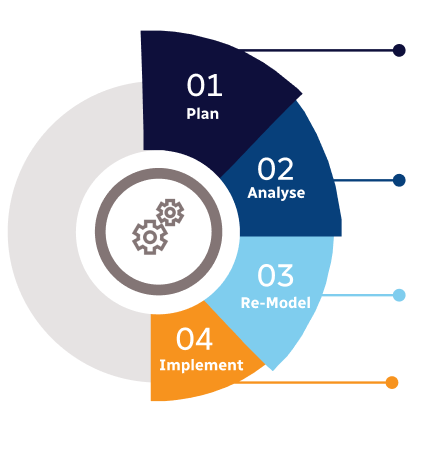
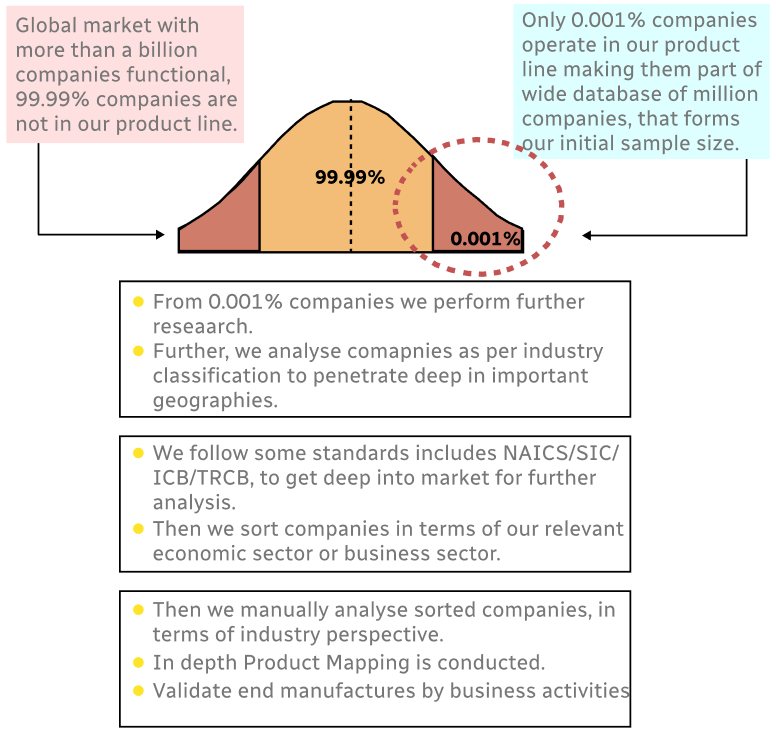
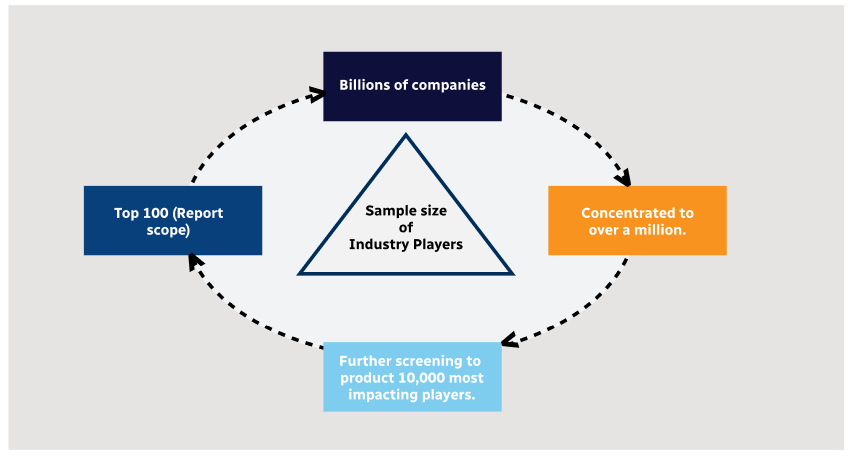
Step 1 - Identification of Relevant Samples Size from Population Database
Step 2 - Approaches for Defining Global Market Size (Value, Volume* & Price*)
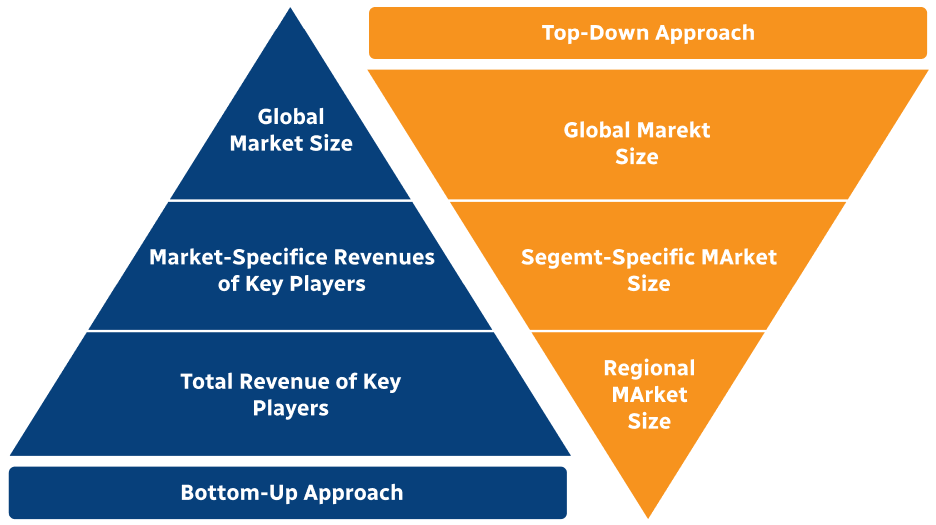
Note*: In applicable scenarios
Step 3 - Data Sources
Primary Research
- Web Analytics
- Survey Reports
- Research Institute
- Latest Research Reports
- Opinion Leaders
Secondary Research
- Annual Reports
- White Paper
- Latest Press Release
- Industry Association
- Paid Database
- Investor Presentations
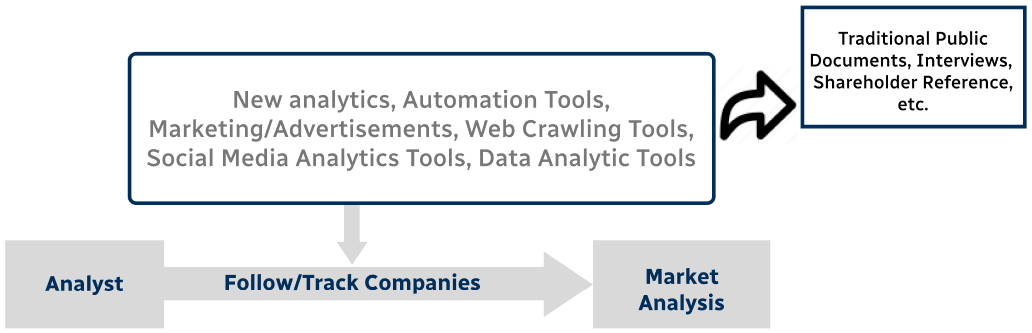
Step 4 - Data Triangulation
Involves using different sources of information in order to increase the validity of a study
These sources are likely to be stakeholders in a program - participants, other researchers, program staff, other community members, and so on.
Then we put all data in single framework & apply various statistical tools to find out the dynamic on the market.
During the analysis stage, feedback from the stakeholder groups would be compared to determine areas of agreement as well as areas of divergence


