
Key Insights
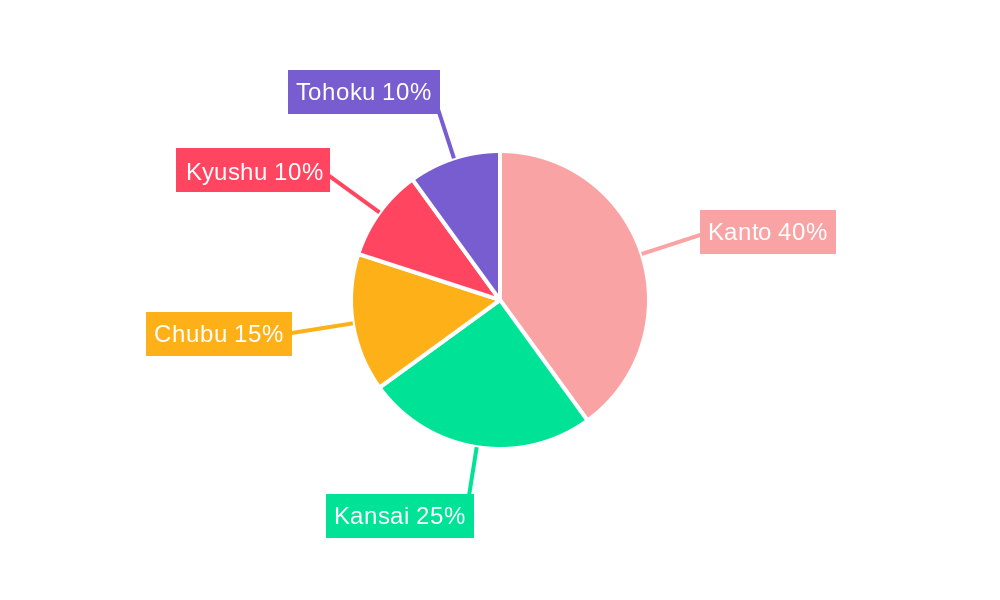
The Japan office furniture market, valued at $1.56 billion in 2025, is projected to experience steady growth, driven by a rising number of businesses and a focus on improving workplace ergonomics and aesthetics. The 3.45% CAGR indicates consistent expansion through 2033, fueled by several key factors. Increased investment in commercial real estate, particularly in major metropolitan areas like Kanto and Kansai, is a significant driver. Furthermore, evolving workplace trends such as the adoption of hybrid work models and a shift towards activity-based working are stimulating demand for adaptable furniture solutions, including ergonomic chairs, height-adjustable desks, and collaborative workspaces. Companies like Okamura Corporation, Herman Miller, and Steelcase, known for high-quality and innovative designs, are major players shaping the market. The market is segmented by distribution channel (direct and indirect), material (wood, metal, plastics, and others), and product type (meeting chairs, lounge chairs, swivel chairs, office tables, storage cabinets, and desks). While the dominance of established players is notable, opportunities exist for smaller businesses specializing in sustainable or uniquely designed furniture to cater to niche market preferences. The ongoing emphasis on employee well-being and productivity continues to be a significant driver, further boosting the sector’s growth prospects.
The segmentation reveals a diverse landscape. The "Indirect" distribution channel, encompassing retailers and dealers, likely holds a larger market share compared to direct sales, reflecting established distribution networks. Among materials, metal and wood likely maintain significant shares, with plastics gaining traction due to cost-effectiveness and design flexibility. Product-wise, the demand for ergonomic chairs and adjustable desks is expected to outpace other categories, mirroring the increasing focus on employee well-being and productivity in modern workplaces. Regional variations exist, with Kanto and Kansai, as major economic hubs, accounting for a substantial portion of overall market demand. Competition is intense, necessitating continuous innovation in design, functionality, and sustainability to maintain a competitive edge. This market presents lucrative opportunities for companies offering superior quality, ergonomic designs, and sustainable production processes.
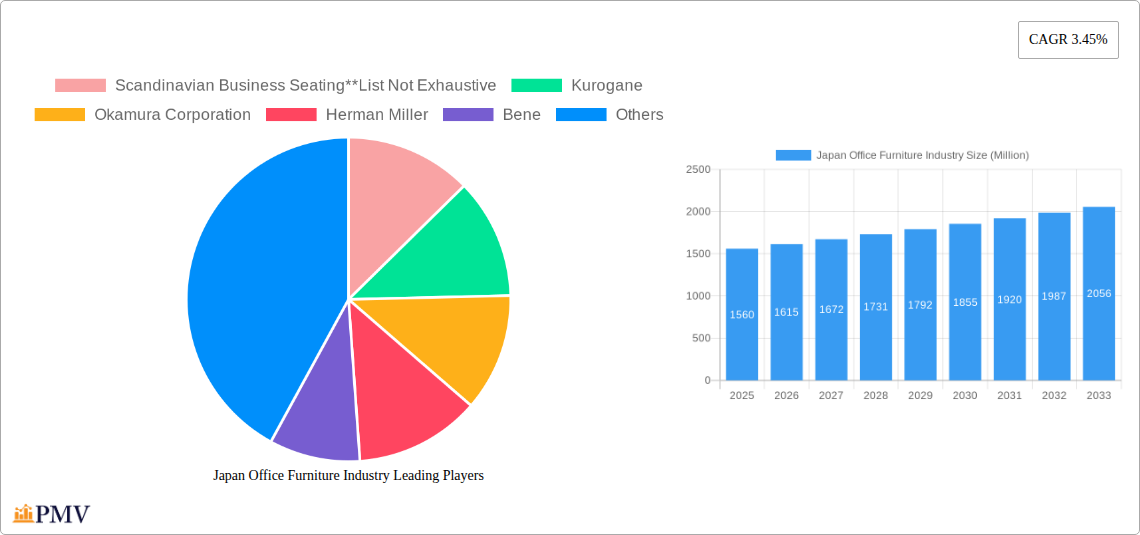
Japan Office Furniture Industry: 2019-2033 Market Report
This comprehensive report provides a detailed analysis of the Japan office furniture industry, offering invaluable insights for businesses operating within or considering entry into this dynamic market. The study covers the period 2019-2033, with a focus on the estimated year 2025 and a forecast period spanning 2025-2033. The report is segmented by distribution channel (direct and indirect), material (wood, metal, plastics, and other), and product type (meeting chairs, lounge chairs, swivel chairs, office tables, storage cabinets, and desks). Key players like Okamura Corporation, Kokuyo, Steelcase, and Herman Miller are analyzed, alongside emerging competitors. The total market size in 2025 is estimated at xx Million USD.
Japan Office Furniture Industry Market Structure & Competitive Dynamics
The Japanese office furniture market is characterized by a moderately concentrated structure, with a blend of influential multinational corporations and well-established domestic enterprises vying for market leadership. Prominent players like Okamura Corporation and Kokuyo command substantial market shares, collectively accounting for approximately **[Insert Percentage]%** of the market. This dynamic industry thrives on a robust innovation ecosystem, fueled by continuous advancements in ergonomics, a growing commitment to sustainability, and the integration of smart office solutions. The regulatory landscape, particularly concerning workplace safety and environmental standards, plays a pivotal role in shaping industry practices. Furthermore, the competitive environment is influenced by the availability of product substitutes such as home office furniture and a rise in flexible workspace solutions, presenting a moderate but persistent competitive threat. Evolving end-user trends, most notably the widespread adoption of hybrid work models and the demand for agile office designs, are profoundly impacting and reshaping market demand.
The market has recently experienced significant merger and acquisition (M&A) activity. A notable instance includes the acquisition of Lamex by Kokuyo in July 2022 for USD 75 Million, a strategic move that substantially expanded Kokuyo's market presence and product offerings. Projections indicate a continued trend of M&A deals, with cumulative deal values anticipated to reach **[Insert Amount] Million USD** throughout the forecast period. Comprehensive analysis of key metrics such as market share, revenue growth trajectories, and profitability is integral to a thorough understanding of the competitive landscape.
- Market Concentration: Moderately concentrated, with key players holding significant and influential shares.
- Innovation Focus: Driven by advancements in ergonomics, sophisticated smart office solutions, and the increasing adoption of sustainable materials.
- Regulatory Landscape: Governed by stringent and evolving safety and environmental regulations that influence product development and manufacturing processes.
- M&A Activity: Demonstrates a significant trend of merger and acquisition activity, propelled by strategic objectives of market consolidation, geographical expansion, and portfolio enhancement.
Japan Office Furniture Industry Industry Trends & Insights
The Japan office furniture market is projected to experience steady growth throughout the forecast period, driven by several factors. The increasing adoption of hybrid work models, though initially impacting traditional office furniture demand, is concurrently spurring demand for adaptable and ergonomic furniture suitable for both home and office environments. Technological advancements in smart office solutions, including integrated technology in furniture and space management systems, are fueling market innovation. A rising preference for sustainable and eco-friendly materials is also shaping the market, driving demand for products with certifications and reduced environmental impact. Consumer preferences lean towards aesthetically pleasing, functional, and customizable furniture. This preference is reflected in increasing sales of modular and adaptable designs. The CAGR for the forecast period (2025-2033) is estimated to be xx%. Market penetration of smart office furniture is expected to reach xx% by 2033.
The competitive dynamics are characterized by intense competition among established players and emerging innovative companies. Strategic partnerships and collaborations are emerging, such as the recent partnership between Kokuyo and Allsteel, which expands their collective reach and product offerings. Price competition and differentiation based on features, design, and sustainability will likely remain key strategies for success.
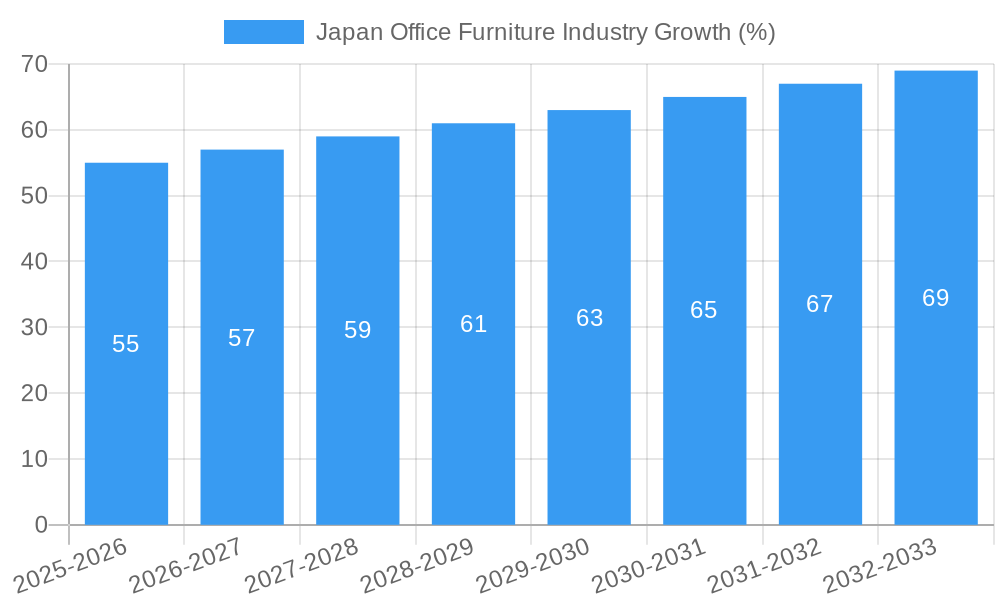
Dominant Markets & Segments in Japan Office Furniture Industry
The Kanto region, including Tokyo and surrounding prefectures, represents the dominant market for office furniture in Japan due to its high concentration of businesses and corporations. The indirect distribution channel holds a larger market share compared to the direct channel, owing to the extensive network of dealers and distributors across the country.
By Distribution Channel:
- Indirect: Dominant due to established dealer networks, wider reach and established customer relationships.
- Direct: Growing due to increased focus on e-commerce and direct sales by major manufacturers.
By Material:
- Metal: Largest segment due to durability and affordability.
- Wood: Significant share, driven by aesthetic appeal and sustainable options.
- Plastics: Growing due to design flexibility and cost-effectiveness.
By Product:
- Desks: Largest segment, driven by core office functionality.
- Office Tables: Significant demand from meeting rooms and collaborative spaces.
- Chairs: Strong demand for ergonomic and functional designs.
Key drivers for the dominant segments include strong economic activity in the Kanto region, supportive government policies promoting workplace modernization, and a well-developed infrastructure for distribution and logistics.
Japan Office Furniture Industry Product Innovations
Recent product innovations are heavily centered on enhancing ergonomics, championing sustainability, and integrating intelligent smart office features. Manufacturers are at the forefront of introducing cutting-edge solutions, including sophisticated height-adjustable desks, ergonomically designed seating with advanced built-in technology, and highly adaptable modular furniture systems that can be effortlessly reconfigured to meet the evolving needs of modern workspaces. There's a palpable and growing emphasis on utilizing sustainable materials, such as recycled plastics and wood sourced from responsibly managed forests. These innovations are not only serving as key differentiators in the market but are also instrumental in elevating customer satisfaction and creating more productive and comfortable work environments. The seamless integration of technology is further enabling optimized space utilization and significantly boosting overall productivity.
Report Segmentation & Scope
This comprehensive report segments the Japan office furniture market across several key dimensions: distribution channel (direct versus indirect sales), material composition (wood, metal, plastics, and other materials), and product type (categorized into meeting chairs, lounge chairs, swivel chairs, office tables, storage cabinets, and desks). Detailed growth projections for each segment are meticulously presented, taking into account current market size and intricate competitive dynamics. The indirect channel is anticipated to experience robust growth, projected at a Compound Annual Growth Rate (CAGR) of **[Insert Percentage]%**, largely attributed to its established distribution networks and its ability to cater to a diverse and broad customer base. The metal segment is expected to maintain its dominant position, underpinned by the inherent durability and cost-effectiveness of metal furniture. Furthermore, high growth is specifically predicted for ergonomic chairs, smart office chairs, and desks and tables, reflecting the evolving demands of contemporary workplaces.
Key Drivers of Japan Office Furniture Industry Growth
The sustained growth of the Japanese office furniture industry is propelled by a confluence of influential factors. These include a rise in disposable incomes, which translates to increased consumer spending on premium office equipment, and the accelerating adoption of flexible workspace solutions meticulously designed to accommodate evolving hybrid working models. Significant government investment in infrastructure projects, encompassing the development of new office spaces and commercial buildings, also acts as a substantial growth catalyst. Moreover, there is an escalating focus on enhancing workplace ergonomics and maximizing productivity through the integration of smart office features. Continuous technological advancements are further driving the demand for sophisticated and innovative office furniture solutions, solidifying their importance in the modern business landscape.
Challenges in the Japan Office Furniture Industry Sector
The industry faces challenges such as fluctuating raw material prices, increased competition from international and domestic players, and supply chain disruptions due to global events. Strict environmental regulations necessitate investments in sustainable manufacturing practices, presenting a cost challenge. The shift towards hybrid work models affects long-term forecasts and requires adaptability in product design. The total impact of these challenges on the market is estimated at a xx% reduction in profitability by 2033.
Leading Players in the Japan Office Furniture Industry Market
- Okamura Corporation
- Kokuyo
- Steelcase
- Herman Miller
- Bene
- HNI Corporation
- Uchida Yoko
- Martela
- Itoki
- Haworth
- Sedus Stoll
- Scandinavian Business Seating
- Kurogane
Key Developments in Japan Office Furniture Industry Sector
- July 2022: HNI Corporation successfully concluded the divestment of its Lamex office furniture division to Kokuyo Co., Ltd., in a transaction valued at USD 75 Million. This strategic acquisition significantly bolstered Kokuyo's market standing and broadened its comprehensive product portfolio.
- Jan 2023: KOKUYO and Allsteel announced a strategic partnership agreement. This collaboration aims to leverage the synergistic strengths of both companies to expand their respective product offerings and enhance their market reach, not only within Japan but also with potential expansion into international markets. This partnership underscores the increasing trend of strategic alliances forming within the industry to foster growth and innovation.
Strategic Japan Office Furniture Industry Market Outlook
The future of the Japan office furniture industry is promising, driven by ongoing technological advancements, increasing adoption of hybrid work models, and a focus on enhancing workplace productivity and well-being. Strategic opportunities exist for companies that focus on sustainable and ergonomic products, smart office solutions, and customized furniture solutions tailored to the evolving needs of businesses. The market presents growth potential for companies that successfully adapt to emerging trends and leverage technological innovation.
Japan Office Furniture Industry Segmentation
-
1. Material
- 1.1. Wood
- 1.2. Metal
- 1.3. Plastics
- 1.4. Other Materials
-
2. Product
- 2.1. Meeting Chairs
- 2.2. Lounge Chairs
- 2.3. Swivel Chairs
- 2.4. Office Tables
- 2.5. Storage Cabinets
- 2.6. Desks
-
3. Distribution Channel
- 3.1. Multi-branded Stores
- 3.2. Specialty Stores
- 3.3. Online Platforms
- 3.4. Other Distribution Channels
Japan Office Furniture Industry Segmentation By Geography
- 1. Japan
Japan Office Furniture Industry REPORT HIGHLIGHTS
| Aspects | Details |
|---|---|
| Study Period | 2019-2033 |
| Base Year | 2024 |
| Estimated Year | 2025 |
| Forecast Period | 2025-2033 |
| Historical Period | 2019-2024 |
| Growth Rate | CAGR of 3.45% from 2019-2033 |
| Segmentation |
|
Table of Contents
- 1. Introduction
- 1.1. Research Scope
- 1.2. Market Segmentation
- 1.3. Research Methodology
- 1.4. Definitions and Assumptions
- 2. Executive Summary
- 2.1. Introduction
- 3. Market Dynamics
- 3.1. Introduction
- 3.2. Market Drivers
- 3.2.1. Increasing Demand for Comfort and Convenience; Growing Awareness of Energy Efficiency
- 3.3. Market Restrains
- 3.3.1. Seasonal Demand Fluctuations; Safety Concerns Related to Overheating or Electrical Malfunctions
- 3.4. Market Trends
- 3.4.1. Rise in Sales of Office Furniture in Japan
- 4. Market Factor Analysis
- 4.1. Porters Five Forces
- 4.2. Supply/Value Chain
- 4.3. PESTEL analysis
- 4.4. Market Entropy
- 4.5. Patent/Trademark Analysis
- 5. Japan Office Furniture Industry Analysis, Insights and Forecast, 2019-2031
- 5.1. Market Analysis, Insights and Forecast - by Material
- 5.1.1. Wood
- 5.1.2. Metal
- 5.1.3. Plastics
- 5.1.4. Other Materials
- 5.2. Market Analysis, Insights and Forecast - by Product
- 5.2.1. Meeting Chairs
- 5.2.2. Lounge Chairs
- 5.2.3. Swivel Chairs
- 5.2.4. Office Tables
- 5.2.5. Storage Cabinets
- 5.2.6. Desks
- 5.3. Market Analysis, Insights and Forecast - by Distribution Channel
- 5.3.1. Multi-branded Stores
- 5.3.2. Specialty Stores
- 5.3.3. Online Platforms
- 5.3.4. Other Distribution Channels
- 5.4. Market Analysis, Insights and Forecast - by Region
- 5.4.1. Japan
- 5.1. Market Analysis, Insights and Forecast - by Material
- 6. Kanto Japan Office Furniture Industry Analysis, Insights and Forecast, 2019-2031
- 7. Kansai Japan Office Furniture Industry Analysis, Insights and Forecast, 2019-2031
- 8. Chubu Japan Office Furniture Industry Analysis, Insights and Forecast, 2019-2031
- 9. Kyushu Japan Office Furniture Industry Analysis, Insights and Forecast, 2019-2031
- 10. Tohoku Japan Office Furniture Industry Analysis, Insights and Forecast, 2019-2031
- 11. Competitive Analysis
- 11.1. Market Share Analysis 2024
- 11.2. Company Profiles
- 11.2.1 Scandinavian Business Seating**List Not Exhaustive
- 11.2.1.1. Overview
- 11.2.1.2. Products
- 11.2.1.3. SWOT Analysis
- 11.2.1.4. Recent Developments
- 11.2.1.5. Financials (Based on Availability)
- 11.2.2 Kurogane
- 11.2.2.1. Overview
- 11.2.2.2. Products
- 11.2.2.3. SWOT Analysis
- 11.2.2.4. Recent Developments
- 11.2.2.5. Financials (Based on Availability)
- 11.2.3 Okamura Corporation
- 11.2.3.1. Overview
- 11.2.3.2. Products
- 11.2.3.3. SWOT Analysis
- 11.2.3.4. Recent Developments
- 11.2.3.5. Financials (Based on Availability)
- 11.2.4 Herman Miller
- 11.2.4.1. Overview
- 11.2.4.2. Products
- 11.2.4.3. SWOT Analysis
- 11.2.4.4. Recent Developments
- 11.2.4.5. Financials (Based on Availability)
- 11.2.5 Bene
- 11.2.5.1. Overview
- 11.2.5.2. Products
- 11.2.5.3. SWOT Analysis
- 11.2.5.4. Recent Developments
- 11.2.5.5. Financials (Based on Availability)
- 11.2.6 HNI Corporation
- 11.2.6.1. Overview
- 11.2.6.2. Products
- 11.2.6.3. SWOT Analysis
- 11.2.6.4. Recent Developments
- 11.2.6.5. Financials (Based on Availability)
- 11.2.7 Steelcase
- 11.2.7.1. Overview
- 11.2.7.2. Products
- 11.2.7.3. SWOT Analysis
- 11.2.7.4. Recent Developments
- 11.2.7.5. Financials (Based on Availability)
- 11.2.8 Kokuyo
- 11.2.8.1. Overview
- 11.2.8.2. Products
- 11.2.8.3. SWOT Analysis
- 11.2.8.4. Recent Developments
- 11.2.8.5. Financials (Based on Availability)
- 11.2.9 Uchida Yoko
- 11.2.9.1. Overview
- 11.2.9.2. Products
- 11.2.9.3. SWOT Analysis
- 11.2.9.4. Recent Developments
- 11.2.9.5. Financials (Based on Availability)
- 11.2.10 Martela
- 11.2.10.1. Overview
- 11.2.10.2. Products
- 11.2.10.3. SWOT Analysis
- 11.2.10.4. Recent Developments
- 11.2.10.5. Financials (Based on Availability)
- 11.2.11 Itoki
- 11.2.11.1. Overview
- 11.2.11.2. Products
- 11.2.11.3. SWOT Analysis
- 11.2.11.4. Recent Developments
- 11.2.11.5. Financials (Based on Availability)
- 11.2.12 Haworth
- 11.2.12.1. Overview
- 11.2.12.2. Products
- 11.2.12.3. SWOT Analysis
- 11.2.12.4. Recent Developments
- 11.2.12.5. Financials (Based on Availability)
- 11.2.13 Sedus Stoll
- 11.2.13.1. Overview
- 11.2.13.2. Products
- 11.2.13.3. SWOT Analysis
- 11.2.13.4. Recent Developments
- 11.2.13.5. Financials (Based on Availability)
- 11.2.1 Scandinavian Business Seating**List Not Exhaustive
List of Figures
- Figure 1: Japan Office Furniture Industry Revenue Breakdown (Million, %) by Product 2024 & 2032
- Figure 2: Japan Office Furniture Industry Share (%) by Company 2024
List of Tables
- Table 1: Japan Office Furniture Industry Revenue Million Forecast, by Region 2019 & 2032
- Table 2: Japan Office Furniture Industry Revenue Million Forecast, by Material 2019 & 2032
- Table 3: Japan Office Furniture Industry Revenue Million Forecast, by Product 2019 & 2032
- Table 4: Japan Office Furniture Industry Revenue Million Forecast, by Distribution Channel 2019 & 2032
- Table 5: Japan Office Furniture Industry Revenue Million Forecast, by Region 2019 & 2032
- Table 6: Japan Office Furniture Industry Revenue Million Forecast, by Country 2019 & 2032
- Table 7: Kanto Japan Office Furniture Industry Revenue (Million) Forecast, by Application 2019 & 2032
- Table 8: Kansai Japan Office Furniture Industry Revenue (Million) Forecast, by Application 2019 & 2032
- Table 9: Chubu Japan Office Furniture Industry Revenue (Million) Forecast, by Application 2019 & 2032
- Table 10: Kyushu Japan Office Furniture Industry Revenue (Million) Forecast, by Application 2019 & 2032
- Table 11: Tohoku Japan Office Furniture Industry Revenue (Million) Forecast, by Application 2019 & 2032
- Table 12: Japan Office Furniture Industry Revenue Million Forecast, by Material 2019 & 2032
- Table 13: Japan Office Furniture Industry Revenue Million Forecast, by Product 2019 & 2032
- Table 14: Japan Office Furniture Industry Revenue Million Forecast, by Distribution Channel 2019 & 2032
- Table 15: Japan Office Furniture Industry Revenue Million Forecast, by Country 2019 & 2032
Frequently Asked Questions
1. What is the projected Compound Annual Growth Rate (CAGR) of the Japan Office Furniture Industry?
The projected CAGR is approximately 3.45%.
2. Which companies are prominent players in the Japan Office Furniture Industry?
Key companies in the market include Scandinavian Business Seating**List Not Exhaustive, Kurogane, Okamura Corporation, Herman Miller, Bene, HNI Corporation, Steelcase, Kokuyo, Uchida Yoko, Martela, Itoki, Haworth, Sedus Stoll.
3. What are the main segments of the Japan Office Furniture Industry?
The market segments include Material, Product, Distribution Channel.
4. Can you provide details about the market size?
The market size is estimated to be USD 1.56 Million as of 2022.
5. What are some drivers contributing to market growth?
Increasing Demand for Comfort and Convenience; Growing Awareness of Energy Efficiency.
6. What are the notable trends driving market growth?
Rise in Sales of Office Furniture in Japan.
7. Are there any restraints impacting market growth?
Seasonal Demand Fluctuations; Safety Concerns Related to Overheating or Electrical Malfunctions.
8. Can you provide examples of recent developments in the market?
Jan 2023: Partnership agreement between KOKUYO and Allsteel. KOKUYO Co., Ltd. announced the partnership agreement with Allsteel Inc., a leading manufacturer of contract furnishings.
9. What pricing options are available for accessing the report?
Pricing options include single-user, multi-user, and enterprise licenses priced at USD 3800, USD 4500, and USD 5800 respectively.
10. Is the market size provided in terms of value or volume?
The market size is provided in terms of value, measured in Million.
11. Are there any specific market keywords associated with the report?
Yes, the market keyword associated with the report is "Japan Office Furniture Industry," which aids in identifying and referencing the specific market segment covered.
12. How do I determine which pricing option suits my needs best?
The pricing options vary based on user requirements and access needs. Individual users may opt for single-user licenses, while businesses requiring broader access may choose multi-user or enterprise licenses for cost-effective access to the report.
13. Are there any additional resources or data provided in the Japan Office Furniture Industry report?
While the report offers comprehensive insights, it's advisable to review the specific contents or supplementary materials provided to ascertain if additional resources or data are available.
14. How can I stay updated on further developments or reports in the Japan Office Furniture Industry?
To stay informed about further developments, trends, and reports in the Japan Office Furniture Industry, consider subscribing to industry newsletters, following relevant companies and organizations, or regularly checking reputable industry news sources and publications.
Methodology
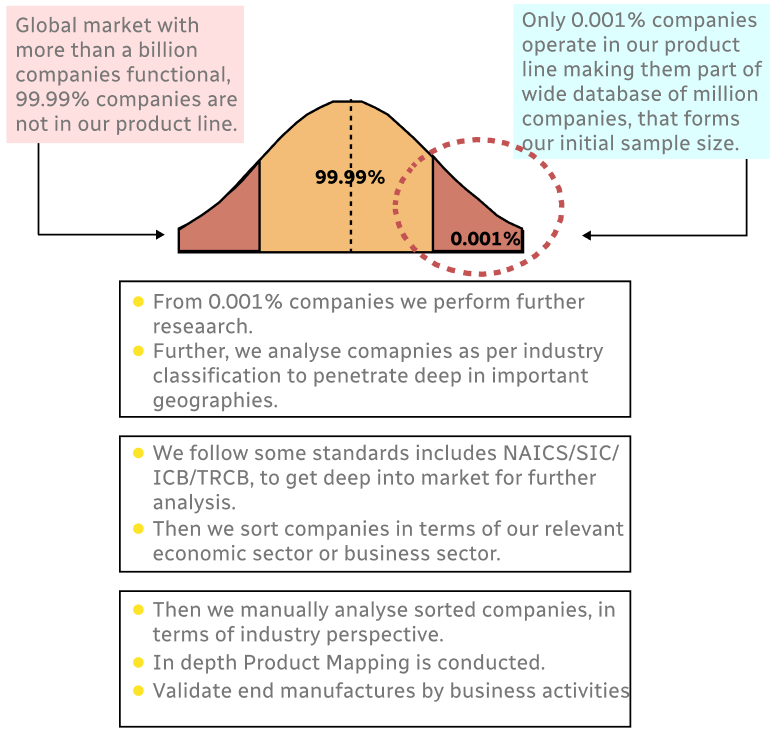
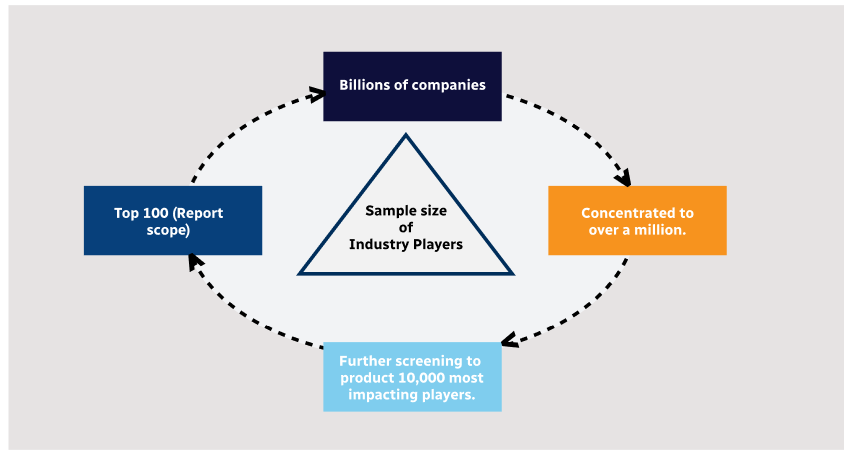
Step 1 - Identification of Relevant Samples Size from Population Database
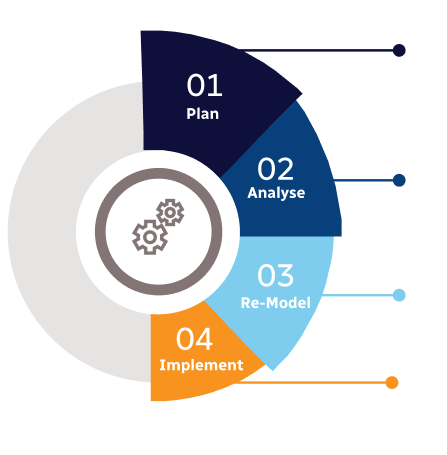
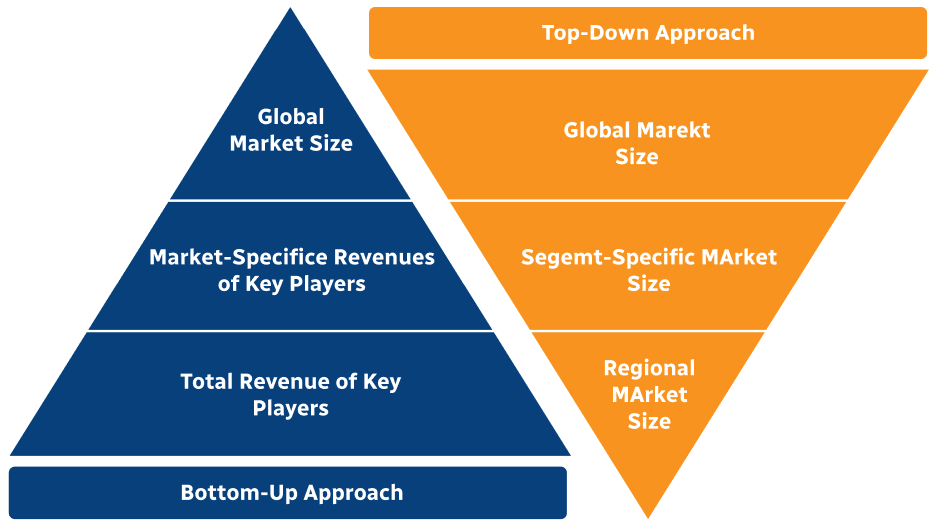
Step 2 - Approaches for Defining Global Market Size (Value, Volume* & Price*)
Note*: In applicable scenarios
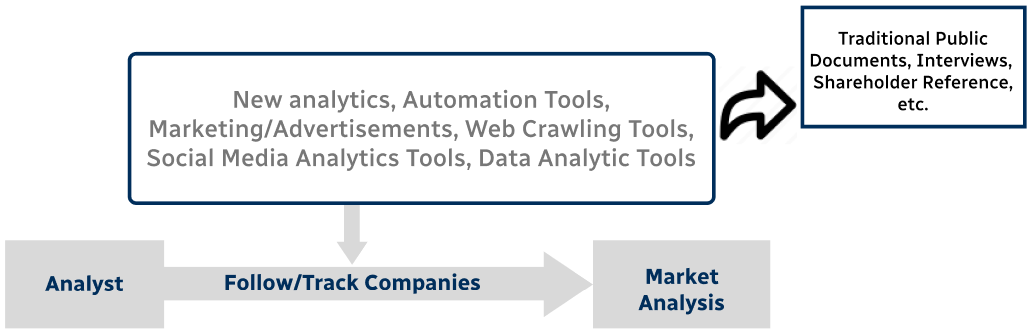
Step 3 - Data Sources
Primary Research
- Web Analytics
- Survey Reports
- Research Institute
- Latest Research Reports
- Opinion Leaders
Secondary Research
- Annual Reports
- White Paper
- Latest Press Release
- Industry Association
- Paid Database
- Investor Presentations
Step 4 - Data Triangulation
Involves using different sources of information in order to increase the validity of a study
These sources are likely to be stakeholders in a program - participants, other researchers, program staff, other community members, and so on.
Then we put all data in single framework & apply various statistical tools to find out the dynamic on the market.
During the analysis stage, feedback from the stakeholder groups would be compared to determine areas of agreement as well as areas of divergence