
Key Insights
The Massive Open Online Course (MOOC) industry is experiencing explosive growth, projected to reach a substantial market size of $22.80 billion by 2025, with an impressive Compound Annual Growth Rate (CAGR) of 39.20%. This remarkable expansion is fueled by several key drivers. The increasing demand for flexible and accessible lifelong learning opportunities, coupled with the growing recognition of online credentials by employers, is significantly propelling the market forward. Furthermore, advancements in digital infrastructure and the widespread adoption of e-learning technologies, particularly accelerated by recent global events, have democratized education, making MOOCs an attractive alternative to traditional academic pathways. The proliferation of mobile learning devices and the continuous innovation in course delivery platforms, incorporating interactive elements and personalized learning experiences, are also critical factors driving this upward trajectory. The market's segmentation reveals a strong preference for cMOOCs (connected MOOCs) and xMOOCs (extended MOOCs), indicating learners' desire for both community-driven and structured educational content. Technology, Business, and Science consistently emerge as leading subject areas, reflecting the evolving needs of the global workforce and the pursuit of specialized skills.
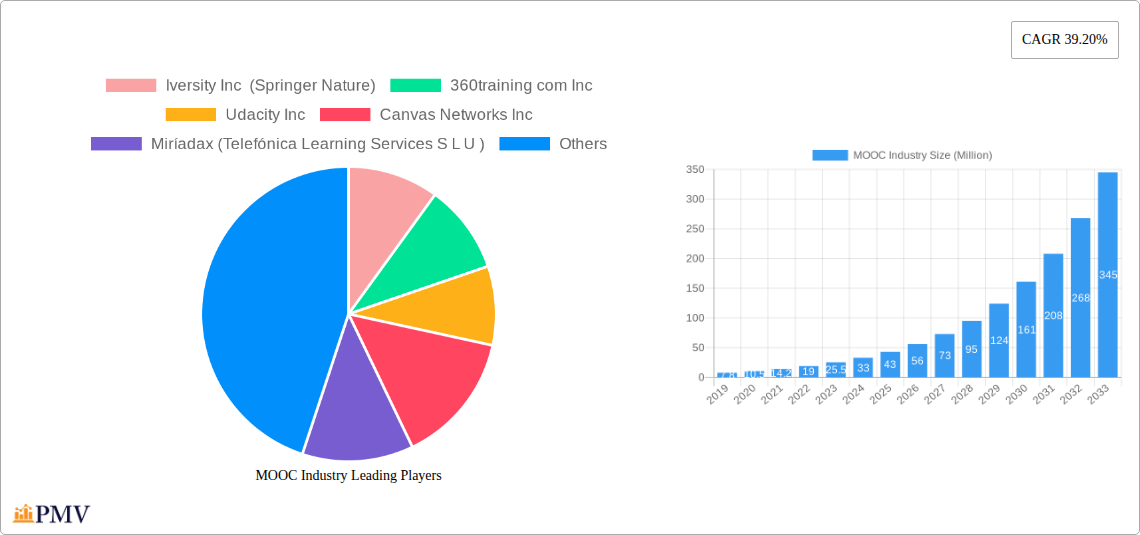
MOOC Industry Market Size (In Million)

Looking ahead, the MOOC market is poised for sustained expansion, driven by emerging trends such as the integration of Artificial Intelligence (AI) for personalized learning paths and automated feedback, the rise of micro-credentials and skill-based certifications, and a greater focus on industry-specific training programs. The increasing investment from major technology companies and educational institutions in developing high-quality, engaging content will further solidify MOOCs' position in the educational landscape. However, certain restraints, such as concerns regarding course completion rates, the need for robust quality assurance mechanisms, and the challenge of digital divide impacting access in certain regions, need to be addressed for holistic market development. Despite these challenges, the overwhelming positive momentum, supported by a diverse range of providers from established universities to specialized ed-tech firms, and a strong regional presence across North America, Europe, Asia, and other key markets, indicates a robust and dynamic future for the MOOC industry.

MOOC Industry Company Market Share
This in-depth MOOC industry report provides unparalleled insights into the rapidly evolving landscape of Massive Open Online Courses. Analyzing the MOOC market size, MOOC market trends, and MOOC market growth, this report is essential for stakeholders seeking to capitalize on the online learning market. We delve into the competitive dynamics, industry developments, and strategic outlook for the period spanning 2019–2033, with a base year of 2025 and a comprehensive forecast period of 2025–2033. Our meticulous analysis covers historical data from 2019–2024, ensuring a robust understanding of past performance and future potential in the e-learning industry. Discover the key drivers, challenges, and dominant segments shaping the global MOOC market.
MOOC Industry Market Structure & Competitive Dynamics
The MOOC industry is characterized by a dynamic and evolving market structure, balancing intense competition with strategic collaborations. Market concentration varies across different segments, with Coursera Inc and edX Inc (2U) holding significant market share in the higher education and professional development sectors. Innovation ecosystems are thriving, driven by partnerships between universities and technology providers, fostering the development of cutting-edge online courses and digital learning solutions. Regulatory frameworks, while still maturing, are increasingly focused on quality assurance and accessibility, impacting the adoption of online degrees and certificate programs. Product substitutes, such as traditional online courses and corporate training platforms, pose a competitive challenge, necessitating continuous innovation in course design and delivery. End-user trends highlight a growing demand for flexible, affordable, and skill-based learning. Merger and acquisition (M&A) activities are a significant feature, with deal values reflecting the strategic importance of acquiring established platforms or specialized content providers. For instance, the acquisition of edX Inc by 2U, Inc. for an undisclosed but significant sum underscored the consolidation trend. We project an estimated MOOC market share of 35 Million for key players by 2025. M&A deal values in the online education market are projected to reach over 50 Million by 2028.
- Market Share Analysis: Leading players are estimated to hold a combined 60% of the MOOC market by 2025.
- Innovation Ecosystems: Robust collaboration between academic institutions and tech firms drives the creation of MOOC platforms and digital learning experiences.
- Regulatory Landscape: Evolving regulations focus on accreditation, data privacy, and learner outcomes for online learning programs.
- Product Substitutes: Traditional online courses, bootcamps, and in-person training present ongoing competition.
- End-User Trends: Growing demand for lifelong learning, upskilling, and reskilling for career advancement.
- M&A Activities: Strategic acquisitions are consolidating the market and expanding service offerings in the higher education technology sector.
MOOC Industry Industry Trends & Insights
The MOOC industry is experiencing unprecedented growth, fueled by a confluence of technological advancements, shifting consumer preferences, and evolving educational paradigms. The CAGR of the MOOC market is projected to be a robust 15% from 2025–2033, reflecting sustained expansion. This growth is primarily driven by the increasing demand for accessible, flexible, and affordable education, particularly for professional development courses and online degrees. Technological disruptions, including AI-powered personalization, VR/AR integrations, and blockchain for credential verification, are revolutionizing the online learning experience. These innovations enhance learner engagement and provide more sophisticated tracking of progress and achievements in digital education. Consumer preferences are shifting towards micro-credentials and stackable learning pathways, allowing individuals to acquire specific skills and build towards larger qualifications. The rise of xMOOCs, offering structured courses with assessments, continues to dominate the market, but cMOOCs, emphasizing collaborative learning, are gaining traction for their community-building potential. Competitive dynamics are intensifying, with established providers and new entrants vying for market dominance through diversified course portfolios and strategic partnerships. The market penetration of MOOCs in emerging economies is a significant growth driver, as these platforms democratize access to quality education for millions worldwide. The increasing acceptance of online certifications by employers further bolsters the industry's trajectory. We estimate the total addressable market for online learning platforms to exceed 200 Million learners by 2030. The digital education market is expected to reach a valuation of 500 Million by 2033.
Dominant Markets & Segments in MOOC Industry
The MOOC industry exhibits distinct regional and sectoral dominance, driven by a combination of economic policies, technological infrastructure, and educational priorities. North America, particularly the United States, remains a leading market due to its established higher education system and strong adoption of online learning technologies. Asia-Pacific is emerging as a rapid growth region, spurred by government initiatives to promote digital literacy and the rising middle class seeking affordable online courses. Within subject types, Technology and Business consistently dominate the MOOC market, reflecting the strong demand for in-demand skills in the global workforce. The Technology MOOCs segment, covering areas like programming, data science, and cybersecurity, is projected to grow at a CAGR of 18%. The Business MOOCs segment, encompassing management, marketing, and finance, is expected to grow at 14% CAGR. Science MOOCs also hold significant appeal, particularly in fields like environmental science and biotechnology. Other Subject Types, including arts, humanities, and personal development, are experiencing steady growth as learners seek holistic educational experiences. From a segment type perspective, xMOOCs continue to lead in market share due to their structured format and university partnerships, accounting for an estimated 70% of the MOOC market in 2025. However, cMOOCs are showing promising growth in niche communities and for fostering collaborative skill development. Economic policies supporting digital transformation and investment in educational infrastructure are key drivers of dominance in these segments. For example, government subsidies for online education in countries like India have significantly boosted market penetration. The projected market size for Technology MOOCs is 80 Million by 2028, and for Business MOOCs is 65 Million.
- Leading Region: North America leads in adoption, with Asia-Pacific as the fastest-growing region.
- Dominant Subject Type: Technology and Business segments command the largest market share due to industry demand.
- Key Drivers for Technology MOOCs: High demand for digital skills, rapid technological advancements, and industry-specific training needs.
- Key Drivers for Business MOOCs: Need for upskilling in management, finance, and marketing for career progression.
- Segment Type Dominance: xMOOCs hold a larger market share due to their structured format and established university affiliations.
- Emerging Growth: cMOOCs are gaining traction for their collaborative learning approach and community engagement.
MOOC Industry Product Innovations
Product innovations in the MOOC industry are rapidly transforming the online learning experience. Leading providers are focusing on AI-powered adaptive learning platforms that personalize content delivery and provide tailored feedback, significantly enhancing learner outcomes. The integration of virtual and augmented reality (VR/AR) in MOOC courses is creating immersive learning environments, particularly for subjects like science and engineering, offering practical, hands-on simulations. Blockchain technology is being adopted for secure and verifiable digital credentials, addressing the growing need for trust in online certifications. Gamification elements are increasingly incorporated to boost learner engagement and motivation. These advancements provide a competitive advantage by offering more effective, interactive, and credible learning solutions, meeting the evolving demands of the digital education market.
Report Segmentation & Scope
This comprehensive MOOC industry report segments the market across key categories for detailed analysis.
- Type: The report meticulously analyzes both cMOOCs (Community-based MOOCs) and xMOOCs (eXtended MOOCs). xMOOCs are projected to hold a market size of 90 Million by 2028, while cMOOCs are expected to reach 25 Million in the same period, demonstrating steady growth in community-driven learning.
- Subject Type: Detailed segmentation includes Technology (projected market size of 80 Million by 2028), Business (projected market size of 65 Million by 2028), Science (projected market size of 40 Million by 2028), and Other Subject Types (projected market size of 50 Million by 2028). Competitive dynamics and growth projections are provided for each.
Key Drivers of MOOC Industry Growth
The MOOC industry is propelled by a robust set of growth drivers. Technologically, the widespread availability of high-speed internet and affordable devices fuels accessibility. Economically, the growing demand for upskilling and reskilling in a rapidly changing job market makes online courses an attractive and cost-effective solution for professional development. Regulatory factors, such as government support for digital education and the increasing recognition of online degrees and certifications by employers, further accelerate adoption. Strategic partnerships between universities, corporations, and MOOC platforms are expanding course offerings and enhancing the credibility of online learning. The global shift towards lifelong learning is a fundamental driver, with individuals seeking continuous knowledge acquisition.
Challenges in the MOOC Industry Sector
Despite its robust growth, the MOOC industry faces several challenges. Regulatory hurdles related to accreditation and quality assurance can slow down the widespread acceptance of certain online degrees and diplomas. Intense competitive pressures from a multitude of online learning providers can lead to price wars and impact profitability margins. Ensuring high learner completion rates and combating digital fatigue remain persistent challenges, requiring innovative pedagogical approaches and learner support systems. The supply chain for creating high-quality digital learning content needs continuous refinement to meet diverse subject demands. The perceived value of MOOC certificates by some employers can also be a barrier. Quantifiable impacts include an estimated 5% reduction in perceived value for unaccredited courses.
Leading Players in the MOOC Industry Market
- Iversity Inc (Springer Nature)
- 360training com Inc
- Udacity Inc
- Canvas Networks Inc
- Miríadax (Telefónica Learning Services S L U )
- Blackboard Inc (Providence Equity Partners)
- openSAP (SAP SE)
- edX Inc (2U)
- Coursera Inc
- Udemy Inc
- FutureLearn Ltd (Global University Systems)
Key Developments in MOOC Industry Sector
- November 2022: Riverside Extension (UCRX) and edX (from 2U, Inc.) announced a collaboration to develop UCRX's first Massive Open Online Courses (MOOCs) focused on well-being, mental health, and world languages, offering free-auditing for learners. This development expands the portfolio of accessible online learning content on the edX platform.
- September 2022: The London School of Economics and Political Science (LSE) launched its first MOOC, "An Introduction to Pre-University Mathematics," and two MicroBachelors programs in Statistics Fundamentals and Mathematics and Statistics Fundamentals on edX. This signifies a growing trend of leading institutions expanding their online education offerings through strategic partnerships for stackable learning pathways.
Strategic MOOC Industry Market Outlook
The strategic MOOC industry market outlook is exceptionally promising, driven by ongoing digital transformation and the persistent need for agile skill development. Growth accelerators include the increasing adoption of blended learning models, the expansion of corporate learning solutions delivered via MOOC platforms, and the continued internationalization of online education. Future market potential lies in developing more specialized vocational courses and micro-credentials that directly address evolving industry demands. Strategic opportunities include leveraging AI for hyper-personalization, expanding into new geographical markets, and forging deeper collaborations with academic institutions and enterprises to create bespoke digital learning programs. The continuous innovation in online learning technologies and the growing global acceptance of e-learning credentials will shape a dynamic and expanding MOOC market.
MOOC Industry Segmentation
-
1. Type
- 1.1. cMOOC
- 1.2. xMOOC
-
2. Subject Type
- 2.1. Technology
- 2.2. Business
- 2.3. Science
- 2.4. Other Subject Types
MOOC Industry Segmentation By Geography
-
1. North America
- 1.1. United States
- 1.2. Canada
-
2. Europe
- 2.1. United Kingdom
- 2.2. France
- 2.3. Germany
- 2.4. Spain
-
3. Asia
- 3.1. China
- 3.2. India
- 3.3. Japan
- 3.4. South Korea
- 4. Australia and New Zealand
-
5. Latin America
- 5.1. Brazil
- 5.2. Mexico
- 5.3. Argentina
-
6. Middle East and Africa
- 6.1. United Arab Emirates
- 6.2. Saudi Arabia
- 6.3. South Africa
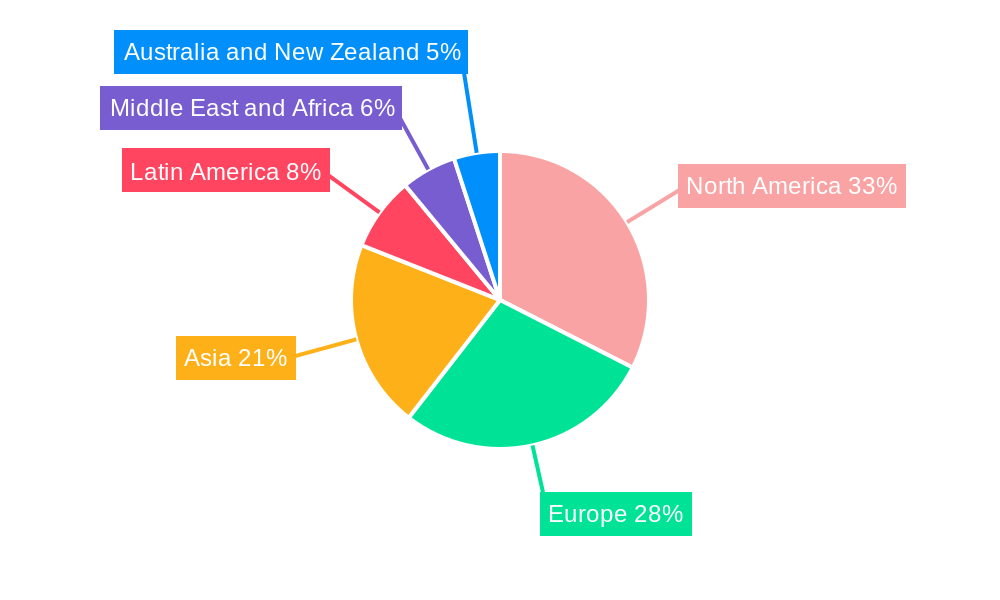
MOOC Industry Regional Market Share
Geographic Coverage of MOOC Industry
MOOC Industry REPORT HIGHLIGHTS
| Aspects | Details |
|---|---|
| Study Period | 2020-2034 |
| Base Year | 2025 |
| Estimated Year | 2026 |
| Forecast Period | 2026-2034 |
| Historical Period | 2020-2025 |
| Growth Rate | CAGR of 39.20% from 2020-2034 |
| Segmentation |
|
Table of Contents
- 1. Introduction
- 1.1. Research Scope
- 1.2. Market Segmentation
- 1.3. Research Methodology
- 1.4. Definitions and Assumptions
- 2. Executive Summary
- 2.1. Introduction
- 3. Market Dynamics
- 3.1. Introduction
- 3.2. Market Drivers
- 3.2.1. Demand for Cost Effective Education Platforms; Increasing Requirement of Global Training
- 3.3. Market Restrains
- 3.3.1. Low Course Completion Rate; Poor Discussion Forum and Mentoring
- 3.4. Market Trends
- 3.4.1. Technology Subject is expected to hold Major Share
- 4. Market Factor Analysis
- 4.1. Porters Five Forces
- 4.2. Supply/Value Chain
- 4.3. PESTEL analysis
- 4.4. Market Entropy
- 4.5. Patent/Trademark Analysis
- 5. Global MOOC Industry Analysis, Insights and Forecast, 2020-2032
- 5.1. Market Analysis, Insights and Forecast - by Type
- 5.1.1. cMOOC
- 5.1.2. xMOOC
- 5.2. Market Analysis, Insights and Forecast - by Subject Type
- 5.2.1. Technology
- 5.2.2. Business
- 5.2.3. Science
- 5.2.4. Other Subject Types
- 5.3. Market Analysis, Insights and Forecast - by Region
- 5.3.1. North America
- 5.3.2. Europe
- 5.3.3. Asia
- 5.3.4. Australia and New Zealand
- 5.3.5. Latin America
- 5.3.6. Middle East and Africa
- 5.1. Market Analysis, Insights and Forecast - by Type
- 6. North America MOOC Industry Analysis, Insights and Forecast, 2020-2032
- 6.1. Market Analysis, Insights and Forecast - by Type
- 6.1.1. cMOOC
- 6.1.2. xMOOC
- 6.2. Market Analysis, Insights and Forecast - by Subject Type
- 6.2.1. Technology
- 6.2.2. Business
- 6.2.3. Science
- 6.2.4. Other Subject Types
- 6.1. Market Analysis, Insights and Forecast - by Type
- 7. Europe MOOC Industry Analysis, Insights and Forecast, 2020-2032
- 7.1. Market Analysis, Insights and Forecast - by Type
- 7.1.1. cMOOC
- 7.1.2. xMOOC
- 7.2. Market Analysis, Insights and Forecast - by Subject Type
- 7.2.1. Technology
- 7.2.2. Business
- 7.2.3. Science
- 7.2.4. Other Subject Types
- 7.1. Market Analysis, Insights and Forecast - by Type
- 8. Asia MOOC Industry Analysis, Insights and Forecast, 2020-2032
- 8.1. Market Analysis, Insights and Forecast - by Type
- 8.1.1. cMOOC
- 8.1.2. xMOOC
- 8.2. Market Analysis, Insights and Forecast - by Subject Type
- 8.2.1. Technology
- 8.2.2. Business
- 8.2.3. Science
- 8.2.4. Other Subject Types
- 8.1. Market Analysis, Insights and Forecast - by Type
- 9. Australia and New Zealand MOOC Industry Analysis, Insights and Forecast, 2020-2032
- 9.1. Market Analysis, Insights and Forecast - by Type
- 9.1.1. cMOOC
- 9.1.2. xMOOC
- 9.2. Market Analysis, Insights and Forecast - by Subject Type
- 9.2.1. Technology
- 9.2.2. Business
- 9.2.3. Science
- 9.2.4. Other Subject Types
- 9.1. Market Analysis, Insights and Forecast - by Type
- 10. Latin America MOOC Industry Analysis, Insights and Forecast, 2020-2032
- 10.1. Market Analysis, Insights and Forecast - by Type
- 10.1.1. cMOOC
- 10.1.2. xMOOC
- 10.2. Market Analysis, Insights and Forecast - by Subject Type
- 10.2.1. Technology
- 10.2.2. Business
- 10.2.3. Science
- 10.2.4. Other Subject Types
- 10.1. Market Analysis, Insights and Forecast - by Type
- 11. Middle East and Africa MOOC Industry Analysis, Insights and Forecast, 2020-2032
- 11.1. Market Analysis, Insights and Forecast - by Type
- 11.1.1. cMOOC
- 11.1.2. xMOOC
- 11.2. Market Analysis, Insights and Forecast - by Subject Type
- 11.2.1. Technology
- 11.2.2. Business
- 11.2.3. Science
- 11.2.4. Other Subject Types
- 11.1. Market Analysis, Insights and Forecast - by Type
- 12. Competitive Analysis
- 12.1. Global Market Share Analysis 2025
- 12.2. Company Profiles
- 12.2.1 Iversity Inc (Springer Nature)
- 12.2.1.1. Overview
- 12.2.1.2. Products
- 12.2.1.3. SWOT Analysis
- 12.2.1.4. Recent Developments
- 12.2.1.5. Financials (Based on Availability)
- 12.2.2 360training com Inc
- 12.2.2.1. Overview
- 12.2.2.2. Products
- 12.2.2.3. SWOT Analysis
- 12.2.2.4. Recent Developments
- 12.2.2.5. Financials (Based on Availability)
- 12.2.3 Udacity Inc
- 12.2.3.1. Overview
- 12.2.3.2. Products
- 12.2.3.3. SWOT Analysis
- 12.2.3.4. Recent Developments
- 12.2.3.5. Financials (Based on Availability)
- 12.2.4 Canvas Networks Inc
- 12.2.4.1. Overview
- 12.2.4.2. Products
- 12.2.4.3. SWOT Analysis
- 12.2.4.4. Recent Developments
- 12.2.4.5. Financials (Based on Availability)
- 12.2.5 Miríadax (Telefónica Learning Services S L U )
- 12.2.5.1. Overview
- 12.2.5.2. Products
- 12.2.5.3. SWOT Analysis
- 12.2.5.4. Recent Developments
- 12.2.5.5. Financials (Based on Availability)
- 12.2.6 Blackboard Inc (Providence Equity Partners)
- 12.2.6.1. Overview
- 12.2.6.2. Products
- 12.2.6.3. SWOT Analysis
- 12.2.6.4. Recent Developments
- 12.2.6.5. Financials (Based on Availability)
- 12.2.7 openSAP (SAP SE)
- 12.2.7.1. Overview
- 12.2.7.2. Products
- 12.2.7.3. SWOT Analysis
- 12.2.7.4. Recent Developments
- 12.2.7.5. Financials (Based on Availability)
- 12.2.8 edX Inc (2U)
- 12.2.8.1. Overview
- 12.2.8.2. Products
- 12.2.8.3. SWOT Analysis
- 12.2.8.4. Recent Developments
- 12.2.8.5. Financials (Based on Availability)
- 12.2.9 Coursera Inc
- 12.2.9.1. Overview
- 12.2.9.2. Products
- 12.2.9.3. SWOT Analysis
- 12.2.9.4. Recent Developments
- 12.2.9.5. Financials (Based on Availability)
- 12.2.10 Udemy Inc
- 12.2.10.1. Overview
- 12.2.10.2. Products
- 12.2.10.3. SWOT Analysis
- 12.2.10.4. Recent Developments
- 12.2.10.5. Financials (Based on Availability)
- 12.2.11 FutureLearn Ltd (Global University Systems)
- 12.2.11.1. Overview
- 12.2.11.2. Products
- 12.2.11.3. SWOT Analysis
- 12.2.11.4. Recent Developments
- 12.2.11.5. Financials (Based on Availability)
- 12.2.1 Iversity Inc (Springer Nature)
List of Figures
- Figure 1: Global MOOC Industry Revenue Breakdown (Million, %) by Region 2025 & 2033
- Figure 2: North America MOOC Industry Revenue (Million), by Type 2025 & 2033
- Figure 3: North America MOOC Industry Revenue Share (%), by Type 2025 & 2033
- Figure 4: North America MOOC Industry Revenue (Million), by Subject Type 2025 & 2033
- Figure 5: North America MOOC Industry Revenue Share (%), by Subject Type 2025 & 2033
- Figure 6: North America MOOC Industry Revenue (Million), by Country 2025 & 2033
- Figure 7: North America MOOC Industry Revenue Share (%), by Country 2025 & 2033
- Figure 8: Europe MOOC Industry Revenue (Million), by Type 2025 & 2033
- Figure 9: Europe MOOC Industry Revenue Share (%), by Type 2025 & 2033
- Figure 10: Europe MOOC Industry Revenue (Million), by Subject Type 2025 & 2033
- Figure 11: Europe MOOC Industry Revenue Share (%), by Subject Type 2025 & 2033
- Figure 12: Europe MOOC Industry Revenue (Million), by Country 2025 & 2033
- Figure 13: Europe MOOC Industry Revenue Share (%), by Country 2025 & 2033
- Figure 14: Asia MOOC Industry Revenue (Million), by Type 2025 & 2033
- Figure 15: Asia MOOC Industry Revenue Share (%), by Type 2025 & 2033
- Figure 16: Asia MOOC Industry Revenue (Million), by Subject Type 2025 & 2033
- Figure 17: Asia MOOC Industry Revenue Share (%), by Subject Type 2025 & 2033
- Figure 18: Asia MOOC Industry Revenue (Million), by Country 2025 & 2033
- Figure 19: Asia MOOC Industry Revenue Share (%), by Country 2025 & 2033
- Figure 20: Australia and New Zealand MOOC Industry Revenue (Million), by Type 2025 & 2033
- Figure 21: Australia and New Zealand MOOC Industry Revenue Share (%), by Type 2025 & 2033
- Figure 22: Australia and New Zealand MOOC Industry Revenue (Million), by Subject Type 2025 & 2033
- Figure 23: Australia and New Zealand MOOC Industry Revenue Share (%), by Subject Type 2025 & 2033
- Figure 24: Australia and New Zealand MOOC Industry Revenue (Million), by Country 2025 & 2033
- Figure 25: Australia and New Zealand MOOC Industry Revenue Share (%), by Country 2025 & 2033
- Figure 26: Latin America MOOC Industry Revenue (Million), by Type 2025 & 2033
- Figure 27: Latin America MOOC Industry Revenue Share (%), by Type 2025 & 2033
- Figure 28: Latin America MOOC Industry Revenue (Million), by Subject Type 2025 & 2033
- Figure 29: Latin America MOOC Industry Revenue Share (%), by Subject Type 2025 & 2033
- Figure 30: Latin America MOOC Industry Revenue (Million), by Country 2025 & 2033
- Figure 31: Latin America MOOC Industry Revenue Share (%), by Country 2025 & 2033
- Figure 32: Middle East and Africa MOOC Industry Revenue (Million), by Type 2025 & 2033
- Figure 33: Middle East and Africa MOOC Industry Revenue Share (%), by Type 2025 & 2033
- Figure 34: Middle East and Africa MOOC Industry Revenue (Million), by Subject Type 2025 & 2033
- Figure 35: Middle East and Africa MOOC Industry Revenue Share (%), by Subject Type 2025 & 2033
- Figure 36: Middle East and Africa MOOC Industry Revenue (Million), by Country 2025 & 2033
- Figure 37: Middle East and Africa MOOC Industry Revenue Share (%), by Country 2025 & 2033
List of Tables
- Table 1: Global MOOC Industry Revenue Million Forecast, by Type 2020 & 2033
- Table 2: Global MOOC Industry Revenue Million Forecast, by Subject Type 2020 & 2033
- Table 3: Global MOOC Industry Revenue Million Forecast, by Region 2020 & 2033
- Table 4: Global MOOC Industry Revenue Million Forecast, by Type 2020 & 2033
- Table 5: Global MOOC Industry Revenue Million Forecast, by Subject Type 2020 & 2033
- Table 6: Global MOOC Industry Revenue Million Forecast, by Country 2020 & 2033
- Table 7: United States MOOC Industry Revenue (Million) Forecast, by Application 2020 & 2033
- Table 8: Canada MOOC Industry Revenue (Million) Forecast, by Application 2020 & 2033
- Table 9: Global MOOC Industry Revenue Million Forecast, by Type 2020 & 2033
- Table 10: Global MOOC Industry Revenue Million Forecast, by Subject Type 2020 & 2033
- Table 11: Global MOOC Industry Revenue Million Forecast, by Country 2020 & 2033
- Table 12: United Kingdom MOOC Industry Revenue (Million) Forecast, by Application 2020 & 2033
- Table 13: France MOOC Industry Revenue (Million) Forecast, by Application 2020 & 2033
- Table 14: Germany MOOC Industry Revenue (Million) Forecast, by Application 2020 & 2033
- Table 15: Spain MOOC Industry Revenue (Million) Forecast, by Application 2020 & 2033
- Table 16: Global MOOC Industry Revenue Million Forecast, by Type 2020 & 2033
- Table 17: Global MOOC Industry Revenue Million Forecast, by Subject Type 2020 & 2033
- Table 18: Global MOOC Industry Revenue Million Forecast, by Country 2020 & 2033
- Table 19: China MOOC Industry Revenue (Million) Forecast, by Application 2020 & 2033
- Table 20: India MOOC Industry Revenue (Million) Forecast, by Application 2020 & 2033
- Table 21: Japan MOOC Industry Revenue (Million) Forecast, by Application 2020 & 2033
- Table 22: South Korea MOOC Industry Revenue (Million) Forecast, by Application 2020 & 2033
- Table 23: Global MOOC Industry Revenue Million Forecast, by Type 2020 & 2033
- Table 24: Global MOOC Industry Revenue Million Forecast, by Subject Type 2020 & 2033
- Table 25: Global MOOC Industry Revenue Million Forecast, by Country 2020 & 2033
- Table 26: Global MOOC Industry Revenue Million Forecast, by Type 2020 & 2033
- Table 27: Global MOOC Industry Revenue Million Forecast, by Subject Type 2020 & 2033
- Table 28: Global MOOC Industry Revenue Million Forecast, by Country 2020 & 2033
- Table 29: Brazil MOOC Industry Revenue (Million) Forecast, by Application 2020 & 2033
- Table 30: Mexico MOOC Industry Revenue (Million) Forecast, by Application 2020 & 2033
- Table 31: Argentina MOOC Industry Revenue (Million) Forecast, by Application 2020 & 2033
- Table 32: Global MOOC Industry Revenue Million Forecast, by Type 2020 & 2033
- Table 33: Global MOOC Industry Revenue Million Forecast, by Subject Type 2020 & 2033
- Table 34: Global MOOC Industry Revenue Million Forecast, by Country 2020 & 2033
- Table 35: United Arab Emirates MOOC Industry Revenue (Million) Forecast, by Application 2020 & 2033
- Table 36: Saudi Arabia MOOC Industry Revenue (Million) Forecast, by Application 2020 & 2033
- Table 37: South Africa MOOC Industry Revenue (Million) Forecast, by Application 2020 & 2033
Frequently Asked Questions
1. What is the projected Compound Annual Growth Rate (CAGR) of the MOOC Industry?
The projected CAGR is approximately 39.20%.
2. Which companies are prominent players in the MOOC Industry?
Key companies in the market include Iversity Inc (Springer Nature), 360training com Inc, Udacity Inc, Canvas Networks Inc, Miríadax (Telefónica Learning Services S L U ), Blackboard Inc (Providence Equity Partners), openSAP (SAP SE), edX Inc (2U), Coursera Inc, Udemy Inc, FutureLearn Ltd (Global University Systems).
3. What are the main segments of the MOOC Industry?
The market segments include Type, Subject Type.
4. Can you provide details about the market size?
The market size is estimated to be USD 22.80 Million as of 2022.
5. What are some drivers contributing to market growth?
Demand for Cost Effective Education Platforms; Increasing Requirement of Global Training.
6. What are the notable trends driving market growth?
Technology Subject is expected to hold Major Share.
7. Are there any restraints impacting market growth?
Low Course Completion Rate; Poor Discussion Forum and Mentoring.
8. Can you provide examples of recent developments in the market?
November 2022 : Riverside Extension (UCRX), The University of California, and edX, one of the leading global online learning platforms from 2U, Inc., announced a collaboration to develop UCRX's first Massive Open Online Courses (MOOCs) on the edX platform. The courses, featuring content in well-being, mental health, and world languages, will be free-to-audit for edX learners.
9. What pricing options are available for accessing the report?
Pricing options include single-user, multi-user, and enterprise licenses priced at USD 4750, USD 5250, and USD 8750 respectively.
10. Is the market size provided in terms of value or volume?
The market size is provided in terms of value, measured in Million.
11. Are there any specific market keywords associated with the report?
Yes, the market keyword associated with the report is "MOOC Industry," which aids in identifying and referencing the specific market segment covered.
12. How do I determine which pricing option suits my needs best?
The pricing options vary based on user requirements and access needs. Individual users may opt for single-user licenses, while businesses requiring broader access may choose multi-user or enterprise licenses for cost-effective access to the report.
13. Are there any additional resources or data provided in the MOOC Industry report?
While the report offers comprehensive insights, it's advisable to review the specific contents or supplementary materials provided to ascertain if additional resources or data are available.
14. How can I stay updated on further developments or reports in the MOOC Industry?
To stay informed about further developments, trends, and reports in the MOOC Industry, consider subscribing to industry newsletters, following relevant companies and organizations, or regularly checking reputable industry news sources and publications.
Methodology
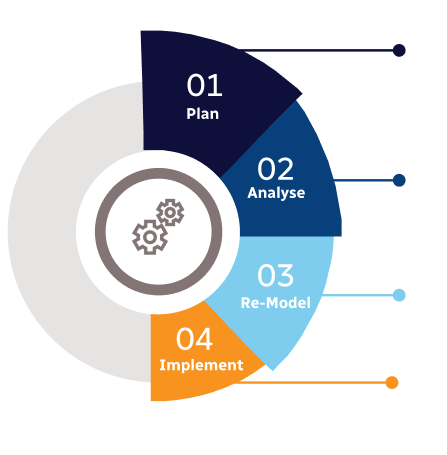
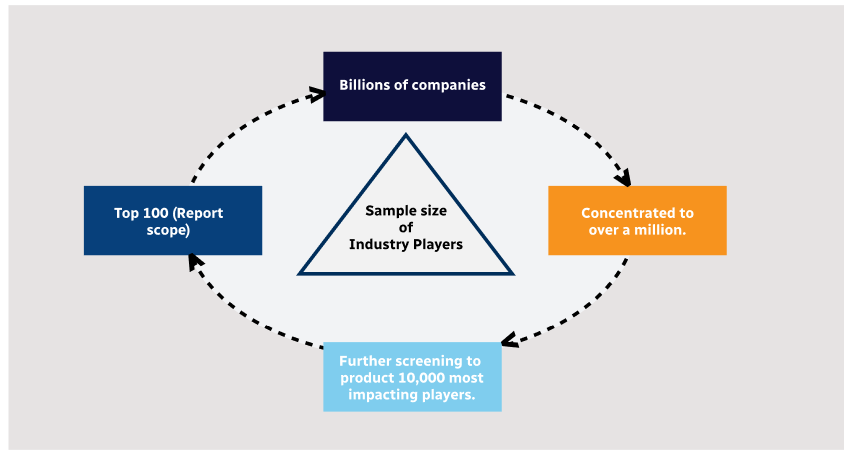
Step 1 - Identification of Relevant Samples Size from Population Database
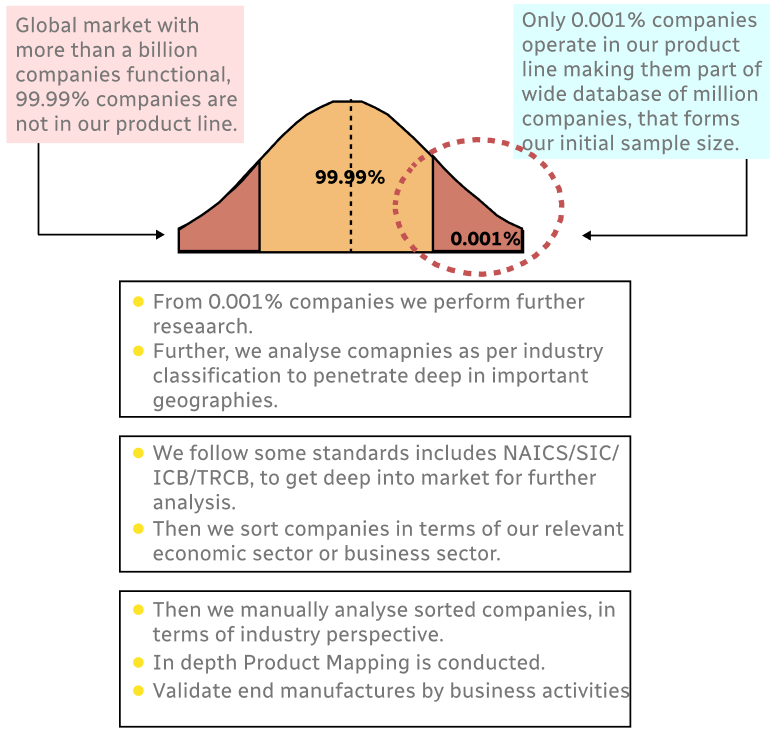
Step 2 - Approaches for Defining Global Market Size (Value, Volume* & Price*)
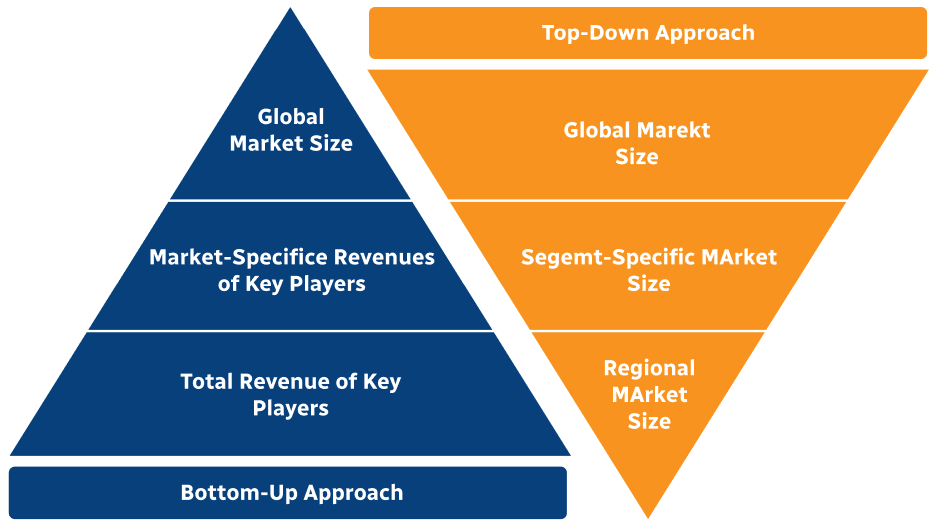
Note*: In applicable scenarios
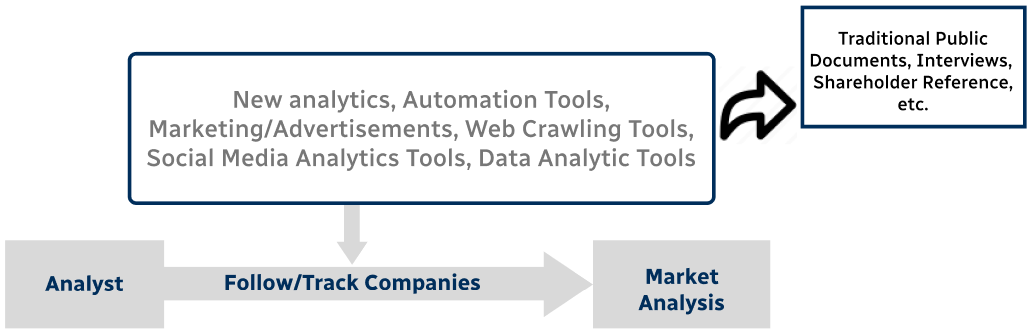
Step 3 - Data Sources
Primary Research
- Web Analytics
- Survey Reports
- Research Institute
- Latest Research Reports
- Opinion Leaders
Secondary Research
- Annual Reports
- White Paper
- Latest Press Release
- Industry Association
- Paid Database
- Investor Presentations
Step 4 - Data Triangulation
Involves using different sources of information in order to increase the validity of a study
These sources are likely to be stakeholders in a program - participants, other researchers, program staff, other community members, and so on.
Then we put all data in single framework & apply various statistical tools to find out the dynamic on the market.
During the analysis stage, feedback from the stakeholder groups would be compared to determine areas of agreement as well as areas of divergence