


Key Insights
The global Food Inspection Services market is projected to reach an impressive $26.27 billion in 2025, exhibiting a robust Compound Annual Growth Rate (CAGR) of 7.8% over the forecast period of 2025-2033. This substantial growth is underpinned by an increasing global focus on food safety, stringent regulatory frameworks, and a growing consumer demand for transparency and quality in the food supply chain. The market is driven by the imperative to prevent foodborne illnesses, ensure compliance with international standards, and protect brand reputation, particularly in light of a more interconnected and export-oriented global food trade. Technological advancements in inspection methodologies, such as AI-powered visual inspection and advanced laboratory testing, are also contributing significantly to market expansion by enhancing efficiency and accuracy.

Food Inspection Services Market Size (In Billion)

The market is segmented by application into SMEs, Large Enterprises, Government Agencies, and by type into During Production Inspection, Final Random Inspection, and Loading Supervision. Large enterprises and government agencies represent significant adoption rates due to the scale of their operations and the higher stakes involved in food safety compliance. The trend towards outsourcing inspection services by food businesses to specialized third-party providers is also a key growth enabler, allowing companies to focus on core competencies while ensuring adherence to evolving safety protocols. Emerging markets, particularly in Asia Pacific, are expected to witness accelerated growth due to rapid industrialization, increasing food consumption, and the rising awareness and enforcement of food safety regulations. However, challenges such as the high cost of advanced inspection technologies and the need for skilled personnel could present some restraints.

Food Inspection Services Company Market Share
Detailed Report Description: Food Inspection Services Market Analysis 2019-2033
This comprehensive report offers an in-depth analysis of the global Food Inspection Services market, providing actionable insights for stakeholders across the food industry. Covering a study period from 2019 to 2033, with a base year of 2025, this report meticulously examines market dynamics, emerging trends, dominant segments, and key players. We leverage extensive research and data to deliver precise forecasts and strategic guidance, ensuring businesses can navigate this critical sector with confidence. The Food Inspection Services market is crucial for ensuring food safety, regulatory compliance, and consumer trust, with increasing complexity driven by global supply chains and evolving consumer demands. This report details the market's value, projected to reach billions by 2033, with a significant CAGR.
Food Inspection Services Market Structure & Competitive Dynamics
The Food Inspection Services market exhibits a moderately concentrated structure, with a blend of large global players and specialized niche providers. Innovation ecosystems are burgeoning, driven by advancements in technology such as AI-powered anomaly detection and blockchain for traceability, fostering a dynamic competitive landscape. Regulatory frameworks, established by bodies like the FSIS (Food Safety and Inspection Service) in the US and the CFIA (Canadian Food Inspection Agency), play a pivotal role in shaping market entry and operational standards. The presence of product substitutes, while limited for core inspection services, exists in the form of internal quality control departments within large enterprises. End-user trends are heavily influenced by increasing consumer demand for transparency and safety, driving a preference for accredited and independent inspection services. Mergers and acquisition (M&A) activities are on the rise as larger entities seek to expand their service portfolios and geographical reach. Notable M&A deal values in recent years have amounted to billions of dollars, consolidating market share and enhancing competitive advantages for the acquiring firms. Companies like SGS, Intertek, and TÜV SÜD are actively participating in this consolidation, aiming to capture a larger portion of the estimated billions in global market revenue. The market share of leading companies is continuously shifting due to strategic acquisitions and organic growth initiatives.
Food Inspection Services Industry Trends & Insights
The Food Inspection Services industry is experiencing robust growth, propelled by an escalating global population and the corresponding surge in food production and consumption. A projected Compound Annual Growth Rate (CAGR) of approximately 7.5% is anticipated over the forecast period (2025–2033), translating to a market value expected to surpass billions. This expansion is primarily driven by increasingly stringent food safety regulations worldwide, mandating rigorous inspection protocols at various stages of the food supply chain. Technological disruptions are reshaping the industry significantly. The integration of artificial intelligence (AI) and machine learning (ML) in analyzing inspection data, identifying patterns, and predicting potential hazards is becoming mainstream. Advanced imaging technologies, such as hyperspectral imaging and thermal imaging, are enhancing the accuracy and efficiency of detecting contaminants and spoilage. Furthermore, the rise of the Internet of Things (IoT) enables real-time monitoring of food conditions during transit and storage, bolstering the effectiveness of loading supervision and during-production inspections. Consumer preferences are also a major influence. Heightened awareness regarding foodborne illnesses and a demand for ethically sourced and sustainably produced food are compelling food businesses to invest more heavily in third-party inspections to validate their claims and build consumer trust. The concept of 'farm-to-fork' traceability is gaining traction, with consumers actively seeking assurances about the origin and safety of their food. This trend is creating new market opportunities for inspection services that can offer comprehensive supply chain visibility. Competitive dynamics are characterized by intense competition among established global players like SGS, Intertek, and QIMA, who are expanding their service offerings and geographical footprints. Smaller, specialized firms are carving out niches by focusing on specific food types or inspection methodologies. The increasing market penetration of advanced inspection technologies, coupled with a growing emphasis on proactive risk management rather than reactive recall responses, is further fueling industry growth. Government agencies such as the UDAF (Utah Department of Agriculture and Food) and public health organizations are also significant drivers, setting standards and sometimes directly engaging inspection services to ensure compliance and public safety. The market penetration of specialized food inspection services is projected to reach over 80% by 2033, reflecting its essential role in the global food ecosystem.
Dominant Markets & Segments in Food Inspection Services
The Food Inspection Services market is characterized by distinct regional dominance and segment-specific growth. Geographically, North America and Europe currently represent the most dominant markets, collectively accounting for over 60% of the global market share. This dominance is underpinned by established regulatory frameworks, high consumer awareness of food safety, and a mature food processing industry. Countries within these regions, such as the United States, Germany, and the United Kingdom, are key contributors, driven by proactive government initiatives and a strong demand for accredited inspection services from both domestic and international food businesses.
Within the Application segment, Large Enterprises command the largest market share, estimated to be around 55% of the total market value. These enterprises, including multinational food manufacturers and retailers, have extensive supply chains and higher compliance burdens, necessitating comprehensive and frequent inspection services. Their substantial budgets allow for investment in advanced inspection technologies and long-term contracts with leading inspection providers.
The Government Agency segment is also a significant market, representing approximately 30% of the total market. Government bodies worldwide, such as the DHSS (Department of Health and Social Services) and Public Health agencies, are critical clients, responsible for setting and enforcing food safety standards. Their demand for inspection services is driven by the need to protect public health and ensure the integrity of the food supply.
Small and Medium-sized Enterprises (SMEs), while representing a smaller individual market share (around 15%), are a rapidly growing segment. As regulatory requirements become more complex and consumer expectations for safety rise, SMEs are increasingly outsourcing their inspection needs to specialized service providers to ensure compliance and maintain competitiveness.
In terms of Types of inspections, During Production Inspection holds the largest market share, estimated at over 40%. This type of inspection is crucial for identifying and rectifying potential issues early in the manufacturing process, thereby preventing costly recalls and ensuring product quality. The increasing focus on quality control throughout the production lifecycle directly fuels the demand for these services.
Final Random Inspection follows closely, accounting for approximately 35% of the market. This serves as a critical quality assurance step before products enter the distribution channels, ensuring that finished goods meet all stipulated standards and specifications.
Loading Supervision represents the remaining portion of the market share, around 25%. This type of inspection is vital for international trade, ensuring that products are handled, loaded, and documented correctly for export or import, minimizing risks of damage, contamination, or non-compliance during transit. Key drivers for dominance in this segment include robust import/export activities and the need for third-party verification.
Food Inspection Services Product Innovations
The Food Inspection Services market is witnessing rapid innovation, driven by the need for enhanced efficiency, accuracy, and traceability. Technological advancements, such as AI-powered visual inspection systems and rapid microbial testing kits, are significantly improving the detection of contaminants and adulterants. Blockchain technology is emerging as a key enabler for secure and transparent food supply chain management, allowing for verifiable inspection records from farm to fork. These innovations offer competitive advantages by reducing inspection times, minimizing human error, and providing deeper insights into food quality and safety. The market fit for these innovations is strong, addressing the increasing demands of regulators, businesses, and consumers for assured food safety and authenticity.
Report Segmentation & Scope
This report segments the Food Inspection Services market across key dimensions to provide a granular understanding of its dynamics. The Application segment is categorized into SMEs, Large Enterprises, and Government Agency. The SMEs segment is projected to exhibit a CAGR of 8.2%, driven by their growing need for cost-effective compliance solutions. Large Enterprises are expected to maintain a steady growth rate of 7.1%, owing to their extensive operations and continuous investment in quality assurance. The Government Agency segment is forecasted to grow at 6.8%, influenced by evolving regulatory landscapes and public health mandates.
The Types of inspection services are segmented into During Production Inspection, Final Random Inspection, and Loading Supervision. During Production Inspection is anticipated to lead market growth with a CAGR of 7.8%, due to its proactive approach to quality control. Final Random Inspection is expected to grow at 7.3%, driven by the need for final product validation. Loading Supervision is projected to see a CAGR of 6.5%, supported by the growing volume of international trade. The scope of this report encompasses global market analysis, regional breakdowns, and detailed segment-specific insights for the forecast period.
Key Drivers of Food Inspection Services Growth
The Food Inspection Services market is propelled by a confluence of powerful drivers. Increasingly stringent global food safety regulations, enforced by bodies like the FDA and EFSA, mandate rigorous inspections and certifications. Heightened consumer awareness and demand for safe, transparent food products compel businesses to invest in robust inspection protocols to build trust. Technological advancements, including AI, IoT, and advanced analytics, are enhancing the efficiency, accuracy, and scope of inspection services, enabling proactive risk management. The growing complexity of global food supply chains necessitates independent verification to ensure quality and compliance across diverse geographies. Furthermore, the rising incidence of foodborne illnesses and product recalls globally underscores the critical importance of effective inspection services for both public health and brand reputation.
Challenges in the Food Inspection Services Sector
Despite robust growth, the Food Inspection Services sector faces several challenges. Stringent and evolving regulatory landscapes can be burdensome, requiring continuous adaptation and investment in updated methodologies and training. High operational costs associated with skilled personnel, sophisticated equipment, and maintaining accreditation can impact profitability, particularly for smaller players. Intense competition from both established global giants and emerging niche providers puts pressure on pricing and margins. Supply chain disruptions, as witnessed in recent global events, can impact the timely execution of inspections and the ability to access certain markets. Lastly, the need for continuous technological adoption requires significant upfront investment, posing a barrier for some businesses aiming to remain competitive.
Leading Players in the Food Inspection Services Market
- SGS
- Intertek
- TÜV SÜD
- QIMA
- FSIS
- FlexXray
- UDAF
- CFIA
- Public Health
- DHSS
Key Developments in Food Inspection Services Sector
- 2023 Q4: SGS launches a new suite of AI-driven analytical tools for enhanced food contaminant detection.
- 2023 Q3: Intertek expands its food testing capabilities in Southeast Asia through a strategic acquisition.
- 2023 Q2: FlexXray announces significant investment in portable X-ray inspection technology for on-site food safety checks.
- 2023 Q1: TÜV SÜD partners with a major food certification body to streamline compliance processes for global food exporters.
- 2022 Q4: QIMA enhances its digital platform with real-time reporting for food inspections, improving transparency for clients.
- 2022 Q3: The CFIA introduces new guidelines for allergen detection, increasing demand for specialized testing services.
- 2022 Q2: Public Health agencies across Europe emphasize the importance of supply chain integrity, boosting demand for loading supervision.
- 2022 Q1: FSIS announces initiatives to integrate advanced data analytics into its inspection processes, driving technological adoption.
- 2021 Q4: DHSS reports a decline in foodborne illness outbreaks attributed to improved inspection regimes.
- 2021 Q3: UDAF collaborates with local food producers to implement enhanced food safety training programs, indirectly boosting inspection needs.
Strategic Food Inspection Services Market Outlook
The strategic outlook for the Food Inspection Services market is highly optimistic, characterized by sustained growth and evolving service offerings. Key accelerators include the increasing global emphasis on food safety and traceability, driven by consumer demand and regulatory mandates. The continuous integration of advanced technologies, such as AI and blockchain, presents significant opportunities for service differentiation and enhanced efficiency. Expansion into emerging markets with rapidly developing food industries, coupled with the growing focus on niche areas like organic and sustainable food certifications, will fuel further market penetration. Strategic partnerships and consolidation among key players are expected to continue, shaping a more integrated and comprehensive service landscape to meet the complex needs of the global food industry.
Food Inspection Services Segmentation
-
1. Application
- 1.1. SMEs
- 1.2. Large Enterprises
- 1.3. Government Agency
-
2. Types
- 2.1. During Production Inspection
- 2.2. Final Random Inspection
- 2.3. Loading Supervision
Food Inspection Services Segmentation By Geography
-
1. North America
- 1.1. United States
- 1.2. Canada
- 1.3. Mexico
-
2. South America
- 2.1. Brazil
- 2.2. Argentina
- 2.3. Rest of South America
-
3. Europe
- 3.1. United Kingdom
- 3.2. Germany
- 3.3. France
- 3.4. Italy
- 3.5. Spain
- 3.6. Russia
- 3.7. Benelux
- 3.8. Nordics
- 3.9. Rest of Europe
-
4. Middle East & Africa
- 4.1. Turkey
- 4.2. Israel
- 4.3. GCC
- 4.4. North Africa
- 4.5. South Africa
- 4.6. Rest of Middle East & Africa
-
5. Asia Pacific
- 5.1. China
- 5.2. India
- 5.3. Japan
- 5.4. South Korea
- 5.5. ASEAN
- 5.6. Oceania
- 5.7. Rest of Asia Pacific

Food Inspection Services Regional Market Share
Geographic Coverage of Food Inspection Services
Food Inspection Services REPORT HIGHLIGHTS
| Aspects | Details |
|---|---|
| Study Period | 2020-2034 |
| Base Year | 2025 |
| Estimated Year | 2026 |
| Forecast Period | 2026-2034 |
| Historical Period | 2020-2025 |
| Growth Rate | CAGR of 7.8% from 2020-2034 |
| Segmentation |
|
Table of Contents
- 1. Introduction
- 1.1. Research Scope
- 1.2. Market Segmentation
- 1.3. Research Methodology
- 1.4. Definitions and Assumptions
- 2. Executive Summary
- 2.1. Introduction
- 3. Market Dynamics
- 3.1. Introduction
- 3.2. Market Drivers
- 3.3. Market Restrains
- 3.4. Market Trends
- 4. Market Factor Analysis
- 4.1. Porters Five Forces
- 4.2. Supply/Value Chain
- 4.3. PESTEL analysis
- 4.4. Market Entropy
- 4.5. Patent/Trademark Analysis
- 5. Global Food Inspection Services Analysis, Insights and Forecast, 2020-2032
- 5.1. Market Analysis, Insights and Forecast - by Application
- 5.1.1. SMEs
- 5.1.2. Large Enterprises
- 5.1.3. Government Agency
- 5.2. Market Analysis, Insights and Forecast - by Types
- 5.2.1. During Production Inspection
- 5.2.2. Final Random Inspection
- 5.2.3. Loading Supervision
- 5.3. Market Analysis, Insights and Forecast - by Region
- 5.3.1. North America
- 5.3.2. South America
- 5.3.3. Europe
- 5.3.4. Middle East & Africa
- 5.3.5. Asia Pacific
- 5.1. Market Analysis, Insights and Forecast - by Application
- 6. North America Food Inspection Services Analysis, Insights and Forecast, 2020-2032
- 6.1. Market Analysis, Insights and Forecast - by Application
- 6.1.1. SMEs
- 6.1.2. Large Enterprises
- 6.1.3. Government Agency
- 6.2. Market Analysis, Insights and Forecast - by Types
- 6.2.1. During Production Inspection
- 6.2.2. Final Random Inspection
- 6.2.3. Loading Supervision
- 6.1. Market Analysis, Insights and Forecast - by Application
- 7. South America Food Inspection Services Analysis, Insights and Forecast, 2020-2032
- 7.1. Market Analysis, Insights and Forecast - by Application
- 7.1.1. SMEs
- 7.1.2. Large Enterprises
- 7.1.3. Government Agency
- 7.2. Market Analysis, Insights and Forecast - by Types
- 7.2.1. During Production Inspection
- 7.2.2. Final Random Inspection
- 7.2.3. Loading Supervision
- 7.1. Market Analysis, Insights and Forecast - by Application
- 8. Europe Food Inspection Services Analysis, Insights and Forecast, 2020-2032
- 8.1. Market Analysis, Insights and Forecast - by Application
- 8.1.1. SMEs
- 8.1.2. Large Enterprises
- 8.1.3. Government Agency
- 8.2. Market Analysis, Insights and Forecast - by Types
- 8.2.1. During Production Inspection
- 8.2.2. Final Random Inspection
- 8.2.3. Loading Supervision
- 8.1. Market Analysis, Insights and Forecast - by Application
- 9. Middle East & Africa Food Inspection Services Analysis, Insights and Forecast, 2020-2032
- 9.1. Market Analysis, Insights and Forecast - by Application
- 9.1.1. SMEs
- 9.1.2. Large Enterprises
- 9.1.3. Government Agency
- 9.2. Market Analysis, Insights and Forecast - by Types
- 9.2.1. During Production Inspection
- 9.2.2. Final Random Inspection
- 9.2.3. Loading Supervision
- 9.1. Market Analysis, Insights and Forecast - by Application
- 10. Asia Pacific Food Inspection Services Analysis, Insights and Forecast, 2020-2032
- 10.1. Market Analysis, Insights and Forecast - by Application
- 10.1.1. SMEs
- 10.1.2. Large Enterprises
- 10.1.3. Government Agency
- 10.2. Market Analysis, Insights and Forecast - by Types
- 10.2.1. During Production Inspection
- 10.2.2. Final Random Inspection
- 10.2.3. Loading Supervision
- 10.1. Market Analysis, Insights and Forecast - by Application
- 11. Competitive Analysis
- 11.1. Global Market Share Analysis 2025
- 11.2. Company Profiles
- 11.2.1 FSIS
- 11.2.1.1. Overview
- 11.2.1.2. Products
- 11.2.1.3. SWOT Analysis
- 11.2.1.4. Recent Developments
- 11.2.1.5. Financials (Based on Availability)
- 11.2.2 FlexXray
- 11.2.2.1. Overview
- 11.2.2.2. Products
- 11.2.2.3. SWOT Analysis
- 11.2.2.4. Recent Developments
- 11.2.2.5. Financials (Based on Availability)
- 11.2.3 UDAF
- 11.2.3.1. Overview
- 11.2.3.2. Products
- 11.2.3.3. SWOT Analysis
- 11.2.3.4. Recent Developments
- 11.2.3.5. Financials (Based on Availability)
- 11.2.4 CFIA
- 11.2.4.1. Overview
- 11.2.4.2. Products
- 11.2.4.3. SWOT Analysis
- 11.2.4.4. Recent Developments
- 11.2.4.5. Financials (Based on Availability)
- 11.2.5 TÜV SÜD
- 11.2.5.1. Overview
- 11.2.5.2. Products
- 11.2.5.3. SWOT Analysis
- 11.2.5.4. Recent Developments
- 11.2.5.5. Financials (Based on Availability)
- 11.2.6 Public Health
- 11.2.6.1. Overview
- 11.2.6.2. Products
- 11.2.6.3. SWOT Analysis
- 11.2.6.4. Recent Developments
- 11.2.6.5. Financials (Based on Availability)
- 11.2.7 Intertek
- 11.2.7.1. Overview
- 11.2.7.2. Products
- 11.2.7.3. SWOT Analysis
- 11.2.7.4. Recent Developments
- 11.2.7.5. Financials (Based on Availability)
- 11.2.8 QIMA
- 11.2.8.1. Overview
- 11.2.8.2. Products
- 11.2.8.3. SWOT Analysis
- 11.2.8.4. Recent Developments
- 11.2.8.5. Financials (Based on Availability)
- 11.2.9 SGS
- 11.2.9.1. Overview
- 11.2.9.2. Products
- 11.2.9.3. SWOT Analysis
- 11.2.9.4. Recent Developments
- 11.2.9.5. Financials (Based on Availability)
- 11.2.10 DHSS
- 11.2.10.1. Overview
- 11.2.10.2. Products
- 11.2.10.3. SWOT Analysis
- 11.2.10.4. Recent Developments
- 11.2.10.5. Financials (Based on Availability)
- 11.2.1 FSIS
List of Figures
- Figure 1: Global Food Inspection Services Revenue Breakdown (undefined, %) by Region 2025 & 2033
- Figure 2: North America Food Inspection Services Revenue (undefined), by Application 2025 & 2033
- Figure 3: North America Food Inspection Services Revenue Share (%), by Application 2025 & 2033
- Figure 4: North America Food Inspection Services Revenue (undefined), by Types 2025 & 2033
- Figure 5: North America Food Inspection Services Revenue Share (%), by Types 2025 & 2033
- Figure 6: North America Food Inspection Services Revenue (undefined), by Country 2025 & 2033
- Figure 7: North America Food Inspection Services Revenue Share (%), by Country 2025 & 2033
- Figure 8: South America Food Inspection Services Revenue (undefined), by Application 2025 & 2033
- Figure 9: South America Food Inspection Services Revenue Share (%), by Application 2025 & 2033
- Figure 10: South America Food Inspection Services Revenue (undefined), by Types 2025 & 2033
- Figure 11: South America Food Inspection Services Revenue Share (%), by Types 2025 & 2033
- Figure 12: South America Food Inspection Services Revenue (undefined), by Country 2025 & 2033
- Figure 13: South America Food Inspection Services Revenue Share (%), by Country 2025 & 2033
- Figure 14: Europe Food Inspection Services Revenue (undefined), by Application 2025 & 2033
- Figure 15: Europe Food Inspection Services Revenue Share (%), by Application 2025 & 2033
- Figure 16: Europe Food Inspection Services Revenue (undefined), by Types 2025 & 2033
- Figure 17: Europe Food Inspection Services Revenue Share (%), by Types 2025 & 2033
- Figure 18: Europe Food Inspection Services Revenue (undefined), by Country 2025 & 2033
- Figure 19: Europe Food Inspection Services Revenue Share (%), by Country 2025 & 2033
- Figure 20: Middle East & Africa Food Inspection Services Revenue (undefined), by Application 2025 & 2033
- Figure 21: Middle East & Africa Food Inspection Services Revenue Share (%), by Application 2025 & 2033
- Figure 22: Middle East & Africa Food Inspection Services Revenue (undefined), by Types 2025 & 2033
- Figure 23: Middle East & Africa Food Inspection Services Revenue Share (%), by Types 2025 & 2033
- Figure 24: Middle East & Africa Food Inspection Services Revenue (undefined), by Country 2025 & 2033
- Figure 25: Middle East & Africa Food Inspection Services Revenue Share (%), by Country 2025 & 2033
- Figure 26: Asia Pacific Food Inspection Services Revenue (undefined), by Application 2025 & 2033
- Figure 27: Asia Pacific Food Inspection Services Revenue Share (%), by Application 2025 & 2033
- Figure 28: Asia Pacific Food Inspection Services Revenue (undefined), by Types 2025 & 2033
- Figure 29: Asia Pacific Food Inspection Services Revenue Share (%), by Types 2025 & 2033
- Figure 30: Asia Pacific Food Inspection Services Revenue (undefined), by Country 2025 & 2033
- Figure 31: Asia Pacific Food Inspection Services Revenue Share (%), by Country 2025 & 2033
List of Tables
- Table 1: Global Food Inspection Services Revenue undefined Forecast, by Application 2020 & 2033
- Table 2: Global Food Inspection Services Revenue undefined Forecast, by Types 2020 & 2033
- Table 3: Global Food Inspection Services Revenue undefined Forecast, by Region 2020 & 2033
- Table 4: Global Food Inspection Services Revenue undefined Forecast, by Application 2020 & 2033
- Table 5: Global Food Inspection Services Revenue undefined Forecast, by Types 2020 & 2033
- Table 6: Global Food Inspection Services Revenue undefined Forecast, by Country 2020 & 2033
- Table 7: United States Food Inspection Services Revenue (undefined) Forecast, by Application 2020 & 2033
- Table 8: Canada Food Inspection Services Revenue (undefined) Forecast, by Application 2020 & 2033
- Table 9: Mexico Food Inspection Services Revenue (undefined) Forecast, by Application 2020 & 2033
- Table 10: Global Food Inspection Services Revenue undefined Forecast, by Application 2020 & 2033
- Table 11: Global Food Inspection Services Revenue undefined Forecast, by Types 2020 & 2033
- Table 12: Global Food Inspection Services Revenue undefined Forecast, by Country 2020 & 2033
- Table 13: Brazil Food Inspection Services Revenue (undefined) Forecast, by Application 2020 & 2033
- Table 14: Argentina Food Inspection Services Revenue (undefined) Forecast, by Application 2020 & 2033
- Table 15: Rest of South America Food Inspection Services Revenue (undefined) Forecast, by Application 2020 & 2033
- Table 16: Global Food Inspection Services Revenue undefined Forecast, by Application 2020 & 2033
- Table 17: Global Food Inspection Services Revenue undefined Forecast, by Types 2020 & 2033
- Table 18: Global Food Inspection Services Revenue undefined Forecast, by Country 2020 & 2033
- Table 19: United Kingdom Food Inspection Services Revenue (undefined) Forecast, by Application 2020 & 2033
- Table 20: Germany Food Inspection Services Revenue (undefined) Forecast, by Application 2020 & 2033
- Table 21: France Food Inspection Services Revenue (undefined) Forecast, by Application 2020 & 2033
- Table 22: Italy Food Inspection Services Revenue (undefined) Forecast, by Application 2020 & 2033
- Table 23: Spain Food Inspection Services Revenue (undefined) Forecast, by Application 2020 & 2033
- Table 24: Russia Food Inspection Services Revenue (undefined) Forecast, by Application 2020 & 2033
- Table 25: Benelux Food Inspection Services Revenue (undefined) Forecast, by Application 2020 & 2033
- Table 26: Nordics Food Inspection Services Revenue (undefined) Forecast, by Application 2020 & 2033
- Table 27: Rest of Europe Food Inspection Services Revenue (undefined) Forecast, by Application 2020 & 2033
- Table 28: Global Food Inspection Services Revenue undefined Forecast, by Application 2020 & 2033
- Table 29: Global Food Inspection Services Revenue undefined Forecast, by Types 2020 & 2033
- Table 30: Global Food Inspection Services Revenue undefined Forecast, by Country 2020 & 2033
- Table 31: Turkey Food Inspection Services Revenue (undefined) Forecast, by Application 2020 & 2033
- Table 32: Israel Food Inspection Services Revenue (undefined) Forecast, by Application 2020 & 2033
- Table 33: GCC Food Inspection Services Revenue (undefined) Forecast, by Application 2020 & 2033
- Table 34: North Africa Food Inspection Services Revenue (undefined) Forecast, by Application 2020 & 2033
- Table 35: South Africa Food Inspection Services Revenue (undefined) Forecast, by Application 2020 & 2033
- Table 36: Rest of Middle East & Africa Food Inspection Services Revenue (undefined) Forecast, by Application 2020 & 2033
- Table 37: Global Food Inspection Services Revenue undefined Forecast, by Application 2020 & 2033
- Table 38: Global Food Inspection Services Revenue undefined Forecast, by Types 2020 & 2033
- Table 39: Global Food Inspection Services Revenue undefined Forecast, by Country 2020 & 2033
- Table 40: China Food Inspection Services Revenue (undefined) Forecast, by Application 2020 & 2033
- Table 41: India Food Inspection Services Revenue (undefined) Forecast, by Application 2020 & 2033
- Table 42: Japan Food Inspection Services Revenue (undefined) Forecast, by Application 2020 & 2033
- Table 43: South Korea Food Inspection Services Revenue (undefined) Forecast, by Application 2020 & 2033
- Table 44: ASEAN Food Inspection Services Revenue (undefined) Forecast, by Application 2020 & 2033
- Table 45: Oceania Food Inspection Services Revenue (undefined) Forecast, by Application 2020 & 2033
- Table 46: Rest of Asia Pacific Food Inspection Services Revenue (undefined) Forecast, by Application 2020 & 2033
Frequently Asked Questions
1. What is the projected Compound Annual Growth Rate (CAGR) of the Food Inspection Services?
The projected CAGR is approximately 7.8%.
2. Which companies are prominent players in the Food Inspection Services?
Key companies in the market include FSIS, FlexXray, UDAF, CFIA, TÜV SÜD, Public Health, Intertek, QIMA, SGS, DHSS.
3. What are the main segments of the Food Inspection Services?
The market segments include Application, Types.
4. Can you provide details about the market size?
The market size is estimated to be USD XXX N/A as of 2022.
5. What are some drivers contributing to market growth?
N/A
6. What are the notable trends driving market growth?
N/A
7. Are there any restraints impacting market growth?
N/A
8. Can you provide examples of recent developments in the market?
N/A
9. What pricing options are available for accessing the report?
Pricing options include single-user, multi-user, and enterprise licenses priced at USD 4900.00, USD 7350.00, and USD 9800.00 respectively.
10. Is the market size provided in terms of value or volume?
The market size is provided in terms of value, measured in N/A.
11. Are there any specific market keywords associated with the report?
Yes, the market keyword associated with the report is "Food Inspection Services," which aids in identifying and referencing the specific market segment covered.
12. How do I determine which pricing option suits my needs best?
The pricing options vary based on user requirements and access needs. Individual users may opt for single-user licenses, while businesses requiring broader access may choose multi-user or enterprise licenses for cost-effective access to the report.
13. Are there any additional resources or data provided in the Food Inspection Services report?
While the report offers comprehensive insights, it's advisable to review the specific contents or supplementary materials provided to ascertain if additional resources or data are available.
14. How can I stay updated on further developments or reports in the Food Inspection Services?
To stay informed about further developments, trends, and reports in the Food Inspection Services, consider subscribing to industry newsletters, following relevant companies and organizations, or regularly checking reputable industry news sources and publications.
Methodology
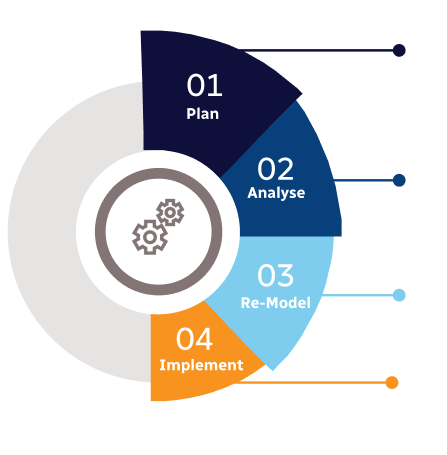
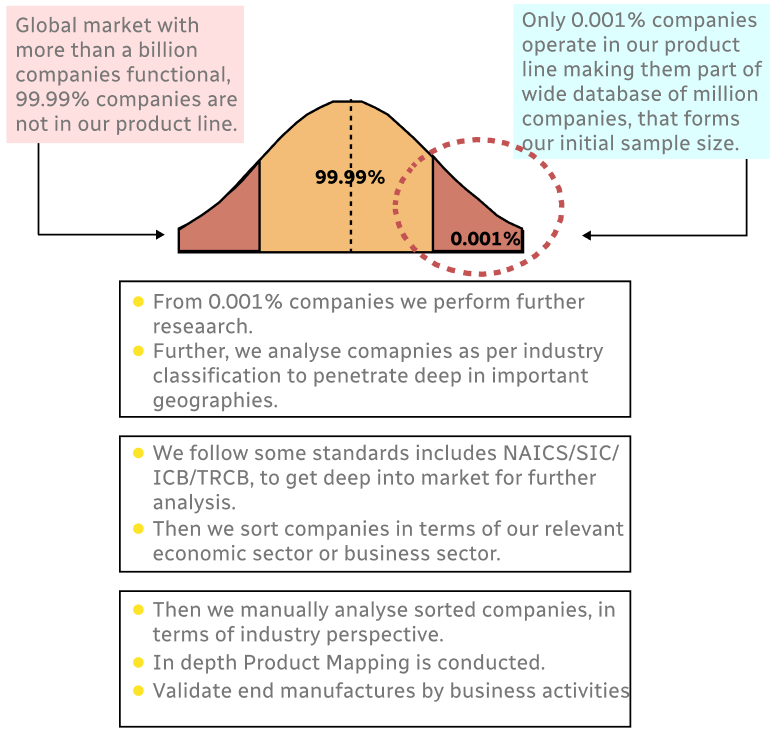
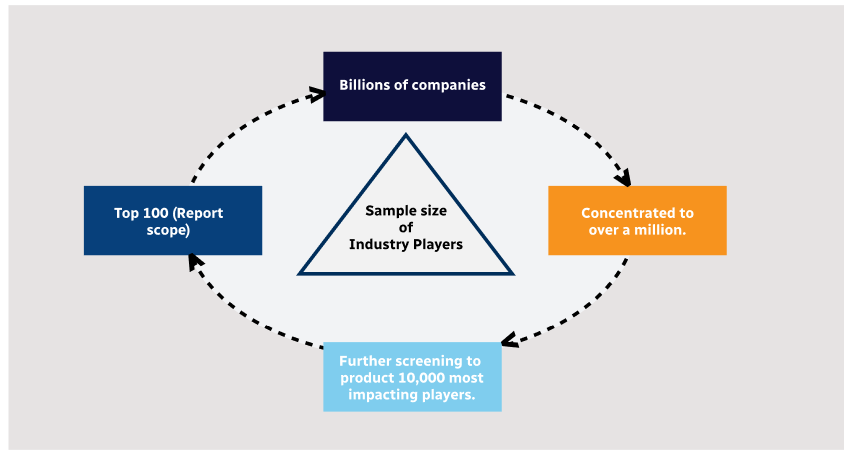
Step 1 - Identification of Relevant Samples Size from Population Database
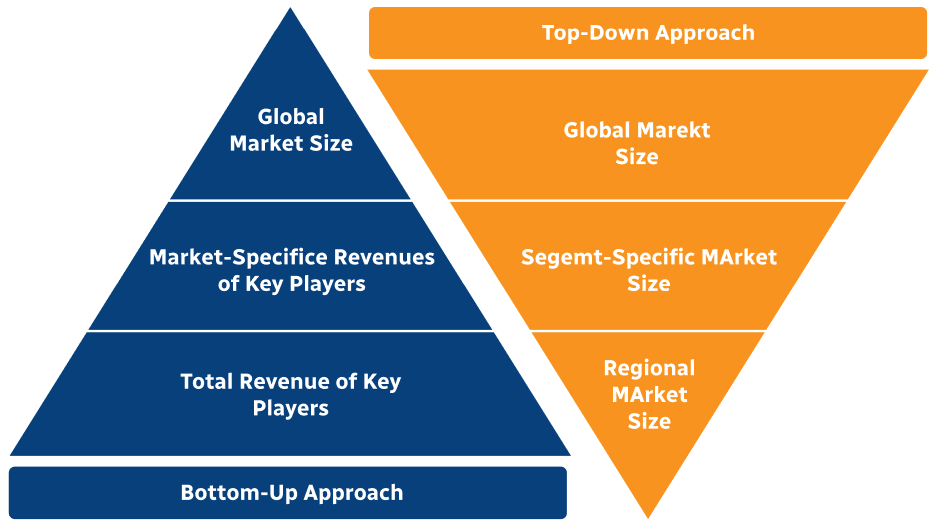
Step 2 - Approaches for Defining Global Market Size (Value, Volume* & Price*)
Note*: In applicable scenarios
Step 3 - Data Sources
Primary Research
- Web Analytics
- Survey Reports
- Research Institute
- Latest Research Reports
- Opinion Leaders
Secondary Research
- Annual Reports
- White Paper
- Latest Press Release
- Industry Association
- Paid Database
- Investor Presentations
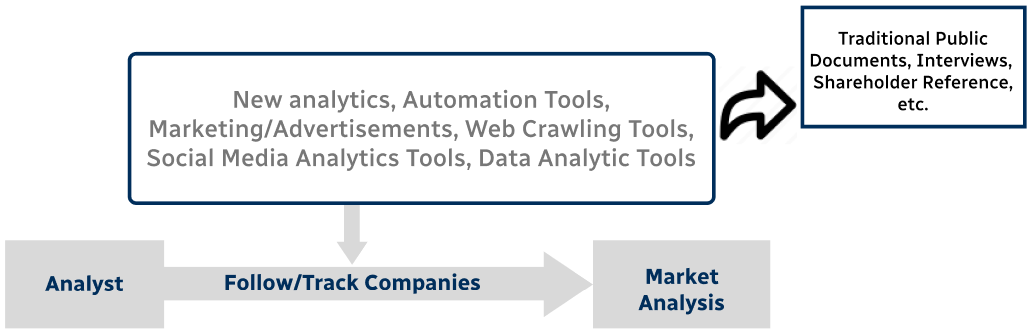
Step 4 - Data Triangulation
Involves using different sources of information in order to increase the validity of a study
These sources are likely to be stakeholders in a program - participants, other researchers, program staff, other community members, and so on.
Then we put all data in single framework & apply various statistical tools to find out the dynamic on the market.
During the analysis stage, feedback from the stakeholder groups would be compared to determine areas of agreement as well as areas of divergence