



Key Insights
The Colombia Freight and Logistics Market is poised for significant expansion, projected to reach approximately USD 20.39 million by 2025 and expand at a robust Compound Annual Growth Rate (CAGR) of 7.62% throughout the forecast period of 2025-2033. This growth is propelled by a confluence of factors, including increasing domestic and international trade activities, a burgeoning manufacturing sector, and the continuous development of infrastructure projects across the country. The demand for efficient and integrated logistics solutions is escalating, driven by the need for streamlined supply chains to support sectors like manufacturing and automotive, distributive trade, and construction. Furthermore, the growing adoption of advanced technologies, such as automation in warehousing and real-time tracking in freight transport, is enhancing operational efficiencies and contributing to market dynamism. The expansion of e-commerce is also a significant catalyst, fueling the demand for courier, express, and parcel services, as well as specialized cold chain logistics for perishable goods.

Colombia Freight and Logistics Market Market Size (In Million)

Key segments within the Colombia Freight and Logistics Market are demonstrating varied growth trajectories. Freight transport, encompassing road, rail, sea, and air, is fundamental to the market's backbone. Freight forwarding and warehousing services are experiencing heightened demand due to the increasing complexity of global supply chains and the need for efficient storage and distribution solutions. The courier, express, and parcel segment is witnessing accelerated growth, largely attributed to the e-commerce boom. Value-added services, including reverse logistics and customization, are becoming increasingly crucial for businesses seeking a competitive edge. While the market benefits from strong drivers like economic development and trade liberalization, it also faces certain restraints. These may include fluctuating fuel prices, potential disruptions in transportation networks due to natural events or labor issues, and the ongoing need for investment in modernizing logistics infrastructure to meet evolving demands. Addressing these challenges will be crucial for sustained and optimal market performance.

Colombia Freight and Logistics Market Company Market Share

Unlock critical insights into the dynamic Colombia freight and logistics market with this in-depth report. Covering the period from 2019 to 2033, with a base year of 2025, this analysis provides a detailed examination of market structure, industry trends, dominant segments, product innovations, key growth drivers, challenges, leading players, and strategic outlook. Essential for logistics providers, shippers, investors, and industry stakeholders seeking to capitalize on the burgeoning Colombian market.
Colombia Freight and Logistics Market Market Structure & Competitive Dynamics
The Colombia freight and logistics market exhibits a moderately concentrated structure, with a mix of global giants and robust domestic players vying for market share. Key companies such as FedEx Corporation, United Parcel Service, Deutsche Post DHL Group (including Suppla), and CEVA Logistics leverage their extensive global networks and advanced technological capabilities. These international players compete fiercely with strong local entities like Blu Logistics, Grupo TCC, Coltanques, Transport Sanchez Polo, NAVIERA FLUVIAL COLOMBIANA SA, SERVIENTREGA SA, and Inter Rapidisimo SA, who possess deep understanding of local nuances and established customer relationships. Market concentration is influenced by the increasing demand for integrated logistics solutions and the gradual consolidation through mergers and acquisitions (M&A). While specific M&A deal values are subject to proprietary data, recent years have seen strategic acquisitions aimed at expanding service portfolios and geographical reach, particularly in road freight transport and cold chain logistics. The regulatory framework, overseen by entities like the Ministry of Transport, plays a crucial role in shaping competition, focusing on infrastructure development, safety standards, and trade facilitation. The presence of product substitutes is limited in core freight transport and freight forwarding services, but innovation in technology-driven solutions, such as advanced tracking and supply chain management software, is a key differentiator. End-user trends, including the growth of e-commerce and the demand for specialized handling of goods in sectors like pharmaceutical and healthcare, are significantly impacting market dynamics. The innovation ecosystem is driven by investments in digital transformation, sustainable logistics, and efficient warehousing solutions.
Colombia Freight and Logistics Market Industry Trends & Insights
The Colombia freight and logistics market is poised for significant expansion, driven by a confluence of robust economic growth, increasing industrial output, and expanding international trade. The compound annual growth rate (CAGR) is projected to be approximately 6.5% from 2025 to 2033. A primary growth driver is the burgeoning e-commerce sector, which fuels an insatiable demand for efficient courier, express, and parcel (CEP) services and last-mile delivery solutions. This trend is further amplified by increasing internet penetration and a growing middle class with higher disposable incomes. Technological disruptions are rapidly reshaping the industry. Investments in digitalization, including the adoption of AI-powered route optimization, IoT for real-time tracking, blockchain for enhanced transparency, and automation in warehousing, are becoming critical for maintaining competitive advantage. These technologies are not only improving operational efficiency but also enhancing customer experience through faster delivery times and greater visibility. Consumer preferences are shifting towards faster, more reliable, and sustainable logistics options. The demand for green logistics solutions, including the adoption of electric vehicles and optimized fuel consumption, is gaining traction. Furthermore, the rise of value-added services such as kitting, assembly, and specialized packaging is becoming a key differentiator for logistics providers. Competitive dynamics are intensifying, with both global players and agile domestic companies striving to capture market share. Strategic partnerships and collaborations are emerging as a means to expand service offerings and penetrate new market segments. The government's focus on improving infrastructure, particularly in road and inland waterway transport, is another significant factor fostering market growth by reducing transit times and logistics costs. The oil and gas and quarrying sector, along with manufacturing and automotive, continues to be substantial contributors to freight volumes, necessitating specialized logistics solutions. The pharmaceutical and healthcare sector's demand for stringent cold chain logistics is also a significant growth area.
Dominant Markets & Segments in Colombia Freight and Logistics Market
Within the Colombia freight and logistics market, road freight transport stands out as the dominant mode, accounting for an estimated 55% of the total freight volume. This dominance is attributable to Colombia's extensive road network and the inherent flexibility and cost-effectiveness of road transport for a wide range of goods across diverse geographical terrains. Key drivers for this segment include increasing consumer demand for goods, the expansion of manufacturing hubs, and the government's continued investment in road infrastructure development and maintenance. The Distributive Trade end-user segment represents the largest consumer of logistics services, driven by the retail sector's growth and the burgeoning e-commerce landscape. This segment's demand for efficient warehousing and last-mile delivery solutions propels the growth of freight forwarding and courier, express, and parcel (CEP) services. Economic policies aimed at boosting domestic consumption and facilitating trade, coupled with infrastructure upgrades, directly benefit this segment.
The Courier, Express, and Parcel (CEP) segment is experiencing rapid growth, with an estimated CAGR of 7.2% during the forecast period. This surge is primarily fueled by the exponential growth of e-commerce, which necessitates rapid and reliable delivery of smaller parcels. The increasing adoption of online shopping habits among the Colombian population, coupled with the expansion of logistics networks by key players like Servientrega SA and Inter Rapidisimo SA, solidifies its dominance. Technological advancements in tracking, sorting, and last-mile delivery optimization are further accelerating this segment's expansion.
In terms of end-users, Manufacturing and Automotive remains a significant contributor to freight volumes, demanding specialized logistics for raw materials, components, and finished products. The ongoing industrialization and increasing production capacities within the automotive sector are key growth factors. Oil and Gas and Quarrying also constitute a substantial portion, requiring heavy-duty transport and specialized handling of equipment and extracted materials, although its growth is subject to global commodity price fluctuations. Agriculture, Fishing, and Forestry, while more fragmented, are increasingly relying on efficient logistics for the timely distribution of perishable goods and raw materials, driving demand for temperature-controlled transportation and specialized warehousing. The Pharmaceutical and Healthcare segment, although smaller in volume, is characterized by high-value goods and stringent regulatory requirements, making cold chain logistics and specialized value-added services critical for its operations.
Colombia Freight and Logistics Market Product Innovations
Innovation in the Colombia freight and logistics market is centered on enhancing efficiency, visibility, and sustainability. Key developments include the adoption of Artificial Intelligence (AI) for predictive analytics in route optimization and demand forecasting, reducing transit times and fuel consumption. Internet of Things (IoT) devices are increasingly integrated into fleets and warehouses, providing real-time data on location, temperature, and condition of goods, crucial for cold chain logistics and high-value cargo. Blockchain technology is being explored to enhance supply chain transparency and security, particularly for international freight forwarding. Furthermore, automation in warehousing, including robotic arms and automated guided vehicles (AGVs), is streamlining inventory management and order fulfillment.
Report Segmentation & Scope
This report provides a granular analysis of the Colombia freight and logistics market across key segments.
By Function: The market is segmented into Freight Transport (further categorized into Road, Rail, Sea and Inland Waterway, and Air), Freight Forwarding, Warehousing, Courier, Express, and Parcel (CEP), Value-added Services, and Cold Chain Logistics. Each of these segments is analyzed for its market size, growth projections, and competitive dynamics, with road freight transport and CEP currently holding significant market shares.
By End User: The analysis encompasses Construction, Oil and Gas and Quarrying, Agriculture, Fishing, and Forestry, Manufacturing and Automotive, Distributive Trade, and Other End Users (Pharmaceutical and Healthcare). The Distributive Trade segment is expected to exhibit the highest growth, closely followed by Pharmaceutical and Healthcare due to specialized needs.
Key Drivers of Colombia Freight and Logistics Market Growth
The Colombia freight and logistics market is propelled by several key factors. The robust growth of the e-commerce sector is a primary driver, significantly increasing demand for efficient courier, express, and parcel (CEP) services and advanced warehousing solutions. Government initiatives focused on infrastructure development, particularly in road and port facilities, are reducing transit times and logistics costs, thereby enhancing overall market efficiency. The expanding manufacturing and automotive sectors contribute to increased freight volumes, necessitating specialized freight transport and value-added services. Furthermore, the growing global demand for Colombian agricultural products is spurring growth in specialized logistics, including cold chain logistics.
Challenges in the Colombia Freight and Logistics Market Sector
Despite its growth potential, the Colombia freight and logistics market faces several challenges. Inadequate infrastructure in certain regions, particularly in rural areas, can lead to higher operating costs and longer delivery times for freight transport. Regulatory hurdles and bureaucratic complexities, though improving, can still pose challenges for new entrants and international freight forwarding operations. Intense competition among players, especially in the CEP segment, can lead to price pressures and reduced profit margins. Furthermore, security concerns related to cargo theft and pilferage require continuous investment in advanced tracking and security measures. The reliance on fossil fuels also presents an environmental challenge, driving the need for greater adoption of sustainable logistics practices.
Leading Players in the Colombia Freight and Logistics Market Market
- Blu Logistics
- Grupo TCC
- Coltanques
- DSV Panalpina
- FedEx Corporation
- United Parcel Service
- Deutsche Post DHL Group
- Transport Sanchez Polo
- CEVA Logistics
- Servicios Postales Nacionales SA
- Inter Rapidisimo SA
- Agility
- NAVIERA FLUVIAL COLOMBIANA SA
- SERVIENTREGA SA
Key Developments in Colombia Freight and Logistics Market Sector
- 2023: Deutsche Post DHL Group expanded its warehousing capacity in Bogotá to support growing e-commerce demand.
- 2023: Blu Logistics invested in a new fleet of fuel-efficient trucks to enhance its road freight transport capabilities and sustainability efforts.
- 2024: Grupo TCC launched an advanced real-time tracking system for its freight forwarding services, improving customer visibility.
- 2024: Servientrega SA introduced specialized cold chain logistics solutions for the pharmaceutical sector, meeting stringent temperature control requirements.
- 2025 (projected): Increased government funding for the modernization of key port infrastructure, aiming to boost sea and inland waterway freight transport.
Strategic Colombia Freight and Logistics Market Market Outlook
The strategic outlook for the Colombia freight and logistics market is highly promising, driven by ongoing digital transformation and a strong emphasis on sustainable practices. The continued expansion of e-commerce will fuel demand for efficient courier, express, and parcel (CEP) services and advanced warehousing automation. Investments in multimodal transport solutions, integrating road, rail, and inland waterway options, will be crucial for optimizing supply chains and reducing environmental impact. The growing demand for cold chain logistics in the pharmaceutical and agriculture sectors presents significant opportunities for specialized service providers. Strategic partnerships and collaborations, particularly between global players and local experts, will be key to navigating the complex Colombian market and unlocking its full potential. Furthermore, focusing on value-added services beyond basic transportation will enable companies to differentiate themselves and capture higher market share.
Colombia Freight and Logistics Market Segmentation
-
1. BY FUNCTION
-
1.1. Freight Transport
- 1.1.1. Road
- 1.1.2. Rail
- 1.1.3. Sea and Inland
- 1.1.4. Air
- 1.2. Freight Forwarding
- 1.3. Warehousing
- 1.4. Courier, Express, and Parcel
- 1.5. Value-added Services
- 1.6. Cold Cha
-
1.1. Freight Transport
-
2. BY END USER
- 2.1. Construction
- 2.2. Oil and Gas and Quarrying
- 2.3. Agriculture, Fishing, and Forestry
- 2.4. Manufacturing and Automotive
- 2.5. Distributive Trade
- 2.6. Other End Users (Pharmaceutical and Healthcare)
Colombia Freight and Logistics Market Segmentation By Geography
- 1. Colombia

Colombia Freight and Logistics Market Regional Market Share

Geographic Coverage of Colombia Freight and Logistics Market
Colombia Freight and Logistics Market REPORT HIGHLIGHTS
| Aspects | Details |
|---|---|
| Study Period | 2020-2034 |
| Base Year | 2025 |
| Estimated Year | 2026 |
| Forecast Period | 2026-2034 |
| Historical Period | 2020-2025 |
| Growth Rate | CAGR of 7.62% from 2020-2034 |
| Segmentation |
|
Table of Contents
- 1. Introduction
- 1.1. Research Scope
- 1.2. Market Segmentation
- 1.3. Research Methodology
- 1.4. Definitions and Assumptions
- 2. Executive Summary
- 2.1. Introduction
- 3. Market Dynamics
- 3.1. Introduction
- 3.2. Market Drivers
- 3.2.1. Growth of digital infrastructure and rise in the number of millennials; Higher internet penetration
- 3.3. Market Restrains
- 3.3.1. Supply Chain Disruptions; Competition from established brands
- 3.4. Market Trends
- 3.4.1. Growth in Airfreight Volume Driving the Market
- 4. Market Factor Analysis
- 4.1. Porters Five Forces
- 4.2. Supply/Value Chain
- 4.3. PESTEL analysis
- 4.4. Market Entropy
- 4.5. Patent/Trademark Analysis
- 5. Colombia Freight and Logistics Market Analysis, Insights and Forecast, 2020-2032
- 5.1. Market Analysis, Insights and Forecast - by BY FUNCTION
- 5.1.1. Freight Transport
- 5.1.1.1. Road
- 5.1.1.2. Rail
- 5.1.1.3. Sea and Inland
- 5.1.1.4. Air
- 5.1.2. Freight Forwarding
- 5.1.3. Warehousing
- 5.1.4. Courier, Express, and Parcel
- 5.1.5. Value-added Services
- 5.1.6. Cold Cha
- 5.1.1. Freight Transport
- 5.2. Market Analysis, Insights and Forecast - by BY END USER
- 5.2.1. Construction
- 5.2.2. Oil and Gas and Quarrying
- 5.2.3. Agriculture, Fishing, and Forestry
- 5.2.4. Manufacturing and Automotive
- 5.2.5. Distributive Trade
- 5.2.6. Other End Users (Pharmaceutical and Healthcare)
- 5.3. Market Analysis, Insights and Forecast - by Region
- 5.3.1. Colombia
- 5.1. Market Analysis, Insights and Forecast - by BY FUNCTION
- 6. Competitive Analysis
- 6.1. Market Share Analysis 2025
- 6.2. Company Profiles
- 6.2.1 Blu Logistics
- 6.2.1.1. Overview
- 6.2.1.2. Products
- 6.2.1.3. SWOT Analysis
- 6.2.1.4. Recent Developments
- 6.2.1.5. Financials (Based on Availability)
- 6.2.2 Grupo TCC
- 6.2.2.1. Overview
- 6.2.2.2. Products
- 6.2.2.3. SWOT Analysis
- 6.2.2.4. Recent Developments
- 6.2.2.5. Financials (Based on Availability)
- 6.2.3 Coltanques
- 6.2.3.1. Overview
- 6.2.3.2. Products
- 6.2.3.3. SWOT Analysis
- 6.2.3.4. Recent Developments
- 6.2.3.5. Financials (Based on Availability)
- 6.2.4 DSV Panalpina**List Not Exhaustive
- 6.2.4.1. Overview
- 6.2.4.2. Products
- 6.2.4.3. SWOT Analysis
- 6.2.4.4. Recent Developments
- 6.2.4.5. Financials (Based on Availability)
- 6.2.5 FedEx Corporation
- 6.2.5.1. Overview
- 6.2.5.2. Products
- 6.2.5.3. SWOT Analysis
- 6.2.5.4. Recent Developments
- 6.2.5.5. Financials (Based on Availability)
- 6.2.6 United Parcel Service
- 6.2.6.1. Overview
- 6.2.6.2. Products
- 6.2.6.3. SWOT Analysis
- 6.2.6.4. Recent Developments
- 6.2.6.5. Financials (Based on Availability)
- 6.2.7 Deutsche Post DHL Group (including Suppla)
- 6.2.7.1. Overview
- 6.2.7.2. Products
- 6.2.7.3. SWOT Analysis
- 6.2.7.4. Recent Developments
- 6.2.7.5. Financials (Based on Availability)
- 6.2.8 Transport Sanchez Polo
- 6.2.8.1. Overview
- 6.2.8.2. Products
- 6.2.8.3. SWOT Analysis
- 6.2.8.4. Recent Developments
- 6.2.8.5. Financials (Based on Availability)
- 6.2.9 CEVA Logistics
- 6.2.9.1. Overview
- 6.2.9.2. Products
- 6.2.9.3. SWOT Analysis
- 6.2.9.4. Recent Developments
- 6.2.9.5. Financials (Based on Availability)
- 6.2.10 Servicios Postales Nacionales SA
- 6.2.10.1. Overview
- 6.2.10.2. Products
- 6.2.10.3. SWOT Analysis
- 6.2.10.4. Recent Developments
- 6.2.10.5. Financials (Based on Availability)
- 6.2.11 Inter Rapidisimo SA
- 6.2.11.1. Overview
- 6.2.11.2. Products
- 6.2.11.3. SWOT Analysis
- 6.2.11.4. Recent Developments
- 6.2.11.5. Financials (Based on Availability)
- 6.2.12 Agility
- 6.2.12.1. Overview
- 6.2.12.2. Products
- 6.2.12.3. SWOT Analysis
- 6.2.12.4. Recent Developments
- 6.2.12.5. Financials (Based on Availability)
- 6.2.13 NAVIERA FLUVIAL COLOMBIANA SA
- 6.2.13.1. Overview
- 6.2.13.2. Products
- 6.2.13.3. SWOT Analysis
- 6.2.13.4. Recent Developments
- 6.2.13.5. Financials (Based on Availability)
- 6.2.14 SERVIENTREGA SA
- 6.2.14.1. Overview
- 6.2.14.2. Products
- 6.2.14.3. SWOT Analysis
- 6.2.14.4. Recent Developments
- 6.2.14.5. Financials (Based on Availability)
- 6.2.1 Blu Logistics
List of Figures
- Figure 1: Colombia Freight and Logistics Market Revenue Breakdown (Million, %) by Product 2025 & 2033
- Figure 2: Colombia Freight and Logistics Market Share (%) by Company 2025
List of Tables
- Table 1: Colombia Freight and Logistics Market Revenue Million Forecast, by BY FUNCTION 2020 & 2033
- Table 2: Colombia Freight and Logistics Market Revenue Million Forecast, by BY END USER 2020 & 2033
- Table 3: Colombia Freight and Logistics Market Revenue Million Forecast, by Region 2020 & 2033
- Table 4: Colombia Freight and Logistics Market Revenue Million Forecast, by BY FUNCTION 2020 & 2033
- Table 5: Colombia Freight and Logistics Market Revenue Million Forecast, by BY END USER 2020 & 2033
- Table 6: Colombia Freight and Logistics Market Revenue Million Forecast, by Country 2020 & 2033
Frequently Asked Questions
1. What is the projected Compound Annual Growth Rate (CAGR) of the Colombia Freight and Logistics Market?
The projected CAGR is approximately 7.62%.
2. Which companies are prominent players in the Colombia Freight and Logistics Market?
Key companies in the market include Blu Logistics, Grupo TCC, Coltanques, DSV Panalpina**List Not Exhaustive, FedEx Corporation, United Parcel Service, Deutsche Post DHL Group (including Suppla), Transport Sanchez Polo, CEVA Logistics, Servicios Postales Nacionales SA, Inter Rapidisimo SA, Agility, NAVIERA FLUVIAL COLOMBIANA SA, SERVIENTREGA SA.
3. What are the main segments of the Colombia Freight and Logistics Market?
The market segments include BY FUNCTION, BY END USER.
4. Can you provide details about the market size?
The market size is estimated to be USD 20.39 Million as of 2022.
5. What are some drivers contributing to market growth?
Growth of digital infrastructure and rise in the number of millennials; Higher internet penetration.
6. What are the notable trends driving market growth?
Growth in Airfreight Volume Driving the Market.
7. Are there any restraints impacting market growth?
Supply Chain Disruptions; Competition from established brands.
8. Can you provide examples of recent developments in the market?
N/A
9. What pricing options are available for accessing the report?
Pricing options include single-user, multi-user, and enterprise licenses priced at USD 3800, USD 4500, and USD 5800 respectively.
10. Is the market size provided in terms of value or volume?
The market size is provided in terms of value, measured in Million.
11. Are there any specific market keywords associated with the report?
Yes, the market keyword associated with the report is "Colombia Freight and Logistics Market," which aids in identifying and referencing the specific market segment covered.
12. How do I determine which pricing option suits my needs best?
The pricing options vary based on user requirements and access needs. Individual users may opt for single-user licenses, while businesses requiring broader access may choose multi-user or enterprise licenses for cost-effective access to the report.
13. Are there any additional resources or data provided in the Colombia Freight and Logistics Market report?
While the report offers comprehensive insights, it's advisable to review the specific contents or supplementary materials provided to ascertain if additional resources or data are available.
14. How can I stay updated on further developments or reports in the Colombia Freight and Logistics Market?
To stay informed about further developments, trends, and reports in the Colombia Freight and Logistics Market, consider subscribing to industry newsletters, following relevant companies and organizations, or regularly checking reputable industry news sources and publications.
Methodology
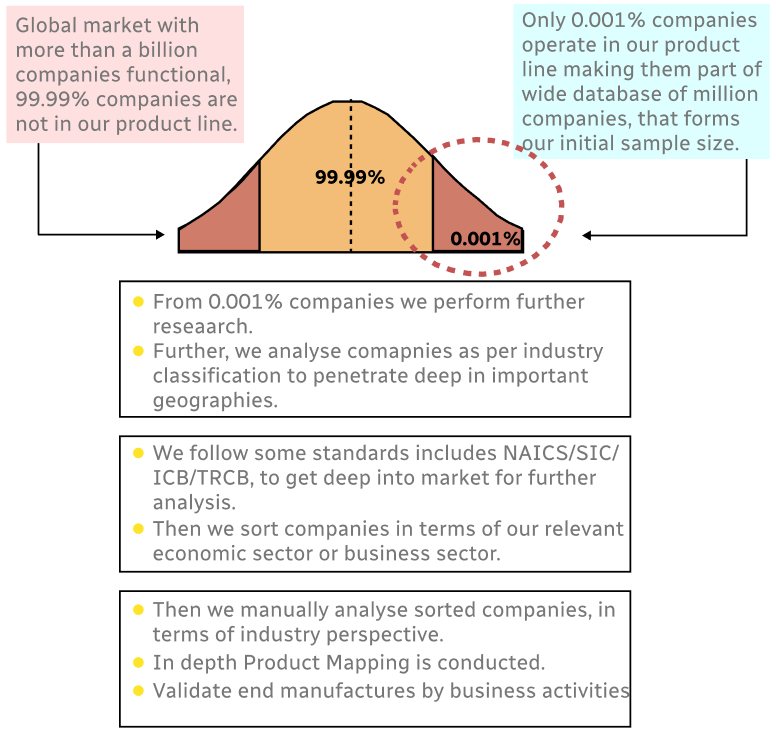
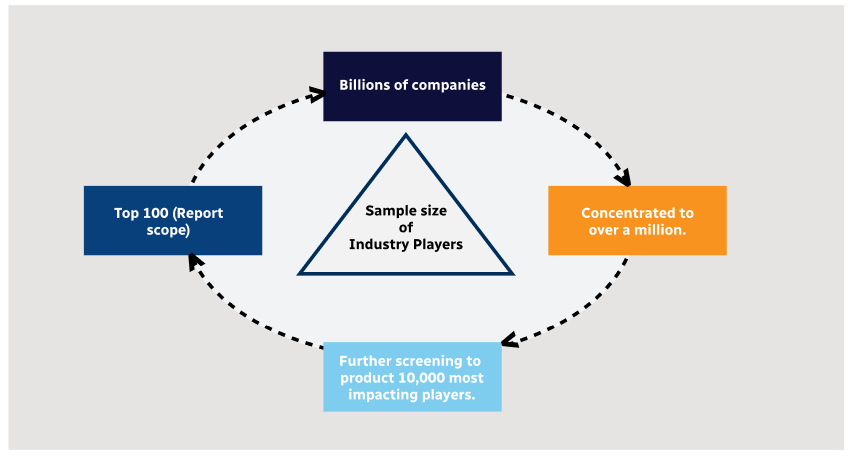
Step 1 - Identification of Relevant Samples Size from Population Database
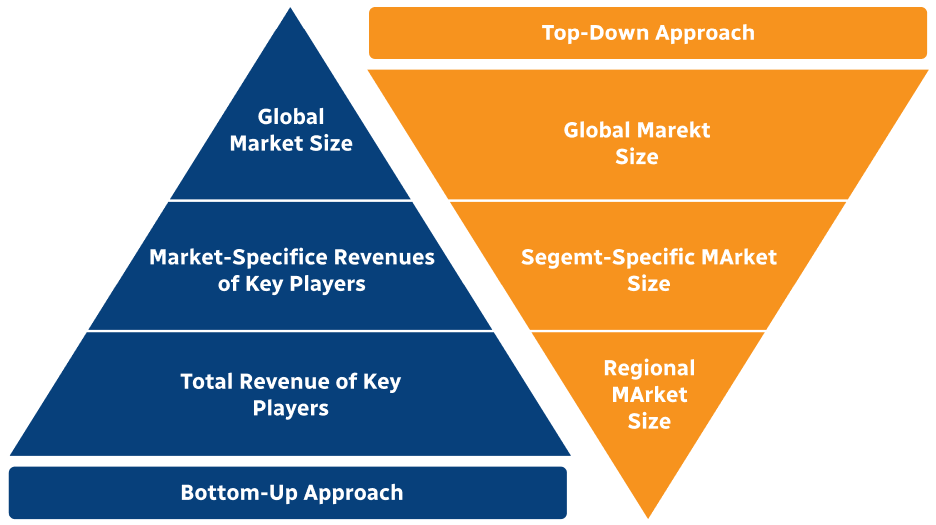
Step 2 - Approaches for Defining Global Market Size (Value, Volume* & Price*)
Note*: In applicable scenarios
Step 3 - Data Sources
Primary Research
- Web Analytics
- Survey Reports
- Research Institute
- Latest Research Reports
- Opinion Leaders
Secondary Research
- Annual Reports
- White Paper
- Latest Press Release
- Industry Association
- Paid Database
- Investor Presentations
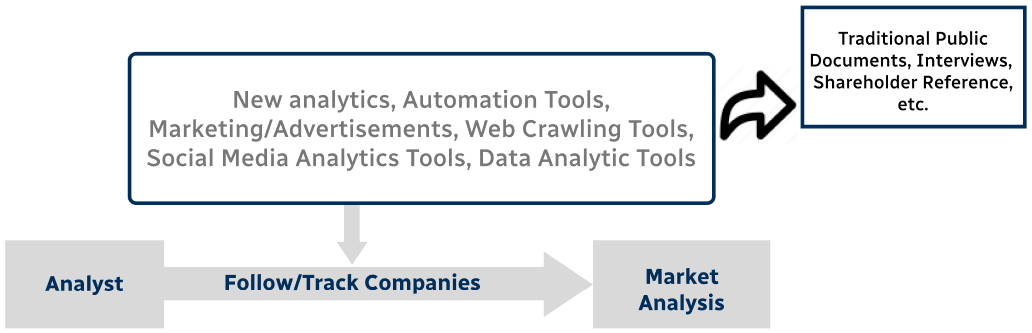
Step 4 - Data Triangulation
Involves using different sources of information in order to increase the validity of a study
These sources are likely to be stakeholders in a program - participants, other researchers, program staff, other community members, and so on.
Then we put all data in single framework & apply various statistical tools to find out the dynamic on the market.
During the analysis stage, feedback from the stakeholder groups would be compared to determine areas of agreement as well as areas of divergence


