


Key Insights
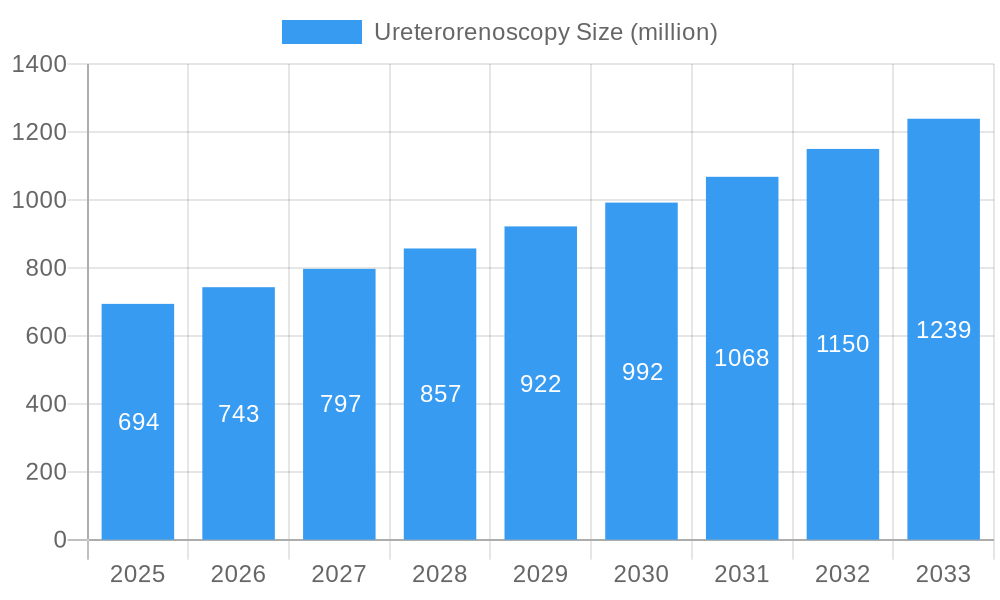
The global Ureterorenoscopy market is poised for significant growth, projected to reach a substantial valuation by 2033, driven by an estimated compound annual growth rate (CAGR) of 6.8%. This expansion is largely fueled by the increasing prevalence of kidney stones and other ureteral disorders, necessitating minimally invasive diagnostic and therapeutic procedures. Advancements in technology, particularly the transition towards highly sophisticated video ureteroscopes offering enhanced visualization and maneuverability, are also playing a crucial role. These innovations improve procedural efficiency and patient outcomes, thereby boosting adoption rates in both hospitals and ambulatory surgery centers. The growing demand for outpatient procedures, coupled with rising healthcare expenditure globally, further underpins the market's upward trajectory. As awareness of Ureterorenoscopy's benefits over traditional surgical interventions grows, its application is expected to broaden, impacting segments across various healthcare settings.

Ureterorenoscopy Market Size (In Million)

The competitive landscape features key players like Karl Storz, Richard Wolf, and Olympus, alongside emerging companies from the Asia Pacific region, such as Shenzhen HugeMed Medical and Hunan Vathin Medical Instrument. These companies are actively investing in research and development to introduce next-generation ureteroscopes with improved imaging, smaller diameters, and integrated therapeutic capabilities. While the market benefits from technological innovation and increasing demand, certain restraints may include the high initial cost of advanced equipment and the need for specialized training for medical professionals. However, the overall outlook remains robust, with opportunities for growth concentrated in regions demonstrating increasing healthcare infrastructure development and a rising incidence of urological conditions. The shift towards value-based healthcare and the emphasis on patient recovery are expected to further accelerate the adoption of Ureterorenoscopy.
Ureterorenoscopy Company Market Share
Ureterorenoscopy Market Analysis Report: Comprehensive Insights & Future Outlook (2019-2033)
This in-depth report offers a granular analysis of the global Ureterorenoscopy market, encompassing market size, growth projections, key trends, and competitive landscapes. Spanning the historical period from 2019 to 2024 and projecting through 2033, with a base and estimated year of 2025, this study provides actionable intelligence for stakeholders. Our comprehensive coverage includes detailed segmentation by application and type, along with an examination of industry developments, product innovations, and strategic market outlooks. The report leverages sophisticated methodologies to deliver reliable market forecasts, crucial for strategic planning and investment decisions in this rapidly evolving sector.
Ureterorenoscopy Market Structure & Competitive Dynamics
The global ureterorenoscopy market exhibits a moderately concentrated structure, with established players like Karl Storz, Richard Wolf, and Olympus holding significant market share, estimated to be over 600 million dollars collectively. Innovation plays a crucial role, driven by continuous advancements in imaging technology, miniaturization, and maneuverability of ureteroscopes. The regulatory landscape, governed by bodies such as the FDA and EMA, influences product approvals and market entry, ensuring patient safety and efficacy, with compliance costs estimated in the tens of millions of dollars annually. Product substitutes, while limited for direct ureteroscopic procedures, include extracorporeal shock wave lithotripsy (ESWL) and percutaneous nephrolithotomy (PCNL), with their adoption influenced by factors like stone size and patient anatomy. End-user trends favor minimally invasive procedures, increasing demand for advanced ureterorenoscopy systems. Mergers and acquisitions (M&A) activity, though not at an aggressive pace, has seen strategic acquisitions aimed at expanding product portfolios and market reach, with recent deals valued in the hundreds of millions of dollars. Key M&A drivers include the pursuit of technological synergies and access to new geographic markets, fostering a dynamic competitive environment.
Ureterorenoscopy Industry Trends & Insights
The ureterorenoscopy market is poised for robust growth, driven by an increasing prevalence of kidney stones, a global healthcare trend impacting millions of patients annually. This surge is partly attributed to lifestyle changes, dietary habits, and improved diagnostic capabilities, leading to earlier detection and intervention. The escalating demand for minimally invasive surgical procedures further fuels market expansion, as ureterorenoscopy offers significant advantages over traditional open surgeries, including reduced patient trauma, shorter hospital stays, and faster recovery times. Technological advancements are at the forefront of market evolution. The development of high-definition imaging, flexible and steerable ureteroscopes, and integrated laser technologies has dramatically improved procedural outcomes and physician efficacy, creating a more efficient and patient-friendly experience. The incorporation of artificial intelligence (AI) in image analysis and surgical planning represents a nascent but promising trend, with early adoption by leading innovators. The market penetration of video ureteroscopy, offering superior visualization and documentation capabilities, is steadily increasing, gradually eclipsing traditional fiber ureteroscopy in many clinical settings, a shift driven by improved image quality and ease of use. The compound annual growth rate (CAGR) for the ureteroscopy market is conservatively estimated at 6.5% over the forecast period, reflecting sustained demand and ongoing innovation. The global market size is projected to reach over 2.5 billion dollars by 2033, a substantial increase from its current valuation of approximately 1.2 billion dollars. Consumer preferences are increasingly aligned with patient-centric care, prioritizing less invasive and faster recovery options, directly benefiting the ureteroscopy segment. Competitive dynamics are characterized by a blend of established global players and emerging regional manufacturers, particularly from China, such as Shenzhen HugeMed Medical and Hunan Vathin Medical Instrument, vying for market share through product differentiation and competitive pricing strategies. Ongoing research into smaller diameter ureteroscopes and improved biocompatible materials further contributes to the competitive landscape.
Dominant Markets & Segments in Ureterorenoscopy
North America currently dominates the global ureterorenoscopy market, with the United States leading in terms of adoption and expenditure, estimated at over 700 million dollars in annual spending. This dominance is attributable to several key drivers, including a well-established healthcare infrastructure, high disposable incomes enabling access to advanced medical technologies, and a proactive approach to adopting minimally invasive surgical techniques. Furthermore, favorable reimbursement policies for urological procedures and a high prevalence of kidney stone disease contribute significantly to the region's leadership.
Within North America, Hospitals represent the most dominant application segment for ureterorenoscopy, accounting for an estimated 65% of the total market share. This is driven by the complex nature of many kidney stone cases requiring a comprehensive surgical suite and intensive post-operative care, which are readily available in hospital settings. The increasing volume of complex stone removal procedures and the preference for integrated surgical solutions within hospital environments solidify this segment's prominence. The estimated market size for ureteroscopy in hospitals alone exceeds 1.6 billion dollars by 2033.
The Video Ureterorenoscopy segment is experiencing substantial growth and is projected to become the most dominant type of ureteroscope. Its market share is estimated to be around 70% of the total ureteroscope market by 2033, driven by its superior image quality, digital recording capabilities, and enhanced maneuverability compared to fiber ureteroscopes. The advanced visualization provided by video ureteroscopes leads to improved diagnostic accuracy, precise surgical navigation, and better documentation of procedures, directly translating to better patient outcomes and physician satisfaction. The market for video ureteroscopes is expected to reach over 1.7 billion dollars by 2033.
Emerging economies, particularly in Asia-Pacific, are exhibiting rapid growth rates, driven by improving healthcare access, increasing medical tourism, and a growing demand for advanced urological treatments. Government initiatives aimed at enhancing healthcare infrastructure and the influx of new market players, including companies like Zhuhai Seesheen Medical Technology and Zhuhai Pusen Medical Technology, are contributing to this expansion, with significant potential for future market share gains.
Ureterorenoscopy Product Innovations
Recent ureterorenoscopy product innovations focus on enhanced visualization, improved maneuverability, and patient comfort. Advancements include the development of ultra-thin diameter ureteroscopes, enabling access to smaller and more distal stones with minimal trauma. High-definition 4K imaging technology offers unparalleled clarity, aiding in precise stone localization and fragmentation. Integrated digital platforms for documentation and remote consultation are also gaining traction. These innovations provide competitive advantages by offering surgeons superior control, reduced procedure times, and improved patient outcomes, thereby increasing market demand.
Report Segmentation & Scope
This report segments the ureterorenoscopy market based on Application and Type.
Application: The Hospitals segment is a significant revenue generator due to the complex nature of procedures performed and the comprehensive infrastructure available. The Ambulatory Surgery Centers segment is experiencing rapid growth, driven by cost-effectiveness and efficiency for less complex cases. The Others segment, encompassing specialized clinics and research institutions, also contributes to market diversity. Growth projections for Hospitals are estimated at a CAGR of 6.2%, reaching approximately 1.6 billion dollars by 2033. Ambulatory Surgery Centers are projected to grow at a CAGR of 7.1%, reaching approximately 800 million dollars by 2033.
Type: The Fiber Ureterorenoscopy segment, while established, is gradually being supplemented by newer technologies. The Video Ureterorenoscopy segment is leading market growth, characterized by superior imaging and maneuverability, projected to reach over 1.7 billion dollars by 2033 with a CAGR of 6.8%. The competitive dynamics within each segment are influenced by technological advancements and market adoption rates.
Key Drivers of Ureterorenoscopy Growth
Several key factors are propelling the growth of the ureterorenoscopy market. The increasing global incidence of kidney stones, linked to lifestyle and dietary shifts, is a primary driver. The persistent demand for minimally invasive surgical procedures, offering reduced patient recovery times and lower complication rates, significantly favors ureteroscopy. Technological advancements, including high-resolution imaging, flexible scopes, and integrated laser technologies, are enhancing procedural efficacy and expanding applications. Moreover, favorable reimbursement policies in developed nations and the growing healthcare expenditure in emerging economies are creating a conducive environment for market expansion, with an estimated 10% annual increase in healthcare spending in target regions.
Challenges in the Ureterorenoscopy Sector
Despite robust growth, the ureterorenoscopy sector faces certain challenges. High initial capital investment for advanced ureteroscopy systems and associated equipment can be a barrier, particularly for smaller healthcare facilities and in developing regions. The learning curve associated with mastering new technologies can also pose a challenge for surgeons. Regulatory hurdles and stringent approval processes for new devices, while ensuring safety, can lead to prolonged time-to-market. Furthermore, the competitive pressure from alternative treatment modalities like ESWL and PCNL, and the continuous need for product innovation to stay ahead of the curve, present ongoing challenges. Supply chain disruptions, as observed in recent global events, can also impact the availability of critical components and finished products, affecting market stability, with potential delays of up to 20% in product delivery.
Leading Players in the Ureterorenoscopy Market
- Karl Storz
- Richard Wolf
- Olympus
- Shenzhen HugeMed Medical
- Hunan Vathin Medical Instrument
- Zhuhai Seesheen Medical Technology
- Zhuhai Pusen Medical Technology
- Innovex Medical
- Nanchang Walker Medical Technology
- Jiangsu Suzhong Pharmaceutical
- Hangzhou Hawk Optical Electronic Instruments
- Wuhan YouCare Technology
Key Developments in Ureterorenoscopy Sector
- 2023: Launch of new generation ultra-thin flexible ureteroscopes with improved deflection and optics by Karl Storz, enhancing access to distal ureteral stones.
- 2023: Olympus announces strategic partnership with a leading AI firm to develop AI-powered image analysis for ureteroscopy, improving diagnostic accuracy and reducing procedure time.
- 2022: Richard Wolf introduces an advanced integrated laser system for ureterorenoscopy, offering enhanced stone fragmentation efficiency and reduced operative time.
- 2022: Shenzhen HugeMed Medical expands its product portfolio with a new series of high-definition video ureteroscopes, targeting emerging markets.
- 2021: Market introduction of single-use ureteroscope technology by several players, addressing infection control concerns and reducing cleaning and sterilization costs.
Strategic Ureterorenoscopy Market Outlook
The strategic outlook for the ureterorenoscopy market is highly positive, characterized by sustained growth and significant opportunities. The increasing global burden of kidney stones, coupled with the undeniable trend towards minimally invasive surgery, will continue to be the primary growth accelerators. Future strategies should focus on developing more affordable and user-friendly ureteroscopy systems to penetrate emerging markets, estimated to grow at over 10% annually. Continued investment in R&D for advanced imaging, miniaturization, and AI integration will be crucial for maintaining a competitive edge. Strategic partnerships and collaborations will facilitate market expansion and technological diffusion. The growing emphasis on patient-centric care and value-based healthcare will further drive the adoption of efficient and effective ureteroscopic solutions, solidifying its position as a cornerstone in urological interventions.
Ureterorenoscopy Segmentation
-
1. Application
- 1.1. Hospitals
- 1.2. Ambulatory Surgery Centers
- 1.3. Others
-
2. Types
- 2.1. Fiber Ureterorenoscopy
- 2.2. Video Ureterorenoscopy
Ureterorenoscopy Segmentation By Geography
-
1. North America
- 1.1. United States
- 1.2. Canada
- 1.3. Mexico
-
2. South America
- 2.1. Brazil
- 2.2. Argentina
- 2.3. Rest of South America
-
3. Europe
- 3.1. United Kingdom
- 3.2. Germany
- 3.3. France
- 3.4. Italy
- 3.5. Spain
- 3.6. Russia
- 3.7. Benelux
- 3.8. Nordics
- 3.9. Rest of Europe
-
4. Middle East & Africa
- 4.1. Turkey
- 4.2. Israel
- 4.3. GCC
- 4.4. North Africa
- 4.5. South Africa
- 4.6. Rest of Middle East & Africa
-
5. Asia Pacific
- 5.1. China
- 5.2. India
- 5.3. Japan
- 5.4. South Korea
- 5.5. ASEAN
- 5.6. Oceania
- 5.7. Rest of Asia Pacific

Ureterorenoscopy Regional Market Share
Geographic Coverage of Ureterorenoscopy
Ureterorenoscopy REPORT HIGHLIGHTS
| Aspects | Details |
|---|---|
| Study Period | 2020-2034 |
| Base Year | 2025 |
| Estimated Year | 2026 |
| Forecast Period | 2026-2034 |
| Historical Period | 2020-2025 |
| Growth Rate | CAGR of 6.8% from 2020-2034 |
| Segmentation |
|
Table of Contents
- 1. Introduction
- 1.1. Research Scope
- 1.2. Market Segmentation
- 1.3. Research Methodology
- 1.4. Definitions and Assumptions
- 2. Executive Summary
- 2.1. Introduction
- 3. Market Dynamics
- 3.1. Introduction
- 3.2. Market Drivers
- 3.3. Market Restrains
- 3.4. Market Trends
- 4. Market Factor Analysis
- 4.1. Porters Five Forces
- 4.2. Supply/Value Chain
- 4.3. PESTEL analysis
- 4.4. Market Entropy
- 4.5. Patent/Trademark Analysis
- 5. Global Ureterorenoscopy Analysis, Insights and Forecast, 2020-2032
- 5.1. Market Analysis, Insights and Forecast - by Application
- 5.1.1. Hospitals
- 5.1.2. Ambulatory Surgery Centers
- 5.1.3. Others
- 5.2. Market Analysis, Insights and Forecast - by Types
- 5.2.1. Fiber Ureterorenoscopy
- 5.2.2. Video Ureterorenoscopy
- 5.3. Market Analysis, Insights and Forecast - by Region
- 5.3.1. North America
- 5.3.2. South America
- 5.3.3. Europe
- 5.3.4. Middle East & Africa
- 5.3.5. Asia Pacific
- 5.1. Market Analysis, Insights and Forecast - by Application
- 6. North America Ureterorenoscopy Analysis, Insights and Forecast, 2020-2032
- 6.1. Market Analysis, Insights and Forecast - by Application
- 6.1.1. Hospitals
- 6.1.2. Ambulatory Surgery Centers
- 6.1.3. Others
- 6.2. Market Analysis, Insights and Forecast - by Types
- 6.2.1. Fiber Ureterorenoscopy
- 6.2.2. Video Ureterorenoscopy
- 6.1. Market Analysis, Insights and Forecast - by Application
- 7. South America Ureterorenoscopy Analysis, Insights and Forecast, 2020-2032
- 7.1. Market Analysis, Insights and Forecast - by Application
- 7.1.1. Hospitals
- 7.1.2. Ambulatory Surgery Centers
- 7.1.3. Others
- 7.2. Market Analysis, Insights and Forecast - by Types
- 7.2.1. Fiber Ureterorenoscopy
- 7.2.2. Video Ureterorenoscopy
- 7.1. Market Analysis, Insights and Forecast - by Application
- 8. Europe Ureterorenoscopy Analysis, Insights and Forecast, 2020-2032
- 8.1. Market Analysis, Insights and Forecast - by Application
- 8.1.1. Hospitals
- 8.1.2. Ambulatory Surgery Centers
- 8.1.3. Others
- 8.2. Market Analysis, Insights and Forecast - by Types
- 8.2.1. Fiber Ureterorenoscopy
- 8.2.2. Video Ureterorenoscopy
- 8.1. Market Analysis, Insights and Forecast - by Application
- 9. Middle East & Africa Ureterorenoscopy Analysis, Insights and Forecast, 2020-2032
- 9.1. Market Analysis, Insights and Forecast - by Application
- 9.1.1. Hospitals
- 9.1.2. Ambulatory Surgery Centers
- 9.1.3. Others
- 9.2. Market Analysis, Insights and Forecast - by Types
- 9.2.1. Fiber Ureterorenoscopy
- 9.2.2. Video Ureterorenoscopy
- 9.1. Market Analysis, Insights and Forecast - by Application
- 10. Asia Pacific Ureterorenoscopy Analysis, Insights and Forecast, 2020-2032
- 10.1. Market Analysis, Insights and Forecast - by Application
- 10.1.1. Hospitals
- 10.1.2. Ambulatory Surgery Centers
- 10.1.3. Others
- 10.2. Market Analysis, Insights and Forecast - by Types
- 10.2.1. Fiber Ureterorenoscopy
- 10.2.2. Video Ureterorenoscopy
- 10.1. Market Analysis, Insights and Forecast - by Application
- 11. Competitive Analysis
- 11.1. Global Market Share Analysis 2025
- 11.2. Company Profiles
- 11.2.1 Karl Storz
- 11.2.1.1. Overview
- 11.2.1.2. Products
- 11.2.1.3. SWOT Analysis
- 11.2.1.4. Recent Developments
- 11.2.1.5. Financials (Based on Availability)
- 11.2.2 Richard Wolf
- 11.2.2.1. Overview
- 11.2.2.2. Products
- 11.2.2.3. SWOT Analysis
- 11.2.2.4. Recent Developments
- 11.2.2.5. Financials (Based on Availability)
- 11.2.3 Olympus
- 11.2.3.1. Overview
- 11.2.3.2. Products
- 11.2.3.3. SWOT Analysis
- 11.2.3.4. Recent Developments
- 11.2.3.5. Financials (Based on Availability)
- 11.2.4 Shenzhen HugeMed Medical
- 11.2.4.1. Overview
- 11.2.4.2. Products
- 11.2.4.3. SWOT Analysis
- 11.2.4.4. Recent Developments
- 11.2.4.5. Financials (Based on Availability)
- 11.2.5 Hunan Vathin Medical Instrument
- 11.2.5.1. Overview
- 11.2.5.2. Products
- 11.2.5.3. SWOT Analysis
- 11.2.5.4. Recent Developments
- 11.2.5.5. Financials (Based on Availability)
- 11.2.6 Zhuhai Seesheen Medical Technology
- 11.2.6.1. Overview
- 11.2.6.2. Products
- 11.2.6.3. SWOT Analysis
- 11.2.6.4. Recent Developments
- 11.2.6.5. Financials (Based on Availability)
- 11.2.7 Zhuhai Pusen Medical Technology
- 11.2.7.1. Overview
- 11.2.7.2. Products
- 11.2.7.3. SWOT Analysis
- 11.2.7.4. Recent Developments
- 11.2.7.5. Financials (Based on Availability)
- 11.2.8 Innovex Medical
- 11.2.8.1. Overview
- 11.2.8.2. Products
- 11.2.8.3. SWOT Analysis
- 11.2.8.4. Recent Developments
- 11.2.8.5. Financials (Based on Availability)
- 11.2.9 Nanchang Walker Medical Technology
- 11.2.9.1. Overview
- 11.2.9.2. Products
- 11.2.9.3. SWOT Analysis
- 11.2.9.4. Recent Developments
- 11.2.9.5. Financials (Based on Availability)
- 11.2.10 Jiangsu Suzhong Pharmaceutical
- 11.2.10.1. Overview
- 11.2.10.2. Products
- 11.2.10.3. SWOT Analysis
- 11.2.10.4. Recent Developments
- 11.2.10.5. Financials (Based on Availability)
- 11.2.11 Hangzhou Hawk Optical Electronic Instruments
- 11.2.11.1. Overview
- 11.2.11.2. Products
- 11.2.11.3. SWOT Analysis
- 11.2.11.4. Recent Developments
- 11.2.11.5. Financials (Based on Availability)
- 11.2.12 Wuhan YouCare Technology
- 11.2.12.1. Overview
- 11.2.12.2. Products
- 11.2.12.3. SWOT Analysis
- 11.2.12.4. Recent Developments
- 11.2.12.5. Financials (Based on Availability)
- 11.2.1 Karl Storz
List of Figures
- Figure 1: Global Ureterorenoscopy Revenue Breakdown (million, %) by Region 2025 & 2033
- Figure 2: North America Ureterorenoscopy Revenue (million), by Application 2025 & 2033
- Figure 3: North America Ureterorenoscopy Revenue Share (%), by Application 2025 & 2033
- Figure 4: North America Ureterorenoscopy Revenue (million), by Types 2025 & 2033
- Figure 5: North America Ureterorenoscopy Revenue Share (%), by Types 2025 & 2033
- Figure 6: North America Ureterorenoscopy Revenue (million), by Country 2025 & 2033
- Figure 7: North America Ureterorenoscopy Revenue Share (%), by Country 2025 & 2033
- Figure 8: South America Ureterorenoscopy Revenue (million), by Application 2025 & 2033
- Figure 9: South America Ureterorenoscopy Revenue Share (%), by Application 2025 & 2033
- Figure 10: South America Ureterorenoscopy Revenue (million), by Types 2025 & 2033
- Figure 11: South America Ureterorenoscopy Revenue Share (%), by Types 2025 & 2033
- Figure 12: South America Ureterorenoscopy Revenue (million), by Country 2025 & 2033
- Figure 13: South America Ureterorenoscopy Revenue Share (%), by Country 2025 & 2033
- Figure 14: Europe Ureterorenoscopy Revenue (million), by Application 2025 & 2033
- Figure 15: Europe Ureterorenoscopy Revenue Share (%), by Application 2025 & 2033
- Figure 16: Europe Ureterorenoscopy Revenue (million), by Types 2025 & 2033
- Figure 17: Europe Ureterorenoscopy Revenue Share (%), by Types 2025 & 2033
- Figure 18: Europe Ureterorenoscopy Revenue (million), by Country 2025 & 2033
- Figure 19: Europe Ureterorenoscopy Revenue Share (%), by Country 2025 & 2033
- Figure 20: Middle East & Africa Ureterorenoscopy Revenue (million), by Application 2025 & 2033
- Figure 21: Middle East & Africa Ureterorenoscopy Revenue Share (%), by Application 2025 & 2033
- Figure 22: Middle East & Africa Ureterorenoscopy Revenue (million), by Types 2025 & 2033
- Figure 23: Middle East & Africa Ureterorenoscopy Revenue Share (%), by Types 2025 & 2033
- Figure 24: Middle East & Africa Ureterorenoscopy Revenue (million), by Country 2025 & 2033
- Figure 25: Middle East & Africa Ureterorenoscopy Revenue Share (%), by Country 2025 & 2033
- Figure 26: Asia Pacific Ureterorenoscopy Revenue (million), by Application 2025 & 2033
- Figure 27: Asia Pacific Ureterorenoscopy Revenue Share (%), by Application 2025 & 2033
- Figure 28: Asia Pacific Ureterorenoscopy Revenue (million), by Types 2025 & 2033
- Figure 29: Asia Pacific Ureterorenoscopy Revenue Share (%), by Types 2025 & 2033
- Figure 30: Asia Pacific Ureterorenoscopy Revenue (million), by Country 2025 & 2033
- Figure 31: Asia Pacific Ureterorenoscopy Revenue Share (%), by Country 2025 & 2033
List of Tables
- Table 1: Global Ureterorenoscopy Revenue million Forecast, by Application 2020 & 2033
- Table 2: Global Ureterorenoscopy Revenue million Forecast, by Types 2020 & 2033
- Table 3: Global Ureterorenoscopy Revenue million Forecast, by Region 2020 & 2033
- Table 4: Global Ureterorenoscopy Revenue million Forecast, by Application 2020 & 2033
- Table 5: Global Ureterorenoscopy Revenue million Forecast, by Types 2020 & 2033
- Table 6: Global Ureterorenoscopy Revenue million Forecast, by Country 2020 & 2033
- Table 7: United States Ureterorenoscopy Revenue (million) Forecast, by Application 2020 & 2033
- Table 8: Canada Ureterorenoscopy Revenue (million) Forecast, by Application 2020 & 2033
- Table 9: Mexico Ureterorenoscopy Revenue (million) Forecast, by Application 2020 & 2033
- Table 10: Global Ureterorenoscopy Revenue million Forecast, by Application 2020 & 2033
- Table 11: Global Ureterorenoscopy Revenue million Forecast, by Types 2020 & 2033
- Table 12: Global Ureterorenoscopy Revenue million Forecast, by Country 2020 & 2033
- Table 13: Brazil Ureterorenoscopy Revenue (million) Forecast, by Application 2020 & 2033
- Table 14: Argentina Ureterorenoscopy Revenue (million) Forecast, by Application 2020 & 2033
- Table 15: Rest of South America Ureterorenoscopy Revenue (million) Forecast, by Application 2020 & 2033
- Table 16: Global Ureterorenoscopy Revenue million Forecast, by Application 2020 & 2033
- Table 17: Global Ureterorenoscopy Revenue million Forecast, by Types 2020 & 2033
- Table 18: Global Ureterorenoscopy Revenue million Forecast, by Country 2020 & 2033
- Table 19: United Kingdom Ureterorenoscopy Revenue (million) Forecast, by Application 2020 & 2033
- Table 20: Germany Ureterorenoscopy Revenue (million) Forecast, by Application 2020 & 2033
- Table 21: France Ureterorenoscopy Revenue (million) Forecast, by Application 2020 & 2033
- Table 22: Italy Ureterorenoscopy Revenue (million) Forecast, by Application 2020 & 2033
- Table 23: Spain Ureterorenoscopy Revenue (million) Forecast, by Application 2020 & 2033
- Table 24: Russia Ureterorenoscopy Revenue (million) Forecast, by Application 2020 & 2033
- Table 25: Benelux Ureterorenoscopy Revenue (million) Forecast, by Application 2020 & 2033
- Table 26: Nordics Ureterorenoscopy Revenue (million) Forecast, by Application 2020 & 2033
- Table 27: Rest of Europe Ureterorenoscopy Revenue (million) Forecast, by Application 2020 & 2033
- Table 28: Global Ureterorenoscopy Revenue million Forecast, by Application 2020 & 2033
- Table 29: Global Ureterorenoscopy Revenue million Forecast, by Types 2020 & 2033
- Table 30: Global Ureterorenoscopy Revenue million Forecast, by Country 2020 & 2033
- Table 31: Turkey Ureterorenoscopy Revenue (million) Forecast, by Application 2020 & 2033
- Table 32: Israel Ureterorenoscopy Revenue (million) Forecast, by Application 2020 & 2033
- Table 33: GCC Ureterorenoscopy Revenue (million) Forecast, by Application 2020 & 2033
- Table 34: North Africa Ureterorenoscopy Revenue (million) Forecast, by Application 2020 & 2033
- Table 35: South Africa Ureterorenoscopy Revenue (million) Forecast, by Application 2020 & 2033
- Table 36: Rest of Middle East & Africa Ureterorenoscopy Revenue (million) Forecast, by Application 2020 & 2033
- Table 37: Global Ureterorenoscopy Revenue million Forecast, by Application 2020 & 2033
- Table 38: Global Ureterorenoscopy Revenue million Forecast, by Types 2020 & 2033
- Table 39: Global Ureterorenoscopy Revenue million Forecast, by Country 2020 & 2033
- Table 40: China Ureterorenoscopy Revenue (million) Forecast, by Application 2020 & 2033
- Table 41: India Ureterorenoscopy Revenue (million) Forecast, by Application 2020 & 2033
- Table 42: Japan Ureterorenoscopy Revenue (million) Forecast, by Application 2020 & 2033
- Table 43: South Korea Ureterorenoscopy Revenue (million) Forecast, by Application 2020 & 2033
- Table 44: ASEAN Ureterorenoscopy Revenue (million) Forecast, by Application 2020 & 2033
- Table 45: Oceania Ureterorenoscopy Revenue (million) Forecast, by Application 2020 & 2033
- Table 46: Rest of Asia Pacific Ureterorenoscopy Revenue (million) Forecast, by Application 2020 & 2033
Frequently Asked Questions
1. What is the projected Compound Annual Growth Rate (CAGR) of the Ureterorenoscopy?
The projected CAGR is approximately 6.8%.
2. Which companies are prominent players in the Ureterorenoscopy?
Key companies in the market include Karl Storz, Richard Wolf, Olympus, Shenzhen HugeMed Medical, Hunan Vathin Medical Instrument, Zhuhai Seesheen Medical Technology, Zhuhai Pusen Medical Technology, Innovex Medical, Nanchang Walker Medical Technology, Jiangsu Suzhong Pharmaceutical, Hangzhou Hawk Optical Electronic Instruments, Wuhan YouCare Technology.
3. What are the main segments of the Ureterorenoscopy?
The market segments include Application, Types.
4. Can you provide details about the market size?
The market size is estimated to be USD 694 million as of 2022.
5. What are some drivers contributing to market growth?
N/A
6. What are the notable trends driving market growth?
N/A
7. Are there any restraints impacting market growth?
N/A
8. Can you provide examples of recent developments in the market?
N/A
9. What pricing options are available for accessing the report?
Pricing options include single-user, multi-user, and enterprise licenses priced at USD 2900.00, USD 4350.00, and USD 5800.00 respectively.
10. Is the market size provided in terms of value or volume?
The market size is provided in terms of value, measured in million.
11. Are there any specific market keywords associated with the report?
Yes, the market keyword associated with the report is "Ureterorenoscopy," which aids in identifying and referencing the specific market segment covered.
12. How do I determine which pricing option suits my needs best?
The pricing options vary based on user requirements and access needs. Individual users may opt for single-user licenses, while businesses requiring broader access may choose multi-user or enterprise licenses for cost-effective access to the report.
13. Are there any additional resources or data provided in the Ureterorenoscopy report?
While the report offers comprehensive insights, it's advisable to review the specific contents or supplementary materials provided to ascertain if additional resources or data are available.
14. How can I stay updated on further developments or reports in the Ureterorenoscopy?
To stay informed about further developments, trends, and reports in the Ureterorenoscopy, consider subscribing to industry newsletters, following relevant companies and organizations, or regularly checking reputable industry news sources and publications.
Methodology
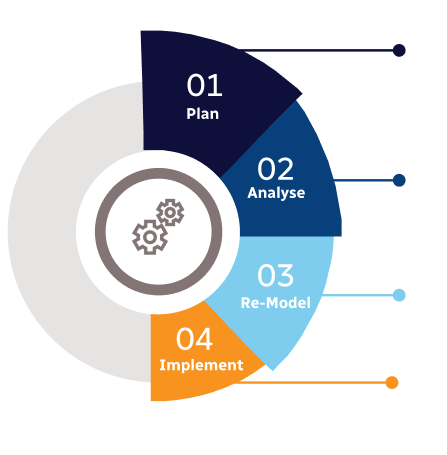
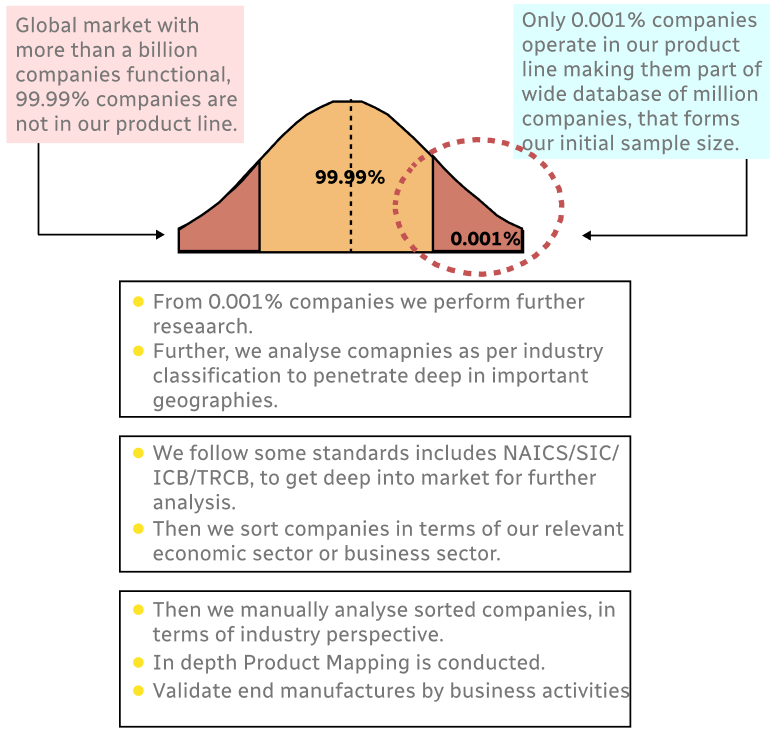
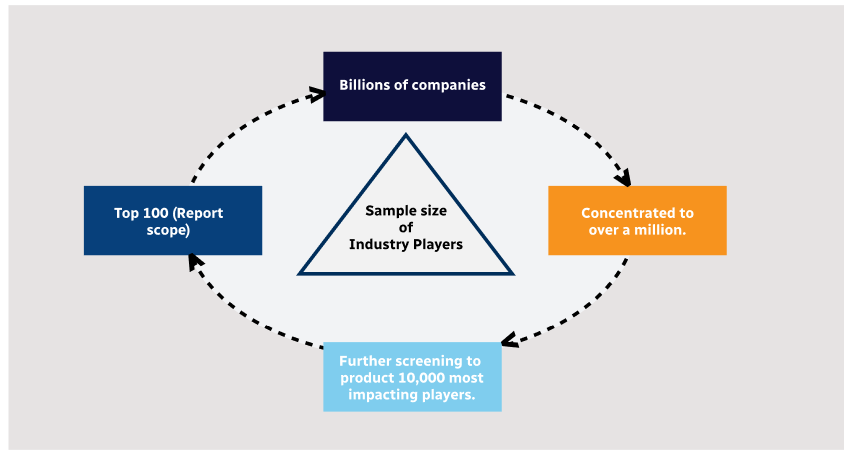
Step 1 - Identification of Relevant Samples Size from Population Database
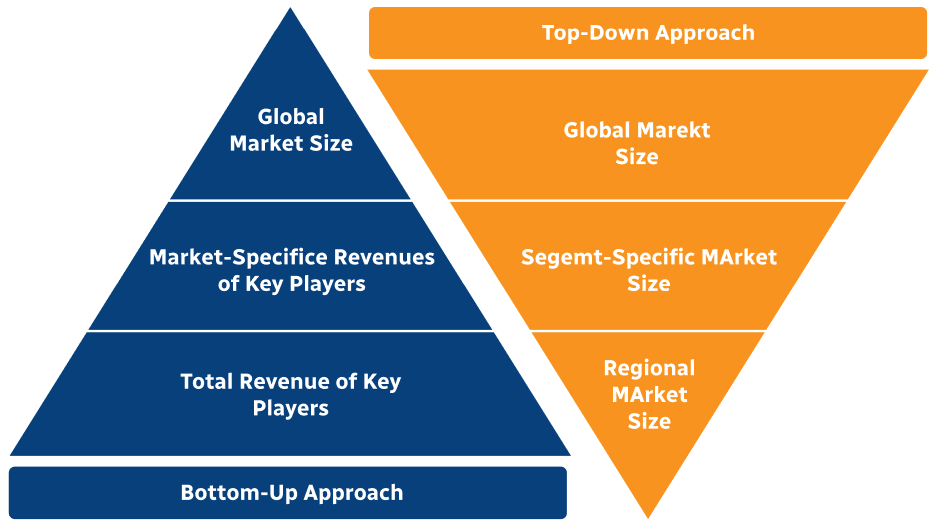
Step 2 - Approaches for Defining Global Market Size (Value, Volume* & Price*)
Note*: In applicable scenarios
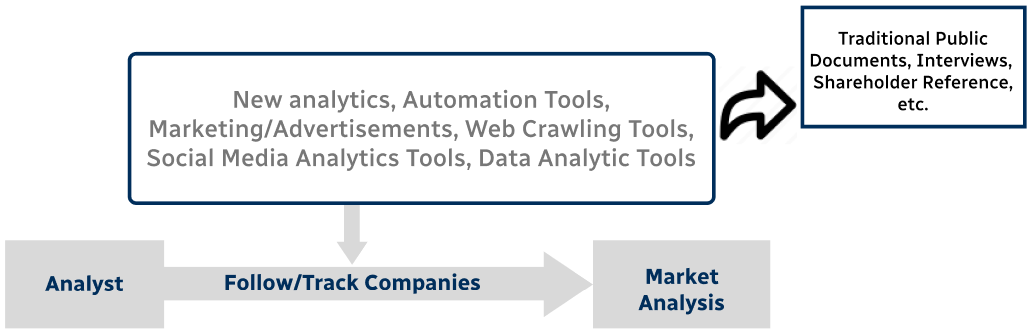
Step 3 - Data Sources
Primary Research
- Web Analytics
- Survey Reports
- Research Institute
- Latest Research Reports
- Opinion Leaders
Secondary Research
- Annual Reports
- White Paper
- Latest Press Release
- Industry Association
- Paid Database
- Investor Presentations
Step 4 - Data Triangulation
Involves using different sources of information in order to increase the validity of a study
These sources are likely to be stakeholders in a program - participants, other researchers, program staff, other community members, and so on.
Then we put all data in single framework & apply various statistical tools to find out the dynamic on the market.
During the analysis stage, feedback from the stakeholder groups would be compared to determine areas of agreement as well as areas of divergence