


Key Insights
The global tourniquet devices market is projected for substantial growth, expected to reach $6.76 billion by 2025, with a Compound Annual Growth Rate (CAGR) of 8.46% anticipated through 2033. This expansion is driven by the escalating prevalence of trauma-related injuries and bleeding emergencies in both civilian and military contexts. Technological advancements are yielding more sophisticated and user-friendly pneumatic tourniquet devices, enhancing precision and safety in blood flow restriction. Increased demand for effective hemorrhage control in emergency medical services, battlefield medicine, and surgical procedures further fuels market expansion. Growing healthcare expenditure and heightened preparedness for mass casualty incidents also contribute to the sustained upward trend.
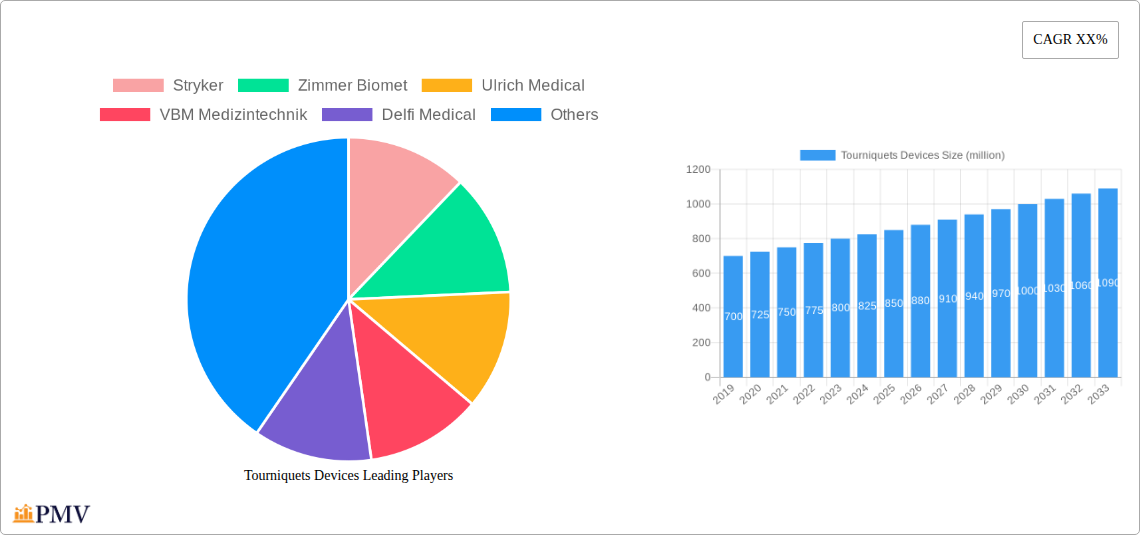
Tourniquets Devices Market Size (In Billion)

The market is segmented by application into hospitals, clinics, military, and other end-users, with hospitals anticipated to hold the largest share due to their pivotal role in emergency care and surgical interventions. Pneumatic tourniquet devices are expected to lead by type, offering superior control and safety over manual alternatives. Geographically, North America and Europe are projected as leading markets, supported by advanced healthcare infrastructure, high medical technology adoption, and a strong focus on trauma care. The Asia Pacific region is forecast to exhibit the fastest growth, driven by increasing healthcare investments, a rising number of surgical procedures, and growing awareness of advanced trauma management techniques. Potential restraints, such as stringent regulatory approvals and the availability of cost-effective manual alternatives in low-resource settings, may present challenges but are unlikely to significantly impede the overall positive market outlook.
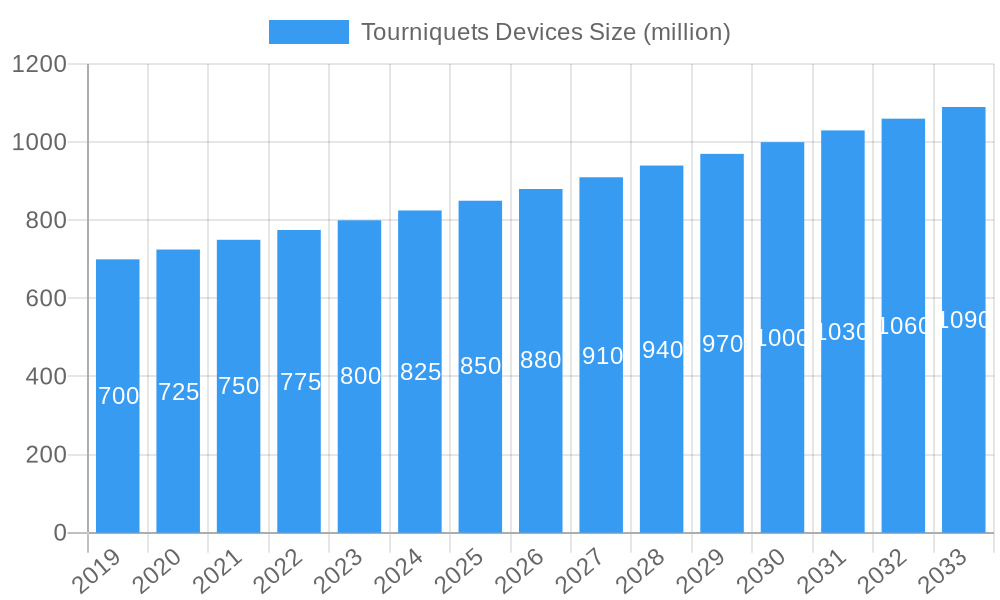
Tourniquets Devices Company Market Share
This comprehensive report offers an in-depth analysis of the global Tourniquets Devices market, a critical segment within the medical device industry. Covering a study period from 2019 to 2033, with a base year of 2025, this report provides invaluable insights into market dynamics, competitive landscapes, and future growth trajectories. It is an essential resource for manufacturers, suppliers, investors, and stakeholders seeking to understand and capitalize on the evolving tourniquets devices market.
Tourniquets Devices Market Structure & Competitive Dynamics
The global tourniquets devices market is characterized by a moderate to high concentration, with a mix of established multinational corporations and emerging regional players. Key companies like Stryker, Zimmer Biomet, Ulrich Medical, and VBM Medizintechnik hold significant market shares due to their extensive product portfolios, strong distribution networks, and robust R&D investments. Innovation ecosystems are driven by continuous advancements in pneumatic tourniquet technology, aiming for enhanced precision, patient safety, and ease of use. Regulatory frameworks, overseen by bodies such as the FDA and EMA, play a crucial role in product approval and market access, influencing product development and market entry strategies. Product substitutes, while limited in the core application, may include advanced compression devices or alternative hemostatic agents in specific emergency scenarios. End-user trends highlight a growing demand for advanced, digital, and portable tourniquet systems, particularly within military and emergency medical services. Merger and acquisition (M&A) activities are expected to increase, as larger players seek to consolidate market position, acquire innovative technologies, and expand their geographical reach. Recent M&A deal values have been in the range of tens of millions to hundreds of millions of dollars, indicative of strategic consolidations.
Tourniquets Devices Industry Trends & Insights
The tourniquets devices market is projected to experience robust growth, driven by several key factors. A significant market growth driver is the increasing incidence of trauma cases and surgical procedures globally. The rising prevalence of sports-related injuries, road traffic accidents, and combat-related injuries in military operations necessitates the widespread availability and adoption of effective hemorrhage control devices. Furthermore, advancements in medical technology are revolutionizing tourniquets devices. The transition from manual to pneumatic tourniquets has significantly improved accuracy and reduced complications. Future innovations are likely to focus on smart tourniquets with integrated digital monitoring capabilities, real-time pressure regulation, and data logging for improved patient care and post-operative analysis. Consumer preferences are shifting towards user-friendly, portable, and highly reliable devices. Healthcare professionals in pre-hospital settings, military medics, and surgeons are demanding tourniquets that are quick to apply, comfortable for patients, and provide consistent, safe pressure. Competitive dynamics are intensifying, with companies differentiating themselves through product features, price points, and distribution strategies. The market penetration of advanced pneumatic tourniquets is expected to rise substantially as their benefits in terms of efficacy and safety become more widely recognized and integrated into clinical protocols. The CAGR for the global tourniquets devices market is estimated to be in the range of 5% to 7% over the forecast period, reflecting a sustained upward trend.
Dominant Markets & Segments in Tourniquets Devices
The Hospitals segment, within the Application category, is anticipated to remain the dominant market force in the global tourniquets devices landscape. This dominance is underpinned by several key drivers. Firstly, the sheer volume of surgical procedures performed annually in hospitals worldwide is immense, creating a consistent demand for reliable tourniquets. Economic policies in developed nations that prioritize healthcare infrastructure and advanced medical equipment further bolster this segment. Secondly, the increasing adoption of advanced medical technologies and the presence of well-equipped surgical departments in hospitals necessitate the use of sophisticated pneumatic tourniquets for optimal patient outcomes. Infrastructure development, including the expansion of healthcare facilities and the establishment of specialized trauma centers, directly contributes to the growth of this segment.
Within the Types segmentation, Pneumatic Tourniquets Devices are expected to exhibit the strongest dominance. The superior precision, controllability, and reduced risk of nerve damage associated with pneumatic devices compared to manual alternatives are primary drivers. Technological advancements in battery life, portability, and digital monitoring features further enhance their appeal.
Regionally, North America and Europe are expected to lead the market. These regions benefit from high healthcare spending, advanced technological adoption rates, strong regulatory support for innovative medical devices, and a high prevalence of chronic diseases and trauma requiring surgical intervention. The presence of major medical device manufacturers and a well-established reimbursement landscape also contribute to their dominance.
Tourniquets Devices Product Innovations
Product innovations in the tourniquets devices market are primarily focused on enhancing user experience, safety, and efficiency. Key developments include the integration of smart features such as digital pressure displays, programmable inflation cycles, and data logging capabilities, allowing for precise control and monitoring during procedures. The development of lighter and more portable designs caters to the needs of military and pre-hospital emergency services. Furthermore, advancements in material science are leading to the creation of more durable, comfortable, and hypoallergenic tourniquet cuffs. These innovations offer significant competitive advantages by addressing unmet clinical needs and improving patient outcomes.
Report Segmentation & Scope
This report segments the global tourniquets devices market based on critical parameters to provide a granular understanding of market dynamics. The Application segments include: Hospitals, Clinics, Military, and Other. The Types segments include: Pneumatic Tourniquets Device, Manual Tourniquets Device, and Other. The Hospitals segment is projected to hold the largest market share due to high surgical volumes. The Military segment is expected to witness substantial growth driven by defense spending and conflict zones. Pneumatic tourniquets are anticipated to dominate the market, driven by their technological superiority. The scope encompasses a detailed analysis of market size, growth projections, and competitive dynamics within each of these segments from 2019 to 2033.
Key Drivers of Tourniquets Devices Growth
The growth of the tourniquets devices market is propelled by a confluence of factors. Technologically, the increasing sophistication and adoption of pneumatic tourniquet systems offering precise pressure control and digital monitoring are paramount. Economically, rising healthcare expenditures, particularly in emerging economies, and increased funding for trauma care and military medical support are significant contributors. Regulatory factors, such as favorable government initiatives promoting the use of advanced medical devices and streamlined approval processes for innovative tourniquets, also play a crucial role. The growing emphasis on patient safety and the reduction of surgical complications further drives the demand for superior hemorrhage control solutions.
Challenges in the Tourniquets Devices Sector
Despite the positive growth outlook, the tourniquets devices sector faces several challenges. Regulatory hurdles and lengthy approval processes in certain regions can impede market entry for new players and innovative products, leading to delayed commercialization. Supply chain disruptions, as witnessed in recent global events, can impact the availability of raw materials and finished goods, affecting production and delivery timelines. Intense competitive pressures among established manufacturers and the threat of potential pricing wars can squeeze profit margins. Furthermore, the high initial cost of advanced pneumatic tourniquets can be a barrier to adoption in resource-limited settings, creating a segment of the market that remains reliant on manual devices.
Leading Players in the Tourniquets Devices Market
- Stryker
- Zimmer Biomet
- Ulrich Medical
- VBM Medizintechnik
- Delfi Medical
- Cardinal Health
- Hokanson
- PerSys Medical
- Hammarplast Medical
- Friedrich Bosch
- Medline
- Rudolf Riester
- Prestige Medical
- Gadelius Medical
- Kimetec
- ROYAX
- Beijing Xintian Liming Medical Device
- Shanghai Huifeng Medical Instrument
- Yancheng Senolo Medical Technology
- Beijing Jinxinxing Medical Device
Key Developments in Tourniquets Devices Sector
- 2023: Launch of next-generation smart pneumatic tourniquets with enhanced connectivity and AI-driven pressure optimization by a leading manufacturer.
- 2022: Major acquisition of a specialized tourniquet technology company by a global medical device conglomerate, aiming to bolster its trauma care portfolio.
- 2022: Increased regulatory approvals for portable and battlefield-ready tourniquet devices, facilitating their deployment in military operations.
- 2021: Introduction of advanced material innovations leading to lighter, more durable, and ergonomic tourniquet cuffs, improving patient comfort and clinician usability.
- 2020: Expansion of distribution networks by several key players into emerging markets in Asia-Pacific and Latin America to address growing healthcare needs.
Strategic Tourniquets Devices Market Outlook
The strategic outlook for the tourniquets devices market remains highly positive, driven by ongoing advancements and increasing global demand. Growth accelerators include the continued penetration of pneumatic and smart tourniquet systems in both established and developing healthcare markets, coupled with strategic collaborations and partnerships to enhance market reach. Investment in R&D focused on minimally invasive applications and emergency preparedness solutions will unlock new market opportunities. The growing awareness of hemorrhage control best practices and the increasing emphasis on patient safety will continue to fuel market expansion. Companies that can effectively leverage technological innovation, optimize their supply chains, and adapt to evolving regulatory landscapes will be best positioned for sustained success.
Tourniquets Devices Segmentation
-
1. Application
- 1.1. Hospitals
- 1.2. Clinics
- 1.3. Military
- 1.4. Other
-
2. Types
- 2.1. Pneumatic Tourniquets Device
- 2.2. Manual Tourniquets Device
- 2.3. Other
Tourniquets Devices Segmentation By Geography
-
1. North America
- 1.1. United States
- 1.2. Canada
- 1.3. Mexico
-
2. South America
- 2.1. Brazil
- 2.2. Argentina
- 2.3. Rest of South America
-
3. Europe
- 3.1. United Kingdom
- 3.2. Germany
- 3.3. France
- 3.4. Italy
- 3.5. Spain
- 3.6. Russia
- 3.7. Benelux
- 3.8. Nordics
- 3.9. Rest of Europe
-
4. Middle East & Africa
- 4.1. Turkey
- 4.2. Israel
- 4.3. GCC
- 4.4. North Africa
- 4.5. South Africa
- 4.6. Rest of Middle East & Africa
-
5. Asia Pacific
- 5.1. China
- 5.2. India
- 5.3. Japan
- 5.4. South Korea
- 5.5. ASEAN
- 5.6. Oceania
- 5.7. Rest of Asia Pacific
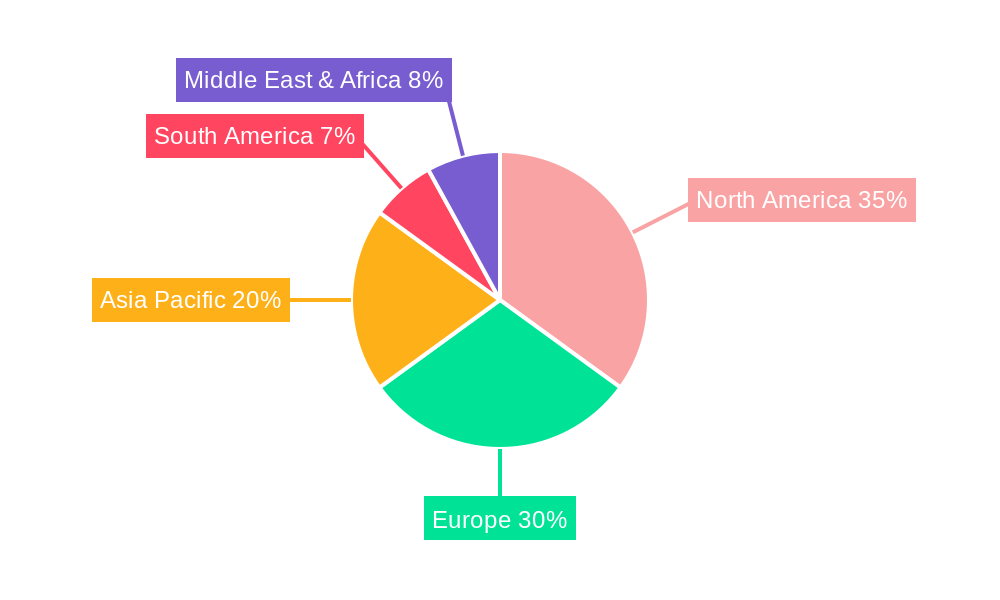
Tourniquets Devices Regional Market Share
Geographic Coverage of Tourniquets Devices
Tourniquets Devices REPORT HIGHLIGHTS
| Aspects | Details |
|---|---|
| Study Period | 2020-2034 |
| Base Year | 2025 |
| Estimated Year | 2026 |
| Forecast Period | 2026-2034 |
| Historical Period | 2020-2025 |
| Growth Rate | CAGR of 8.46% from 2020-2034 |
| Segmentation |
|
Table of Contents
- 1. Introduction
- 1.1. Research Scope
- 1.2. Market Segmentation
- 1.3. Research Methodology
- 1.4. Definitions and Assumptions
- 2. Executive Summary
- 2.1. Introduction
- 3. Market Dynamics
- 3.1. Introduction
- 3.2. Market Drivers
- 3.3. Market Restrains
- 3.4. Market Trends
- 4. Market Factor Analysis
- 4.1. Porters Five Forces
- 4.2. Supply/Value Chain
- 4.3. PESTEL analysis
- 4.4. Market Entropy
- 4.5. Patent/Trademark Analysis
- 5. Global Tourniquets Devices Analysis, Insights and Forecast, 2020-2032
- 5.1. Market Analysis, Insights and Forecast - by Application
- 5.1.1. Hospitals
- 5.1.2. Clinics
- 5.1.3. Military
- 5.1.4. Other
- 5.2. Market Analysis, Insights and Forecast - by Types
- 5.2.1. Pneumatic Tourniquets Device
- 5.2.2. Manual Tourniquets Device
- 5.2.3. Other
- 5.3. Market Analysis, Insights and Forecast - by Region
- 5.3.1. North America
- 5.3.2. South America
- 5.3.3. Europe
- 5.3.4. Middle East & Africa
- 5.3.5. Asia Pacific
- 5.1. Market Analysis, Insights and Forecast - by Application
- 6. North America Tourniquets Devices Analysis, Insights and Forecast, 2020-2032
- 6.1. Market Analysis, Insights and Forecast - by Application
- 6.1.1. Hospitals
- 6.1.2. Clinics
- 6.1.3. Military
- 6.1.4. Other
- 6.2. Market Analysis, Insights and Forecast - by Types
- 6.2.1. Pneumatic Tourniquets Device
- 6.2.2. Manual Tourniquets Device
- 6.2.3. Other
- 6.1. Market Analysis, Insights and Forecast - by Application
- 7. South America Tourniquets Devices Analysis, Insights and Forecast, 2020-2032
- 7.1. Market Analysis, Insights and Forecast - by Application
- 7.1.1. Hospitals
- 7.1.2. Clinics
- 7.1.3. Military
- 7.1.4. Other
- 7.2. Market Analysis, Insights and Forecast - by Types
- 7.2.1. Pneumatic Tourniquets Device
- 7.2.2. Manual Tourniquets Device
- 7.2.3. Other
- 7.1. Market Analysis, Insights and Forecast - by Application
- 8. Europe Tourniquets Devices Analysis, Insights and Forecast, 2020-2032
- 8.1. Market Analysis, Insights and Forecast - by Application
- 8.1.1. Hospitals
- 8.1.2. Clinics
- 8.1.3. Military
- 8.1.4. Other
- 8.2. Market Analysis, Insights and Forecast - by Types
- 8.2.1. Pneumatic Tourniquets Device
- 8.2.2. Manual Tourniquets Device
- 8.2.3. Other
- 8.1. Market Analysis, Insights and Forecast - by Application
- 9. Middle East & Africa Tourniquets Devices Analysis, Insights and Forecast, 2020-2032
- 9.1. Market Analysis, Insights and Forecast - by Application
- 9.1.1. Hospitals
- 9.1.2. Clinics
- 9.1.3. Military
- 9.1.4. Other
- 9.2. Market Analysis, Insights and Forecast - by Types
- 9.2.1. Pneumatic Tourniquets Device
- 9.2.2. Manual Tourniquets Device
- 9.2.3. Other
- 9.1. Market Analysis, Insights and Forecast - by Application
- 10. Asia Pacific Tourniquets Devices Analysis, Insights and Forecast, 2020-2032
- 10.1. Market Analysis, Insights and Forecast - by Application
- 10.1.1. Hospitals
- 10.1.2. Clinics
- 10.1.3. Military
- 10.1.4. Other
- 10.2. Market Analysis, Insights and Forecast - by Types
- 10.2.1. Pneumatic Tourniquets Device
- 10.2.2. Manual Tourniquets Device
- 10.2.3. Other
- 10.1. Market Analysis, Insights and Forecast - by Application
- 11. Competitive Analysis
- 11.1. Global Market Share Analysis 2025
- 11.2. Company Profiles
- 11.2.1 Stryker
- 11.2.1.1. Overview
- 11.2.1.2. Products
- 11.2.1.3. SWOT Analysis
- 11.2.1.4. Recent Developments
- 11.2.1.5. Financials (Based on Availability)
- 11.2.2 Zimmer Biomet
- 11.2.2.1. Overview
- 11.2.2.2. Products
- 11.2.2.3. SWOT Analysis
- 11.2.2.4. Recent Developments
- 11.2.2.5. Financials (Based on Availability)
- 11.2.3 Ulrich Medical
- 11.2.3.1. Overview
- 11.2.3.2. Products
- 11.2.3.3. SWOT Analysis
- 11.2.3.4. Recent Developments
- 11.2.3.5. Financials (Based on Availability)
- 11.2.4 VBM Medizintechnik
- 11.2.4.1. Overview
- 11.2.4.2. Products
- 11.2.4.3. SWOT Analysis
- 11.2.4.4. Recent Developments
- 11.2.4.5. Financials (Based on Availability)
- 11.2.5 Delfi Medical
- 11.2.5.1. Overview
- 11.2.5.2. Products
- 11.2.5.3. SWOT Analysis
- 11.2.5.4. Recent Developments
- 11.2.5.5. Financials (Based on Availability)
- 11.2.6 Cardinal Health
- 11.2.6.1. Overview
- 11.2.6.2. Products
- 11.2.6.3. SWOT Analysis
- 11.2.6.4. Recent Developments
- 11.2.6.5. Financials (Based on Availability)
- 11.2.7 Hokanson
- 11.2.7.1. Overview
- 11.2.7.2. Products
- 11.2.7.3. SWOT Analysis
- 11.2.7.4. Recent Developments
- 11.2.7.5. Financials (Based on Availability)
- 11.2.8 PerSys Medical
- 11.2.8.1. Overview
- 11.2.8.2. Products
- 11.2.8.3. SWOT Analysis
- 11.2.8.4. Recent Developments
- 11.2.8.5. Financials (Based on Availability)
- 11.2.9 Hammarplast Medical
- 11.2.9.1. Overview
- 11.2.9.2. Products
- 11.2.9.3. SWOT Analysis
- 11.2.9.4. Recent Developments
- 11.2.9.5. Financials (Based on Availability)
- 11.2.10 Friedrich Bosch
- 11.2.10.1. Overview
- 11.2.10.2. Products
- 11.2.10.3. SWOT Analysis
- 11.2.10.4. Recent Developments
- 11.2.10.5. Financials (Based on Availability)
- 11.2.11 Medline
- 11.2.11.1. Overview
- 11.2.11.2. Products
- 11.2.11.3. SWOT Analysis
- 11.2.11.4. Recent Developments
- 11.2.11.5. Financials (Based on Availability)
- 11.2.12 Rudolf Riester
- 11.2.12.1. Overview
- 11.2.12.2. Products
- 11.2.12.3. SWOT Analysis
- 11.2.12.4. Recent Developments
- 11.2.12.5. Financials (Based on Availability)
- 11.2.13 Prestige Medical
- 11.2.13.1. Overview
- 11.2.13.2. Products
- 11.2.13.3. SWOT Analysis
- 11.2.13.4. Recent Developments
- 11.2.13.5. Financials (Based on Availability)
- 11.2.14 Gadelius Medical
- 11.2.14.1. Overview
- 11.2.14.2. Products
- 11.2.14.3. SWOT Analysis
- 11.2.14.4. Recent Developments
- 11.2.14.5. Financials (Based on Availability)
- 11.2.15 Kimetec
- 11.2.15.1. Overview
- 11.2.15.2. Products
- 11.2.15.3. SWOT Analysis
- 11.2.15.4. Recent Developments
- 11.2.15.5. Financials (Based on Availability)
- 11.2.16 ROYAX
- 11.2.16.1. Overview
- 11.2.16.2. Products
- 11.2.16.3. SWOT Analysis
- 11.2.16.4. Recent Developments
- 11.2.16.5. Financials (Based on Availability)
- 11.2.17 Beijing Xintian Liming Medical Device
- 11.2.17.1. Overview
- 11.2.17.2. Products
- 11.2.17.3. SWOT Analysis
- 11.2.17.4. Recent Developments
- 11.2.17.5. Financials (Based on Availability)
- 11.2.18 Shanghai Huifeng Medical Instrument
- 11.2.18.1. Overview
- 11.2.18.2. Products
- 11.2.18.3. SWOT Analysis
- 11.2.18.4. Recent Developments
- 11.2.18.5. Financials (Based on Availability)
- 11.2.19 Yancheng Senolo Medical Technology
- 11.2.19.1. Overview
- 11.2.19.2. Products
- 11.2.19.3. SWOT Analysis
- 11.2.19.4. Recent Developments
- 11.2.19.5. Financials (Based on Availability)
- 11.2.20 Beijing Jinxinxing Medical Device
- 11.2.20.1. Overview
- 11.2.20.2. Products
- 11.2.20.3. SWOT Analysis
- 11.2.20.4. Recent Developments
- 11.2.20.5. Financials (Based on Availability)
- 11.2.1 Stryker
List of Figures
- Figure 1: Global Tourniquets Devices Revenue Breakdown (billion, %) by Region 2025 & 2033
- Figure 2: Global Tourniquets Devices Volume Breakdown (K, %) by Region 2025 & 2033
- Figure 3: North America Tourniquets Devices Revenue (billion), by Application 2025 & 2033
- Figure 4: North America Tourniquets Devices Volume (K), by Application 2025 & 2033
- Figure 5: North America Tourniquets Devices Revenue Share (%), by Application 2025 & 2033
- Figure 6: North America Tourniquets Devices Volume Share (%), by Application 2025 & 2033
- Figure 7: North America Tourniquets Devices Revenue (billion), by Types 2025 & 2033
- Figure 8: North America Tourniquets Devices Volume (K), by Types 2025 & 2033
- Figure 9: North America Tourniquets Devices Revenue Share (%), by Types 2025 & 2033
- Figure 10: North America Tourniquets Devices Volume Share (%), by Types 2025 & 2033
- Figure 11: North America Tourniquets Devices Revenue (billion), by Country 2025 & 2033
- Figure 12: North America Tourniquets Devices Volume (K), by Country 2025 & 2033
- Figure 13: North America Tourniquets Devices Revenue Share (%), by Country 2025 & 2033
- Figure 14: North America Tourniquets Devices Volume Share (%), by Country 2025 & 2033
- Figure 15: South America Tourniquets Devices Revenue (billion), by Application 2025 & 2033
- Figure 16: South America Tourniquets Devices Volume (K), by Application 2025 & 2033
- Figure 17: South America Tourniquets Devices Revenue Share (%), by Application 2025 & 2033
- Figure 18: South America Tourniquets Devices Volume Share (%), by Application 2025 & 2033
- Figure 19: South America Tourniquets Devices Revenue (billion), by Types 2025 & 2033
- Figure 20: South America Tourniquets Devices Volume (K), by Types 2025 & 2033
- Figure 21: South America Tourniquets Devices Revenue Share (%), by Types 2025 & 2033
- Figure 22: South America Tourniquets Devices Volume Share (%), by Types 2025 & 2033
- Figure 23: South America Tourniquets Devices Revenue (billion), by Country 2025 & 2033
- Figure 24: South America Tourniquets Devices Volume (K), by Country 2025 & 2033
- Figure 25: South America Tourniquets Devices Revenue Share (%), by Country 2025 & 2033
- Figure 26: South America Tourniquets Devices Volume Share (%), by Country 2025 & 2033
- Figure 27: Europe Tourniquets Devices Revenue (billion), by Application 2025 & 2033
- Figure 28: Europe Tourniquets Devices Volume (K), by Application 2025 & 2033
- Figure 29: Europe Tourniquets Devices Revenue Share (%), by Application 2025 & 2033
- Figure 30: Europe Tourniquets Devices Volume Share (%), by Application 2025 & 2033
- Figure 31: Europe Tourniquets Devices Revenue (billion), by Types 2025 & 2033
- Figure 32: Europe Tourniquets Devices Volume (K), by Types 2025 & 2033
- Figure 33: Europe Tourniquets Devices Revenue Share (%), by Types 2025 & 2033
- Figure 34: Europe Tourniquets Devices Volume Share (%), by Types 2025 & 2033
- Figure 35: Europe Tourniquets Devices Revenue (billion), by Country 2025 & 2033
- Figure 36: Europe Tourniquets Devices Volume (K), by Country 2025 & 2033
- Figure 37: Europe Tourniquets Devices Revenue Share (%), by Country 2025 & 2033
- Figure 38: Europe Tourniquets Devices Volume Share (%), by Country 2025 & 2033
- Figure 39: Middle East & Africa Tourniquets Devices Revenue (billion), by Application 2025 & 2033
- Figure 40: Middle East & Africa Tourniquets Devices Volume (K), by Application 2025 & 2033
- Figure 41: Middle East & Africa Tourniquets Devices Revenue Share (%), by Application 2025 & 2033
- Figure 42: Middle East & Africa Tourniquets Devices Volume Share (%), by Application 2025 & 2033
- Figure 43: Middle East & Africa Tourniquets Devices Revenue (billion), by Types 2025 & 2033
- Figure 44: Middle East & Africa Tourniquets Devices Volume (K), by Types 2025 & 2033
- Figure 45: Middle East & Africa Tourniquets Devices Revenue Share (%), by Types 2025 & 2033
- Figure 46: Middle East & Africa Tourniquets Devices Volume Share (%), by Types 2025 & 2033
- Figure 47: Middle East & Africa Tourniquets Devices Revenue (billion), by Country 2025 & 2033
- Figure 48: Middle East & Africa Tourniquets Devices Volume (K), by Country 2025 & 2033
- Figure 49: Middle East & Africa Tourniquets Devices Revenue Share (%), by Country 2025 & 2033
- Figure 50: Middle East & Africa Tourniquets Devices Volume Share (%), by Country 2025 & 2033
- Figure 51: Asia Pacific Tourniquets Devices Revenue (billion), by Application 2025 & 2033
- Figure 52: Asia Pacific Tourniquets Devices Volume (K), by Application 2025 & 2033
- Figure 53: Asia Pacific Tourniquets Devices Revenue Share (%), by Application 2025 & 2033
- Figure 54: Asia Pacific Tourniquets Devices Volume Share (%), by Application 2025 & 2033
- Figure 55: Asia Pacific Tourniquets Devices Revenue (billion), by Types 2025 & 2033
- Figure 56: Asia Pacific Tourniquets Devices Volume (K), by Types 2025 & 2033
- Figure 57: Asia Pacific Tourniquets Devices Revenue Share (%), by Types 2025 & 2033
- Figure 58: Asia Pacific Tourniquets Devices Volume Share (%), by Types 2025 & 2033
- Figure 59: Asia Pacific Tourniquets Devices Revenue (billion), by Country 2025 & 2033
- Figure 60: Asia Pacific Tourniquets Devices Volume (K), by Country 2025 & 2033
- Figure 61: Asia Pacific Tourniquets Devices Revenue Share (%), by Country 2025 & 2033
- Figure 62: Asia Pacific Tourniquets Devices Volume Share (%), by Country 2025 & 2033
List of Tables
- Table 1: Global Tourniquets Devices Revenue billion Forecast, by Application 2020 & 2033
- Table 2: Global Tourniquets Devices Volume K Forecast, by Application 2020 & 2033
- Table 3: Global Tourniquets Devices Revenue billion Forecast, by Types 2020 & 2033
- Table 4: Global Tourniquets Devices Volume K Forecast, by Types 2020 & 2033
- Table 5: Global Tourniquets Devices Revenue billion Forecast, by Region 2020 & 2033
- Table 6: Global Tourniquets Devices Volume K Forecast, by Region 2020 & 2033
- Table 7: Global Tourniquets Devices Revenue billion Forecast, by Application 2020 & 2033
- Table 8: Global Tourniquets Devices Volume K Forecast, by Application 2020 & 2033
- Table 9: Global Tourniquets Devices Revenue billion Forecast, by Types 2020 & 2033
- Table 10: Global Tourniquets Devices Volume K Forecast, by Types 2020 & 2033
- Table 11: Global Tourniquets Devices Revenue billion Forecast, by Country 2020 & 2033
- Table 12: Global Tourniquets Devices Volume K Forecast, by Country 2020 & 2033
- Table 13: United States Tourniquets Devices Revenue (billion) Forecast, by Application 2020 & 2033
- Table 14: United States Tourniquets Devices Volume (K) Forecast, by Application 2020 & 2033
- Table 15: Canada Tourniquets Devices Revenue (billion) Forecast, by Application 2020 & 2033
- Table 16: Canada Tourniquets Devices Volume (K) Forecast, by Application 2020 & 2033
- Table 17: Mexico Tourniquets Devices Revenue (billion) Forecast, by Application 2020 & 2033
- Table 18: Mexico Tourniquets Devices Volume (K) Forecast, by Application 2020 & 2033
- Table 19: Global Tourniquets Devices Revenue billion Forecast, by Application 2020 & 2033
- Table 20: Global Tourniquets Devices Volume K Forecast, by Application 2020 & 2033
- Table 21: Global Tourniquets Devices Revenue billion Forecast, by Types 2020 & 2033
- Table 22: Global Tourniquets Devices Volume K Forecast, by Types 2020 & 2033
- Table 23: Global Tourniquets Devices Revenue billion Forecast, by Country 2020 & 2033
- Table 24: Global Tourniquets Devices Volume K Forecast, by Country 2020 & 2033
- Table 25: Brazil Tourniquets Devices Revenue (billion) Forecast, by Application 2020 & 2033
- Table 26: Brazil Tourniquets Devices Volume (K) Forecast, by Application 2020 & 2033
- Table 27: Argentina Tourniquets Devices Revenue (billion) Forecast, by Application 2020 & 2033
- Table 28: Argentina Tourniquets Devices Volume (K) Forecast, by Application 2020 & 2033
- Table 29: Rest of South America Tourniquets Devices Revenue (billion) Forecast, by Application 2020 & 2033
- Table 30: Rest of South America Tourniquets Devices Volume (K) Forecast, by Application 2020 & 2033
- Table 31: Global Tourniquets Devices Revenue billion Forecast, by Application 2020 & 2033
- Table 32: Global Tourniquets Devices Volume K Forecast, by Application 2020 & 2033
- Table 33: Global Tourniquets Devices Revenue billion Forecast, by Types 2020 & 2033
- Table 34: Global Tourniquets Devices Volume K Forecast, by Types 2020 & 2033
- Table 35: Global Tourniquets Devices Revenue billion Forecast, by Country 2020 & 2033
- Table 36: Global Tourniquets Devices Volume K Forecast, by Country 2020 & 2033
- Table 37: United Kingdom Tourniquets Devices Revenue (billion) Forecast, by Application 2020 & 2033
- Table 38: United Kingdom Tourniquets Devices Volume (K) Forecast, by Application 2020 & 2033
- Table 39: Germany Tourniquets Devices Revenue (billion) Forecast, by Application 2020 & 2033
- Table 40: Germany Tourniquets Devices Volume (K) Forecast, by Application 2020 & 2033
- Table 41: France Tourniquets Devices Revenue (billion) Forecast, by Application 2020 & 2033
- Table 42: France Tourniquets Devices Volume (K) Forecast, by Application 2020 & 2033
- Table 43: Italy Tourniquets Devices Revenue (billion) Forecast, by Application 2020 & 2033
- Table 44: Italy Tourniquets Devices Volume (K) Forecast, by Application 2020 & 2033
- Table 45: Spain Tourniquets Devices Revenue (billion) Forecast, by Application 2020 & 2033
- Table 46: Spain Tourniquets Devices Volume (K) Forecast, by Application 2020 & 2033
- Table 47: Russia Tourniquets Devices Revenue (billion) Forecast, by Application 2020 & 2033
- Table 48: Russia Tourniquets Devices Volume (K) Forecast, by Application 2020 & 2033
- Table 49: Benelux Tourniquets Devices Revenue (billion) Forecast, by Application 2020 & 2033
- Table 50: Benelux Tourniquets Devices Volume (K) Forecast, by Application 2020 & 2033
- Table 51: Nordics Tourniquets Devices Revenue (billion) Forecast, by Application 2020 & 2033
- Table 52: Nordics Tourniquets Devices Volume (K) Forecast, by Application 2020 & 2033
- Table 53: Rest of Europe Tourniquets Devices Revenue (billion) Forecast, by Application 2020 & 2033
- Table 54: Rest of Europe Tourniquets Devices Volume (K) Forecast, by Application 2020 & 2033
- Table 55: Global Tourniquets Devices Revenue billion Forecast, by Application 2020 & 2033
- Table 56: Global Tourniquets Devices Volume K Forecast, by Application 2020 & 2033
- Table 57: Global Tourniquets Devices Revenue billion Forecast, by Types 2020 & 2033
- Table 58: Global Tourniquets Devices Volume K Forecast, by Types 2020 & 2033
- Table 59: Global Tourniquets Devices Revenue billion Forecast, by Country 2020 & 2033
- Table 60: Global Tourniquets Devices Volume K Forecast, by Country 2020 & 2033
- Table 61: Turkey Tourniquets Devices Revenue (billion) Forecast, by Application 2020 & 2033
- Table 62: Turkey Tourniquets Devices Volume (K) Forecast, by Application 2020 & 2033
- Table 63: Israel Tourniquets Devices Revenue (billion) Forecast, by Application 2020 & 2033
- Table 64: Israel Tourniquets Devices Volume (K) Forecast, by Application 2020 & 2033
- Table 65: GCC Tourniquets Devices Revenue (billion) Forecast, by Application 2020 & 2033
- Table 66: GCC Tourniquets Devices Volume (K) Forecast, by Application 2020 & 2033
- Table 67: North Africa Tourniquets Devices Revenue (billion) Forecast, by Application 2020 & 2033
- Table 68: North Africa Tourniquets Devices Volume (K) Forecast, by Application 2020 & 2033
- Table 69: South Africa Tourniquets Devices Revenue (billion) Forecast, by Application 2020 & 2033
- Table 70: South Africa Tourniquets Devices Volume (K) Forecast, by Application 2020 & 2033
- Table 71: Rest of Middle East & Africa Tourniquets Devices Revenue (billion) Forecast, by Application 2020 & 2033
- Table 72: Rest of Middle East & Africa Tourniquets Devices Volume (K) Forecast, by Application 2020 & 2033
- Table 73: Global Tourniquets Devices Revenue billion Forecast, by Application 2020 & 2033
- Table 74: Global Tourniquets Devices Volume K Forecast, by Application 2020 & 2033
- Table 75: Global Tourniquets Devices Revenue billion Forecast, by Types 2020 & 2033
- Table 76: Global Tourniquets Devices Volume K Forecast, by Types 2020 & 2033
- Table 77: Global Tourniquets Devices Revenue billion Forecast, by Country 2020 & 2033
- Table 78: Global Tourniquets Devices Volume K Forecast, by Country 2020 & 2033
- Table 79: China Tourniquets Devices Revenue (billion) Forecast, by Application 2020 & 2033
- Table 80: China Tourniquets Devices Volume (K) Forecast, by Application 2020 & 2033
- Table 81: India Tourniquets Devices Revenue (billion) Forecast, by Application 2020 & 2033
- Table 82: India Tourniquets Devices Volume (K) Forecast, by Application 2020 & 2033
- Table 83: Japan Tourniquets Devices Revenue (billion) Forecast, by Application 2020 & 2033
- Table 84: Japan Tourniquets Devices Volume (K) Forecast, by Application 2020 & 2033
- Table 85: South Korea Tourniquets Devices Revenue (billion) Forecast, by Application 2020 & 2033
- Table 86: South Korea Tourniquets Devices Volume (K) Forecast, by Application 2020 & 2033
- Table 87: ASEAN Tourniquets Devices Revenue (billion) Forecast, by Application 2020 & 2033
- Table 88: ASEAN Tourniquets Devices Volume (K) Forecast, by Application 2020 & 2033
- Table 89: Oceania Tourniquets Devices Revenue (billion) Forecast, by Application 2020 & 2033
- Table 90: Oceania Tourniquets Devices Volume (K) Forecast, by Application 2020 & 2033
- Table 91: Rest of Asia Pacific Tourniquets Devices Revenue (billion) Forecast, by Application 2020 & 2033
- Table 92: Rest of Asia Pacific Tourniquets Devices Volume (K) Forecast, by Application 2020 & 2033
Frequently Asked Questions
1. What is the projected Compound Annual Growth Rate (CAGR) of the Tourniquets Devices?
The projected CAGR is approximately 8.46%.
2. Which companies are prominent players in the Tourniquets Devices?
Key companies in the market include Stryker, Zimmer Biomet, Ulrich Medical, VBM Medizintechnik, Delfi Medical, Cardinal Health, Hokanson, PerSys Medical, Hammarplast Medical, Friedrich Bosch, Medline, Rudolf Riester, Prestige Medical, Gadelius Medical, Kimetec, ROYAX, Beijing Xintian Liming Medical Device, Shanghai Huifeng Medical Instrument, Yancheng Senolo Medical Technology, Beijing Jinxinxing Medical Device.
3. What are the main segments of the Tourniquets Devices?
The market segments include Application, Types.
4. Can you provide details about the market size?
The market size is estimated to be USD 6.76 billion as of 2022.
5. What are some drivers contributing to market growth?
N/A
6. What are the notable trends driving market growth?
N/A
7. Are there any restraints impacting market growth?
N/A
8. Can you provide examples of recent developments in the market?
N/A
9. What pricing options are available for accessing the report?
Pricing options include single-user, multi-user, and enterprise licenses priced at USD 3950.00, USD 5925.00, and USD 7900.00 respectively.
10. Is the market size provided in terms of value or volume?
The market size is provided in terms of value, measured in billion and volume, measured in K.
11. Are there any specific market keywords associated with the report?
Yes, the market keyword associated with the report is "Tourniquets Devices," which aids in identifying and referencing the specific market segment covered.
12. How do I determine which pricing option suits my needs best?
The pricing options vary based on user requirements and access needs. Individual users may opt for single-user licenses, while businesses requiring broader access may choose multi-user or enterprise licenses for cost-effective access to the report.
13. Are there any additional resources or data provided in the Tourniquets Devices report?
While the report offers comprehensive insights, it's advisable to review the specific contents or supplementary materials provided to ascertain if additional resources or data are available.
14. How can I stay updated on further developments or reports in the Tourniquets Devices?
To stay informed about further developments, trends, and reports in the Tourniquets Devices, consider subscribing to industry newsletters, following relevant companies and organizations, or regularly checking reputable industry news sources and publications.
Methodology
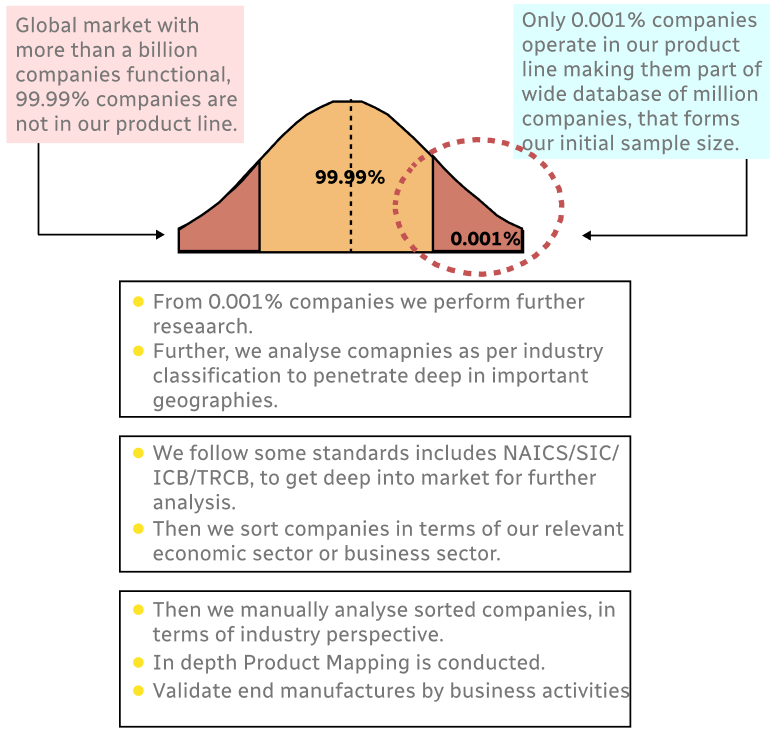
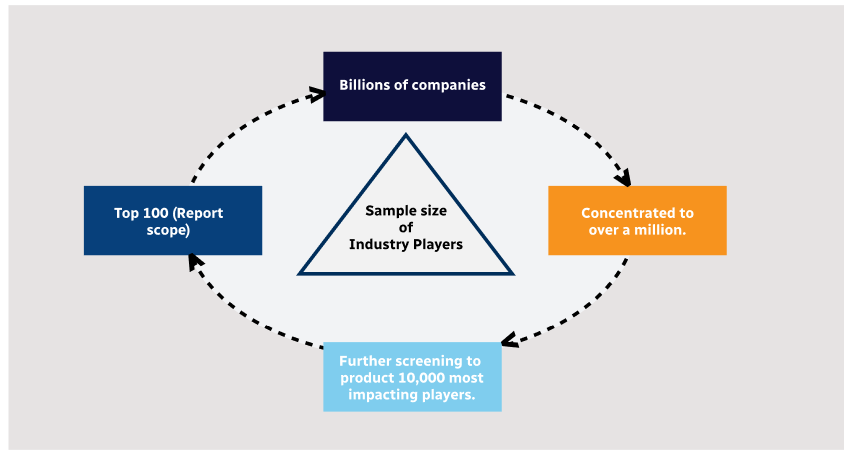
Step 1 - Identification of Relevant Samples Size from Population Database
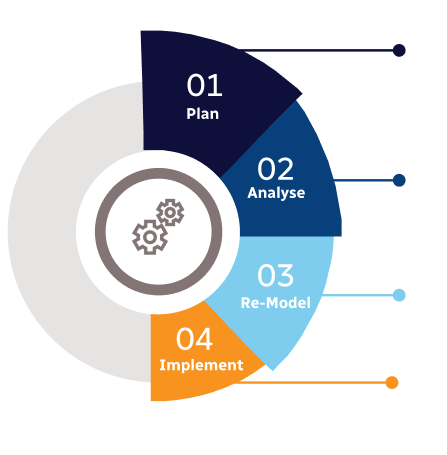
Step 2 - Approaches for Defining Global Market Size (Value, Volume* & Price*)
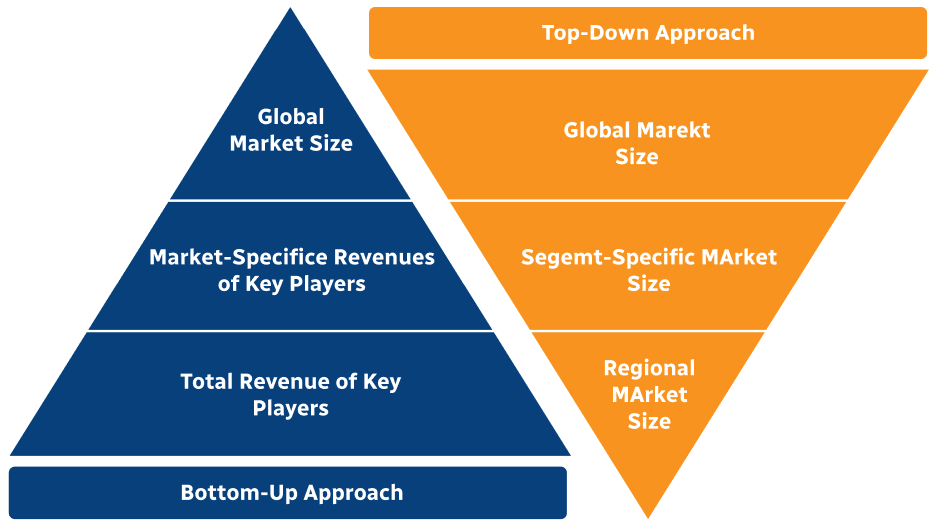
Note*: In applicable scenarios
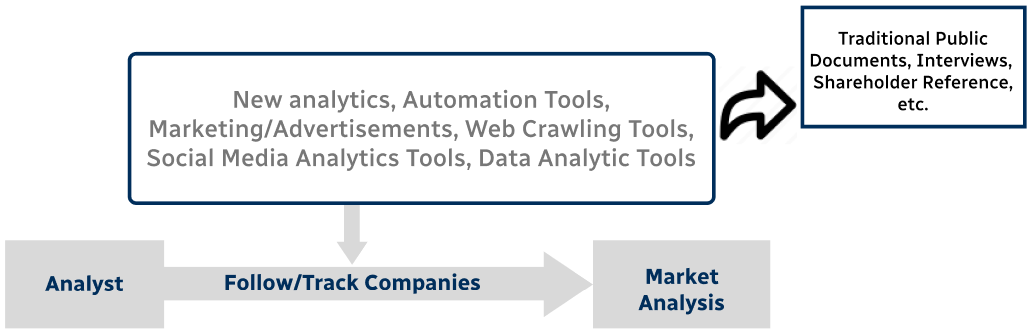
Step 3 - Data Sources
Primary Research
- Web Analytics
- Survey Reports
- Research Institute
- Latest Research Reports
- Opinion Leaders
Secondary Research
- Annual Reports
- White Paper
- Latest Press Release
- Industry Association
- Paid Database
- Investor Presentations
Step 4 - Data Triangulation
Involves using different sources of information in order to increase the validity of a study
These sources are likely to be stakeholders in a program - participants, other researchers, program staff, other community members, and so on.
Then we put all data in single framework & apply various statistical tools to find out the dynamic on the market.
During the analysis stage, feedback from the stakeholder groups would be compared to determine areas of agreement as well as areas of divergence