


Key Insights
The global market for lab supplies is poised for significant expansion, projected to reach an estimated $150 billion by 2025, with a robust Compound Annual Growth Rate (CAGR) of 8.5% anticipated over the forecast period of 2025-2033. This growth is primarily propelled by escalating investments in research and development across academic institutions and the burgeoning pharmaceutical and biotechnology sectors. The increasing demand for advanced diagnostics and personalized medicine further fuels the need for high-quality lab equipment and consumables, driving market value towards an estimated $280 billion by 2033. Key segments like academic institutes and clinical diagnostic laboratories are expected to witness substantial growth, supported by government initiatives and private funding aimed at enhancing healthcare infrastructure and scientific research capabilities globally. The market's expansion is further underpinned by the continuous introduction of innovative products and technologies, offering greater precision, efficiency, and cost-effectiveness in laboratory operations.
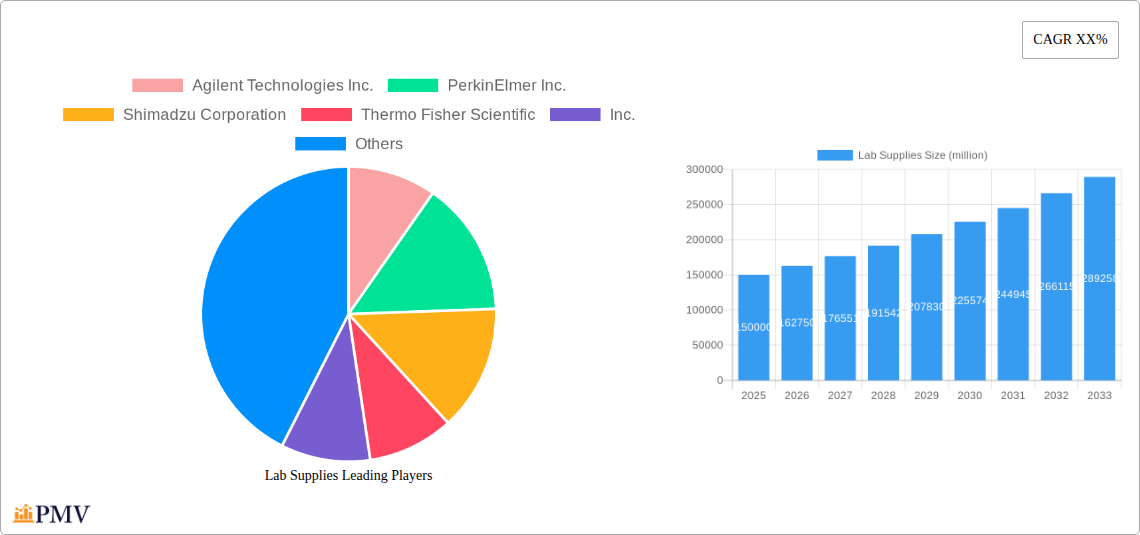
Lab Supplies Market Size (In Billion)

Despite the promising outlook, certain restraints could influence the market's trajectory. Stringent regulatory frameworks governing laboratory operations and product approvals can pose challenges, necessitating significant compliance investments for manufacturers and suppliers. Moreover, the high initial cost of sophisticated laboratory equipment might present a barrier for smaller research facilities and developing economies. Nevertheless, the overwhelming positive drivers, including the increasing prevalence of chronic diseases, the growing need for drug discovery and development, and advancements in life sciences research, are expected to outweigh these challenges. Emerging economies, particularly in the Asia Pacific region, are emerging as lucrative markets due to their rapidly developing research infrastructure and increasing healthcare expenditure, presenting substantial opportunities for market players. The market is characterized by a competitive landscape featuring both established global players and emerging regional manufacturers, all vying to capture a significant share through product innovation and strategic collaborations.
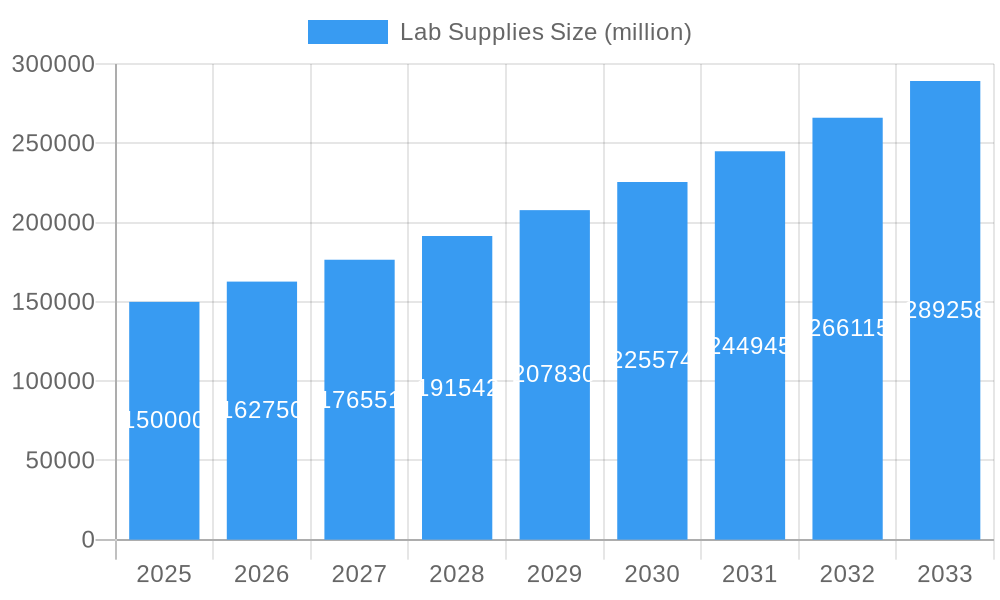
Lab Supplies Company Market Share
This in-depth report provides a detailed analysis of the global Lab Supplies Market, covering historical data, current trends, and future projections from 2019 to 2033. We examine key market segments, dominant players, critical growth drivers, and emerging challenges. This report is essential for stakeholders seeking to understand the laboratory consumables market, scientific equipment market, and biotechnology supplies market. Our research encompasses major companies like Thermo Fisher Scientific, Agilent Technologies, PerkinElmer, and Shimadzu, alongside crucial segments such as pharmaceutical and biotechnology R&D supplies, clinical diagnostics laboratory supplies, and academic research lab equipment.
Lab Supplies Market Structure & Competitive Dynamics
The global Lab Supplies Market exhibits a moderately concentrated structure, characterized by the presence of a few dominant global players alongside a multitude of smaller, specialized suppliers. This competitive landscape is shaped by significant innovation ecosystems, driven by continuous research and development in areas like automation, miniaturization, and digital integration within laboratories. Regulatory frameworks, including stringent quality control standards and compliance requirements for research and diagnostic applications, play a pivotal role in market entry and competitive differentiation. The threat of product substitutes is relatively low in core laboratory consumables and equipment, given the specialized nature and performance demands. However, advancements in virtual and remote lab technologies present a nascent form of substitution for certain experimental procedures. End-user trends are increasingly leaning towards sustainability, cost-efficiency, and integrated digital solutions, pushing manufacturers to adapt their product portfolios and service offerings. Mergers and acquisitions (M&A) activities are a significant feature, with estimated deal values reaching over one hundred million in recent years, as larger entities seek to consolidate market share, acquire new technologies, and expand their geographic reach. Key players like Thermo Fisher Scientific and Danaher have been particularly active in strategic acquisitions to bolster their offerings in areas such as diagnostics and life sciences.
Lab Supplies Industry Trends & Insights
The Lab Supplies Industry is poised for robust growth, with an estimated Compound Annual Growth Rate (CAGR) of approximately seven percent during the forecast period. This expansion is primarily fueled by escalating investments in research and development across the pharmaceutical, biotechnology, and healthcare sectors, driven by the pursuit of novel therapies, diagnostics, and medical advancements. The increasing prevalence of chronic diseases and infectious outbreaks worldwide necessitates advanced clinical and diagnostic laboratory supplies, further propelling market demand. Technological disruptions are a significant trend, with the integration of artificial intelligence (AI) and machine learning (ML) in laboratory automation, data analysis, and experimental design promising to revolutionize laboratory workflows. The adoption of high-throughput screening equipment and automated liquid handling systems is becoming standard practice, enhancing efficiency and reducing human error. Consumer preferences are shifting towards suppliers offering integrated solutions, comprehensive product portfolios, and superior technical support. There's also a growing emphasis on sustainability, with a demand for eco-friendly and recyclable laboratory disposables. The market penetration of advanced analytical instruments and specialized consumables continues to rise, particularly in emerging economies where laboratory infrastructure is rapidly developing. The pandemic has also accelerated the demand for biosafety products and diagnostic testing supplies, highlighting the sector's critical role in public health.
Dominant Markets & Segments in Lab Supplies
The global Lab Supplies Market is dominated by the Pharmaceutical & Biotechnology Companies segment, which accounts for an estimated forty-five percent of the total market revenue. This dominance is driven by substantial R&D expenditures aimed at drug discovery, development, and manufacturing, requiring a wide array of specialized laboratory equipment and consumables. Economic policies supporting pharmaceutical innovation and government initiatives promoting biotechnology research further bolster this segment. The Clinical & Diagnostic Laboratories segment follows closely, representing approximately thirty percent of the market, with an increasing reliance on advanced diagnostic tools and high-quality reagents for accurate disease detection and patient management.
Key drivers for the dominance of these segments include:
- High R&D Budgets: Pharmaceutical and biotech companies allocate significant financial resources to research and development activities, directly translating to higher demand for lab supplies.
- Technological Advancements: Continuous innovation in analytical techniques and diagnostic methodologies necessitates state-of-the-art equipment and specialized consumables.
- Regulatory Requirements: Stringent quality control and regulatory compliance in drug development and diagnostics mandate the use of certified and high-purity lab supplies.
- Growing Healthcare Expenditure: Increased global healthcare spending translates to greater demand for diagnostic testing and medical research.
In terms of product types, Equipment holds a substantial market share due to the high initial investment required for sophisticated instruments like mass spectrometers, chromatographs, and microscopes. However, the Disposables segment is experiencing rapid growth due to its recurring purchase nature and the constant need for sterile, single-use items in research and diagnostics. The Academic Institutes segment, while smaller, remains a consistent consumer of a broad range of lab supplies, driven by fundamental research and educational needs.
Lab Supplies Product Innovations
The Lab Supplies Market is witnessing continuous product innovation, driven by the pursuit of enhanced precision, efficiency, and miniaturization. Companies are investing in developing advanced analytical instruments with improved sensitivity and throughput, such as next-generation mass spectrometers and high-resolution microscopes. In the realm of disposables, innovations focus on novel materials that are more sustainable, offer enhanced chemical resistance, or incorporate smart functionalities for better tracking and data integration. The integration of automation and robotics in liquid handling, sample preparation, and workflow management systems provides significant competitive advantages by reducing manual labor and increasing reproducibility. Furthermore, there's a growing trend towards user-friendly interfaces and digital connectivity, enabling remote monitoring and data analysis, thus optimizing laboratory operations and accelerating research outcomes across various applications.
Report Segmentation & Scope
This comprehensive report segments the Lab Supplies Market across key dimensions to provide granular insights.
Application Segmentation:
- Academic Institutes: This segment encompasses universities and research institutions, characterized by diverse research areas and a steady demand for a broad range of general-purpose lab equipment and consumables. Market size for this segment is estimated at one hundred million in 2025, with a projected CAGR of five percent.
- Clinical & Diagnostic Laboratories: This segment includes hospitals, private labs, and public health facilities, focusing on disease diagnosis and patient testing. Demand is high for specialized diagnostic kits, reagents, and analytical instruments. Market size for this segment is estimated at one hundred fifty million in 2025, with a projected CAGR of eight percent.
- Pharmaceutical & Biotechnology Companies: This segment represents a significant portion of the market, driven by extensive R&D for drug discovery, development, and manufacturing. High-value, specialized equipment and premium consumables are in high demand. Market size for this segment is estimated at two hundred million in 2025, with a projected CAGR of ten percent.
- Others: This residual segment includes industrial testing labs, environmental monitoring agencies, and food safety laboratories, each with specific and evolving needs for lab supplies. Market size for this segment is estimated at fifty million in 2025, with a projected CAGR of six percent.
Type Segmentation:
- Equipment: This segment comprises analytical instruments, laboratory furniture, safety equipment, and general lab apparatus. Market size for this segment is estimated at three hundred million in 2025, with a projected CAGR of seven percent.
- Disposables: This segment includes glassware, plasticware, filters, gloves, and reagents. It is characterized by recurring purchases and rapid innovation. Market size for this segment is estimated at two hundred million in 2025, with a projected CAGR of nine percent.
Key Drivers of Lab Supplies Growth
The Lab Supplies Sector is experiencing significant growth fueled by several key factors. Increasing global healthcare expenditure and the rising prevalence of chronic diseases are driving demand for clinical diagnostic supplies. Furthermore, substantial investments in pharmaceutical and biotechnology research and development, spurred by the need for novel drug discovery and personalized medicine, are a major growth accelerator. Technological advancements, such as the adoption of automation, AI, and advanced analytical techniques, are creating new market opportunities for sophisticated laboratory equipment and specialized consumables. Government initiatives promoting scientific research and funding for academic institutions also contribute significantly to market expansion. The growing focus on stringent quality control and regulatory compliance across various industries necessitates the use of high-quality and certified lab supplies.
Challenges in the Lab Supplies Sector
Despite the positive growth outlook, the Lab Supplies Sector faces several challenges. Stringent and evolving regulatory frameworks across different regions can pose significant hurdles for market entry and product approval, increasing compliance costs and development timelines. Supply chain disruptions, exacerbated by geopolitical events and logistical complexities, can lead to price volatility and availability issues for critical raw materials and finished products. Intense competition among numerous global and regional players, coupled with price pressures from cost-conscious end-users, can impact profit margins. Furthermore, the rapid pace of technological innovation requires continuous investment in R&D, posing a challenge for smaller companies to keep pace. The growing demand for sustainable products also presents a challenge, requiring manufacturers to invest in eco-friendly materials and production processes.
Leading Players in the Lab Supplies Market
- Agilent Technologies Inc.
- PerkinElmer Inc.
- Shimadzu Corporation
- Thermo Fisher Scientific, Inc.
- Waters Corporation
- VWR International, LLC
- Merck & Co., Inc.
- Danaher
- Spectrum Chemical Manufacturing Corp.
- Pace Analytical Services, LLC
- Eppendorf AG
- Hettich Instruments
- John Barron
- Shenzhen Mindray
- Camlab Ltd
- Bellco Glass
- Eurofins Scientific
- Medline Scientific Limited
- WK Life Sciences
- VITLAB GmbH
- Crystalgen, Inc.
- SKS Science Products
- Citotest Labware Manufacturing Co.,Ltd.
- Elkay Laboratory Products
- Pathtech
- Brand GmbH & Co. KG
Key Developments in Lab Supplies Sector
- 2023: Thermo Fisher Scientific launched a new series of advanced analytical instruments designed for enhanced sensitivity and throughput in proteomics research, impacting the research lab equipment market.
- 2023: Agilent Technologies acquired a specialized provider of chromatography consumables, aiming to expand its product portfolio and strengthen its position in the laboratory consumables market.
- 2022: PerkinElmer introduced a new range of diagnostic reagents and kits, directly addressing the growing demand in the clinical diagnostics laboratory supplies segment.
- 2022: Shimadzu Corporation unveiled innovative software for data analysis and laboratory automation, enhancing the efficiency of pharmaceutical R&D supplies.
- 2021: Danaher completed a significant acquisition in the life sciences sector, reinforcing its comprehensive offerings in the biotechnology supplies market.
- 2021: VWR International, LLC expanded its distribution network in emerging markets, improving accessibility of scientific equipment to a broader customer base.
- 2020: The COVID-19 pandemic spurred unprecedented demand for biosafety products and diagnostic testing supplies, leading to rapid production scale-ups and innovation in these areas.
Strategic Lab Supplies Market Outlook
The strategic outlook for the Lab Supplies Market is highly positive, characterized by sustained growth accelerators. The ongoing digital transformation in laboratories, including the adoption of AI, IoT, and cloud-based solutions, presents significant opportunities for companies offering integrated and smart lab solutions. The burgeoning field of personalized medicine and advanced therapies will continue to drive demand for highly specialized consumables and equipment within the pharmaceutical and biotechnology sectors. Furthermore, the increasing focus on sustainability and circular economy principles will create a market for eco-friendly laboratory disposables and greener manufacturing processes. Emerging economies, with their rapidly developing healthcare and research infrastructure, offer substantial untapped potential. Strategic partnerships, acquisitions, and a focus on customer-centric innovation will be crucial for players aiming to capture market share and drive future success in this dynamic industry.
Lab Supplies Segmentation
-
1. Application
- 1.1. Academic Institutes
- 1.2. Clinical & Diagnostic Laboratories
- 1.3. Pharmaceutical & Biotechnology Companies
- 1.4. Others
-
2. Types
- 2.1. Equipment
- 2.2. Disposables
Lab Supplies Segmentation By Geography
-
1. North America
- 1.1. United States
- 1.2. Canada
- 1.3. Mexico
-
2. South America
- 2.1. Brazil
- 2.2. Argentina
- 2.3. Rest of South America
-
3. Europe
- 3.1. United Kingdom
- 3.2. Germany
- 3.3. France
- 3.4. Italy
- 3.5. Spain
- 3.6. Russia
- 3.7. Benelux
- 3.8. Nordics
- 3.9. Rest of Europe
-
4. Middle East & Africa
- 4.1. Turkey
- 4.2. Israel
- 4.3. GCC
- 4.4. North Africa
- 4.5. South Africa
- 4.6. Rest of Middle East & Africa
-
5. Asia Pacific
- 5.1. China
- 5.2. India
- 5.3. Japan
- 5.4. South Korea
- 5.5. ASEAN
- 5.6. Oceania
- 5.7. Rest of Asia Pacific
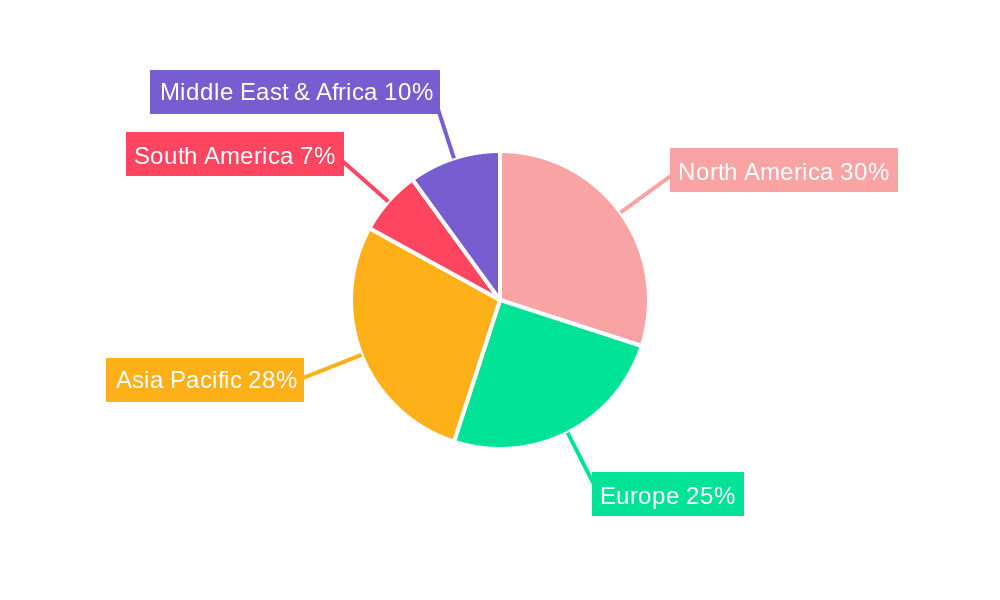
Lab Supplies Regional Market Share
Geographic Coverage of Lab Supplies
Lab Supplies REPORT HIGHLIGHTS
| Aspects | Details |
|---|---|
| Study Period | 2020-2034 |
| Base Year | 2025 |
| Estimated Year | 2026 |
| Forecast Period | 2026-2034 |
| Historical Period | 2020-2025 |
| Growth Rate | CAGR of 8.3% from 2020-2034 |
| Segmentation |
|
Table of Contents
- 1. Introduction
- 1.1. Research Scope
- 1.2. Market Segmentation
- 1.3. Research Methodology
- 1.4. Definitions and Assumptions
- 2. Executive Summary
- 2.1. Introduction
- 3. Market Dynamics
- 3.1. Introduction
- 3.2. Market Drivers
- 3.3. Market Restrains
- 3.4. Market Trends
- 4. Market Factor Analysis
- 4.1. Porters Five Forces
- 4.2. Supply/Value Chain
- 4.3. PESTEL analysis
- 4.4. Market Entropy
- 4.5. Patent/Trademark Analysis
- 5. Global Lab Supplies Analysis, Insights and Forecast, 2020-2032
- 5.1. Market Analysis, Insights and Forecast - by Application
- 5.1.1. Academic Institutes
- 5.1.2. Clinical & Diagnostic Laboratories
- 5.1.3. Pharmaceutical & Biotechnology Companies
- 5.1.4. Others
- 5.2. Market Analysis, Insights and Forecast - by Types
- 5.2.1. Equipment
- 5.2.2. Disposables
- 5.3. Market Analysis, Insights and Forecast - by Region
- 5.3.1. North America
- 5.3.2. South America
- 5.3.3. Europe
- 5.3.4. Middle East & Africa
- 5.3.5. Asia Pacific
- 5.1. Market Analysis, Insights and Forecast - by Application
- 6. North America Lab Supplies Analysis, Insights and Forecast, 2020-2032
- 6.1. Market Analysis, Insights and Forecast - by Application
- 6.1.1. Academic Institutes
- 6.1.2. Clinical & Diagnostic Laboratories
- 6.1.3. Pharmaceutical & Biotechnology Companies
- 6.1.4. Others
- 6.2. Market Analysis, Insights and Forecast - by Types
- 6.2.1. Equipment
- 6.2.2. Disposables
- 6.1. Market Analysis, Insights and Forecast - by Application
- 7. South America Lab Supplies Analysis, Insights and Forecast, 2020-2032
- 7.1. Market Analysis, Insights and Forecast - by Application
- 7.1.1. Academic Institutes
- 7.1.2. Clinical & Diagnostic Laboratories
- 7.1.3. Pharmaceutical & Biotechnology Companies
- 7.1.4. Others
- 7.2. Market Analysis, Insights and Forecast - by Types
- 7.2.1. Equipment
- 7.2.2. Disposables
- 7.1. Market Analysis, Insights and Forecast - by Application
- 8. Europe Lab Supplies Analysis, Insights and Forecast, 2020-2032
- 8.1. Market Analysis, Insights and Forecast - by Application
- 8.1.1. Academic Institutes
- 8.1.2. Clinical & Diagnostic Laboratories
- 8.1.3. Pharmaceutical & Biotechnology Companies
- 8.1.4. Others
- 8.2. Market Analysis, Insights and Forecast - by Types
- 8.2.1. Equipment
- 8.2.2. Disposables
- 8.1. Market Analysis, Insights and Forecast - by Application
- 9. Middle East & Africa Lab Supplies Analysis, Insights and Forecast, 2020-2032
- 9.1. Market Analysis, Insights and Forecast - by Application
- 9.1.1. Academic Institutes
- 9.1.2. Clinical & Diagnostic Laboratories
- 9.1.3. Pharmaceutical & Biotechnology Companies
- 9.1.4. Others
- 9.2. Market Analysis, Insights and Forecast - by Types
- 9.2.1. Equipment
- 9.2.2. Disposables
- 9.1. Market Analysis, Insights and Forecast - by Application
- 10. Asia Pacific Lab Supplies Analysis, Insights and Forecast, 2020-2032
- 10.1. Market Analysis, Insights and Forecast - by Application
- 10.1.1. Academic Institutes
- 10.1.2. Clinical & Diagnostic Laboratories
- 10.1.3. Pharmaceutical & Biotechnology Companies
- 10.1.4. Others
- 10.2. Market Analysis, Insights and Forecast - by Types
- 10.2.1. Equipment
- 10.2.2. Disposables
- 10.1. Market Analysis, Insights and Forecast - by Application
- 11. Competitive Analysis
- 11.1. Global Market Share Analysis 2025
- 11.2. Company Profiles
- 11.2.1 Agilent Technologies Inc.
- 11.2.1.1. Overview
- 11.2.1.2. Products
- 11.2.1.3. SWOT Analysis
- 11.2.1.4. Recent Developments
- 11.2.1.5. Financials (Based on Availability)
- 11.2.2 PerkinElmer Inc.
- 11.2.2.1. Overview
- 11.2.2.2. Products
- 11.2.2.3. SWOT Analysis
- 11.2.2.4. Recent Developments
- 11.2.2.5. Financials (Based on Availability)
- 11.2.3 Shimadzu Corporation
- 11.2.3.1. Overview
- 11.2.3.2. Products
- 11.2.3.3. SWOT Analysis
- 11.2.3.4. Recent Developments
- 11.2.3.5. Financials (Based on Availability)
- 11.2.4 Thermo Fisher Scientific
- 11.2.4.1. Overview
- 11.2.4.2. Products
- 11.2.4.3. SWOT Analysis
- 11.2.4.4. Recent Developments
- 11.2.4.5. Financials (Based on Availability)
- 11.2.5 Inc.
- 11.2.5.1. Overview
- 11.2.5.2. Products
- 11.2.5.3. SWOT Analysis
- 11.2.5.4. Recent Developments
- 11.2.5.5. Financials (Based on Availability)
- 11.2.6 Waters Corporation
- 11.2.6.1. Overview
- 11.2.6.2. Products
- 11.2.6.3. SWOT Analysis
- 11.2.6.4. Recent Developments
- 11.2.6.5. Financials (Based on Availability)
- 11.2.7 VWR International
- 11.2.7.1. Overview
- 11.2.7.2. Products
- 11.2.7.3. SWOT Analysis
- 11.2.7.4. Recent Developments
- 11.2.7.5. Financials (Based on Availability)
- 11.2.8 LLC
- 11.2.8.1. Overview
- 11.2.8.2. Products
- 11.2.8.3. SWOT Analysis
- 11.2.8.4. Recent Developments
- 11.2.8.5. Financials (Based on Availability)
- 11.2.9 Merck & Co.
- 11.2.9.1. Overview
- 11.2.9.2. Products
- 11.2.9.3. SWOT Analysis
- 11.2.9.4. Recent Developments
- 11.2.9.5. Financials (Based on Availability)
- 11.2.10 Inc.
- 11.2.10.1. Overview
- 11.2.10.2. Products
- 11.2.10.3. SWOT Analysis
- 11.2.10.4. Recent Developments
- 11.2.10.5. Financials (Based on Availability)
- 11.2.11 Danaher
- 11.2.11.1. Overview
- 11.2.11.2. Products
- 11.2.11.3. SWOT Analysis
- 11.2.11.4. Recent Developments
- 11.2.11.5. Financials (Based on Availability)
- 11.2.12 Spectrum Chemical Manufacturing Corp.
- 11.2.12.1. Overview
- 11.2.12.2. Products
- 11.2.12.3. SWOT Analysis
- 11.2.12.4. Recent Developments
- 11.2.12.5. Financials (Based on Availability)
- 11.2.13 Pace Analytical Services
- 11.2.13.1. Overview
- 11.2.13.2. Products
- 11.2.13.3. SWOT Analysis
- 11.2.13.4. Recent Developments
- 11.2.13.5. Financials (Based on Availability)
- 11.2.14 LLC
- 11.2.14.1. Overview
- 11.2.14.2. Products
- 11.2.14.3. SWOT Analysis
- 11.2.14.4. Recent Developments
- 11.2.14.5. Financials (Based on Availability)
- 11.2.15 Eppendorf AG
- 11.2.15.1. Overview
- 11.2.15.2. Products
- 11.2.15.3. SWOT Analysis
- 11.2.15.4. Recent Developments
- 11.2.15.5. Financials (Based on Availability)
- 11.2.16 Hettich Instruments
- 11.2.16.1. Overview
- 11.2.16.2. Products
- 11.2.16.3. SWOT Analysis
- 11.2.16.4. Recent Developments
- 11.2.16.5. Financials (Based on Availability)
- 11.2.17 John Barron
- 11.2.17.1. Overview
- 11.2.17.2. Products
- 11.2.17.3. SWOT Analysis
- 11.2.17.4. Recent Developments
- 11.2.17.5. Financials (Based on Availability)
- 11.2.18 Shenzhen Mindray
- 11.2.18.1. Overview
- 11.2.18.2. Products
- 11.2.18.3. SWOT Analysis
- 11.2.18.4. Recent Developments
- 11.2.18.5. Financials (Based on Availability)
- 11.2.19 Camlab Ltd
- 11.2.19.1. Overview
- 11.2.19.2. Products
- 11.2.19.3. SWOT Analysis
- 11.2.19.4. Recent Developments
- 11.2.19.5. Financials (Based on Availability)
- 11.2.20 Bellco Glass
- 11.2.20.1. Overview
- 11.2.20.2. Products
- 11.2.20.3. SWOT Analysis
- 11.2.20.4. Recent Developments
- 11.2.20.5. Financials (Based on Availability)
- 11.2.21 Eurofins Scientific
- 11.2.21.1. Overview
- 11.2.21.2. Products
- 11.2.21.3. SWOT Analysis
- 11.2.21.4. Recent Developments
- 11.2.21.5. Financials (Based on Availability)
- 11.2.22 Medline Scientific Limited
- 11.2.22.1. Overview
- 11.2.22.2. Products
- 11.2.22.3. SWOT Analysis
- 11.2.22.4. Recent Developments
- 11.2.22.5. Financials (Based on Availability)
- 11.2.23 WK Life Sciences
- 11.2.23.1. Overview
- 11.2.23.2. Products
- 11.2.23.3. SWOT Analysis
- 11.2.23.4. Recent Developments
- 11.2.23.5. Financials (Based on Availability)
- 11.2.24 VITLAB GmbH
- 11.2.24.1. Overview
- 11.2.24.2. Products
- 11.2.24.3. SWOT Analysis
- 11.2.24.4. Recent Developments
- 11.2.24.5. Financials (Based on Availability)
- 11.2.25 Crystalgen
- 11.2.25.1. Overview
- 11.2.25.2. Products
- 11.2.25.3. SWOT Analysis
- 11.2.25.4. Recent Developments
- 11.2.25.5. Financials (Based on Availability)
- 11.2.26 Inc.
- 11.2.26.1. Overview
- 11.2.26.2. Products
- 11.2.26.3. SWOT Analysis
- 11.2.26.4. Recent Developments
- 11.2.26.5. Financials (Based on Availability)
- 11.2.27 SKS Science Products
- 11.2.27.1. Overview
- 11.2.27.2. Products
- 11.2.27.3. SWOT Analysis
- 11.2.27.4. Recent Developments
- 11.2.27.5. Financials (Based on Availability)
- 11.2.28 Citotest Labware Manufacturing Co.
- 11.2.28.1. Overview
- 11.2.28.2. Products
- 11.2.28.3. SWOT Analysis
- 11.2.28.4. Recent Developments
- 11.2.28.5. Financials (Based on Availability)
- 11.2.29 Ltd.
- 11.2.29.1. Overview
- 11.2.29.2. Products
- 11.2.29.3. SWOT Analysis
- 11.2.29.4. Recent Developments
- 11.2.29.5. Financials (Based on Availability)
- 11.2.30 Elkay Laboratory Products
- 11.2.30.1. Overview
- 11.2.30.2. Products
- 11.2.30.3. SWOT Analysis
- 11.2.30.4. Recent Developments
- 11.2.30.5. Financials (Based on Availability)
- 11.2.31 Pathtech
- 11.2.31.1. Overview
- 11.2.31.2. Products
- 11.2.31.3. SWOT Analysis
- 11.2.31.4. Recent Developments
- 11.2.31.5. Financials (Based on Availability)
- 11.2.32 Brand GmbH & Co. KG
- 11.2.32.1. Overview
- 11.2.32.2. Products
- 11.2.32.3. SWOT Analysis
- 11.2.32.4. Recent Developments
- 11.2.32.5. Financials (Based on Availability)
- 11.2.1 Agilent Technologies Inc.
List of Figures
- Figure 1: Global Lab Supplies Revenue Breakdown (undefined, %) by Region 2025 & 2033
- Figure 2: North America Lab Supplies Revenue (undefined), by Application 2025 & 2033
- Figure 3: North America Lab Supplies Revenue Share (%), by Application 2025 & 2033
- Figure 4: North America Lab Supplies Revenue (undefined), by Types 2025 & 2033
- Figure 5: North America Lab Supplies Revenue Share (%), by Types 2025 & 2033
- Figure 6: North America Lab Supplies Revenue (undefined), by Country 2025 & 2033
- Figure 7: North America Lab Supplies Revenue Share (%), by Country 2025 & 2033
- Figure 8: South America Lab Supplies Revenue (undefined), by Application 2025 & 2033
- Figure 9: South America Lab Supplies Revenue Share (%), by Application 2025 & 2033
- Figure 10: South America Lab Supplies Revenue (undefined), by Types 2025 & 2033
- Figure 11: South America Lab Supplies Revenue Share (%), by Types 2025 & 2033
- Figure 12: South America Lab Supplies Revenue (undefined), by Country 2025 & 2033
- Figure 13: South America Lab Supplies Revenue Share (%), by Country 2025 & 2033
- Figure 14: Europe Lab Supplies Revenue (undefined), by Application 2025 & 2033
- Figure 15: Europe Lab Supplies Revenue Share (%), by Application 2025 & 2033
- Figure 16: Europe Lab Supplies Revenue (undefined), by Types 2025 & 2033
- Figure 17: Europe Lab Supplies Revenue Share (%), by Types 2025 & 2033
- Figure 18: Europe Lab Supplies Revenue (undefined), by Country 2025 & 2033
- Figure 19: Europe Lab Supplies Revenue Share (%), by Country 2025 & 2033
- Figure 20: Middle East & Africa Lab Supplies Revenue (undefined), by Application 2025 & 2033
- Figure 21: Middle East & Africa Lab Supplies Revenue Share (%), by Application 2025 & 2033
- Figure 22: Middle East & Africa Lab Supplies Revenue (undefined), by Types 2025 & 2033
- Figure 23: Middle East & Africa Lab Supplies Revenue Share (%), by Types 2025 & 2033
- Figure 24: Middle East & Africa Lab Supplies Revenue (undefined), by Country 2025 & 2033
- Figure 25: Middle East & Africa Lab Supplies Revenue Share (%), by Country 2025 & 2033
- Figure 26: Asia Pacific Lab Supplies Revenue (undefined), by Application 2025 & 2033
- Figure 27: Asia Pacific Lab Supplies Revenue Share (%), by Application 2025 & 2033
- Figure 28: Asia Pacific Lab Supplies Revenue (undefined), by Types 2025 & 2033
- Figure 29: Asia Pacific Lab Supplies Revenue Share (%), by Types 2025 & 2033
- Figure 30: Asia Pacific Lab Supplies Revenue (undefined), by Country 2025 & 2033
- Figure 31: Asia Pacific Lab Supplies Revenue Share (%), by Country 2025 & 2033
List of Tables
- Table 1: Global Lab Supplies Revenue undefined Forecast, by Application 2020 & 2033
- Table 2: Global Lab Supplies Revenue undefined Forecast, by Types 2020 & 2033
- Table 3: Global Lab Supplies Revenue undefined Forecast, by Region 2020 & 2033
- Table 4: Global Lab Supplies Revenue undefined Forecast, by Application 2020 & 2033
- Table 5: Global Lab Supplies Revenue undefined Forecast, by Types 2020 & 2033
- Table 6: Global Lab Supplies Revenue undefined Forecast, by Country 2020 & 2033
- Table 7: United States Lab Supplies Revenue (undefined) Forecast, by Application 2020 & 2033
- Table 8: Canada Lab Supplies Revenue (undefined) Forecast, by Application 2020 & 2033
- Table 9: Mexico Lab Supplies Revenue (undefined) Forecast, by Application 2020 & 2033
- Table 10: Global Lab Supplies Revenue undefined Forecast, by Application 2020 & 2033
- Table 11: Global Lab Supplies Revenue undefined Forecast, by Types 2020 & 2033
- Table 12: Global Lab Supplies Revenue undefined Forecast, by Country 2020 & 2033
- Table 13: Brazil Lab Supplies Revenue (undefined) Forecast, by Application 2020 & 2033
- Table 14: Argentina Lab Supplies Revenue (undefined) Forecast, by Application 2020 & 2033
- Table 15: Rest of South America Lab Supplies Revenue (undefined) Forecast, by Application 2020 & 2033
- Table 16: Global Lab Supplies Revenue undefined Forecast, by Application 2020 & 2033
- Table 17: Global Lab Supplies Revenue undefined Forecast, by Types 2020 & 2033
- Table 18: Global Lab Supplies Revenue undefined Forecast, by Country 2020 & 2033
- Table 19: United Kingdom Lab Supplies Revenue (undefined) Forecast, by Application 2020 & 2033
- Table 20: Germany Lab Supplies Revenue (undefined) Forecast, by Application 2020 & 2033
- Table 21: France Lab Supplies Revenue (undefined) Forecast, by Application 2020 & 2033
- Table 22: Italy Lab Supplies Revenue (undefined) Forecast, by Application 2020 & 2033
- Table 23: Spain Lab Supplies Revenue (undefined) Forecast, by Application 2020 & 2033
- Table 24: Russia Lab Supplies Revenue (undefined) Forecast, by Application 2020 & 2033
- Table 25: Benelux Lab Supplies Revenue (undefined) Forecast, by Application 2020 & 2033
- Table 26: Nordics Lab Supplies Revenue (undefined) Forecast, by Application 2020 & 2033
- Table 27: Rest of Europe Lab Supplies Revenue (undefined) Forecast, by Application 2020 & 2033
- Table 28: Global Lab Supplies Revenue undefined Forecast, by Application 2020 & 2033
- Table 29: Global Lab Supplies Revenue undefined Forecast, by Types 2020 & 2033
- Table 30: Global Lab Supplies Revenue undefined Forecast, by Country 2020 & 2033
- Table 31: Turkey Lab Supplies Revenue (undefined) Forecast, by Application 2020 & 2033
- Table 32: Israel Lab Supplies Revenue (undefined) Forecast, by Application 2020 & 2033
- Table 33: GCC Lab Supplies Revenue (undefined) Forecast, by Application 2020 & 2033
- Table 34: North Africa Lab Supplies Revenue (undefined) Forecast, by Application 2020 & 2033
- Table 35: South Africa Lab Supplies Revenue (undefined) Forecast, by Application 2020 & 2033
- Table 36: Rest of Middle East & Africa Lab Supplies Revenue (undefined) Forecast, by Application 2020 & 2033
- Table 37: Global Lab Supplies Revenue undefined Forecast, by Application 2020 & 2033
- Table 38: Global Lab Supplies Revenue undefined Forecast, by Types 2020 & 2033
- Table 39: Global Lab Supplies Revenue undefined Forecast, by Country 2020 & 2033
- Table 40: China Lab Supplies Revenue (undefined) Forecast, by Application 2020 & 2033
- Table 41: India Lab Supplies Revenue (undefined) Forecast, by Application 2020 & 2033
- Table 42: Japan Lab Supplies Revenue (undefined) Forecast, by Application 2020 & 2033
- Table 43: South Korea Lab Supplies Revenue (undefined) Forecast, by Application 2020 & 2033
- Table 44: ASEAN Lab Supplies Revenue (undefined) Forecast, by Application 2020 & 2033
- Table 45: Oceania Lab Supplies Revenue (undefined) Forecast, by Application 2020 & 2033
- Table 46: Rest of Asia Pacific Lab Supplies Revenue (undefined) Forecast, by Application 2020 & 2033
Frequently Asked Questions
1. What is the projected Compound Annual Growth Rate (CAGR) of the Lab Supplies?
The projected CAGR is approximately 8.3%.
2. Which companies are prominent players in the Lab Supplies?
Key companies in the market include Agilent Technologies Inc., PerkinElmer Inc., Shimadzu Corporation, Thermo Fisher Scientific, Inc., Waters Corporation, VWR International, LLC, Merck & Co., Inc., Danaher, Spectrum Chemical Manufacturing Corp., Pace Analytical Services, LLC, Eppendorf AG, Hettich Instruments, John Barron, Shenzhen Mindray, Camlab Ltd, Bellco Glass, Eurofins Scientific, Medline Scientific Limited, WK Life Sciences, VITLAB GmbH, Crystalgen, Inc., SKS Science Products, Citotest Labware Manufacturing Co., Ltd., Elkay Laboratory Products, Pathtech, Brand GmbH & Co. KG.
3. What are the main segments of the Lab Supplies?
The market segments include Application, Types.
4. Can you provide details about the market size?
The market size is estimated to be USD XXX N/A as of 2022.
5. What are some drivers contributing to market growth?
N/A
6. What are the notable trends driving market growth?
N/A
7. Are there any restraints impacting market growth?
N/A
8. Can you provide examples of recent developments in the market?
N/A
9. What pricing options are available for accessing the report?
Pricing options include single-user, multi-user, and enterprise licenses priced at USD 2900.00, USD 4350.00, and USD 5800.00 respectively.
10. Is the market size provided in terms of value or volume?
The market size is provided in terms of value, measured in N/A.
11. Are there any specific market keywords associated with the report?
Yes, the market keyword associated with the report is "Lab Supplies," which aids in identifying and referencing the specific market segment covered.
12. How do I determine which pricing option suits my needs best?
The pricing options vary based on user requirements and access needs. Individual users may opt for single-user licenses, while businesses requiring broader access may choose multi-user or enterprise licenses for cost-effective access to the report.
13. Are there any additional resources or data provided in the Lab Supplies report?
While the report offers comprehensive insights, it's advisable to review the specific contents or supplementary materials provided to ascertain if additional resources or data are available.
14. How can I stay updated on further developments or reports in the Lab Supplies?
To stay informed about further developments, trends, and reports in the Lab Supplies, consider subscribing to industry newsletters, following relevant companies and organizations, or regularly checking reputable industry news sources and publications.
Methodology
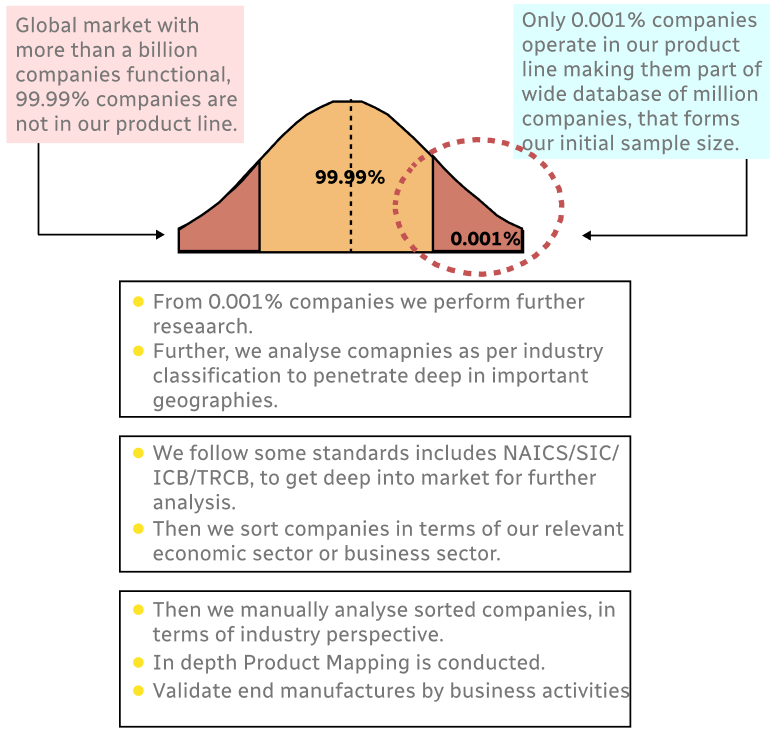
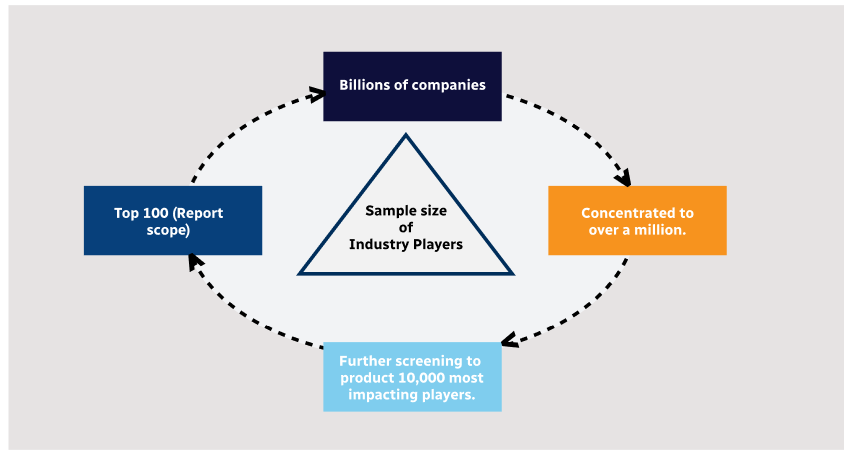
Step 1 - Identification of Relevant Samples Size from Population Database
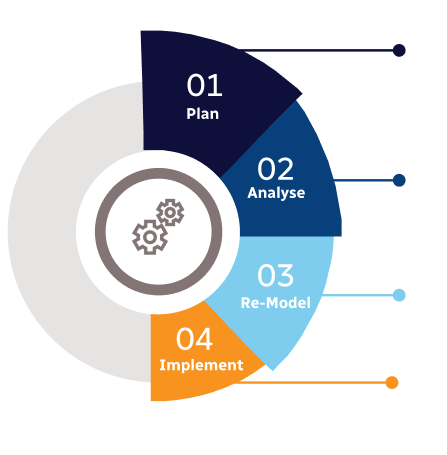
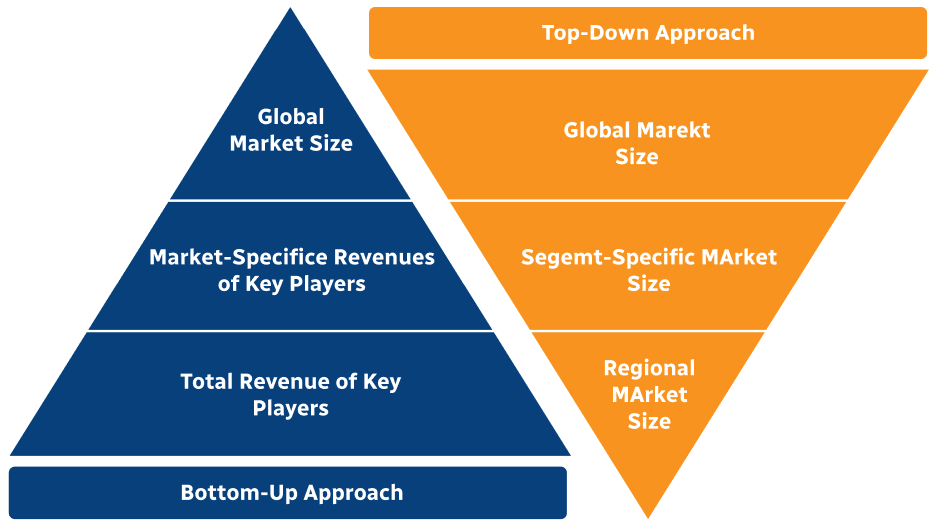
Step 2 - Approaches for Defining Global Market Size (Value, Volume* & Price*)
Note*: In applicable scenarios
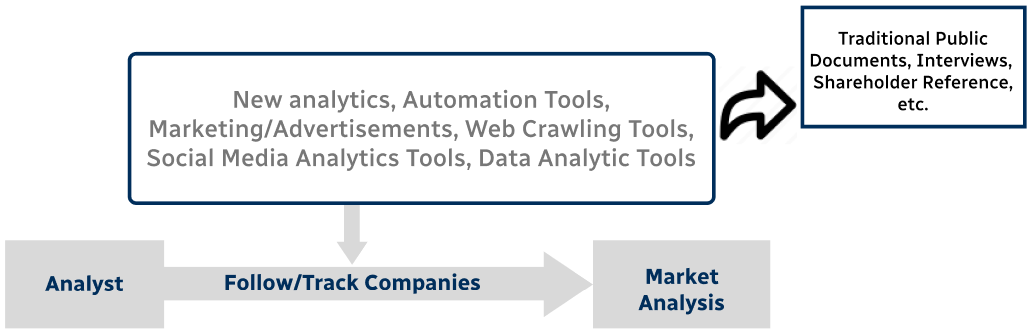
Step 3 - Data Sources
Primary Research
- Web Analytics
- Survey Reports
- Research Institute
- Latest Research Reports
- Opinion Leaders
Secondary Research
- Annual Reports
- White Paper
- Latest Press Release
- Industry Association
- Paid Database
- Investor Presentations
Step 4 - Data Triangulation
Involves using different sources of information in order to increase the validity of a study
These sources are likely to be stakeholders in a program - participants, other researchers, program staff, other community members, and so on.
Then we put all data in single framework & apply various statistical tools to find out the dynamic on the market.
During the analysis stage, feedback from the stakeholder groups would be compared to determine areas of agreement as well as areas of divergence