

Key Insights
The Germany automotive parts zinc die casting market is poised for significant expansion, fueled by the escalating demand for lightweight, high-strength automotive components. The market is projected to grow at a Compound Annual Growth Rate (CAGR) of 5.6% from 2025 to 2033. Key growth drivers include the increasing adoption of electric vehicles (EVs) necessitating lighter parts, advancements in die casting technology enhancing precision and efficiency, and a heightened focus on fuel efficiency and emissions reduction. Growth is particularly anticipated in body assemblies and engine parts segments, where zinc die castings are extensively utilized. While pressure die casting currently leads production, vacuum die casting is emerging for high-quality, complex components. The market is competitive, with both domestic and international players. Regional concentration is observed in automotive manufacturing hubs like North Rhine-Westphalia, Bavaria, Baden-Württemberg, Lower Saxony, and Hesse. Despite potential challenges from raw material price volatility and environmental regulations, the market outlook remains positive, driven by innovation and the automotive sector's growth.

Germany Automotive Parts Zinc Die Casting Market Market Size (In Billion)

Germany's robust automotive manufacturing base and commitment to technological advancements provide a fertile ground for the zinc die casting market. Government initiatives supporting sustainable automotive production and R&D investments further bolster market prospects. Opportunities exist for specialized players across various application types. Sustained competitiveness demands continuous investment in advanced technologies and efficient production. Proactive strategies are crucial for managing raw material cost fluctuations and adhering to environmental standards. Future growth is intrinsically linked to the overall German automotive industry's trajectory, the success of the EV transition, and ongoing innovation in die casting technologies.

Germany Automotive Parts Zinc Die Casting Market Company Market Share

Germany Automotive Parts Zinc Die Casting Market: A Comprehensive Report (2019-2033)
This in-depth report provides a comprehensive analysis of the Germany automotive parts zinc die casting market, offering invaluable insights for industry stakeholders. The study covers the period from 2019 to 2033, with 2025 serving as the base and estimated year. The report meticulously examines market structure, competitive dynamics, industry trends, dominant segments, product innovations, and key challenges, forecasting market growth and outlining strategic opportunities until 2033.
Germany Automotive Parts Zinc Die Casting Market Market Structure & Competitive Dynamics
This section delves into the competitive landscape of the German automotive parts zinc die casting market. We analyze market concentration, revealing the market share held by key players such as Sandhar technologies Ltd, Empire Casting Co, Pace Industries, Brillcast Manufacturing LLC, Cascade Die Casting Group Inc, Ningbo Die Casting Company, Ashook Minda Grou, Dynacast, and Kemlows Diecasting Products Ltd. The report quantifies market concentration using the Herfindahl-Hirschman Index (HHI) and assesses the impact of mergers and acquisitions (M&A) activities on market dynamics. The total value of M&A deals in the period 2019-2024 is estimated at xx Million. We also examine the regulatory framework governing the industry, including environmental regulations and safety standards, and assess their influence on market participants. Furthermore, the analysis considers the presence of substitute materials and their potential impact on market growth. We explore end-user trends in the automotive industry, focusing on the increasing demand for lightweight vehicles and the impact on zinc die casting adoption. The report also examines the innovation ecosystem, highlighting R&D investments and technological advancements influencing the market.
- Market Concentration: xx% (estimated)
- M&A Activity (2019-2024): xx Million (estimated)
- Key Regulatory Factors: Emission standards, material safety regulations.
- Substitute Materials: Aluminum die casting, plastic components.
Germany Automotive Parts Zinc Die Casting Market Industry Trends & Insights
The German automotive parts zinc die casting market is experiencing a dynamic evolution, fueled by a confluence of technological advancements, shifting consumer preferences, and the transformative impact of electrification. We project a robust Compound Annual Growth Rate (CAGR) of [Insert Projected CAGR]% during the forecast period (2025-2033). This growth trajectory is significantly influenced by the relentless pursuit of lightweight vehicle designs, critical for enhancing fuel efficiency and reducing emissions. Furthermore, continuous innovation in die casting methodologies, including the integration of Industry 4.0 principles and advanced automation, is optimizing production efficiency, driving down costs, and enabling the creation of more intricate and precise components. The burgeoning electric vehicle (EV) sector is a pivotal growth catalyst, as zinc die-cast parts are increasingly utilized in battery housings, motor components, and thermal management systems. The market penetration of zinc die casting in the automotive sector is estimated at [Insert 2025 Market Penetration]% in 2025, with a projected expansion to [Insert 2033 Market Penetration]% by 2033, underscoring its growing importance.
Consumer demand for vehicles that are not only fuel-efficient but also environmentally conscious is a significant driver, pushing manufacturers towards materials and production processes that align with sustainability goals. In this competitive landscape, key players are strategically focusing on pricing strategies, product differentiation through enhanced material properties and design complexity, and continuous technological innovation. The report provides a comprehensive examination of these competitive dynamics. Moreover, the market's performance is intricately linked to macroeconomic factors, including overall economic growth and the inherent volatility of raw material prices, such as zinc and aluminum, which directly impact production costs and market profitability.
Dominant Markets & Segments in Germany Automotive Parts Zinc Die Casting Market
Within the expansive German automotive parts zinc die casting market, specific segments stand out due to their significant market share and growth potential. The Pressure Die Casting process continues to assert its dominance in the Production Process Type segment, capturing an estimated [Insert Pressure Die Casting %]% of the market in 2025. This prevalence is attributed to its inherent advantages in high-volume production, precision, and cost-effectiveness. In terms of Application Type, Engine Parts remain the largest segment, a testament to the enduring demand for intricate, high-performance engine components that require the dimensional accuracy and strength offered by zinc die casting. However, with the electrification trend, we anticipate a notable rise in applications for Battery Components and E-Mobility Parts in the coming years.
Key Drivers for Dominant Segments:
- Pressure Die Casting: Unmatched speed for mass production, superior surface finish, and excellent dimensional accuracy, making it ideal for complex automotive components.
- Engine Parts: Continuous demand for precision-engineered components that withstand high temperatures and pressures, coupled with evolving engine technologies demanding more sophisticated designs.
- Emerging Segments (e.g., Battery Components, E-Mobility Parts): The rapid growth of the electric vehicle market is creating substantial new opportunities for lightweight, robust, and thermally conductive zinc die-cast parts for battery systems and electric powertrains.
Detailed Dominance Analysis:
The enduring dominance of Pressure Die Casting is a direct consequence of its well-established technological maturity, its capacity for achieving high production volumes at competitive price points, and its ability to produce parts with tight tolerances and excellent surface finishes. The substantial share held by Engine Parts is intrinsically linked to the stringent quality benchmarks set by the German automotive industry and the consistently high demand for these critical components. The German government's supportive economic policies and incentives for the automotive manufacturing sector further bolster the growth and sustained dominance of these key segments. As the industry pivots towards electromobility, significant investment and innovation are expected in zinc die casting applications for EVs, potentially shifting the landscape of dominant segments in the long term.
Germany Automotive Parts Zinc Die Casting Market Product Innovations
Innovation is the lifeblood of the German automotive parts zinc die casting market, with recent advancements significantly enhancing capabilities and expanding applications. Cutting-edge developments in die design, including the use of advanced simulation software and novel cooling techniques, are leading to longer die life and improved casting quality. The automation of the die casting process has reached new heights, with sophisticated robotics and AI-driven quality control systems optimizing cycle times and reducing human error. Crucially, the development of high-performance zinc alloys with superior mechanical properties, such as increased tensile strength, improved creep resistance, and enhanced corrosion resistance, is enabling the production of lighter, stronger, and more durable automotive parts. These innovations are particularly impactful in the realm of body assemblies and structural components, where complex geometries, intricate surface finishes, and significant weight reduction are paramount. The competitive advantage in this evolving market lies in a company's ability to not only deliver innovative zinc die-cast solutions but also to achieve cost-effective manufacturing through streamlined processes and an agile, efficient supply chain. This focus on innovation also extends to exploring sustainable manufacturing practices and the recyclability of zinc alloys.
Report Segmentation & Scope
This report segments the Germany automotive parts zinc die casting market based on Production Process Type (Pressure Die Casting, Vacuum Die Casting, Other Production Process Types) and Application Type (Body Assemblies, Engine Parts, Transmission Parts, Other Application Types). Each segment's market size, growth projections, and competitive dynamics are analyzed in detail. The detailed analysis of each segment includes market size estimates for 2025 and forecasts until 2033. The competitive landscape within each segment is discussed, including the major players and their market share.
Key Drivers of Germany Automotive Parts Zinc Die Casting Market Growth
Several factors fuel the growth of the German automotive parts zinc die casting market. The increasing demand for lightweight vehicles to improve fuel efficiency is a major driver. Technological advancements, such as the development of high-strength zinc alloys and automation in the die casting process, also contribute significantly. Furthermore, favorable government policies supporting the automotive industry in Germany promote market expansion.
Challenges in the Germany Automotive Parts Zinc Die Casting Market Sector
Despite its promising outlook, the Germany automotive parts zinc die casting market navigates several significant challenges. The inherent volatility in the global prices of raw materials, particularly zinc, poses a constant threat to cost predictability and profit margins. Escalating labor costs within Germany also contribute to the pressure on manufacturing expenses. Furthermore, the market must continuously adapt to an increasingly stringent regulatory environment concerning environmental impact, emissions, and material usage, necessitating investments in cleaner production technologies and sustainable practices. Global supply chain disruptions, exacerbated by geopolitical events and logistical complexities, can lead to production delays and impact delivery timelines, potentially affecting customer relationships and profitability. The competitive landscape is intense, with both established players and emerging entrants vying for market share. This necessitates a relentless focus on continuous innovation, process optimization, and cost-efficiency to maintain a competitive edge.
Leading Players in the Germany Automotive Parts Zinc Die Casting Market Market
- Sandhar technologies Ltd
- Empire Casting Co
- Pace Industries
- Brillcast Manufacturing LLC
- Cascade Die Casting Group Inc
- Ningbo Die Casting Company
- Ashook Minda Grou
- Dynacast
- Kemlows Diecasting Products Ltd
Key Developments in Germany Automotive Parts Zinc Die Casting Market Sector
- 2023-Q3: Dynacast announced a new investment in automation technology for its German facility.
- 2022-Q4: Sandhar Technologies Ltd. launched a new line of high-strength zinc alloys.
- (Further developments to be added in the full report)
Strategic Germany Automotive Parts Zinc Die Casting Market Market Outlook
The strategic outlook for the German automotive parts zinc die casting market remains exceptionally bright, presenting substantial avenues for growth and innovation. The persistent and growing demand for lightweight, fuel-efficient, and emission-reduced vehicles, coupled with the accelerated adoption of electric mobility, will continue to be primary market accelerators. Technological advancements, particularly in automation, intelligent manufacturing, and the development of specialized zinc alloys, will further propel market expansion and enable the production of highly complex and performance-driven components. Strategic partnerships between die casters, automotive OEMs, and material suppliers will be crucial for co-developing next-generation solutions. Companies that prioritize innovation in product design and material science, embrace cost-efficiency through optimized manufacturing processes, and demonstrate a strong commitment to sustainable and environmentally responsible practices are best positioned to capture significant market share. The market is anticipated to witness a transformative increase in the adoption of advanced die casting technologies, including digitalization and smart manufacturing, which will not only drive operational efficiencies but also unlock new application possibilities, solidifying zinc die casting's pivotal role in the future of the automotive industry.
Germany Automotive Parts Zinc Die Casting Market Segmentation
-
1. Production Process Type
- 1.1. Pressure Die Casting
- 1.2. Vacuum Die Casting
- 1.3. Other Productino Process Types
-
2. Application Type
- 2.1. Body Assemblies
- 2.2. Engine Parts
- 2.3. Transmission Parts
- 2.4. Other Aplication Types
Germany Automotive Parts Zinc Die Casting Market Segmentation By Geography
- 1. Germany

Germany Automotive Parts Zinc Die Casting Market Regional Market Share

Geographic Coverage of Germany Automotive Parts Zinc Die Casting Market
Germany Automotive Parts Zinc Die Casting Market REPORT HIGHLIGHTS
| Aspects | Details |
|---|---|
| Study Period | 2020-2034 |
| Base Year | 2025 |
| Estimated Year | 2026 |
| Forecast Period | 2026-2034 |
| Historical Period | 2020-2025 |
| Growth Rate | CAGR of 5.6% from 2020-2034 |
| Segmentation |
|
Table of Contents
- 1. Introduction
- 1.1. Research Scope
- 1.2. Market Segmentation
- 1.3. Research Methodology
- 1.4. Definitions and Assumptions
- 2. Executive Summary
- 2.1. Introduction
- 3. Market Dynamics
- 3.1. Introduction
- 3.2. Market Drivers
- 3.2.1. Growth of the Automotive Industry to Drive Demand in the Die Casting Market
- 3.3. Market Restrains
- 3.3.1. High Processing Cost May Hamper Market Expansion
- 3.4. Market Trends
- 3.4.1. Rising Demand for Vacuum Die Casting and Enactment of Stringent Emission Regulations
- 4. Market Factor Analysis
- 4.1. Porters Five Forces
- 4.2. Supply/Value Chain
- 4.3. PESTEL analysis
- 4.4. Market Entropy
- 4.5. Patent/Trademark Analysis
- 5. Germany Automotive Parts Zinc Die Casting Market Analysis, Insights and Forecast, 2020-2032
- 5.1. Market Analysis, Insights and Forecast - by Production Process Type
- 5.1.1. Pressure Die Casting
- 5.1.2. Vacuum Die Casting
- 5.1.3. Other Productino Process Types
- 5.2. Market Analysis, Insights and Forecast - by Application Type
- 5.2.1. Body Assemblies
- 5.2.2. Engine Parts
- 5.2.3. Transmission Parts
- 5.2.4. Other Aplication Types
- 5.3. Market Analysis, Insights and Forecast - by Region
- 5.3.1. Germany
- 5.1. Market Analysis, Insights and Forecast - by Production Process Type
- 6. Competitive Analysis
- 6.1. Market Share Analysis 2025
- 6.2. Company Profiles
- 6.2.1 Sandhar technologies Ltd
- 6.2.1.1. Overview
- 6.2.1.2. Products
- 6.2.1.3. SWOT Analysis
- 6.2.1.4. Recent Developments
- 6.2.1.5. Financials (Based on Availability)
- 6.2.2 Empire Casting Co
- 6.2.2.1. Overview
- 6.2.2.2. Products
- 6.2.2.3. SWOT Analysis
- 6.2.2.4. Recent Developments
- 6.2.2.5. Financials (Based on Availability)
- 6.2.3 Pace Industries
- 6.2.3.1. Overview
- 6.2.3.2. Products
- 6.2.3.3. SWOT Analysis
- 6.2.3.4. Recent Developments
- 6.2.3.5. Financials (Based on Availability)
- 6.2.4 Brillcast Manufacturing LLC
- 6.2.4.1. Overview
- 6.2.4.2. Products
- 6.2.4.3. SWOT Analysis
- 6.2.4.4. Recent Developments
- 6.2.4.5. Financials (Based on Availability)
- 6.2.5 Cascade Die Casting Group Inc
- 6.2.5.1. Overview
- 6.2.5.2. Products
- 6.2.5.3. SWOT Analysis
- 6.2.5.4. Recent Developments
- 6.2.5.5. Financials (Based on Availability)
- 6.2.6 Ningbo Die Casting Company
- 6.2.6.1. Overview
- 6.2.6.2. Products
- 6.2.6.3. SWOT Analysis
- 6.2.6.4. Recent Developments
- 6.2.6.5. Financials (Based on Availability)
- 6.2.7 Ashook Minda Grou
- 6.2.7.1. Overview
- 6.2.7.2. Products
- 6.2.7.3. SWOT Analysis
- 6.2.7.4. Recent Developments
- 6.2.7.5. Financials (Based on Availability)
- 6.2.8 Dynacast
- 6.2.8.1. Overview
- 6.2.8.2. Products
- 6.2.8.3. SWOT Analysis
- 6.2.8.4. Recent Developments
- 6.2.8.5. Financials (Based on Availability)
- 6.2.9 Kemlows Diecasting Products Ltd
- 6.2.9.1. Overview
- 6.2.9.2. Products
- 6.2.9.3. SWOT Analysis
- 6.2.9.4. Recent Developments
- 6.2.9.5. Financials (Based on Availability)
- 6.2.1 Sandhar technologies Ltd
List of Figures
- Figure 1: Germany Automotive Parts Zinc Die Casting Market Revenue Breakdown (billion, %) by Product 2025 & 2033
- Figure 2: Germany Automotive Parts Zinc Die Casting Market Share (%) by Company 2025
List of Tables
- Table 1: Germany Automotive Parts Zinc Die Casting Market Revenue billion Forecast, by Production Process Type 2020 & 2033
- Table 2: Germany Automotive Parts Zinc Die Casting Market Revenue billion Forecast, by Application Type 2020 & 2033
- Table 3: Germany Automotive Parts Zinc Die Casting Market Revenue billion Forecast, by Region 2020 & 2033
- Table 4: Germany Automotive Parts Zinc Die Casting Market Revenue billion Forecast, by Production Process Type 2020 & 2033
- Table 5: Germany Automotive Parts Zinc Die Casting Market Revenue billion Forecast, by Application Type 2020 & 2033
- Table 6: Germany Automotive Parts Zinc Die Casting Market Revenue billion Forecast, by Country 2020 & 2033
Frequently Asked Questions
1. What is the projected Compound Annual Growth Rate (CAGR) of the Germany Automotive Parts Zinc Die Casting Market?
The projected CAGR is approximately 5.6%.
2. Which companies are prominent players in the Germany Automotive Parts Zinc Die Casting Market?
Key companies in the market include Sandhar technologies Ltd, Empire Casting Co, Pace Industries, Brillcast Manufacturing LLC, Cascade Die Casting Group Inc, Ningbo Die Casting Company, Ashook Minda Grou, Dynacast, Kemlows Diecasting Products Ltd.
3. What are the main segments of the Germany Automotive Parts Zinc Die Casting Market?
The market segments include Production Process Type, Application Type.
4. Can you provide details about the market size?
The market size is estimated to be USD 6.08 billion as of 2022.
5. What are some drivers contributing to market growth?
Growth of the Automotive Industry to Drive Demand in the Die Casting Market.
6. What are the notable trends driving market growth?
Rising Demand for Vacuum Die Casting and Enactment of Stringent Emission Regulations.
7. Are there any restraints impacting market growth?
High Processing Cost May Hamper Market Expansion.
8. Can you provide examples of recent developments in the market?
N/A
9. What pricing options are available for accessing the report?
Pricing options include single-user, multi-user, and enterprise licenses priced at USD 3800, USD 4500, and USD 5800 respectively.
10. Is the market size provided in terms of value or volume?
The market size is provided in terms of value, measured in billion.
11. Are there any specific market keywords associated with the report?
Yes, the market keyword associated with the report is "Germany Automotive Parts Zinc Die Casting Market," which aids in identifying and referencing the specific market segment covered.
12. How do I determine which pricing option suits my needs best?
The pricing options vary based on user requirements and access needs. Individual users may opt for single-user licenses, while businesses requiring broader access may choose multi-user or enterprise licenses for cost-effective access to the report.
13. Are there any additional resources or data provided in the Germany Automotive Parts Zinc Die Casting Market report?
While the report offers comprehensive insights, it's advisable to review the specific contents or supplementary materials provided to ascertain if additional resources or data are available.
14. How can I stay updated on further developments or reports in the Germany Automotive Parts Zinc Die Casting Market?
To stay informed about further developments, trends, and reports in the Germany Automotive Parts Zinc Die Casting Market, consider subscribing to industry newsletters, following relevant companies and organizations, or regularly checking reputable industry news sources and publications.
Methodology
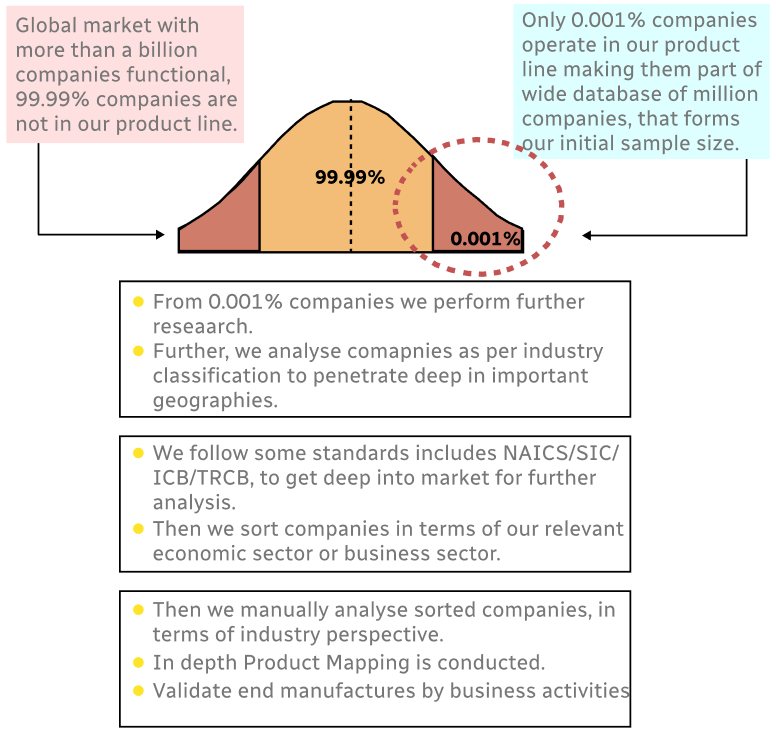
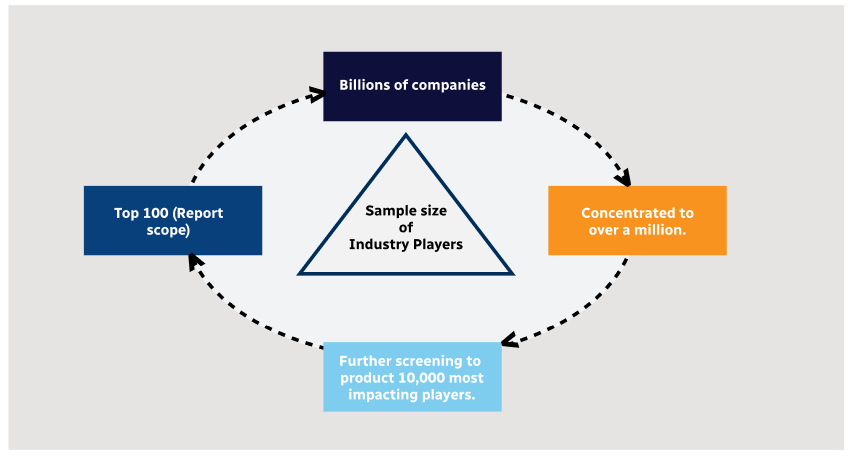
Step 1 - Identification of Relevant Samples Size from Population Database
Step 2 - Approaches for Defining Global Market Size (Value, Volume* & Price*)
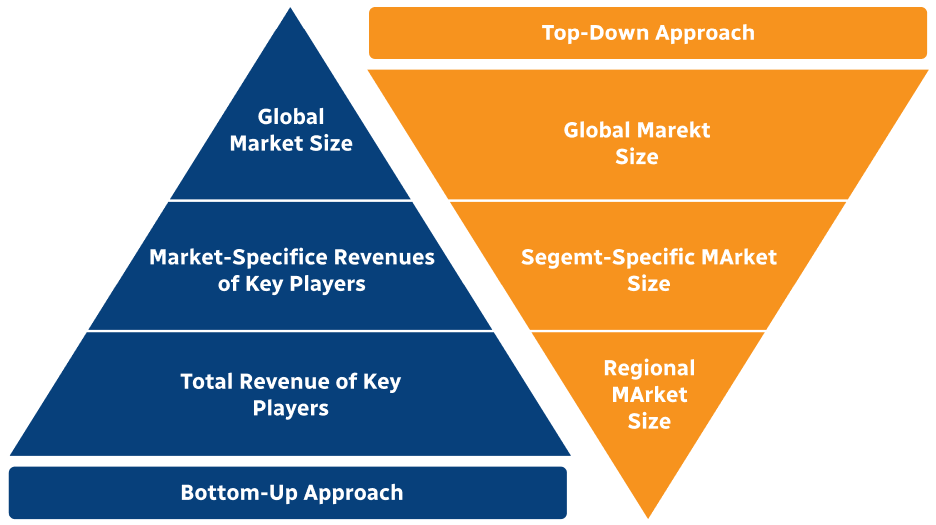
Note*: In applicable scenarios
Step 3 - Data Sources
Primary Research
- Web Analytics
- Survey Reports
- Research Institute
- Latest Research Reports
- Opinion Leaders
Secondary Research
- Annual Reports
- White Paper
- Latest Press Release
- Industry Association
- Paid Database
- Investor Presentations
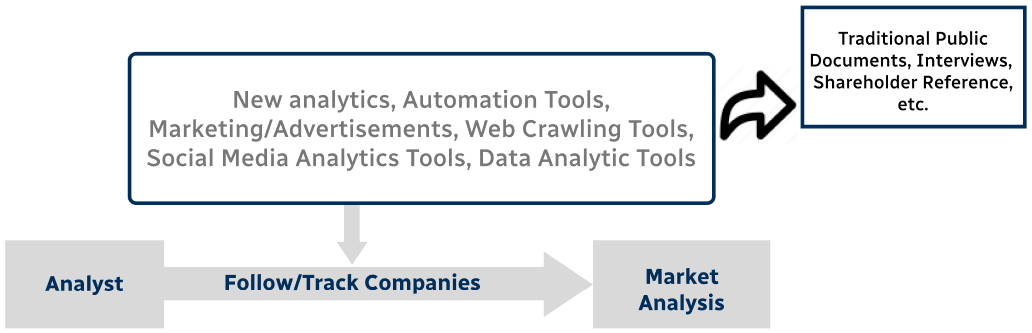
Step 4 - Data Triangulation
Involves using different sources of information in order to increase the validity of a study
These sources are likely to be stakeholders in a program - participants, other researchers, program staff, other community members, and so on.
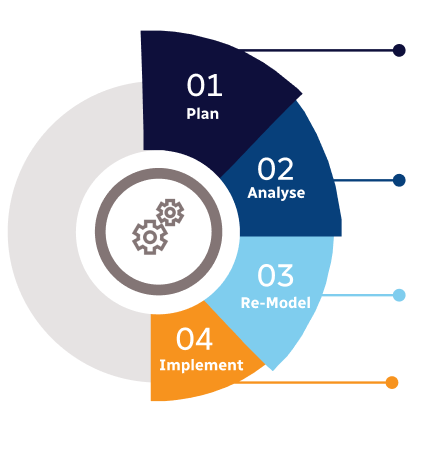
Then we put all data in single framework & apply various statistical tools to find out the dynamic on the market.
During the analysis stage, feedback from the stakeholder groups would be compared to determine areas of agreement as well as areas of divergence


