


Key Insights
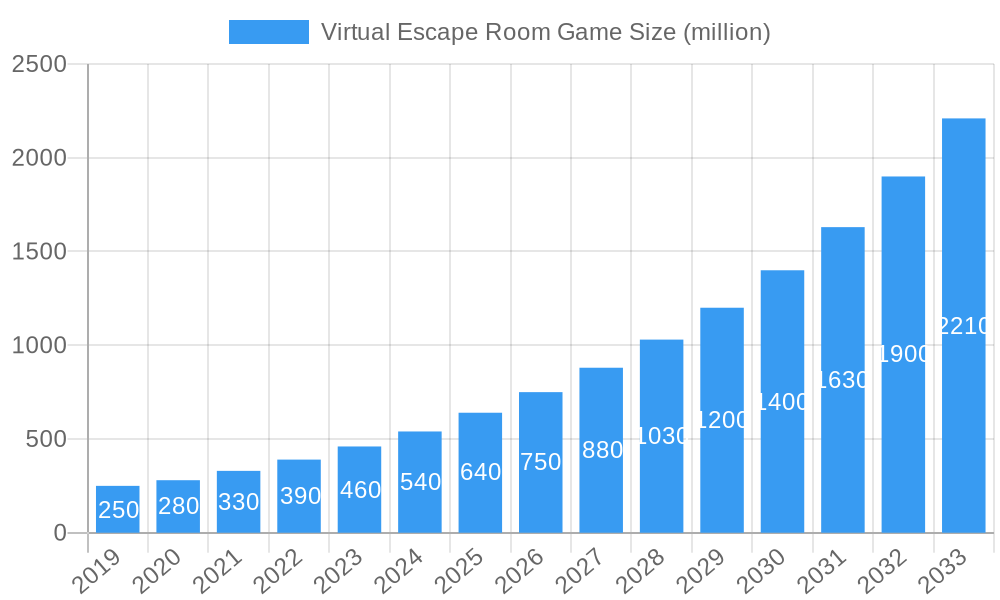
The Virtual Escape Room Game market is projected for significant expansion, estimated to reach USD 750 million by 2025. This growth is underpinned by a robust Compound Annual Growth Rate (CAGR) of 18.5% from 2025 to 2033. Key growth drivers include the escalating demand for immersive and interactive entertainment, particularly among younger demographics and remote teams seeking collaborative activities. The inherent accessibility and convenience of virtual platforms, especially cloud-based solutions, facilitate global participation. Advancements in Virtual Reality (VR) and Augmented Reality (AR) are enhancing realism and engagement, fostering market penetration. Widespread high-speed internet adoption and the increasing acceptance of digital entertainment further contribute to this upward trend.
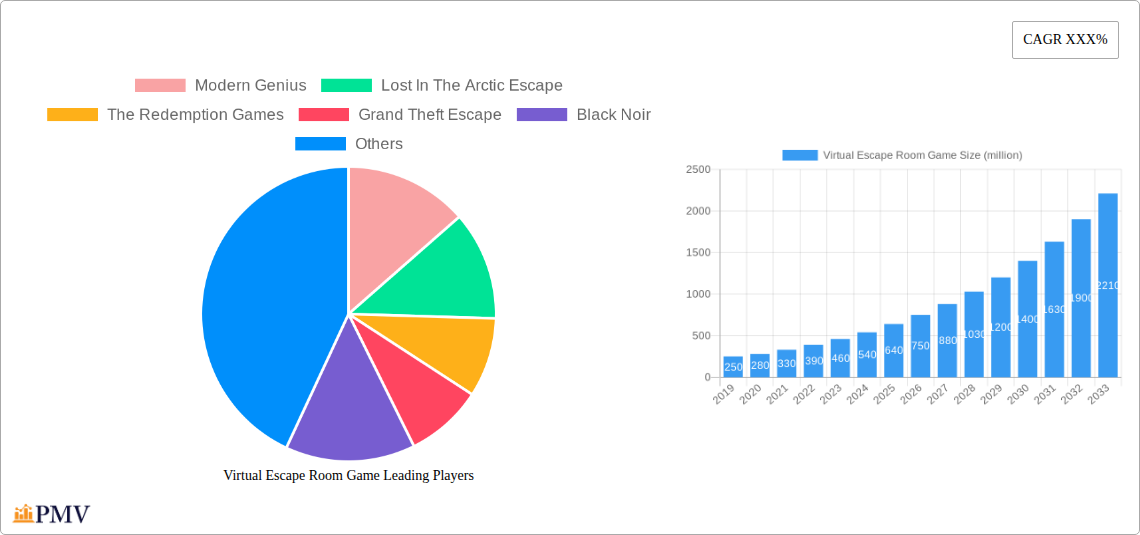
Virtual Escape Room Game Market Size (In Billion)

Market restraints include the initial investment in high-end VR hardware for some consumers and potential limitations in social interaction compared to physical escape rooms. However, the adaptability of virtual escape rooms for diverse applications, from personal entertainment and family gatherings to corporate team-building, ensures their sustained relevance. The 'Enterprise' segment is anticipated for strong adoption as businesses increasingly utilize virtual experiences for employee engagement, onboarding, and remote team cohesion. Market segmentation by type includes 'Cloud-based' and 'On-premises' solutions, with cloud-based offerings currently leading due to their scalability and accessibility. Geographically, North America and Europe are expected to maintain their market dominance, driven by early adoption and mature digital entertainment markets. The Asia Pacific region is projected for the fastest growth, fueled by expanding internet infrastructure and a tech-savvy population.
Virtual Escape Room Game Company Market Share
Virtual Escape Room Game Market: Comprehensive Analysis and Future Outlook (2025-2033)
This comprehensive report analyzes the global Virtual Escape Room Game market, detailing its structure, competitive landscape, industry trends, dominant segments, product innovations, growth drivers, challenges, key players, significant developments, and strategic outlook. Covering the base year of 2025 and a forecast period from 2025 to 2033, this analysis offers critical insights for stakeholders. The market is projected for substantial growth, driven by increasing demand for immersive entertainment and technological advancements. The total market size is estimated to reach 13.29 billion by 2025, with a projected Compound Annual Growth Rate (CAGR) of 9.32% through 2033.
Virtual Escape Room Game Market Structure & Competitive Dynamics
The virtual escape room market, while exhibiting a moderate level of concentration, is characterized by a dynamic innovation ecosystem. Companies are actively investing in advanced technologies like augmented reality (AR) and virtual reality (VR) to enhance player immersion. Regulatory frameworks are generally supportive, focusing on consumer data protection and intellectual property rights, with minimal direct impact on game development. Product substitutes, such as traditional escape rooms and other forms of online gaming, exist but the unique interactive and problem-solving nature of virtual escape rooms offers a distinct value proposition. End-user trends are strongly leaning towards digital-first entertainment, social gaming, and team-building activities, particularly among millennials and Gen Z. Mergers and acquisition (M&A) activities are present as larger entertainment tech companies seek to acquire niche virtual escape room developers, with reported M&A deal values in the range of xx million. Key market players are continuously striving to differentiate themselves through unique themes, storytelling, and technological integration.
Virtual Escape Room Game Industry Trends & Insights
The virtual escape room game industry is witnessing a significant upsurge, fueled by a confluence of technological advancements and evolving consumer entertainment preferences. The historical period of 2019-2024 saw initial market penetration and rapid adoption, particularly accelerated by the global pandemic which propelled demand for at-home, interactive entertainment solutions. This momentum is projected to continue throughout the forecast period of 2025-2033. Key market growth drivers include the increasing affordability and accessibility of VR/AR hardware, making immersive experiences more viable for a broader audience. Technological disruptions, such as the integration of AI for dynamic puzzle generation and personalized gameplay, are further enhancing engagement levels. Consumer preferences are increasingly shifting towards collaborative, social, and mentally stimulating activities that can be enjoyed remotely. This has led to a surge in demand for virtual escape rooms for team-building events, family gatherings, and virtual social outings. The competitive dynamics are characterized by both established gaming companies venturing into the space and specialized virtual escape room developers innovating rapidly. Market penetration is expected to grow substantially, with a projected increase in the number of active users by xx% annually. The CAGR for the virtual escape room market is estimated to be xx%, indicating robust and sustained growth. Furthermore, the development of more sophisticated narrative structures and thematic diversity is attracting a wider demographic, moving beyond the core gaming audience. The ease of access via cloud-based platforms and the potential for scalable deployment are also significant contributing factors to the industry's upward trajectory. The ongoing evolution of game design, incorporating elements of storytelling, puzzle-solving, and collaborative problem-solving, ensures continued player interest and acquisition.
Dominant Markets & Segments in Virtual Escape Room Game
The virtual escape room game market exhibits distinct regional and segment dominance, influenced by factors such as technological infrastructure, disposable income, and cultural affinity for gaming. North America currently leads the market, driven by early adoption of advanced gaming technologies and a strong existing market for entertainment experiences. The United States, in particular, accounts for a significant portion of the global market share, estimated at xx%. This dominance is underpinned by a robust digital infrastructure, high internet penetration, and a large consumer base actively seeking novel entertainment options. The Cloud-based segment within the Type category is overwhelmingly dominant, accounting for approximately xx% of the market. This is attributed to its inherent scalability, accessibility, and lower upfront investment for both providers and consumers, making it an attractive option for individuals and enterprises alike. In terms of Application, the Personal segment holds a substantial market share, estimated at xx%, as individuals increasingly seek engaging solo or small-group entertainment. However, the Enterprise segment is experiencing rapid growth, projected to expand at a CAGR of xx% through 2033, fueled by its effectiveness in remote team building, employee onboarding, and corporate training. Key drivers for this regional and segment dominance include government initiatives promoting digital innovation, substantial venture capital investment in the gaming and entertainment technology sectors, and a cultural predisposition towards adopting new technologies. For instance, the availability of high-speed internet and widespread ownership of gaming devices in North America directly correlates with the penetration of virtual escape room games. Similarly, the enterprise segment's growth is propelled by the increasing adoption of remote work models, necessitating innovative solutions for team cohesion and engagement.
Virtual Escape Room Game Product Innovations
Product innovations in the virtual escape room game sector are primarily focused on enhancing player immersion and interactivity. This includes the integration of advanced AR/VR technologies for more realistic environments, sophisticated AI-driven puzzle mechanics that adapt to player skill levels, and the development of more compelling narrative structures. Competitive advantages are being gained through unique thematic offerings, cross-platform compatibility, and robust multiplayer functionalities. The market is witnessing a trend towards gamified learning experiences and corporate team-building solutions, showcasing the versatility of these digital adventures and their growing market fit beyond pure entertainment.
Report Segmentation & Scope
The virtual escape room game market is segmented across various applications and deployment types to provide a granular view of market dynamics. The Personal application segment is projected to reach a market size of xx million by 2033, driven by individual consumers seeking engaging leisure activities. The Family segment is expected to grow at a CAGR of xx%, catering to households looking for shared entertainment experiences. The Enterprise segment, a key growth area, is projected to expand to xx million by 2033, fueled by its utility in corporate training and team building. In terms of deployment type, the Cloud-based segment dominates, estimated at xx million by 2033, offering scalability and accessibility. The On-premises segment, while smaller, is expected to see steady growth in niche enterprise applications. Competitive dynamics within each segment vary, with specialized providers often dominating niche areas.
Key Drivers of Virtual Escape Room Game Growth
Several key drivers are propelling the virtual escape room game sector forward. Technologically, the increasing accessibility and affordability of VR/AR hardware, coupled with advancements in cloud computing and AI, are creating more immersive and engaging experiences. Economically, the growing disposable income in many regions and the demand for novel entertainment options are fueling market expansion. Regulatory factors, while generally supportive, can also influence growth through data privacy regulations and intellectual property protections that encourage fair competition and innovation. The shift towards remote work and the increasing need for virtual team-building activities are also significant accelerators, particularly for the enterprise segment.
Challenges in the Virtual Escape Room Game Sector
Despite its promising growth, the virtual escape room game sector faces several challenges. High development costs for cutting-edge VR/AR experiences can be a barrier to entry for smaller companies. Supply chain issues related to specialized hardware components can also impact production and availability. Furthermore, intense competitive pressures from both established gaming giants and emerging startups necessitate continuous innovation and effective marketing strategies to capture and retain market share. Ensuring consistent game quality and player satisfaction across diverse technical setups remains a critical hurdle.
Leading Players in the Virtual Escape Room Game Market
- Modern Genius
- Lost In The Arctic Escape
- The Redemption Games
- Grand Theft Escape
- Black Noir
- 61out
- Trapped in the Web
- Mad Genius Escape
- Luco Games
- Confundrum
- The Panic Room Online
- Expedition Escape
- Paruzal
- Escape Experience
- Brain Chase
- YouEscape
- Experios
- escapemanor
- Entermission
- Isolation
- Banana Life
- Elude Escape Room
- Escapely
- Elgin Escape
- Escape Room The Game
- Next Level Escape
- TeamEscape
- Hallows Hill
- Escape Live
- Lockbox
- Exit The Room
- Witty Escapes
- Xscape Now
Key Developments in Virtual Escape Room Game Sector
- 2023/09: Entermission launches a new VR escape room with advanced haptic feedback, enhancing player immersion significantly.
- 2023/11: Experios announces a strategic partnership with a leading VR hardware manufacturer to co-develop immersive escape room experiences.
- 2024/01: Escape Live expands its cloud-based platform offerings, introducing more collaborative features for remote team-building.
- 2024/03: Modern Genius acquires Black Noir, a niche developer known for its intricate puzzle design, bolstering its creative capabilities.
- 2024/05: Trapped in the Web releases a new escape room leveraging AI for adaptive difficulty, catering to a wider player base.
Strategic Virtual Escape Room Game Market Outlook
The strategic outlook for the virtual escape room game market is exceptionally positive, characterized by significant growth accelerators. The continuous evolution of immersive technologies, such as photorealistic graphics and realistic physics engines, will further elevate player engagement. The expanding integration of virtual escape rooms into corporate training and educational sectors presents substantial untapped potential. Furthermore, the growing trend of cross-platform accessibility, allowing seamless play across various devices, will broaden the market reach. Strategic opportunities lie in developing diverse thematic content, fostering strong community engagement, and leveraging data analytics to personalize player experiences and drive retention.
Virtual Escape Room Game Segmentation
-
1. Application
- 1.1. Personal
- 1.2. Family
- 1.3. Enterprise
-
2. Type
- 2.1. Cloud-based
- 2.2. On-premises
Virtual Escape Room Game Segmentation By Geography
-
1. North America
- 1.1. United States
- 1.2. Canada
- 1.3. Mexico
-
2. South America
- 2.1. Brazil
- 2.2. Argentina
- 2.3. Rest of South America
-
3. Europe
- 3.1. United Kingdom
- 3.2. Germany
- 3.3. France
- 3.4. Italy
- 3.5. Spain
- 3.6. Russia
- 3.7. Benelux
- 3.8. Nordics
- 3.9. Rest of Europe
-
4. Middle East & Africa
- 4.1. Turkey
- 4.2. Israel
- 4.3. GCC
- 4.4. North Africa
- 4.5. South Africa
- 4.6. Rest of Middle East & Africa
-
5. Asia Pacific
- 5.1. China
- 5.2. India
- 5.3. Japan
- 5.4. South Korea
- 5.5. ASEAN
- 5.6. Oceania
- 5.7. Rest of Asia Pacific
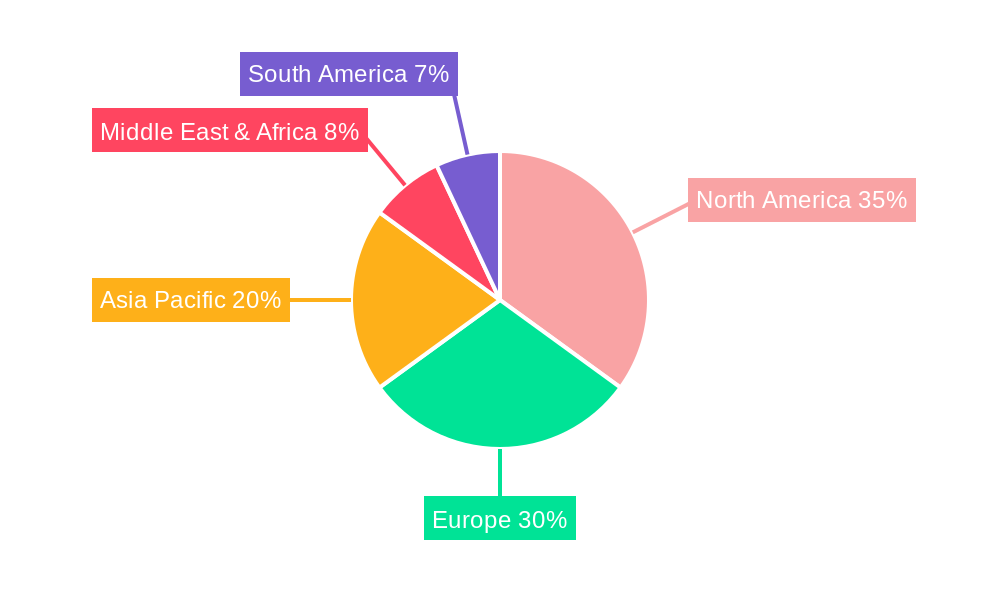
Virtual Escape Room Game Regional Market Share
Geographic Coverage of Virtual Escape Room Game
Virtual Escape Room Game REPORT HIGHLIGHTS
| Aspects | Details |
|---|---|
| Study Period | 2020-2034 |
| Base Year | 2025 |
| Estimated Year | 2026 |
| Forecast Period | 2026-2034 |
| Historical Period | 2020-2025 |
| Growth Rate | CAGR of 9.32% from 2020-2034 |
| Segmentation |
|
Table of Contents
- 1. Introduction
- 1.1. Research Scope
- 1.2. Market Segmentation
- 1.3. Research Methodology
- 1.4. Definitions and Assumptions
- 2. Executive Summary
- 2.1. Introduction
- 3. Market Dynamics
- 3.1. Introduction
- 3.2. Market Drivers
- 3.3. Market Restrains
- 3.4. Market Trends
- 4. Market Factor Analysis
- 4.1. Porters Five Forces
- 4.2. Supply/Value Chain
- 4.3. PESTEL analysis
- 4.4. Market Entropy
- 4.5. Patent/Trademark Analysis
- 5. Global Virtual Escape Room Game Analysis, Insights and Forecast, 2020-2032
- 5.1. Market Analysis, Insights and Forecast - by Application
- 5.1.1. Personal
- 5.1.2. Family
- 5.1.3. Enterprise
- 5.2. Market Analysis, Insights and Forecast - by Type
- 5.2.1. Cloud-based
- 5.2.2. On-premises
- 5.3. Market Analysis, Insights and Forecast - by Region
- 5.3.1. North America
- 5.3.2. South America
- 5.3.3. Europe
- 5.3.4. Middle East & Africa
- 5.3.5. Asia Pacific
- 5.1. Market Analysis, Insights and Forecast - by Application
- 6. North America Virtual Escape Room Game Analysis, Insights and Forecast, 2020-2032
- 6.1. Market Analysis, Insights and Forecast - by Application
- 6.1.1. Personal
- 6.1.2. Family
- 6.1.3. Enterprise
- 6.2. Market Analysis, Insights and Forecast - by Type
- 6.2.1. Cloud-based
- 6.2.2. On-premises
- 6.1. Market Analysis, Insights and Forecast - by Application
- 7. South America Virtual Escape Room Game Analysis, Insights and Forecast, 2020-2032
- 7.1. Market Analysis, Insights and Forecast - by Application
- 7.1.1. Personal
- 7.1.2. Family
- 7.1.3. Enterprise
- 7.2. Market Analysis, Insights and Forecast - by Type
- 7.2.1. Cloud-based
- 7.2.2. On-premises
- 7.1. Market Analysis, Insights and Forecast - by Application
- 8. Europe Virtual Escape Room Game Analysis, Insights and Forecast, 2020-2032
- 8.1. Market Analysis, Insights and Forecast - by Application
- 8.1.1. Personal
- 8.1.2. Family
- 8.1.3. Enterprise
- 8.2. Market Analysis, Insights and Forecast - by Type
- 8.2.1. Cloud-based
- 8.2.2. On-premises
- 8.1. Market Analysis, Insights and Forecast - by Application
- 9. Middle East & Africa Virtual Escape Room Game Analysis, Insights and Forecast, 2020-2032
- 9.1. Market Analysis, Insights and Forecast - by Application
- 9.1.1. Personal
- 9.1.2. Family
- 9.1.3. Enterprise
- 9.2. Market Analysis, Insights and Forecast - by Type
- 9.2.1. Cloud-based
- 9.2.2. On-premises
- 9.1. Market Analysis, Insights and Forecast - by Application
- 10. Asia Pacific Virtual Escape Room Game Analysis, Insights and Forecast, 2020-2032
- 10.1. Market Analysis, Insights and Forecast - by Application
- 10.1.1. Personal
- 10.1.2. Family
- 10.1.3. Enterprise
- 10.2. Market Analysis, Insights and Forecast - by Type
- 10.2.1. Cloud-based
- 10.2.2. On-premises
- 10.1. Market Analysis, Insights and Forecast - by Application
- 11. Competitive Analysis
- 11.1. Global Market Share Analysis 2025
- 11.2. Company Profiles
- 11.2.1 Modern Genius
- 11.2.1.1. Overview
- 11.2.1.2. Products
- 11.2.1.3. SWOT Analysis
- 11.2.1.4. Recent Developments
- 11.2.1.5. Financials (Based on Availability)
- 11.2.2 Lost In The Arctic Escape
- 11.2.2.1. Overview
- 11.2.2.2. Products
- 11.2.2.3. SWOT Analysis
- 11.2.2.4. Recent Developments
- 11.2.2.5. Financials (Based on Availability)
- 11.2.3 The Redemption Games
- 11.2.3.1. Overview
- 11.2.3.2. Products
- 11.2.3.3. SWOT Analysis
- 11.2.3.4. Recent Developments
- 11.2.3.5. Financials (Based on Availability)
- 11.2.4 Grand Theft Escape
- 11.2.4.1. Overview
- 11.2.4.2. Products
- 11.2.4.3. SWOT Analysis
- 11.2.4.4. Recent Developments
- 11.2.4.5. Financials (Based on Availability)
- 11.2.5 Black Noir
- 11.2.5.1. Overview
- 11.2.5.2. Products
- 11.2.5.3. SWOT Analysis
- 11.2.5.4. Recent Developments
- 11.2.5.5. Financials (Based on Availability)
- 11.2.6 61out
- 11.2.6.1. Overview
- 11.2.6.2. Products
- 11.2.6.3. SWOT Analysis
- 11.2.6.4. Recent Developments
- 11.2.6.5. Financials (Based on Availability)
- 11.2.7 Trapped in the Web
- 11.2.7.1. Overview
- 11.2.7.2. Products
- 11.2.7.3. SWOT Analysis
- 11.2.7.4. Recent Developments
- 11.2.7.5. Financials (Based on Availability)
- 11.2.8 Mad Genius Escape
- 11.2.8.1. Overview
- 11.2.8.2. Products
- 11.2.8.3. SWOT Analysis
- 11.2.8.4. Recent Developments
- 11.2.8.5. Financials (Based on Availability)
- 11.2.9 Luco Games
- 11.2.9.1. Overview
- 11.2.9.2. Products
- 11.2.9.3. SWOT Analysis
- 11.2.9.4. Recent Developments
- 11.2.9.5. Financials (Based on Availability)
- 11.2.10 Confundrum
- 11.2.10.1. Overview
- 11.2.10.2. Products
- 11.2.10.3. SWOT Analysis
- 11.2.10.4. Recent Developments
- 11.2.10.5. Financials (Based on Availability)
- 11.2.11 The Panic Room Online
- 11.2.11.1. Overview
- 11.2.11.2. Products
- 11.2.11.3. SWOT Analysis
- 11.2.11.4. Recent Developments
- 11.2.11.5. Financials (Based on Availability)
- 11.2.12 Expedition Escape
- 11.2.12.1. Overview
- 11.2.12.2. Products
- 11.2.12.3. SWOT Analysis
- 11.2.12.4. Recent Developments
- 11.2.12.5. Financials (Based on Availability)
- 11.2.13 Paruzal
- 11.2.13.1. Overview
- 11.2.13.2. Products
- 11.2.13.3. SWOT Analysis
- 11.2.13.4. Recent Developments
- 11.2.13.5. Financials (Based on Availability)
- 11.2.14 Escape Experience
- 11.2.14.1. Overview
- 11.2.14.2. Products
- 11.2.14.3. SWOT Analysis
- 11.2.14.4. Recent Developments
- 11.2.14.5. Financials (Based on Availability)
- 11.2.15 Brain Chase
- 11.2.15.1. Overview
- 11.2.15.2. Products
- 11.2.15.3. SWOT Analysis
- 11.2.15.4. Recent Developments
- 11.2.15.5. Financials (Based on Availability)
- 11.2.16 YouEscape
- 11.2.16.1. Overview
- 11.2.16.2. Products
- 11.2.16.3. SWOT Analysis
- 11.2.16.4. Recent Developments
- 11.2.16.5. Financials (Based on Availability)
- 11.2.17 Experios
- 11.2.17.1. Overview
- 11.2.17.2. Products
- 11.2.17.3. SWOT Analysis
- 11.2.17.4. Recent Developments
- 11.2.17.5. Financials (Based on Availability)
- 11.2.18 escapemanor
- 11.2.18.1. Overview
- 11.2.18.2. Products
- 11.2.18.3. SWOT Analysis
- 11.2.18.4. Recent Developments
- 11.2.18.5. Financials (Based on Availability)
- 11.2.19 Entermission
- 11.2.19.1. Overview
- 11.2.19.2. Products
- 11.2.19.3. SWOT Analysis
- 11.2.19.4. Recent Developments
- 11.2.19.5. Financials (Based on Availability)
- 11.2.20 Isolation
- 11.2.20.1. Overview
- 11.2.20.2. Products
- 11.2.20.3. SWOT Analysis
- 11.2.20.4. Recent Developments
- 11.2.20.5. Financials (Based on Availability)
- 11.2.21 Banana Life
- 11.2.21.1. Overview
- 11.2.21.2. Products
- 11.2.21.3. SWOT Analysis
- 11.2.21.4. Recent Developments
- 11.2.21.5. Financials (Based on Availability)
- 11.2.22 Elude Escape Room
- 11.2.22.1. Overview
- 11.2.22.2. Products
- 11.2.22.3. SWOT Analysis
- 11.2.22.4. Recent Developments
- 11.2.22.5. Financials (Based on Availability)
- 11.2.23 Escapely
- 11.2.23.1. Overview
- 11.2.23.2. Products
- 11.2.23.3. SWOT Analysis
- 11.2.23.4. Recent Developments
- 11.2.23.5. Financials (Based on Availability)
- 11.2.24 Elgin Escape
- 11.2.24.1. Overview
- 11.2.24.2. Products
- 11.2.24.3. SWOT Analysis
- 11.2.24.4. Recent Developments
- 11.2.24.5. Financials (Based on Availability)
- 11.2.25 Escape Room The Game
- 11.2.25.1. Overview
- 11.2.25.2. Products
- 11.2.25.3. SWOT Analysis
- 11.2.25.4. Recent Developments
- 11.2.25.5. Financials (Based on Availability)
- 11.2.26 Next Level Escape
- 11.2.26.1. Overview
- 11.2.26.2. Products
- 11.2.26.3. SWOT Analysis
- 11.2.26.4. Recent Developments
- 11.2.26.5. Financials (Based on Availability)
- 11.2.27 TeamEscape
- 11.2.27.1. Overview
- 11.2.27.2. Products
- 11.2.27.3. SWOT Analysis
- 11.2.27.4. Recent Developments
- 11.2.27.5. Financials (Based on Availability)
- 11.2.28 Hallows Hill
- 11.2.28.1. Overview
- 11.2.28.2. Products
- 11.2.28.3. SWOT Analysis
- 11.2.28.4. Recent Developments
- 11.2.28.5. Financials (Based on Availability)
- 11.2.29 Escape Live
- 11.2.29.1. Overview
- 11.2.29.2. Products
- 11.2.29.3. SWOT Analysis
- 11.2.29.4. Recent Developments
- 11.2.29.5. Financials (Based on Availability)
- 11.2.30 Lockbox
- 11.2.30.1. Overview
- 11.2.30.2. Products
- 11.2.30.3. SWOT Analysis
- 11.2.30.4. Recent Developments
- 11.2.30.5. Financials (Based on Availability)
- 11.2.31 Exit The Room
- 11.2.31.1. Overview
- 11.2.31.2. Products
- 11.2.31.3. SWOT Analysis
- 11.2.31.4. Recent Developments
- 11.2.31.5. Financials (Based on Availability)
- 11.2.32 Witty Escapes
- 11.2.32.1. Overview
- 11.2.32.2. Products
- 11.2.32.3. SWOT Analysis
- 11.2.32.4. Recent Developments
- 11.2.32.5. Financials (Based on Availability)
- 11.2.33 Xscape Now
- 11.2.33.1. Overview
- 11.2.33.2. Products
- 11.2.33.3. SWOT Analysis
- 11.2.33.4. Recent Developments
- 11.2.33.5. Financials (Based on Availability)
- 11.2.1 Modern Genius
List of Figures
- Figure 1: Global Virtual Escape Room Game Revenue Breakdown (billion, %) by Region 2025 & 2033
- Figure 2: North America Virtual Escape Room Game Revenue (billion), by Application 2025 & 2033
- Figure 3: North America Virtual Escape Room Game Revenue Share (%), by Application 2025 & 2033
- Figure 4: North America Virtual Escape Room Game Revenue (billion), by Type 2025 & 2033
- Figure 5: North America Virtual Escape Room Game Revenue Share (%), by Type 2025 & 2033
- Figure 6: North America Virtual Escape Room Game Revenue (billion), by Country 2025 & 2033
- Figure 7: North America Virtual Escape Room Game Revenue Share (%), by Country 2025 & 2033
- Figure 8: South America Virtual Escape Room Game Revenue (billion), by Application 2025 & 2033
- Figure 9: South America Virtual Escape Room Game Revenue Share (%), by Application 2025 & 2033
- Figure 10: South America Virtual Escape Room Game Revenue (billion), by Type 2025 & 2033
- Figure 11: South America Virtual Escape Room Game Revenue Share (%), by Type 2025 & 2033
- Figure 12: South America Virtual Escape Room Game Revenue (billion), by Country 2025 & 2033
- Figure 13: South America Virtual Escape Room Game Revenue Share (%), by Country 2025 & 2033
- Figure 14: Europe Virtual Escape Room Game Revenue (billion), by Application 2025 & 2033
- Figure 15: Europe Virtual Escape Room Game Revenue Share (%), by Application 2025 & 2033
- Figure 16: Europe Virtual Escape Room Game Revenue (billion), by Type 2025 & 2033
- Figure 17: Europe Virtual Escape Room Game Revenue Share (%), by Type 2025 & 2033
- Figure 18: Europe Virtual Escape Room Game Revenue (billion), by Country 2025 & 2033
- Figure 19: Europe Virtual Escape Room Game Revenue Share (%), by Country 2025 & 2033
- Figure 20: Middle East & Africa Virtual Escape Room Game Revenue (billion), by Application 2025 & 2033
- Figure 21: Middle East & Africa Virtual Escape Room Game Revenue Share (%), by Application 2025 & 2033
- Figure 22: Middle East & Africa Virtual Escape Room Game Revenue (billion), by Type 2025 & 2033
- Figure 23: Middle East & Africa Virtual Escape Room Game Revenue Share (%), by Type 2025 & 2033
- Figure 24: Middle East & Africa Virtual Escape Room Game Revenue (billion), by Country 2025 & 2033
- Figure 25: Middle East & Africa Virtual Escape Room Game Revenue Share (%), by Country 2025 & 2033
- Figure 26: Asia Pacific Virtual Escape Room Game Revenue (billion), by Application 2025 & 2033
- Figure 27: Asia Pacific Virtual Escape Room Game Revenue Share (%), by Application 2025 & 2033
- Figure 28: Asia Pacific Virtual Escape Room Game Revenue (billion), by Type 2025 & 2033
- Figure 29: Asia Pacific Virtual Escape Room Game Revenue Share (%), by Type 2025 & 2033
- Figure 30: Asia Pacific Virtual Escape Room Game Revenue (billion), by Country 2025 & 2033
- Figure 31: Asia Pacific Virtual Escape Room Game Revenue Share (%), by Country 2025 & 2033
List of Tables
- Table 1: Global Virtual Escape Room Game Revenue billion Forecast, by Application 2020 & 2033
- Table 2: Global Virtual Escape Room Game Revenue billion Forecast, by Type 2020 & 2033
- Table 3: Global Virtual Escape Room Game Revenue billion Forecast, by Region 2020 & 2033
- Table 4: Global Virtual Escape Room Game Revenue billion Forecast, by Application 2020 & 2033
- Table 5: Global Virtual Escape Room Game Revenue billion Forecast, by Type 2020 & 2033
- Table 6: Global Virtual Escape Room Game Revenue billion Forecast, by Country 2020 & 2033
- Table 7: United States Virtual Escape Room Game Revenue (billion) Forecast, by Application 2020 & 2033
- Table 8: Canada Virtual Escape Room Game Revenue (billion) Forecast, by Application 2020 & 2033
- Table 9: Mexico Virtual Escape Room Game Revenue (billion) Forecast, by Application 2020 & 2033
- Table 10: Global Virtual Escape Room Game Revenue billion Forecast, by Application 2020 & 2033
- Table 11: Global Virtual Escape Room Game Revenue billion Forecast, by Type 2020 & 2033
- Table 12: Global Virtual Escape Room Game Revenue billion Forecast, by Country 2020 & 2033
- Table 13: Brazil Virtual Escape Room Game Revenue (billion) Forecast, by Application 2020 & 2033
- Table 14: Argentina Virtual Escape Room Game Revenue (billion) Forecast, by Application 2020 & 2033
- Table 15: Rest of South America Virtual Escape Room Game Revenue (billion) Forecast, by Application 2020 & 2033
- Table 16: Global Virtual Escape Room Game Revenue billion Forecast, by Application 2020 & 2033
- Table 17: Global Virtual Escape Room Game Revenue billion Forecast, by Type 2020 & 2033
- Table 18: Global Virtual Escape Room Game Revenue billion Forecast, by Country 2020 & 2033
- Table 19: United Kingdom Virtual Escape Room Game Revenue (billion) Forecast, by Application 2020 & 2033
- Table 20: Germany Virtual Escape Room Game Revenue (billion) Forecast, by Application 2020 & 2033
- Table 21: France Virtual Escape Room Game Revenue (billion) Forecast, by Application 2020 & 2033
- Table 22: Italy Virtual Escape Room Game Revenue (billion) Forecast, by Application 2020 & 2033
- Table 23: Spain Virtual Escape Room Game Revenue (billion) Forecast, by Application 2020 & 2033
- Table 24: Russia Virtual Escape Room Game Revenue (billion) Forecast, by Application 2020 & 2033
- Table 25: Benelux Virtual Escape Room Game Revenue (billion) Forecast, by Application 2020 & 2033
- Table 26: Nordics Virtual Escape Room Game Revenue (billion) Forecast, by Application 2020 & 2033
- Table 27: Rest of Europe Virtual Escape Room Game Revenue (billion) Forecast, by Application 2020 & 2033
- Table 28: Global Virtual Escape Room Game Revenue billion Forecast, by Application 2020 & 2033
- Table 29: Global Virtual Escape Room Game Revenue billion Forecast, by Type 2020 & 2033
- Table 30: Global Virtual Escape Room Game Revenue billion Forecast, by Country 2020 & 2033
- Table 31: Turkey Virtual Escape Room Game Revenue (billion) Forecast, by Application 2020 & 2033
- Table 32: Israel Virtual Escape Room Game Revenue (billion) Forecast, by Application 2020 & 2033
- Table 33: GCC Virtual Escape Room Game Revenue (billion) Forecast, by Application 2020 & 2033
- Table 34: North Africa Virtual Escape Room Game Revenue (billion) Forecast, by Application 2020 & 2033
- Table 35: South Africa Virtual Escape Room Game Revenue (billion) Forecast, by Application 2020 & 2033
- Table 36: Rest of Middle East & Africa Virtual Escape Room Game Revenue (billion) Forecast, by Application 2020 & 2033
- Table 37: Global Virtual Escape Room Game Revenue billion Forecast, by Application 2020 & 2033
- Table 38: Global Virtual Escape Room Game Revenue billion Forecast, by Type 2020 & 2033
- Table 39: Global Virtual Escape Room Game Revenue billion Forecast, by Country 2020 & 2033
- Table 40: China Virtual Escape Room Game Revenue (billion) Forecast, by Application 2020 & 2033
- Table 41: India Virtual Escape Room Game Revenue (billion) Forecast, by Application 2020 & 2033
- Table 42: Japan Virtual Escape Room Game Revenue (billion) Forecast, by Application 2020 & 2033
- Table 43: South Korea Virtual Escape Room Game Revenue (billion) Forecast, by Application 2020 & 2033
- Table 44: ASEAN Virtual Escape Room Game Revenue (billion) Forecast, by Application 2020 & 2033
- Table 45: Oceania Virtual Escape Room Game Revenue (billion) Forecast, by Application 2020 & 2033
- Table 46: Rest of Asia Pacific Virtual Escape Room Game Revenue (billion) Forecast, by Application 2020 & 2033
Frequently Asked Questions
1. What is the projected Compound Annual Growth Rate (CAGR) of the Virtual Escape Room Game?
The projected CAGR is approximately 9.32%.
2. Which companies are prominent players in the Virtual Escape Room Game?
Key companies in the market include Modern Genius, Lost In The Arctic Escape, The Redemption Games, Grand Theft Escape, Black Noir, 61out, Trapped in the Web, Mad Genius Escape, Luco Games, Confundrum, The Panic Room Online, Expedition Escape, Paruzal, Escape Experience, Brain Chase, YouEscape, Experios, escapemanor, Entermission, Isolation, Banana Life, Elude Escape Room, Escapely, Elgin Escape, Escape Room The Game, Next Level Escape, TeamEscape, Hallows Hill, Escape Live, Lockbox, Exit The Room, Witty Escapes, Xscape Now.
3. What are the main segments of the Virtual Escape Room Game?
The market segments include Application, Type.
4. Can you provide details about the market size?
The market size is estimated to be USD 13.29 billion as of 2022.
5. What are some drivers contributing to market growth?
N/A
6. What are the notable trends driving market growth?
N/A
7. Are there any restraints impacting market growth?
N/A
8. Can you provide examples of recent developments in the market?
N/A
9. What pricing options are available for accessing the report?
Pricing options include single-user, multi-user, and enterprise licenses priced at USD 2900.00, USD 4350.00, and USD 5800.00 respectively.
10. Is the market size provided in terms of value or volume?
The market size is provided in terms of value, measured in billion.
11. Are there any specific market keywords associated with the report?
Yes, the market keyword associated with the report is "Virtual Escape Room Game," which aids in identifying and referencing the specific market segment covered.
12. How do I determine which pricing option suits my needs best?
The pricing options vary based on user requirements and access needs. Individual users may opt for single-user licenses, while businesses requiring broader access may choose multi-user or enterprise licenses for cost-effective access to the report.
13. Are there any additional resources or data provided in the Virtual Escape Room Game report?
While the report offers comprehensive insights, it's advisable to review the specific contents or supplementary materials provided to ascertain if additional resources or data are available.
14. How can I stay updated on further developments or reports in the Virtual Escape Room Game?
To stay informed about further developments, trends, and reports in the Virtual Escape Room Game, consider subscribing to industry newsletters, following relevant companies and organizations, or regularly checking reputable industry news sources and publications.
Methodology
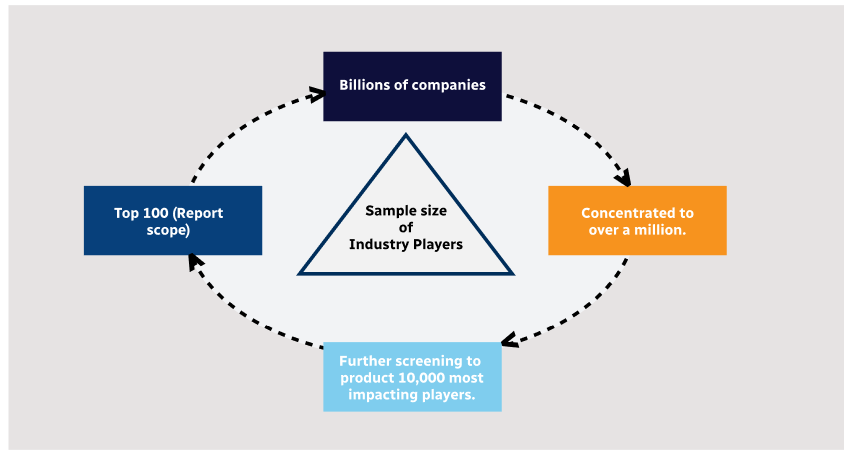
Step 1 - Identification of Relevant Samples Size from Population Database

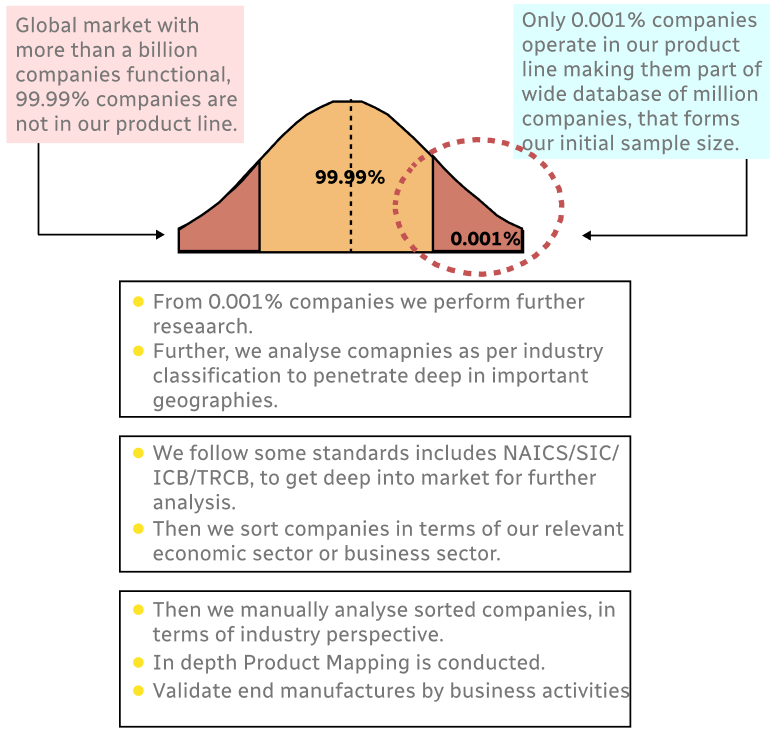
Step 2 - Approaches for Defining Global Market Size (Value, Volume* & Price*)
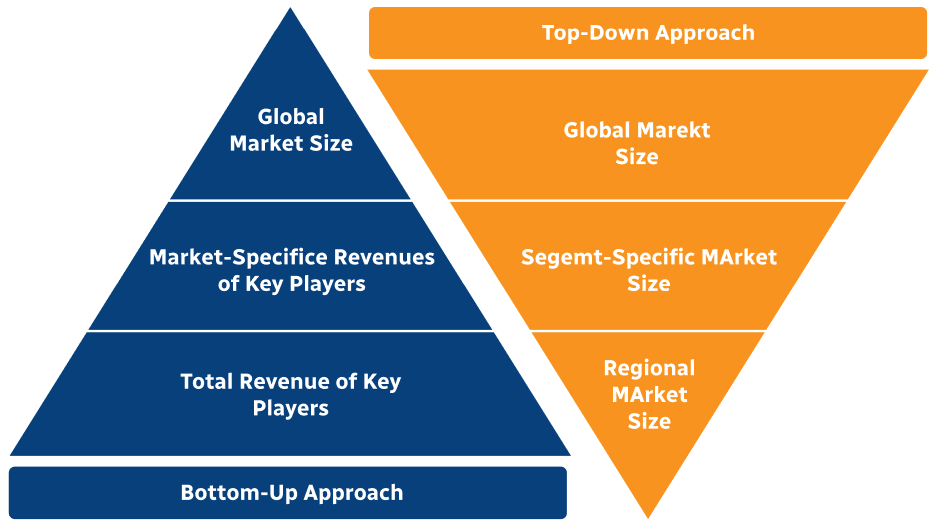
Note*: In applicable scenarios
Step 3 - Data Sources
Primary Research
- Web Analytics
- Survey Reports
- Research Institute
- Latest Research Reports
- Opinion Leaders
Secondary Research
- Annual Reports
- White Paper
- Latest Press Release
- Industry Association
- Paid Database
- Investor Presentations
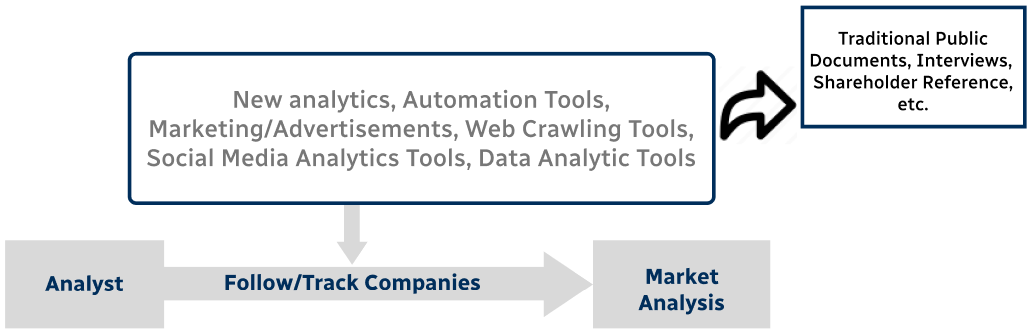
Step 4 - Data Triangulation
Involves using different sources of information in order to increase the validity of a study
These sources are likely to be stakeholders in a program - participants, other researchers, program staff, other community members, and so on.
Then we put all data in single framework & apply various statistical tools to find out the dynamic on the market.
During the analysis stage, feedback from the stakeholder groups would be compared to determine areas of agreement as well as areas of divergence