


Key Insights
The global Turbine Repair Services market is poised for robust expansion, projected to reach an estimated USD 2,605 million by 2025, with a substantial Compound Annual Growth Rate (CAGR) of 5.7% anticipated throughout the forecast period of 2025-2033. This significant growth is primarily fueled by the escalating demand for power generation across various sectors, necessitating the maintenance and longevity of critical turbine infrastructure. The aerospace sector, with its increasing fleet sizes and stringent safety regulations, is a key driver, alongside the indispensable role of turbines in the oil and gas industry for exploration and production operations. Furthermore, the growing adoption of renewable energy sources, particularly wind energy, is creating a parallel demand for specialized wind turbine repair services, contributing to the market's upward trajectory.
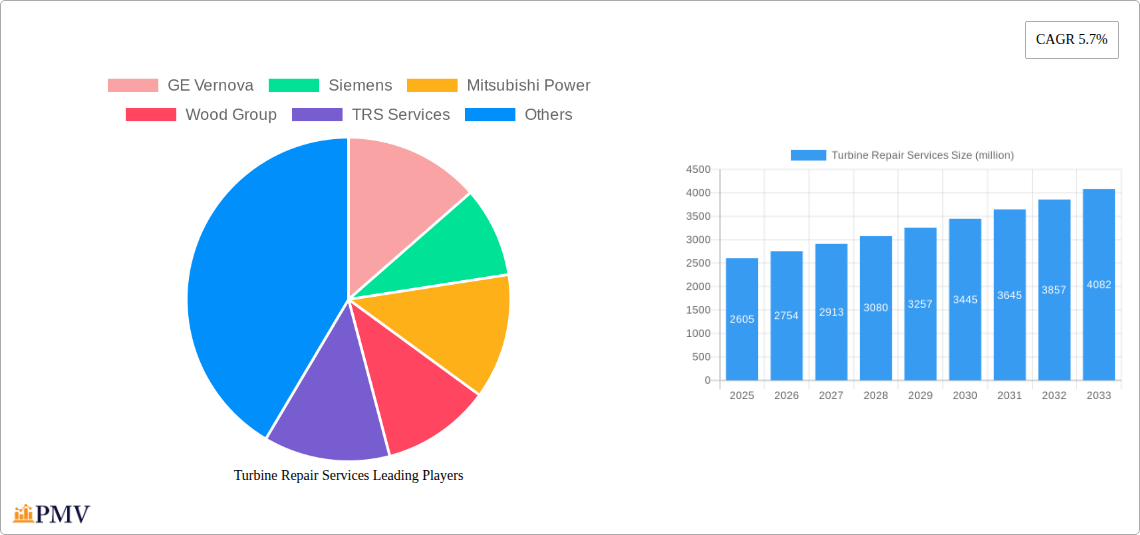
Turbine Repair Services Market Size (In Billion)

The market landscape is characterized by a diverse range of applications, with Power Generation representing a dominant segment due to the sheer volume of turbines in operation. Aerospace and Oil and Gas follow closely, driven by specialized maintenance requirements and operational criticality. In terms of repair types, Steam Turbine Repair and Gas Turbine Repair services are expected to command a significant share, reflecting the prevalent turbine technologies. However, the burgeoning wind energy sector is rapidly increasing the demand for Wind Turbine Repair services. Geographically, North America and Europe currently lead the market, owing to mature industrial bases and extensive investments in power infrastructure. Asia Pacific, however, is emerging as a high-growth region, driven by rapid industrialization, increasing energy consumption, and significant investments in renewable energy projects, particularly wind farms. Leading companies such as GE Vernova, Siemens, and Mitsubishi Power are actively engaged in providing comprehensive repair solutions, while specialized players like Wood Group and TRS Services are carving out niches within the market. The market's growth is further supported by technological advancements in repair techniques and a greater emphasis on predictive maintenance to enhance turbine efficiency and reduce downtime.
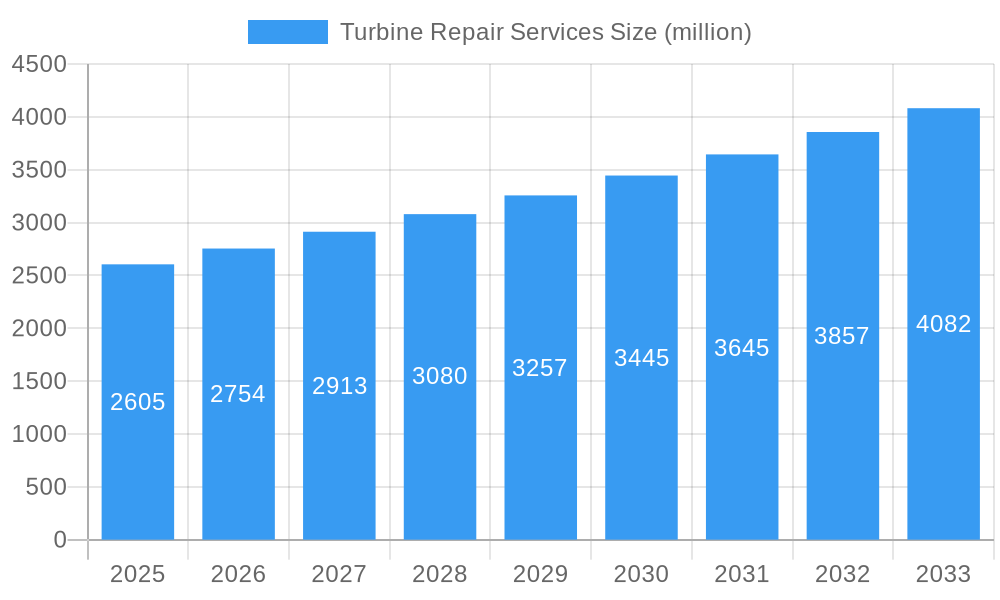
Turbine Repair Services Company Market Share
Turbine Repair Services Market: Comprehensive Report Analysis
This in-depth report provides a thorough analysis of the global Turbine Repair Services market, encompassing its structure, trends, dominant segments, innovations, key drivers, challenges, leading players, recent developments, and future outlook. Designed for industry professionals, asset managers, and strategic planners, this report leverages an extensive study period from 2019 to 2033, with a base year of 2025, offering a robust forecast for the period 2025–2033 and historical insights from 2019–2024. We deliver actionable intelligence to navigate the complex and evolving landscape of turbine maintenance and repair.
Turbine Repair Services Market Structure & Competitive Dynamics
The Turbine Repair Services market exhibits a moderately fragmented structure, with a blend of large, established players and specialized niche providers. Key industry participants include GE Vernova, Siemens, Mitsubishi Power, Wood Group, TRS Services, Liburdi, Kawasaki Heavy Industries, MD&A Turbines, ITS Parts, Ansaldo Energia, Turbine Pros, Solar Turbines, Trinity Turbine Technology, Blackstone Industrial Services, CISLeads, MTU Aero Engines, EthosEnergy, Proenergy Services, MAN Diesel & Turbo, MJB International, Pump Engineering, Reliable Turbine Services, LLC, Jay Industrial Repair, S.T. Cotter Turbine, Industrial Turbine Services GmbH, ST Cotter Turbine Services Inc. Market concentration varies across different turbine types and geographical regions. Innovation ecosystems are driven by a continuous need for improved efficiency, extended lifespan, and reduced downtime for critical turbine assets. Regulatory frameworks, particularly concerning safety, environmental compliance, and emissions, significantly influence service providers' operational strategies and investment decisions. Product substitutes, such as component upgrades or complete turbine replacements, represent a dynamic competitive factor. End-user trends are increasingly focused on predictive maintenance, digitalization of services, and long-term service agreements. Merger and acquisition (M&A) activities are prevalent as companies seek to expand their service capabilities, geographical reach, and technological expertise. Recent M&A deals have seen valuations ranging from several million to hundreds of millions, aimed at consolidating market share and securing access to advanced repair technologies. The market share of leading companies is estimated to be in the double-digit percentage range, with smaller players holding significant portions in specific regional or specialized segments.
Turbine Repair Services Industry Trends & Insights
The global Turbine Repair Services market is experiencing robust growth, projected at a Compound Annual Growth Rate (CAGR) of approximately 6.5% over the forecast period. This expansion is fueled by several key trends, including the aging installed base of turbines across various sectors, necessitating regular and specialized maintenance. The increasing demand for reliable and efficient power generation, particularly from renewable sources like wind and solar (though this report focuses on associated turbine repair), alongside the sustained need for energy in the oil and gas, aerospace, and industrial sectors, underpins the consistent requirement for turbine repair services. Technological disruptions are at the forefront, with advancements in predictive maintenance leveraging AI and IoT sensors revolutionizing how turbine health is monitored and managed. This shift from reactive to proactive repair strategies minimizes downtime and optimizes operational efficiency, representing a significant market penetration of new technologies. Furthermore, the development of advanced materials and coatings for turbine components, enabling enhanced durability and performance, drives the demand for specialized repair techniques. Consumer preferences are evolving towards service providers offering integrated solutions, including remote diagnostics, on-site emergency repairs, and comprehensive long-term service contracts. The competitive dynamics are characterized by intense price competition, a focus on specialized expertise, and the strategic importance of building strong customer relationships. Companies are investing heavily in R&D to develop proprietary repair methodologies and digital service platforms. The market penetration of specialized repair services is steadily increasing, driven by the complexity of modern turbines and the stringent performance requirements across different applications. The global market size for turbine repair services is estimated to be in the range of several tens of billions of dollars, with a significant portion attributed to gas turbine repairs.
Dominant Markets & Segments in Turbine Repair Services
The Power Generation application segment stands out as the dominant market within the global Turbine Repair Services sector, accounting for an estimated 55% of the total market revenue. This dominance is driven by the sheer volume of installed turbines in power plants worldwide and the critical need for continuous operation to meet energy demands. Key drivers for this segment include:
- Economic Policies: Government initiatives promoting energy security and the transition to cleaner energy sources often involve substantial investments in power infrastructure, including turbines that require ongoing maintenance.
- Infrastructure: The vast and aging power generation infrastructure globally necessitates consistent repair and refurbishment to ensure reliability and efficiency.
- Regulatory Mandates: Stringent regulations regarding emissions and operational safety mandate regular inspections and maintenance for power generation turbines.
Within the Type segmentation, Gas Turbines Repair is the largest segment, representing approximately 45% of the market. This is due to their widespread use in power generation, oil and gas operations, and aviation, coupled with their complex operating environments that demand frequent specialized maintenance. The dominance of gas turbine repair is attributed to:
- Technological Advancements: Continuous innovation in gas turbine design leads to increased complexity, requiring specialized repair expertise.
- Operational Demands: Gas turbines in power generation and oil and gas often operate under high stress and demanding conditions, accelerating wear and tear.
- Aerospace Applications: The aviation industry relies heavily on gas turbines, where safety and performance are paramount, leading to a consistent demand for expert repair services.
Geographically, North America is the leading region, driven by a mature industrial base, significant investments in energy infrastructure, and a strong emphasis on asset maintenance and performance optimization. The presence of major players like GE Vernova and Solar Turbines further solidifies its leading position. Within North America, the United States holds the largest market share due to its extensive power generation capacity, robust aerospace industry, and active oil and gas sector.
The Oil and Gas segment also represents a significant portion of the market, driven by the need for reliable turbine operation in exploration, production, and refining processes, often in remote and harsh environments.
Turbine Repair Services Product Innovations
Product innovations in turbine repair services are focused on enhancing efficiency, extending component life, and minimizing downtime. Key advancements include the development of advanced coating technologies that provide superior resistance to high temperatures and corrosive environments. Laser cladding and additive manufacturing techniques are being employed to precisely repair worn or damaged turbine blades and other critical components, offering superior dimensional accuracy and material integrity compared to traditional methods. Furthermore, the integration of digital technologies, such as AI-powered diagnostic tools and remote monitoring systems, allows for predictive maintenance, enabling early detection of potential issues and proactive intervention, thereby reducing the need for costly emergency repairs and improving overall asset performance.
Report Segmentation & Scope
This report segments the Turbine Repair Services market across key applications and turbine types.
Application Segmentation:
- Power Generation: This segment includes repair services for turbines used in electricity generation, covering a vast installed base and continuous demand for maintenance. Growth projections are strong, with estimated market sizes in the tens of billions, driven by the need for reliable energy.
- Aerospace: Encompasses repair services for aircraft engines and auxiliary power units. This segment demands highly specialized expertise and adherence to stringent safety regulations. Market sizes are significant, with consistent demand from airlines and defense sectors.
- Marine: Focuses on repair of turbines used in ships and offshore platforms. This segment is influenced by global trade volumes and offshore exploration activities, with projected steady growth.
- Oil and Gas: Includes repair of turbines used in exploration, production, and refining. This segment is cyclical but vital, with ongoing demand driven by energy needs.
- Chemical: Covers turbine repair in chemical processing plants where reliability is crucial for continuous operations.
- Others: Includes niche applications and emerging areas.
Type Segmentation:
- Steam Turbines Repair: Addresses the maintenance needs of steam turbines widely used in power generation and industrial processes.
- Gas Turbines Repair: The largest segment, covering a broad range of applications and driven by technological advancements.
- Wind Turbines Repair: Growing segment, focusing on maintenance of wind turbine components, particularly gearboxes and generators.
- Water Turbines Repair: Niche segment for hydropower turbines, with demand tied to infrastructure development and maintenance of existing facilities.
Key Drivers of Turbine Repair Services Growth
Several factors are propelling the growth of the Turbine Repair Services market. The aging global fleet of turbines across all sectors necessitates ongoing maintenance and repair to ensure operational efficiency and longevity. The increasing demand for energy, particularly from developing economies, is driving the expansion of power generation capacity, which in turn requires a greater volume of turbine repair services. Technological advancements, such as the adoption of digital twins and predictive maintenance solutions, are transforming service delivery, enabling more proactive and cost-effective repairs. Furthermore, stringent environmental regulations mandating improved efficiency and reduced emissions encourage operators to invest in regular maintenance and component upgrades, further boosting the demand for specialized repair expertise. The focus on extending the operational lifespan of existing assets to avoid the high capital expenditure of new turbine installations also contributes significantly to market growth.
Challenges in the Turbine Repair Services Sector
The Turbine Repair Services sector faces several challenges that can impact growth and profitability. Regulatory hurdles, particularly in highly regulated industries like aerospace and nuclear power, can increase compliance costs and extend project timelines. Supply chain disruptions, often exacerbated by geopolitical events or material shortages, can lead to delays in obtaining critical spare parts and specialized materials, impacting turnaround times and increasing costs, with potential impacts on project costs exceeding tens of millions. Intense competitive pressure among service providers leads to price erosion in certain market segments. The need for highly skilled labor and specialized training programs to keep pace with evolving turbine technologies represents a continuous challenge in talent acquisition and retention. Furthermore, the capital-intensive nature of establishing and maintaining advanced repair facilities and technologies requires significant upfront investment.
Leading Players in the Turbine Repair Services Market
- GE Vernova
- Siemens
- Mitsubishi Power
- Wood Group
- TRS Services
- Liburdi
- Kawasaki Heavy Industries
- MD&A Turbines
- ITS Parts
- Ansaldo Energia
- Turbine Pros
- Solar Turbines
- Trinity Turbine Technology
- Blackstone Industrial Services
- CISLeads
- MTU Aero Engines
- EthosEnergy
- Proenergy Services
- MAN Diesel & Turbo
- MJB International
- Pump Engineering
- Reliable Turbine Services, LLC
- Jay Industrial Repair
- S.T. Cotter Turbine
- Industrial Turbine Services GmbH
- ST Cotter Turbine Services Inc
Key Developments in Turbine Repair Services Sector
- 2023: EthosEnergy acquired a significant repair facility, expanding its gas turbine service capabilities and reinforcing its market position.
- 2023: Siemens announced a new digital platform for remote turbine monitoring and diagnostics, enhancing predictive maintenance offerings.
- 2024: GE Vernova invested several million dollars in its advanced repair technology center to enhance its capabilities in blade repair.
- 2024: Mitsubishi Power partnered with a major energy producer for long-term service agreements covering their fleet of gas turbines.
- 2025: MD&A Turbines expanded its service network in Europe, aiming to provide faster response times for regional clients.
- 2025: Wood Group launched a new training program focused on advanced materials and repair techniques for wind turbines.
Strategic Turbine Repair Services Market Outlook
The strategic outlook for the Turbine Repair Services market remains highly positive, driven by sustained global energy demand and the imperative to maintain the efficiency and reliability of existing turbine assets. Growth accelerators include the increasing adoption of Industry 4.0 technologies, enabling data-driven maintenance strategies and personalized service offerings. Companies that invest in developing specialized repair expertise for emerging turbine technologies, such as advanced aeroderivatives and higher-efficiency gas turbines, will be well-positioned for future success. Strategic opportunities lie in expanding service portfolios to include comprehensive asset management solutions, encompassing remote monitoring, performance optimization, and lifecycle management. The growing emphasis on sustainability and the circular economy also presents opportunities for providers offering component refurbishment and reconditioning services. Continued M&A activity is anticipated as companies seek to consolidate market share and acquire innovative technologies, with deal values expected to remain significant, potentially reaching hundreds of millions for strategic acquisitions.
Turbine Repair Services Segmentation
-
1. Application
- 1.1. Power Generation
- 1.2. Aerospace
- 1.3. Marine
- 1.4. Oil and Gas
- 1.5. Chemical
- 1.6. Others
-
2. Type
- 2.1. Steam Turbines Repair
- 2.2. Gas Turbines Repair
- 2.3. Wind Turbines Repair
- 2.4. Water Turbines Repair
Turbine Repair Services Segmentation By Geography
-
1. North America
- 1.1. United States
- 1.2. Canada
- 1.3. Mexico
-
2. South America
- 2.1. Brazil
- 2.2. Argentina
- 2.3. Rest of South America
-
3. Europe
- 3.1. United Kingdom
- 3.2. Germany
- 3.3. France
- 3.4. Italy
- 3.5. Spain
- 3.6. Russia
- 3.7. Benelux
- 3.8. Nordics
- 3.9. Rest of Europe
-
4. Middle East & Africa
- 4.1. Turkey
- 4.2. Israel
- 4.3. GCC
- 4.4. North Africa
- 4.5. South Africa
- 4.6. Rest of Middle East & Africa
-
5. Asia Pacific
- 5.1. China
- 5.2. India
- 5.3. Japan
- 5.4. South Korea
- 5.5. ASEAN
- 5.6. Oceania
- 5.7. Rest of Asia Pacific
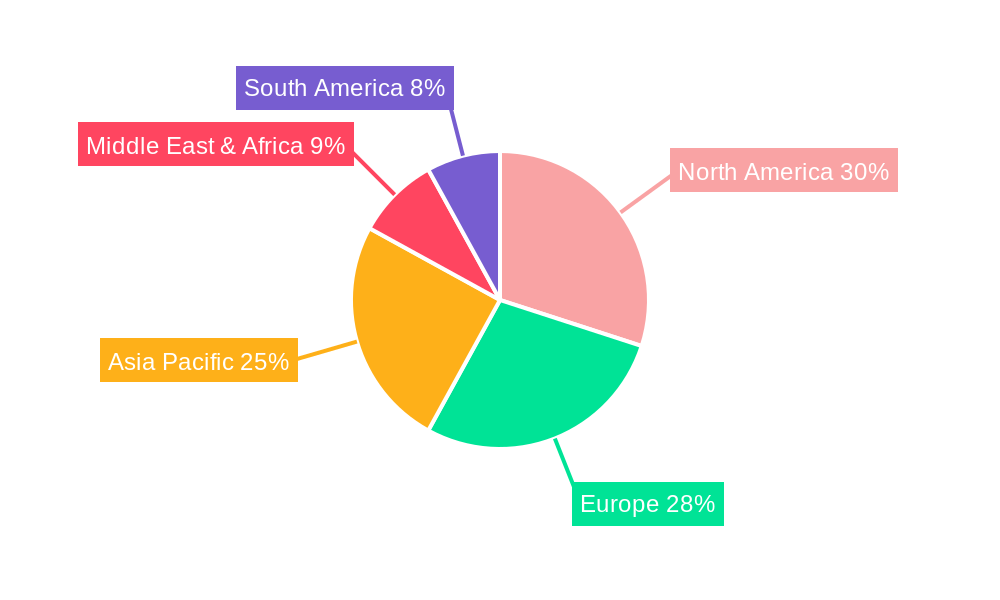
Turbine Repair Services Regional Market Share
Geographic Coverage of Turbine Repair Services
Turbine Repair Services REPORT HIGHLIGHTS
| Aspects | Details |
|---|---|
| Study Period | 2020-2034 |
| Base Year | 2025 |
| Estimated Year | 2026 |
| Forecast Period | 2026-2034 |
| Historical Period | 2020-2025 |
| Growth Rate | CAGR of 5.7% from 2020-2034 |
| Segmentation |
|
Table of Contents
- 1. Introduction
- 1.1. Research Scope
- 1.2. Market Segmentation
- 1.3. Research Methodology
- 1.4. Definitions and Assumptions
- 2. Executive Summary
- 2.1. Introduction
- 3. Market Dynamics
- 3.1. Introduction
- 3.2. Market Drivers
- 3.3. Market Restrains
- 3.4. Market Trends
- 4. Market Factor Analysis
- 4.1. Porters Five Forces
- 4.2. Supply/Value Chain
- 4.3. PESTEL analysis
- 4.4. Market Entropy
- 4.5. Patent/Trademark Analysis
- 5. Global Turbine Repair Services Analysis, Insights and Forecast, 2020-2032
- 5.1. Market Analysis, Insights and Forecast - by Application
- 5.1.1. Power Generation
- 5.1.2. Aerospace
- 5.1.3. Marine
- 5.1.4. Oil and Gas
- 5.1.5. Chemical
- 5.1.6. Others
- 5.2. Market Analysis, Insights and Forecast - by Type
- 5.2.1. Steam Turbines Repair
- 5.2.2. Gas Turbines Repair
- 5.2.3. Wind Turbines Repair
- 5.2.4. Water Turbines Repair
- 5.3. Market Analysis, Insights and Forecast - by Region
- 5.3.1. North America
- 5.3.2. South America
- 5.3.3. Europe
- 5.3.4. Middle East & Africa
- 5.3.5. Asia Pacific
- 5.1. Market Analysis, Insights and Forecast - by Application
- 6. North America Turbine Repair Services Analysis, Insights and Forecast, 2020-2032
- 6.1. Market Analysis, Insights and Forecast - by Application
- 6.1.1. Power Generation
- 6.1.2. Aerospace
- 6.1.3. Marine
- 6.1.4. Oil and Gas
- 6.1.5. Chemical
- 6.1.6. Others
- 6.2. Market Analysis, Insights and Forecast - by Type
- 6.2.1. Steam Turbines Repair
- 6.2.2. Gas Turbines Repair
- 6.2.3. Wind Turbines Repair
- 6.2.4. Water Turbines Repair
- 6.1. Market Analysis, Insights and Forecast - by Application
- 7. South America Turbine Repair Services Analysis, Insights and Forecast, 2020-2032
- 7.1. Market Analysis, Insights and Forecast - by Application
- 7.1.1. Power Generation
- 7.1.2. Aerospace
- 7.1.3. Marine
- 7.1.4. Oil and Gas
- 7.1.5. Chemical
- 7.1.6. Others
- 7.2. Market Analysis, Insights and Forecast - by Type
- 7.2.1. Steam Turbines Repair
- 7.2.2. Gas Turbines Repair
- 7.2.3. Wind Turbines Repair
- 7.2.4. Water Turbines Repair
- 7.1. Market Analysis, Insights and Forecast - by Application
- 8. Europe Turbine Repair Services Analysis, Insights and Forecast, 2020-2032
- 8.1. Market Analysis, Insights and Forecast - by Application
- 8.1.1. Power Generation
- 8.1.2. Aerospace
- 8.1.3. Marine
- 8.1.4. Oil and Gas
- 8.1.5. Chemical
- 8.1.6. Others
- 8.2. Market Analysis, Insights and Forecast - by Type
- 8.2.1. Steam Turbines Repair
- 8.2.2. Gas Turbines Repair
- 8.2.3. Wind Turbines Repair
- 8.2.4. Water Turbines Repair
- 8.1. Market Analysis, Insights and Forecast - by Application
- 9. Middle East & Africa Turbine Repair Services Analysis, Insights and Forecast, 2020-2032
- 9.1. Market Analysis, Insights and Forecast - by Application
- 9.1.1. Power Generation
- 9.1.2. Aerospace
- 9.1.3. Marine
- 9.1.4. Oil and Gas
- 9.1.5. Chemical
- 9.1.6. Others
- 9.2. Market Analysis, Insights and Forecast - by Type
- 9.2.1. Steam Turbines Repair
- 9.2.2. Gas Turbines Repair
- 9.2.3. Wind Turbines Repair
- 9.2.4. Water Turbines Repair
- 9.1. Market Analysis, Insights and Forecast - by Application
- 10. Asia Pacific Turbine Repair Services Analysis, Insights and Forecast, 2020-2032
- 10.1. Market Analysis, Insights and Forecast - by Application
- 10.1.1. Power Generation
- 10.1.2. Aerospace
- 10.1.3. Marine
- 10.1.4. Oil and Gas
- 10.1.5. Chemical
- 10.1.6. Others
- 10.2. Market Analysis, Insights and Forecast - by Type
- 10.2.1. Steam Turbines Repair
- 10.2.2. Gas Turbines Repair
- 10.2.3. Wind Turbines Repair
- 10.2.4. Water Turbines Repair
- 10.1. Market Analysis, Insights and Forecast - by Application
- 11. Competitive Analysis
- 11.1. Global Market Share Analysis 2025
- 11.2. Company Profiles
- 11.2.1 GE Vernova
- 11.2.1.1. Overview
- 11.2.1.2. Products
- 11.2.1.3. SWOT Analysis
- 11.2.1.4. Recent Developments
- 11.2.1.5. Financials (Based on Availability)
- 11.2.2 Siemens
- 11.2.2.1. Overview
- 11.2.2.2. Products
- 11.2.2.3. SWOT Analysis
- 11.2.2.4. Recent Developments
- 11.2.2.5. Financials (Based on Availability)
- 11.2.3 Mitsubishi Power
- 11.2.3.1. Overview
- 11.2.3.2. Products
- 11.2.3.3. SWOT Analysis
- 11.2.3.4. Recent Developments
- 11.2.3.5. Financials (Based on Availability)
- 11.2.4 Wood Group
- 11.2.4.1. Overview
- 11.2.4.2. Products
- 11.2.4.3. SWOT Analysis
- 11.2.4.4. Recent Developments
- 11.2.4.5. Financials (Based on Availability)
- 11.2.5 TRS Services
- 11.2.5.1. Overview
- 11.2.5.2. Products
- 11.2.5.3. SWOT Analysis
- 11.2.5.4. Recent Developments
- 11.2.5.5. Financials (Based on Availability)
- 11.2.6 Liburdi
- 11.2.6.1. Overview
- 11.2.6.2. Products
- 11.2.6.3. SWOT Analysis
- 11.2.6.4. Recent Developments
- 11.2.6.5. Financials (Based on Availability)
- 11.2.7 Kawasaki Heavy Industries
- 11.2.7.1. Overview
- 11.2.7.2. Products
- 11.2.7.3. SWOT Analysis
- 11.2.7.4. Recent Developments
- 11.2.7.5. Financials (Based on Availability)
- 11.2.8 MD&A Turbines
- 11.2.8.1. Overview
- 11.2.8.2. Products
- 11.2.8.3. SWOT Analysis
- 11.2.8.4. Recent Developments
- 11.2.8.5. Financials (Based on Availability)
- 11.2.9 ITS Parts
- 11.2.9.1. Overview
- 11.2.9.2. Products
- 11.2.9.3. SWOT Analysis
- 11.2.9.4. Recent Developments
- 11.2.9.5. Financials (Based on Availability)
- 11.2.10 Ansaldo Energia
- 11.2.10.1. Overview
- 11.2.10.2. Products
- 11.2.10.3. SWOT Analysis
- 11.2.10.4. Recent Developments
- 11.2.10.5. Financials (Based on Availability)
- 11.2.11 Turbine Pros
- 11.2.11.1. Overview
- 11.2.11.2. Products
- 11.2.11.3. SWOT Analysis
- 11.2.11.4. Recent Developments
- 11.2.11.5. Financials (Based on Availability)
- 11.2.12 Solar Turbines
- 11.2.12.1. Overview
- 11.2.12.2. Products
- 11.2.12.3. SWOT Analysis
- 11.2.12.4. Recent Developments
- 11.2.12.5. Financials (Based on Availability)
- 11.2.13 Trinity Turbine Technology
- 11.2.13.1. Overview
- 11.2.13.2. Products
- 11.2.13.3. SWOT Analysis
- 11.2.13.4. Recent Developments
- 11.2.13.5. Financials (Based on Availability)
- 11.2.14 Blackstone Industrial Services
- 11.2.14.1. Overview
- 11.2.14.2. Products
- 11.2.14.3. SWOT Analysis
- 11.2.14.4. Recent Developments
- 11.2.14.5. Financials (Based on Availability)
- 11.2.15 CISLeads
- 11.2.15.1. Overview
- 11.2.15.2. Products
- 11.2.15.3. SWOT Analysis
- 11.2.15.4. Recent Developments
- 11.2.15.5. Financials (Based on Availability)
- 11.2.16 MTU Aero Engines
- 11.2.16.1. Overview
- 11.2.16.2. Products
- 11.2.16.3. SWOT Analysis
- 11.2.16.4. Recent Developments
- 11.2.16.5. Financials (Based on Availability)
- 11.2.17 EthosEnergy
- 11.2.17.1. Overview
- 11.2.17.2. Products
- 11.2.17.3. SWOT Analysis
- 11.2.17.4. Recent Developments
- 11.2.17.5. Financials (Based on Availability)
- 11.2.18 Proenergy Services
- 11.2.18.1. Overview
- 11.2.18.2. Products
- 11.2.18.3. SWOT Analysis
- 11.2.18.4. Recent Developments
- 11.2.18.5. Financials (Based on Availability)
- 11.2.19 MAN Diesel & Turbo
- 11.2.19.1. Overview
- 11.2.19.2. Products
- 11.2.19.3. SWOT Analysis
- 11.2.19.4. Recent Developments
- 11.2.19.5. Financials (Based on Availability)
- 11.2.20 MJB International
- 11.2.20.1. Overview
- 11.2.20.2. Products
- 11.2.20.3. SWOT Analysis
- 11.2.20.4. Recent Developments
- 11.2.20.5. Financials (Based on Availability)
- 11.2.21 Pump Engineering
- 11.2.21.1. Overview
- 11.2.21.2. Products
- 11.2.21.3. SWOT Analysis
- 11.2.21.4. Recent Developments
- 11.2.21.5. Financials (Based on Availability)
- 11.2.22 Reliable Turbine Services LLC
- 11.2.22.1. Overview
- 11.2.22.2. Products
- 11.2.22.3. SWOT Analysis
- 11.2.22.4. Recent Developments
- 11.2.22.5. Financials (Based on Availability)
- 11.2.23 Jay Industrial Repair
- 11.2.23.1. Overview
- 11.2.23.2. Products
- 11.2.23.3. SWOT Analysis
- 11.2.23.4. Recent Developments
- 11.2.23.5. Financials (Based on Availability)
- 11.2.24 S.T. Cotter Turbine
- 11.2.24.1. Overview
- 11.2.24.2. Products
- 11.2.24.3. SWOT Analysis
- 11.2.24.4. Recent Developments
- 11.2.24.5. Financials (Based on Availability)
- 11.2.25 Industrial Turbine Services GmbH
- 11.2.25.1. Overview
- 11.2.25.2. Products
- 11.2.25.3. SWOT Analysis
- 11.2.25.4. Recent Developments
- 11.2.25.5. Financials (Based on Availability)
- 11.2.26 ST Cotter Turbine Services Inc
- 11.2.26.1. Overview
- 11.2.26.2. Products
- 11.2.26.3. SWOT Analysis
- 11.2.26.4. Recent Developments
- 11.2.26.5. Financials (Based on Availability)
- 11.2.1 GE Vernova
List of Figures
- Figure 1: Global Turbine Repair Services Revenue Breakdown (million, %) by Region 2025 & 2033
- Figure 2: North America Turbine Repair Services Revenue (million), by Application 2025 & 2033
- Figure 3: North America Turbine Repair Services Revenue Share (%), by Application 2025 & 2033
- Figure 4: North America Turbine Repair Services Revenue (million), by Type 2025 & 2033
- Figure 5: North America Turbine Repair Services Revenue Share (%), by Type 2025 & 2033
- Figure 6: North America Turbine Repair Services Revenue (million), by Country 2025 & 2033
- Figure 7: North America Turbine Repair Services Revenue Share (%), by Country 2025 & 2033
- Figure 8: South America Turbine Repair Services Revenue (million), by Application 2025 & 2033
- Figure 9: South America Turbine Repair Services Revenue Share (%), by Application 2025 & 2033
- Figure 10: South America Turbine Repair Services Revenue (million), by Type 2025 & 2033
- Figure 11: South America Turbine Repair Services Revenue Share (%), by Type 2025 & 2033
- Figure 12: South America Turbine Repair Services Revenue (million), by Country 2025 & 2033
- Figure 13: South America Turbine Repair Services Revenue Share (%), by Country 2025 & 2033
- Figure 14: Europe Turbine Repair Services Revenue (million), by Application 2025 & 2033
- Figure 15: Europe Turbine Repair Services Revenue Share (%), by Application 2025 & 2033
- Figure 16: Europe Turbine Repair Services Revenue (million), by Type 2025 & 2033
- Figure 17: Europe Turbine Repair Services Revenue Share (%), by Type 2025 & 2033
- Figure 18: Europe Turbine Repair Services Revenue (million), by Country 2025 & 2033
- Figure 19: Europe Turbine Repair Services Revenue Share (%), by Country 2025 & 2033
- Figure 20: Middle East & Africa Turbine Repair Services Revenue (million), by Application 2025 & 2033
- Figure 21: Middle East & Africa Turbine Repair Services Revenue Share (%), by Application 2025 & 2033
- Figure 22: Middle East & Africa Turbine Repair Services Revenue (million), by Type 2025 & 2033
- Figure 23: Middle East & Africa Turbine Repair Services Revenue Share (%), by Type 2025 & 2033
- Figure 24: Middle East & Africa Turbine Repair Services Revenue (million), by Country 2025 & 2033
- Figure 25: Middle East & Africa Turbine Repair Services Revenue Share (%), by Country 2025 & 2033
- Figure 26: Asia Pacific Turbine Repair Services Revenue (million), by Application 2025 & 2033
- Figure 27: Asia Pacific Turbine Repair Services Revenue Share (%), by Application 2025 & 2033
- Figure 28: Asia Pacific Turbine Repair Services Revenue (million), by Type 2025 & 2033
- Figure 29: Asia Pacific Turbine Repair Services Revenue Share (%), by Type 2025 & 2033
- Figure 30: Asia Pacific Turbine Repair Services Revenue (million), by Country 2025 & 2033
- Figure 31: Asia Pacific Turbine Repair Services Revenue Share (%), by Country 2025 & 2033
List of Tables
- Table 1: Global Turbine Repair Services Revenue million Forecast, by Application 2020 & 2033
- Table 2: Global Turbine Repair Services Revenue million Forecast, by Type 2020 & 2033
- Table 3: Global Turbine Repair Services Revenue million Forecast, by Region 2020 & 2033
- Table 4: Global Turbine Repair Services Revenue million Forecast, by Application 2020 & 2033
- Table 5: Global Turbine Repair Services Revenue million Forecast, by Type 2020 & 2033
- Table 6: Global Turbine Repair Services Revenue million Forecast, by Country 2020 & 2033
- Table 7: United States Turbine Repair Services Revenue (million) Forecast, by Application 2020 & 2033
- Table 8: Canada Turbine Repair Services Revenue (million) Forecast, by Application 2020 & 2033
- Table 9: Mexico Turbine Repair Services Revenue (million) Forecast, by Application 2020 & 2033
- Table 10: Global Turbine Repair Services Revenue million Forecast, by Application 2020 & 2033
- Table 11: Global Turbine Repair Services Revenue million Forecast, by Type 2020 & 2033
- Table 12: Global Turbine Repair Services Revenue million Forecast, by Country 2020 & 2033
- Table 13: Brazil Turbine Repair Services Revenue (million) Forecast, by Application 2020 & 2033
- Table 14: Argentina Turbine Repair Services Revenue (million) Forecast, by Application 2020 & 2033
- Table 15: Rest of South America Turbine Repair Services Revenue (million) Forecast, by Application 2020 & 2033
- Table 16: Global Turbine Repair Services Revenue million Forecast, by Application 2020 & 2033
- Table 17: Global Turbine Repair Services Revenue million Forecast, by Type 2020 & 2033
- Table 18: Global Turbine Repair Services Revenue million Forecast, by Country 2020 & 2033
- Table 19: United Kingdom Turbine Repair Services Revenue (million) Forecast, by Application 2020 & 2033
- Table 20: Germany Turbine Repair Services Revenue (million) Forecast, by Application 2020 & 2033
- Table 21: France Turbine Repair Services Revenue (million) Forecast, by Application 2020 & 2033
- Table 22: Italy Turbine Repair Services Revenue (million) Forecast, by Application 2020 & 2033
- Table 23: Spain Turbine Repair Services Revenue (million) Forecast, by Application 2020 & 2033
- Table 24: Russia Turbine Repair Services Revenue (million) Forecast, by Application 2020 & 2033
- Table 25: Benelux Turbine Repair Services Revenue (million) Forecast, by Application 2020 & 2033
- Table 26: Nordics Turbine Repair Services Revenue (million) Forecast, by Application 2020 & 2033
- Table 27: Rest of Europe Turbine Repair Services Revenue (million) Forecast, by Application 2020 & 2033
- Table 28: Global Turbine Repair Services Revenue million Forecast, by Application 2020 & 2033
- Table 29: Global Turbine Repair Services Revenue million Forecast, by Type 2020 & 2033
- Table 30: Global Turbine Repair Services Revenue million Forecast, by Country 2020 & 2033
- Table 31: Turkey Turbine Repair Services Revenue (million) Forecast, by Application 2020 & 2033
- Table 32: Israel Turbine Repair Services Revenue (million) Forecast, by Application 2020 & 2033
- Table 33: GCC Turbine Repair Services Revenue (million) Forecast, by Application 2020 & 2033
- Table 34: North Africa Turbine Repair Services Revenue (million) Forecast, by Application 2020 & 2033
- Table 35: South Africa Turbine Repair Services Revenue (million) Forecast, by Application 2020 & 2033
- Table 36: Rest of Middle East & Africa Turbine Repair Services Revenue (million) Forecast, by Application 2020 & 2033
- Table 37: Global Turbine Repair Services Revenue million Forecast, by Application 2020 & 2033
- Table 38: Global Turbine Repair Services Revenue million Forecast, by Type 2020 & 2033
- Table 39: Global Turbine Repair Services Revenue million Forecast, by Country 2020 & 2033
- Table 40: China Turbine Repair Services Revenue (million) Forecast, by Application 2020 & 2033
- Table 41: India Turbine Repair Services Revenue (million) Forecast, by Application 2020 & 2033
- Table 42: Japan Turbine Repair Services Revenue (million) Forecast, by Application 2020 & 2033
- Table 43: South Korea Turbine Repair Services Revenue (million) Forecast, by Application 2020 & 2033
- Table 44: ASEAN Turbine Repair Services Revenue (million) Forecast, by Application 2020 & 2033
- Table 45: Oceania Turbine Repair Services Revenue (million) Forecast, by Application 2020 & 2033
- Table 46: Rest of Asia Pacific Turbine Repair Services Revenue (million) Forecast, by Application 2020 & 2033
Frequently Asked Questions
1. What is the projected Compound Annual Growth Rate (CAGR) of the Turbine Repair Services?
The projected CAGR is approximately 5.7%.
2. Which companies are prominent players in the Turbine Repair Services?
Key companies in the market include GE Vernova, Siemens, Mitsubishi Power, Wood Group, TRS Services, Liburdi, Kawasaki Heavy Industries, MD&A Turbines, ITS Parts, Ansaldo Energia, Turbine Pros, Solar Turbines, Trinity Turbine Technology, Blackstone Industrial Services, CISLeads, MTU Aero Engines, EthosEnergy, Proenergy Services, MAN Diesel & Turbo, MJB International, Pump Engineering, Reliable Turbine Services, LLC, Jay Industrial Repair, S.T. Cotter Turbine, Industrial Turbine Services GmbH, ST Cotter Turbine Services Inc.
3. What are the main segments of the Turbine Repair Services?
The market segments include Application, Type.
4. Can you provide details about the market size?
The market size is estimated to be USD 2605 million as of 2022.
5. What are some drivers contributing to market growth?
N/A
6. What are the notable trends driving market growth?
N/A
7. Are there any restraints impacting market growth?
N/A
8. Can you provide examples of recent developments in the market?
N/A
9. What pricing options are available for accessing the report?
Pricing options include single-user, multi-user, and enterprise licenses priced at USD 3950.00, USD 5925.00, and USD 7900.00 respectively.
10. Is the market size provided in terms of value or volume?
The market size is provided in terms of value, measured in million.
11. Are there any specific market keywords associated with the report?
Yes, the market keyword associated with the report is "Turbine Repair Services," which aids in identifying and referencing the specific market segment covered.
12. How do I determine which pricing option suits my needs best?
The pricing options vary based on user requirements and access needs. Individual users may opt for single-user licenses, while businesses requiring broader access may choose multi-user or enterprise licenses for cost-effective access to the report.
13. Are there any additional resources or data provided in the Turbine Repair Services report?
While the report offers comprehensive insights, it's advisable to review the specific contents or supplementary materials provided to ascertain if additional resources or data are available.
14. How can I stay updated on further developments or reports in the Turbine Repair Services?
To stay informed about further developments, trends, and reports in the Turbine Repair Services, consider subscribing to industry newsletters, following relevant companies and organizations, or regularly checking reputable industry news sources and publications.
Methodology
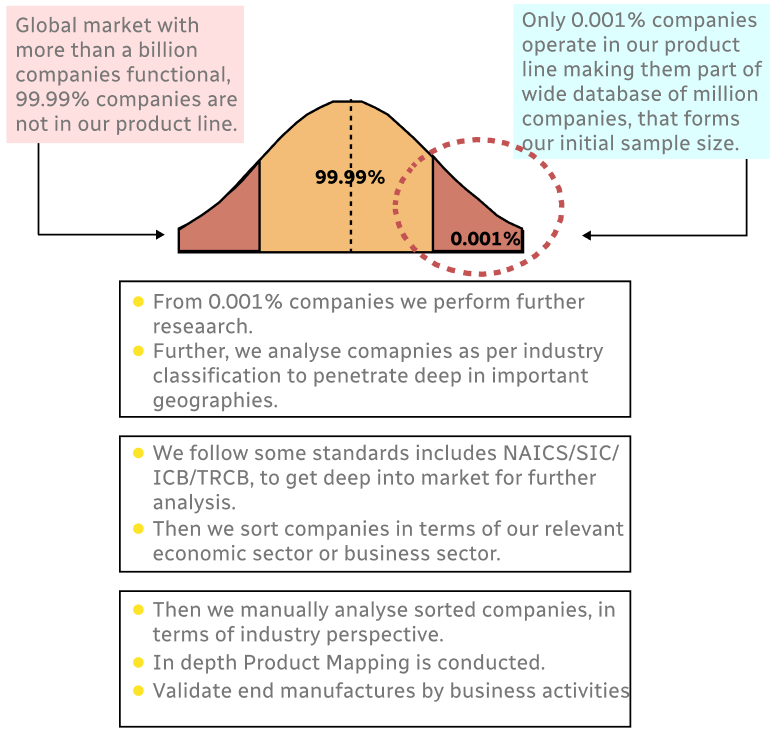
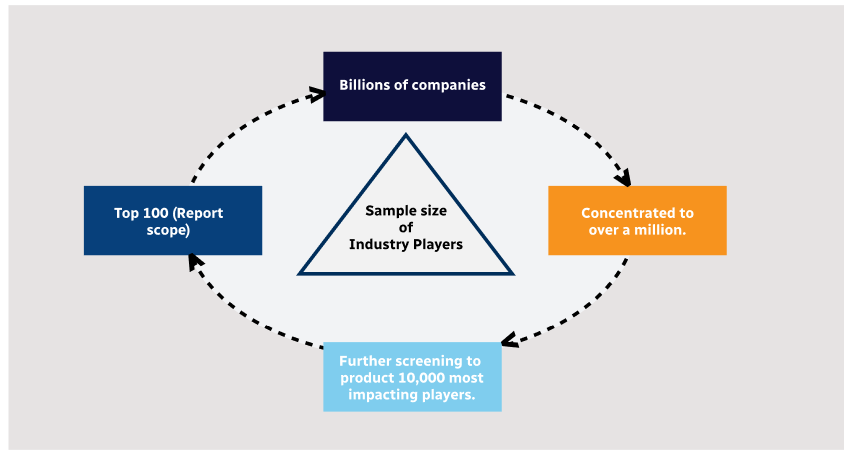
Step 1 - Identification of Relevant Samples Size from Population Database
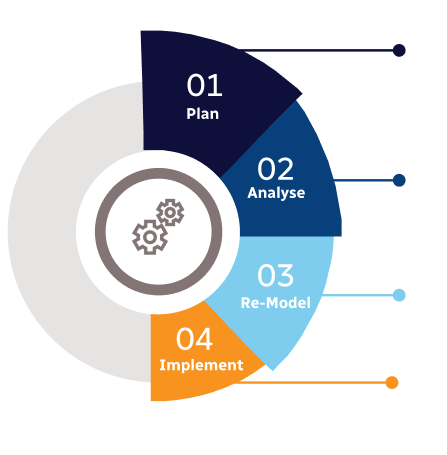
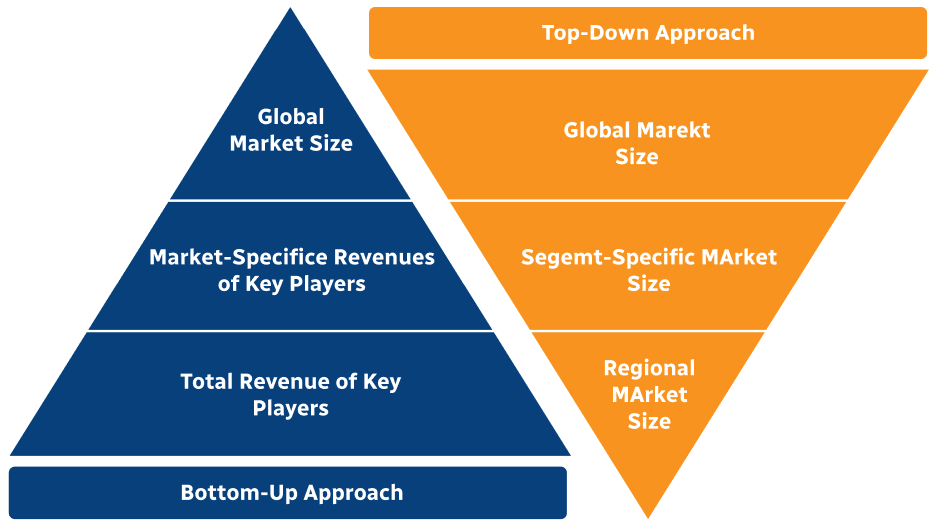
Step 2 - Approaches for Defining Global Market Size (Value, Volume* & Price*)
Note*: In applicable scenarios
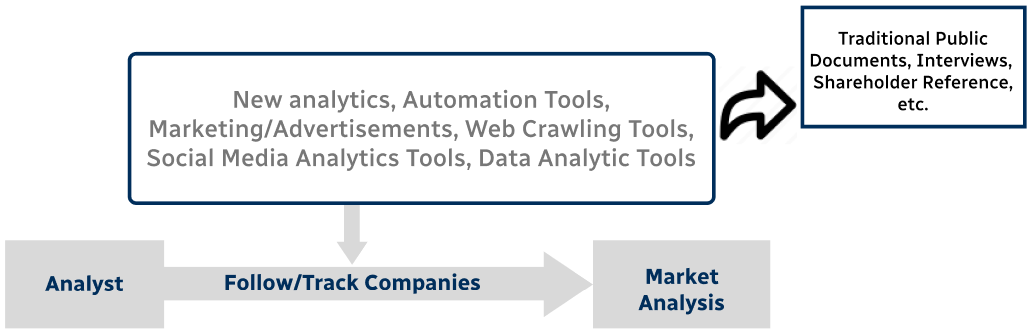
Step 3 - Data Sources
Primary Research
- Web Analytics
- Survey Reports
- Research Institute
- Latest Research Reports
- Opinion Leaders
Secondary Research
- Annual Reports
- White Paper
- Latest Press Release
- Industry Association
- Paid Database
- Investor Presentations
Step 4 - Data Triangulation
Involves using different sources of information in order to increase the validity of a study
These sources are likely to be stakeholders in a program - participants, other researchers, program staff, other community members, and so on.
Then we put all data in single framework & apply various statistical tools to find out the dynamic on the market.
During the analysis stage, feedback from the stakeholder groups would be compared to determine areas of agreement as well as areas of divergence