



Key Insights
The Southeast Asia Refined Petroleum Products Market is poised for substantial growth, reaching an estimated USD 222.78 billion in 2022 and projected to expand at a Compound Annual Growth Rate (CAGR) of 4.8% through 2033. This robust expansion is fueled by a confluence of factors, primarily the escalating demand for energy across diverse sectors, including transportation, manufacturing, and power generation. Key drivers include the burgeoning middle class in nations like Indonesia, Malaysia, and Thailand, which translates to increased personal mobility and higher consumption of automotive fuels. Furthermore, robust industrial activity and the ongoing development of infrastructure projects across the region are creating sustained demand for various refined petroleum products. The marine and aviation fuel segments are also experiencing significant uplift, driven by the vital role of shipping and air travel in regional trade and tourism.

Southeast Asia Refined Petroleum Products Market Market Size (In Billion)

Navigating this dynamic landscape, the market is characterized by several key trends. The growing emphasis on cleaner fuels and evolving regulatory frameworks are pushing for advancements in refining technologies and a potential shift towards more environmentally friendly products, though traditional fuels remain dominant. Despite the growth trajectory, certain restraints may influence the market's pace. Fluctuations in crude oil prices, geopolitical uncertainties, and increasing investments in renewable energy alternatives could pose challenges. The market is segmented into Automotive Fuels, Marine Fuels, Aviation Fuels, Liquefied Petroleum Gas (LPG), and Other Products, with a strong geographic focus on Indonesia, Malaysia, Thailand, and the broader Rest of Southeast Asia. Leading companies such as Shell PLC, Exxon Mobil Corporation, PT Pertamina (Persero), and Petroliam Nasional Berhad (PETRONAS) are key players, actively shaping the market's direction through strategic investments and product development.

Southeast Asia Refined Petroleum Products Market Company Market Share

This comprehensive report provides an exhaustive analysis of the Southeast Asia Refined Petroleum Products Market, offering critical insights and actionable intelligence for stakeholders. Spanning the historical period from 2019 to 2024, with a base year of 2025 and a forecast period extending to 2033, this study is an essential resource for understanding market dynamics, growth drivers, and competitive strategies in this vital region. The market size is projected to reach approximately $250 billion by 2033, with a Compound Annual Growth Rate (CAGR) of 4.5% from the base year.
Southeast Asia Refined Petroleum Products Market Market Structure & Competitive Dynamics
The Southeast Asia Refined Petroleum Products Market is characterized by a moderate to high level of market concentration, with major integrated oil companies holding significant market share. Key players like Shell PLC, Exxon Mobil Corporation, and PT Pertamina (Persero) dominate downstream operations, influencing pricing and supply chains. The innovation ecosystem is driven by the need for cleaner fuels and enhanced refinery efficiency. Regulatory frameworks, while evolving, largely support market growth but can also present complexities for new entrants. Product substitutes, such as biofuels and electric vehicle adoption, are emerging but currently represent a minor threat to refined petroleum products, particularly in the automotive and aviation sectors. End-user trends indicate a growing demand for high-quality, compliant fuels and a preference for reliable supply chains. Mergers and acquisitions (M&A) activities are sporadic but can significantly alter market landscapes, with notable deals in the past few years valued in the hundreds of millions to billions of dollars, aimed at consolidating regional presence and enhancing refinery capabilities. For instance, recent collaborations on refinery restarts signify strategic partnerships to optimize production and meet stringent fuel standards.
Southeast Asia Refined Petroleum Products Market Industry Trends & Insights
The Southeast Asia Refined Petroleum Products Market is experiencing robust growth, fueled by burgeoning economies, increasing per capita income, and a rapidly expanding middle class across the region. This translates directly into heightened demand for transportation, commercial, and industrial energy solutions. The ongoing industrialization and infrastructure development projects in countries like Indonesia, Malaysia, and Thailand are significant market growth drivers, necessitating a consistent and substantial supply of refined petroleum products. Technological disruptions are primarily focused on improving refinery efficiency, reducing environmental impact, and developing cleaner fuel alternatives. This includes advancements in hydrocracking, catalytic cracking, and desulfurization technologies to meet increasingly stringent emission standards, such as Euro 5. Consumer preferences are shifting towards higher-quality fuels with lower sulfur content and improved combustion efficiency, driven by environmental awareness and regulatory mandates. The competitive dynamics are intense, with established global players leveraging their scale and technological expertise, while national oil companies are increasingly focusing on domestic supply security and value-added refining. The market penetration of specialized refined products, such as aviation fuel and marine bunker fuels, is expected to grow significantly due to expanded air travel and global trade activities. The CAGR for the refined petroleum products market in Southeast Asia is projected to be approximately 4.5% during the forecast period, indicating sustained expansion.
Dominant Markets & Segments in Southeast Asia Refined Petroleum Products Market
Indonesia stands out as the dominant market within the Southeast Asia Refined Petroleum Products Market, driven by its large population, extensive industrial base, and significant energy consumption. The country’s economic policies, focused on industrial development and infrastructure expansion, directly fuel the demand for a wide array of refined petroleum products. Malaysia also holds a strong position, characterized by its strategic refining capabilities and its role as a significant exporter of refined products. Thailand, with its established manufacturing sector and robust tourism industry, further contributes to the regional demand. The "Rest of Southeast Asia," encompassing countries like Vietnam, the Philippines, and Singapore, collectively represents a substantial and growing market.
Within the product segments, Automotive Fuels are the largest and most dominant, accounting for over 40% of the market share. This is a direct consequence of rising vehicle ownership and expanding transportation networks. Key drivers include government incentives for vehicle purchases, urbanization, and the demand for efficient personal and commercial transportation.
Marine Fuels represent another significant segment, propelled by Southeast Asia's critical role in global shipping and trade routes. The expansion of port infrastructure and the increasing volume of maritime trade are major catalysts for this segment's growth.
Aviation Fuels are experiencing rapid expansion due to the booming tourism sector and the increasing number of low-cost carriers operating within the region. Growth in air travel frequency and capacity directly translates to higher demand for jet fuel.
Liquefied Petroleum Gas (LPG) is a crucial segment, particularly for residential and commercial cooking, as well as for industrial heating applications. Government initiatives to promote LPG as a cleaner alternative to traditional fuels in households contribute to its sustained demand.
Other Products, including petrochemical feedstocks, lubricants, and asphalt, cater to diverse industrial needs and are integral to the region's manufacturing and construction sectors. Their dominance is tied to the overall industrial output and infrastructure development pace.
Southeast Asia Refined Petroleum Products Market Product Innovations
Product innovation in the Southeast Asia Refined Petroleum Products Market is primarily driven by the global imperative for cleaner energy and enhanced efficiency. Refiners are focusing on developing advanced formulations for automotive fuels that offer improved fuel economy and reduced emissions, aligning with stricter environmental regulations. In the marine sector, the focus is on low-sulfur bunker fuels and alternative marine fuels to meet International Maritime Organization (IMO) standards. Technological advancements are also enabling the production of higher-grade aviation fuels with better performance characteristics. These innovations not only address environmental concerns but also provide competitive advantages by meeting specific industry requirements and end-user demands for performance and sustainability.
Report Segmentation & Scope
This report segments the Southeast Asia Refined Petroleum Products Market by Product and Geography. The Product segmentation includes: Automotive Fuels, Marine Fuels, Aviation Fuels, Liquefied Petroleum Gas (LPG), and Other Products. Each segment is analyzed for its market size, growth projections, and competitive dynamics, with Automotive Fuels expected to retain its leading position, followed by Marine Fuels. The Geographical segmentation covers: Indonesia, Malaysia, Thailand, and the Rest of Southeast Asia. Indonesia is projected to lead in market size, driven by its substantial domestic demand. The "Rest of Southeast Asia" segment is anticipated to exhibit the highest growth rate due to emerging economies and increasing energy consumption. The study period spans from 2019 to 2033, with a base year of 2025, offering a comprehensive view of historical trends and future projections.
Key Drivers of Southeast Asia Refined Petroleum Products Market Growth
Several key drivers are propelling the Southeast Asia Refined Petroleum Products Market. Economic growth and industrialization across the region are leading to increased demand for energy across all sectors. Rising per capita income and an expanding middle class are fueling a surge in vehicle ownership, thereby boosting the automotive fuels segment. Infrastructure development, including the construction of roads, ports, and airports, necessitates significant consumption of refined products like diesel and jet fuel. Furthermore, favorable government policies supporting the energy sector and promoting cleaner fuel adoption, coupled with technological advancements in refining processes that improve efficiency and product quality, are crucial growth accelerators. The strategic importance of maritime trade routes passing through Southeast Asia also underpins the demand for marine fuels.
Challenges in the Southeast Asia Refined Petroleum Products Market Sector
Despite strong growth prospects, the Southeast Asia Refined Petroleum Products Market faces several challenges. Volatile crude oil prices directly impact refining margins and product pricing, creating market uncertainty. Increasingly stringent environmental regulations regarding emissions and fuel quality necessitate significant capital investment in upgrading refinery infrastructure, posing a barrier for smaller players. Supply chain disruptions, whether due to geopolitical events, natural disasters, or logistical complexities, can impact the availability and cost of refined products. Competition from alternative energy sources, such as renewable energy and electric vehicles, although currently nascent in some segments, represents a long-term challenge. Finally, complex regulatory frameworks and varying import/export policies across different Southeast Asian nations can create hurdles for regional trade and market access.
Leading Players in the Southeast Asia Refined Petroleum Products Market Market
- Shell PLC
- Exxon Mobil Corporation
- PT Pertamina (Persero)
- Vietnam Oil and Gas Group
- Chevron Corporation
- Malaysia Oil Refinery Sdn Bhd
- TotalEnergies SE
- Petroliam Nasional Berhad (PETRONAS)
- BP PLC
Key Developments in Southeast Asia Refined Petroleum Products Market Sector
- September 2022: Equinor and Global Petro Storage (GPS) jointly commissioned a liquefied petroleum gas (LPG) storage terminal in Malaysia. The fully automated facility at Port Klang will enable "cost-advantaged shipments" of very large gas carriers (VLGCs) into Malaysia. The terminal features two 60,000 cubic meters of refrigerated tanks for the storage of propane and butane, as well as four pressurized bullet tanks for the storage of pressurized LPG. This development enhances regional LPG supply chain capabilities.
- May 2022: Petroliam Nasional Berhad (PETRONAS), the national oil company of Malaysia, and Saudi Aramco, the national oil company of Saudi Arabia, have collaborated to restart the refinery-petrochemical complex in Malaysia. The refinery has a 300,000 BPD capacity and is equipped to develop refined petroleum products, including jet fuel, motor gasoline, and diesel, meeting Euro 5 fuel specifications. This strategic partnership aims to optimize production and meet high-quality fuel demands.
- March 2021: Indonesia's national energy giant PT Pertamina announced plans to relocate its USD 10-billion oil refinery project from Bontang in East Kalimantan after terminating a preliminary agreement with Oman's Overseas Oil and Gas. This move signals a recalibration of major refining investment strategies within Indonesia.
Strategic Southeast Asia Refined Petroleum Products Market Market Outlook
The strategic outlook for the Southeast Asia Refined Petroleum Products Market is one of continued expansion and transformation. The region's robust economic growth, coupled with increasing energy demand, presents significant opportunities. Investments in upgrading refining capacities and adopting cleaner technologies will be critical for market players to maintain competitiveness and meet evolving environmental standards. The growth of aviation and marine fuels segments, driven by tourism and trade respectively, offers substantial potential. Furthermore, the ongoing push for energy diversification and the increasing adoption of cleaner fuels will spur innovation in product development and potentially create new market niches. Strategic collaborations, such as those seen in refinery restarts and infrastructure development, will be key to navigating market complexities and capitalizing on emerging trends. The market is poised for sustained growth, driven by a combination of fundamental demand and strategic adaptation.
Southeast Asia Refined Petroleum Products Market Segmentation
-
1. Product
- 1.1. Automotive Fuels
- 1.2. Marine Fuels
- 1.3. Aviation Fuels
- 1.4. Liquefied Petroleum Gas (LPG)
- 1.5. Other Products
-
2. Geography
- 2.1. Indonesia
- 2.2. Malaysia
- 2.3. Thailand
- 2.4. Rest of Southeast Asia
Southeast Asia Refined Petroleum Products Market Segmentation By Geography
- 1. Indonesia
- 2. Malaysia
- 3. Thailand
- 4. Rest of Southeast Asia

Southeast Asia Refined Petroleum Products Market Regional Market Share

Geographic Coverage of Southeast Asia Refined Petroleum Products Market
Southeast Asia Refined Petroleum Products Market REPORT HIGHLIGHTS
| Aspects | Details |
|---|---|
| Study Period | 2020-2034 |
| Base Year | 2025 |
| Estimated Year | 2026 |
| Forecast Period | 2026-2034 |
| Historical Period | 2020-2025 |
| Growth Rate | CAGR of 4.8% from 2020-2034 |
| Segmentation |
|
Table of Contents
- 1. Introduction
- 1.1. Research Scope
- 1.2. Market Segmentation
- 1.3. Research Methodology
- 1.4. Definitions and Assumptions
- 2. Executive Summary
- 2.1. Introduction
- 3. Market Dynamics
- 3.1. Introduction
- 3.2. Market Drivers
- 3.2.1. 4.; Increasing Investment in Oil and Gas Sector4.; Supportive Government Policies
- 3.3. Market Restrains
- 3.3.1. 4.; Inclination towards renewable energy
- 3.4. Market Trends
- 3.4.1. Automotive Fuel to Dominate the Market
- 4. Market Factor Analysis
- 4.1. Porters Five Forces
- 4.2. Supply/Value Chain
- 4.3. PESTEL analysis
- 4.4. Market Entropy
- 4.5. Patent/Trademark Analysis
- 5. Southeast Asia Refined Petroleum Products Market Analysis, Insights and Forecast, 2020-2032
- 5.1. Market Analysis, Insights and Forecast - by Product
- 5.1.1. Automotive Fuels
- 5.1.2. Marine Fuels
- 5.1.3. Aviation Fuels
- 5.1.4. Liquefied Petroleum Gas (LPG)
- 5.1.5. Other Products
- 5.2. Market Analysis, Insights and Forecast - by Geography
- 5.2.1. Indonesia
- 5.2.2. Malaysia
- 5.2.3. Thailand
- 5.2.4. Rest of Southeast Asia
- 5.3. Market Analysis, Insights and Forecast - by Region
- 5.3.1. Indonesia
- 5.3.2. Malaysia
- 5.3.3. Thailand
- 5.3.4. Rest of Southeast Asia
- 5.1. Market Analysis, Insights and Forecast - by Product
- 6. Indonesia Southeast Asia Refined Petroleum Products Market Analysis, Insights and Forecast, 2020-2032
- 6.1. Market Analysis, Insights and Forecast - by Product
- 6.1.1. Automotive Fuels
- 6.1.2. Marine Fuels
- 6.1.3. Aviation Fuels
- 6.1.4. Liquefied Petroleum Gas (LPG)
- 6.1.5. Other Products
- 6.2. Market Analysis, Insights and Forecast - by Geography
- 6.2.1. Indonesia
- 6.2.2. Malaysia
- 6.2.3. Thailand
- 6.2.4. Rest of Southeast Asia
- 6.1. Market Analysis, Insights and Forecast - by Product
- 7. Malaysia Southeast Asia Refined Petroleum Products Market Analysis, Insights and Forecast, 2020-2032
- 7.1. Market Analysis, Insights and Forecast - by Product
- 7.1.1. Automotive Fuels
- 7.1.2. Marine Fuels
- 7.1.3. Aviation Fuels
- 7.1.4. Liquefied Petroleum Gas (LPG)
- 7.1.5. Other Products
- 7.2. Market Analysis, Insights and Forecast - by Geography
- 7.2.1. Indonesia
- 7.2.2. Malaysia
- 7.2.3. Thailand
- 7.2.4. Rest of Southeast Asia
- 7.1. Market Analysis, Insights and Forecast - by Product
- 8. Thailand Southeast Asia Refined Petroleum Products Market Analysis, Insights and Forecast, 2020-2032
- 8.1. Market Analysis, Insights and Forecast - by Product
- 8.1.1. Automotive Fuels
- 8.1.2. Marine Fuels
- 8.1.3. Aviation Fuels
- 8.1.4. Liquefied Petroleum Gas (LPG)
- 8.1.5. Other Products
- 8.2. Market Analysis, Insights and Forecast - by Geography
- 8.2.1. Indonesia
- 8.2.2. Malaysia
- 8.2.3. Thailand
- 8.2.4. Rest of Southeast Asia
- 8.1. Market Analysis, Insights and Forecast - by Product
- 9. Rest of Southeast Asia Southeast Asia Refined Petroleum Products Market Analysis, Insights and Forecast, 2020-2032
- 9.1. Market Analysis, Insights and Forecast - by Product
- 9.1.1. Automotive Fuels
- 9.1.2. Marine Fuels
- 9.1.3. Aviation Fuels
- 9.1.4. Liquefied Petroleum Gas (LPG)
- 9.1.5. Other Products
- 9.2. Market Analysis, Insights and Forecast - by Geography
- 9.2.1. Indonesia
- 9.2.2. Malaysia
- 9.2.3. Thailand
- 9.2.4. Rest of Southeast Asia
- 9.1. Market Analysis, Insights and Forecast - by Product
- 10. Competitive Analysis
- 10.1. Market Share Analysis 2025
- 10.2. Company Profiles
- 10.2.1 Shell PLC
- 10.2.1.1. Overview
- 10.2.1.2. Products
- 10.2.1.3. SWOT Analysis
- 10.2.1.4. Recent Developments
- 10.2.1.5. Financials (Based on Availability)
- 10.2.2 Exxon Mobil Corporation
- 10.2.2.1. Overview
- 10.2.2.2. Products
- 10.2.2.3. SWOT Analysis
- 10.2.2.4. Recent Developments
- 10.2.2.5. Financials (Based on Availability)
- 10.2.3 PT Pertamina (Persero)
- 10.2.3.1. Overview
- 10.2.3.2. Products
- 10.2.3.3. SWOT Analysis
- 10.2.3.4. Recent Developments
- 10.2.3.5. Financials (Based on Availability)
- 10.2.4 Vietnam Oil and Gas Group
- 10.2.4.1. Overview
- 10.2.4.2. Products
- 10.2.4.3. SWOT Analysis
- 10.2.4.4. Recent Developments
- 10.2.4.5. Financials (Based on Availability)
- 10.2.5 Chevron Corporation
- 10.2.5.1. Overview
- 10.2.5.2. Products
- 10.2.5.3. SWOT Analysis
- 10.2.5.4. Recent Developments
- 10.2.5.5. Financials (Based on Availability)
- 10.2.6 Malaysia Oil Refinery Sdn Bhd*List Not Exhaustive
- 10.2.6.1. Overview
- 10.2.6.2. Products
- 10.2.6.3. SWOT Analysis
- 10.2.6.4. Recent Developments
- 10.2.6.5. Financials (Based on Availability)
- 10.2.7 TotalEnergies SE
- 10.2.7.1. Overview
- 10.2.7.2. Products
- 10.2.7.3. SWOT Analysis
- 10.2.7.4. Recent Developments
- 10.2.7.5. Financials (Based on Availability)
- 10.2.8 Petroliam Nasional Berhad (PETRONAS)
- 10.2.8.1. Overview
- 10.2.8.2. Products
- 10.2.8.3. SWOT Analysis
- 10.2.8.4. Recent Developments
- 10.2.8.5. Financials (Based on Availability)
- 10.2.9 BP PLC
- 10.2.9.1. Overview
- 10.2.9.2. Products
- 10.2.9.3. SWOT Analysis
- 10.2.9.4. Recent Developments
- 10.2.9.5. Financials (Based on Availability)
- 10.2.1 Shell PLC
List of Figures
- Figure 1: Southeast Asia Refined Petroleum Products Market Revenue Breakdown (billion, %) by Product 2025 & 2033
- Figure 2: Southeast Asia Refined Petroleum Products Market Share (%) by Company 2025
List of Tables
- Table 1: Southeast Asia Refined Petroleum Products Market Revenue billion Forecast, by Product 2020 & 2033
- Table 2: Southeast Asia Refined Petroleum Products Market Volume Liter Forecast, by Product 2020 & 2033
- Table 3: Southeast Asia Refined Petroleum Products Market Revenue billion Forecast, by Geography 2020 & 2033
- Table 4: Southeast Asia Refined Petroleum Products Market Volume Liter Forecast, by Geography 2020 & 2033
- Table 5: Southeast Asia Refined Petroleum Products Market Revenue billion Forecast, by Region 2020 & 2033
- Table 6: Southeast Asia Refined Petroleum Products Market Volume Liter Forecast, by Region 2020 & 2033
- Table 7: Southeast Asia Refined Petroleum Products Market Revenue billion Forecast, by Product 2020 & 2033
- Table 8: Southeast Asia Refined Petroleum Products Market Volume Liter Forecast, by Product 2020 & 2033
- Table 9: Southeast Asia Refined Petroleum Products Market Revenue billion Forecast, by Geography 2020 & 2033
- Table 10: Southeast Asia Refined Petroleum Products Market Volume Liter Forecast, by Geography 2020 & 2033
- Table 11: Southeast Asia Refined Petroleum Products Market Revenue billion Forecast, by Country 2020 & 2033
- Table 12: Southeast Asia Refined Petroleum Products Market Volume Liter Forecast, by Country 2020 & 2033
- Table 13: Southeast Asia Refined Petroleum Products Market Revenue billion Forecast, by Product 2020 & 2033
- Table 14: Southeast Asia Refined Petroleum Products Market Volume Liter Forecast, by Product 2020 & 2033
- Table 15: Southeast Asia Refined Petroleum Products Market Revenue billion Forecast, by Geography 2020 & 2033
- Table 16: Southeast Asia Refined Petroleum Products Market Volume Liter Forecast, by Geography 2020 & 2033
- Table 17: Southeast Asia Refined Petroleum Products Market Revenue billion Forecast, by Country 2020 & 2033
- Table 18: Southeast Asia Refined Petroleum Products Market Volume Liter Forecast, by Country 2020 & 2033
- Table 19: Southeast Asia Refined Petroleum Products Market Revenue billion Forecast, by Product 2020 & 2033
- Table 20: Southeast Asia Refined Petroleum Products Market Volume Liter Forecast, by Product 2020 & 2033
- Table 21: Southeast Asia Refined Petroleum Products Market Revenue billion Forecast, by Geography 2020 & 2033
- Table 22: Southeast Asia Refined Petroleum Products Market Volume Liter Forecast, by Geography 2020 & 2033
- Table 23: Southeast Asia Refined Petroleum Products Market Revenue billion Forecast, by Country 2020 & 2033
- Table 24: Southeast Asia Refined Petroleum Products Market Volume Liter Forecast, by Country 2020 & 2033
- Table 25: Southeast Asia Refined Petroleum Products Market Revenue billion Forecast, by Product 2020 & 2033
- Table 26: Southeast Asia Refined Petroleum Products Market Volume Liter Forecast, by Product 2020 & 2033
- Table 27: Southeast Asia Refined Petroleum Products Market Revenue billion Forecast, by Geography 2020 & 2033
- Table 28: Southeast Asia Refined Petroleum Products Market Volume Liter Forecast, by Geography 2020 & 2033
- Table 29: Southeast Asia Refined Petroleum Products Market Revenue billion Forecast, by Country 2020 & 2033
- Table 30: Southeast Asia Refined Petroleum Products Market Volume Liter Forecast, by Country 2020 & 2033
Frequently Asked Questions
1. What is the projected Compound Annual Growth Rate (CAGR) of the Southeast Asia Refined Petroleum Products Market?
The projected CAGR is approximately 4.8%.
2. Which companies are prominent players in the Southeast Asia Refined Petroleum Products Market?
Key companies in the market include Shell PLC, Exxon Mobil Corporation, PT Pertamina (Persero), Vietnam Oil and Gas Group, Chevron Corporation, Malaysia Oil Refinery Sdn Bhd*List Not Exhaustive, TotalEnergies SE, Petroliam Nasional Berhad (PETRONAS), BP PLC.
3. What are the main segments of the Southeast Asia Refined Petroleum Products Market?
The market segments include Product, Geography.
4. Can you provide details about the market size?
The market size is estimated to be USD 222.78 billion as of 2022.
5. What are some drivers contributing to market growth?
4.; Increasing Investment in Oil and Gas Sector4.; Supportive Government Policies.
6. What are the notable trends driving market growth?
Automotive Fuel to Dominate the Market.
7. Are there any restraints impacting market growth?
4.; Inclination towards renewable energy.
8. Can you provide examples of recent developments in the market?
September 2022: Equinor and Global Petro Storage (GPS) jointly commissioned liquefied petroleum gas (LPG) storage terminal in Malaysia. The fully automated facility at Port Klang will enable "cost-advantaged shipments" of very large gas carriers (VLGCs) into Malaysia. The terminal features two 60,000 cubic meters of refrigerated tanks for the storage of propane and butane, as well as four pressurized bullet tanks for the storage of pressurized LPG.
9. What pricing options are available for accessing the report?
Pricing options include single-user, multi-user, and enterprise licenses priced at USD 4750, USD 5250, and USD 8750 respectively.
10. Is the market size provided in terms of value or volume?
The market size is provided in terms of value, measured in billion and volume, measured in Liter.
11. Are there any specific market keywords associated with the report?
Yes, the market keyword associated with the report is "Southeast Asia Refined Petroleum Products Market," which aids in identifying and referencing the specific market segment covered.
12. How do I determine which pricing option suits my needs best?
The pricing options vary based on user requirements and access needs. Individual users may opt for single-user licenses, while businesses requiring broader access may choose multi-user or enterprise licenses for cost-effective access to the report.
13. Are there any additional resources or data provided in the Southeast Asia Refined Petroleum Products Market report?
While the report offers comprehensive insights, it's advisable to review the specific contents or supplementary materials provided to ascertain if additional resources or data are available.
14. How can I stay updated on further developments or reports in the Southeast Asia Refined Petroleum Products Market?
To stay informed about further developments, trends, and reports in the Southeast Asia Refined Petroleum Products Market, consider subscribing to industry newsletters, following relevant companies and organizations, or regularly checking reputable industry news sources and publications.
Methodology
Step 1 - Identification of Relevant Samples Size from Population Database
Step 2 - Approaches for Defining Global Market Size (Value, Volume* & Price*)
Note*: In applicable scenarios
Step 3 - Data Sources
Primary Research
- Web Analytics
- Survey Reports
- Research Institute
- Latest Research Reports
- Opinion Leaders
Secondary Research
- Annual Reports
- White Paper
- Latest Press Release
- Industry Association
- Paid Database
- Investor Presentations
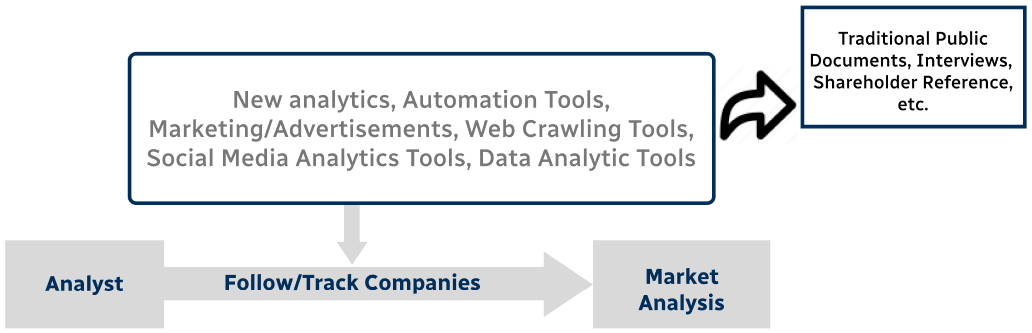
Step 4 - Data Triangulation
Involves using different sources of information in order to increase the validity of a study
These sources are likely to be stakeholders in a program - participants, other researchers, program staff, other community members, and so on.
Then we put all data in single framework & apply various statistical tools to find out the dynamic on the market.
During the analysis stage, feedback from the stakeholder groups would be compared to determine areas of agreement as well as areas of divergence


