



Key Insights
The Latin America Biopesticides Market is poised for significant expansion, driven by a growing demand for sustainable agricultural practices and increasing awareness of the environmental and health benefits of biological pest control. With an estimated market size of USD 1.85 billion in 2025, the region is projected to witness a robust Compound Annual Growth Rate (CAGR) of 13.8% through 2033. This impressive growth trajectory is fueled by several key factors, including supportive government initiatives promoting organic farming, a rising preference among consumers for pesticide-free produce, and the inherent advantages of biopesticides such as reduced toxicity and improved soil health. The imperative to address the detrimental effects of synthetic pesticides on ecosystems and human health further accelerates the adoption of biological alternatives. This shift is particularly pronounced in major agricultural economies like Brazil and Argentina, where the intensification of farming activities necessitates more eco-friendly solutions to maintain productivity while safeguarding the environment. The market's expansion will be supported by advancements in research and development, leading to more effective and diverse biopesticide formulations tailored to specific regional pest challenges.

Latin America Biopesticides Industry Market Size (In Billion)

The Latin America Biopesticides Market is characterized by a dynamic interplay of drivers and emerging trends, alongside specific market restraints that the industry is actively working to overcome. Key drivers include the increasing demand for organic produce, stricter regulations on chemical pesticide usage, and a growing understanding of the long-term benefits of biopesticides for soil health and biodiversity. The segment analysis reveals robust opportunities in production, consumption, and international trade, with both import and export markets showing significant potential for growth. Price trends are expected to stabilize as production scales increase and technological advancements reduce manufacturing costs. While the market enjoys strong growth prospects, challenges such as the relatively higher cost of some biopesticides compared to conventional alternatives, limited shelf-life, and the need for specialized knowledge in application can act as restraints. However, ongoing innovations in formulation, delivery systems, and integrated pest management (IPM) strategies are progressively mitigating these challenges, paving the way for wider market penetration across various crop types and farming scales in Latin America.

Latin America Biopesticides Industry Company Market Share

Latin America Biopesticides Industry: Comprehensive Market Analysis and Forecast (2019-2033)
This in-depth report provides a detailed analysis of the Latin America biopesticides industry, offering actionable insights and strategic recommendations for stakeholders. The study covers a comprehensive period from 2019 to 2033, with 2025 serving as the base and estimated year. We meticulously examine production and consumption patterns, import and export dynamics, price trends, and significant industry developments, incorporating a wealth of data to support our findings. Leading players like Corteva Agriscience, American Vanguard Corporation, Bayer CropScience AG, BASF SE, and Koppert Biological Systems are thoroughly profiled.
Latin America Biopesticides Industry Market Structure & Competitive Dynamics
The Latin America biopesticides industry is characterized by a moderately concentrated market structure, with a growing number of both established multinational corporations and emerging regional players vying for market share. Innovation ecosystems are steadily maturing, driven by increased investment in research and development and a growing awareness of sustainable agriculture. Regulatory frameworks across Latin America are evolving, with some nations actively promoting biopesticide adoption through supportive policies, while others present more stringent approval processes. Product substitutes, primarily conventional chemical pesticides, continue to pose a competitive challenge, though the demand for safer, environmentally friendly alternatives is on the rise. End-user trends are shifting towards integrated pest management (IPM) strategies, with farmers increasingly recognizing the benefits of biopesticides in crop protection and soil health. Mergers and acquisitions (M&A) activities, while not yet at a highly aggressive pace, are anticipated to increase as companies seek to consolidate their market positions and expand their product portfolios. M&A deal values are expected to rise as strategic acquisitions become more prevalent to gain access to advanced technologies and established distribution networks.
Latin America Biopesticides Industry Industry Trends & Insights
The Latin America biopesticides industry is experiencing robust growth, propelled by a confluence of powerful market drivers, technological disruptions, evolving consumer preferences, and dynamic competitive landscapes. The rising global demand for organic and sustainably produced food is directly translating into increased adoption of biopesticides across the region, particularly in key agricultural economies like Brazil, Mexico, and Argentina. Government initiatives and supportive regulatory environments in several Latin American countries are actively encouraging the shift away from synthetic pesticides, creating fertile ground for biopesticide market penetration. Furthermore, increasing consumer awareness regarding the health and environmental impacts of chemical residues on food is creating a significant pull for biopesticide-treated produce.
Technological advancements in biotechnology, including the discovery and development of novel microbial strains and botanical extracts with potent pest control capabilities, are revolutionizing the biopesticides market. Companies are investing heavily in research and development to enhance the efficacy, shelf-life, and application methods of their biopesticide formulations, making them more competitive with conventional alternatives. The forecast CAGR for the Latin America biopesticides market is robust, estimated at approximately 15% to 20% over the forecast period. Market penetration of biopesticides, currently at around 5-10% of the total pesticide market in some segments, is projected to expand significantly, reaching upwards of 20-25% in mature markets by 2033. The growing incidence of pest resistance to conventional chemicals also necessitates the exploration and adoption of alternative pest management solutions, further fueling the biopesticides market.
Dominant Markets & Segments in Latin America Biopesticides Industry
Production Analysis: Brazil stands out as the dominant market in biopesticide production within Latin America, driven by its extensive agricultural sector and supportive governmental policies promoting sustainable farming practices. The country's significant investment in agricultural research and development, coupled with a strong base of domestic biopesticide manufacturers, underpins its leadership.
- Key Drivers for Brazil's Dominance:
- Expansive agricultural land and diverse crop production.
- Government incentives for organic and sustainable agriculture.
- Presence of leading biopesticide research institutions.
- Growing domestic demand for biopesticide solutions.
Consumption Analysis: Similar to production, Brazil also leads in biopesticide consumption, reflecting its status as a major agricultural producer and exporter. Argentina and Mexico follow closely, with increasing adoption rates driven by export market demands for residue-free produce and growing domestic awareness.
- Key Drivers for Consumption:
- Demand for residue-free agricultural products in international markets.
- Increasing awareness of environmental and health benefits.
- Effectiveness of biopesticides in managing specific regional pests.
- Expansion of organic farming practices.
Import Market Analysis (Value & Volume): Mexico and Colombia represent significant import markets for biopesticides. These countries often import specialized biopesticide formulations and active ingredients that may not be readily available domestically, particularly those tailored for specific high-value crops or unique pest challenges. The import market value is projected to reach over $1.5 billion by 2033.
- Key Drivers for Imports:
- Need for advanced or specialized biopesticide products.
- Gaps in domestic production capabilities for certain formulations.
- Influence of international agricultural technology trends.
Export Market Analysis (Value & Volume): Brazil is the leading exporter of biopesticides from Latin America, capitalizing on its production capabilities and the global demand for its agricultural commodities. Argentina also plays a notable role in exporting biopesticide products and technologies to neighboring countries. The export market value is expected to surpass $1.2 billion by 2033.
- Key Drivers for Exports:
- Cost-effective production of biopesticides.
- Competitive pricing strategies.
- Established trade relationships with international markets.
Price Trend Analysis: The price trend for biopesticides in Latin America is generally characterized by a slight premium over conventional chemical pesticides, reflecting the higher research and development costs and specialized production processes. However, this premium is narrowing as production scales increase and technological advancements improve efficiency. The overall market value is estimated to reach over $4 billion by 2033.
- Key Drivers for Price Trends:
- Cost of raw materials and active ingredient production.
- Research and development investment.
- Economies of scale in manufacturing.
- Regulatory compliance costs.
- Market competition.
Latin America Biopesticides Industry Product Innovations
Product innovations in the Latin America biopesticides industry are primarily focused on developing more effective, broad-spectrum, and user-friendly formulations. Key advancements include the commercialization of novel microbial agents (bacteria, fungi, viruses), botanical extracts with enhanced efficacy against specific pests, and pheromone-based mating disruption products. Companies are also investing in improving the shelf-life and stability of biopesticides, crucial for widespread adoption. The development of integrated bio-solutions, combining different biopesticide modes of action, and the incorporation of digital technologies for precision application are also gaining traction, offering competitive advantages in terms of efficacy and cost-effectiveness.
Report Segmentation & Scope
This report segments the Latin America biopesticides industry across Production Analysis, Consumption Analysis, Import Market Analysis (Value & Volume), Export Market Analysis (Value & Volume), and Price Trend Analysis. The Production Analysis segment, valued at over $1 billion in 2025, is projected to grow at a CAGR of approximately 17%. The Consumption Analysis segment, also exceeding $1 billion in 2025, is expected to expand at a similar CAGR, driven by increasing demand for sustainable agricultural inputs. The Import Market Analysis, valued at over $1.5 billion by 2033, will witness steady growth, while the Export Market Analysis is forecast to reach over $1.2 billion by 2033, driven by Brazil's strong agricultural trade. The Price Trend Analysis will detail market dynamics and competitive landscapes influencing pricing strategies.
Key Drivers of Latin America Biopesticides Industry Growth
The Latin America biopesticides industry's growth is propelled by a combination of compelling factors. Growing global and regional consumer demand for organic and sustainably produced food is a primary driver, compelling farmers to seek safer crop protection solutions. Supportive government policies and regulatory frameworks in key agricultural nations are actively encouraging the adoption of biopesticides by offering incentives and streamlining approval processes, fostering a more conducive market environment. Escalating concerns regarding the environmental and health impacts of conventional chemical pesticides are further fueling the demand for eco-friendly alternatives. Additionally, the increasing incidence of pest resistance to traditional chemical treatments necessitates the exploration and integration of biopesticides into integrated pest management (IPM) strategies.
Challenges in the Latin America Biopesticides Industry Sector
Despite the promising growth trajectory, the Latin America biopesticides industry faces several significant challenges. Regulatory hurdles and the often lengthy and complex approval processes for new biopesticide products in various countries can impede market entry and slow down innovation. Supply chain issues, including the availability of consistent raw materials and the logistical challenges of distributing temperature-sensitive biological products across vast geographical areas, can impact product availability and cost-effectiveness. Moreover, the competitive pressure from established and often cheaper conventional chemical pesticides remains a significant barrier, requiring continuous efforts in farmer education and demonstration of the economic and environmental benefits of biopesticides. The perceived higher upfront cost of some biopesticides compared to conventional options can also deter adoption, particularly for smallholder farmers.
Leading Players in the Latin America Biopesticides Industry Market
- Corteva Agriscience
- American Vanguard Corporation
- Andermatt Biocontrol
- Valent Biosciences Corporation
- Marrone Bio Innovations
- Bayer CropScience AG
- Koppert Biological Systems
- Camson Bio Technologies Ltd
- BASF SE
Key Developments in Latin America Biopesticides Industry Sector
- 2023: Several Latin American countries, including Brazil and Mexico, introduced new policies and incentives to promote the use of biopesticides, aiming to reduce reliance on chemical inputs.
- 2023: Corteva Agriscience expanded its biopesticide portfolio with new product launches tailored for Latin American crops, focusing on fungal and bacterial diseases.
- 2024: Bayer CropScience AG announced significant investments in R&D for novel biopesticide formulations to address evolving pest resistance challenges in the region.
- 2024: Koppert Biological Systems intensified its focus on biological crop protection solutions in key Latin American markets, emphasizing integrated pest management strategies.
- 2024: Marrone Bio Innovations (now part of Bioceres) continued to expand its presence in Latin America, leveraging its portfolio of bio-based crop protection and plant health products.
- 2024: Andermatt Biocontrol strengthened its distribution networks in several South American countries, making its biopesticide solutions more accessible to local farmers.
Strategic Latin America Biopesticides Industry Market Outlook
The strategic outlook for the Latin America biopesticides industry is exceptionally bright, characterized by strong growth accelerators and significant future market potential. The ongoing global shift towards sustainable agriculture and increasing consumer demand for organic produce will continue to drive the adoption of biopesticides. Strategic opportunities lie in developing localized formulations tailored to specific regional pest pressures and crop types, investing in farmer education and technical support to overcome adoption barriers, and leveraging digital technologies for precision application and enhanced efficacy. Furthermore, collaborations between research institutions, biopesticide manufacturers, and agricultural cooperatives will be crucial for fostering innovation and expanding market reach. The proactive development of supportive regulatory frameworks across the region will further unlock the industry's full potential, positioning Latin America as a leading global hub for biopesticide production and consumption.
Latin America Biopesticides Industry Segmentation
- 1. Production Analysis
- 2. Consumption Analysis
- 3. Import Market Analysis (Value & Volume)
- 4. Export Market Analysis (Value & Volume)
- 5. Price Trend Analysis
Latin America Biopesticides Industry Segmentation By Geography
-
1. Latin America
- 1.1. Brazil
- 1.2. Argentina
- 1.3. Chile
- 1.4. Colombia
- 1.5. Mexico
- 1.6. Peru
- 1.7. Venezuela
- 1.8. Ecuador
- 1.9. Bolivia
- 1.10. Paraguay

Latin America Biopesticides Industry Regional Market Share

Geographic Coverage of Latin America Biopesticides Industry
Latin America Biopesticides Industry REPORT HIGHLIGHTS
| Aspects | Details |
|---|---|
| Study Period | 2020-2034 |
| Base Year | 2025 |
| Estimated Year | 2026 |
| Forecast Period | 2026-2034 |
| Historical Period | 2020-2025 |
| Growth Rate | CAGR of 13.8% from 2020-2034 |
| Segmentation |
|
Table of Contents
- 1. Introduction
- 1.1. Research Scope
- 1.2. Market Segmentation
- 1.3. Research Methodology
- 1.4. Definitions and Assumptions
- 2. Executive Summary
- 2.1. Introduction
- 3. Market Dynamics
- 3.1. Introduction
- 3.2. Market Drivers
- 3.2.1. Declining Labour Availability and Rising Cost of Farm Labour; Rapid Technological Advancements by Key Players
- 3.3. Market Restrains
- 3.3.1. High Cost of Agricultural Machinery and Repair; Data Privacy Concerns in Modern Farming
- 3.4. Market Trends
- 3.4.1. Adoption of Organic Farming
- 4. Market Factor Analysis
- 4.1. Porters Five Forces
- 4.2. Supply/Value Chain
- 4.3. PESTEL analysis
- 4.4. Market Entropy
- 4.5. Patent/Trademark Analysis
- 5. Latin America Biopesticides Industry Analysis, Insights and Forecast, 2020-2032
- 5.1. Market Analysis, Insights and Forecast - by Production Analysis
- 5.2. Market Analysis, Insights and Forecast - by Consumption Analysis
- 5.3. Market Analysis, Insights and Forecast - by Import Market Analysis (Value & Volume)
- 5.4. Market Analysis, Insights and Forecast - by Export Market Analysis (Value & Volume)
- 5.5. Market Analysis, Insights and Forecast - by Price Trend Analysis
- 5.6. Market Analysis, Insights and Forecast - by Region
- 5.6.1. Latin America
- 5.1. Market Analysis, Insights and Forecast - by Production Analysis
- 6. Competitive Analysis
- 6.1. Market Share Analysis 2025
- 6.2. Company Profiles
- 6.2.1 Corteva Agriscienc
- 6.2.1.1. Overview
- 6.2.1.2. Products
- 6.2.1.3. SWOT Analysis
- 6.2.1.4. Recent Developments
- 6.2.1.5. Financials (Based on Availability)
- 6.2.2 American Vanguard Corporation
- 6.2.2.1. Overview
- 6.2.2.2. Products
- 6.2.2.3. SWOT Analysis
- 6.2.2.4. Recent Developments
- 6.2.2.5. Financials (Based on Availability)
- 6.2.3 Andermatt Biocontrol
- 6.2.3.1. Overview
- 6.2.3.2. Products
- 6.2.3.3. SWOT Analysis
- 6.2.3.4. Recent Developments
- 6.2.3.5. Financials (Based on Availability)
- 6.2.4 Valent Biosciences Corporation
- 6.2.4.1. Overview
- 6.2.4.2. Products
- 6.2.4.3. SWOT Analysis
- 6.2.4.4. Recent Developments
- 6.2.4.5. Financials (Based on Availability)
- 6.2.5 Marrone Bio Innovations
- 6.2.5.1. Overview
- 6.2.5.2. Products
- 6.2.5.3. SWOT Analysis
- 6.2.5.4. Recent Developments
- 6.2.5.5. Financials (Based on Availability)
- 6.2.6 Bayer CropScience AG
- 6.2.6.1. Overview
- 6.2.6.2. Products
- 6.2.6.3. SWOT Analysis
- 6.2.6.4. Recent Developments
- 6.2.6.5. Financials (Based on Availability)
- 6.2.7 Koppert Biological Systems
- 6.2.7.1. Overview
- 6.2.7.2. Products
- 6.2.7.3. SWOT Analysis
- 6.2.7.4. Recent Developments
- 6.2.7.5. Financials (Based on Availability)
- 6.2.8 Camson Bio Technologies Ltd
- 6.2.8.1. Overview
- 6.2.8.2. Products
- 6.2.8.3. SWOT Analysis
- 6.2.8.4. Recent Developments
- 6.2.8.5. Financials (Based on Availability)
- 6.2.9 BASF SE
- 6.2.9.1. Overview
- 6.2.9.2. Products
- 6.2.9.3. SWOT Analysis
- 6.2.9.4. Recent Developments
- 6.2.9.5. Financials (Based on Availability)
- 6.2.1 Corteva Agriscienc
List of Figures
- Figure 1: Latin America Biopesticides Industry Revenue Breakdown (undefined, %) by Product 2025 & 2033
- Figure 2: Latin America Biopesticides Industry Share (%) by Company 2025
List of Tables
- Table 1: Latin America Biopesticides Industry Revenue undefined Forecast, by Production Analysis 2020 & 2033
- Table 2: Latin America Biopesticides Industry Revenue undefined Forecast, by Consumption Analysis 2020 & 2033
- Table 3: Latin America Biopesticides Industry Revenue undefined Forecast, by Import Market Analysis (Value & Volume) 2020 & 2033
- Table 4: Latin America Biopesticides Industry Revenue undefined Forecast, by Export Market Analysis (Value & Volume) 2020 & 2033
- Table 5: Latin America Biopesticides Industry Revenue undefined Forecast, by Price Trend Analysis 2020 & 2033
- Table 6: Latin America Biopesticides Industry Revenue undefined Forecast, by Region 2020 & 2033
- Table 7: Latin America Biopesticides Industry Revenue undefined Forecast, by Production Analysis 2020 & 2033
- Table 8: Latin America Biopesticides Industry Revenue undefined Forecast, by Consumption Analysis 2020 & 2033
- Table 9: Latin America Biopesticides Industry Revenue undefined Forecast, by Import Market Analysis (Value & Volume) 2020 & 2033
- Table 10: Latin America Biopesticides Industry Revenue undefined Forecast, by Export Market Analysis (Value & Volume) 2020 & 2033
- Table 11: Latin America Biopesticides Industry Revenue undefined Forecast, by Price Trend Analysis 2020 & 2033
- Table 12: Latin America Biopesticides Industry Revenue undefined Forecast, by Country 2020 & 2033
- Table 13: Brazil Latin America Biopesticides Industry Revenue (undefined) Forecast, by Application 2020 & 2033
- Table 14: Argentina Latin America Biopesticides Industry Revenue (undefined) Forecast, by Application 2020 & 2033
- Table 15: Chile Latin America Biopesticides Industry Revenue (undefined) Forecast, by Application 2020 & 2033
- Table 16: Colombia Latin America Biopesticides Industry Revenue (undefined) Forecast, by Application 2020 & 2033
- Table 17: Mexico Latin America Biopesticides Industry Revenue (undefined) Forecast, by Application 2020 & 2033
- Table 18: Peru Latin America Biopesticides Industry Revenue (undefined) Forecast, by Application 2020 & 2033
- Table 19: Venezuela Latin America Biopesticides Industry Revenue (undefined) Forecast, by Application 2020 & 2033
- Table 20: Ecuador Latin America Biopesticides Industry Revenue (undefined) Forecast, by Application 2020 & 2033
- Table 21: Bolivia Latin America Biopesticides Industry Revenue (undefined) Forecast, by Application 2020 & 2033
- Table 22: Paraguay Latin America Biopesticides Industry Revenue (undefined) Forecast, by Application 2020 & 2033
Frequently Asked Questions
1. What is the projected Compound Annual Growth Rate (CAGR) of the Latin America Biopesticides Industry?
The projected CAGR is approximately 13.8%.
2. Which companies are prominent players in the Latin America Biopesticides Industry?
Key companies in the market include Corteva Agriscienc, American Vanguard Corporation, Andermatt Biocontrol, Valent Biosciences Corporation, Marrone Bio Innovations, Bayer CropScience AG, Koppert Biological Systems, Camson Bio Technologies Ltd, BASF SE.
3. What are the main segments of the Latin America Biopesticides Industry?
The market segments include Production Analysis, Consumption Analysis, Import Market Analysis (Value & Volume), Export Market Analysis (Value & Volume), Price Trend Analysis.
4. Can you provide details about the market size?
The market size is estimated to be USD XXX N/A as of 2022.
5. What are some drivers contributing to market growth?
Declining Labour Availability and Rising Cost of Farm Labour; Rapid Technological Advancements by Key Players.
6. What are the notable trends driving market growth?
Adoption of Organic Farming.
7. Are there any restraints impacting market growth?
High Cost of Agricultural Machinery and Repair; Data Privacy Concerns in Modern Farming.
8. Can you provide examples of recent developments in the market?
N/A
9. What pricing options are available for accessing the report?
Pricing options include single-user, multi-user, and enterprise licenses priced at USD 3800, USD 4500, and USD 5800 respectively.
10. Is the market size provided in terms of value or volume?
The market size is provided in terms of value, measured in N/A.
11. Are there any specific market keywords associated with the report?
Yes, the market keyword associated with the report is "Latin America Biopesticides Industry," which aids in identifying and referencing the specific market segment covered.
12. How do I determine which pricing option suits my needs best?
The pricing options vary based on user requirements and access needs. Individual users may opt for single-user licenses, while businesses requiring broader access may choose multi-user or enterprise licenses for cost-effective access to the report.
13. Are there any additional resources or data provided in the Latin America Biopesticides Industry report?
While the report offers comprehensive insights, it's advisable to review the specific contents or supplementary materials provided to ascertain if additional resources or data are available.
14. How can I stay updated on further developments or reports in the Latin America Biopesticides Industry?
To stay informed about further developments, trends, and reports in the Latin America Biopesticides Industry, consider subscribing to industry newsletters, following relevant companies and organizations, or regularly checking reputable industry news sources and publications.
Methodology
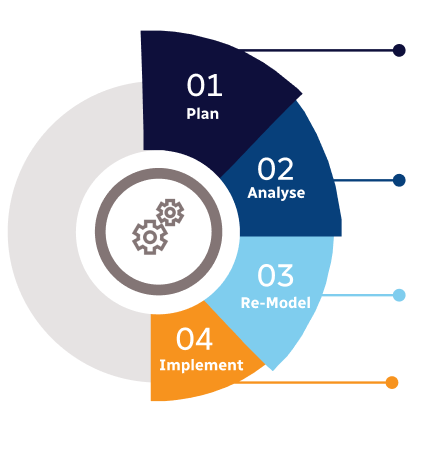
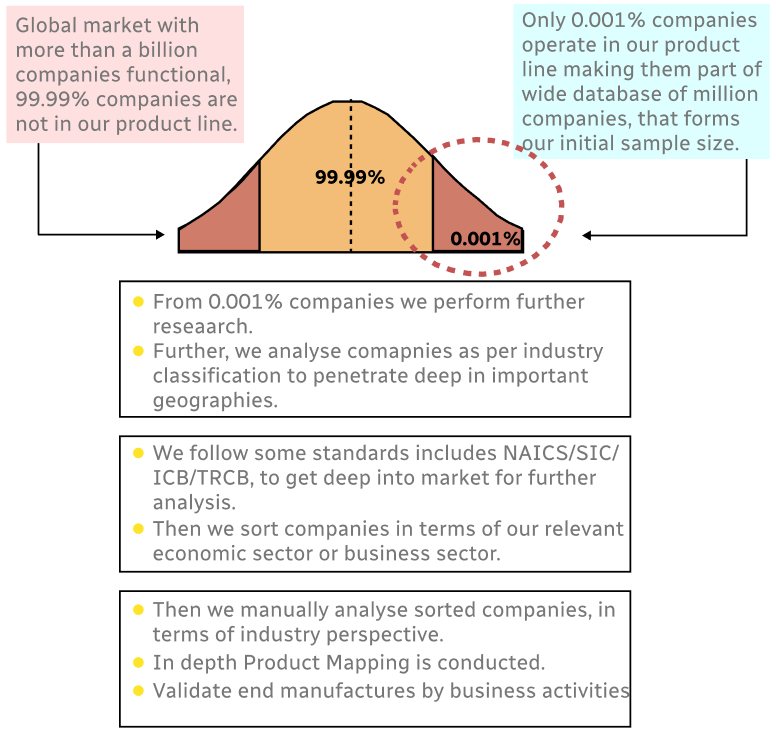
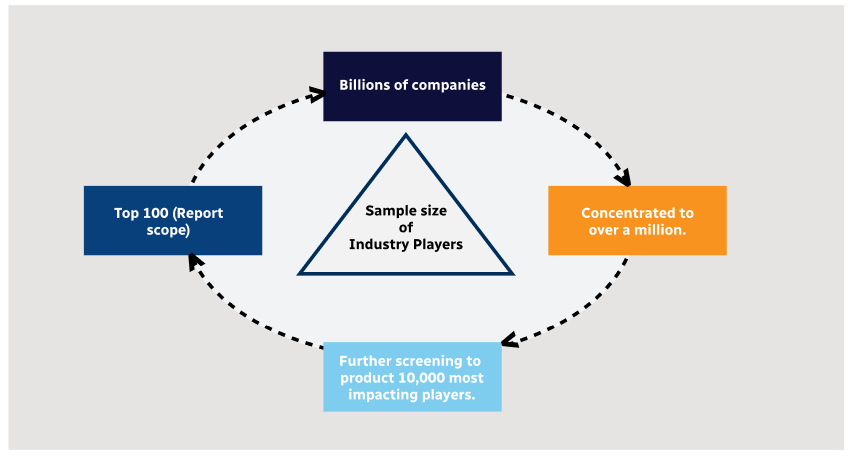
Step 1 - Identification of Relevant Samples Size from Population Database
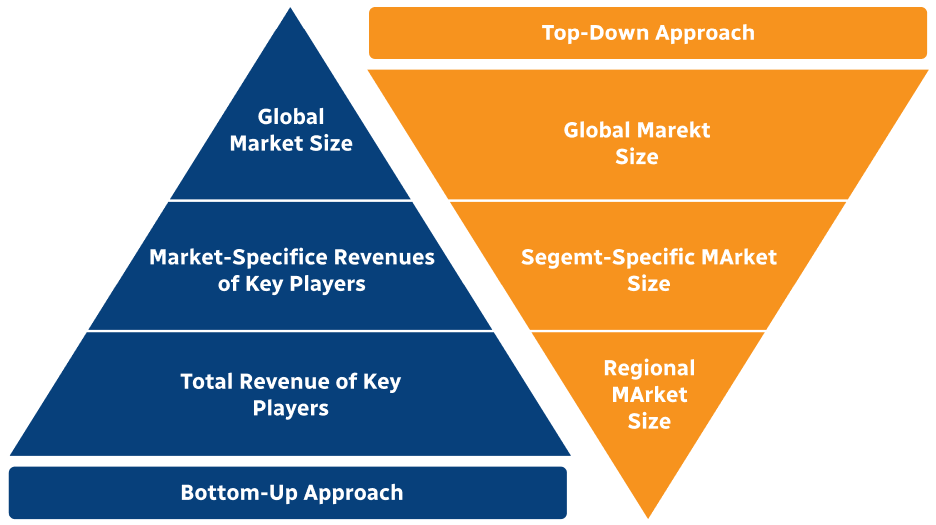
Step 2 - Approaches for Defining Global Market Size (Value, Volume* & Price*)
Note*: In applicable scenarios
Step 3 - Data Sources
Primary Research
- Web Analytics
- Survey Reports
- Research Institute
- Latest Research Reports
- Opinion Leaders
Secondary Research
- Annual Reports
- White Paper
- Latest Press Release
- Industry Association
- Paid Database
- Investor Presentations
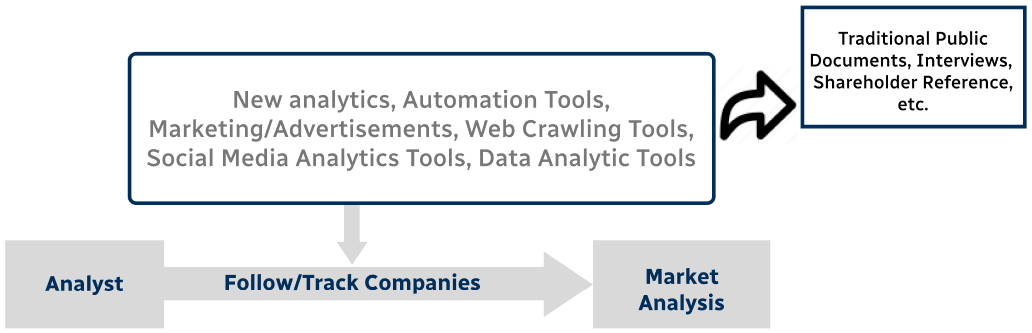
Step 4 - Data Triangulation
Involves using different sources of information in order to increase the validity of a study
These sources are likely to be stakeholders in a program - participants, other researchers, program staff, other community members, and so on.
Then we put all data in single framework & apply various statistical tools to find out the dynamic on the market.
During the analysis stage, feedback from the stakeholder groups would be compared to determine areas of agreement as well as areas of divergence


