



Key Insights
The Indian Office Real Estate industry is poised for exceptional growth, projected to reach an estimated USD 33.41 billion in 2025, with a robust CAGR of 28.50% anticipated throughout the forecast period of 2025-2033. This impressive expansion is primarily driven by a burgeoning economy, increasing foreign direct investment, and the sustained demand from technology, BFSI, and co-working sectors. Major metropolitan hubs like Bengaluru, Hyderabad, and Mumbai are at the forefront of this surge, attracting significant investments and witnessing the development of Grade A office spaces equipped with modern amenities and sustainable features. The government's focus on policy reforms, ease of doing business initiatives, and the rapid expansion of India's IT and startup ecosystem are crucial catalysts for this market's upward trajectory. Furthermore, the adoption of hybrid work models is paradoxically fueling demand for well-designed, collaborative office spaces that offer flexibility and employee well-being.
The market is characterized by several key trends, including a strong emphasis on sustainable development and green buildings, the rise of flexible and co-working spaces catering to diverse business needs, and the increasing integration of smart technologies for enhanced building management and tenant experience. Companies such as Prestige Estate Projects Ltd, Cushman & Wakefield, Oberoi Realty, JLL, and DLF Limited are actively investing in new projects and acquisitions to capitalize on this growth. While the market enjoys significant tailwinds, potential restraints such as evolving regulatory landscapes, fluctuating interest rates impacting investment decisions, and the geographical concentration of demand in Tier-1 cities could pose challenges. However, the overall outlook remains overwhelmingly positive, with continuous innovation and strategic expansion by key players expected to propel the Indian office real estate market to new heights, solidifying its position as a premier investment destination.
India Office Real Estate Industry Market Analysis Report: Trends, Growth, and Investment Outlook (2019-2033)
This comprehensive report delves deep into the dynamic India office real estate market, offering an in-depth analysis of its structure, competitive landscape, and future trajectory. Covering a study period from 2019 to 2033, with a base year of 2025 and a forecast period from 2025 to 2033, this report provides actionable insights for investors, developers, and stakeholders. We examine key industry developments, dominant city markets like Bengaluru, Hyderabad, and Mumbai, and evolving commercial office space trends. Gain a competitive edge with our detailed market segmentation, growth drivers, challenges, and the strategic outlook for the Indian commercial property market.
India Office Real Estate Industry Market Structure & Competitive Dynamics
The Indian office real estate market is characterized by a moderately concentrated structure, with a few large-scale developers and global real estate consultancies holding significant market share. Key players like DLF Limited and Prestige Estate Projects Ltd. command substantial portions of the commercial office space in major metros. Innovation ecosystems are burgeoning, driven by the increasing demand for Grade A office spaces, smart buildings, and flexible workspace solutions. Regulatory frameworks, while evolving, still present a complex landscape for new entrants. Product substitutes, such as co-working spaces and a growing remote work culture, are influencing demand patterns. End-user trends are shifting towards sustainability, employee well-being, and technology integration within office environments. Merger and acquisition (M&A) activities, while not as prevalent as in some mature markets, are strategic, focusing on consolidating portfolios and expanding geographical reach. Estimated M&A deal values are projected to reach xx Million over the forecast period, indicating a consolidation phase. Market share analysis for leading developers will be provided, showcasing their dominance in key Indian office markets.
India Office Real Estate Industry Industry Trends & Insights
The Indian office real estate industry is poised for robust growth, driven by a confluence of factors. The Indian economy's strong fundamentals, increasing foreign direct investment (FDI), and the expansion of the IT/ITeS sector continue to fuel demand for premium commercial office buildings. We project a Compound Annual Growth Rate (CAGR) of approximately xx% for the Indian office real estate market during the forecast period. Technological disruptions, including the adoption of proptech for property management, smart building technologies, and integrated workspace solutions, are reshaping how office spaces are designed, occupied, and managed. Consumer preferences are increasingly tilting towards flexible lease terms, employee-centric designs, and ESG (Environmental, Social, and Governance) compliant buildings. Competitive dynamics are intensifying, with both domestic and international developers vying for market share in prime locations. Market penetration of modern office formats, including co-working and managed spaces, is expected to witness significant growth, estimated to reach xx% by 2033. The sustained demand from burgeoning sectors like technology, financial services, and e-commerce, coupled with government initiatives promoting Ease of Doing Business, will continue to be primary growth accelerators for the Indian office rental market. Furthermore, the evolving hybrid work models are pushing demand for well-equipped, collaborative office environments that offer enhanced employee experiences and attract top talent, thereby sustaining the demand for quality office space in India.
Dominant Markets & Segments in India Office Real Estate Industry
The India office real estate industry is largely dominated by its Tier-1 cities, with Bengaluru, Hyderabad, and Mumbai leading the charge in demand and supply.
- Bengaluru: This tech-centric hub continues to be the undisputed leader in commercial office space absorption.
- Key Drivers: Proliferation of IT/ITeS companies, a vast talent pool, robust startup ecosystem, and supportive state government policies for technology development. Bengaluru consistently reports the highest occupancy rates and rental growth among all Indian cities.
- Hyderabad: Emerging as a strong contender, Hyderabad offers competitive rentals and a burgeoning IT and pharmaceutical sector.
- Key Drivers: Government focus on making Hyderabad an innovation hub, expansion of existing IT corridors, and a lower cost of operations compared to other metros, attracting significant investment from global corporations.
- Mumbai: As India's financial capital, Mumbai maintains its position as a prime market for corporate headquarters and financial institutions.
- Key Drivers: Presence of major BFSI (Banking, Financial Services, and Insurance) companies, multinational corporations, and a well-established business infrastructure. Despite high rentals, its strategic importance ensures sustained demand for premium office spaces.
- Other Cities: Cities like Delhi-NCR (Gurugram), Pune, and Chennai are also significant contributors to the Indian office real estate market, driven by their specific industrial strengths and growing IT/ITES presence. However, their market size and growth trajectory are generally lower compared to the top three metros. The overall dominance of these major urban centers reflects the concentration of economic activity, talent availability, and corporate decision-making hubs within the Indian commercial property landscape.
India Office Real Estate Industry Product Innovations
Product innovations in the Indian office real estate market are increasingly focused on creating sustainable, technology-enabled, and employee-centric workspaces. This includes the integration of smart building technologies for energy efficiency and occupant comfort, the development of flexible and adaptable office layouts to accommodate hybrid work models, and the incorporation of biophilic design principles to enhance employee well-being. Competitive advantages are being gained through certifications like LEED and WELL, attracting tenants with strong ESG commitments. These innovations cater to evolving market demands for modern, efficient, and healthy work environments, solidifying the market's move towards future-ready office spaces in India.
Report Segmentation & Scope
This report segments the India office real estate market across key geographical regions and city clusters.
- Major Cities:
- Bengaluru: This segment analyzes the robust demand and supply dynamics driven by the IT/ITeS sector, including projected market sizes of approximately xx Million square feet and a strong CAGR of xx% for the forecast period.
- Hyderabad: This segment focuses on Hyderabad's emerging status as a corporate hub, detailing its market size (estimated at xx Million square feet) and projected growth of xx%.
- Mumbai: This segment covers the financial capital's premium office market, including its substantial market size (estimated at xx Million square feet) and steady growth predictions of xx%.
- Other Cities: This segment encompasses the significant office markets in Delhi-NCR, Pune, Chennai, and other emerging Tier-2 cities, offering an aggregated market size of xx Million square feet and a projected CAGR of xx%, highlighting their collective contribution to the Indian commercial property market.
Key Drivers of India Office Real Estate Industry Growth
The India office real estate industry is propelled by several key drivers. Economic Growth: India's consistent GDP expansion fuels business expansion and job creation, directly increasing the demand for commercial office space. Technological Advancements: The booming IT and IT-enabled services (ITES) sector, along with the growth of startups, is a primary driver of demand for Grade A office buildings. Government Initiatives: Policies promoting foreign direct investment (FDI) and initiatives like 'Make in India' encourage corporate expansion, necessitating new office spaces. Urbanization: Rapid urbanization across India leads to the development of new commercial hubs and increased demand for office facilities in both established and emerging cities. Foreign Investment: Increasing global interest in the Indian market translates into greater leasing activities by multinational corporations.
Challenges in the India Office Real Estate Industry Sector
Despite its promising growth, the India office real estate industry faces several challenges. Regulatory Hurdles: Navigating complex and evolving regulatory frameworks, including RERA (Real Estate (Regulation and Development) Act) and environmental clearances, can cause project delays and increase costs. Infrastructure Deficiencies: Inadequate public transportation and urban infrastructure in certain micro-markets can impact accessibility and employee commute, affecting office space desirability. Supply Chain Disruptions: Global and domestic supply chain issues can impact construction timelines and material costs. Competitive Pressures: Intense competition among developers, especially in prime locations, can lead to pressure on rental yields and profitability. Hybrid Work Models: The ongoing shift towards hybrid and remote work models presents a long-term challenge to traditional office space absorption, requiring developers to adapt their offerings.
Leading Players in the India Office Real Estate Industry Market
- Prestige Estate Projects Ltd
- Cushman & Wakefield
- HDIL Ltd
- Supertech Limited
- Oberoi Realty
- CBRE Group
- Indiabulls Real Estate
- JLL
- Savills
- DLF Limited
Key Developments in India Office Real Estate Industry Sector
- October 2022: Colliers International, a global real estate consulting firm, announced that the major six cities in India (Bengaluru, Chennai, Delhi-NCR, Hyderabad, Mumbai, and Pune) planned to develop more than 300 million square feet of existing and upcoming commercial office buildings. This indicates a significant expansion of office space in India.
- August 2022: Hines Ltd. (the US-based real estate firm) planned to develop an office building comprising 9 lakh square feet of leasable area in Mumbai. In addition, the company has already completed two commercial projects in Gurugram, comprising 1.4 million square feet. Thus, the company is planning to increase its footprint in India by developing commercial projects, highlighting the growing interest of international players in the Indian commercial property market.
Strategic India Office Real Estate Industry Market Outlook
The strategic outlook for the India office real estate market is highly optimistic, driven by sustainable economic growth and increasing global investment. Future market potential lies in the development of Grade A, ESG-compliant, and technologically advanced office spaces that cater to the evolving needs of multinational corporations and domestic businesses. Strategic opportunities include the expansion into emerging Tier-2 cities with strong economic potential, the development of flexible and co-working solutions, and the adoption of proptech to enhance operational efficiencies and tenant experiences. The continued focus on innovation, sustainability, and employee well-being will be critical for capturing market share and driving long-term value in the Indian commercial real estate sector.
India Office Real Estate Industry Segmentation
-
1. Major Cities
- 1.1. Bengaluru
- 1.2. Hyderabad
- 1.3. Mumbai
- 1.4. Other Cities
India Office Real Estate Industry Segmentation By Geography
- 1. India
India Office Real Estate Industry REPORT HIGHLIGHTS
| Aspects | Details |
|---|---|
| Study Period | 2019-2033 |
| Base Year | 2024 |
| Estimated Year | 2025 |
| Forecast Period | 2025-2033 |
| Historical Period | 2019-2024 |
| Growth Rate | CAGR of 28.50% from 2019-2033 |
| Segmentation |
|
Table of Contents
- 1. Introduction
- 1.1. Research Scope
- 1.2. Market Segmentation
- 1.3. Research Methodology
- 1.4. Definitions and Assumptions
- 2. Executive Summary
- 2.1. Introduction
- 3. Market Dynamics
- 3.1. Introduction
- 3.2. Market Drivers
- 3.2.1. Improvements in Infrastructure and New Development; Population Growth and Demographic Changes
- 3.3. Market Restrains
- 3.3.1. Housing Shortages; Increasing Awareness towards Environmental Issues
- 3.4. Market Trends
- 3.4.1. Demand for Office Space Increased in 2021
- 4. Market Factor Analysis
- 4.1. Porters Five Forces
- 4.2. Supply/Value Chain
- 4.3. PESTEL analysis
- 4.4. Market Entropy
- 4.5. Patent/Trademark Analysis
- 5. India Office Real Estate Industry Analysis, Insights and Forecast, 2019-2031
- 5.1. Market Analysis, Insights and Forecast - by Major Cities
- 5.1.1. Bengaluru
- 5.1.2. Hyderabad
- 5.1.3. Mumbai
- 5.1.4. Other Cities
- 5.2. Market Analysis, Insights and Forecast - by Region
- 5.2.1. India
- 5.1. Market Analysis, Insights and Forecast - by Major Cities
- 6. North India India Office Real Estate Industry Analysis, Insights and Forecast, 2019-2031
- 7. South India India Office Real Estate Industry Analysis, Insights and Forecast, 2019-2031
- 8. East India India Office Real Estate Industry Analysis, Insights and Forecast, 2019-2031
- 9. West India India Office Real Estate Industry Analysis, Insights and Forecast, 2019-2031
- 10. Competitive Analysis
- 10.1. Market Share Analysis 2024
- 10.2. Company Profiles
- 10.2.1 Prestige Estate Projects Ltd
- 10.2.1.1. Overview
- 10.2.1.2. Products
- 10.2.1.3. SWOT Analysis
- 10.2.1.4. Recent Developments
- 10.2.1.5. Financials (Based on Availability)
- 10.2.2 Cushman & Wakefield
- 10.2.2.1. Overview
- 10.2.2.2. Products
- 10.2.2.3. SWOT Analysis
- 10.2.2.4. Recent Developments
- 10.2.2.5. Financials (Based on Availability)
- 10.2.3 HDIL Lt
- 10.2.3.1. Overview
- 10.2.3.2. Products
- 10.2.3.3. SWOT Analysis
- 10.2.3.4. Recent Developments
- 10.2.3.5. Financials (Based on Availability)
- 10.2.4 Supertech Limited
- 10.2.4.1. Overview
- 10.2.4.2. Products
- 10.2.4.3. SWOT Analysis
- 10.2.4.4. Recent Developments
- 10.2.4.5. Financials (Based on Availability)
- 10.2.5 Oberoi Realty
- 10.2.5.1. Overview
- 10.2.5.2. Products
- 10.2.5.3. SWOT Analysis
- 10.2.5.4. Recent Developments
- 10.2.5.5. Financials (Based on Availability)
- 10.2.6 CBRE Group
- 10.2.6.1. Overview
- 10.2.6.2. Products
- 10.2.6.3. SWOT Analysis
- 10.2.6.4. Recent Developments
- 10.2.6.5. Financials (Based on Availability)
- 10.2.7 Indiabulls Real Estate
- 10.2.7.1. Overview
- 10.2.7.2. Products
- 10.2.7.3. SWOT Analysis
- 10.2.7.4. Recent Developments
- 10.2.7.5. Financials (Based on Availability)
- 10.2.8 JLL
- 10.2.8.1. Overview
- 10.2.8.2. Products
- 10.2.8.3. SWOT Analysis
- 10.2.8.4. Recent Developments
- 10.2.8.5. Financials (Based on Availability)
- 10.2.9 Savills
- 10.2.9.1. Overview
- 10.2.9.2. Products
- 10.2.9.3. SWOT Analysis
- 10.2.9.4. Recent Developments
- 10.2.9.5. Financials (Based on Availability)
- 10.2.10 DLF Limited
- 10.2.10.1. Overview
- 10.2.10.2. Products
- 10.2.10.3. SWOT Analysis
- 10.2.10.4. Recent Developments
- 10.2.10.5. Financials (Based on Availability)
- 10.2.1 Prestige Estate Projects Ltd
List of Figures
- Figure 1: India Office Real Estate Industry Revenue Breakdown (Million, %) by Product 2024 & 2032
- Figure 2: India Office Real Estate Industry Share (%) by Company 2024
List of Tables
- Table 1: India Office Real Estate Industry Revenue Million Forecast, by Region 2019 & 2032
- Table 2: India Office Real Estate Industry Revenue Million Forecast, by Major Cities 2019 & 2032
- Table 3: India Office Real Estate Industry Revenue Million Forecast, by Region 2019 & 2032
- Table 4: India Office Real Estate Industry Revenue Million Forecast, by Country 2019 & 2032
- Table 5: North India India Office Real Estate Industry Revenue (Million) Forecast, by Application 2019 & 2032
- Table 6: South India India Office Real Estate Industry Revenue (Million) Forecast, by Application 2019 & 2032
- Table 7: East India India Office Real Estate Industry Revenue (Million) Forecast, by Application 2019 & 2032
- Table 8: West India India Office Real Estate Industry Revenue (Million) Forecast, by Application 2019 & 2032
- Table 9: India Office Real Estate Industry Revenue Million Forecast, by Major Cities 2019 & 2032
- Table 10: India Office Real Estate Industry Revenue Million Forecast, by Country 2019 & 2032
Frequently Asked Questions
1. What is the projected Compound Annual Growth Rate (CAGR) of the India Office Real Estate Industry?
The projected CAGR is approximately 28.50%.
2. Which companies are prominent players in the India Office Real Estate Industry?
Key companies in the market include Prestige Estate Projects Ltd, Cushman & Wakefield, HDIL Lt, Supertech Limited, Oberoi Realty, CBRE Group, Indiabulls Real Estate, JLL, Savills, DLF Limited.
3. What are the main segments of the India Office Real Estate Industry?
The market segments include Major Cities.
4. Can you provide details about the market size?
The market size is estimated to be USD 33.41 Million as of 2022.
5. What are some drivers contributing to market growth?
Improvements in Infrastructure and New Development; Population Growth and Demographic Changes.
6. What are the notable trends driving market growth?
Demand for Office Space Increased in 2021.
7. Are there any restraints impacting market growth?
Housing Shortages; Increasing Awareness towards Environmental Issues.
8. Can you provide examples of recent developments in the market?
October 2022: Colliers International, a global real estate consulting firm, announced that the major six cities in India (Bengaluru, Chennai, Delhi-NCR, Hyderabad, Mumbai, and Pune) planned to develop more than 300 million square feet of existing and upcoming commercial office buildings.
9. What pricing options are available for accessing the report?
Pricing options include single-user, multi-user, and enterprise licenses priced at USD 3800, USD 4500, and USD 5800 respectively.
10. Is the market size provided in terms of value or volume?
The market size is provided in terms of value, measured in Million.
11. Are there any specific market keywords associated with the report?
Yes, the market keyword associated with the report is "India Office Real Estate Industry," which aids in identifying and referencing the specific market segment covered.
12. How do I determine which pricing option suits my needs best?
The pricing options vary based on user requirements and access needs. Individual users may opt for single-user licenses, while businesses requiring broader access may choose multi-user or enterprise licenses for cost-effective access to the report.
13. Are there any additional resources or data provided in the India Office Real Estate Industry report?
While the report offers comprehensive insights, it's advisable to review the specific contents or supplementary materials provided to ascertain if additional resources or data are available.
14. How can I stay updated on further developments or reports in the India Office Real Estate Industry?
To stay informed about further developments, trends, and reports in the India Office Real Estate Industry, consider subscribing to industry newsletters, following relevant companies and organizations, or regularly checking reputable industry news sources and publications.
Methodology
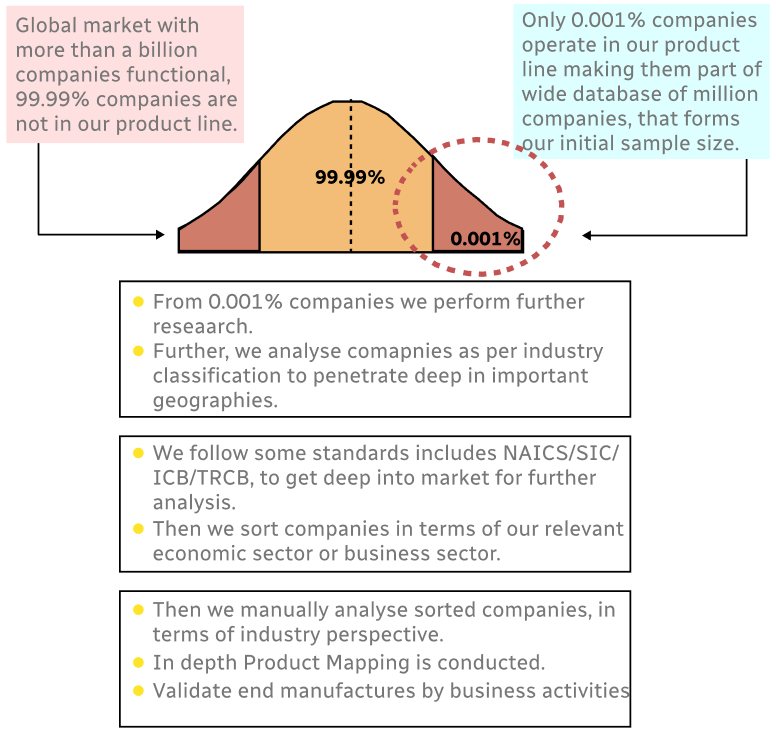
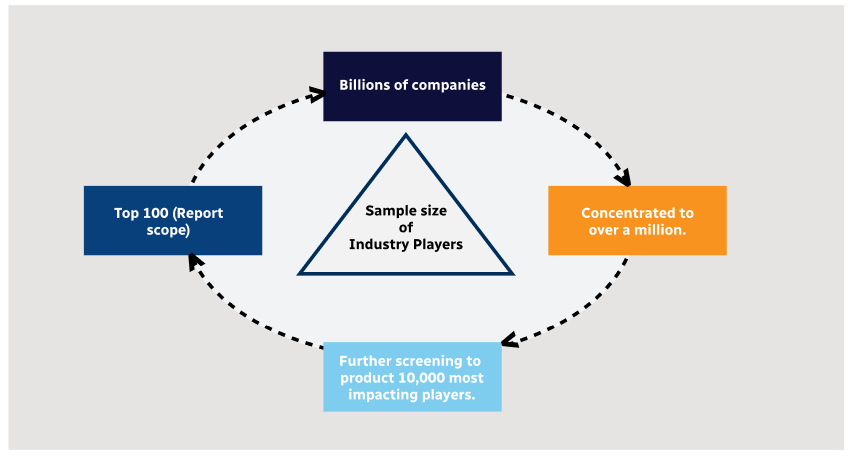
Step 1 - Identification of Relevant Samples Size from Population Database
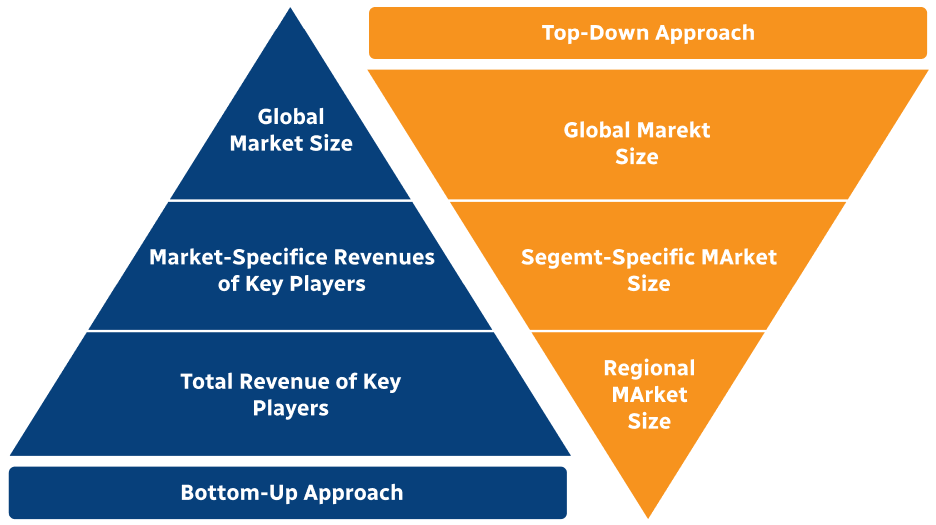
Step 2 - Approaches for Defining Global Market Size (Value, Volume* & Price*)
Note*: In applicable scenarios
Step 3 - Data Sources
Primary Research
- Web Analytics
- Survey Reports
- Research Institute
- Latest Research Reports
- Opinion Leaders
Secondary Research
- Annual Reports
- White Paper
- Latest Press Release
- Industry Association
- Paid Database
- Investor Presentations
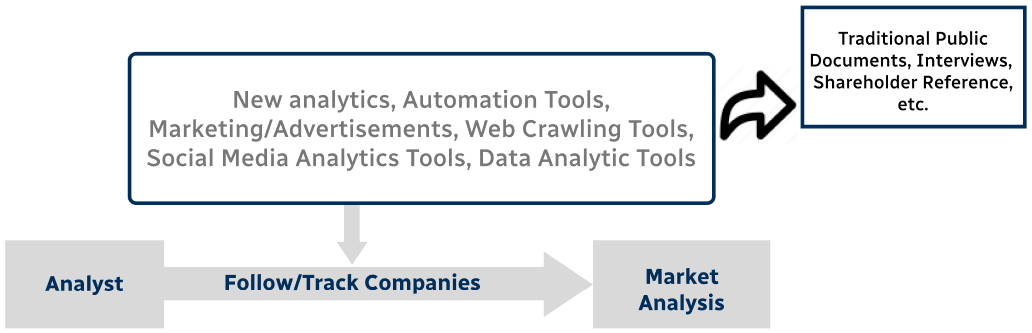
Step 4 - Data Triangulation
Involves using different sources of information in order to increase the validity of a study
These sources are likely to be stakeholders in a program - participants, other researchers, program staff, other community members, and so on.
Then we put all data in single framework & apply various statistical tools to find out the dynamic on the market.
During the analysis stage, feedback from the stakeholder groups would be compared to determine areas of agreement as well as areas of divergence


