


Key Insights
The global particle counters market is poised for steady expansion, projected to reach an estimated USD 183 million in 2025, growing at a Compound Annual Growth Rate (CAGR) of 3.7% through 2033. This growth is primarily fueled by the increasing stringency of contamination control regulations across diverse industries, including pharmaceuticals, semiconductor manufacturing, and food and beverage production. The demand for precise and real-time monitoring of airborne and liquid particulates is paramount for ensuring product quality, patient safety, and operational efficiency. Advancements in sensor technology, miniaturization, and IoT integration are further driving innovation, leading to more sophisticated and user-friendly particle counting solutions. The market is witnessing a significant uptake in handheld and portable devices, offering flexibility and on-site analysis capabilities, which are becoming indispensable tools for quality control and environmental monitoring professionals.

Global Particle Counters Market Market Size (In Million)

Key drivers underpinning this market trajectory include the escalating awareness of airborne particulate matter's impact on human health and industrial processes, alongside the growing need for maintaining sterile environments in healthcare settings. The semiconductor industry's persistent pursuit of ultra-clean manufacturing environments to produce increasingly complex microchips also represents a substantial growth avenue. While the market benefits from these positive trends, certain restraints, such as the high initial cost of advanced particle counting systems and the need for specialized training for effective operation, might temper growth in some segments. However, the overarching necessity for stringent quality assurance and regulatory compliance is expected to outweigh these challenges, ensuring sustained market development. The Asia Pacific region, particularly China and India, is anticipated to emerge as a significant growth hub due to rapid industrialization and increasing investments in quality control infrastructure.

Global Particle Counters Market Company Market Share
This detailed report offers an in-depth analysis of the global particle counters market, a critical sector supporting industries from pharmaceuticals and semiconductor manufacturing to aerospace and environmental monitoring. With a study period spanning from 2019 to 2033, a base and estimated year of 2025, and a forecast period from 2025 to 2033, this report provides unparalleled insights into market dynamics, growth drivers, challenges, and key players. We dissect the particle counter market size, particle counter market share, and particle counter market trends, offering actionable intelligence for stakeholders. This comprehensive particle counter industry report explores the intricate landscape of airborne particle counters and liquid particle counters, their diverse applications in cleanroom monitoring and contamination monitoring, and the evolving modalities including handheld particle counters and portable particle counters.
Global Particle Counters Market Market Structure & Competitive Dynamics
The global particle counters market exhibits a moderately consolidated structure, characterized by the presence of established global players and a growing number of specialized regional manufacturers. Market concentration is influenced by proprietary technologies, stringent regulatory compliance, and the capital-intensive nature of advanced particle counting equipment. Innovation plays a pivotal role, with companies continuously investing in R&D to develop more sensitive, accurate, and user-friendly particle counters. Key areas of innovation include miniaturization for portable particle counters, enhanced data integrity features for cleanroom monitoring, and improved detection limits for trace contaminants. The regulatory framework, particularly within pharmaceutical manufacturing (e.g., FDA, EMA guidelines) and semiconductor fabrication, significantly shapes product development and market entry. Product substitutes, while limited in precision for critical applications, include manual microscopic particle analysis. End-user trends indicate a growing demand for real-time monitoring solutions, automation, and cloud-based data management for contamination monitoring. Mergers and acquisitions (M&A) are strategic tools for market expansion and technology acquisition, with recent M&A deal values ranging from tens of millions to hundreds of millions of dollars, reinforcing market consolidation. The market share of leading players like Fortive (Setra Systems) and Spectris (Particle Measuring Systems) is substantial, driven by their comprehensive product portfolios and established global distribution networks.
- Market Concentration: Moderate to High among top players.
- Innovation Ecosystem: Driven by advancements in sensor technology, data analytics, and miniaturization.
- Regulatory Frameworks: Strict compliance with GMP, ISO standards, and industry-specific regulations.
- Product Substitutes: Limited for high-precision applications; manual methods are less efficient.
- End-User Trends: Increased demand for IoT-enabled devices, automation, and real-time data.
- M&A Activities: Strategic for market expansion and acquiring specialized technologies.
Global Particle Counters Market Industry Trends & Insights
The global particle counters market is experiencing robust growth, propelled by an escalating demand for stringent contamination control across a multitude of industries. The estimated market size is projected to reach xx million dollars by 2025 and is anticipated to expand at a Compound Annual Growth Rate (CAGR) of approximately xx% from 2025 to 2033. This growth is underpinned by several key factors. Firstly, the pharmaceutical and biotechnology sectors are intensifying their focus on maintaining sterile environments and ensuring the quality of injectable drugs, biologics, and vaccines, thereby driving significant demand for airborne particle counters and liquid particle counters for cleanroom monitoring and process contamination monitoring. The semiconductor industry, with its ever-shrinking chip geometries, necessitates ultra-clean manufacturing environments to prevent defects, making particle counting technology indispensable. Furthermore, the growing awareness of air quality and the health implications of airborne particulate matter are stimulating the use of particle counters in environmental monitoring and industrial hygiene applications.
Technological disruptions are at the forefront of market evolution. The development of smaller, lighter, and more connected portable particle counters is enhancing their utility in diverse field applications. Advancements in laser scattering technology are leading to greater sensitivity and accuracy in detecting sub-micron particles. The integration of IoT capabilities allows for remote monitoring, data logging, and predictive maintenance, transforming how contamination control is managed. Consumer preferences are shifting towards solutions that offer ease of use, cost-effectiveness, and comprehensive data reporting that complies with global regulatory standards. Competitive dynamics are characterized by intense innovation, strategic partnerships, and a focus on customer support and validation services. Market penetration is deepening in emerging economies as industrialization and regulatory standards evolve. The increasing application of particle counters in food and beverage production, cosmetics, and advanced materials further broadens the market scope. The ongoing shift towards digital transformation and Industry 4.0 principles is accelerating the adoption of smart particle counting systems.
Dominant Markets & Segments in Global Particle Counters Market
The global particle counters market is dominated by regions and segments that exhibit strong industrial output, stringent regulatory requirements, and a high focus on product quality and safety.
Leading Region:
North America, particularly the United States, and Europe are the dominant regions in the global particle counters market. This dominance is attributed to the well-established pharmaceutical and biotechnology industries, advanced semiconductor manufacturing hubs, and stringent environmental regulations.
- Key Drivers:
- Strong presence of global pharmaceutical and biotech companies.
- Advanced semiconductor manufacturing capabilities.
- Rigorous regulatory oversight (FDA, EMA).
- High disposable income and investment in R&D.
- Growing focus on environmental monitoring and public health.
Dominant Product Segment:
Airborne Particle Counters: This segment holds the largest market share, driven by the critical need for cleanroom monitoring in pharmaceutical manufacturing, semiconductor fabrication, and healthcare facilities. The increasing prevalence of airborne contaminants in urban environments also contributes to their widespread use in environmental and industrial hygiene applications. The demand for portable airborne particle counters for on-site testing and remote monitoring systems for continuous surveillance is particularly high.
- Key Drivers:
- Essential for GMP compliance in pharmaceutical production.
- Critical for maintaining ultra-clean environments in semiconductor fabs.
- Growing use in HVAC system monitoring and indoor air quality assessment.
- Technological advancements leading to higher sensitivity and smaller form factors.
- Key Drivers:
Dominant Application Segment:
Cleanroom Monitoring: This application segment is the primary revenue generator for the particle counters market. The pharmaceutical, biotechnology, and semiconductor industries rely heavily on meticulous cleanroom monitoring to prevent product contamination, ensure process integrity, and meet regulatory standards. The increasing complexity of manufacturing processes and the demand for higher purity products further solidify the importance of this application.
- Key Drivers:
- Mandatory for regulatory compliance in life sciences and electronics.
- Direct impact on product yield and quality.
- Growing trend of smart cleanrooms with integrated monitoring systems.
- Development of advanced therapies and nanotechnologies requiring stricter cleanroom controls.
- Key Drivers:
Dominant Modality Segment:
Portable: The portable particle counters segment is experiencing significant growth. Their versatility allows for on-site measurements in various locations, making them ideal for field service, quality control checks, and troubleshooting. The development of smaller, lighter, and battery-powered handheld particle counters further enhances their appeal, enabling greater mobility and ease of use in diverse industrial settings.
- Key Drivers:
- Flexibility for on-site testing and validation.
- Cost-effectiveness compared to fixed installations for certain applications.
- Advancements in battery technology and wireless connectivity.
- Growing adoption in HVAC inspections, industrial hygiene, and facility management.
- Key Drivers:
Global Particle Counters Market Product Innovations
Product innovation in the global particle counters market is characterized by the development of more sensitive, accurate, and user-friendly devices. Advancements in laser scattering technology are enabling the detection of smaller particle sizes with greater precision, crucial for industries like semiconductor manufacturing. Miniaturization has led to the proliferation of compact and portable particle counters, enhancing their applicability in field environments and reducing the cost of ownership. The integration of smart features, such as wireless connectivity, cloud-based data management, and advanced data analytics, is transforming particle counting equipment into intelligent monitoring solutions. These innovations provide real-time data, facilitate remote access, and enable predictive maintenance, offering significant competitive advantages to manufacturers and end-users by improving efficiency and ensuring compliance with stringent quality standards.
Report Segmentation & Scope
This report meticulously segments the global particle counters market to provide a granular understanding of its diverse landscape. The segmentation covers the following key areas:
- Product: The market is segmented into Airborne Particle Counters, Liquid Particle Counters, and Others. Airborne particle counters are essential for monitoring air quality in cleanrooms and other controlled environments, while liquid particle counters are vital for ensuring the purity of liquids in pharmaceutical, semiconductor, and food & beverage industries. The 'Others' category may include specialized instruments for specific applications. Projections indicate continued strong growth for both airborne and liquid particle counters, with the former potentially holding a larger market share due to broader cleanroom applications.
- Applications: The report categorizes applications as Cleanroom Monitoring, Contamination Monitoring of Liquids, and Aerosol Monitoring and Research. Cleanroom monitoring is expected to remain the largest application due to stringent requirements in pharmaceuticals and semiconductors. Contamination monitoring of liquids is also a significant growth area, particularly in life sciences and manufacturing. Aerosol monitoring is gaining traction due to increasing environmental and health concerns.
- Modality: The market is segmented by modality into Handheld, Portable, and Remote. Portable particle counters are projected to see the highest growth rate due to their flexibility and widespread use in various industrial settings. Handheld devices offer convenience for spot checks, while remote systems are crucial for continuous, automated monitoring. Each modality caters to specific operational needs and investment capacities.
Key Drivers of Global Particle Counters Market Growth
The global particle counters market is propelled by a confluence of technological, economic, and regulatory factors. The escalating demand for stringent contamination control in critical industries such as pharmaceuticals, biotechnology, and semiconductor manufacturing is a primary driver. Advancements in sensor technology, leading to more sensitive and accurate particle detection, are enabling the monitoring of smaller particle sizes, essential for cutting-edge manufacturing processes. Stringent regulatory compliance requirements, including GMP and ISO standards, mandate the use of particle counting equipment for product quality and safety assurance. Furthermore, growing awareness of air quality and its impact on public health is fostering the adoption of particle counters in environmental monitoring and industrial hygiene. The increasing trend towards automation and Industry 4.0 is also driving the demand for integrated and smart particle counting systems.
Challenges in the Global Particle Counters Market Sector
Despite the robust growth trajectory, the global particle counters market faces several challenges. The high cost of advanced particle counting equipment, especially for highly sensitive instruments, can be a barrier for small and medium-sized enterprises. Evolving and complex regulatory landscapes across different regions require continuous adaptation and investment in compliance, posing a challenge for manufacturers. Supply chain disruptions and the availability of specialized components can impact production timelines and costs. Moreover, the market is subject to competitive pressures, with established players and emerging companies vying for market share, which can lead to price sensitivity. The need for skilled personnel to operate and maintain sophisticated particle counting systems and interpret data also presents a challenge.
Leading Players in the Global Particle Counters Market Market
- Fortive (Setra Systems)
- Merck KGaA
- PAMAS Partikelmess- und Analysesysteme GmbH
- Spectris (Particle Measuring Systems)
- Fluke Corporation
- Markus Klotz GmbH
- HAL Technology
- Olympus Corporation
- RION Co Ltd
- Danaher (Beckman Coulter Inc)
Key Developments in Global Particle Counters Market Sector
- July 2022: Climet announced the final lifetime buy of the CI-x56 WiFi Portable Particle counter. Climet is providing customers with over two years of notification that the CI-x56 portable particle counter will eventually be discontinued.
- May 2021: Particle Measuring Systems (PMS) launched the new Lasair Pro Airborne Particle Counter. The Lasair Pro supports a complete contamination control solution including clean area monitoring (portable and remote) while meeting global requirements for data integrity.
Strategic Global Particle Counters Market Market Outlook
The strategic outlook for the global particle counters market is highly positive, driven by sustained demand from critical industries and ongoing technological advancements. The increasing sophistication of manufacturing processes, particularly in pharmaceuticals, semiconductors, and advanced materials, will continue to fuel the need for high-precision particle counting solutions. The trend towards miniaturization and the development of integrated, IoT-enabled portable particle counters will expand market reach into new applications and geographies. Strategic opportunities lie in developing cost-effective solutions for emerging markets, enhancing data analytics capabilities for predictive maintenance, and offering comprehensive validation and support services. The market is poised for further growth fueled by increasing regulatory stringency and a global emphasis on product quality and safety.
Global Particle Counters Market Segmentation
-
1. Product
- 1.1. Airborne Particle Counters
- 1.2. Liquid Particle Counters
- 1.3. Others
-
2. Applications
- 2.1. Cleanroom Monitoring
- 2.2. Contamination Monitoring of Liquids
- 2.3. Aerosol Monitoring and Research
-
3. Modality
- 3.1. Handheld
- 3.2. Portable
- 3.3. Remote
Global Particle Counters Market Segmentation By Geography
-
1. North America
- 1.1. United States
- 1.2. Canada
- 1.3. Mexico
-
2. Europe
- 2.1. Germany
- 2.2. United Kingdom
- 2.3. France
- 2.4. Italy
- 2.5. Spain
- 2.6. Rest of Europe
-
3. Asia Pacific
- 3.1. China
- 3.2. Japan
- 3.3. India
- 3.4. Australia
- 3.5. South Korea
- 3.6. Rest of Asia Pacific
- 4. Rest of the World

Global Particle Counters Market Regional Market Share
Geographic Coverage of Global Particle Counters Market
Global Particle Counters Market REPORT HIGHLIGHTS
| Aspects | Details |
|---|---|
| Study Period | 2020-2034 |
| Base Year | 2025 |
| Estimated Year | 2026 |
| Forecast Period | 2026-2034 |
| Historical Period | 2020-2025 |
| Growth Rate | CAGR of 3.7% from 2020-2034 |
| Segmentation |
|
Table of Contents
- 1. Introduction
- 1.1. Research Scope
- 1.2. Market Segmentation
- 1.3. Research Methodology
- 1.4. Definitions and Assumptions
- 2. Executive Summary
- 2.1. Introduction
- 3. Market Dynamics
- 3.1. Introduction
- 3.2. Market Drivers
- 3.2.1. Technological Advancements in the Product; Increasing Investments into Research and Development Activities
- 3.3. Market Restrains
- 3.3.1. High Cost of Systems
- 3.4. Market Trends
- 3.4.1. Portable Segment is Expected to Exhibit a Significant Market Growth Over the Forecast Period
- 4. Market Factor Analysis
- 4.1. Porters Five Forces
- 4.2. Supply/Value Chain
- 4.3. PESTEL analysis
- 4.4. Market Entropy
- 4.5. Patent/Trademark Analysis
- 5. Global Particle Counters Market Analysis, Insights and Forecast, 2020-2032
- 5.1. Market Analysis, Insights and Forecast - by Product
- 5.1.1. Airborne Particle Counters
- 5.1.2. Liquid Particle Counters
- 5.1.3. Others
- 5.2. Market Analysis, Insights and Forecast - by Applications
- 5.2.1. Cleanroom Monitoring
- 5.2.2. Contamination Monitoring of Liquids
- 5.2.3. Aerosol Monitoring and Research
- 5.3. Market Analysis, Insights and Forecast - by Modality
- 5.3.1. Handheld
- 5.3.2. Portable
- 5.3.3. Remote
- 5.4. Market Analysis, Insights and Forecast - by Region
- 5.4.1. North America
- 5.4.2. Europe
- 5.4.3. Asia Pacific
- 5.4.4. Rest of the World
- 5.1. Market Analysis, Insights and Forecast - by Product
- 6. North America Global Particle Counters Market Analysis, Insights and Forecast, 2020-2032
- 6.1. Market Analysis, Insights and Forecast - by Product
- 6.1.1. Airborne Particle Counters
- 6.1.2. Liquid Particle Counters
- 6.1.3. Others
- 6.2. Market Analysis, Insights and Forecast - by Applications
- 6.2.1. Cleanroom Monitoring
- 6.2.2. Contamination Monitoring of Liquids
- 6.2.3. Aerosol Monitoring and Research
- 6.3. Market Analysis, Insights and Forecast - by Modality
- 6.3.1. Handheld
- 6.3.2. Portable
- 6.3.3. Remote
- 6.1. Market Analysis, Insights and Forecast - by Product
- 7. Europe Global Particle Counters Market Analysis, Insights and Forecast, 2020-2032
- 7.1. Market Analysis, Insights and Forecast - by Product
- 7.1.1. Airborne Particle Counters
- 7.1.2. Liquid Particle Counters
- 7.1.3. Others
- 7.2. Market Analysis, Insights and Forecast - by Applications
- 7.2.1. Cleanroom Monitoring
- 7.2.2. Contamination Monitoring of Liquids
- 7.2.3. Aerosol Monitoring and Research
- 7.3. Market Analysis, Insights and Forecast - by Modality
- 7.3.1. Handheld
- 7.3.2. Portable
- 7.3.3. Remote
- 7.1. Market Analysis, Insights and Forecast - by Product
- 8. Asia Pacific Global Particle Counters Market Analysis, Insights and Forecast, 2020-2032
- 8.1. Market Analysis, Insights and Forecast - by Product
- 8.1.1. Airborne Particle Counters
- 8.1.2. Liquid Particle Counters
- 8.1.3. Others
- 8.2. Market Analysis, Insights and Forecast - by Applications
- 8.2.1. Cleanroom Monitoring
- 8.2.2. Contamination Monitoring of Liquids
- 8.2.3. Aerosol Monitoring and Research
- 8.3. Market Analysis, Insights and Forecast - by Modality
- 8.3.1. Handheld
- 8.3.2. Portable
- 8.3.3. Remote
- 8.1. Market Analysis, Insights and Forecast - by Product
- 9. Rest of the World Global Particle Counters Market Analysis, Insights and Forecast, 2020-2032
- 9.1. Market Analysis, Insights and Forecast - by Product
- 9.1.1. Airborne Particle Counters
- 9.1.2. Liquid Particle Counters
- 9.1.3. Others
- 9.2. Market Analysis, Insights and Forecast - by Applications
- 9.2.1. Cleanroom Monitoring
- 9.2.2. Contamination Monitoring of Liquids
- 9.2.3. Aerosol Monitoring and Research
- 9.3. Market Analysis, Insights and Forecast - by Modality
- 9.3.1. Handheld
- 9.3.2. Portable
- 9.3.3. Remote
- 9.1. Market Analysis, Insights and Forecast - by Product
- 10. Competitive Analysis
- 10.1. Market Share Analysis 2025
- 10.2. Company Profiles
- 10.2.1 Fortive (Setra Systems)
- 10.2.1.1. Overview
- 10.2.1.2. Products
- 10.2.1.3. SWOT Analysis
- 10.2.1.4. Recent Developments
- 10.2.1.5. Financials (Based on Availability)
- 10.2.2 Merck KGaA
- 10.2.2.1. Overview
- 10.2.2.2. Products
- 10.2.2.3. SWOT Analysis
- 10.2.2.4. Recent Developments
- 10.2.2.5. Financials (Based on Availability)
- 10.2.3 PAMAS Partikelmess- und Analysesysteme GmbH
- 10.2.3.1. Overview
- 10.2.3.2. Products
- 10.2.3.3. SWOT Analysis
- 10.2.3.4. Recent Developments
- 10.2.3.5. Financials (Based on Availability)
- 10.2.4 Spectris (Particle Measuring Systems)
- 10.2.4.1. Overview
- 10.2.4.2. Products
- 10.2.4.3. SWOT Analysis
- 10.2.4.4. Recent Developments
- 10.2.4.5. Financials (Based on Availability)
- 10.2.5 Fluke Corporation
- 10.2.5.1. Overview
- 10.2.5.2. Products
- 10.2.5.3. SWOT Analysis
- 10.2.5.4. Recent Developments
- 10.2.5.5. Financials (Based on Availability)
- 10.2.6 Markus Klotz GmbH
- 10.2.6.1. Overview
- 10.2.6.2. Products
- 10.2.6.3. SWOT Analysis
- 10.2.6.4. Recent Developments
- 10.2.6.5. Financials (Based on Availability)
- 10.2.7 HAL Technology
- 10.2.7.1. Overview
- 10.2.7.2. Products
- 10.2.7.3. SWOT Analysis
- 10.2.7.4. Recent Developments
- 10.2.7.5. Financials (Based on Availability)
- 10.2.8 Olympus Corporation
- 10.2.8.1. Overview
- 10.2.8.2. Products
- 10.2.8.3. SWOT Analysis
- 10.2.8.4. Recent Developments
- 10.2.8.5. Financials (Based on Availability)
- 10.2.9 RION Co Ltd
- 10.2.9.1. Overview
- 10.2.9.2. Products
- 10.2.9.3. SWOT Analysis
- 10.2.9.4. Recent Developments
- 10.2.9.5. Financials (Based on Availability)
- 10.2.10 Danaher (Beckman Coulter Inc )
- 10.2.10.1. Overview
- 10.2.10.2. Products
- 10.2.10.3. SWOT Analysis
- 10.2.10.4. Recent Developments
- 10.2.10.5. Financials (Based on Availability)
- 10.2.1 Fortive (Setra Systems)
List of Figures
- Figure 1: Global Global Particle Counters Market Revenue Breakdown (undefined, %) by Region 2025 & 2033
- Figure 2: North America Global Particle Counters Market Revenue (undefined), by Product 2025 & 2033
- Figure 3: North America Global Particle Counters Market Revenue Share (%), by Product 2025 & 2033
- Figure 4: North America Global Particle Counters Market Revenue (undefined), by Applications 2025 & 2033
- Figure 5: North America Global Particle Counters Market Revenue Share (%), by Applications 2025 & 2033
- Figure 6: North America Global Particle Counters Market Revenue (undefined), by Modality 2025 & 2033
- Figure 7: North America Global Particle Counters Market Revenue Share (%), by Modality 2025 & 2033
- Figure 8: North America Global Particle Counters Market Revenue (undefined), by Country 2025 & 2033
- Figure 9: North America Global Particle Counters Market Revenue Share (%), by Country 2025 & 2033
- Figure 10: Europe Global Particle Counters Market Revenue (undefined), by Product 2025 & 2033
- Figure 11: Europe Global Particle Counters Market Revenue Share (%), by Product 2025 & 2033
- Figure 12: Europe Global Particle Counters Market Revenue (undefined), by Applications 2025 & 2033
- Figure 13: Europe Global Particle Counters Market Revenue Share (%), by Applications 2025 & 2033
- Figure 14: Europe Global Particle Counters Market Revenue (undefined), by Modality 2025 & 2033
- Figure 15: Europe Global Particle Counters Market Revenue Share (%), by Modality 2025 & 2033
- Figure 16: Europe Global Particle Counters Market Revenue (undefined), by Country 2025 & 2033
- Figure 17: Europe Global Particle Counters Market Revenue Share (%), by Country 2025 & 2033
- Figure 18: Asia Pacific Global Particle Counters Market Revenue (undefined), by Product 2025 & 2033
- Figure 19: Asia Pacific Global Particle Counters Market Revenue Share (%), by Product 2025 & 2033
- Figure 20: Asia Pacific Global Particle Counters Market Revenue (undefined), by Applications 2025 & 2033
- Figure 21: Asia Pacific Global Particle Counters Market Revenue Share (%), by Applications 2025 & 2033
- Figure 22: Asia Pacific Global Particle Counters Market Revenue (undefined), by Modality 2025 & 2033
- Figure 23: Asia Pacific Global Particle Counters Market Revenue Share (%), by Modality 2025 & 2033
- Figure 24: Asia Pacific Global Particle Counters Market Revenue (undefined), by Country 2025 & 2033
- Figure 25: Asia Pacific Global Particle Counters Market Revenue Share (%), by Country 2025 & 2033
- Figure 26: Rest of the World Global Particle Counters Market Revenue (undefined), by Product 2025 & 2033
- Figure 27: Rest of the World Global Particle Counters Market Revenue Share (%), by Product 2025 & 2033
- Figure 28: Rest of the World Global Particle Counters Market Revenue (undefined), by Applications 2025 & 2033
- Figure 29: Rest of the World Global Particle Counters Market Revenue Share (%), by Applications 2025 & 2033
- Figure 30: Rest of the World Global Particle Counters Market Revenue (undefined), by Modality 2025 & 2033
- Figure 31: Rest of the World Global Particle Counters Market Revenue Share (%), by Modality 2025 & 2033
- Figure 32: Rest of the World Global Particle Counters Market Revenue (undefined), by Country 2025 & 2033
- Figure 33: Rest of the World Global Particle Counters Market Revenue Share (%), by Country 2025 & 2033
List of Tables
- Table 1: Global Particle Counters Market Revenue undefined Forecast, by Product 2020 & 2033
- Table 2: Global Particle Counters Market Revenue undefined Forecast, by Applications 2020 & 2033
- Table 3: Global Particle Counters Market Revenue undefined Forecast, by Modality 2020 & 2033
- Table 4: Global Particle Counters Market Revenue undefined Forecast, by Region 2020 & 2033
- Table 5: Global Particle Counters Market Revenue undefined Forecast, by Product 2020 & 2033
- Table 6: Global Particle Counters Market Revenue undefined Forecast, by Applications 2020 & 2033
- Table 7: Global Particle Counters Market Revenue undefined Forecast, by Modality 2020 & 2033
- Table 8: Global Particle Counters Market Revenue undefined Forecast, by Country 2020 & 2033
- Table 9: United States Global Particle Counters Market Revenue (undefined) Forecast, by Application 2020 & 2033
- Table 10: Canada Global Particle Counters Market Revenue (undefined) Forecast, by Application 2020 & 2033
- Table 11: Mexico Global Particle Counters Market Revenue (undefined) Forecast, by Application 2020 & 2033
- Table 12: Global Particle Counters Market Revenue undefined Forecast, by Product 2020 & 2033
- Table 13: Global Particle Counters Market Revenue undefined Forecast, by Applications 2020 & 2033
- Table 14: Global Particle Counters Market Revenue undefined Forecast, by Modality 2020 & 2033
- Table 15: Global Particle Counters Market Revenue undefined Forecast, by Country 2020 & 2033
- Table 16: Germany Global Particle Counters Market Revenue (undefined) Forecast, by Application 2020 & 2033
- Table 17: United Kingdom Global Particle Counters Market Revenue (undefined) Forecast, by Application 2020 & 2033
- Table 18: France Global Particle Counters Market Revenue (undefined) Forecast, by Application 2020 & 2033
- Table 19: Italy Global Particle Counters Market Revenue (undefined) Forecast, by Application 2020 & 2033
- Table 20: Spain Global Particle Counters Market Revenue (undefined) Forecast, by Application 2020 & 2033
- Table 21: Rest of Europe Global Particle Counters Market Revenue (undefined) Forecast, by Application 2020 & 2033
- Table 22: Global Particle Counters Market Revenue undefined Forecast, by Product 2020 & 2033
- Table 23: Global Particle Counters Market Revenue undefined Forecast, by Applications 2020 & 2033
- Table 24: Global Particle Counters Market Revenue undefined Forecast, by Modality 2020 & 2033
- Table 25: Global Particle Counters Market Revenue undefined Forecast, by Country 2020 & 2033
- Table 26: China Global Particle Counters Market Revenue (undefined) Forecast, by Application 2020 & 2033
- Table 27: Japan Global Particle Counters Market Revenue (undefined) Forecast, by Application 2020 & 2033
- Table 28: India Global Particle Counters Market Revenue (undefined) Forecast, by Application 2020 & 2033
- Table 29: Australia Global Particle Counters Market Revenue (undefined) Forecast, by Application 2020 & 2033
- Table 30: South Korea Global Particle Counters Market Revenue (undefined) Forecast, by Application 2020 & 2033
- Table 31: Rest of Asia Pacific Global Particle Counters Market Revenue (undefined) Forecast, by Application 2020 & 2033
- Table 32: Global Particle Counters Market Revenue undefined Forecast, by Product 2020 & 2033
- Table 33: Global Particle Counters Market Revenue undefined Forecast, by Applications 2020 & 2033
- Table 34: Global Particle Counters Market Revenue undefined Forecast, by Modality 2020 & 2033
- Table 35: Global Particle Counters Market Revenue undefined Forecast, by Country 2020 & 2033
Frequently Asked Questions
1. What is the projected Compound Annual Growth Rate (CAGR) of the Global Particle Counters Market?
The projected CAGR is approximately 3.7%.
2. Which companies are prominent players in the Global Particle Counters Market?
Key companies in the market include Fortive (Setra Systems), Merck KGaA, PAMAS Partikelmess- und Analysesysteme GmbH, Spectris (Particle Measuring Systems), Fluke Corporation, Markus Klotz GmbH, HAL Technology, Olympus Corporation, RION Co Ltd, Danaher (Beckman Coulter Inc ).
3. What are the main segments of the Global Particle Counters Market?
The market segments include Product, Applications, Modality.
4. Can you provide details about the market size?
The market size is estimated to be USD XXX N/A as of 2022.
5. What are some drivers contributing to market growth?
Technological Advancements in the Product; Increasing Investments into Research and Development Activities.
6. What are the notable trends driving market growth?
Portable Segment is Expected to Exhibit a Significant Market Growth Over the Forecast Period.
7. Are there any restraints impacting market growth?
High Cost of Systems.
8. Can you provide examples of recent developments in the market?
In July 2022, Climet announced the final lifetime buy of the CI-x56 WiFi Portable Particle counter. Climet is providing customers with over two years of notification that the CI-x56 portable particle counter will eventually be discontinued.
9. What pricing options are available for accessing the report?
Pricing options include single-user, multi-user, and enterprise licenses priced at USD 4750, USD 5250, and USD 8750 respectively.
10. Is the market size provided in terms of value or volume?
The market size is provided in terms of value, measured in N/A.
11. Are there any specific market keywords associated with the report?
Yes, the market keyword associated with the report is "Global Particle Counters Market," which aids in identifying and referencing the specific market segment covered.
12. How do I determine which pricing option suits my needs best?
The pricing options vary based on user requirements and access needs. Individual users may opt for single-user licenses, while businesses requiring broader access may choose multi-user or enterprise licenses for cost-effective access to the report.
13. Are there any additional resources or data provided in the Global Particle Counters Market report?
While the report offers comprehensive insights, it's advisable to review the specific contents or supplementary materials provided to ascertain if additional resources or data are available.
14. How can I stay updated on further developments or reports in the Global Particle Counters Market?
To stay informed about further developments, trends, and reports in the Global Particle Counters Market, consider subscribing to industry newsletters, following relevant companies and organizations, or regularly checking reputable industry news sources and publications.
Methodology
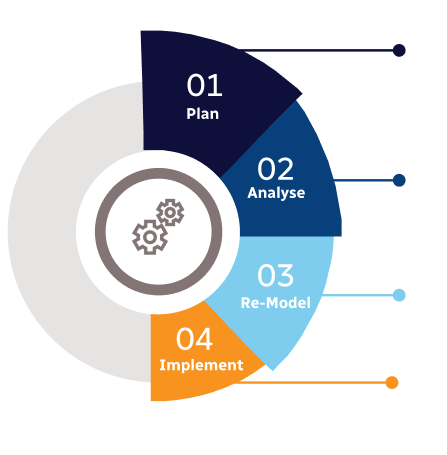
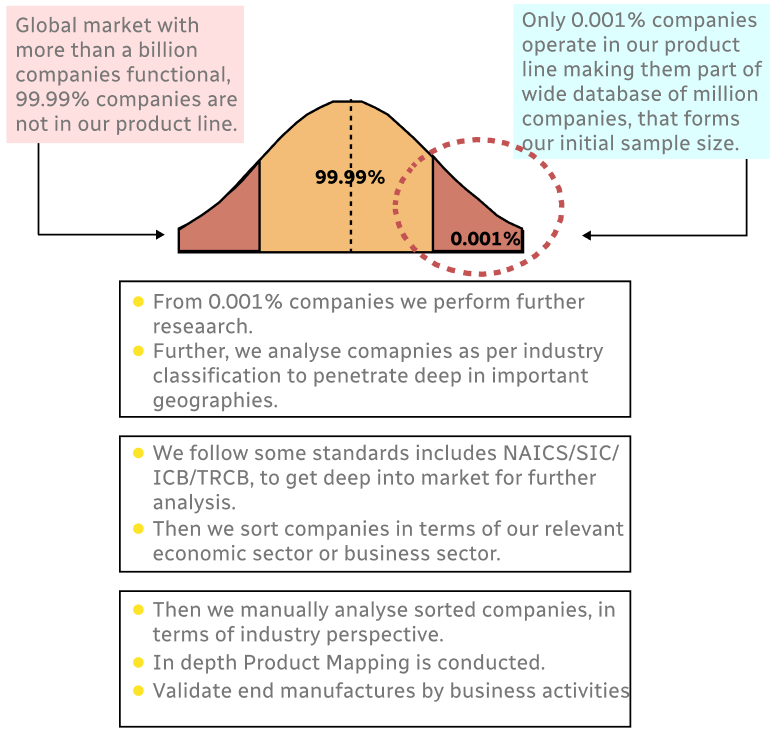
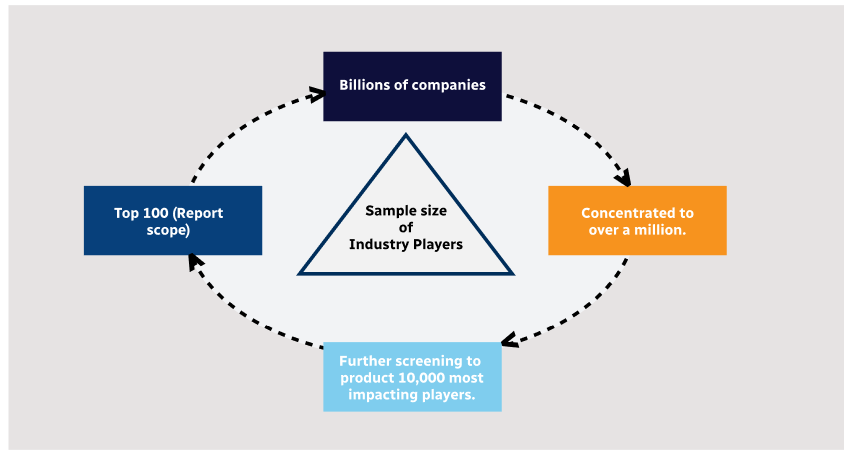
Step 1 - Identification of Relevant Samples Size from Population Database
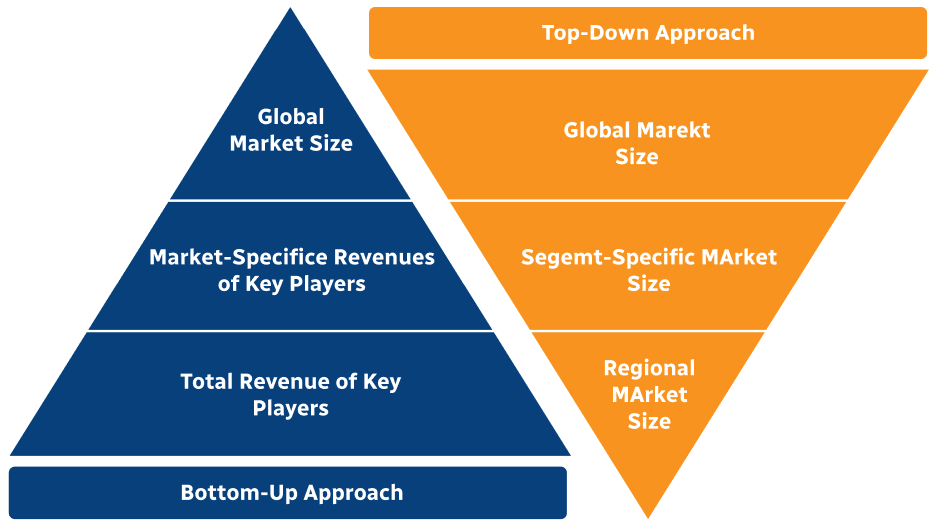
Step 2 - Approaches for Defining Global Market Size (Value, Volume* & Price*)
Note*: In applicable scenarios
Step 3 - Data Sources
Primary Research
- Web Analytics
- Survey Reports
- Research Institute
- Latest Research Reports
- Opinion Leaders
Secondary Research
- Annual Reports
- White Paper
- Latest Press Release
- Industry Association
- Paid Database
- Investor Presentations
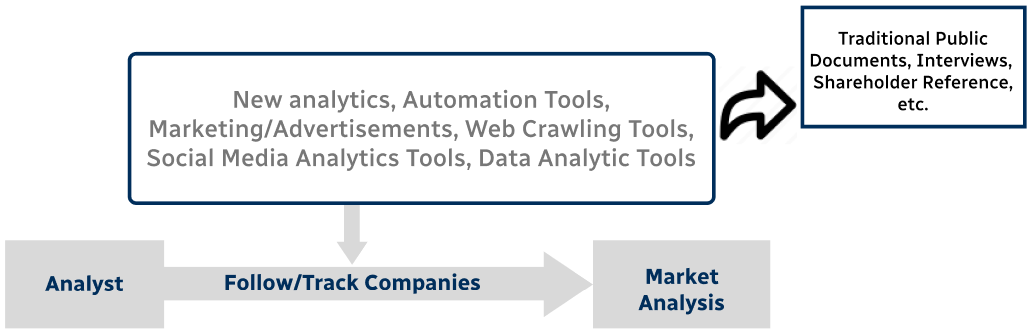
Step 4 - Data Triangulation
Involves using different sources of information in order to increase the validity of a study
These sources are likely to be stakeholders in a program - participants, other researchers, program staff, other community members, and so on.
Then we put all data in single framework & apply various statistical tools to find out the dynamic on the market.
During the analysis stage, feedback from the stakeholder groups would be compared to determine areas of agreement as well as areas of divergence