
Key Insights
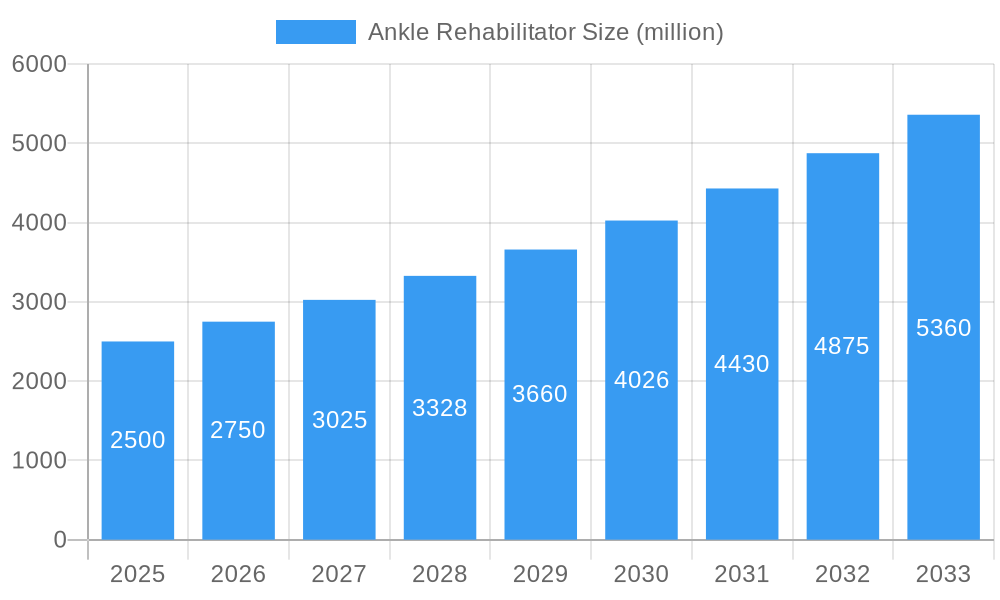
The global ankle rehabilitator market is experiencing robust growth, driven by the increasing prevalence of ankle injuries and the rising demand for effective rehabilitation solutions. The market is projected to exhibit a considerable Compound Annual Growth Rate (CAGR) throughout the forecast period (2025-2033), fueled by several key factors. Technological advancements leading to the development of more sophisticated and user-friendly ankle rehabilitation devices are a significant contributor. Furthermore, the growing awareness among healthcare professionals and patients about the benefits of early and effective rehabilitation, coupled with increasing healthcare expenditure, is propelling market expansion. The market segmentation reveals a diverse landscape, with various types of ankle rehabilitators catering to different needs and preferences. The presence of established players such as iHomeRehab, Kinetec Medical Products, and Medcom, alongside emerging regional companies, indicates a competitive yet dynamic market structure. The increasing adoption of minimally invasive surgical techniques also contributes to the market growth as these procedures often necessitate post-operative rehabilitation.
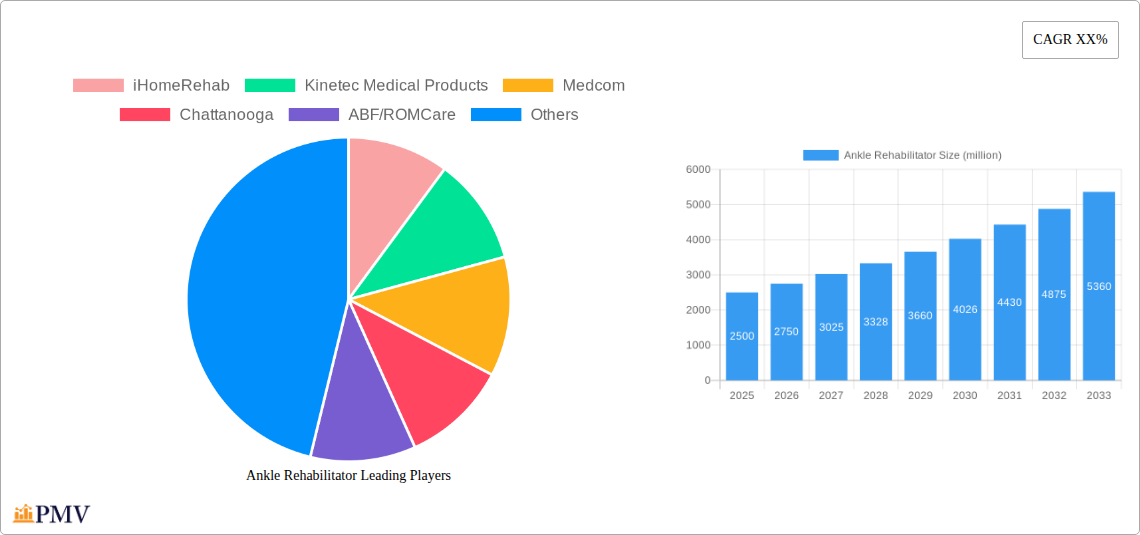
Ankle Rehabilitator Market Size (In Billion)

Geographic variations in market growth are expected, with regions like North America and Europe likely maintaining significant market shares due to advanced healthcare infrastructure and higher disposable incomes. However, emerging economies in Asia-Pacific are projected to witness substantial growth owing to rising healthcare awareness and increasing investments in rehabilitation facilities. Despite this positive outlook, certain challenges persist. High costs associated with advanced ankle rehabilitation devices and a lack of awareness in certain regions might impede market growth to some extent. However, the overall market trajectory remains optimistic, with continued innovation and increasing healthcare spending likely to outweigh these constraints. Future market success will hinge on manufacturers' ability to develop cost-effective, user-friendly devices and effectively target key patient populations.
Ankle Rehabilitator Company Market Share
Ankle Rehabilitator Market Report: 2019-2033
This comprehensive report provides an in-depth analysis of the global ankle rehabilitator market, offering invaluable insights for industry stakeholders, investors, and healthcare professionals. The study period spans from 2019 to 2033, with 2025 serving as both the base and estimated year. The forecast period covers 2025-2033, while the historical period encompasses 2019-2024. The report projects a market size exceeding $XX million by 2033, presenting significant growth opportunities. This report is meticulously crafted, requiring no further modifications.
Ankle Rehabilitator Market Structure & Competitive Dynamics
The global ankle rehabilitator market exhibits a moderately consolidated structure, with a handful of key players commanding significant market share. The top five companies—iHomeRehab, Kinetec Medical Products, Medcom, Chattanooga, and ABF/ROMCare—account for an estimated XX% of the global market in 2025. Market concentration is further influenced by the presence of several regional and niche players, particularly in China, including Changzhou Kangda Rehabilitation Equipment, Xiangyu Medical, Changzhou Huarui Rehabilitation, Hangzhou Jizhi Medical Technology, and Jiangsu Qianjing Medical Equipment. Innovation within the ecosystem is driven by advancements in robotics, AI-powered rehabilitation programs, and user-friendly interfaces. Regulatory frameworks, particularly concerning medical device approvals, significantly impact market entry and growth. The market witnesses continuous development of alternative treatments and therapies, posing a level of substitution risk. End-user trends lean towards minimally invasive procedures and personalized rehabilitation plans. M&A activity within the last five years has been moderate, with a combined deal value exceeding $XX million.
- Market Share (2025): Top 5 players: XX%, Others: XX%.
- M&A Deal Value (2019-2024): ~$XX million.
- Key Regulatory Bodies: [List relevant regulatory bodies and their impact]
Ankle Rehabilitator Industry Trends & Insights
The ankle rehabilitator market is experiencing robust growth, fueled by several key trends. The rising prevalence of ankle injuries across various age demographics, coupled with increasing awareness regarding effective rehabilitation techniques, is a primary driver. Technological advancements, particularly in robotic-assisted rehabilitation and virtual reality therapies, are revolutionizing the treatment landscape. A shift towards personalized and home-based rehabilitation solutions is also gaining momentum, driven by increasing healthcare costs and patient preferences for convenient care. This trend is reflected in the rising popularity of portable and user-friendly ankle rehabilitators. The market is expected to witness a Compound Annual Growth Rate (CAGR) of XX% during the forecast period (2025-2033). Market penetration is currently estimated at XX% and projected to reach XX% by 2033. The competitive landscape is characterized by intense rivalry, with companies constantly innovating and improving their product offerings to capture a larger market share.
Dominant Markets & Segments in Ankle Rehabilitator
The North American market currently holds the largest share of the global ankle rehabilitator market, driven by factors including high healthcare expenditure, advanced healthcare infrastructure, and a high prevalence of ankle injuries.
Key Drivers in North America:
- High healthcare expenditure.
- Advanced healthcare infrastructure.
- High prevalence of sports-related injuries.
- Stringent regulatory frameworks promoting innovation.
- Growing adoption of technologically advanced rehabilitation devices.
Dominance Analysis: The strong presence of established players, coupled with substantial investment in R&D and a high rate of technological advancement, significantly contribute to the region’s dominance. The market exhibits strong growth potential in Asia-Pacific due to factors such as rapidly rising healthcare infrastructure and government support.
Ankle Rehabilitator Product Innovations
Recent product innovations focus on enhancing user experience and treatment efficacy. This includes the integration of smart sensors for real-time data monitoring, AI-powered personalized rehabilitation programs, and the development of more compact and user-friendly designs for home use. These innovations are designed to address unmet clinical needs and improve patient outcomes, thereby increasing market penetration and demand. The integration of virtual reality (VR) and augmented reality (AR) technologies is creating a new wave of innovative ankle rehabilitators.
Report Segmentation & Scope
The report segments the ankle rehabilitator market based on several key factors:
- By Product Type: This includes motorized, manual, and other types of ankle rehabilitators, each with its own growth projections and competitive landscape.
- By End-User: This segment focuses on hospitals, rehabilitation centers, home care settings, and sports medicine clinics, each with unique needs and preferences.
- By Geography: The report analyses market dynamics across North America, Europe, Asia-Pacific, and the rest of the world.
Key Drivers of Ankle Rehabilitator Growth
Several factors are propelling the growth of the ankle rehabilitator market. Technological advancements lead to more effective and user-friendly devices. The increasing prevalence of ankle injuries resulting from aging populations and sports activities, combined with rising healthcare spending, drive demand. Furthermore, favorable government regulations and insurance coverage contribute to market expansion.
Challenges in the Ankle Rehabilitator Sector
The ankle rehabilitator sector faces challenges including the high cost of advanced devices, stringent regulatory approvals, and the potential for substitute therapies. Competition among established players and new entrants poses a constant pressure on pricing and innovation. Supply chain disruptions and material scarcity can impact production and availability, thereby affecting market growth.
Leading Players in the Ankle Rehabilitator Market
- iHomeRehab
- Kinetec Medical Products
- Medcom
- Chattanooga
- ABF/ROMCare
- Platinum Health
- Remington Medical Equipment
- Complete Orthopedic Services
- Changzhou Kangda Rehabilitation Equipment
- Xiangyu Medical
- Changzhou Huarui Rehabilitation
- Hangzhou Jizhi Medical Technology
- Jiangsu Qianjing Medical Equipment
Key Developments in Ankle Rehabilitator Sector
- 2022 Q4: Medcom launched a new line of AI-powered ankle rehabilitators.
- 2023 Q1: Kinetec Medical Products acquired a smaller competitor, expanding its market share.
- 2024 Q2: New regulatory guidelines were implemented, impacting the market entry of new players.
- [Add more developments with dates as available]
Strategic Ankle Rehabilitator Market Outlook
The ankle rehabilitator market presents significant growth potential driven by increasing technological advancements, rising prevalence of ankle injuries, and growing demand for effective rehabilitation solutions. Strategic opportunities lie in developing innovative products with advanced features, expanding into new geographical markets, and forging strategic partnerships to enhance market reach and distribution. Focusing on personalized rehabilitation programs and user-friendly designs will be crucial for success in this evolving market.
Ankle Rehabilitator Segmentation
-
1. Application
- 1.1. Hospital
- 1.2. Rehabilitation Center
-
2. Types
- 2.1. Cabinet Type Ankle Rehabilitator
- 2.2. Portable Type Ankle Rehabilitator
Ankle Rehabilitator Segmentation By Geography
-
1. North America
- 1.1. United States
- 1.2. Canada
- 1.3. Mexico
-
2. South America
- 2.1. Brazil
- 2.2. Argentina
- 2.3. Rest of South America
-
3. Europe
- 3.1. United Kingdom
- 3.2. Germany
- 3.3. France
- 3.4. Italy
- 3.5. Spain
- 3.6. Russia
- 3.7. Benelux
- 3.8. Nordics
- 3.9. Rest of Europe
-
4. Middle East & Africa
- 4.1. Turkey
- 4.2. Israel
- 4.3. GCC
- 4.4. North Africa
- 4.5. South Africa
- 4.6. Rest of Middle East & Africa
-
5. Asia Pacific
- 5.1. China
- 5.2. India
- 5.3. Japan
- 5.4. South Korea
- 5.5. ASEAN
- 5.6. Oceania
- 5.7. Rest of Asia Pacific
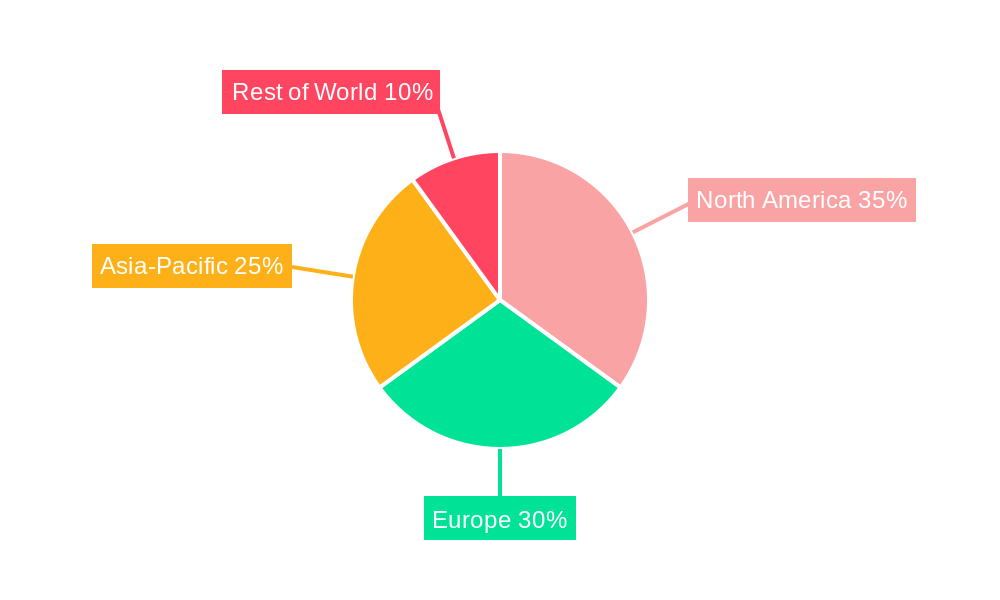
Ankle Rehabilitator Regional Market Share
Geographic Coverage of Ankle Rehabilitator
Ankle Rehabilitator REPORT HIGHLIGHTS
| Aspects | Details |
|---|---|
| Study Period | 2020-2034 |
| Base Year | 2025 |
| Estimated Year | 2026 |
| Forecast Period | 2026-2034 |
| Historical Period | 2020-2025 |
| Growth Rate | CAGR of 7.3% from 2020-2034 |
| Segmentation |
|
Table of Contents
- 1. Introduction
- 1.1. Research Scope
- 1.2. Market Segmentation
- 1.3. Research Methodology
- 1.4. Definitions and Assumptions
- 2. Executive Summary
- 2.1. Introduction
- 3. Market Dynamics
- 3.1. Introduction
- 3.2. Market Drivers
- 3.3. Market Restrains
- 3.4. Market Trends
- 4. Market Factor Analysis
- 4.1. Porters Five Forces
- 4.2. Supply/Value Chain
- 4.3. PESTEL analysis
- 4.4. Market Entropy
- 4.5. Patent/Trademark Analysis
- 5. Global Ankle Rehabilitator Analysis, Insights and Forecast, 2020-2032
- 5.1. Market Analysis, Insights and Forecast - by Application
- 5.1.1. Hospital
- 5.1.2. Rehabilitation Center
- 5.2. Market Analysis, Insights and Forecast - by Types
- 5.2.1. Cabinet Type Ankle Rehabilitator
- 5.2.2. Portable Type Ankle Rehabilitator
- 5.3. Market Analysis, Insights and Forecast - by Region
- 5.3.1. North America
- 5.3.2. South America
- 5.3.3. Europe
- 5.3.4. Middle East & Africa
- 5.3.5. Asia Pacific
- 5.1. Market Analysis, Insights and Forecast - by Application
- 6. North America Ankle Rehabilitator Analysis, Insights and Forecast, 2020-2032
- 6.1. Market Analysis, Insights and Forecast - by Application
- 6.1.1. Hospital
- 6.1.2. Rehabilitation Center
- 6.2. Market Analysis, Insights and Forecast - by Types
- 6.2.1. Cabinet Type Ankle Rehabilitator
- 6.2.2. Portable Type Ankle Rehabilitator
- 6.1. Market Analysis, Insights and Forecast - by Application
- 7. South America Ankle Rehabilitator Analysis, Insights and Forecast, 2020-2032
- 7.1. Market Analysis, Insights and Forecast - by Application
- 7.1.1. Hospital
- 7.1.2. Rehabilitation Center
- 7.2. Market Analysis, Insights and Forecast - by Types
- 7.2.1. Cabinet Type Ankle Rehabilitator
- 7.2.2. Portable Type Ankle Rehabilitator
- 7.1. Market Analysis, Insights and Forecast - by Application
- 8. Europe Ankle Rehabilitator Analysis, Insights and Forecast, 2020-2032
- 8.1. Market Analysis, Insights and Forecast - by Application
- 8.1.1. Hospital
- 8.1.2. Rehabilitation Center
- 8.2. Market Analysis, Insights and Forecast - by Types
- 8.2.1. Cabinet Type Ankle Rehabilitator
- 8.2.2. Portable Type Ankle Rehabilitator
- 8.1. Market Analysis, Insights and Forecast - by Application
- 9. Middle East & Africa Ankle Rehabilitator Analysis, Insights and Forecast, 2020-2032
- 9.1. Market Analysis, Insights and Forecast - by Application
- 9.1.1. Hospital
- 9.1.2. Rehabilitation Center
- 9.2. Market Analysis, Insights and Forecast - by Types
- 9.2.1. Cabinet Type Ankle Rehabilitator
- 9.2.2. Portable Type Ankle Rehabilitator
- 9.1. Market Analysis, Insights and Forecast - by Application
- 10. Asia Pacific Ankle Rehabilitator Analysis, Insights and Forecast, 2020-2032
- 10.1. Market Analysis, Insights and Forecast - by Application
- 10.1.1. Hospital
- 10.1.2. Rehabilitation Center
- 10.2. Market Analysis, Insights and Forecast - by Types
- 10.2.1. Cabinet Type Ankle Rehabilitator
- 10.2.2. Portable Type Ankle Rehabilitator
- 10.1. Market Analysis, Insights and Forecast - by Application
- 11. Competitive Analysis
- 11.1. Global Market Share Analysis 2025
- 11.2. Company Profiles
- 11.2.1 iHomeRehab
- 11.2.1.1. Overview
- 11.2.1.2. Products
- 11.2.1.3. SWOT Analysis
- 11.2.1.4. Recent Developments
- 11.2.1.5. Financials (Based on Availability)
- 11.2.2 Kinetec Medical Products
- 11.2.2.1. Overview
- 11.2.2.2. Products
- 11.2.2.3. SWOT Analysis
- 11.2.2.4. Recent Developments
- 11.2.2.5. Financials (Based on Availability)
- 11.2.3 Medcom
- 11.2.3.1. Overview
- 11.2.3.2. Products
- 11.2.3.3. SWOT Analysis
- 11.2.3.4. Recent Developments
- 11.2.3.5. Financials (Based on Availability)
- 11.2.4 Chattanooga
- 11.2.4.1. Overview
- 11.2.4.2. Products
- 11.2.4.3. SWOT Analysis
- 11.2.4.4. Recent Developments
- 11.2.4.5. Financials (Based on Availability)
- 11.2.5 ABF/ROMCare
- 11.2.5.1. Overview
- 11.2.5.2. Products
- 11.2.5.3. SWOT Analysis
- 11.2.5.4. Recent Developments
- 11.2.5.5. Financials (Based on Availability)
- 11.2.6 Platinum Health
- 11.2.6.1. Overview
- 11.2.6.2. Products
- 11.2.6.3. SWOT Analysis
- 11.2.6.4. Recent Developments
- 11.2.6.5. Financials (Based on Availability)
- 11.2.7 Remington Medical Equipment
- 11.2.7.1. Overview
- 11.2.7.2. Products
- 11.2.7.3. SWOT Analysis
- 11.2.7.4. Recent Developments
- 11.2.7.5. Financials (Based on Availability)
- 11.2.8 Complete Orthopedic Services
- 11.2.8.1. Overview
- 11.2.8.2. Products
- 11.2.8.3. SWOT Analysis
- 11.2.8.4. Recent Developments
- 11.2.8.5. Financials (Based on Availability)
- 11.2.9 Changzhou Kangda Rehabilitation Equipment
- 11.2.9.1. Overview
- 11.2.9.2. Products
- 11.2.9.3. SWOT Analysis
- 11.2.9.4. Recent Developments
- 11.2.9.5. Financials (Based on Availability)
- 11.2.10 Xiangyu Medical
- 11.2.10.1. Overview
- 11.2.10.2. Products
- 11.2.10.3. SWOT Analysis
- 11.2.10.4. Recent Developments
- 11.2.10.5. Financials (Based on Availability)
- 11.2.11 Changzhou Huarui Rehabllitatlon
- 11.2.11.1. Overview
- 11.2.11.2. Products
- 11.2.11.3. SWOT Analysis
- 11.2.11.4. Recent Developments
- 11.2.11.5. Financials (Based on Availability)
- 11.2.12 Hangzhou Jizhi Medical Technology
- 11.2.12.1. Overview
- 11.2.12.2. Products
- 11.2.12.3. SWOT Analysis
- 11.2.12.4. Recent Developments
- 11.2.12.5. Financials (Based on Availability)
- 11.2.13 Jiangsu Qianjing Medical Equipment
- 11.2.13.1. Overview
- 11.2.13.2. Products
- 11.2.13.3. SWOT Analysis
- 11.2.13.4. Recent Developments
- 11.2.13.5. Financials (Based on Availability)
- 11.2.1 iHomeRehab
List of Figures
- Figure 1: Global Ankle Rehabilitator Revenue Breakdown (undefined, %) by Region 2025 & 2033
- Figure 2: North America Ankle Rehabilitator Revenue (undefined), by Application 2025 & 2033
- Figure 3: North America Ankle Rehabilitator Revenue Share (%), by Application 2025 & 2033
- Figure 4: North America Ankle Rehabilitator Revenue (undefined), by Types 2025 & 2033
- Figure 5: North America Ankle Rehabilitator Revenue Share (%), by Types 2025 & 2033
- Figure 6: North America Ankle Rehabilitator Revenue (undefined), by Country 2025 & 2033
- Figure 7: North America Ankle Rehabilitator Revenue Share (%), by Country 2025 & 2033
- Figure 8: South America Ankle Rehabilitator Revenue (undefined), by Application 2025 & 2033
- Figure 9: South America Ankle Rehabilitator Revenue Share (%), by Application 2025 & 2033
- Figure 10: South America Ankle Rehabilitator Revenue (undefined), by Types 2025 & 2033
- Figure 11: South America Ankle Rehabilitator Revenue Share (%), by Types 2025 & 2033
- Figure 12: South America Ankle Rehabilitator Revenue (undefined), by Country 2025 & 2033
- Figure 13: South America Ankle Rehabilitator Revenue Share (%), by Country 2025 & 2033
- Figure 14: Europe Ankle Rehabilitator Revenue (undefined), by Application 2025 & 2033
- Figure 15: Europe Ankle Rehabilitator Revenue Share (%), by Application 2025 & 2033
- Figure 16: Europe Ankle Rehabilitator Revenue (undefined), by Types 2025 & 2033
- Figure 17: Europe Ankle Rehabilitator Revenue Share (%), by Types 2025 & 2033
- Figure 18: Europe Ankle Rehabilitator Revenue (undefined), by Country 2025 & 2033
- Figure 19: Europe Ankle Rehabilitator Revenue Share (%), by Country 2025 & 2033
- Figure 20: Middle East & Africa Ankle Rehabilitator Revenue (undefined), by Application 2025 & 2033
- Figure 21: Middle East & Africa Ankle Rehabilitator Revenue Share (%), by Application 2025 & 2033
- Figure 22: Middle East & Africa Ankle Rehabilitator Revenue (undefined), by Types 2025 & 2033
- Figure 23: Middle East & Africa Ankle Rehabilitator Revenue Share (%), by Types 2025 & 2033
- Figure 24: Middle East & Africa Ankle Rehabilitator Revenue (undefined), by Country 2025 & 2033
- Figure 25: Middle East & Africa Ankle Rehabilitator Revenue Share (%), by Country 2025 & 2033
- Figure 26: Asia Pacific Ankle Rehabilitator Revenue (undefined), by Application 2025 & 2033
- Figure 27: Asia Pacific Ankle Rehabilitator Revenue Share (%), by Application 2025 & 2033
- Figure 28: Asia Pacific Ankle Rehabilitator Revenue (undefined), by Types 2025 & 2033
- Figure 29: Asia Pacific Ankle Rehabilitator Revenue Share (%), by Types 2025 & 2033
- Figure 30: Asia Pacific Ankle Rehabilitator Revenue (undefined), by Country 2025 & 2033
- Figure 31: Asia Pacific Ankle Rehabilitator Revenue Share (%), by Country 2025 & 2033
List of Tables
- Table 1: Global Ankle Rehabilitator Revenue undefined Forecast, by Application 2020 & 2033
- Table 2: Global Ankle Rehabilitator Revenue undefined Forecast, by Types 2020 & 2033
- Table 3: Global Ankle Rehabilitator Revenue undefined Forecast, by Region 2020 & 2033
- Table 4: Global Ankle Rehabilitator Revenue undefined Forecast, by Application 2020 & 2033
- Table 5: Global Ankle Rehabilitator Revenue undefined Forecast, by Types 2020 & 2033
- Table 6: Global Ankle Rehabilitator Revenue undefined Forecast, by Country 2020 & 2033
- Table 7: United States Ankle Rehabilitator Revenue (undefined) Forecast, by Application 2020 & 2033
- Table 8: Canada Ankle Rehabilitator Revenue (undefined) Forecast, by Application 2020 & 2033
- Table 9: Mexico Ankle Rehabilitator Revenue (undefined) Forecast, by Application 2020 & 2033
- Table 10: Global Ankle Rehabilitator Revenue undefined Forecast, by Application 2020 & 2033
- Table 11: Global Ankle Rehabilitator Revenue undefined Forecast, by Types 2020 & 2033
- Table 12: Global Ankle Rehabilitator Revenue undefined Forecast, by Country 2020 & 2033
- Table 13: Brazil Ankle Rehabilitator Revenue (undefined) Forecast, by Application 2020 & 2033
- Table 14: Argentina Ankle Rehabilitator Revenue (undefined) Forecast, by Application 2020 & 2033
- Table 15: Rest of South America Ankle Rehabilitator Revenue (undefined) Forecast, by Application 2020 & 2033
- Table 16: Global Ankle Rehabilitator Revenue undefined Forecast, by Application 2020 & 2033
- Table 17: Global Ankle Rehabilitator Revenue undefined Forecast, by Types 2020 & 2033
- Table 18: Global Ankle Rehabilitator Revenue undefined Forecast, by Country 2020 & 2033
- Table 19: United Kingdom Ankle Rehabilitator Revenue (undefined) Forecast, by Application 2020 & 2033
- Table 20: Germany Ankle Rehabilitator Revenue (undefined) Forecast, by Application 2020 & 2033
- Table 21: France Ankle Rehabilitator Revenue (undefined) Forecast, by Application 2020 & 2033
- Table 22: Italy Ankle Rehabilitator Revenue (undefined) Forecast, by Application 2020 & 2033
- Table 23: Spain Ankle Rehabilitator Revenue (undefined) Forecast, by Application 2020 & 2033
- Table 24: Russia Ankle Rehabilitator Revenue (undefined) Forecast, by Application 2020 & 2033
- Table 25: Benelux Ankle Rehabilitator Revenue (undefined) Forecast, by Application 2020 & 2033
- Table 26: Nordics Ankle Rehabilitator Revenue (undefined) Forecast, by Application 2020 & 2033
- Table 27: Rest of Europe Ankle Rehabilitator Revenue (undefined) Forecast, by Application 2020 & 2033
- Table 28: Global Ankle Rehabilitator Revenue undefined Forecast, by Application 2020 & 2033
- Table 29: Global Ankle Rehabilitator Revenue undefined Forecast, by Types 2020 & 2033
- Table 30: Global Ankle Rehabilitator Revenue undefined Forecast, by Country 2020 & 2033
- Table 31: Turkey Ankle Rehabilitator Revenue (undefined) Forecast, by Application 2020 & 2033
- Table 32: Israel Ankle Rehabilitator Revenue (undefined) Forecast, by Application 2020 & 2033
- Table 33: GCC Ankle Rehabilitator Revenue (undefined) Forecast, by Application 2020 & 2033
- Table 34: North Africa Ankle Rehabilitator Revenue (undefined) Forecast, by Application 2020 & 2033
- Table 35: South Africa Ankle Rehabilitator Revenue (undefined) Forecast, by Application 2020 & 2033
- Table 36: Rest of Middle East & Africa Ankle Rehabilitator Revenue (undefined) Forecast, by Application 2020 & 2033
- Table 37: Global Ankle Rehabilitator Revenue undefined Forecast, by Application 2020 & 2033
- Table 38: Global Ankle Rehabilitator Revenue undefined Forecast, by Types 2020 & 2033
- Table 39: Global Ankle Rehabilitator Revenue undefined Forecast, by Country 2020 & 2033
- Table 40: China Ankle Rehabilitator Revenue (undefined) Forecast, by Application 2020 & 2033
- Table 41: India Ankle Rehabilitator Revenue (undefined) Forecast, by Application 2020 & 2033
- Table 42: Japan Ankle Rehabilitator Revenue (undefined) Forecast, by Application 2020 & 2033
- Table 43: South Korea Ankle Rehabilitator Revenue (undefined) Forecast, by Application 2020 & 2033
- Table 44: ASEAN Ankle Rehabilitator Revenue (undefined) Forecast, by Application 2020 & 2033
- Table 45: Oceania Ankle Rehabilitator Revenue (undefined) Forecast, by Application 2020 & 2033
- Table 46: Rest of Asia Pacific Ankle Rehabilitator Revenue (undefined) Forecast, by Application 2020 & 2033
Frequently Asked Questions
1. What is the projected Compound Annual Growth Rate (CAGR) of the Ankle Rehabilitator?
The projected CAGR is approximately 7.3%.
2. Which companies are prominent players in the Ankle Rehabilitator?
Key companies in the market include iHomeRehab, Kinetec Medical Products, Medcom, Chattanooga, ABF/ROMCare, Platinum Health, Remington Medical Equipment, Complete Orthopedic Services, Changzhou Kangda Rehabilitation Equipment, Xiangyu Medical, Changzhou Huarui Rehabllitatlon, Hangzhou Jizhi Medical Technology, Jiangsu Qianjing Medical Equipment.
3. What are the main segments of the Ankle Rehabilitator?
The market segments include Application, Types.
4. Can you provide details about the market size?
The market size is estimated to be USD XXX N/A as of 2022.
5. What are some drivers contributing to market growth?
N/A
6. What are the notable trends driving market growth?
N/A
7. Are there any restraints impacting market growth?
N/A
8. Can you provide examples of recent developments in the market?
N/A
9. What pricing options are available for accessing the report?
Pricing options include single-user, multi-user, and enterprise licenses priced at USD 2900.00, USD 4350.00, and USD 5800.00 respectively.
10. Is the market size provided in terms of value or volume?
The market size is provided in terms of value, measured in N/A.
11. Are there any specific market keywords associated with the report?
Yes, the market keyword associated with the report is "Ankle Rehabilitator," which aids in identifying and referencing the specific market segment covered.
12. How do I determine which pricing option suits my needs best?
The pricing options vary based on user requirements and access needs. Individual users may opt for single-user licenses, while businesses requiring broader access may choose multi-user or enterprise licenses for cost-effective access to the report.
13. Are there any additional resources or data provided in the Ankle Rehabilitator report?
While the report offers comprehensive insights, it's advisable to review the specific contents or supplementary materials provided to ascertain if additional resources or data are available.
14. How can I stay updated on further developments or reports in the Ankle Rehabilitator?
To stay informed about further developments, trends, and reports in the Ankle Rehabilitator, consider subscribing to industry newsletters, following relevant companies and organizations, or regularly checking reputable industry news sources and publications.
Methodology
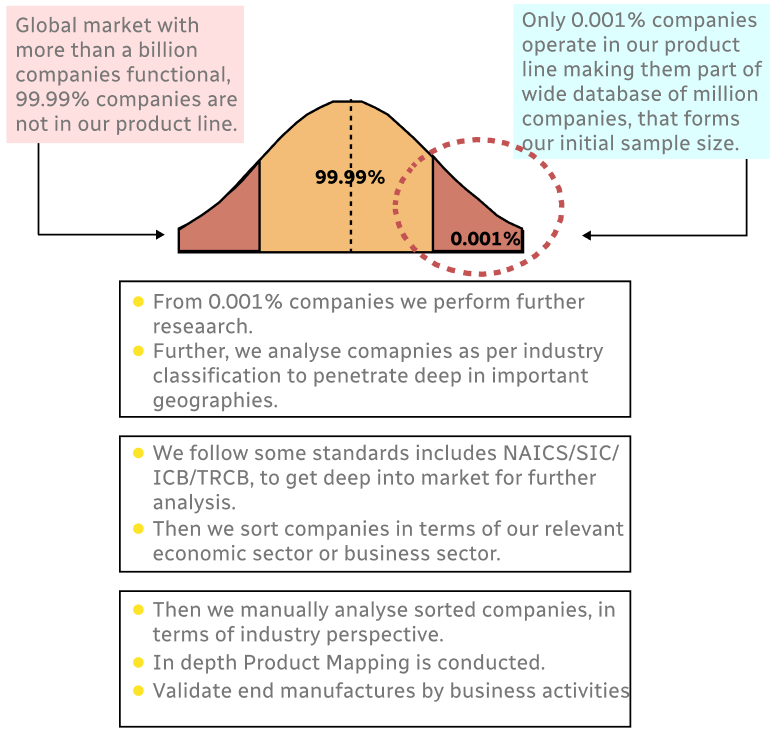
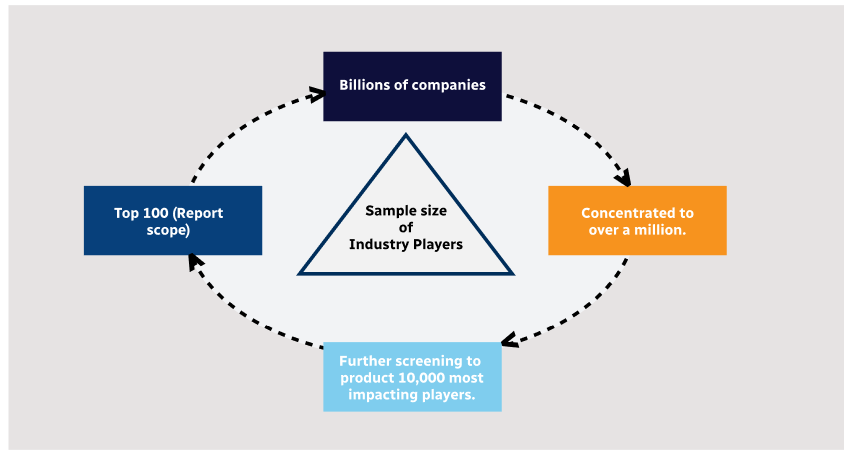
Step 1 - Identification of Relevant Samples Size from Population Database
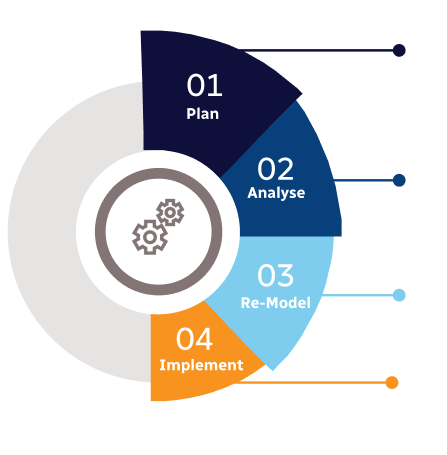
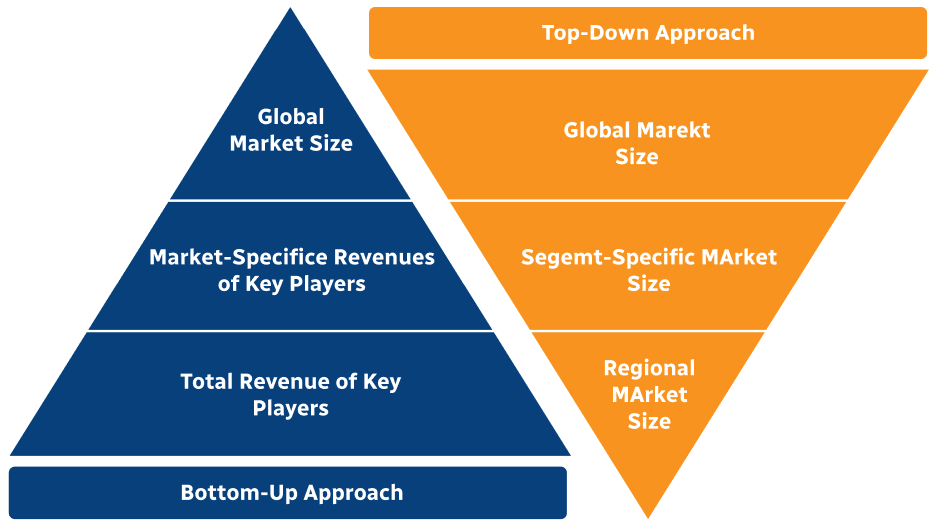
Step 2 - Approaches for Defining Global Market Size (Value, Volume* & Price*)
Note*: In applicable scenarios
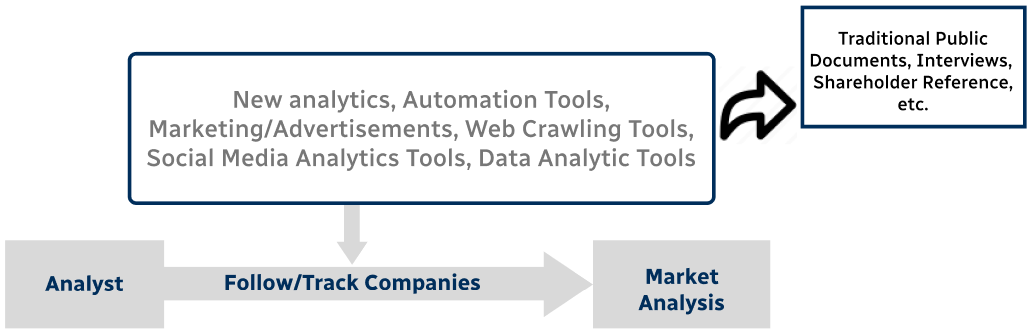
Step 3 - Data Sources
Primary Research
- Web Analytics
- Survey Reports
- Research Institute
- Latest Research Reports
- Opinion Leaders
Secondary Research
- Annual Reports
- White Paper
- Latest Press Release
- Industry Association
- Paid Database
- Investor Presentations
Step 4 - Data Triangulation
Involves using different sources of information in order to increase the validity of a study
These sources are likely to be stakeholders in a program - participants, other researchers, program staff, other community members, and so on.
Then we put all data in single framework & apply various statistical tools to find out the dynamic on the market.
During the analysis stage, feedback from the stakeholder groups would be compared to determine areas of agreement as well as areas of divergence