



Key Insights
The African Swine Feed Market, projected at $4.32 billion by 2025, is poised for robust expansion with a Compound Annual Growth Rate (CAGR) of 3.9% from 2025 to 2033. This growth is propelled by escalating pork demand, driven by demographic shifts and urbanization across Africa. The adoption of advanced farming methodologies and enhanced livestock management practices is also contributing significantly to feed efficiency and market development. Furthermore, an increased emphasis on animal health and performance through specialized feed additives, including vitamins, antioxidants, and enzymes, is stimulating market demand. The market segments into ingredient types (cereals, oilseed meals, oils, molasses) and supplement types (antibiotics, vitamins), presenting varied opportunities. Key industry leaders such as Cargill, Nutreco, and Alltech are actively contributing to innovation and competitive dynamics. Challenges such as inconsistent feed quality, underdeveloped infrastructure, and volatile raw material prices may pose restraints in specific regions. South Africa currently leads the market due to its established infrastructure and mature swine industry, while countries like Kenya, Uganda, and Tanzania offer substantial future growth prospects as their economies mature and consumer spending rises.

African Swine Feed Market Market Size (In Billion)

The forecast period (2025-2033) indicates significant market growth in sub-Saharan Africa, largely due to rising consumer incomes and a growing middle class. The trend towards intensive farming and the adoption of refined feed formulations are further bolstering market expansion. Nevertheless, the market remains vulnerable to external factors like disease outbreaks and climate change, which can affect feed availability and animal well-being. Strategic partnerships, investment in research and development, and a commitment to sustainable, cost-effective feed solutions will be crucial for market players. A significant emerging trend is the increasing focus on feed quality and safety, driven by evolving regulatory landscapes, which will favor companies prioritizing these aspects.

African Swine Feed Market Company Market Share

African Swine Feed Market: A Comprehensive Market Analysis (2019-2033)
This in-depth report provides a comprehensive analysis of the African swine feed market, offering invaluable insights for industry stakeholders, investors, and strategic decision-makers. The study covers the period from 2019 to 2033, with a focus on the 2025-2033 forecast period, utilizing 2025 as the base year. The report leverages extensive primary and secondary research to deliver actionable intelligence on market size, segmentation, competitive landscape, growth drivers, challenges, and future outlook. This report's meticulous analysis and detailed projections will enable you to navigate the complexities of the African swine feed market with confidence.
African Swine Feed Market Market Structure & Competitive Dynamics
The African swine feed market exhibits a moderately consolidated structure, with key players like Cargill Incorporated, Cargill Incorporated, Nutreco NV, Nutreco NV, and Alltech Inc. Alltech Inc holding significant market share. However, the presence of several regional and smaller players indicates a dynamic competitive landscape. Market concentration is estimated at xx% in 2025, driven by the increasing scale of operations of larger players and the acquisition of smaller businesses. Innovation in feed formulations, focusing on improved digestibility and disease resistance, is a key competitive differentiator. Regulatory frameworks governing feed quality and safety are constantly evolving, requiring companies to invest in compliance. The market witnesses frequent M&A activities. For instance, in 2024, a major player acquired a smaller feed mill in Kenya for approximately $xx Million, aimed at expanding its market reach. This deal, along with other similar transactions, contributes to the consolidation within the industry. Product substitution, primarily from locally sourced ingredients, is a notable factor affecting market dynamics. End-user preferences are shifting toward specialized feeds catering to specific swine breeds and growth stages. These preferences are mainly driven by increased awareness of nutrition's impact on animal health and productivity.
African Swine Feed Market Industry Trends & Insights
The African swine feed market is experiencing robust growth, driven by factors such as the expanding swine population, rising consumer demand for pork products, and increasing investments in commercial swine farming. The market recorded a CAGR of xx% during the historical period (2019-2024), and is projected to maintain a healthy CAGR of xx% during the forecast period (2025-2033). Market penetration of advanced feed technologies, like precision feeding and feed formulation software, is increasing gradually. Consumer preferences are driving the demand for feed additives that enhance animal health, welfare, and meat quality. Technological disruptions such as the adoption of automation in feed production and precision farming techniques are changing the industry’s dynamics. This leads to cost optimization and improved efficiency. Furthermore, the competitive landscape remains highly dynamic, with existing players expanding their operations and new entrants emerging, particularly in regional markets. Government policies supporting the livestock sector, including subsidies and infrastructure development, are also stimulating market expansion.
Dominant Markets & Segments in African Swine Feed Market
The African swine feed market is characterized by distinct dominant segments, meticulously analyzed by both their constituent ingredients and the crucial supplements they incorporate. The agricultural landscape of Africa, with its diverse farming practices and economic realities, shapes the consumption patterns and market penetration of various feed components.
-
By Ingredient:
- Cereals: These remain the cornerstone of swine feed in Africa, driven by their unparalleled affordability and widespread accessibility across the continent. The ever-increasing swine populations and the ease of procurement in diverse regional economies solidify their dominant position. Key drivers include a growing demand for staple protein sources and established local supply chains.
- Cereals By-products: Offering a more economical alternative to whole cereals, these by-products are experiencing robust, moderate growth. Their price competitiveness makes them an attractive option for smallholder farmers and large-scale operations alike, aiming to optimize feed costs without significantly compromising nutritional value.
- Oilseed Meal: As a vital source of protein, oilseed meals are witnessing a significant surge in demand. This growth is fueled by an increasing awareness among farmers regarding their critical role in promoting optimal swine health, growth, and productivity. The focus on delivering superior protein content for improved animal well-being is a primary driver.
- Oils: While essential for enhancing the energy density of swine feed, oils exhibit a slower growth trajectory due to their relatively higher cost. Their utility as an energy source is undeniable, but widespread adoption is often tempered by price sensitivity in many African markets.
- Molasses: Valued for its palatability and contribution to energy content, molasses enjoys steady and consistent demand. Its role in improving feed intake, particularly for younger pigs, makes it a reliable component in various feed formulations.
- Other Ingredients: This broad category encompasses a variety of specialized and niche ingredients. Their growth rates are diverse, reflecting their specific applications and the unique nutritional requirements of different swine breeds or production systems. The key driver is often the ability to address specific animal health or performance needs in specialized contexts.
-
By Supplement:
- Antibiotics: Despite facing increasing regulatory scrutiny and a growing emphasis on antibiotic-free production, antibiotics remain a crucial segment for preventing and treating common swine diseases. Their continued use is driven by the necessity for disease control, though market participants are actively exploring alternative solutions.
- Vitamins: Indispensable for ensuring optimal swine health, immune function, and growth performance, vitamins are a consistently growing segment. Their role in preventing deficiencies and supporting overall productivity makes them a non-negotiable component in modern swine diets.
- Antioxidants: These supplements play a vital role in maintaining feed quality by preventing oxidative damage, thereby extending shelf life and preserving nutrient integrity. Their moderate growth reflects a growing appreciation for their impact on feed stability and economic value.
- Enzymes: Enzymes are experiencing significant growth due to their proven ability to enhance nutrient digestibility. This leads to improved feed conversion ratios, reduced waste, and ultimately, more cost-effective pork production. The drive for greater feed efficiency is a primary catalyst for their adoption.
- Acidifiers: These additives are gaining traction for their positive impact on gut health and the modulation of the intestinal microbiome. By creating a more favorable gut environment, they contribute to better nutrient absorption and a reduction in enteric diseases, leading to moderate but consistent growth.
- Others: This category includes a range of specialized and emerging supplements. Their growth is often driven by niche applications, specific breeding programs, or innovative approaches to animal nutrition and health.
Geographically, the report highlights **South Africa** as the leading country within the African swine feed market in 2025. This dominance is attributed to its well-established swine population, a robust and export-oriented pork production industry, and a comparatively advanced agricultural infrastructure. Favorable government policies supporting livestock production, increasing adoption of modern farming techniques, and a strong emphasis on feed quality and safety further bolster South Africa's leading position.
African Swine Feed Market Product Innovations
Recent innovations in the African swine feed market focus on developing customized feed formulations tailored to specific swine breeds and growth stages. This includes incorporating novel ingredients, such as insect meal and single-cell proteins, to enhance sustainability and nutritional value. Technological advancements in feed processing, such as extrusion and pelleting techniques, aim to improve feed digestibility and nutrient utilization. These innovations are largely driven by the increasing demand for high-quality, cost-effective swine feed, addressing the growing concerns about animal welfare and environmental sustainability.
Report Segmentation & Scope
The African swine feed market is segmented by ingredient (Cereals, Cereals By-products, Oilseed Meal, Oils, Molasses, Other Ingredients) and by supplement (Antibiotics, Vitamins, Antioxidants, Enzymes, Acidifiers, Others). Each segment’s market size, growth rate, and competitive landscape are thoroughly analyzed. Growth projections for each segment vary, reflecting the diverse factors influencing demand within each category. For example, the cereals segment shows robust growth due to its price-competitiveness, while the enzyme segment is witnessing a rapid expansion driven by increased efficiency gains. Competitive dynamics within segments are analyzed considering the presence of key players and emerging regional competitors.
Key Drivers of African Swine Feed Market Growth
The African swine feed market is fueled by several factors. The rise in pork consumption and the resulting expansion of the swine population are major drivers. Government initiatives supporting agricultural development and infrastructure improvements are also crucial, as is increasing farmer awareness of advanced feeding techniques and the resultant improved productivity. Technological advancements, such as precision feeding systems and automation in feed production, further enhance efficiency and profitability.
Challenges in the African Swine Feed Market Sector
The African swine feed market faces various challenges. Fluctuations in raw material prices and supply chain disruptions can significantly impact profitability. Regulatory hurdles related to feed quality, safety, and the use of certain additives pose substantial challenges. Competition from both established and emerging players, and the presence of informal markets, add further complexity to market dynamics. These challenges collectively impact market growth and profitability, calling for strategies that address price volatility, regulatory compliance, and competitive pressures.
Leading Players in the African Swine Feed Market Market
- Serfco Feeds
- Cargill Incorporated
- Elanc
- Novus International
- Nutreco NV
- Alltech Inc
- Novafeeds
- Kemin Industries Inc
Key Developments in African Swine Feed Market Sector
- January 2023: Launch of a new, fortified swine feed by Alltech Inc. in Nigeria, emphasizing improved immunity.
- June 2022: Cargill Incorporated announced an investment in a new feed mill in Ethiopia.
- October 2021: Acquisition of a local feed producer by Nutreco NV in Kenya.
Strategic African Swine Feed Market Market Outlook
The future of the African swine feed market presents substantial opportunities for growth and innovation. Continued expansion of the swine industry, increasing adoption of advanced technologies, and government support for agricultural development are key drivers of future growth. Strategic opportunities exist in developing customized feed solutions, leveraging technological advancements, and investing in sustainable and responsible sourcing practices. The focus on improving feed efficiency, animal health, and reducing environmental impact will define the next phase of market evolution.
African Swine Feed Market Segmentation
-
1. Ingredient
- 1.1. Cereals
- 1.2. Cereals By Product
- 1.3. Oilseed Meal
- 1.4. Molasses
- 1.5. Other Ingredients
-
2. Supplement
- 2.1. Antibiotics
- 2.2. Vitamins
- 2.3. Antioxidants
- 2.4. Enzymes
- 2.5. Acidifiers
- 2.6. Others
-
3. Geography
- 3.1. South Africa
- 3.2. Egypt
- 3.3. Rest of South Africa
African Swine Feed Market Segmentation By Geography
- 1. South Africa
- 2. Egypt
- 3. Rest of South Africa

African Swine Feed Market Regional Market Share

Geographic Coverage of African Swine Feed Market
African Swine Feed Market REPORT HIGHLIGHTS
| Aspects | Details |
|---|---|
| Study Period | 2020-2034 |
| Base Year | 2025 |
| Estimated Year | 2026 |
| Forecast Period | 2026-2034 |
| Historical Period | 2020-2025 |
| Growth Rate | CAGR of 3.9% from 2020-2034 |
| Segmentation |
|
Table of Contents
- 1. Introduction
- 1.1. Research Scope
- 1.2. Market Segmentation
- 1.3. Research Methodology
- 1.4. Definitions and Assumptions
- 2. Executive Summary
- 2.1. Introduction
- 3. Market Dynamics
- 3.1. Introduction
- 3.2. Market Drivers
- 3.2.1. Increased Pet Humanization; Growing Trend of E-commerce
- 3.3. Market Restrains
- 3.3.1. Rising Cost of Raw Material Production; Growing Concern Over Environment and Pet Health
- 3.4. Market Trends
- 3.4.1. Rising Swine Production Drives the Market
- 4. Market Factor Analysis
- 4.1. Porters Five Forces
- 4.2. Supply/Value Chain
- 4.3. PESTEL analysis
- 4.4. Market Entropy
- 4.5. Patent/Trademark Analysis
- 5. African Swine Feed Market Analysis, Insights and Forecast, 2020-2032
- 5.1. Market Analysis, Insights and Forecast - by Ingredient
- 5.1.1. Cereals
- 5.1.2. Cereals By Product
- 5.1.3. Oilseed Meal
- 5.1.4. Molasses
- 5.1.5. Other Ingredients
- 5.2. Market Analysis, Insights and Forecast - by Supplement
- 5.2.1. Antibiotics
- 5.2.2. Vitamins
- 5.2.3. Antioxidants
- 5.2.4. Enzymes
- 5.2.5. Acidifiers
- 5.2.6. Others
- 5.3. Market Analysis, Insights and Forecast - by Geography
- 5.3.1. South Africa
- 5.3.2. Egypt
- 5.3.3. Rest of South Africa
- 5.4. Market Analysis, Insights and Forecast - by Region
- 5.4.1. South Africa
- 5.4.2. Egypt
- 5.4.3. Rest of South Africa
- 5.1. Market Analysis, Insights and Forecast - by Ingredient
- 6. South Africa African Swine Feed Market Analysis, Insights and Forecast, 2020-2032
- 6.1. Market Analysis, Insights and Forecast - by Ingredient
- 6.1.1. Cereals
- 6.1.2. Cereals By Product
- 6.1.3. Oilseed Meal
- 6.1.4. Molasses
- 6.1.5. Other Ingredients
- 6.2. Market Analysis, Insights and Forecast - by Supplement
- 6.2.1. Antibiotics
- 6.2.2. Vitamins
- 6.2.3. Antioxidants
- 6.2.4. Enzymes
- 6.2.5. Acidifiers
- 6.2.6. Others
- 6.3. Market Analysis, Insights and Forecast - by Geography
- 6.3.1. South Africa
- 6.3.2. Egypt
- 6.3.3. Rest of South Africa
- 6.1. Market Analysis, Insights and Forecast - by Ingredient
- 7. Egypt African Swine Feed Market Analysis, Insights and Forecast, 2020-2032
- 7.1. Market Analysis, Insights and Forecast - by Ingredient
- 7.1.1. Cereals
- 7.1.2. Cereals By Product
- 7.1.3. Oilseed Meal
- 7.1.4. Molasses
- 7.1.5. Other Ingredients
- 7.2. Market Analysis, Insights and Forecast - by Supplement
- 7.2.1. Antibiotics
- 7.2.2. Vitamins
- 7.2.3. Antioxidants
- 7.2.4. Enzymes
- 7.2.5. Acidifiers
- 7.2.6. Others
- 7.3. Market Analysis, Insights and Forecast - by Geography
- 7.3.1. South Africa
- 7.3.2. Egypt
- 7.3.3. Rest of South Africa
- 7.1. Market Analysis, Insights and Forecast - by Ingredient
- 8. Rest of South Africa African Swine Feed Market Analysis, Insights and Forecast, 2020-2032
- 8.1. Market Analysis, Insights and Forecast - by Ingredient
- 8.1.1. Cereals
- 8.1.2. Cereals By Product
- 8.1.3. Oilseed Meal
- 8.1.4. Molasses
- 8.1.5. Other Ingredients
- 8.2. Market Analysis, Insights and Forecast - by Supplement
- 8.2.1. Antibiotics
- 8.2.2. Vitamins
- 8.2.3. Antioxidants
- 8.2.4. Enzymes
- 8.2.5. Acidifiers
- 8.2.6. Others
- 8.3. Market Analysis, Insights and Forecast - by Geography
- 8.3.1. South Africa
- 8.3.2. Egypt
- 8.3.3. Rest of South Africa
- 8.1. Market Analysis, Insights and Forecast - by Ingredient
- 9. Competitive Analysis
- 9.1. Market Share Analysis 2025
- 9.2. Company Profiles
- 9.2.1 Serfco Feeds
- 9.2.1.1. Overview
- 9.2.1.2. Products
- 9.2.1.3. SWOT Analysis
- 9.2.1.4. Recent Developments
- 9.2.1.5. Financials (Based on Availability)
- 9.2.2 Cargill Incorporated
- 9.2.2.1. Overview
- 9.2.2.2. Products
- 9.2.2.3. SWOT Analysis
- 9.2.2.4. Recent Developments
- 9.2.2.5. Financials (Based on Availability)
- 9.2.3 Elanc
- 9.2.3.1. Overview
- 9.2.3.2. Products
- 9.2.3.3. SWOT Analysis
- 9.2.3.4. Recent Developments
- 9.2.3.5. Financials (Based on Availability)
- 9.2.4 Novus International
- 9.2.4.1. Overview
- 9.2.4.2. Products
- 9.2.4.3. SWOT Analysis
- 9.2.4.4. Recent Developments
- 9.2.4.5. Financials (Based on Availability)
- 9.2.5 Nutreco NV
- 9.2.5.1. Overview
- 9.2.5.2. Products
- 9.2.5.3. SWOT Analysis
- 9.2.5.4. Recent Developments
- 9.2.5.5. Financials (Based on Availability)
- 9.2.6 Alltech Inc
- 9.2.6.1. Overview
- 9.2.6.2. Products
- 9.2.6.3. SWOT Analysis
- 9.2.6.4. Recent Developments
- 9.2.6.5. Financials (Based on Availability)
- 9.2.7 Novafeeds
- 9.2.7.1. Overview
- 9.2.7.2. Products
- 9.2.7.3. SWOT Analysis
- 9.2.7.4. Recent Developments
- 9.2.7.5. Financials (Based on Availability)
- 9.2.8 Kemin Industries Inc
- 9.2.8.1. Overview
- 9.2.8.2. Products
- 9.2.8.3. SWOT Analysis
- 9.2.8.4. Recent Developments
- 9.2.8.5. Financials (Based on Availability)
- 9.2.1 Serfco Feeds
List of Figures
- Figure 1: African Swine Feed Market Revenue Breakdown (billion, %) by Product 2025 & 2033
- Figure 2: African Swine Feed Market Share (%) by Company 2025
List of Tables
- Table 1: African Swine Feed Market Revenue billion Forecast, by Ingredient 2020 & 2033
- Table 2: African Swine Feed Market Revenue billion Forecast, by Supplement 2020 & 2033
- Table 3: African Swine Feed Market Revenue billion Forecast, by Geography 2020 & 2033
- Table 4: African Swine Feed Market Revenue billion Forecast, by Region 2020 & 2033
- Table 5: African Swine Feed Market Revenue billion Forecast, by Ingredient 2020 & 2033
- Table 6: African Swine Feed Market Revenue billion Forecast, by Supplement 2020 & 2033
- Table 7: African Swine Feed Market Revenue billion Forecast, by Geography 2020 & 2033
- Table 8: African Swine Feed Market Revenue billion Forecast, by Country 2020 & 2033
- Table 9: African Swine Feed Market Revenue billion Forecast, by Ingredient 2020 & 2033
- Table 10: African Swine Feed Market Revenue billion Forecast, by Supplement 2020 & 2033
- Table 11: African Swine Feed Market Revenue billion Forecast, by Geography 2020 & 2033
- Table 12: African Swine Feed Market Revenue billion Forecast, by Country 2020 & 2033
- Table 13: African Swine Feed Market Revenue billion Forecast, by Ingredient 2020 & 2033
- Table 14: African Swine Feed Market Revenue billion Forecast, by Supplement 2020 & 2033
- Table 15: African Swine Feed Market Revenue billion Forecast, by Geography 2020 & 2033
- Table 16: African Swine Feed Market Revenue billion Forecast, by Country 2020 & 2033
Frequently Asked Questions
1. What is the projected Compound Annual Growth Rate (CAGR) of the African Swine Feed Market?
The projected CAGR is approximately 3.9%.
2. Which companies are prominent players in the African Swine Feed Market?
Key companies in the market include Serfco Feeds, Cargill Incorporated, Elanc, Novus International, Nutreco NV, Alltech Inc, Novafeeds, Kemin Industries Inc.
3. What are the main segments of the African Swine Feed Market?
The market segments include Ingredient, Supplement, Geography.
4. Can you provide details about the market size?
The market size is estimated to be USD 4.32 billion as of 2022.
5. What are some drivers contributing to market growth?
Increased Pet Humanization; Growing Trend of E-commerce.
6. What are the notable trends driving market growth?
Rising Swine Production Drives the Market.
7. Are there any restraints impacting market growth?
Rising Cost of Raw Material Production; Growing Concern Over Environment and Pet Health.
8. Can you provide examples of recent developments in the market?
N/A
9. What pricing options are available for accessing the report?
Pricing options include single-user, multi-user, and enterprise licenses priced at USD 4750, USD 5250, and USD 8750 respectively.
10. Is the market size provided in terms of value or volume?
The market size is provided in terms of value, measured in billion.
11. Are there any specific market keywords associated with the report?
Yes, the market keyword associated with the report is "African Swine Feed Market," which aids in identifying and referencing the specific market segment covered.
12. How do I determine which pricing option suits my needs best?
The pricing options vary based on user requirements and access needs. Individual users may opt for single-user licenses, while businesses requiring broader access may choose multi-user or enterprise licenses for cost-effective access to the report.
13. Are there any additional resources or data provided in the African Swine Feed Market report?
While the report offers comprehensive insights, it's advisable to review the specific contents or supplementary materials provided to ascertain if additional resources or data are available.
14. How can I stay updated on further developments or reports in the African Swine Feed Market?
To stay informed about further developments, trends, and reports in the African Swine Feed Market, consider subscribing to industry newsletters, following relevant companies and organizations, or regularly checking reputable industry news sources and publications.
Methodology
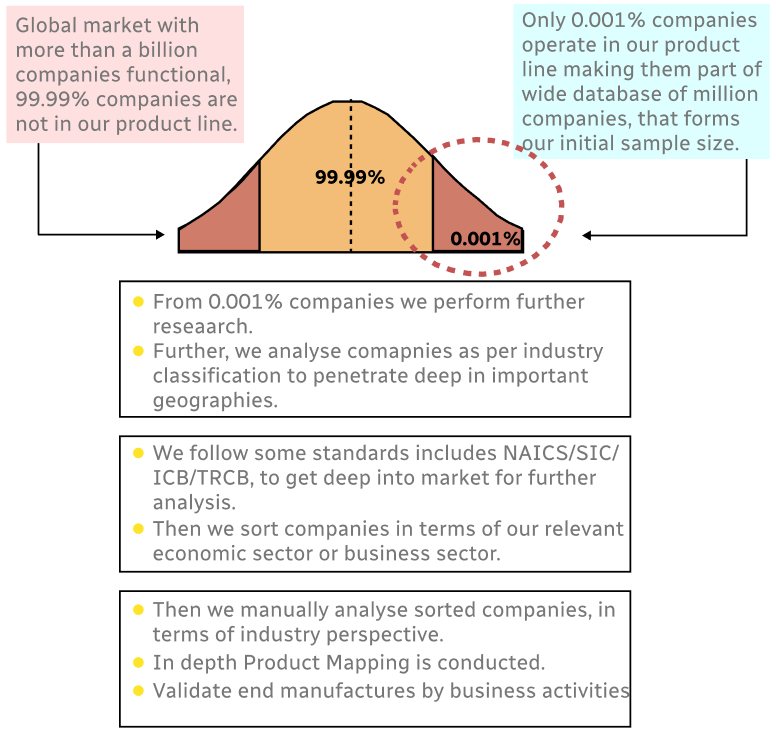
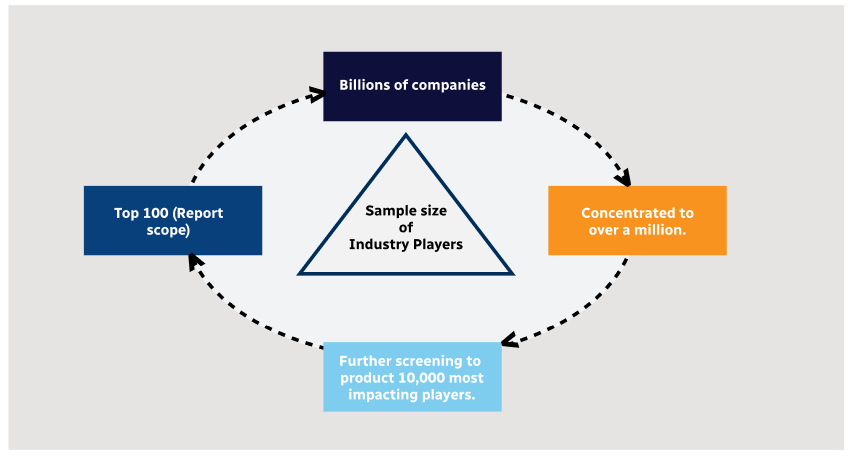
Step 1 - Identification of Relevant Samples Size from Population Database
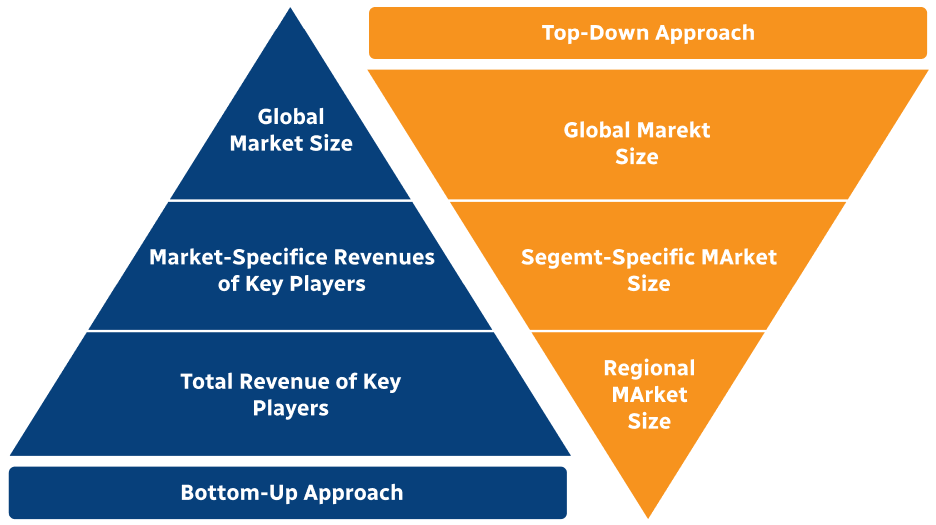
Step 2 - Approaches for Defining Global Market Size (Value, Volume* & Price*)
Note*: In applicable scenarios
Step 3 - Data Sources
Primary Research
- Web Analytics
- Survey Reports
- Research Institute
- Latest Research Reports
- Opinion Leaders
Secondary Research
- Annual Reports
- White Paper
- Latest Press Release
- Industry Association
- Paid Database
- Investor Presentations
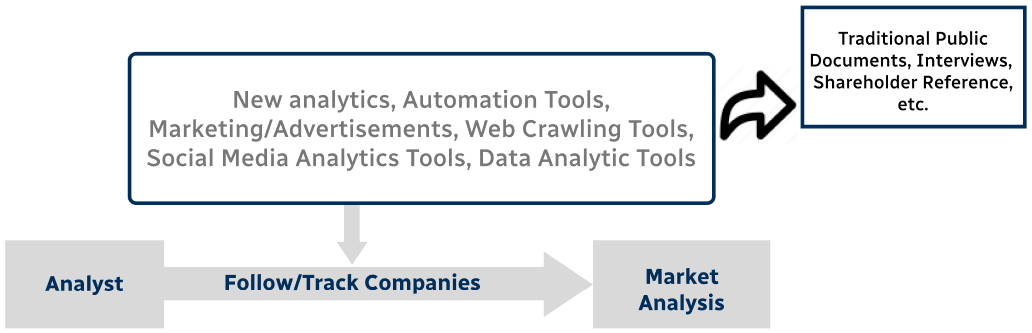
Step 4 - Data Triangulation
Involves using different sources of information in order to increase the validity of a study
These sources are likely to be stakeholders in a program - participants, other researchers, program staff, other community members, and so on.
Then we put all data in single framework & apply various statistical tools to find out the dynamic on the market.
During the analysis stage, feedback from the stakeholder groups would be compared to determine areas of agreement as well as areas of divergence


