


Key Insights
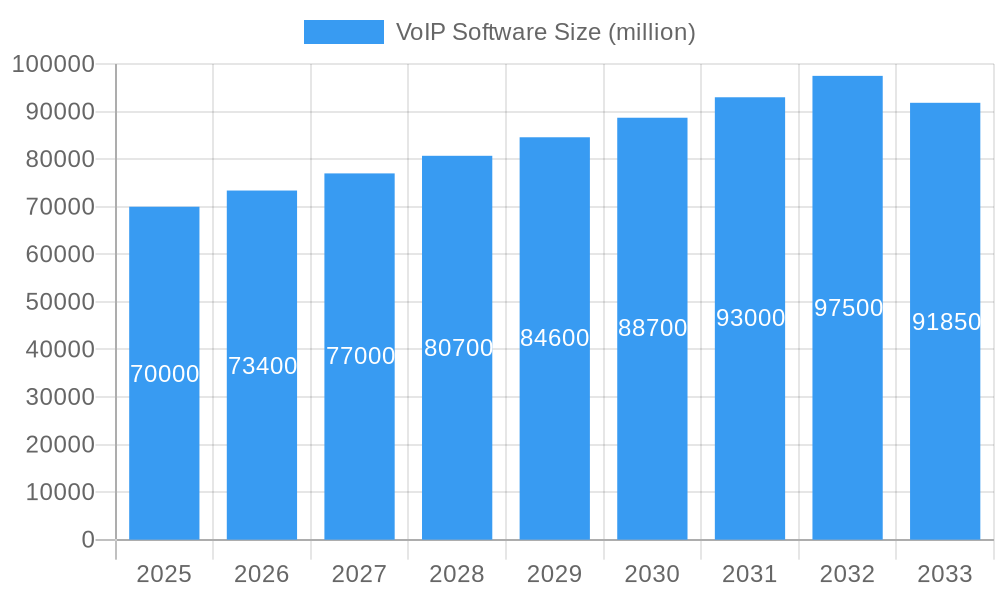
The global VoIP Software market is poised for significant expansion, projected to reach a substantial market size of USD 91,850 million by 2033, exhibiting a Compound Annual Growth Rate (CAGR) of 4.9% from 2025 to 2033. This robust growth is primarily fueled by the increasing adoption of cloud-based solutions, driven by their scalability, flexibility, and cost-effectiveness. Small and Medium Enterprises (SMEs) are increasingly leveraging VoIP software to enhance communication efficiency and reduce operational expenses, acting as a major growth engine. Furthermore, the burgeoning demand for advanced features such as unified communications, video conferencing integration, and enhanced security protocols within VoIP solutions is propelling market expansion. The shift towards remote and hybrid work models across various industries globally has further cemented the importance of reliable and feature-rich communication platforms, directly benefiting the VoIP software market.
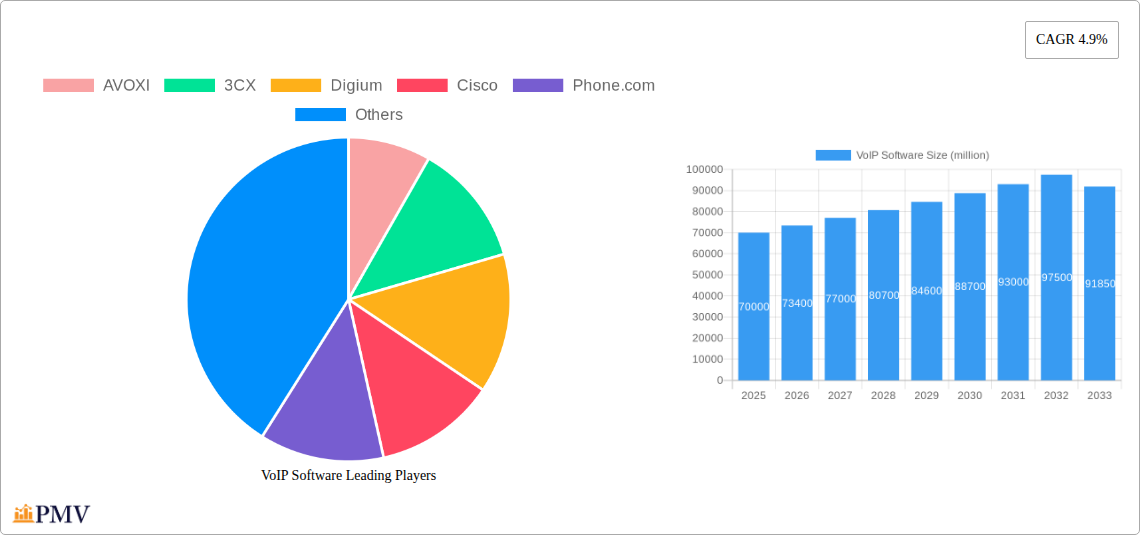
VoIP Software Market Size (In Billion)

The market's trajectory is further shaped by evolving technological landscapes and strategic initiatives by key players. The increasing integration of Artificial Intelligence (AI) for features like intelligent call routing and sentiment analysis, alongside the proliferation of 5G technology for improved call quality and speed, are significant market trends. While the widespread adoption of cloud-based VoIP solutions offers substantial growth opportunities, some large enterprises still maintain on-premises systems due to specific security concerns or legacy infrastructure, representing a segment for potential migration and upgrade. The competitive landscape features established giants and agile innovators, all vying to capture market share through product innovation, strategic partnerships, and competitive pricing. Regional growth is expected to be led by North America and Europe, with Asia Pacific demonstrating rapid adoption rates due to its large and growing business ecosystem.
VoIP Software Company Market Share
Comprehensive VoIP Software Market Report: Analysis, Trends, and Forecast (2019-2033)
This in-depth report provides an exhaustive analysis of the global VoIP (Voice over Internet Protocol) Software market, offering critical insights for stakeholders navigating this dynamic landscape. With a study period spanning from 2019 to 2033, the report leverages a base year of 2025 and a forecast period from 2025 to 2033, informed by historical data from 2019-2024. The research covers key industry players including AVOXI, 3CX, Digium, Cisco, Phone.com, ZoiPer, CloudCall, Talkroute, OnSIP, and Line2, and examines market segmentation across applications like Small and Medium Enterprises (SMEs) and Large Enterprises, and deployment types such as Cloud-based and On-premises.
VoIP Software Market Structure & Competitive Dynamics
The global VoIP Software market exhibits a moderately concentrated structure, characterized by a blend of large, established technology providers and agile, niche players. Innovation ecosystems are thriving, driven by continuous advancements in cloud computing, artificial intelligence, and network infrastructure, facilitating the development of feature-rich and scalable VoIP solutions. Regulatory frameworks, while generally supportive of technological adoption, can vary significantly by region, impacting market entry and operational strategies. Product substitutes, including traditional telephony and other unified communications platforms, pose a constant challenge, necessitating ongoing differentiation and value proposition enhancement. End-user trends highlight a growing demand for seamless integration, enhanced collaboration tools, and cost-effective communication solutions, particularly among Small and Medium Enterprises (SMEs). Merger and acquisition (M&A) activities are a significant feature, with strategic consolidations aiming to expand market reach, acquire innovative technologies, and gain competitive advantages. M&A deal values are projected to reach hundreds of millions of dollars annually. Market share analysis reveals that cloud-based solutions are steadily capturing a larger proportion of the market from on-premises deployments.
VoIP Software Industry Trends & Insights
The VoIP Software industry is experiencing robust growth, driven by several compelling factors. The ongoing digital transformation across industries, coupled with the increasing adoption of remote and hybrid work models, has significantly amplified the demand for flexible and reliable communication platforms. Technological disruptions, such as the widespread deployment of 5G networks and advancements in AI-powered features like intelligent call routing, sentiment analysis, and automated customer service, are revolutionizing the user experience and operational efficiency. Consumer preferences are shifting towards integrated communication solutions that offer voice, video, messaging, and collaboration tools within a single, intuitive interface. This is particularly evident as businesses seek to streamline workflows and improve employee productivity. The competitive dynamics are intensifying, with companies focusing on delivering superior customer support, enhanced security features, and tailored solutions for specific industry verticals. Market penetration of VoIP solutions continues to expand globally, driven by the cost savings and scalability benefits over traditional landlines. The Compound Annual Growth Rate (CAGR) for the VoIP software market is projected to be substantial, estimated to be in the high single digits to low double digits over the forecast period. Key market drivers include the declining cost of internet bandwidth, the proliferation of mobile devices, and the increasing need for international communication capabilities at reduced costs. The integration of VoIP with other business applications, such as CRM and ERP systems, is also a significant trend, creating a more connected and efficient business environment. The market is further propelled by the growing reliance on cloud infrastructure, offering unparalleled flexibility and scalability for businesses of all sizes. Furthermore, the increasing focus on cybersecurity within communication platforms is driving innovation in encryption and data protection.
Dominant Markets & Segments in VoIP Software
The dominant markets and segments within the VoIP Software sector are shaped by economic policies, infrastructure development, and evolving business needs. Cloud-based VoIP solutions are exhibiting significant dominance, particularly among Small and Medium Enterprises (SMEs). This preference is driven by the inherent scalability, flexibility, and cost-effectiveness of cloud deployments, eliminating the need for significant upfront hardware investments and reducing IT overhead. Key drivers for cloud-based dominance include:
- Economic Policies: Government initiatives promoting digital infrastructure and cloud adoption, alongside tax incentives for technology investments, are fueling growth.
- Infrastructure: The widespread availability of high-speed internet connectivity globally, especially in developed and rapidly developing economies, is crucial for reliable cloud-based VoIP performance.
- Technological Advancements: Continuous improvements in cloud infrastructure, including enhanced security protocols and greater processing power, make cloud solutions increasingly robust and appealing.
- SME Agility: SMEs often leverage cloud VoIP to gain enterprise-grade communication capabilities without the associated costs and complexities of on-premises systems.
In terms of Application, Small and Medium Enterprises (SMEs) represent a particularly strong and growing segment. Their need for scalable, affordable, and feature-rich communication solutions makes them prime adopters of VoIP technology. The ability to easily add or remove users, access advanced features like auto-attendants and call recording, and integrate with other business tools aligns perfectly with the operational requirements of SMEs. Large Enterprises are also significant users, with a focus on advanced features, robust security, seamless integration with existing IT infrastructure, and high call volume management.
Regionally, North America and Europe currently lead in VoIP Software adoption, driven by advanced technological infrastructure, early market penetration, and a strong presence of key industry players. However, the Asia-Pacific region is emerging as a rapidly growing market, fueled by increasing internet penetration, a burgeoning SME sector, and significant investments in digital transformation initiatives. The economic policies in these regions often encourage technological innovation and business expansion.
VoIP Software Product Innovations
VoIP software is witnessing rapid product innovations focused on enhancing user experience, functionality, and integration. Developments include AI-powered features for intelligent call routing, sentiment analysis, and real-time translation, significantly improving customer service and internal communication. Enhanced collaboration tools, such as integrated video conferencing, instant messaging, and screen sharing, are becoming standard. Furthermore, seamless integration with CRM, ERP, and other business productivity suites is a key competitive advantage, enabling a unified workflow. The emphasis on robust security features, including end-to-end encryption and compliance certifications, is also paramount in building customer trust and ensuring data protection.
Report Segmentation & Scope
This report segments the VoIP Software market by Application and Type. The Small and Medium Enterprises (SMEs) segment is projected to experience substantial growth, driven by cost-effectiveness and scalability, with market sizes expected to reach hundreds of millions of dollars. Large Enterprises represent a mature segment, focusing on advanced customization, integration, and high-volume capacity, with ongoing demand for enhanced security and unified communications. The Cloud-based segment is anticipated to dominate, offering flexibility and reduced infrastructure costs, with significant market share projections in the billions. The On-premises segment, while declining in overall market share, continues to be relevant for organizations with specific security requirements or existing infrastructure investments, with a steady market presence.
Key Drivers of VoIP Software Growth
The growth of the VoIP Software market is primarily propelled by technological advancements, economic factors, and regulatory support. The ongoing digital transformation across industries necessitates efficient and flexible communication solutions. The increasing adoption of remote and hybrid work models has further accelerated this demand. Economically, the cost savings offered by VoIP over traditional telephony, coupled with reduced infrastructure and maintenance expenses for cloud-based solutions, are significant drivers. Regulatory frameworks in many regions are increasingly supportive of digital communication technologies, facilitating wider adoption. The continuous innovation in features like AI integration, enhanced collaboration tools, and robust security measures also plays a crucial role in expanding the market.
Challenges in the VoIP Software Sector
Despite its strong growth trajectory, the VoIP Software sector faces several challenges. Regulatory hurdles, particularly concerning data privacy and telecommunications compliance in different jurisdictions, can impact global expansion strategies. Supply chain issues, while less prevalent for software than hardware, can affect the availability of underlying infrastructure components that support VoIP services. Intense competitive pressures from established players and new entrants necessitate continuous innovation and aggressive pricing strategies, potentially impacting profit margins. The cost of upgrading legacy infrastructure for some businesses and the need for robust internet connectivity in less developed regions also present adoption barriers, impacting market penetration.
Leading Players in the VoIP Software Market
- AVOXI
- 3CX
- Digium
- Cisco
- Phone.com
- ZoiPer
- CloudCall
- Talkroute
- OnSIP
- Line2
Key Developments in VoIP Software Sector
- 2024 January: Launch of AI-powered virtual assistant for advanced call automation by AVOXI, enhancing customer service efficiency.
- 2024 March: 3CX introduces enhanced security protocols and expanded integration capabilities for its unified communications platform.
- 2024 April: Cisco announces strategic partnerships to bolster its cloud-based VoIP offerings, targeting hybrid work environments.
- 2024 May: Phone.com expands its feature set with advanced analytics and reporting for SMEs.
- 2024 June: Digium enhances its Asterisk platform with new developer tools, fostering third-party innovation.
- 2024 July: ZoiPer releases a refreshed user interface for its softphone applications, focusing on improved usability.
- 2024 September: CloudCall rolls out advanced CRM integrations, streamlining sales workflows for its users.
- 2024 October: Talkroute introduces a new mobile-first VoIP solution for small businesses.
- 2024 November: OnSIP expands its cloud PBX offering with enhanced video conferencing features.
- 2024 December: Line2 announces significant price reductions for its business VoIP plans, targeting budget-conscious SMEs.
Strategic VoIP Software Market Outlook
The strategic outlook for the VoIP Software market is exceptionally positive, driven by continuous technological innovation and evolving business communication needs. The increasing demand for unified communications, integrated collaboration tools, and AI-powered functionalities will serve as key growth accelerators. Companies that can offer comprehensive, secure, and cost-effective solutions tailored to the specific requirements of SMEs and Large Enterprises will be well-positioned for success. The ongoing shift towards cloud-based deployments and the expansion into emerging markets present significant opportunities for market players to capture substantial market share and revenue growth throughout the forecast period. Strategic investments in research and development, coupled with strategic partnerships and acquisitions, will be crucial for maintaining a competitive edge and capitalizing on future market potential.
VoIP Software Segmentation
-
1. Application
- 1.1. Small and Medium Enterprises (SMEs)
- 1.2. Large Enterprises
-
2. Types
- 2.1. Cloud-based
- 2.2. On-premises
VoIP Software Segmentation By Geography
-
1. North America
- 1.1. United States
- 1.2. Canada
- 1.3. Mexico
-
2. South America
- 2.1. Brazil
- 2.2. Argentina
- 2.3. Rest of South America
-
3. Europe
- 3.1. United Kingdom
- 3.2. Germany
- 3.3. France
- 3.4. Italy
- 3.5. Spain
- 3.6. Russia
- 3.7. Benelux
- 3.8. Nordics
- 3.9. Rest of Europe
-
4. Middle East & Africa
- 4.1. Turkey
- 4.2. Israel
- 4.3. GCC
- 4.4. North Africa
- 4.5. South Africa
- 4.6. Rest of Middle East & Africa
-
5. Asia Pacific
- 5.1. China
- 5.2. India
- 5.3. Japan
- 5.4. South Korea
- 5.5. ASEAN
- 5.6. Oceania
- 5.7. Rest of Asia Pacific
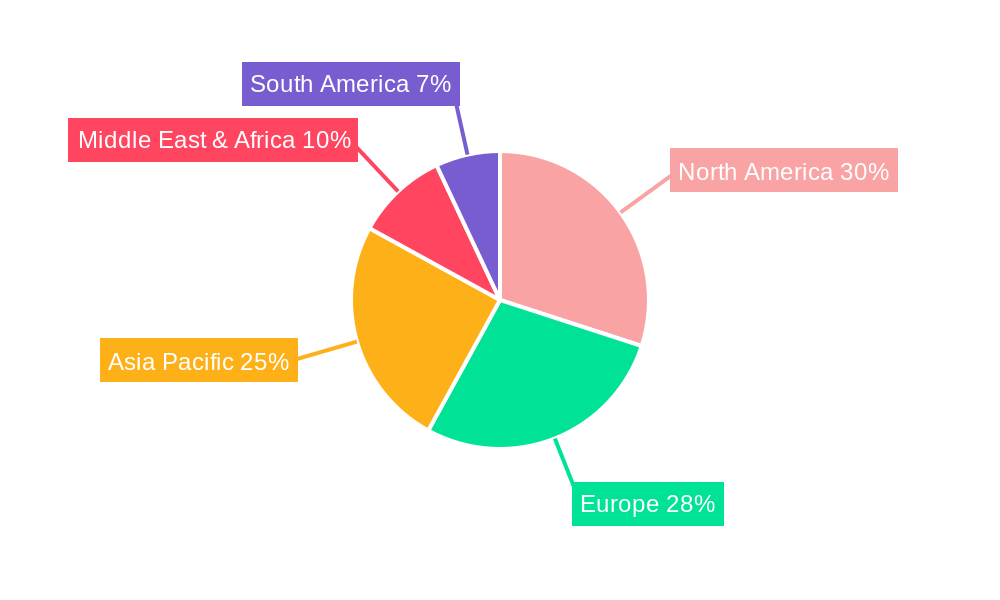
VoIP Software Regional Market Share
Geographic Coverage of VoIP Software
VoIP Software REPORT HIGHLIGHTS
| Aspects | Details |
|---|---|
| Study Period | 2020-2034 |
| Base Year | 2025 |
| Estimated Year | 2026 |
| Forecast Period | 2026-2034 |
| Historical Period | 2020-2025 |
| Growth Rate | CAGR of 4.9% from 2020-2034 |
| Segmentation |
|
Table of Contents
- 1. Introduction
- 1.1. Research Scope
- 1.2. Market Segmentation
- 1.3. Research Methodology
- 1.4. Definitions and Assumptions
- 2. Executive Summary
- 2.1. Introduction
- 3. Market Dynamics
- 3.1. Introduction
- 3.2. Market Drivers
- 3.3. Market Restrains
- 3.4. Market Trends
- 4. Market Factor Analysis
- 4.1. Porters Five Forces
- 4.2. Supply/Value Chain
- 4.3. PESTEL analysis
- 4.4. Market Entropy
- 4.5. Patent/Trademark Analysis
- 5. Global VoIP Software Analysis, Insights and Forecast, 2020-2032
- 5.1. Market Analysis, Insights and Forecast - by Application
- 5.1.1. Small and Medium Enterprises (SMEs)
- 5.1.2. Large Enterprises
- 5.2. Market Analysis, Insights and Forecast - by Types
- 5.2.1. Cloud-based
- 5.2.2. On-premises
- 5.3. Market Analysis, Insights and Forecast - by Region
- 5.3.1. North America
- 5.3.2. South America
- 5.3.3. Europe
- 5.3.4. Middle East & Africa
- 5.3.5. Asia Pacific
- 5.1. Market Analysis, Insights and Forecast - by Application
- 6. North America VoIP Software Analysis, Insights and Forecast, 2020-2032
- 6.1. Market Analysis, Insights and Forecast - by Application
- 6.1.1. Small and Medium Enterprises (SMEs)
- 6.1.2. Large Enterprises
- 6.2. Market Analysis, Insights and Forecast - by Types
- 6.2.1. Cloud-based
- 6.2.2. On-premises
- 6.1. Market Analysis, Insights and Forecast - by Application
- 7. South America VoIP Software Analysis, Insights and Forecast, 2020-2032
- 7.1. Market Analysis, Insights and Forecast - by Application
- 7.1.1. Small and Medium Enterprises (SMEs)
- 7.1.2. Large Enterprises
- 7.2. Market Analysis, Insights and Forecast - by Types
- 7.2.1. Cloud-based
- 7.2.2. On-premises
- 7.1. Market Analysis, Insights and Forecast - by Application
- 8. Europe VoIP Software Analysis, Insights and Forecast, 2020-2032
- 8.1. Market Analysis, Insights and Forecast - by Application
- 8.1.1. Small and Medium Enterprises (SMEs)
- 8.1.2. Large Enterprises
- 8.2. Market Analysis, Insights and Forecast - by Types
- 8.2.1. Cloud-based
- 8.2.2. On-premises
- 8.1. Market Analysis, Insights and Forecast - by Application
- 9. Middle East & Africa VoIP Software Analysis, Insights and Forecast, 2020-2032
- 9.1. Market Analysis, Insights and Forecast - by Application
- 9.1.1. Small and Medium Enterprises (SMEs)
- 9.1.2. Large Enterprises
- 9.2. Market Analysis, Insights and Forecast - by Types
- 9.2.1. Cloud-based
- 9.2.2. On-premises
- 9.1. Market Analysis, Insights and Forecast - by Application
- 10. Asia Pacific VoIP Software Analysis, Insights and Forecast, 2020-2032
- 10.1. Market Analysis, Insights and Forecast - by Application
- 10.1.1. Small and Medium Enterprises (SMEs)
- 10.1.2. Large Enterprises
- 10.2. Market Analysis, Insights and Forecast - by Types
- 10.2.1. Cloud-based
- 10.2.2. On-premises
- 10.1. Market Analysis, Insights and Forecast - by Application
- 11. Competitive Analysis
- 11.1. Global Market Share Analysis 2025
- 11.2. Company Profiles
- 11.2.1 AVOXI
- 11.2.1.1. Overview
- 11.2.1.2. Products
- 11.2.1.3. SWOT Analysis
- 11.2.1.4. Recent Developments
- 11.2.1.5. Financials (Based on Availability)
- 11.2.2 3CX
- 11.2.2.1. Overview
- 11.2.2.2. Products
- 11.2.2.3. SWOT Analysis
- 11.2.2.4. Recent Developments
- 11.2.2.5. Financials (Based on Availability)
- 11.2.3 Digium
- 11.2.3.1. Overview
- 11.2.3.2. Products
- 11.2.3.3. SWOT Analysis
- 11.2.3.4. Recent Developments
- 11.2.3.5. Financials (Based on Availability)
- 11.2.4 Cisco
- 11.2.4.1. Overview
- 11.2.4.2. Products
- 11.2.4.3. SWOT Analysis
- 11.2.4.4. Recent Developments
- 11.2.4.5. Financials (Based on Availability)
- 11.2.5 Phone.com
- 11.2.5.1. Overview
- 11.2.5.2. Products
- 11.2.5.3. SWOT Analysis
- 11.2.5.4. Recent Developments
- 11.2.5.5. Financials (Based on Availability)
- 11.2.6 ZoiPer
- 11.2.6.1. Overview
- 11.2.6.2. Products
- 11.2.6.3. SWOT Analysis
- 11.2.6.4. Recent Developments
- 11.2.6.5. Financials (Based on Availability)
- 11.2.7 CloudCall
- 11.2.7.1. Overview
- 11.2.7.2. Products
- 11.2.7.3. SWOT Analysis
- 11.2.7.4. Recent Developments
- 11.2.7.5. Financials (Based on Availability)
- 11.2.8 Talkroute
- 11.2.8.1. Overview
- 11.2.8.2. Products
- 11.2.8.3. SWOT Analysis
- 11.2.8.4. Recent Developments
- 11.2.8.5. Financials (Based on Availability)
- 11.2.9 OnSIP
- 11.2.9.1. Overview
- 11.2.9.2. Products
- 11.2.9.3. SWOT Analysis
- 11.2.9.4. Recent Developments
- 11.2.9.5. Financials (Based on Availability)
- 11.2.10 Line2
- 11.2.10.1. Overview
- 11.2.10.2. Products
- 11.2.10.3. SWOT Analysis
- 11.2.10.4. Recent Developments
- 11.2.10.5. Financials (Based on Availability)
- 11.2.1 AVOXI
List of Figures
- Figure 1: Global VoIP Software Revenue Breakdown (million, %) by Region 2025 & 2033
- Figure 2: North America VoIP Software Revenue (million), by Application 2025 & 2033
- Figure 3: North America VoIP Software Revenue Share (%), by Application 2025 & 2033
- Figure 4: North America VoIP Software Revenue (million), by Types 2025 & 2033
- Figure 5: North America VoIP Software Revenue Share (%), by Types 2025 & 2033
- Figure 6: North America VoIP Software Revenue (million), by Country 2025 & 2033
- Figure 7: North America VoIP Software Revenue Share (%), by Country 2025 & 2033
- Figure 8: South America VoIP Software Revenue (million), by Application 2025 & 2033
- Figure 9: South America VoIP Software Revenue Share (%), by Application 2025 & 2033
- Figure 10: South America VoIP Software Revenue (million), by Types 2025 & 2033
- Figure 11: South America VoIP Software Revenue Share (%), by Types 2025 & 2033
- Figure 12: South America VoIP Software Revenue (million), by Country 2025 & 2033
- Figure 13: South America VoIP Software Revenue Share (%), by Country 2025 & 2033
- Figure 14: Europe VoIP Software Revenue (million), by Application 2025 & 2033
- Figure 15: Europe VoIP Software Revenue Share (%), by Application 2025 & 2033
- Figure 16: Europe VoIP Software Revenue (million), by Types 2025 & 2033
- Figure 17: Europe VoIP Software Revenue Share (%), by Types 2025 & 2033
- Figure 18: Europe VoIP Software Revenue (million), by Country 2025 & 2033
- Figure 19: Europe VoIP Software Revenue Share (%), by Country 2025 & 2033
- Figure 20: Middle East & Africa VoIP Software Revenue (million), by Application 2025 & 2033
- Figure 21: Middle East & Africa VoIP Software Revenue Share (%), by Application 2025 & 2033
- Figure 22: Middle East & Africa VoIP Software Revenue (million), by Types 2025 & 2033
- Figure 23: Middle East & Africa VoIP Software Revenue Share (%), by Types 2025 & 2033
- Figure 24: Middle East & Africa VoIP Software Revenue (million), by Country 2025 & 2033
- Figure 25: Middle East & Africa VoIP Software Revenue Share (%), by Country 2025 & 2033
- Figure 26: Asia Pacific VoIP Software Revenue (million), by Application 2025 & 2033
- Figure 27: Asia Pacific VoIP Software Revenue Share (%), by Application 2025 & 2033
- Figure 28: Asia Pacific VoIP Software Revenue (million), by Types 2025 & 2033
- Figure 29: Asia Pacific VoIP Software Revenue Share (%), by Types 2025 & 2033
- Figure 30: Asia Pacific VoIP Software Revenue (million), by Country 2025 & 2033
- Figure 31: Asia Pacific VoIP Software Revenue Share (%), by Country 2025 & 2033
List of Tables
- Table 1: Global VoIP Software Revenue million Forecast, by Application 2020 & 2033
- Table 2: Global VoIP Software Revenue million Forecast, by Types 2020 & 2033
- Table 3: Global VoIP Software Revenue million Forecast, by Region 2020 & 2033
- Table 4: Global VoIP Software Revenue million Forecast, by Application 2020 & 2033
- Table 5: Global VoIP Software Revenue million Forecast, by Types 2020 & 2033
- Table 6: Global VoIP Software Revenue million Forecast, by Country 2020 & 2033
- Table 7: United States VoIP Software Revenue (million) Forecast, by Application 2020 & 2033
- Table 8: Canada VoIP Software Revenue (million) Forecast, by Application 2020 & 2033
- Table 9: Mexico VoIP Software Revenue (million) Forecast, by Application 2020 & 2033
- Table 10: Global VoIP Software Revenue million Forecast, by Application 2020 & 2033
- Table 11: Global VoIP Software Revenue million Forecast, by Types 2020 & 2033
- Table 12: Global VoIP Software Revenue million Forecast, by Country 2020 & 2033
- Table 13: Brazil VoIP Software Revenue (million) Forecast, by Application 2020 & 2033
- Table 14: Argentina VoIP Software Revenue (million) Forecast, by Application 2020 & 2033
- Table 15: Rest of South America VoIP Software Revenue (million) Forecast, by Application 2020 & 2033
- Table 16: Global VoIP Software Revenue million Forecast, by Application 2020 & 2033
- Table 17: Global VoIP Software Revenue million Forecast, by Types 2020 & 2033
- Table 18: Global VoIP Software Revenue million Forecast, by Country 2020 & 2033
- Table 19: United Kingdom VoIP Software Revenue (million) Forecast, by Application 2020 & 2033
- Table 20: Germany VoIP Software Revenue (million) Forecast, by Application 2020 & 2033
- Table 21: France VoIP Software Revenue (million) Forecast, by Application 2020 & 2033
- Table 22: Italy VoIP Software Revenue (million) Forecast, by Application 2020 & 2033
- Table 23: Spain VoIP Software Revenue (million) Forecast, by Application 2020 & 2033
- Table 24: Russia VoIP Software Revenue (million) Forecast, by Application 2020 & 2033
- Table 25: Benelux VoIP Software Revenue (million) Forecast, by Application 2020 & 2033
- Table 26: Nordics VoIP Software Revenue (million) Forecast, by Application 2020 & 2033
- Table 27: Rest of Europe VoIP Software Revenue (million) Forecast, by Application 2020 & 2033
- Table 28: Global VoIP Software Revenue million Forecast, by Application 2020 & 2033
- Table 29: Global VoIP Software Revenue million Forecast, by Types 2020 & 2033
- Table 30: Global VoIP Software Revenue million Forecast, by Country 2020 & 2033
- Table 31: Turkey VoIP Software Revenue (million) Forecast, by Application 2020 & 2033
- Table 32: Israel VoIP Software Revenue (million) Forecast, by Application 2020 & 2033
- Table 33: GCC VoIP Software Revenue (million) Forecast, by Application 2020 & 2033
- Table 34: North Africa VoIP Software Revenue (million) Forecast, by Application 2020 & 2033
- Table 35: South Africa VoIP Software Revenue (million) Forecast, by Application 2020 & 2033
- Table 36: Rest of Middle East & Africa VoIP Software Revenue (million) Forecast, by Application 2020 & 2033
- Table 37: Global VoIP Software Revenue million Forecast, by Application 2020 & 2033
- Table 38: Global VoIP Software Revenue million Forecast, by Types 2020 & 2033
- Table 39: Global VoIP Software Revenue million Forecast, by Country 2020 & 2033
- Table 40: China VoIP Software Revenue (million) Forecast, by Application 2020 & 2033
- Table 41: India VoIP Software Revenue (million) Forecast, by Application 2020 & 2033
- Table 42: Japan VoIP Software Revenue (million) Forecast, by Application 2020 & 2033
- Table 43: South Korea VoIP Software Revenue (million) Forecast, by Application 2020 & 2033
- Table 44: ASEAN VoIP Software Revenue (million) Forecast, by Application 2020 & 2033
- Table 45: Oceania VoIP Software Revenue (million) Forecast, by Application 2020 & 2033
- Table 46: Rest of Asia Pacific VoIP Software Revenue (million) Forecast, by Application 2020 & 2033
Frequently Asked Questions
1. What is the projected Compound Annual Growth Rate (CAGR) of the VoIP Software?
The projected CAGR is approximately 4.9%.
2. Which companies are prominent players in the VoIP Software?
Key companies in the market include AVOXI, 3CX, Digium, Cisco, Phone.com, ZoiPer, CloudCall, Talkroute, OnSIP, Line2.
3. What are the main segments of the VoIP Software?
The market segments include Application, Types.
4. Can you provide details about the market size?
The market size is estimated to be USD 91850 million as of 2022.
5. What are some drivers contributing to market growth?
N/A
6. What are the notable trends driving market growth?
N/A
7. Are there any restraints impacting market growth?
N/A
8. Can you provide examples of recent developments in the market?
N/A
9. What pricing options are available for accessing the report?
Pricing options include single-user, multi-user, and enterprise licenses priced at USD 4900.00, USD 7350.00, and USD 9800.00 respectively.
10. Is the market size provided in terms of value or volume?
The market size is provided in terms of value, measured in million.
11. Are there any specific market keywords associated with the report?
Yes, the market keyword associated with the report is "VoIP Software," which aids in identifying and referencing the specific market segment covered.
12. How do I determine which pricing option suits my needs best?
The pricing options vary based on user requirements and access needs. Individual users may opt for single-user licenses, while businesses requiring broader access may choose multi-user or enterprise licenses for cost-effective access to the report.
13. Are there any additional resources or data provided in the VoIP Software report?
While the report offers comprehensive insights, it's advisable to review the specific contents or supplementary materials provided to ascertain if additional resources or data are available.
14. How can I stay updated on further developments or reports in the VoIP Software?
To stay informed about further developments, trends, and reports in the VoIP Software, consider subscribing to industry newsletters, following relevant companies and organizations, or regularly checking reputable industry news sources and publications.
Methodology
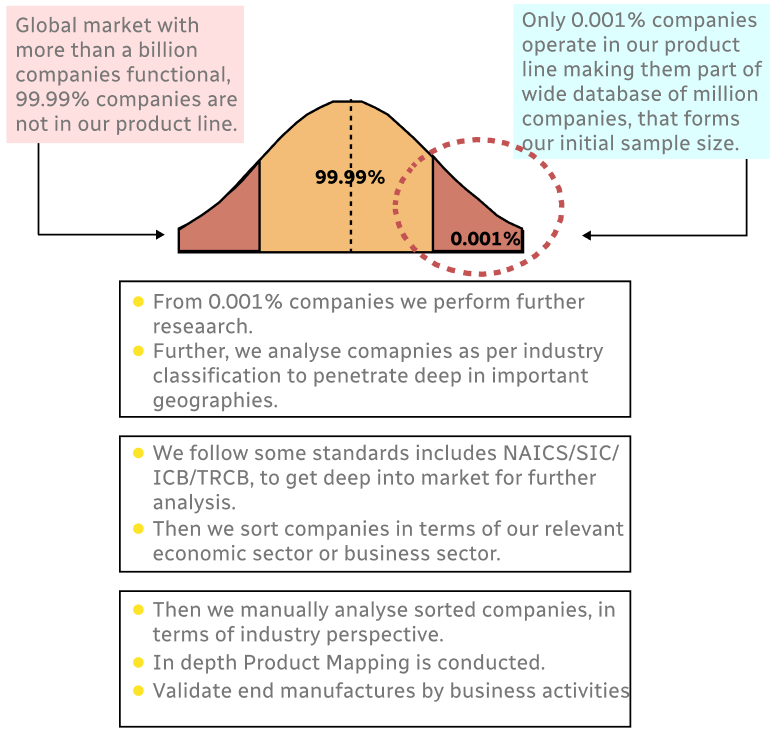
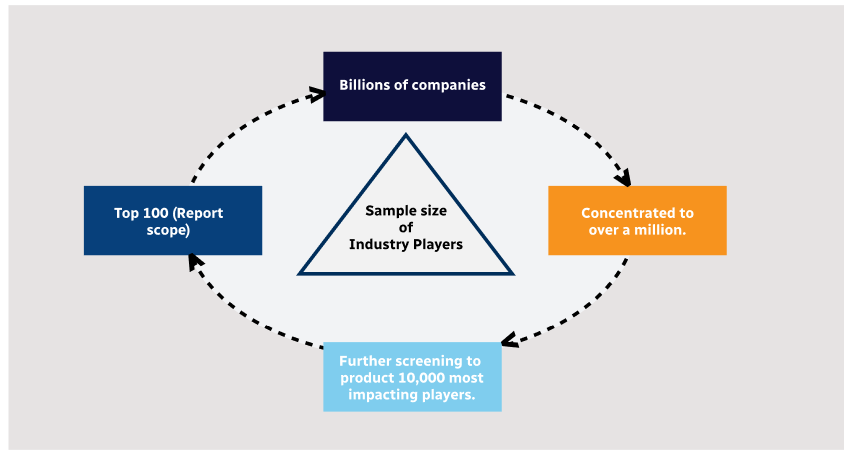
Step 1 - Identification of Relevant Samples Size from Population Database
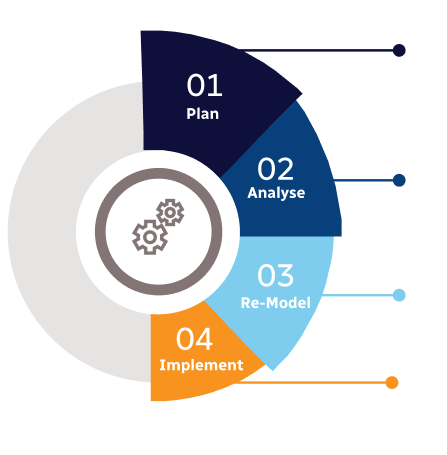
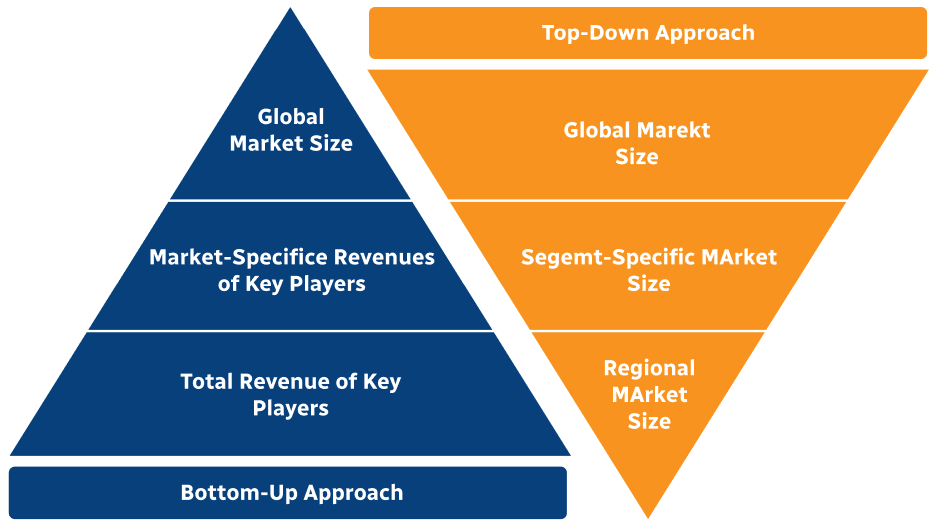
Step 2 - Approaches for Defining Global Market Size (Value, Volume* & Price*)
Note*: In applicable scenarios
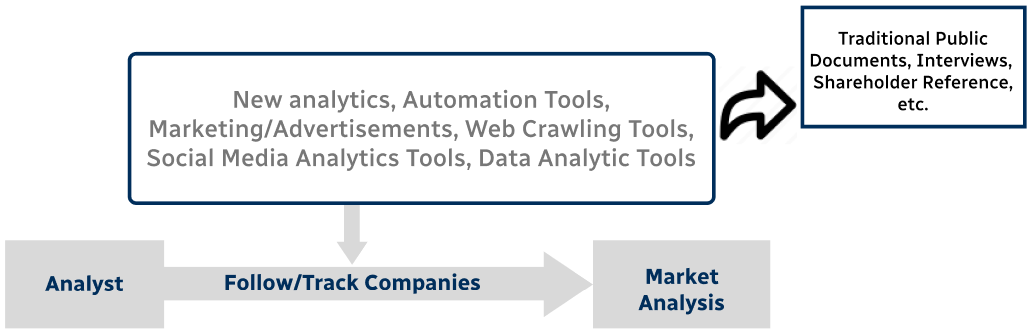
Step 3 - Data Sources
Primary Research
- Web Analytics
- Survey Reports
- Research Institute
- Latest Research Reports
- Opinion Leaders
Secondary Research
- Annual Reports
- White Paper
- Latest Press Release
- Industry Association
- Paid Database
- Investor Presentations
Step 4 - Data Triangulation
Involves using different sources of information in order to increase the validity of a study
These sources are likely to be stakeholders in a program - participants, other researchers, program staff, other community members, and so on.
Then we put all data in single framework & apply various statistical tools to find out the dynamic on the market.
During the analysis stage, feedback from the stakeholder groups would be compared to determine areas of agreement as well as areas of divergence