
Key Insights
The global voice cloning market is experiencing robust expansion, driven by escalating demand for personalized user experiences across diverse sectors. The market, valued at $2.4 billion in 2025, is projected for significant growth through 2033. This upward trajectory is attributed to advancements in AI and machine learning enhancing voice cloning accuracy and naturalness. Increased adoption of voice assistants, audiobooks, and personalized content creation in sectors like IT & Telecommunications, BFSI, education, healthcare, and travel & tourism further fuels demand. Cloud-based deployment models are gaining traction due to scalability and cost-effectiveness, contributing to market dynamism. However, ethical considerations and data privacy requirements may pose challenges.
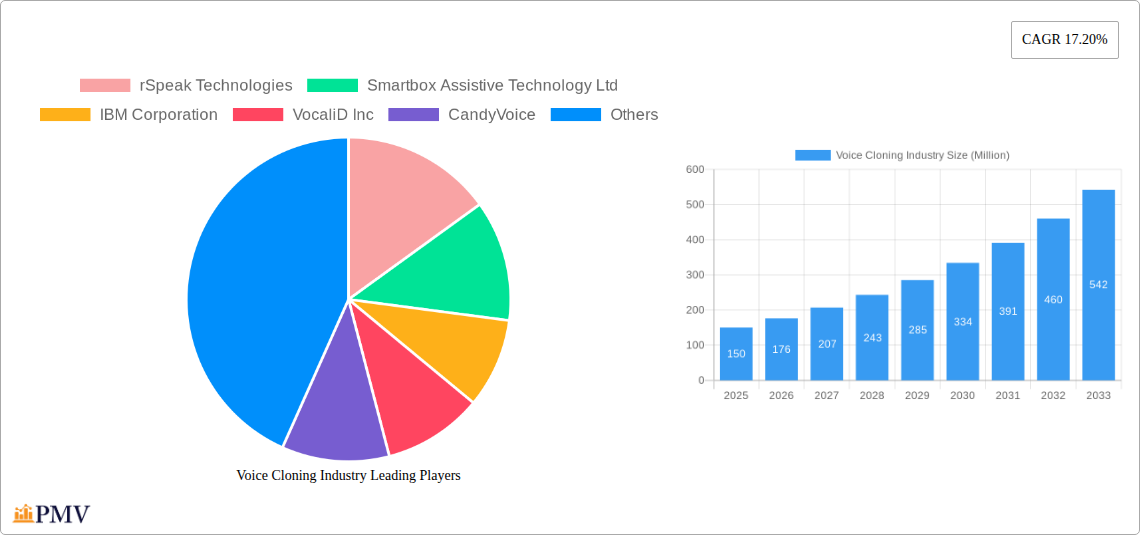
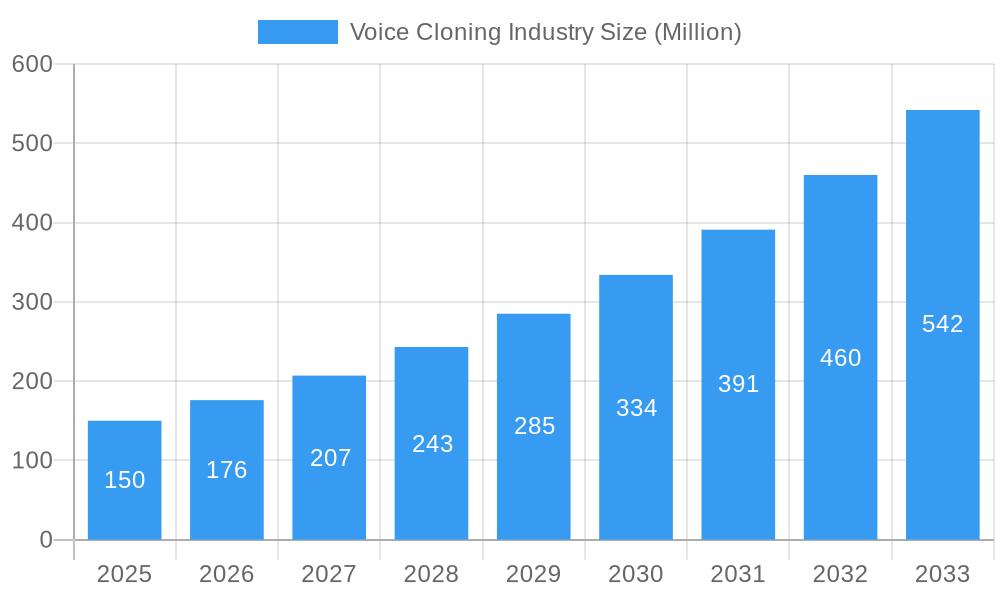
Voice Cloning Industry Market Size (In Billion)

The competitive landscape features established technology leaders and innovative startups, fostering continuous innovation. Market segmentation reveals a shift towards cloud deployment models, alongside ongoing strength in on-premise solutions. IT & Telecommunications and BFSI sectors are leading adoption, with education and healthcare following. Geographically, North America and Europe represent mature markets, while Asia-Pacific is poised for rapid expansion driven by increasing digitalization. The forecast period of 2025-2033 indicates substantial potential for sustained market growth, propelled by ongoing technological evolution and expanding applications.
Voice Cloning Industry Company Market Share
Voice Cloning Industry Market Analysis: 2019-2033
This comprehensive analysis offers critical insights into the global voice cloning industry for businesses, investors, and researchers. Covering a study period from 2019 to 2033, with a base year of 2025, this report provides historical data (2019-2024) and future projections for a complete market understanding. The market was valued at $2.4 billion in 2025 and is projected to reach significant figures by 2033. The report details market segmentation, competitive dynamics, technological advancements, and key growth drivers, delivering actionable intelligence for strategic decision-making.
Voice Cloning Industry Market Structure & Competitive Dynamics
The voice cloning market exhibits a moderately concentrated structure, with several key players vying for market share. The market is characterized by a dynamic innovation ecosystem, fostering continuous advancements in speech synthesis technology. Regulatory frameworks surrounding data privacy and intellectual property rights significantly influence market operations. The emergence of alternative technologies, like text-to-speech synthesis, presents potential substitutes. End-user trends, particularly the increasing demand for personalized and immersive experiences, drive market growth. Mergers and acquisitions (M&A) play a significant role in shaping the competitive landscape. While precise M&A deal values are not publicly available for all transactions, we estimate the total value of significant deals within the period 2019-2024 to be approximately xx Million. Market share is currently dominated by a few major players, with smaller companies focusing on niche segments.
- Market Concentration: Moderately concentrated, with a few dominant players and numerous smaller niche players.
- Innovation Ecosystem: Highly dynamic, with ongoing advancements in AI and machine learning driving innovation.
- Regulatory Frameworks: Stringent regulations related to data privacy (e.g., GDPR) and intellectual property rights impacting market growth.
- Product Substitutes: Text-to-speech technology presents a competitive alternative, although voice cloning offers unique advantages in terms of personalization.
- End-User Trends: Growing demand for personalized and immersive experiences across various sectors fuels market expansion.
- M&A Activities: Significant M&A activity observed, with deal values estimated at approximately xx Million (2019-2024).
Voice Cloning Industry Industry Trends & Insights
The global voice cloning market is experiencing substantial growth, driven by a confluence of factors. Technological advancements, particularly in artificial intelligence (AI) and machine learning (ML), are enabling more natural-sounding and accurate voice clones. The increasing adoption of cloud-based solutions is facilitating broader accessibility and affordability of voice cloning technology. Consumer preferences for personalized experiences across diverse industries are further fueling market expansion. The competitive landscape is characterized by both established technology giants and agile startups, leading to rapid innovation and market consolidation. The Compound Annual Growth Rate (CAGR) for the voice cloning market is estimated to be xx% during the forecast period (2025-2033), with market penetration expected to reach xx% by 2033.
Dominant Markets & Segments in Voice Cloning Industry
The North American region currently holds a dominant position in the voice cloning market, fueled by robust technological infrastructure and a high concentration of major players. Within the deployment type segment, the Cloud segment is projected to witness faster growth compared to On-Premise due to its scalability and cost-effectiveness. The IT & Telecommunication sector is the leading end-user vertical, driven by the rising demand for AI-powered customer service and virtual assistants.
Key Drivers for North American Dominance:
- Strong technological infrastructure and R&D investments.
- High adoption of AI-powered solutions across industries.
- Presence of major players in the voice cloning market.
Key Drivers for Cloud Segment Dominance:
- Scalability and cost-effectiveness compared to on-premise solutions.
- Ease of access and deployment through cloud platforms.
- Integration with other cloud-based services.
Key Drivers for IT & Telecommunication Sector Dominance:
- High demand for AI-powered customer service and virtual assistants.
- Opportunities to enhance customer experience and operational efficiency.
- Increasing investments in digital transformation initiatives.
Voice Cloning Industry Product Innovations
Recent product developments focus on enhancing the naturalness and realism of synthetic voices, incorporating features like emotional expression and accent customization. Applications span various sectors, including entertainment, education, and accessibility. Competitive advantages stem from superior voice quality, efficient algorithms, and seamless integration with existing platforms. This ongoing innovation reflects the market’s technological trends and aligns with the evolving demands of diverse end-user verticals.
Report Segmentation & Scope
This report segments the voice cloning market by deployment type (On-Premise, Cloud) and end-user verticals (IT & Telecommunication, BFSI, Educational Institutions, Healthcare, Travel & Tourism, Others (Media & Entertainment, Retail)). Each segment is analyzed in detail, providing insights into growth projections, market sizes, and competitive dynamics. The cloud segment is expected to grow at a faster CAGR than the on-premise segment due to its scalability and flexibility. The IT & Telecommunication sector is expected to remain the largest end-user vertical throughout the forecast period. Market size estimations for each segment are detailed within the main report.
Key Drivers of Voice Cloning Industry Growth
Several factors fuel the growth of the voice cloning industry. Technological advancements, particularly in AI and machine learning, have significantly improved the quality and realism of synthetic voices. Increasing demand for personalized experiences across various sectors drives adoption. Economic factors, such as the decreasing cost of cloud computing and AI services, make voice cloning technology more accessible. Favorable regulatory environments in certain regions also foster innovation and market expansion. Examples include government initiatives supporting AI development and data privacy regulations that balance innovation with user protection.
Challenges in the Voice Cloning Industry Sector
The voice cloning industry faces several challenges. Regulatory hurdles surrounding data privacy and intellectual property are significant, impacting market development. Supply chain disruptions, particularly concerning specialized hardware and software components, can affect production and delivery. Intense competitive pressures from established players and new entrants create challenges for maintaining market share and profitability. These factors, while present, are not expected to significantly impede overall market growth but require strategic adaptation by market players.
Leading Players in the Voice Cloning Industry Market
- rSpeak Technologies
- Smartbox Assistive Technology Ltd
- IBM Corporation
- VocaliD Inc
- CandyVoice
- Descript Inc
- Resemble AI
- Acapela Group
- Microsoft Corporation
- CereProc Ltd
Key Developments in Voice Cloning Industry Sector
- October 2022: Stats Perform and Veritone, Inc. announced a strategic alliance to leverage AI voice technology for real-time sports updates, expanding reach to content producers and media outlets.
- October 2022: Augnito's speech-to-text AI program was integrated into Prime Health Dubai's systems, improving healthcare efficiency and data collection with 99.9% accuracy.
Strategic Voice Cloning Industry Market Outlook
The voice cloning market holds substantial future potential, driven by continued technological advancements, increasing demand for personalized experiences, and expansion into new applications. Strategic opportunities exist for companies that can develop innovative voice cloning solutions, focusing on superior voice quality, seamless integration with existing systems, and robust data privacy measures. Market players should prioritize partnerships and collaborations to leverage expertise across different sectors and tap into emerging market niches, ensuring sustained growth and market leadership.
Voice Cloning Industry Segmentation
-
1. Deployment Type
- 1.1. On-Premise
- 1.2. Cloud
-
2. End-user Verticals
- 2.1. IT & Telecommunication
- 2.2. BFSI
- 2.3. Educational Institutions
- 2.4. Healthcare
- 2.5. Travel & Tourism
- 2.6. Others (Media & Entertainment, Retail)
Voice Cloning Industry Segmentation By Geography
-
1. North America
- 1.1. United States
- 1.2. Canada
-
2. Europe
- 2.1. Germany
- 2.2. UK
- 2.3. France
- 2.4. Spain
- 2.5. Rest of Europe
-
3. Asia Pacific
- 3.1. China
- 3.2. Japan
- 3.3. India
- 3.4. Australia
- 3.5. Rest of APAC
- 4. Rest of the World
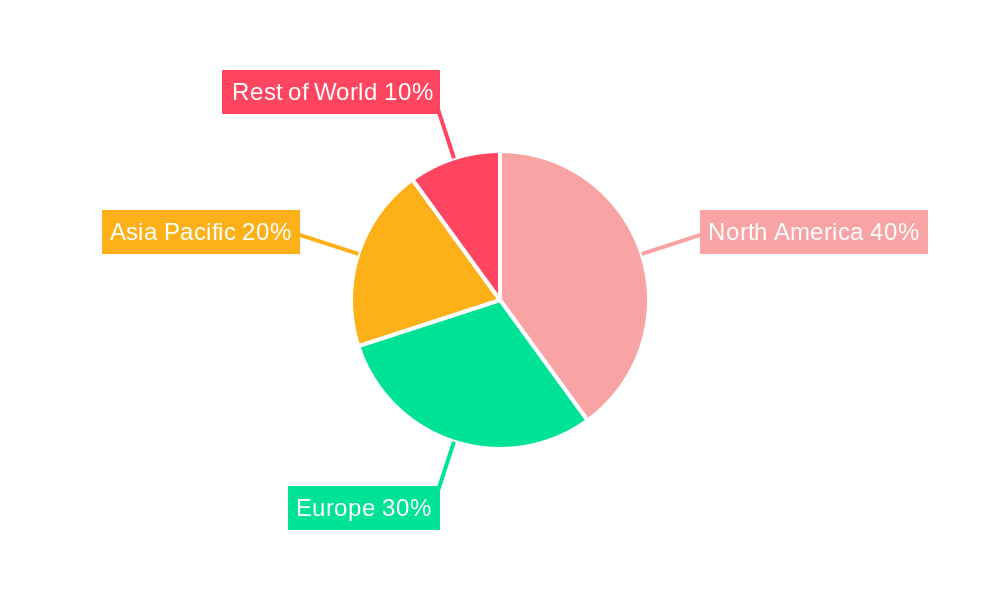
Voice Cloning Industry Regional Market Share
Geographic Coverage of Voice Cloning Industry
Voice Cloning Industry REPORT HIGHLIGHTS
| Aspects | Details |
|---|---|
| Study Period | 2020-2034 |
| Base Year | 2025 |
| Estimated Year | 2026 |
| Forecast Period | 2026-2034 |
| Historical Period | 2020-2025 |
| Growth Rate | CAGR of 26% from 2020-2034 |
| Segmentation |
|
Table of Contents
- 1. Introduction
- 1.1. Research Scope
- 1.2. Market Segmentation
- 1.3. Research Methodology
- 1.4. Definitions and Assumptions
- 2. Executive Summary
- 2.1. Introduction
- 3. Market Dynamics
- 3.1. Introduction
- 3.2. Market Drivers
- 3.2.1. Rising Usage of IoT and Connected Devices; Technological Developments in Solution segment to flourish the market
- 3.3. Market Restrains
- 3.3.1. Increasing Security and Privacy Concerns Among Enterprises
- 3.4. Market Trends
- 3.4.1. Solutions Segment is Expected to Grow at a Significant Rate Over the Forecast Period
- 4. Market Factor Analysis
- 4.1. Porters Five Forces
- 4.2. Supply/Value Chain
- 4.3. PESTEL analysis
- 4.4. Market Entropy
- 4.5. Patent/Trademark Analysis
- 5. Global Voice Cloning Industry Analysis, Insights and Forecast, 2020-2032
- 5.1. Market Analysis, Insights and Forecast - by Deployment Type
- 5.1.1. On-Premise
- 5.1.2. Cloud
- 5.2. Market Analysis, Insights and Forecast - by End-user Verticals
- 5.2.1. IT & Telecommunication
- 5.2.2. BFSI
- 5.2.3. Educational Institutions
- 5.2.4. Healthcare
- 5.2.5. Travel & Tourism
- 5.2.6. Others (Media & Entertainment, Retail)
- 5.3. Market Analysis, Insights and Forecast - by Region
- 5.3.1. North America
- 5.3.2. Europe
- 5.3.3. Asia Pacific
- 5.3.4. Rest of the World
- 5.1. Market Analysis, Insights and Forecast - by Deployment Type
- 6. North America Voice Cloning Industry Analysis, Insights and Forecast, 2020-2032
- 6.1. Market Analysis, Insights and Forecast - by Deployment Type
- 6.1.1. On-Premise
- 6.1.2. Cloud
- 6.2. Market Analysis, Insights and Forecast - by End-user Verticals
- 6.2.1. IT & Telecommunication
- 6.2.2. BFSI
- 6.2.3. Educational Institutions
- 6.2.4. Healthcare
- 6.2.5. Travel & Tourism
- 6.2.6. Others (Media & Entertainment, Retail)
- 6.1. Market Analysis, Insights and Forecast - by Deployment Type
- 7. Europe Voice Cloning Industry Analysis, Insights and Forecast, 2020-2032
- 7.1. Market Analysis, Insights and Forecast - by Deployment Type
- 7.1.1. On-Premise
- 7.1.2. Cloud
- 7.2. Market Analysis, Insights and Forecast - by End-user Verticals
- 7.2.1. IT & Telecommunication
- 7.2.2. BFSI
- 7.2.3. Educational Institutions
- 7.2.4. Healthcare
- 7.2.5. Travel & Tourism
- 7.2.6. Others (Media & Entertainment, Retail)
- 7.1. Market Analysis, Insights and Forecast - by Deployment Type
- 8. Asia Pacific Voice Cloning Industry Analysis, Insights and Forecast, 2020-2032
- 8.1. Market Analysis, Insights and Forecast - by Deployment Type
- 8.1.1. On-Premise
- 8.1.2. Cloud
- 8.2. Market Analysis, Insights and Forecast - by End-user Verticals
- 8.2.1. IT & Telecommunication
- 8.2.2. BFSI
- 8.2.3. Educational Institutions
- 8.2.4. Healthcare
- 8.2.5. Travel & Tourism
- 8.2.6. Others (Media & Entertainment, Retail)
- 8.1. Market Analysis, Insights and Forecast - by Deployment Type
- 9. Rest of the World Voice Cloning Industry Analysis, Insights and Forecast, 2020-2032
- 9.1. Market Analysis, Insights and Forecast - by Deployment Type
- 9.1.1. On-Premise
- 9.1.2. Cloud
- 9.2. Market Analysis, Insights and Forecast - by End-user Verticals
- 9.2.1. IT & Telecommunication
- 9.2.2. BFSI
- 9.2.3. Educational Institutions
- 9.2.4. Healthcare
- 9.2.5. Travel & Tourism
- 9.2.6. Others (Media & Entertainment, Retail)
- 9.1. Market Analysis, Insights and Forecast - by Deployment Type
- 10. Competitive Analysis
- 10.1. Global Market Share Analysis 2025
- 10.2. Company Profiles
- 10.2.1 rSpeak Technologies
- 10.2.1.1. Overview
- 10.2.1.2. Products
- 10.2.1.3. SWOT Analysis
- 10.2.1.4. Recent Developments
- 10.2.1.5. Financials (Based on Availability)
- 10.2.2 Smartbox Assistive Technology Ltd
- 10.2.2.1. Overview
- 10.2.2.2. Products
- 10.2.2.3. SWOT Analysis
- 10.2.2.4. Recent Developments
- 10.2.2.5. Financials (Based on Availability)
- 10.2.3 IBM Corporation
- 10.2.3.1. Overview
- 10.2.3.2. Products
- 10.2.3.3. SWOT Analysis
- 10.2.3.4. Recent Developments
- 10.2.3.5. Financials (Based on Availability)
- 10.2.4 VocaliD Inc
- 10.2.4.1. Overview
- 10.2.4.2. Products
- 10.2.4.3. SWOT Analysis
- 10.2.4.4. Recent Developments
- 10.2.4.5. Financials (Based on Availability)
- 10.2.5 CandyVoice
- 10.2.5.1. Overview
- 10.2.5.2. Products
- 10.2.5.3. SWOT Analysis
- 10.2.5.4. Recent Developments
- 10.2.5.5. Financials (Based on Availability)
- 10.2.6 Descript Inc
- 10.2.6.1. Overview
- 10.2.6.2. Products
- 10.2.6.3. SWOT Analysis
- 10.2.6.4. Recent Developments
- 10.2.6.5. Financials (Based on Availability)
- 10.2.7 Resemble AI
- 10.2.7.1. Overview
- 10.2.7.2. Products
- 10.2.7.3. SWOT Analysis
- 10.2.7.4. Recent Developments
- 10.2.7.5. Financials (Based on Availability)
- 10.2.8 Acapela Group
- 10.2.8.1. Overview
- 10.2.8.2. Products
- 10.2.8.3. SWOT Analysis
- 10.2.8.4. Recent Developments
- 10.2.8.5. Financials (Based on Availability)
- 10.2.9 Microsoft Corporation
- 10.2.9.1. Overview
- 10.2.9.2. Products
- 10.2.9.3. SWOT Analysis
- 10.2.9.4. Recent Developments
- 10.2.9.5. Financials (Based on Availability)
- 10.2.10 CereProc Ltd
- 10.2.10.1. Overview
- 10.2.10.2. Products
- 10.2.10.3. SWOT Analysis
- 10.2.10.4. Recent Developments
- 10.2.10.5. Financials (Based on Availability)
- 10.2.1 rSpeak Technologies
List of Figures
- Figure 1: Global Voice Cloning Industry Revenue Breakdown (billion, %) by Region 2025 & 2033
- Figure 2: North America Voice Cloning Industry Revenue (billion), by Deployment Type 2025 & 2033
- Figure 3: North America Voice Cloning Industry Revenue Share (%), by Deployment Type 2025 & 2033
- Figure 4: North America Voice Cloning Industry Revenue (billion), by End-user Verticals 2025 & 2033
- Figure 5: North America Voice Cloning Industry Revenue Share (%), by End-user Verticals 2025 & 2033
- Figure 6: North America Voice Cloning Industry Revenue (billion), by Country 2025 & 2033
- Figure 7: North America Voice Cloning Industry Revenue Share (%), by Country 2025 & 2033
- Figure 8: Europe Voice Cloning Industry Revenue (billion), by Deployment Type 2025 & 2033
- Figure 9: Europe Voice Cloning Industry Revenue Share (%), by Deployment Type 2025 & 2033
- Figure 10: Europe Voice Cloning Industry Revenue (billion), by End-user Verticals 2025 & 2033
- Figure 11: Europe Voice Cloning Industry Revenue Share (%), by End-user Verticals 2025 & 2033
- Figure 12: Europe Voice Cloning Industry Revenue (billion), by Country 2025 & 2033
- Figure 13: Europe Voice Cloning Industry Revenue Share (%), by Country 2025 & 2033
- Figure 14: Asia Pacific Voice Cloning Industry Revenue (billion), by Deployment Type 2025 & 2033
- Figure 15: Asia Pacific Voice Cloning Industry Revenue Share (%), by Deployment Type 2025 & 2033
- Figure 16: Asia Pacific Voice Cloning Industry Revenue (billion), by End-user Verticals 2025 & 2033
- Figure 17: Asia Pacific Voice Cloning Industry Revenue Share (%), by End-user Verticals 2025 & 2033
- Figure 18: Asia Pacific Voice Cloning Industry Revenue (billion), by Country 2025 & 2033
- Figure 19: Asia Pacific Voice Cloning Industry Revenue Share (%), by Country 2025 & 2033
- Figure 20: Rest of the World Voice Cloning Industry Revenue (billion), by Deployment Type 2025 & 2033
- Figure 21: Rest of the World Voice Cloning Industry Revenue Share (%), by Deployment Type 2025 & 2033
- Figure 22: Rest of the World Voice Cloning Industry Revenue (billion), by End-user Verticals 2025 & 2033
- Figure 23: Rest of the World Voice Cloning Industry Revenue Share (%), by End-user Verticals 2025 & 2033
- Figure 24: Rest of the World Voice Cloning Industry Revenue (billion), by Country 2025 & 2033
- Figure 25: Rest of the World Voice Cloning Industry Revenue Share (%), by Country 2025 & 2033
List of Tables
- Table 1: Global Voice Cloning Industry Revenue billion Forecast, by Deployment Type 2020 & 2033
- Table 2: Global Voice Cloning Industry Revenue billion Forecast, by End-user Verticals 2020 & 2033
- Table 3: Global Voice Cloning Industry Revenue billion Forecast, by Region 2020 & 2033
- Table 4: Global Voice Cloning Industry Revenue billion Forecast, by Deployment Type 2020 & 2033
- Table 5: Global Voice Cloning Industry Revenue billion Forecast, by End-user Verticals 2020 & 2033
- Table 6: Global Voice Cloning Industry Revenue billion Forecast, by Country 2020 & 2033
- Table 7: United States Voice Cloning Industry Revenue (billion) Forecast, by Application 2020 & 2033
- Table 8: Canada Voice Cloning Industry Revenue (billion) Forecast, by Application 2020 & 2033
- Table 9: Global Voice Cloning Industry Revenue billion Forecast, by Deployment Type 2020 & 2033
- Table 10: Global Voice Cloning Industry Revenue billion Forecast, by End-user Verticals 2020 & 2033
- Table 11: Global Voice Cloning Industry Revenue billion Forecast, by Country 2020 & 2033
- Table 12: Germany Voice Cloning Industry Revenue (billion) Forecast, by Application 2020 & 2033
- Table 13: UK Voice Cloning Industry Revenue (billion) Forecast, by Application 2020 & 2033
- Table 14: France Voice Cloning Industry Revenue (billion) Forecast, by Application 2020 & 2033
- Table 15: Spain Voice Cloning Industry Revenue (billion) Forecast, by Application 2020 & 2033
- Table 16: Rest of Europe Voice Cloning Industry Revenue (billion) Forecast, by Application 2020 & 2033
- Table 17: Global Voice Cloning Industry Revenue billion Forecast, by Deployment Type 2020 & 2033
- Table 18: Global Voice Cloning Industry Revenue billion Forecast, by End-user Verticals 2020 & 2033
- Table 19: Global Voice Cloning Industry Revenue billion Forecast, by Country 2020 & 2033
- Table 20: China Voice Cloning Industry Revenue (billion) Forecast, by Application 2020 & 2033
- Table 21: Japan Voice Cloning Industry Revenue (billion) Forecast, by Application 2020 & 2033
- Table 22: India Voice Cloning Industry Revenue (billion) Forecast, by Application 2020 & 2033
- Table 23: Australia Voice Cloning Industry Revenue (billion) Forecast, by Application 2020 & 2033
- Table 24: Rest of APAC Voice Cloning Industry Revenue (billion) Forecast, by Application 2020 & 2033
- Table 25: Global Voice Cloning Industry Revenue billion Forecast, by Deployment Type 2020 & 2033
- Table 26: Global Voice Cloning Industry Revenue billion Forecast, by End-user Verticals 2020 & 2033
- Table 27: Global Voice Cloning Industry Revenue billion Forecast, by Country 2020 & 2033
Frequently Asked Questions
1. What is the projected Compound Annual Growth Rate (CAGR) of the Voice Cloning Industry?
The projected CAGR is approximately 26%.
2. Which companies are prominent players in the Voice Cloning Industry?
Key companies in the market include rSpeak Technologies, Smartbox Assistive Technology Ltd, IBM Corporation, VocaliD Inc, CandyVoice, Descript Inc, Resemble AI, Acapela Group, Microsoft Corporation, CereProc Ltd.
3. What are the main segments of the Voice Cloning Industry?
The market segments include Deployment Type, End-user Verticals.
4. Can you provide details about the market size?
The market size is estimated to be USD 2.4 billion as of 2022.
5. What are some drivers contributing to market growth?
Rising Usage of IoT and Connected Devices; Technological Developments in Solution segment to flourish the market.
6. What are the notable trends driving market growth?
Solutions Segment is Expected to Grow at a Significant Rate Over the Forecast Period.
7. Are there any restraints impacting market growth?
Increasing Security and Privacy Concerns Among Enterprises.
8. Can you provide examples of recent developments in the market?
October 2022: To deliver real-time play-by-play, pre-game, in-game, and post-game updates, Stats Perform, the sports tech leader in data and AI, and Veritone, Inc., creator of the hyper-expansive enterprise AI platform aiWARE, have announced a new strategic alliance. The collaboration will combine Stats Perform's dependable Opta sports data with Veritone's award-winning synthetic speech AI technology to provide localized AI voice capabilities to content producers, media outlets, brand agencies, teams, leagues, and betting platforms around the world.
9. What pricing options are available for accessing the report?
Pricing options include single-user, multi-user, and enterprise licenses priced at USD 4750, USD 5250, and USD 8750 respectively.
10. Is the market size provided in terms of value or volume?
The market size is provided in terms of value, measured in billion.
11. Are there any specific market keywords associated with the report?
Yes, the market keyword associated with the report is "Voice Cloning Industry," which aids in identifying and referencing the specific market segment covered.
12. How do I determine which pricing option suits my needs best?
The pricing options vary based on user requirements and access needs. Individual users may opt for single-user licenses, while businesses requiring broader access may choose multi-user or enterprise licenses for cost-effective access to the report.
13. Are there any additional resources or data provided in the Voice Cloning Industry report?
While the report offers comprehensive insights, it's advisable to review the specific contents or supplementary materials provided to ascertain if additional resources or data are available.
14. How can I stay updated on further developments or reports in the Voice Cloning Industry?
To stay informed about further developments, trends, and reports in the Voice Cloning Industry, consider subscribing to industry newsletters, following relevant companies and organizations, or regularly checking reputable industry news sources and publications.
Methodology
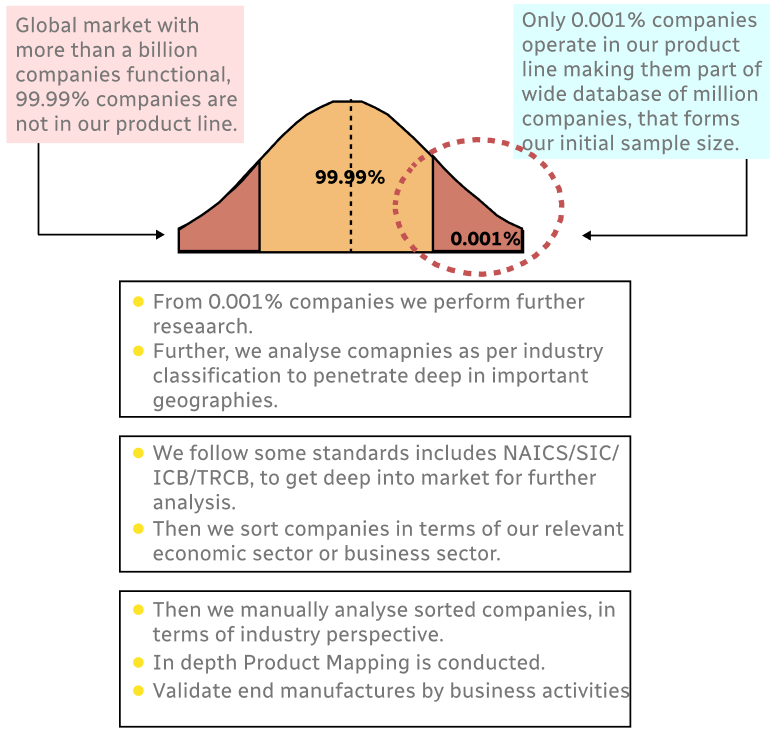
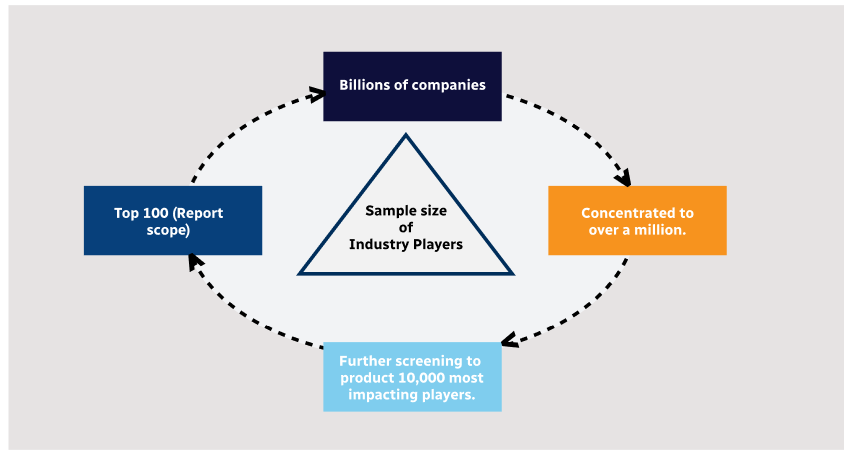
Step 1 - Identification of Relevant Samples Size from Population Database
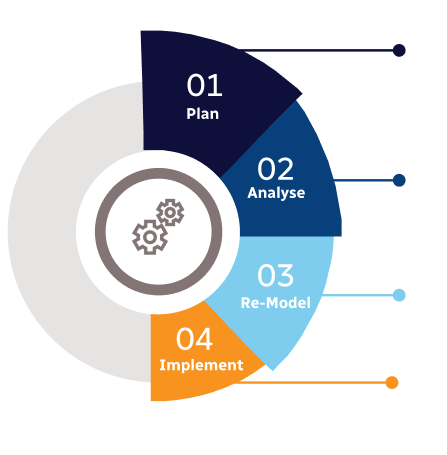
Step 2 - Approaches for Defining Global Market Size (Value, Volume* & Price*)
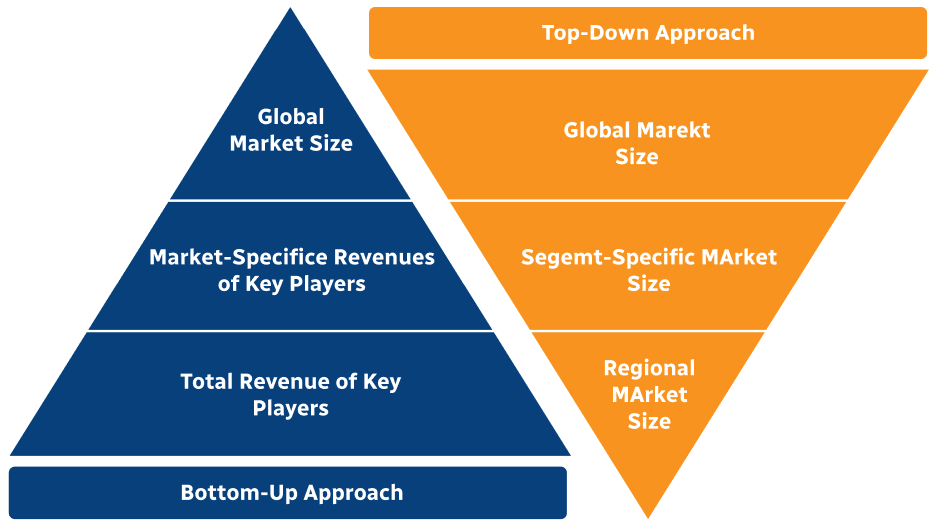
Note*: In applicable scenarios
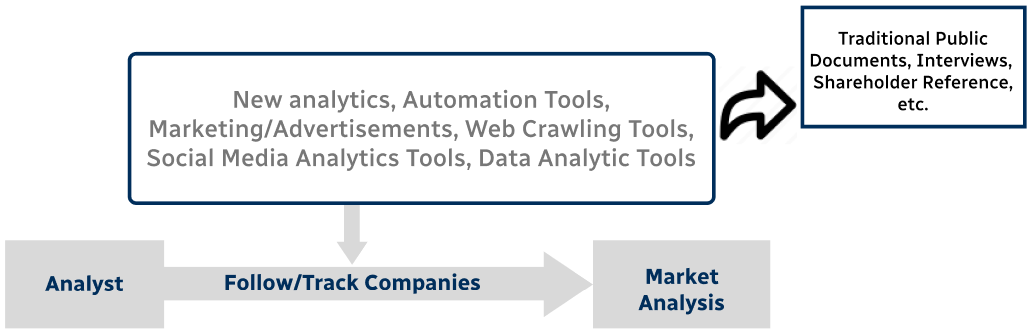
Step 3 - Data Sources
Primary Research
- Web Analytics
- Survey Reports
- Research Institute
- Latest Research Reports
- Opinion Leaders
Secondary Research
- Annual Reports
- White Paper
- Latest Press Release
- Industry Association
- Paid Database
- Investor Presentations
Step 4 - Data Triangulation
Involves using different sources of information in order to increase the validity of a study
These sources are likely to be stakeholders in a program - participants, other researchers, program staff, other community members, and so on.
Then we put all data in single framework & apply various statistical tools to find out the dynamic on the market.
During the analysis stage, feedback from the stakeholder groups would be compared to determine areas of agreement as well as areas of divergence