



Key Insights
The United States Proximity Sensor Market is poised for substantial growth, projected to reach USD 9.26 billion in 2025 and expand at a robust Compound Annual Growth Rate (CAGR) of 13.35% through 2033. This expansion is primarily fueled by the escalating demand for automation across diverse sectors, particularly in industrial automation, automotive, and aerospace and defense. The increasing integration of smart technologies and the Internet of Things (IoT) is driving the adoption of proximity sensors for enhanced efficiency, safety, and real-time monitoring. Key technologies like inductive and photoelectric sensors are expected to dominate the market, owing to their reliability and cost-effectiveness in various applications. The automotive industry's transition towards advanced driver-assistance systems (ADAS) and autonomous vehicles, along with the stringent safety regulations in aerospace and defense, are significant growth drivers. Furthermore, the burgeoning consumer electronics sector, with its continuous innovation in smart devices and wearables, also contributes to the upward trajectory of the market.

United States Proximity Sensor Market Market Size (In Billion)

While the market exhibits strong growth potential, certain factors could pose challenges. The initial cost of advanced proximity sensor systems and the need for skilled personnel for their installation and maintenance might present restraints, especially for small and medium-sized enterprises. However, the ongoing technological advancements are leading to more affordable and user-friendly solutions. The market is characterized by a dynamic competitive landscape, with established players like Rockwell Automation, Honeywell International Inc., and NXP Semiconductors N.V. investing heavily in research and development to introduce innovative products and expand their market reach. The increasing focus on Industry 4.0 initiatives and the growing adoption of robotic systems across manufacturing facilities will further accelerate the demand for sophisticated proximity sensing solutions, solidifying the market's positive outlook.

United States Proximity Sensor Market Company Market Share

Report Description:
Gain unparalleled insights into the dynamic United States Proximity Sensor Market with this in-depth analysis. Covering the study period of 2019–2033, with 2025 as the base and estimated year, this report provides a definitive forecast from 2025–2033, building upon crucial historical data from 2019–2024. Explore key market segments including Inductive, Capacitive, Photoelectric, Magnetic, and Ultrasonic proximity sensors, across Single-Channel and Multi-Channel types. Understand the influence of diverse end-user industries such as Aerospace and Defense, Automotive, Industrial Automation, Consumer Electronics, Food & Beverage, Pharmaceutical, Construction, and Energy. This report identifies critical market drivers, technological innovations, competitive strategies, and future growth accelerators, offering actionable intelligence for stakeholders seeking to capitalize on the expanding US proximity sensor industry.
United States Proximity Sensor Market Market Structure & Competitive Dynamics
The United States Proximity Sensor Market exhibits a moderately consolidated structure, with key players like Rockwell Automation, Honeywell International Inc., NXP Semiconductors N.V., SICK AG, STMicroelectronics, Schneider Electric, OMRON Corporation, Panasonic Corporation, and General Electric holding significant market share. Innovation ecosystems are robust, driven by continuous R&D investments in miniaturization, enhanced accuracy, and smart sensing capabilities, particularly in industrial automation and automotive applications. Regulatory frameworks, while generally supportive of technological advancement, can influence product certification and adoption rates, especially in sectors like aerospace and defense. Product substitutes, such as vision systems and other non-contact sensors, are evolving but currently face limitations in cost-effectiveness and specific application suitability compared to established proximity sensor technologies like inductive and photoelectric. End-user trends indicate a strong demand for IoT-enabled sensors and predictive maintenance solutions. Mergers and acquisitions (M&A) activity, with estimated deal values in the hundreds of millions of dollars, is a strategic tool for companies to expand their product portfolios, technological expertise, and market reach. For instance, acquisitions of specialized sensor technology firms by larger conglomerates aim to integrate advanced sensing into broader automation solutions. The market share distribution reflects a tiered landscape, with established giants dominating a substantial portion, while niche players focus on specialized applications and emerging technologies.
United States Proximity Sensor Market Industry Trends & Insights
The United States Proximity Sensor Market is poised for significant expansion, driven by a confluence of technological advancements, evolving end-user demands, and a robust industrial base. The projected Compound Annual Growth Rate (CAGR) is estimated to be between 6.5% and 8.0% over the forecast period, signifying a healthy upward trajectory. The increasing adoption of Industry 4.0 principles across manufacturing sectors is a primary growth driver. This includes the proliferation of the Industrial Internet of Things (IIoT), where proximity sensors play a crucial role in data acquisition for process optimization, automation, and predictive maintenance. In industrial automation, the need for precise object detection, positioning, and safety interlocks in automated machinery fuels the demand for reliable and accurate proximity sensors. The automotive industry is another major contributor, with the integration of proximity sensors in advanced driver-assistance systems (ADAS), parking assist, and in-cabin sensing applications. The shift towards electric vehicles (EVs) and autonomous driving technologies further amplifies this demand.
Technological disruptions are continually shaping the market. Innovations in capacitive and photoelectric sensor technologies are leading to smaller form factors, improved sensing ranges, and enhanced immunity to environmental factors like dust and moisture. The development of smart proximity sensors with integrated processing capabilities and wireless connectivity is enabling real-time data transfer and remote monitoring, fostering a more connected and intelligent manufacturing environment. Consumer preferences are increasingly leaning towards sophisticated and integrated sensing solutions, driving innovation in consumer electronics and smart home devices. The market penetration of proximity sensors is high in core industrial sectors, but significant growth potential exists in emerging applications and niche markets.
Competitive dynamics are characterized by intense innovation and strategic partnerships. Companies are focusing on developing application-specific sensors and offering comprehensive solutions that integrate sensing, control, and connectivity. The pursuit of cost-efficiency without compromising performance remains a key competitive factor. Furthermore, the increasing emphasis on safety and compliance in various industries necessitates the development of sensors that meet stringent international standards. The growing demand for energy-efficient solutions is also influencing product development, with manufacturers prioritizing low-power consumption sensors for battery-operated devices and large-scale deployments. The resurgence of domestic manufacturing and reshoring initiatives also contribute to a sustained demand for advanced automation components, including proximity sensors.
Dominant Markets & Segments in United States Proximity Sensor Market
The United States Proximity Sensor Market showcases distinct dominance across several key segments.
Technology Dominance:
- Inductive Proximity Sensors: These sensors continue to be a dominant force, particularly in industrial automation and automotive applications, due to their robustness, cost-effectiveness, and reliability in detecting metallic objects. Their prevalence in harsh industrial environments, where they can withstand extreme temperatures, vibration, and contaminants, solidifies their market leadership.
- Photoelectric Proximity Sensors: With their versatility and ability to detect a wider range of materials and distances, photoelectric sensors are experiencing significant growth, especially in food & beverage, pharmaceutical, and packaging industries where non-contact detection of various object types is crucial. Advancements in through-beam, retro-reflective, and diffuse-reflective technologies are expanding their application scope.
- Capacitive Proximity Sensors: While not as dominant as inductive or photoelectric, capacitive sensors are gaining traction in niche applications, particularly for detecting non-metallic materials like liquids, powders, and plastics. Their ability to sense through non-metallic barriers makes them valuable in certain specialized industrial processes.
- Ultrasonic Proximity Sensors: These sensors are increasingly adopted for applications requiring precise distance measurement and detection of irregular shapes or transparent objects, finding use in robotics, material handling, and level sensing.
- Magnetic Proximity Sensors: Their niche dominance lies in applications requiring detection of magnetic targets, such as in motor control, position sensing in harsh environments, and specialized automation tasks.
Channel Type Dominance:
- Single-Channel: This remains the most prevalent channel type due to its widespread use in basic detection and control applications across most end-user industries. Its simplicity and cost-effectiveness make it a staple in many automation setups.
- Multi-Channel: While less dominant, multi-channel sensors are crucial for applications requiring the simultaneous detection of multiple objects or complex positional information, seeing increased adoption in advanced robotics and intricate assembly lines.
End-User Dominance:
- Industrial Automation: This sector is the largest and most influential segment, driven by the relentless pursuit of efficiency, safety, and automation in manufacturing plants. Economic policies promoting domestic manufacturing and investments in advanced factory infrastructure are key drivers. The need for precise control, material handling, and safety interlocking systems in robotics and automated production lines makes proximity sensors indispensable.
- Automotive: The automotive industry is a significant and rapidly growing market for proximity sensors. The push for ADAS, autonomous driving, and enhanced vehicle safety features, along with the increasing complexity of vehicle interiors and exteriors, necessitates a high volume of advanced proximity sensing solutions. Government mandates for safety features and the booming EV market are significant contributors.
- Aerospace and Defense: This segment, while smaller in volume, commands high-value applications due to stringent reliability and performance requirements. Proximity sensors are critical for aircraft systems, defense equipment, and guided missile technology, where precision and fail-safe operation are paramount.
- Consumer Electronics: With the rise of smart homes, wearable technology, and advanced appliances, the consumer electronics sector is becoming an increasingly important market for proximity sensors, particularly for proximity detection in user interfaces and device interaction.
United States Proximity Sensor Market Product Innovations
Recent product innovations in the United States Proximity Sensor Market are centered on enhanced intelligence, miniaturization, and ruggedization. Manufacturers are developing smart sensors with embedded AI capabilities for predictive diagnostics and self-calibration, improving uptime and reducing maintenance costs. The integration of IO-Link technology is becoming standard, enabling seamless integration with higher-level control systems and facilitating efficient data exchange. Advancements in photoelectric and capacitive sensor designs are leading to smaller form factors with extended sensing ranges and improved resistance to environmental factors like dirt, oil, and moisture. For instance, new sensor models offer multi-functionality, combining proximity detection with temperature or pressure sensing in a single device, offering OEMs greater design flexibility and cost savings. These innovations provide a competitive advantage by meeting the evolving demands for smarter, more connected, and more robust sensing solutions across diverse industrial and consumer applications.
Report Segmentation & Scope
This report meticulously segments the United States Proximity Sensor Market to provide a granular understanding of market dynamics.
Technology Segmentation: The market is analyzed across Inductive, Capacitive, Photoelectric, Magnetic, Ultrasonic, and Other Technology types. Inductive sensors are expected to maintain a significant market share due to their widespread industrial adoption, while photoelectric sensors are projected for robust growth, driven by their versatility. Ultrasonic and capacitive sensors will cater to niche but expanding applications.
Channel Type Segmentation: Analysis includes Single-Channel and Multi-Channel sensors. Single-channel sensors will continue to dominate in volume, serving basic detection needs, whereas multi-channel sensors will see increased adoption in complex automation and robotics.
End-User Segmentation: The market is dissected by Aerospace and Defense, Automotive, Industrial Automation, Consumer Electronics, Food & Beverage, Pharmaceutical, Construction, Energy, and Other End-users. Industrial Automation and Automotive are projected to remain the largest segments, propelled by Industry 4.0 initiatives and advancements in vehicle technology, respectively. Aerospace and Defense will represent a high-value, albeit smaller, segment. Growth is also anticipated in Consumer Electronics and Food & Beverage as smart technologies become more integrated.
Key Drivers of United States Proximity Sensor Market Growth
The United States Proximity Sensor Market is propelled by several interconnected drivers. Foremost is the pervasive adoption of Industry 4.0 and the IIoT, which necessitates sophisticated sensing capabilities for data collection, process automation, and predictive maintenance across manufacturing and industrial sectors. The rapid evolution of the automotive industry, particularly the integration of Advanced Driver-Assistance Systems (ADAS), electric vehicles (EVs), and the pursuit of autonomous driving, creates significant demand for advanced proximity sensors. Government initiatives promoting advanced manufacturing, reshoring efforts, and investments in infrastructure further bolster the market by increasing the need for automation and control systems. Technological advancements, such as miniaturization, enhanced accuracy, and smart sensor functionalities, are making proximity sensors more versatile and cost-effective for a wider array of applications.
Challenges in the United States Proximity Sensor Market Sector
Despite robust growth, the United States Proximity Sensor Market faces several challenges. Intense competition among established players and emerging low-cost manufacturers can lead to price pressures and margin erosion, particularly for standard sensor types. Supply chain disruptions, exacerbated by geopolitical events and raw material shortages, can impact production timelines and product availability, leading to increased costs. Evolving regulatory landscapes, while generally supportive, can introduce compliance complexities and necessitate additional testing and certification, potentially delaying product launches. The rapid pace of technological change also poses a challenge, requiring continuous R&D investment to keep pace with innovations in AI, IoT, and advanced materials, ensuring sensors remain competitive and relevant in an increasingly sophisticated market.
Leading Players in the United States Proximity Sensor Market Market
- Rockwell Automation
- Honeywell International Inc.
- NXP Semiconductors N V
- SICK AG
- STMicroelectronics
- Schneider Electric
- OMRON Corporation
- Panasonic Corporation
- General Electric
Key Developments in United States Proximity Sensor Market Sector
- 2023: Launch of new ruggedized inductive proximity sensors with enhanced resistance to harsh environmental conditions for heavy industrial applications.
- 2023: Introduction of smart photoelectric sensors with built-in analytics and IO-Link communication capabilities for advanced machine vision integration.
- 2022: Major acquisition of a specialized sensor technology firm by a leading automation provider to strengthen its IoT sensing portfolio.
- 2022: Development of novel capacitive sensors capable of detecting non-metallic materials through thicker barriers, expanding applications in food processing and packaging.
- 2021: Significant investment in R&D for miniaturized ultrasonic sensors targeting consumer electronics and wearable devices.
- 2021: Strategic partnership formed to integrate proximity sensor data with cloud-based AI platforms for predictive maintenance solutions.
Strategic United States Proximity Sensor Market Market Outlook
The strategic outlook for the United States Proximity Sensor Market is highly promising, driven by an acceleration in automation and digitalization trends. Growth accelerators include the expanding adoption of IIoT solutions, requiring more intelligent and connected sensors for real-time data acquisition and analysis. The continued innovation in the automotive sector, particularly in ADAS and autonomous driving, will fuel demand for high-performance sensors. Furthermore, government initiatives supporting advanced manufacturing and infrastructure development are creating a fertile ground for market expansion. Companies that focus on developing application-specific solutions, integrating advanced features like AI and edge computing, and ensuring seamless connectivity will be well-positioned to capitalize on future market opportunities and maintain a competitive edge in this dynamic sector. The increasing demand for smart factory solutions and the integration of sensors into everyday devices will continue to drive market growth.
United States Proximity Sensor Market Segmentation
-
1. Technology
- 1.1. Inductive
- 1.2. Capacitive
- 1.3. Photoelectric
- 1.4. Magnetic
- 1.5. Ultrasonic
- 1.6. Other Technology
-
2. Channel Type
- 2.1. Single Channel
- 2.2. Multi-Channel
-
3. End-User
- 3.1. Aerospace and Defense
- 3.2. Automotive
- 3.3. Industrial Automation
- 3.4. Consumer Electronics
- 3.5. Food & Beverage
- 3.6. Pharmaceutical
- 3.7. Construction
- 3.8. Energy
- 3.9. Other End-users
United States Proximity Sensor Market Segmentation By Geography
- 1. United States

United States Proximity Sensor Market Regional Market Share

Geographic Coverage of United States Proximity Sensor Market
United States Proximity Sensor Market REPORT HIGHLIGHTS
| Aspects | Details |
|---|---|
| Study Period | 2020-2034 |
| Base Year | 2025 |
| Estimated Year | 2026 |
| Forecast Period | 2026-2034 |
| Historical Period | 2020-2025 |
| Growth Rate | CAGR of 13.35% from 2020-2034 |
| Segmentation |
|
Table of Contents
- 1. Introduction
- 1.1. Research Scope
- 1.2. Market Segmentation
- 1.3. Research Methodology
- 1.4. Definitions and Assumptions
- 2. Executive Summary
- 2.1. Introduction
- 3. Market Dynamics
- 3.1. Introduction
- 3.2. Market Drivers
- 3.2.1. ; Growth in Industrial Automation; Increase in the Demand for Inductive Sensing Technology; Expansion of Automotive Sensing Applications
- 3.3. Market Restrains
- 3.3.1. Design Comlexity & Reliability
- 3.4. Market Trends
- 3.4.1. The Automotive Segment is Expected to Drive the Market's Growth
- 4. Market Factor Analysis
- 4.1. Porters Five Forces
- 4.2. Supply/Value Chain
- 4.3. PESTEL analysis
- 4.4. Market Entropy
- 4.5. Patent/Trademark Analysis
- 5. United States Proximity Sensor Market Analysis, Insights and Forecast, 2020-2032
- 5.1. Market Analysis, Insights and Forecast - by Technology
- 5.1.1. Inductive
- 5.1.2. Capacitive
- 5.1.3. Photoelectric
- 5.1.4. Magnetic
- 5.1.5. Ultrasonic
- 5.1.6. Other Technology
- 5.2. Market Analysis, Insights and Forecast - by Channel Type
- 5.2.1. Single Channel
- 5.2.2. Multi-Channel
- 5.3. Market Analysis, Insights and Forecast - by End-User
- 5.3.1. Aerospace and Defense
- 5.3.2. Automotive
- 5.3.3. Industrial Automation
- 5.3.4. Consumer Electronics
- 5.3.5. Food & Beverage
- 5.3.6. Pharmaceutical
- 5.3.7. Construction
- 5.3.8. Energy
- 5.3.9. Other End-users
- 5.4. Market Analysis, Insights and Forecast - by Region
- 5.4.1. United States
- 5.1. Market Analysis, Insights and Forecast - by Technology
- 6. Competitive Analysis
- 6.1. Market Share Analysis 2025
- 6.2. Company Profiles
- 6.2.1 Rockwell Automation
- 6.2.1.1. Overview
- 6.2.1.2. Products
- 6.2.1.3. SWOT Analysis
- 6.2.1.4. Recent Developments
- 6.2.1.5. Financials (Based on Availability)
- 6.2.2 Honeywell International Inc
- 6.2.2.1. Overview
- 6.2.2.2. Products
- 6.2.2.3. SWOT Analysis
- 6.2.2.4. Recent Developments
- 6.2.2.5. Financials (Based on Availability)
- 6.2.3 NXP Semiconductors N V
- 6.2.3.1. Overview
- 6.2.3.2. Products
- 6.2.3.3. SWOT Analysis
- 6.2.3.4. Recent Developments
- 6.2.3.5. Financials (Based on Availability)
- 6.2.4 SICK AG
- 6.2.4.1. Overview
- 6.2.4.2. Products
- 6.2.4.3. SWOT Analysis
- 6.2.4.4. Recent Developments
- 6.2.4.5. Financials (Based on Availability)
- 6.2.5 STMicroelectronics
- 6.2.5.1. Overview
- 6.2.5.2. Products
- 6.2.5.3. SWOT Analysis
- 6.2.5.4. Recent Developments
- 6.2.5.5. Financials (Based on Availability)
- 6.2.6 Schneider Electric
- 6.2.6.1. Overview
- 6.2.6.2. Products
- 6.2.6.3. SWOT Analysis
- 6.2.6.4. Recent Developments
- 6.2.6.5. Financials (Based on Availability)
- 6.2.7 OMRON Corporation
- 6.2.7.1. Overview
- 6.2.7.2. Products
- 6.2.7.3. SWOT Analysis
- 6.2.7.4. Recent Developments
- 6.2.7.5. Financials (Based on Availability)
- 6.2.8 Panasonic Corporation
- 6.2.8.1. Overview
- 6.2.8.2. Products
- 6.2.8.3. SWOT Analysis
- 6.2.8.4. Recent Developments
- 6.2.8.5. Financials (Based on Availability)
- 6.2.9 General Electric*List Not Exhaustive
- 6.2.9.1. Overview
- 6.2.9.2. Products
- 6.2.9.3. SWOT Analysis
- 6.2.9.4. Recent Developments
- 6.2.9.5. Financials (Based on Availability)
- 6.2.1 Rockwell Automation
List of Figures
- Figure 1: United States Proximity Sensor Market Revenue Breakdown (billion, %) by Product 2025 & 2033
- Figure 2: United States Proximity Sensor Market Share (%) by Company 2025
List of Tables
- Table 1: United States Proximity Sensor Market Revenue billion Forecast, by Technology 2020 & 2033
- Table 2: United States Proximity Sensor Market Revenue billion Forecast, by Channel Type 2020 & 2033
- Table 3: United States Proximity Sensor Market Revenue billion Forecast, by End-User 2020 & 2033
- Table 4: United States Proximity Sensor Market Revenue billion Forecast, by Region 2020 & 2033
- Table 5: United States Proximity Sensor Market Revenue billion Forecast, by Technology 2020 & 2033
- Table 6: United States Proximity Sensor Market Revenue billion Forecast, by Channel Type 2020 & 2033
- Table 7: United States Proximity Sensor Market Revenue billion Forecast, by End-User 2020 & 2033
- Table 8: United States Proximity Sensor Market Revenue billion Forecast, by Country 2020 & 2033
Frequently Asked Questions
1. What is the projected Compound Annual Growth Rate (CAGR) of the United States Proximity Sensor Market?
The projected CAGR is approximately 13.35%.
2. Which companies are prominent players in the United States Proximity Sensor Market?
Key companies in the market include Rockwell Automation, Honeywell International Inc, NXP Semiconductors N V, SICK AG, STMicroelectronics, Schneider Electric, OMRON Corporation, Panasonic Corporation, General Electric*List Not Exhaustive.
3. What are the main segments of the United States Proximity Sensor Market?
The market segments include Technology, Channel Type, End-User.
4. Can you provide details about the market size?
The market size is estimated to be USD 9.26 billion as of 2022.
5. What are some drivers contributing to market growth?
; Growth in Industrial Automation; Increase in the Demand for Inductive Sensing Technology; Expansion of Automotive Sensing Applications.
6. What are the notable trends driving market growth?
The Automotive Segment is Expected to Drive the Market's Growth.
7. Are there any restraints impacting market growth?
Design Comlexity & Reliability.
8. Can you provide examples of recent developments in the market?
N/A
9. What pricing options are available for accessing the report?
Pricing options include single-user, multi-user, and enterprise licenses priced at USD 3800, USD 4500, and USD 5800 respectively.
10. Is the market size provided in terms of value or volume?
The market size is provided in terms of value, measured in billion.
11. Are there any specific market keywords associated with the report?
Yes, the market keyword associated with the report is "United States Proximity Sensor Market," which aids in identifying and referencing the specific market segment covered.
12. How do I determine which pricing option suits my needs best?
The pricing options vary based on user requirements and access needs. Individual users may opt for single-user licenses, while businesses requiring broader access may choose multi-user or enterprise licenses for cost-effective access to the report.
13. Are there any additional resources or data provided in the United States Proximity Sensor Market report?
While the report offers comprehensive insights, it's advisable to review the specific contents or supplementary materials provided to ascertain if additional resources or data are available.
14. How can I stay updated on further developments or reports in the United States Proximity Sensor Market?
To stay informed about further developments, trends, and reports in the United States Proximity Sensor Market, consider subscribing to industry newsletters, following relevant companies and organizations, or regularly checking reputable industry news sources and publications.
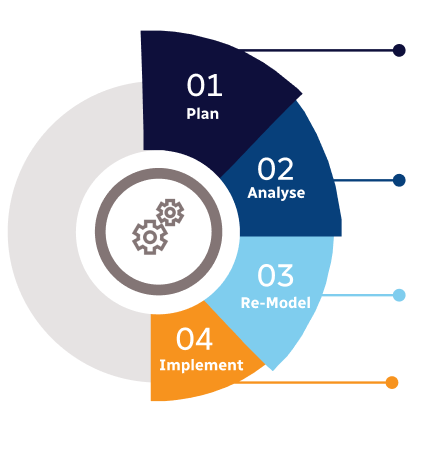
Methodology
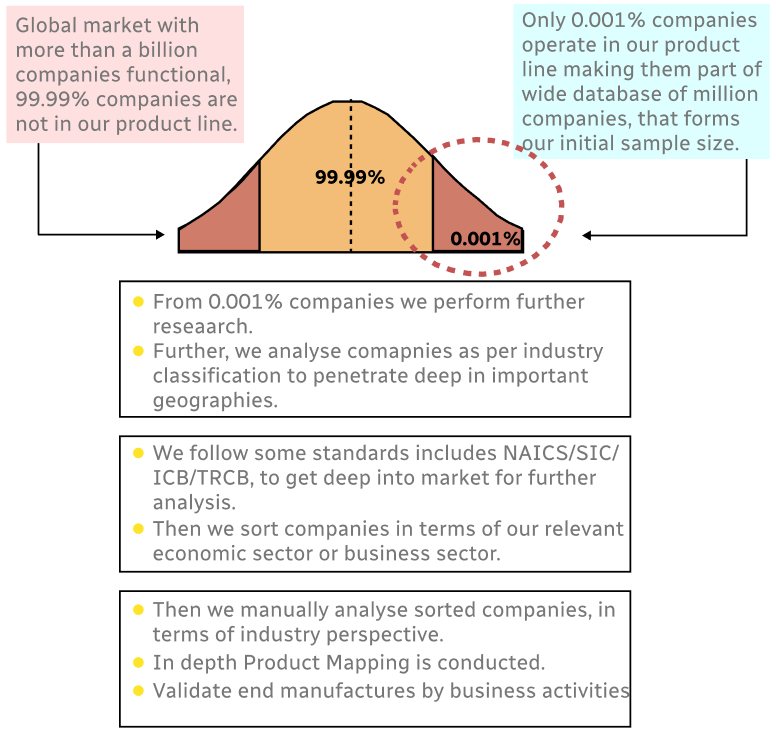
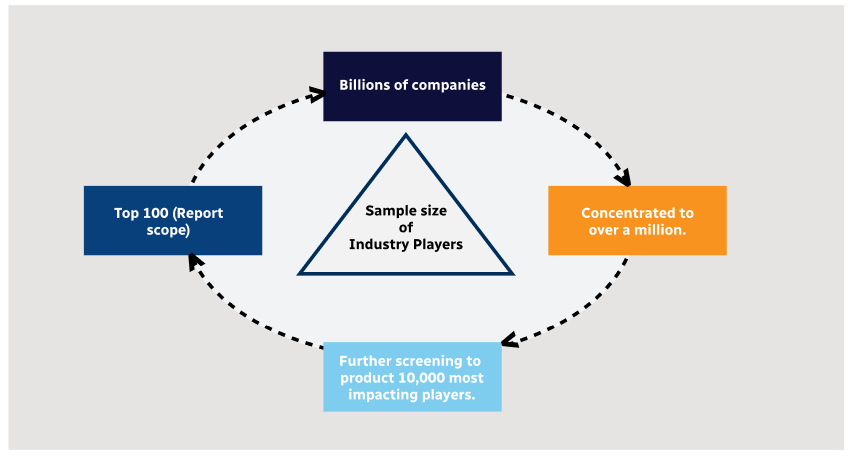
Step 1 - Identification of Relevant Samples Size from Population Database
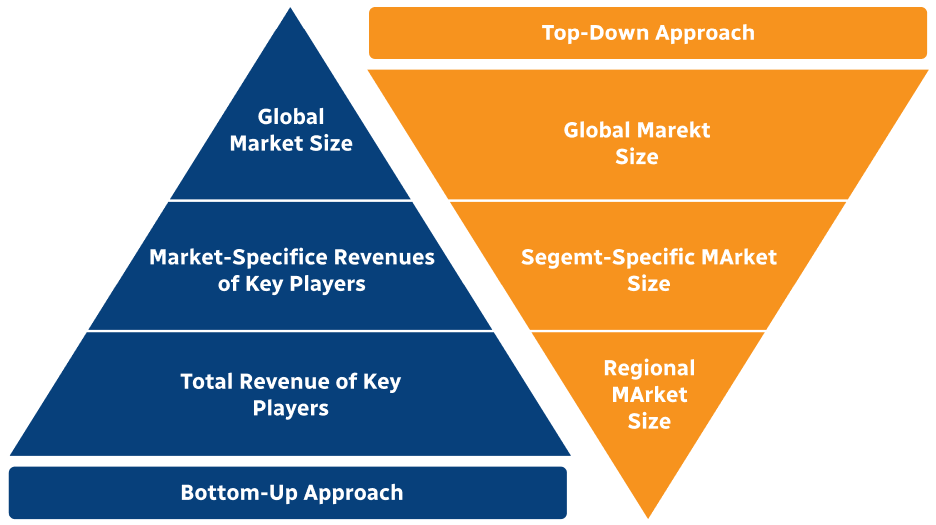
Step 2 - Approaches for Defining Global Market Size (Value, Volume* & Price*)
Note*: In applicable scenarios
Step 3 - Data Sources
Primary Research
- Web Analytics
- Survey Reports
- Research Institute
- Latest Research Reports
- Opinion Leaders
Secondary Research
- Annual Reports
- White Paper
- Latest Press Release
- Industry Association
- Paid Database
- Investor Presentations
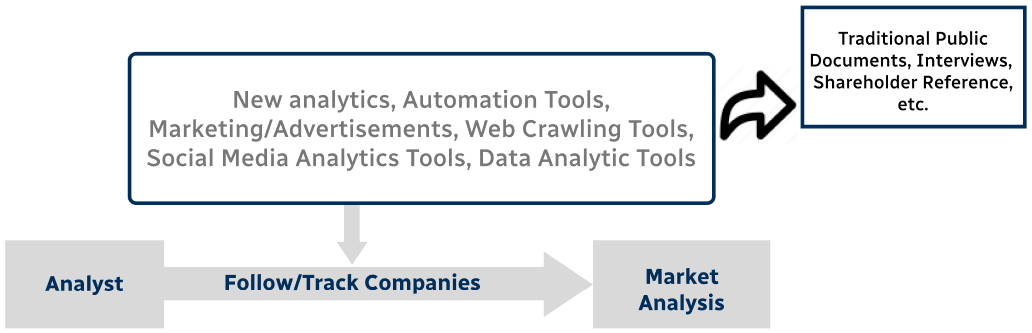
Step 4 - Data Triangulation
Involves using different sources of information in order to increase the validity of a study
These sources are likely to be stakeholders in a program - participants, other researchers, program staff, other community members, and so on.
Then we put all data in single framework & apply various statistical tools to find out the dynamic on the market.
During the analysis stage, feedback from the stakeholder groups would be compared to determine areas of agreement as well as areas of divergence


