



Key Insights
The global TV show and film market is poised for steady growth, projected to reach $70.1 billion in 2025. This expansion is driven by an increasing demand for high-quality content across various platforms, fueled by the proliferation of streaming services and the evolving preferences of global audiences. The market is anticipated to grow at a Compound Annual Growth Rate (CAGR) of 2.5% between 2025 and 2033, indicating a robust and sustained upward trajectory. Key growth drivers include the rising adoption of digital entertainment, the increasing production of original content by streaming giants, and the growing influence of emerging markets. Furthermore, technological advancements in production and distribution, such as the adoption of AI in scriptwriting and advanced visual effects, are contributing to both the quality and volume of content being produced. The industry's ability to adapt to changing consumer behaviors, including the demand for personalized viewing experiences and binge-watching culture, will be crucial for sustained success.

TV Show and Film Market Size (In Billion)

The market is segmented by application into TV Production Revenues and TV Distribution, and Film Production Revenues and Film Distribution, highlighting the interconnectedness of these entertainment sectors. Further segmentation by type, including Pre-production, Production, and Post-production, underscores the comprehensive value chain involved. Major players like Warner Bros., The Walt Disney, and Universal Pictures are at the forefront, investing heavily in content creation and strategic partnerships to expand their global reach. Geographic analysis reveals North America and Europe as dominant regions, with Asia Pacific showing significant growth potential due to its large population and increasing disposable income. The market, however, faces certain restraints, including rising production costs, increasing competition, and evolving regulatory landscapes. Nevertheless, the overarching trend points towards continued innovation, content diversification, and a more interconnected global entertainment ecosystem, ensuring the TV show and film market remains a dynamic and lucrative industry.

TV Show and Film Company Market Share

In-Depth Report: TV Show and Film Market Analysis (2019–2033) - Unlocking Billion-Dollar Growth Opportunities
This comprehensive report offers an unparalleled deep dive into the global TV Show and Film industry, meticulously analyzing market dynamics, emerging trends, and strategic opportunities from 2019 to 2033. With a base year of 2025 and a detailed forecast period spanning 2025–2033, this study provides actionable insights for stakeholders navigating this ever-evolving billion-dollar sector. We dissect key revenue streams across TV Production, TV Distribution, Film Production, and Film Distribution, examining every stage from Pre-production to Post-production. Essential for media conglomerates, production houses, investors, and policymakers, this report leverages cutting-edge data and expert analysis to illuminate the path to sustained growth and competitive advantage.
TV Show and Film Market Structure & Competitive Dynamics
The global TV Show and Film market, valued in the hundreds of billions, exhibits a dynamic and evolving structure. Market concentration varies significantly across regions, with major players like Warner Bros., The Walt Disney, Universal Pictures, Paramount Pictures, and Columbia Pictures dominating certain segments, particularly in North America and Europe. However, the rise of localized content and regional production hubs, driven by companies such as Toei Company, CJ Entertainment, Huayi Brothers Media, and China Film Group Corporation, is fostering a more diverse competitive landscape. Innovation ecosystems are vibrant, fueled by advancements in streaming technology, virtual production, and AI-driven content creation, leading to the emergence of new production methodologies and distribution channels. Regulatory frameworks continue to shape market access and content standards, with ongoing debates around content moderation, intellectual property rights, and antitrust concerns influencing investment decisions. Product substitutes are increasingly prevalent, with interactive gaming and immersive digital experiences vying for consumer attention alongside traditional film and television content. End-user trends are heavily influenced by the proliferation of Over-The-Top (OTT) platforms, demanding more personalized, on-demand, and high-quality audiovisual experiences. Mergers and Acquisitions (M&A) remain a significant driver of market consolidation, with strategic deals valued in the tens of billions aimed at expanding content libraries, acquiring new technologies, and reaching broader audiences. For instance, recent M&A activities have seen consolidation among major studios to leverage IP across multiple platforms.
TV Show and Film Industry Trends & Insights
The TV Show and Film industry is experiencing a period of transformative growth, with a projected Compound Annual Growth Rate (CAGR) of over 8% anticipated over the forecast period. This expansion is primarily propelled by the relentless surge in digital streaming, which has revolutionized content consumption habits and expanded market penetration globally. The proliferation of Over-The-Top (OTT) platforms, from giants like Netflix and Amazon Prime Video to specialized niche services, has created unprecedented demand for both original productions and licensed content. This shift has significantly impacted traditional broadcast television, forcing a strategic pivot towards digital-first strategies and diversified revenue streams. Technological disruptions are at the forefront of this evolution, with Artificial Intelligence (AI) playing an increasingly crucial role in everything from script analysis and audience prediction to post-production workflows and personalized content recommendations. Virtual and augmented reality (VR/AR) technologies are also beginning to offer new avenues for immersive storytelling and interactive viewing experiences, although their widespread adoption in mainstream film and TV production is still in its nascent stages. Consumer preferences are increasingly characterized by a demand for diverse, inclusive, and socially relevant narratives, pushing production companies to invest in a wider array of stories and talent. The global reach of streaming services has also facilitated the rise of international content, with Korean dramas, Spanish-language series, and anime gaining massive global followings, significantly broadening the competitive landscape and creating new revenue opportunities for producers worldwide. The industry is also witnessing a growing emphasis on franchise building and intellectual property (IP) leveraging, with studios increasingly focusing on developing interconnected cinematic universes and transmedia storytelling to maximize audience engagement and revenue across multiple platforms. The impact of the pandemic, while disruptive in the short term, accelerated many of these digital transformation trends, solidifying the importance of robust digital distribution and production capabilities.
Dominant Markets & Segments in TV Show and Film
The global TV Show and Film market is characterized by distinct dominant regions and segments, each contributing significantly to the overall billion-dollar valuation.
Application: TV Production Revenues and TV Distribution
- Dominance: North America, driven by the United States, remains the leading region for both TV Production Revenues and TV Distribution, largely due to the presence of major studios like Warner Bros., The Walt Disney, and Paramount Pictures, alongside a mature streaming ecosystem. Economic policies favoring intellectual property protection and robust infrastructure supporting large-scale productions are key drivers.
- Growth Drivers:
- High consumer spending on entertainment.
- Advanced technological infrastructure for broadcasting and streaming.
- Significant investment in original content by major networks and streaming platforms.
- Strong intellectual property laws protecting content creators.
- Detailed Analysis: The US market alone accounts for over 30% of global TV production revenues, fueled by its status as a hub for creative talent and production facilities. TV Distribution revenues are equally substantial, driven by the global reach of American content through syndication and streaming licensing deals with companies like Netflix and HBO Max. Asia-Pacific, particularly China and South Korea, is rapidly emerging as a significant player, with government initiatives like the China Film Group Corporation's investments and the global success of K-dramas from companies like CJ Entertainment, showcasing a strong growth trajectory in both production and distribution.
Application: Film Production Revenues and Film Distribution
- Dominance: Hollywood, centered in the United States, continues its reign in Film Production Revenues and Film Distribution. Major studios like Universal Pictures, Columbia Pictures, and 20th Century Studios, along with animation powerhouses like Pixar and DreamWorks Animation, consistently deliver blockbuster hits that dominate global box office receipts and digital distribution.
- Growth Drivers:
- Massive global audience appeal of Hollywood franchises.
- Advanced visual effects and cinematic technologies.
- Extensive global distribution networks and marketing capabilities.
- The ongoing evolution of the theatrical and home entertainment release windows, albeit with increasing flexibility.
- Detailed Analysis: Global film production revenues are largely driven by the tentpole releases from these major US studios, with their global marketing muscle ensuring widespread audience reach. Film Distribution is similarly concentrated, with these entities controlling a significant portion of international theatrical releases and digital licensing. However, the rise of independent film productions and the increasing importance of international film festivals are diversifying the landscape. Asian film markets, particularly India (Bollywood) and China, represent substantial domestic film production and distribution markets, with growing ambitions for international expansion.
Types: Pre-production, Production, and Post-production
- Dominance: While Pre-production, Production, and Post-production are integral phases across all applications, the Production and Post-production segments represent the most substantial revenue generators within the overall industry. The demand for high-quality visual effects, advanced editing, and sophisticated sound design in both TV and film drives significant investment in these areas.
- Growth Drivers:
- Increasing complexity and visual ambition of content.
- Advancements in digital workflows and rendering technologies.
- Growth in virtual production techniques.
- Demand for specialized post-production services.
- Detailed Analysis: The Production phase, encompassing filming and on-location shoots, commands the largest share due to the extensive resources, talent, and equipment required. Post-production, however, is experiencing rapid growth, fueled by the demand for sophisticated CGI, color grading, sound mixing, and visual effects (VFX). Companies specializing in these services are critical to delivering the high-fidelity experiences audiences expect. Pre-production, while less revenue-intensive, is crucial for efficiency and risk mitigation, with technologies like AI-driven script analysis and virtual scouting becoming increasingly important.
TV Show and Film Product Innovations
Product innovations in the TV Show and Film sector are primarily focused on enhancing storytelling capabilities and audience engagement. Technological advancements are driving the creation of immersive visual effects, leveraging AI for more efficient animation and character generation. Virtual production techniques, utilizing LED walls and real-time rendering, are revolutionizing on-set filming, allowing for greater creative control and reduced production times. The integration of interactive elements into streaming content and the development of personalized viewing experiences based on user data are also key innovations, aiming to deepen viewer connection. These developments offer significant competitive advantages by enabling more compelling narratives, reducing production costs, and catering to evolving consumer expectations for dynamic and tailored entertainment.
Report Segmentation & Scope
This report meticulously segments the global TV Show and Film market across key application and type categories.
Application Segments:
- TV Production Revenues and TV Distribution: This segment encompasses all revenue generated from the creation, broadcasting, and distribution of television series, reality shows, documentaries, and other episodic content. It includes broadcast rights, cable subscriptions, and crucial Over-The-Top (OTT) streaming platform revenues. Growth projections indicate a sustained double-digit expansion driven by the continued dominance of streaming services.
- Film Production Revenues and Film Distribution: This segment covers revenue from the creation and distribution of feature films, including theatrical releases, direct-to-digital premieres, and pay-per-view models. The market size is substantial, with growth influenced by the evolving balance between theatrical windows and digital availability.
Type Segments:
- Pre-production: This segment focuses on the initial planning and development stages of TV shows and films, including scriptwriting, casting, storyboarding, and budgeting. While less revenue-intensive than production, its efficient execution is vital for overall project success.
- Production: This segment represents the core filming and shooting phase, involving actors, directors, crew, and on-location or studio work. It is the most capital-intensive segment, with significant market share.
- Post-production: This segment includes all processes following principal photography, such as editing, visual effects (VFX), sound design, color grading, and music scoring. This segment is experiencing rapid growth due to the increasing demand for high-quality visual spectacles and sophisticated audio experiences.
Key Drivers of TV Show and Film Growth
Several pivotal factors are propelling the growth of the TV Show and Film sector. Technologically, the widespread adoption of high-speed internet and advanced streaming infrastructure has democratized content access and fueled demand for on-demand viewing. The increasing sophistication of production technologies, including AI-powered tools and virtual production, enables the creation of more ambitious and visually stunning content at potentially lower costs. Economically, rising disposable incomes in emerging markets and the continued investment by major media conglomerates in original content are significant drivers. Regulatory environments, while sometimes posing challenges, can also stimulate growth through incentives for local production and the protection of intellectual property rights, ensuring a stable investment climate. The sheer volume of content being commissioned by streaming platforms, aiming to capture and retain subscribers, is a paramount growth accelerant.
Challenges in the TV Show and Film Sector
Despite robust growth, the TV Show and Film sector faces several formidable challenges. Regulatory hurdles, including evolving content moderation policies and varying international distribution laws, can create complexity and increase compliance costs. Supply chain issues, particularly concerning the availability of skilled labor and specialized equipment, can impact production timelines and budgets. Intense competitive pressures from a crowded streaming market and the rise of user-generated content platforms demand constant innovation and significant marketing investment to stand out. Piracy and intellectual property infringement remain persistent threats, eroding potential revenue streams. Furthermore, the high cost of content creation and the risk of production delays or critical failures present substantial financial risks for studios and production companies. The increasing demand for diverse representation, while a positive social development, also requires strategic adjustments in talent acquisition and storytelling.
Leading Players in the TV Show and Film Market
- Warner Bros.
- The Walt Disney
- Universal Pictures
- Paramount Pictures
- Columbia Pictures
- 20th Century Studios
- Lionsgate Films
- Metro-Goldwyn-Mayer
- DreamWorks Animation
- Pixar
- Toei Company
- CJ Entertainment
- Huayi Brothers Media
- China Film Group Corporation
- Tokyo Broadcasting System
- Fuji TV
Key Developments in TV Show and Film Sector
- 2023 March: Major streaming platforms significantly increase investment in exclusive original content production to combat subscriber churn.
- 2023 April: Introduction of advanced AI-powered script analysis tools by several production companies, aiming to optimize narrative arcs and audience engagement potential.
- 2023 June: Expansion of virtual production studios in Europe and Asia, offering more accessible and cost-effective high-end filmmaking solutions.
- 2023 August: The Walt Disney Company announces a strategic restructuring of its media and entertainment divisions, emphasizing direct-to-consumer growth.
- 2023 October: China Film Group Corporation announces a major initiative to boost international co-productions, seeking to expand its global cinematic influence.
- 2024 January: Paramount Pictures unveils a new slate of franchise expansions, leveraging established intellectual property across film, TV, and streaming.
- 2024 March: CJ Entertainment announces a significant expansion into international co-production partnerships, targeting North American and European markets.
- 2024 June: Toei Company reports record-breaking revenue from its animation division, driven by global demand for anime.
- 2024 August: Huayi Brothers Media announces a substantial investment in next-generation immersive storytelling technologies.
- 2024 October: Tokyo Broadcasting System and Fuji TV explore new digital distribution partnerships to reach a younger demographic.
Strategic TV Show and Film Market Outlook
The strategic outlook for the TV Show and Film market is overwhelmingly positive, driven by sustained global demand for compelling content and ongoing technological innovation. The continued expansion of streaming services, coupled with the increasing global appetite for diverse narratives from various regions, presents immense growth opportunities. Key accelerators include further investment in AI and virtual production to enhance efficiency and creative possibilities, the strategic leveraging of intellectual property across multiple platforms, and the exploration of new monetization models beyond traditional advertising and subscription fees. Companies that can effectively adapt to evolving consumer preferences for interactive and personalized content, while navigating complex regulatory landscapes, will be best positioned for long-term success and significant returns in this multi-billion dollar industry.
TV Show and Film Segmentation
-
1. Application
- 1.1. TV Production Revenues and TV Distribution
- 1.2. Film Production Revenues and Film Distribution
-
2. Types
- 2.1. Pre-production
- 2.2. Production
- 2.3. Post-production
TV Show and Film Segmentation By Geography
-
1. North America
- 1.1. United States
- 1.2. Canada
- 1.3. Mexico
-
2. South America
- 2.1. Brazil
- 2.2. Argentina
- 2.3. Rest of South America
-
3. Europe
- 3.1. United Kingdom
- 3.2. Germany
- 3.3. France
- 3.4. Italy
- 3.5. Spain
- 3.6. Russia
- 3.7. Benelux
- 3.8. Nordics
- 3.9. Rest of Europe
-
4. Middle East & Africa
- 4.1. Turkey
- 4.2. Israel
- 4.3. GCC
- 4.4. North Africa
- 4.5. South Africa
- 4.6. Rest of Middle East & Africa
-
5. Asia Pacific
- 5.1. China
- 5.2. India
- 5.3. Japan
- 5.4. South Korea
- 5.5. ASEAN
- 5.6. Oceania
- 5.7. Rest of Asia Pacific

TV Show and Film Regional Market Share

Geographic Coverage of TV Show and Film
TV Show and Film REPORT HIGHLIGHTS
| Aspects | Details |
|---|---|
| Study Period | 2020-2034 |
| Base Year | 2025 |
| Estimated Year | 2026 |
| Forecast Period | 2026-2034 |
| Historical Period | 2020-2025 |
| Growth Rate | CAGR of 2.5% from 2020-2034 |
| Segmentation |
|
Table of Contents
- 1. Introduction
- 1.1. Research Scope
- 1.2. Market Segmentation
- 1.3. Research Objective
- 1.4. Definitions and Assumptions
- 2. Executive Summary
- 2.1. Market Snapshot
- 3. Market Dynamics
- 3.1. Market Drivers
- 3.2. Market Restrains
- 3.3. Market Trends
- 3.4. Market Opportunities
- 4. Market Factor Analysis
- 4.1. Porters Five Forces
- 4.1.1. Bargaining Power of Suppliers
- 4.1.2. Bargaining Power of Buyers
- 4.1.3. Threat of New Entrants
- 4.1.4. Threat of Substitutes
- 4.1.5. Competitive Rivalry
- 4.2. PESTEL analysis
- 4.3. BCG Analysis
- 4.3.1. Stars (High Growth, High Market Share)
- 4.3.2. Cash Cows (Low Growth, High Market Share)
- 4.3.3. Question Mark (High Growth, Low Market Share)
- 4.3.4. Dogs (Low Growth, Low Market Share)
- 4.4. Ansoff Matrix Analysis
- 4.5. Supply Chain Analysis
- 4.6. Regulatory Landscape
- 4.7. Current Market Potential and Opportunity Assessment (TAM–SAM–SOM Framework)
- 4.8. PMV Analyst Note
- 4.1. Porters Five Forces
- 5. Market Analysis, Insights and Forecast 2021-2033
- 5.1. Market Analysis, Insights and Forecast - by Application
- 5.1.1. TV Production Revenues and TV Distribution
- 5.1.2. Film Production Revenues and Film Distribution
- 5.2. Market Analysis, Insights and Forecast - by Types
- 5.2.1. Pre-production
- 5.2.2. Production
- 5.2.3. Post-production
- 5.3. Market Analysis, Insights and Forecast - by Region
- 5.3.1. North America
- 5.3.2. South America
- 5.3.3. Europe
- 5.3.4. Middle East & Africa
- 5.3.5. Asia Pacific
- 5.1. Market Analysis, Insights and Forecast - by Application
- 6. Global TV Show and Film Analysis, Insights and Forecast, 2021-2033
- 6.1. Market Analysis, Insights and Forecast - by Application
- 6.1.1. TV Production Revenues and TV Distribution
- 6.1.2. Film Production Revenues and Film Distribution
- 6.2. Market Analysis, Insights and Forecast - by Types
- 6.2.1. Pre-production
- 6.2.2. Production
- 6.2.3. Post-production
- 6.1. Market Analysis, Insights and Forecast - by Application
- 7. North America TV Show and Film Analysis, Insights and Forecast, 2020-2032
- 7.1. Market Analysis, Insights and Forecast - by Application
- 7.1.1. TV Production Revenues and TV Distribution
- 7.1.2. Film Production Revenues and Film Distribution
- 7.2. Market Analysis, Insights and Forecast - by Types
- 7.2.1. Pre-production
- 7.2.2. Production
- 7.2.3. Post-production
- 7.1. Market Analysis, Insights and Forecast - by Application
- 8. South America TV Show and Film Analysis, Insights and Forecast, 2020-2032
- 8.1. Market Analysis, Insights and Forecast - by Application
- 8.1.1. TV Production Revenues and TV Distribution
- 8.1.2. Film Production Revenues and Film Distribution
- 8.2. Market Analysis, Insights and Forecast - by Types
- 8.2.1. Pre-production
- 8.2.2. Production
- 8.2.3. Post-production
- 8.1. Market Analysis, Insights and Forecast - by Application
- 9. Europe TV Show and Film Analysis, Insights and Forecast, 2020-2032
- 9.1. Market Analysis, Insights and Forecast - by Application
- 9.1.1. TV Production Revenues and TV Distribution
- 9.1.2. Film Production Revenues and Film Distribution
- 9.2. Market Analysis, Insights and Forecast - by Types
- 9.2.1. Pre-production
- 9.2.2. Production
- 9.2.3. Post-production
- 9.1. Market Analysis, Insights and Forecast - by Application
- 10. Middle East & Africa TV Show and Film Analysis, Insights and Forecast, 2020-2032
- 10.1. Market Analysis, Insights and Forecast - by Application
- 10.1.1. TV Production Revenues and TV Distribution
- 10.1.2. Film Production Revenues and Film Distribution
- 10.2. Market Analysis, Insights and Forecast - by Types
- 10.2.1. Pre-production
- 10.2.2. Production
- 10.2.3. Post-production
- 10.1. Market Analysis, Insights and Forecast - by Application
- 11. Asia Pacific TV Show and Film Analysis, Insights and Forecast, 2020-2032
- 11.1. Market Analysis, Insights and Forecast - by Application
- 11.1.1. TV Production Revenues and TV Distribution
- 11.1.2. Film Production Revenues and Film Distribution
- 11.2. Market Analysis, Insights and Forecast - by Types
- 11.2.1. Pre-production
- 11.2.2. Production
- 11.2.3. Post-production
- 11.1. Market Analysis, Insights and Forecast - by Application
- 12. Competitive Analysis
- 12.1. Company Profiles
- 12.1.1 Warner Bros.
- 12.1.1.1. Company Overview
- 12.1.1.2. Products
- 12.1.1.3. Company Financials
- 12.1.1.4. SWOT Analysis
- 12.1.2 The Walt Disney
- 12.1.2.1. Company Overview
- 12.1.2.2. Products
- 12.1.2.3. Company Financials
- 12.1.2.4. SWOT Analysis
- 12.1.3 Universal Pictures
- 12.1.3.1. Company Overview
- 12.1.3.2. Products
- 12.1.3.3. Company Financials
- 12.1.3.4. SWOT Analysis
- 12.1.4 Paramount Pictures
- 12.1.4.1. Company Overview
- 12.1.4.2. Products
- 12.1.4.3. Company Financials
- 12.1.4.4. SWOT Analysis
- 12.1.5 Columbia Pictures
- 12.1.5.1. Company Overview
- 12.1.5.2. Products
- 12.1.5.3. Company Financials
- 12.1.5.4. SWOT Analysis
- 12.1.6 20th Century Studios
- 12.1.6.1. Company Overview
- 12.1.6.2. Products
- 12.1.6.3. Company Financials
- 12.1.6.4. SWOT Analysis
- 12.1.7 Lionsgate Films
- 12.1.7.1. Company Overview
- 12.1.7.2. Products
- 12.1.7.3. Company Financials
- 12.1.7.4. SWOT Analysis
- 12.1.8 Metro-Goldwyn-Mayer
- 12.1.8.1. Company Overview
- 12.1.8.2. Products
- 12.1.8.3. Company Financials
- 12.1.8.4. SWOT Analysis
- 12.1.9 DreamWorks Animation
- 12.1.9.1. Company Overview
- 12.1.9.2. Products
- 12.1.9.3. Company Financials
- 12.1.9.4. SWOT Analysis
- 12.1.10 Pixar
- 12.1.10.1. Company Overview
- 12.1.10.2. Products
- 12.1.10.3. Company Financials
- 12.1.10.4. SWOT Analysis
- 12.1.11 Toei Company
- 12.1.11.1. Company Overview
- 12.1.11.2. Products
- 12.1.11.3. Company Financials
- 12.1.11.4. SWOT Analysis
- 12.1.12 CJ Entertainment
- 12.1.12.1. Company Overview
- 12.1.12.2. Products
- 12.1.12.3. Company Financials
- 12.1.12.4. SWOT Analysis
- 12.1.13 Huayi Brothers Media
- 12.1.13.1. Company Overview
- 12.1.13.2. Products
- 12.1.13.3. Company Financials
- 12.1.13.4. SWOT Analysis
- 12.1.14 China Film Group Corporation
- 12.1.14.1. Company Overview
- 12.1.14.2. Products
- 12.1.14.3. Company Financials
- 12.1.14.4. SWOT Analysis
- 12.1.15 Tokyo Broadcasting System
- 12.1.15.1. Company Overview
- 12.1.15.2. Products
- 12.1.15.3. Company Financials
- 12.1.15.4. SWOT Analysis
- 12.1.16 Fuji TV
- 12.1.16.1. Company Overview
- 12.1.16.2. Products
- 12.1.16.3. Company Financials
- 12.1.16.4. SWOT Analysis
- 12.1.1 Warner Bros.
- 12.2. Market Entropy
- 12.2.1 Company's Key Areas Served
- 12.2.2 Recent Developments
- 12.3. Company Market Share Analysis 2025
- 12.3.1 Top 5 Companies Market Share Analysis
- 12.3.2 Top 3 Companies Market Share Analysis
- 12.4. List of Potential Customers
- 13. Research Methodology
List of Figures
- Figure 1: Global TV Show and Film Revenue Breakdown (undefined, %) by Region 2025 & 2033
- Figure 2: North America TV Show and Film Revenue (undefined), by Application 2025 & 2033
- Figure 3: North America TV Show and Film Revenue Share (%), by Application 2025 & 2033
- Figure 4: North America TV Show and Film Revenue (undefined), by Types 2025 & 2033
- Figure 5: North America TV Show and Film Revenue Share (%), by Types 2025 & 2033
- Figure 6: North America TV Show and Film Revenue (undefined), by Country 2025 & 2033
- Figure 7: North America TV Show and Film Revenue Share (%), by Country 2025 & 2033
- Figure 8: South America TV Show and Film Revenue (undefined), by Application 2025 & 2033
- Figure 9: South America TV Show and Film Revenue Share (%), by Application 2025 & 2033
- Figure 10: South America TV Show and Film Revenue (undefined), by Types 2025 & 2033
- Figure 11: South America TV Show and Film Revenue Share (%), by Types 2025 & 2033
- Figure 12: South America TV Show and Film Revenue (undefined), by Country 2025 & 2033
- Figure 13: South America TV Show and Film Revenue Share (%), by Country 2025 & 2033
- Figure 14: Europe TV Show and Film Revenue (undefined), by Application 2025 & 2033
- Figure 15: Europe TV Show and Film Revenue Share (%), by Application 2025 & 2033
- Figure 16: Europe TV Show and Film Revenue (undefined), by Types 2025 & 2033
- Figure 17: Europe TV Show and Film Revenue Share (%), by Types 2025 & 2033
- Figure 18: Europe TV Show and Film Revenue (undefined), by Country 2025 & 2033
- Figure 19: Europe TV Show and Film Revenue Share (%), by Country 2025 & 2033
- Figure 20: Middle East & Africa TV Show and Film Revenue (undefined), by Application 2025 & 2033
- Figure 21: Middle East & Africa TV Show and Film Revenue Share (%), by Application 2025 & 2033
- Figure 22: Middle East & Africa TV Show and Film Revenue (undefined), by Types 2025 & 2033
- Figure 23: Middle East & Africa TV Show and Film Revenue Share (%), by Types 2025 & 2033
- Figure 24: Middle East & Africa TV Show and Film Revenue (undefined), by Country 2025 & 2033
- Figure 25: Middle East & Africa TV Show and Film Revenue Share (%), by Country 2025 & 2033
- Figure 26: Asia Pacific TV Show and Film Revenue (undefined), by Application 2025 & 2033
- Figure 27: Asia Pacific TV Show and Film Revenue Share (%), by Application 2025 & 2033
- Figure 28: Asia Pacific TV Show and Film Revenue (undefined), by Types 2025 & 2033
- Figure 29: Asia Pacific TV Show and Film Revenue Share (%), by Types 2025 & 2033
- Figure 30: Asia Pacific TV Show and Film Revenue (undefined), by Country 2025 & 2033
- Figure 31: Asia Pacific TV Show and Film Revenue Share (%), by Country 2025 & 2033
List of Tables
- Table 1: Global TV Show and Film Revenue undefined Forecast, by Application 2020 & 2033
- Table 2: Global TV Show and Film Revenue undefined Forecast, by Types 2020 & 2033
- Table 3: Global TV Show and Film Revenue undefined Forecast, by Region 2020 & 2033
- Table 4: Global TV Show and Film Revenue undefined Forecast, by Application 2020 & 2033
- Table 5: Global TV Show and Film Revenue undefined Forecast, by Types 2020 & 2033
- Table 6: Global TV Show and Film Revenue undefined Forecast, by Country 2020 & 2033
- Table 7: United States TV Show and Film Revenue (undefined) Forecast, by Application 2020 & 2033
- Table 8: Canada TV Show and Film Revenue (undefined) Forecast, by Application 2020 & 2033
- Table 9: Mexico TV Show and Film Revenue (undefined) Forecast, by Application 2020 & 2033
- Table 10: Global TV Show and Film Revenue undefined Forecast, by Application 2020 & 2033
- Table 11: Global TV Show and Film Revenue undefined Forecast, by Types 2020 & 2033
- Table 12: Global TV Show and Film Revenue undefined Forecast, by Country 2020 & 2033
- Table 13: Brazil TV Show and Film Revenue (undefined) Forecast, by Application 2020 & 2033
- Table 14: Argentina TV Show and Film Revenue (undefined) Forecast, by Application 2020 & 2033
- Table 15: Rest of South America TV Show and Film Revenue (undefined) Forecast, by Application 2020 & 2033
- Table 16: Global TV Show and Film Revenue undefined Forecast, by Application 2020 & 2033
- Table 17: Global TV Show and Film Revenue undefined Forecast, by Types 2020 & 2033
- Table 18: Global TV Show and Film Revenue undefined Forecast, by Country 2020 & 2033
- Table 19: United Kingdom TV Show and Film Revenue (undefined) Forecast, by Application 2020 & 2033
- Table 20: Germany TV Show and Film Revenue (undefined) Forecast, by Application 2020 & 2033
- Table 21: France TV Show and Film Revenue (undefined) Forecast, by Application 2020 & 2033
- Table 22: Italy TV Show and Film Revenue (undefined) Forecast, by Application 2020 & 2033
- Table 23: Spain TV Show and Film Revenue (undefined) Forecast, by Application 2020 & 2033
- Table 24: Russia TV Show and Film Revenue (undefined) Forecast, by Application 2020 & 2033
- Table 25: Benelux TV Show and Film Revenue (undefined) Forecast, by Application 2020 & 2033
- Table 26: Nordics TV Show and Film Revenue (undefined) Forecast, by Application 2020 & 2033
- Table 27: Rest of Europe TV Show and Film Revenue (undefined) Forecast, by Application 2020 & 2033
- Table 28: Global TV Show and Film Revenue undefined Forecast, by Application 2020 & 2033
- Table 29: Global TV Show and Film Revenue undefined Forecast, by Types 2020 & 2033
- Table 30: Global TV Show and Film Revenue undefined Forecast, by Country 2020 & 2033
- Table 31: Turkey TV Show and Film Revenue (undefined) Forecast, by Application 2020 & 2033
- Table 32: Israel TV Show and Film Revenue (undefined) Forecast, by Application 2020 & 2033
- Table 33: GCC TV Show and Film Revenue (undefined) Forecast, by Application 2020 & 2033
- Table 34: North Africa TV Show and Film Revenue (undefined) Forecast, by Application 2020 & 2033
- Table 35: South Africa TV Show and Film Revenue (undefined) Forecast, by Application 2020 & 2033
- Table 36: Rest of Middle East & Africa TV Show and Film Revenue (undefined) Forecast, by Application 2020 & 2033
- Table 37: Global TV Show and Film Revenue undefined Forecast, by Application 2020 & 2033
- Table 38: Global TV Show and Film Revenue undefined Forecast, by Types 2020 & 2033
- Table 39: Global TV Show and Film Revenue undefined Forecast, by Country 2020 & 2033
- Table 40: China TV Show and Film Revenue (undefined) Forecast, by Application 2020 & 2033
- Table 41: India TV Show and Film Revenue (undefined) Forecast, by Application 2020 & 2033
- Table 42: Japan TV Show and Film Revenue (undefined) Forecast, by Application 2020 & 2033
- Table 43: South Korea TV Show and Film Revenue (undefined) Forecast, by Application 2020 & 2033
- Table 44: ASEAN TV Show and Film Revenue (undefined) Forecast, by Application 2020 & 2033
- Table 45: Oceania TV Show and Film Revenue (undefined) Forecast, by Application 2020 & 2033
- Table 46: Rest of Asia Pacific TV Show and Film Revenue (undefined) Forecast, by Application 2020 & 2033
Frequently Asked Questions
1. What is the projected Compound Annual Growth Rate (CAGR) of the TV Show and Film?
The projected CAGR is approximately 2.5%.
2. Which companies are prominent players in the TV Show and Film?
Key companies in the market include Warner Bros., The Walt Disney, Universal Pictures, Paramount Pictures, Columbia Pictures, 20th Century Studios, Lionsgate Films, Metro-Goldwyn-Mayer, DreamWorks Animation, Pixar, Toei Company, CJ Entertainment, Huayi Brothers Media, China Film Group Corporation, Tokyo Broadcasting System, Fuji TV.
3. What are the main segments of the TV Show and Film?
The market segments include Application, Types.
4. Can you provide details about the market size?
The market size is estimated to be USD XXX N/A as of 2022.
5. What are some drivers contributing to market growth?
N/A
6. What are the notable trends driving market growth?
N/A
7. Are there any restraints impacting market growth?
N/A
8. Can you provide examples of recent developments in the market?
N/A
9. What pricing options are available for accessing the report?
Pricing options include single-user, multi-user, and enterprise licenses priced at USD 4900.00, USD 7350.00, and USD 9800.00 respectively.
10. Is the market size provided in terms of value or volume?
The market size is provided in terms of value, measured in N/A.
11. Are there any specific market keywords associated with the report?
Yes, the market keyword associated with the report is "TV Show and Film," which aids in identifying and referencing the specific market segment covered.
12. How do I determine which pricing option suits my needs best?
The pricing options vary based on user requirements and access needs. Individual users may opt for single-user licenses, while businesses requiring broader access may choose multi-user or enterprise licenses for cost-effective access to the report.
13. Are there any additional resources or data provided in the TV Show and Film report?
While the report offers comprehensive insights, it's advisable to review the specific contents or supplementary materials provided to ascertain if additional resources or data are available.
14. How can I stay updated on further developments or reports in the TV Show and Film?
To stay informed about further developments, trends, and reports in the TV Show and Film, consider subscribing to industry newsletters, following relevant companies and organizations, or regularly checking reputable industry news sources and publications.
Methodology
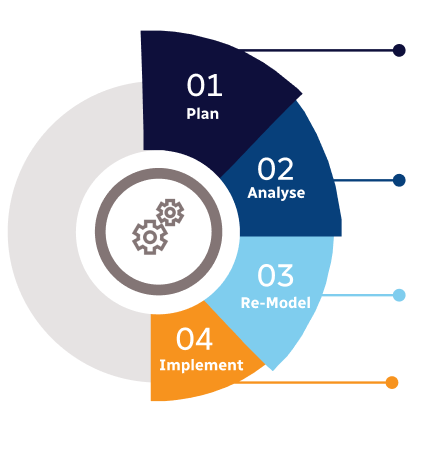
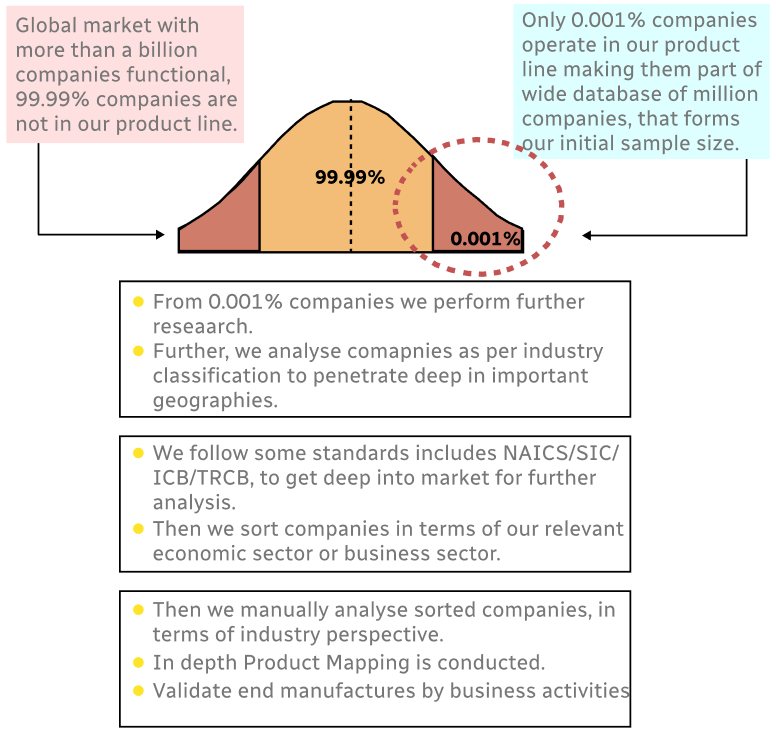
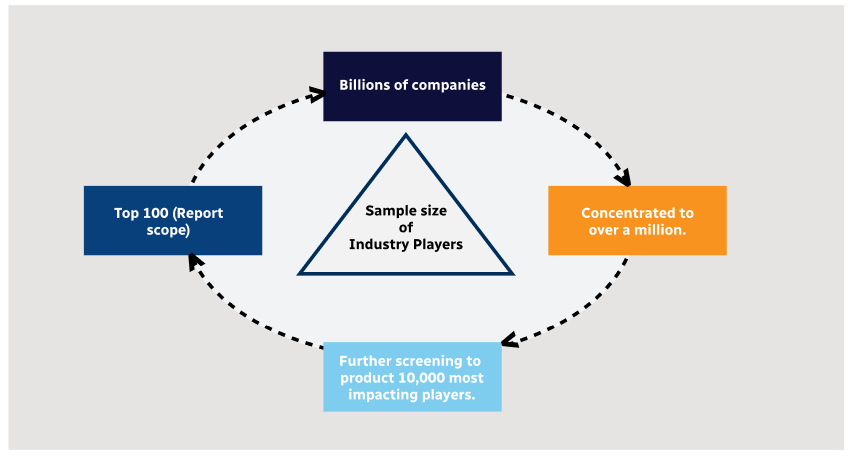
Step 1 - Identification of Relevant Samples Size from Population Database
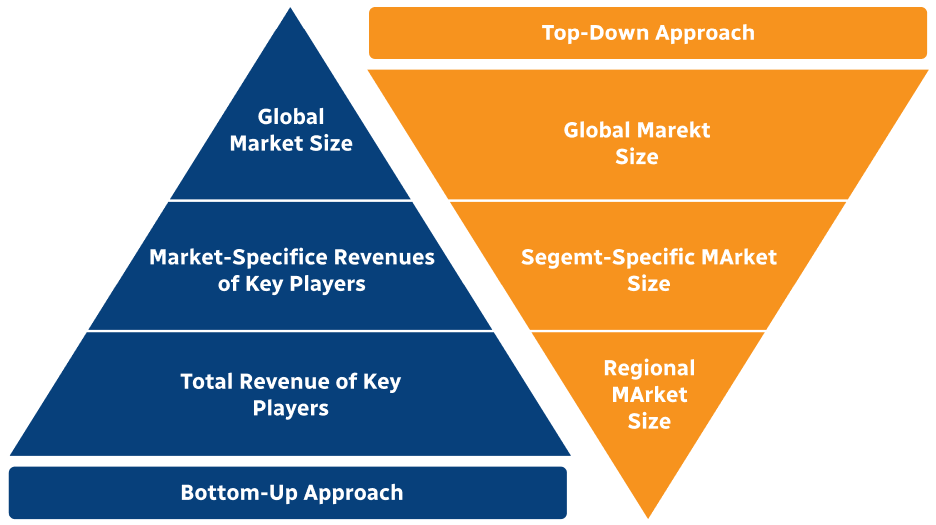
Step 2 - Approaches for Defining Global Market Size (Value, Volume* & Price*)
Note*: In applicable scenarios
Step 3 - Data Sources
Primary Research
- Web Analytics
- Survey Reports
- Research Institute
- Latest Research Reports
- Opinion Leaders
Secondary Research
- Annual Reports
- White Paper
- Latest Press Release
- Industry Association
- Paid Database
- Investor Presentations
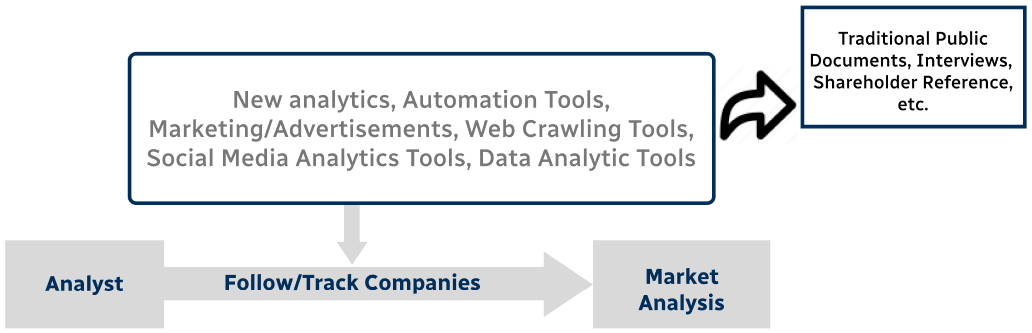
Step 4 - Data Triangulation
Involves using different sources of information in order to increase the validity of a study
These sources are likely to be stakeholders in a program - participants, other researchers, program staff, other community members, and so on.
Then we put all data in single framework & apply various statistical tools to find out the dynamic on the market.
During the analysis stage, feedback from the stakeholder groups would be compared to determine areas of agreement as well as areas of divergence


