


Key Insights
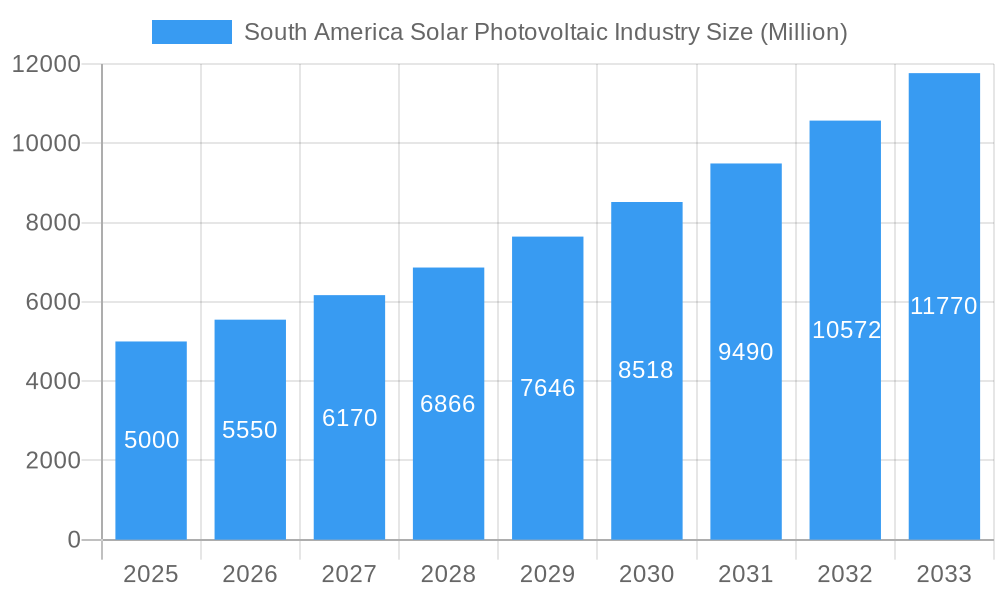
The South American solar photovoltaic (PV) market is poised for significant expansion, driven by escalating energy requirements, favorable governmental policies promoting renewables, and the decreasing cost of PV systems. The market, valued at an estimated $6.6 billion in 2024, is projected to achieve a Compound Annual Growth Rate (CAGR) of 11.2% between 2024 and 2033. This upward trajectory is underpinned by substantial investments in utility-scale solar farms, particularly in Brazil and Argentina, countries endowed with abundant solar resources and robust regulatory environments. Concurrently, the residential and commercial & industrial (C&I) sectors are experiencing a surge in rooftop solar installations, facilitated by reduced initial investment and growing incentives for energy autonomy.
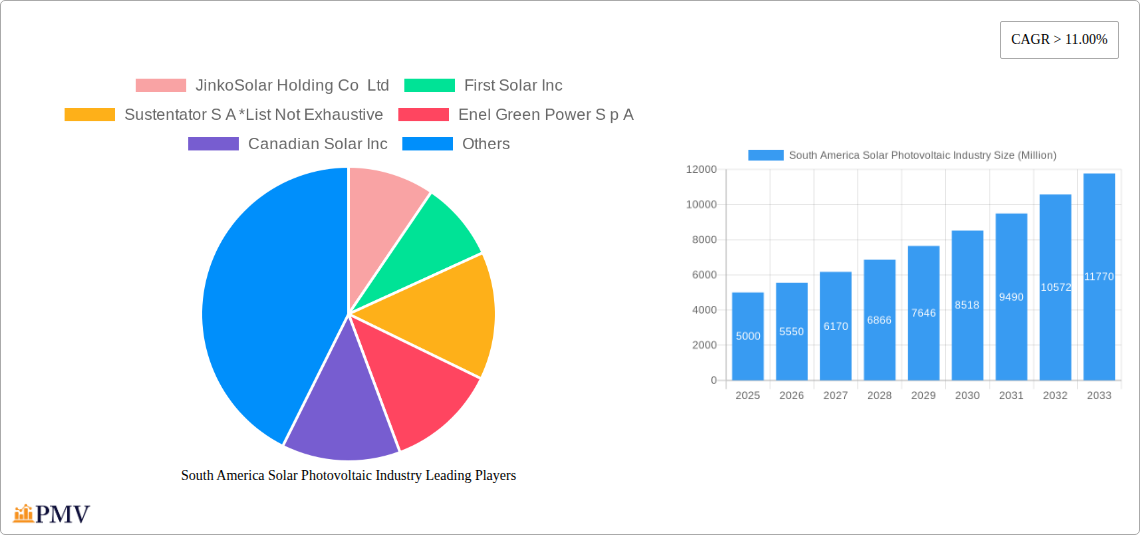
South America Solar Photovoltaic Industry Market Size (In Billion)

The utility-scale ground-mounted segment is leading growth, characterized by large-scale projects. However, the rooftop segment, comprising residential and C&I applications, is also expanding rapidly. This expansion is propelled by government incentives and heightened awareness of the environmental and economic advantages of solar energy. Brazil and Argentina are the dominant markets in South America, leveraging high solar irradiation and supportive national strategies. Emerging interest in solar energy across other South American nations further contributes to the collective market growth. The competitive landscape is shaped by prominent international manufacturers such as JinkoSolar, First Solar, and Canadian Solar, alongside established regional players. Ongoing advancements in solar technology, leading to improved efficiency and cost reductions, will continue to accelerate market expansion throughout the forecast period.
South America Solar Photovoltaic Industry Company Market Share
South America Solar Photovoltaic (PV) Industry Report: 2019-2033
This comprehensive report provides an in-depth analysis of the South America solar photovoltaic (PV) industry, offering invaluable insights for investors, industry professionals, and strategic decision-makers. Covering the period from 2019 to 2033, with a base year of 2025 and a forecast period of 2025-2033, this report meticulously examines market trends, competitive dynamics, and growth opportunities within this rapidly expanding sector. The report leverages a robust methodology, incorporating both historical data (2019-2024) and future projections, to deliver accurate and actionable intelligence. Key market segments analyzed include ground-mounted and rooftop deployments, and residential, commercial, and industrial end-users. Leading players such as JinkoSolar Holding Co Ltd, First Solar Inc, Sustentator S.A., Enel Green Power S.p.A., Canadian Solar Inc, Atlas Renewable Energy, JA Solar Holdings Co Ltd, Acciona SA, Sonnedix Power Holdings Ltd, and Trina Solar Limited are profiled, offering a complete overview of the competitive landscape. The report quantifies market size in Millions for all relevant metrics.
South America Solar Photovoltaic Industry Market Structure & Competitive Dynamics
This section analyzes the South American solar PV market's competitive landscape, including market concentration, innovation ecosystems, regulatory frameworks, and end-user trends. The market is moderately fragmented, with several major players vying for market share. In 2025, the top five players held an estimated xx% of the market share, while the remaining players collectively held xx%. Innovation is driven by technological advancements in PV cell efficiency and system integration, alongside supportive government policies and incentives. Regulatory frameworks vary across South American countries, impacting market development and investment. Ground mounted solar power is driving a significant share of the market, due to higher capacity and cost-effectiveness. However, rooftop solar is gaining traction, especially in residential sectors and commercial settings. M&A activity is expected to remain strong through 2033, with estimated deal values totaling xx Million in the forecast period. Key aspects considered include:
- Market Concentration: Analysis of market share held by major players.
- Innovation Ecosystems: Assessment of technological advancements and research activities.
- Regulatory Frameworks: Evaluation of policies and incentives affecting market growth.
- Product Substitutes: Examination of alternative energy sources and their impact.
- End-User Trends: Analysis of demand patterns across residential, commercial, and industrial sectors.
- M&A Activities: Tracking of mergers, acquisitions, and joint ventures.
South America Solar Photovoltaic Industry Industry Trends & Insights
This section delves into the key drivers shaping the South American solar PV industry, forecasting substantial growth driven by increasing energy demand, falling PV system costs, and supportive government policies. The industry is witnessing a Compound Annual Growth Rate (CAGR) of xx% during the forecast period (2025-2033), with market penetration expected to reach xx% by 2033. Technological disruptions, such as advancements in battery storage technology and the development of more efficient PV modules, are accelerating market growth. Consumer preferences are shifting towards clean and sustainable energy sources, further boosting demand. Competitive dynamics are intense, with major players focusing on cost optimization, technological innovation, and project development. This report analyses:
- Market size and growth projections.
- Impact of technological disruptions (e.g., advancements in battery storage).
- Shifting consumer preferences towards renewable energy.
- Competitive landscape analysis, focusing on market share and pricing strategies.
Dominant Markets & Segments in South America Solar Photovoltaic Industry
This section pinpoints the leading regions, countries, and segments within the South American solar PV market. Chile and Brazil emerge as dominant markets, fueled by strong government support for renewable energy and abundant solar resources. Ground-mounted PV systems currently represent the largest segment due to economies of scale, but rooftop solar is experiencing rapid growth, particularly in urban areas. The Commercial and Industrial (C&I) segment exhibits substantial growth potential, driven by corporate sustainability initiatives and cost savings.
- Key Drivers for Dominant Markets:
- Chile: Abundant solar resources, supportive government policies, and relatively stable political environment.
- Brazil: Large energy demand, increasing focus on renewable energy integration, and government incentives.
- Ground-Mounted: Lower cost per kW, suitability for large-scale projects.
- Rooftop: Easier installation in urban areas, reduced grid connection costs, potential for self-consumption.
- C&I: Corporate sustainability initiatives, cost savings on energy bills, and long-term investment returns.
South America Solar Photovoltaic Industry Product Innovations
Recent advancements in solar PV technology have resulted in increased efficiency, reduced costs, and improved system reliability. This includes the development of high-efficiency monocrystalline silicon solar cells, advanced bifacial modules capable of absorbing light from both sides, and more sophisticated power electronics for optimal energy conversion. These innovations enhance system performance, reduce land requirements, and improve overall cost-effectiveness. These technological advancements have led to wider market adoption, driven by improvements in system performance and cost reductions.
Report Segmentation & Scope
This report segments the South American solar PV market by deployment type (ground-mounted and rooftop) and end-user (residential, commercial, and industrial). Ground-mounted systems are projected to hold the largest market share in terms of capacity, driven by large-scale utility-owned projects. Rooftop systems are experiencing faster growth due to increasing adoption in residential and commercial sectors. The C&I segment is poised for significant expansion, propelled by corporate sustainability goals and cost-saving incentives. The report provides detailed growth projections, market sizes, and competitive dynamics for each segment, based on thorough analysis of market trends, data, and projections.
Key Drivers of South America Solar Photovoltaic Industry Growth
Several factors contribute to the substantial growth of the South American solar PV industry. These include:
- Decreasing PV system costs: Technological advancements have led to significant cost reductions in PV modules and balance-of-system components.
- Supportive government policies: Many South American countries have implemented policies and incentives, such as feed-in tariffs and tax credits, to encourage solar energy adoption.
- Increasing energy demand: The growing energy needs of the region, coupled with a desire for cleaner energy sources, are driving market growth.
- Abundant solar resources: Many South American countries benefit from favorable solar irradiance, making them suitable for large-scale PV deployment.
Challenges in the South America Solar Photovoltaic Industry Sector
Despite the substantial growth potential, the South American solar PV industry faces several challenges:
- Regulatory uncertainty: Inconsistent regulatory frameworks and permitting processes across different countries can hinder project development and investment.
- Grid infrastructure limitations: Outdated and insufficient grid infrastructure in some regions can pose difficulties in integrating large amounts of solar power.
- Supply chain disruptions: Global supply chain issues can impact the availability and cost of PV components.
- Financing constraints: Access to financing for large-scale solar projects can be limited in some markets.
Leading Players in the South America Solar Photovoltaic Industry Market
- JinkoSolar Holding Co Ltd
- First Solar Inc
- Sustentator S.A.
- Enel Green Power S.p.A.
- Canadian Solar Inc
- Atlas Renewable Energy
- JA Solar Holdings Co Ltd
- Acciona SA
- Sonnedix Power Holdings Ltd
- Trina Solar Limited
Key Developments in South America Solar Photovoltaic Industry Sector
- 2023-Q3: Launch of a large-scale solar PV project in Chile by Enel Green Power, adding xx MW of capacity.
- 2022-Q4: Announcement of a strategic partnership between two major players to develop a large solar farm in Brazil.
- 2021-Q2: Implementation of new renewable energy incentives by the Chilean government, leading to increased investment in the solar sector.
Strategic South America Solar Photovoltaic Industry Market Outlook
The South American solar PV industry is poised for continued robust growth throughout the forecast period. Key factors driving this growth include decreasing technology costs, supportive government policies, growing energy demand, and improved grid infrastructure. The market presents several strategic opportunities for investors and industry players, including developing large-scale utility-owned projects, expanding into rooftop solar segments, and focusing on innovative energy storage solutions. The expanding C&I sector provides further lucrative opportunities for businesses willing to provide comprehensive solar solutions. The region’s renewable energy ambitions coupled with the falling costs of solar energy indicate a bright future for the industry.
South America Solar Photovoltaic Industry Segmentation
-
1. Deployment
- 1.1. Ground Mounted
- 1.2. Rooftop
-
2. End-User
- 2.1. Residential
- 2.2. Commercial and Industrial
-
3. Geography
- 3.1. Brazil
- 3.2. Argentina
- 3.3. Chile
- 3.4. Rest of South America
South America Solar Photovoltaic Industry Segmentation By Geography
- 1. Brazil
- 2. Argentina
- 3. Chile
- 4. Rest of South America
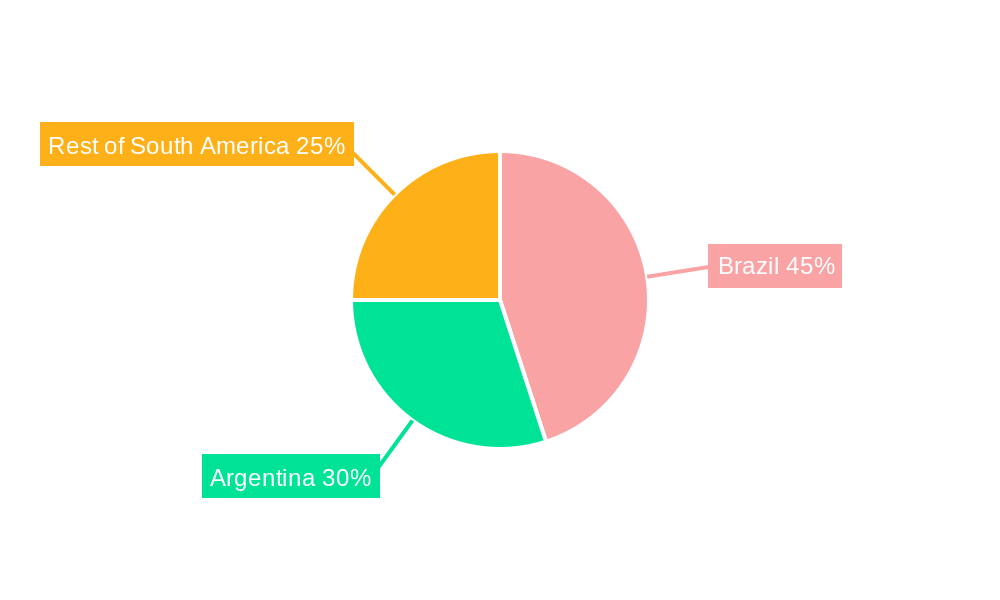
South America Solar Photovoltaic Industry Regional Market Share
Geographic Coverage of South America Solar Photovoltaic Industry
South America Solar Photovoltaic Industry REPORT HIGHLIGHTS
| Aspects | Details |
|---|---|
| Study Period | 2020-2034 |
| Base Year | 2025 |
| Estimated Year | 2026 |
| Forecast Period | 2026-2034 |
| Historical Period | 2020-2025 |
| Growth Rate | CAGR of 11.2% from 2020-2034 |
| Segmentation |
|
Table of Contents
- 1. Introduction
- 1.1. Research Scope
- 1.2. Market Segmentation
- 1.3. Research Methodology
- 1.4. Definitions and Assumptions
- 2. Executive Summary
- 2.1. Introduction
- 3. Market Dynamics
- 3.1. Introduction
- 3.2. Market Drivers
- 3.2.1. 4.; Integration of Renewable Energy4.; Supportive Government Policies
- 3.3. Market Restrains
- 3.3.1. 4.; High infrastructure costs
- 3.4. Market Trends
- 3.4.1. Ground Mounted Solar PV to Dominate the Market
- 4. Market Factor Analysis
- 4.1. Porters Five Forces
- 4.2. Supply/Value Chain
- 4.3. PESTEL analysis
- 4.4. Market Entropy
- 4.5. Patent/Trademark Analysis
- 5. South America Solar Photovoltaic Industry Analysis, Insights and Forecast, 2020-2032
- 5.1. Market Analysis, Insights and Forecast - by Deployment
- 5.1.1. Ground Mounted
- 5.1.2. Rooftop
- 5.2. Market Analysis, Insights and Forecast - by End-User
- 5.2.1. Residential
- 5.2.2. Commercial and Industrial
- 5.3. Market Analysis, Insights and Forecast - by Geography
- 5.3.1. Brazil
- 5.3.2. Argentina
- 5.3.3. Chile
- 5.3.4. Rest of South America
- 5.4. Market Analysis, Insights and Forecast - by Region
- 5.4.1. Brazil
- 5.4.2. Argentina
- 5.4.3. Chile
- 5.4.4. Rest of South America
- 5.1. Market Analysis, Insights and Forecast - by Deployment
- 6. Brazil South America Solar Photovoltaic Industry Analysis, Insights and Forecast, 2020-2032
- 6.1. Market Analysis, Insights and Forecast - by Deployment
- 6.1.1. Ground Mounted
- 6.1.2. Rooftop
- 6.2. Market Analysis, Insights and Forecast - by End-User
- 6.2.1. Residential
- 6.2.2. Commercial and Industrial
- 6.3. Market Analysis, Insights and Forecast - by Geography
- 6.3.1. Brazil
- 6.3.2. Argentina
- 6.3.3. Chile
- 6.3.4. Rest of South America
- 6.1. Market Analysis, Insights and Forecast - by Deployment
- 7. Argentina South America Solar Photovoltaic Industry Analysis, Insights and Forecast, 2020-2032
- 7.1. Market Analysis, Insights and Forecast - by Deployment
- 7.1.1. Ground Mounted
- 7.1.2. Rooftop
- 7.2. Market Analysis, Insights and Forecast - by End-User
- 7.2.1. Residential
- 7.2.2. Commercial and Industrial
- 7.3. Market Analysis, Insights and Forecast - by Geography
- 7.3.1. Brazil
- 7.3.2. Argentina
- 7.3.3. Chile
- 7.3.4. Rest of South America
- 7.1. Market Analysis, Insights and Forecast - by Deployment
- 8. Chile South America Solar Photovoltaic Industry Analysis, Insights and Forecast, 2020-2032
- 8.1. Market Analysis, Insights and Forecast - by Deployment
- 8.1.1. Ground Mounted
- 8.1.2. Rooftop
- 8.2. Market Analysis, Insights and Forecast - by End-User
- 8.2.1. Residential
- 8.2.2. Commercial and Industrial
- 8.3. Market Analysis, Insights and Forecast - by Geography
- 8.3.1. Brazil
- 8.3.2. Argentina
- 8.3.3. Chile
- 8.3.4. Rest of South America
- 8.1. Market Analysis, Insights and Forecast - by Deployment
- 9. Rest of South America South America Solar Photovoltaic Industry Analysis, Insights and Forecast, 2020-2032
- 9.1. Market Analysis, Insights and Forecast - by Deployment
- 9.1.1. Ground Mounted
- 9.1.2. Rooftop
- 9.2. Market Analysis, Insights and Forecast - by End-User
- 9.2.1. Residential
- 9.2.2. Commercial and Industrial
- 9.3. Market Analysis, Insights and Forecast - by Geography
- 9.3.1. Brazil
- 9.3.2. Argentina
- 9.3.3. Chile
- 9.3.4. Rest of South America
- 9.1. Market Analysis, Insights and Forecast - by Deployment
- 10. Competitive Analysis
- 10.1. Market Share Analysis 2025
- 10.2. Company Profiles
- 10.2.1 JinkoSolar Holding Co Ltd
- 10.2.1.1. Overview
- 10.2.1.2. Products
- 10.2.1.3. SWOT Analysis
- 10.2.1.4. Recent Developments
- 10.2.1.5. Financials (Based on Availability)
- 10.2.2 First Solar Inc
- 10.2.2.1. Overview
- 10.2.2.2. Products
- 10.2.2.3. SWOT Analysis
- 10.2.2.4. Recent Developments
- 10.2.2.5. Financials (Based on Availability)
- 10.2.3 Sustentator S A *List Not Exhaustive
- 10.2.3.1. Overview
- 10.2.3.2. Products
- 10.2.3.3. SWOT Analysis
- 10.2.3.4. Recent Developments
- 10.2.3.5. Financials (Based on Availability)
- 10.2.4 Enel Green Power S p A
- 10.2.4.1. Overview
- 10.2.4.2. Products
- 10.2.4.3. SWOT Analysis
- 10.2.4.4. Recent Developments
- 10.2.4.5. Financials (Based on Availability)
- 10.2.5 Canadian Solar Inc
- 10.2.5.1. Overview
- 10.2.5.2. Products
- 10.2.5.3. SWOT Analysis
- 10.2.5.4. Recent Developments
- 10.2.5.5. Financials (Based on Availability)
- 10.2.6 Atlas Renewable Energy
- 10.2.6.1. Overview
- 10.2.6.2. Products
- 10.2.6.3. SWOT Analysis
- 10.2.6.4. Recent Developments
- 10.2.6.5. Financials (Based on Availability)
- 10.2.7 JA Solar Holdings Co Ltd
- 10.2.7.1. Overview
- 10.2.7.2. Products
- 10.2.7.3. SWOT Analysis
- 10.2.7.4. Recent Developments
- 10.2.7.5. Financials (Based on Availability)
- 10.2.8 Acciona SA
- 10.2.8.1. Overview
- 10.2.8.2. Products
- 10.2.8.3. SWOT Analysis
- 10.2.8.4. Recent Developments
- 10.2.8.5. Financials (Based on Availability)
- 10.2.9 Sonnedix Power Holdings Ltd
- 10.2.9.1. Overview
- 10.2.9.2. Products
- 10.2.9.3. SWOT Analysis
- 10.2.9.4. Recent Developments
- 10.2.9.5. Financials (Based on Availability)
- 10.2.10 Trina Solar Limited
- 10.2.10.1. Overview
- 10.2.10.2. Products
- 10.2.10.3. SWOT Analysis
- 10.2.10.4. Recent Developments
- 10.2.10.5. Financials (Based on Availability)
- 10.2.1 JinkoSolar Holding Co Ltd
List of Figures
- Figure 1: South America Solar Photovoltaic Industry Revenue Breakdown (billion, %) by Product 2025 & 2033
- Figure 2: South America Solar Photovoltaic Industry Share (%) by Company 2025
List of Tables
- Table 1: South America Solar Photovoltaic Industry Revenue billion Forecast, by Deployment 2020 & 2033
- Table 2: South America Solar Photovoltaic Industry Revenue billion Forecast, by End-User 2020 & 2033
- Table 3: South America Solar Photovoltaic Industry Revenue billion Forecast, by Geography 2020 & 2033
- Table 4: South America Solar Photovoltaic Industry Revenue billion Forecast, by Region 2020 & 2033
- Table 5: South America Solar Photovoltaic Industry Revenue billion Forecast, by Deployment 2020 & 2033
- Table 6: South America Solar Photovoltaic Industry Revenue billion Forecast, by End-User 2020 & 2033
- Table 7: South America Solar Photovoltaic Industry Revenue billion Forecast, by Geography 2020 & 2033
- Table 8: South America Solar Photovoltaic Industry Revenue billion Forecast, by Country 2020 & 2033
- Table 9: South America Solar Photovoltaic Industry Revenue billion Forecast, by Deployment 2020 & 2033
- Table 10: South America Solar Photovoltaic Industry Revenue billion Forecast, by End-User 2020 & 2033
- Table 11: South America Solar Photovoltaic Industry Revenue billion Forecast, by Geography 2020 & 2033
- Table 12: South America Solar Photovoltaic Industry Revenue billion Forecast, by Country 2020 & 2033
- Table 13: South America Solar Photovoltaic Industry Revenue billion Forecast, by Deployment 2020 & 2033
- Table 14: South America Solar Photovoltaic Industry Revenue billion Forecast, by End-User 2020 & 2033
- Table 15: South America Solar Photovoltaic Industry Revenue billion Forecast, by Geography 2020 & 2033
- Table 16: South America Solar Photovoltaic Industry Revenue billion Forecast, by Country 2020 & 2033
- Table 17: South America Solar Photovoltaic Industry Revenue billion Forecast, by Deployment 2020 & 2033
- Table 18: South America Solar Photovoltaic Industry Revenue billion Forecast, by End-User 2020 & 2033
- Table 19: South America Solar Photovoltaic Industry Revenue billion Forecast, by Geography 2020 & 2033
- Table 20: South America Solar Photovoltaic Industry Revenue billion Forecast, by Country 2020 & 2033
Frequently Asked Questions
1. What is the projected Compound Annual Growth Rate (CAGR) of the South America Solar Photovoltaic Industry?
The projected CAGR is approximately 11.2%.
2. Which companies are prominent players in the South America Solar Photovoltaic Industry?
Key companies in the market include JinkoSolar Holding Co Ltd, First Solar Inc, Sustentator S A *List Not Exhaustive, Enel Green Power S p A, Canadian Solar Inc, Atlas Renewable Energy, JA Solar Holdings Co Ltd, Acciona SA, Sonnedix Power Holdings Ltd, Trina Solar Limited.
3. What are the main segments of the South America Solar Photovoltaic Industry?
The market segments include Deployment, End-User, Geography.
4. Can you provide details about the market size?
The market size is estimated to be USD 6.6 billion as of 2022.
5. What are some drivers contributing to market growth?
4.; Integration of Renewable Energy4.; Supportive Government Policies.
6. What are the notable trends driving market growth?
Ground Mounted Solar PV to Dominate the Market.
7. Are there any restraints impacting market growth?
4.; High infrastructure costs.
8. Can you provide examples of recent developments in the market?
N/A
9. What pricing options are available for accessing the report?
Pricing options include single-user, multi-user, and enterprise licenses priced at USD 4750, USD 5250, and USD 8750 respectively.
10. Is the market size provided in terms of value or volume?
The market size is provided in terms of value, measured in billion.
11. Are there any specific market keywords associated with the report?
Yes, the market keyword associated with the report is "South America Solar Photovoltaic Industry," which aids in identifying and referencing the specific market segment covered.
12. How do I determine which pricing option suits my needs best?
The pricing options vary based on user requirements and access needs. Individual users may opt for single-user licenses, while businesses requiring broader access may choose multi-user or enterprise licenses for cost-effective access to the report.
13. Are there any additional resources or data provided in the South America Solar Photovoltaic Industry report?
While the report offers comprehensive insights, it's advisable to review the specific contents or supplementary materials provided to ascertain if additional resources or data are available.
14. How can I stay updated on further developments or reports in the South America Solar Photovoltaic Industry?
To stay informed about further developments, trends, and reports in the South America Solar Photovoltaic Industry, consider subscribing to industry newsletters, following relevant companies and organizations, or regularly checking reputable industry news sources and publications.
Methodology
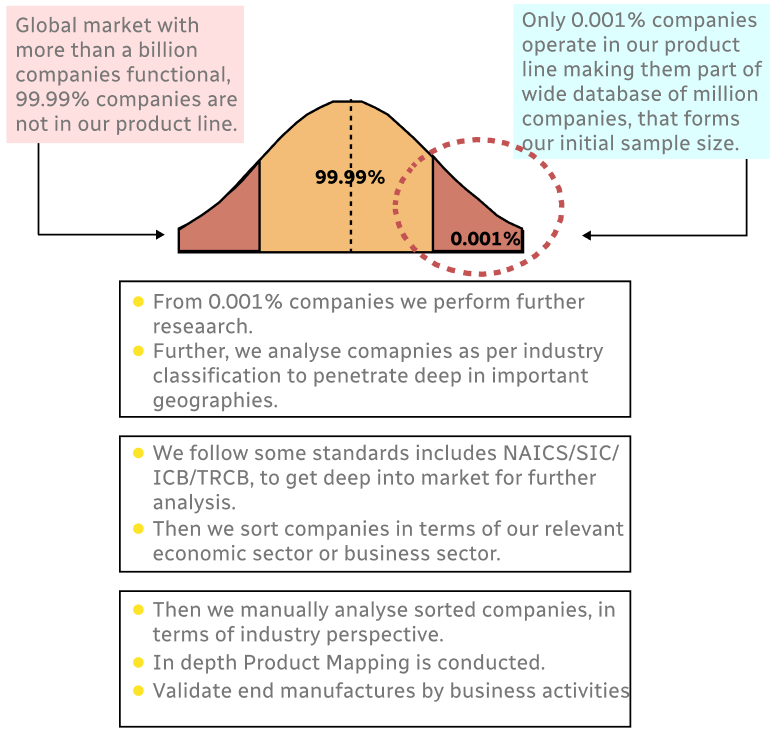
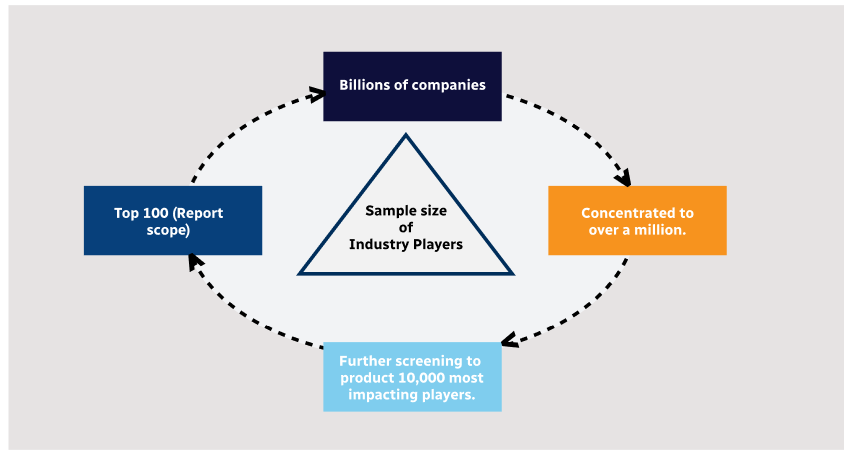
Step 1 - Identification of Relevant Samples Size from Population Database
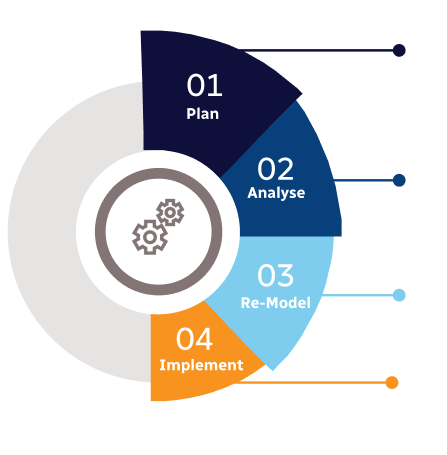
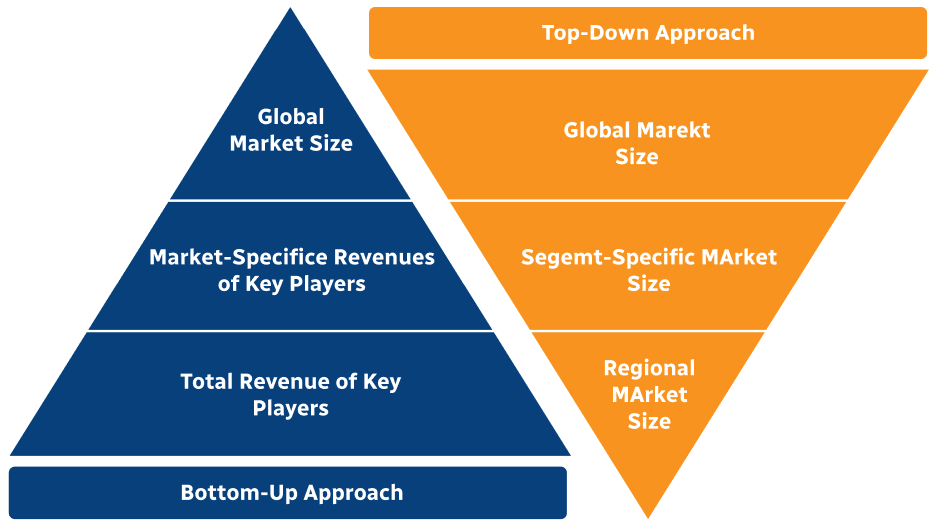
Step 2 - Approaches for Defining Global Market Size (Value, Volume* & Price*)
Note*: In applicable scenarios
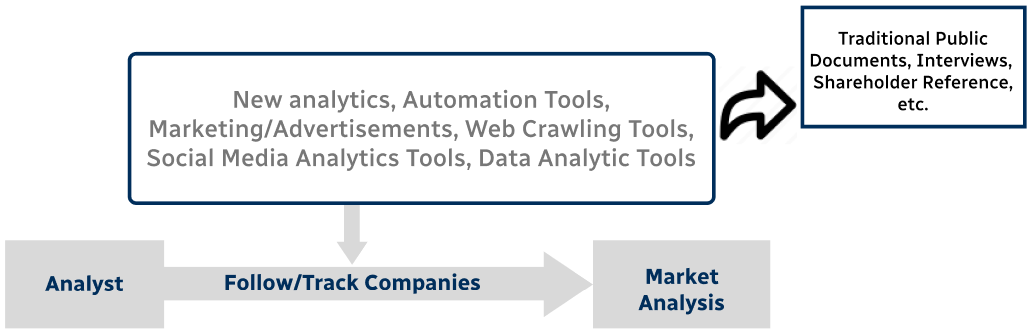
Step 3 - Data Sources
Primary Research
- Web Analytics
- Survey Reports
- Research Institute
- Latest Research Reports
- Opinion Leaders
Secondary Research
- Annual Reports
- White Paper
- Latest Press Release
- Industry Association
- Paid Database
- Investor Presentations
Step 4 - Data Triangulation
Involves using different sources of information in order to increase the validity of a study
These sources are likely to be stakeholders in a program - participants, other researchers, program staff, other community members, and so on.
Then we put all data in single framework & apply various statistical tools to find out the dynamic on the market.
During the analysis stage, feedback from the stakeholder groups would be compared to determine areas of agreement as well as areas of divergence