



Key Insights
The global Search and Rescue Robots Market is experiencing robust expansion, currently valued at $30.74 Million and projected to grow at an impressive Compound Annual Growth Rate (CAGR) of 14.79% during the forecast period of 2025-2033. This significant growth is fueled by a confluence of critical drivers. The increasing frequency and severity of natural disasters, such as earthquakes, floods, and wildfires, are creating an urgent need for advanced solutions to locate and assist victims in hazardous environments. Furthermore, the continuous advancements in robotics technology, including enhanced AI capabilities, improved sensor technologies, and increased autonomy, are making these robots more effective and versatile. The growing demand for greater operational efficiency and reduced risk to human rescuers in disaster scenarios also plays a pivotal role. Geographically, North America and Europe are expected to lead the market, driven by significant investments in defense and emergency response infrastructure, alongside strong technological innovation. The Asia Pacific region is also poised for substantial growth, spurred by increasing disaster vulnerability and government initiatives to bolster disaster management capabilities.

Search And Rescue Robots Market Market Size (In Million)

The market is segmented into two primary operation types: Autonomous and Remotely Operated. Autonomous robots are gaining traction due to their ability to perform tasks with minimal human intervention, enhancing speed and efficiency in critical situations. Remotely operated robots, while still crucial, are increasingly being integrated with autonomous features. In terms of platform types, Ground, Marine, and Aerial robots each serve distinct roles, from navigating debris-laden terrains and underwater environments to providing aerial reconnaissance. Key industry players like Boston Dynamics Inc., Lockheed Martin Corporation, and Northrop Grumman Corporation are at the forefront of innovation, developing sophisticated robotic solutions for search and rescue. Emerging trends include the integration of swarm robotics for wider area coverage, miniaturization of robots for accessing confined spaces, and the development of AI-powered analytics for faster data processing and decision-making. Challenges such as high initial investment costs and the need for robust infrastructure for deployment and maintenance may temper growth in some regions, but the overall trajectory for the Search and Rescue Robots Market remains highly positive due to its indispensable role in saving lives and mitigating the impact of emergencies.

Search And Rescue Robots Market Company Market Share

Here's the SEO-optimized, detailed report description for the Search And Rescue Robots Market, incorporating all your requirements:
This in-depth market research report provides a comprehensive analysis of the global Search And Rescue Robots Market, offering critical insights for stakeholders looking to understand current dynamics and future trajectories. Spanning a study period from 2019 to 2033, with a base year of 2025 and a forecast period extending from 2025 to 2033, this report is an essential resource for investors, manufacturers, and government agencies. We delve into market size, segmentation, key drivers, challenges, and the competitive landscape, delivering actionable intelligence for strategic decision-making in this rapidly evolving sector. The report meticulously examines the market's structure, identifying innovation ecosystems, regulatory frameworks, and emerging end-user trends that are shaping the demand for advanced robotic solutions in critical rescue operations.
Search And Rescue Robots Market Market Structure & Competitive Dynamics
The Search And Rescue Robots Market is characterized by a dynamic and evolving structure, with a moderate to high level of market concentration. Innovation ecosystems are robust, driven by significant investment in research and development by leading players and government-funded initiatives. Regulatory frameworks are progressively adapting to integrate advanced robotic technologies into emergency response protocols, though regional variations exist. Product substitutes, such as traditional human-led search and rescue methods and less sophisticated drones, are present but are increasingly being outpaced by the capabilities of specialized robots. End-user trends highlight a growing reliance on autonomous and remotely operated systems for enhanced safety, speed, and effectiveness in disaster scenarios. Mergers and acquisitions (M&A) activities are on the rise as larger entities seek to acquire specialized expertise and expand their product portfolios, with M&A deal values projected to reach several hundred million dollars over the forecast period. Key players are focusing on developing robots with advanced sensing capabilities, improved mobility in challenging terrains, and enhanced communication systems to bolster their market share, which is projected to grow significantly.
Search And Rescue Robots Market Industry Trends & Insights
The Search And Rescue Robots Market is experiencing robust growth, driven by an increasing frequency and severity of natural disasters, growing security concerns, and advancements in artificial intelligence (AI) and robotics. The market penetration of search and rescue robots is expected to accelerate, fueled by government mandates for enhanced disaster preparedness and the undeniable cost-efficiency and life-saving potential of these technologies. The Compound Annual Growth Rate (CAGR) for the Search And Rescue Robots Market is projected to be between 12.5% and 14.8% over the forecast period, indicating substantial expansion. Technological disruptions, particularly in areas like AI-powered object recognition, sophisticated navigation in GPS-denied environments, and long-range communication, are transforming the capabilities of these robots. Consumer preferences, primarily from government agencies and large humanitarian organizations, are shifting towards more autonomous and intelligent systems that can reduce human risk and increase operational efficiency. Competitive dynamics are intensifying as companies invest in next-generation platforms that offer superior performance in harsh conditions, from underwater exploration with marine robots to aerial surveillance and ground-based reconnaissance. The market is also seeing increased integration of swarm robotics for coordinated search efforts and the development of robots with enhanced payload capacities for delivering essential supplies or carrying medical equipment. The integration of sophisticated sensor suites, including thermal imaging, LiDAR, and gas detectors, further enhances their utility, making them indispensable tools for modern search and rescue operations.
Dominant Markets & Segments in Search And Rescue Robots Market
The Search And Rescue Robots Market exhibits strong dominance in specific regions and segments. Geographically, North America, particularly the United States, leads the market due to significant government investment in defense and homeland security, coupled with advanced technological infrastructure and a proactive approach to disaster management. Asia Pacific is emerging as a rapidly growing market, driven by a high population density, frequent natural disasters like earthquakes and typhoons, and increasing government focus on public safety.
Platform Type Dominance:
- Ground Robots: These represent a significant segment due to their versatility in navigating diverse terrains, including urban rubble, forests, and mountainous areas. Key drivers for their dominance include their ability to carry heavier payloads, conduct close-up inspections, and provide tactile feedback. Economic policies favoring disaster preparedness and infrastructure development in at-risk regions further bolster their demand.
- Aerial Robots (Drones): Drones are crucial for wide-area surveillance, rapid deployment, and accessing hard-to-reach locations. Their dominance is driven by technological advancements in battery life, sensor miniaturization, and autonomous flight capabilities. Government initiatives promoting drone usage in public safety and emergency response are key accelerators.
- Marine Robots: While a niche segment, marine robots are critical for search and rescue operations in coastal areas, lakes, and oceans, particularly in submerged environments. Their dominance is spurred by the need for underwater reconnaissance, object identification, and victim location in maritime disasters.
Operation Type Dominance:
- Autonomous Robots: The trend towards autonomous operation is a major driver of market growth. Robots capable of independent navigation, decision-making, and mission execution are increasingly preferred for their efficiency and reduced reliance on constant human intervention, especially in high-risk or communication-challenged scenarios.
- Remotely Operated Robots: These remain vital, offering human operators direct control and oversight in complex situations. Their dominance is sustained by the need for human judgment in nuanced rescue scenarios and for complex manipulation tasks, complementing the capabilities of autonomous systems.
Search And Rescue Robots Market Product Innovations
Product innovations in the Search And Rescue Robots Market are centered on enhancing operational efficiency and survivability. Recent developments include the integration of advanced AI for object recognition and scene understanding, enabling robots to identify potential victims or hazards with greater accuracy. Lightweight, robust materials are being employed to improve mobility and durability in extreme environments. Innovations in sensor fusion, combining data from thermal cameras, LiDAR, and acoustic sensors, provide a more comprehensive situational awareness. Furthermore, advancements in modular design allow for rapid reconfiguration of robots to suit specific mission requirements, from carrying medical supplies to deploying communication relays. These innovations provide a significant competitive advantage by offering enhanced mission success rates and improved safety for rescue personnel.
Report Segmentation & Scope
The Search And Rescue Robots Market is meticulously segmented to provide granular insights into its various facets. The segmentation is primarily based on Platform Type and Operation Type.
Platform Type:
- Ground Robots: This segment is expected to witness substantial growth, driven by their utility in disaster zones and complex terrains. Market size is projected to reach several thousand million dollars by 2033, with a CAGR of approximately 13%. Competitive dynamics are characterized by innovation in mobility and sensor technology.
- Marine Robots: This segment, while smaller, is crucial for maritime rescue operations. Growth is steady, with projections indicating a market size in the hundreds of millions of dollars. Competitive advantages lie in underwater navigation and object detection capabilities.
- Aerial Robots: This segment is projected for rapid expansion due to the versatility of drones in surveillance and reconnaissance. Market size is expected to grow significantly, potentially reaching thousands of million dollars. Competitive pressures focus on flight endurance and data acquisition technologies.
Operation Type:
- Autonomous Robots: This segment is the primary growth engine, driven by advancements in AI and machine learning. Market size is projected to be dominant, with growth fueled by the demand for self-sufficient rescue solutions.
- Remotely Operated Robots: This segment will continue to be important, particularly for complex tasks requiring human intervention. Its market size will remain substantial, with a steady CAGR as it complements autonomous capabilities.
Key Drivers of Search And Rescue Robots Market Growth
The Search And Rescue Robots Market is propelled by a confluence of critical growth drivers. Technologically, rapid advancements in artificial intelligence, machine learning, and sensor technology are enabling the development of more sophisticated and capable robots. Economic factors, such as increased government spending on defense and homeland security, and a growing emphasis on disaster preparedness initiatives globally, are significantly boosting market demand. Regulatory frameworks are also evolving to facilitate the adoption of robotic solutions in emergency response, creating a more favorable environment for market expansion. Furthermore, the persistent threat of natural disasters and complex security situations worldwide necessitates advanced tools that can operate in hazardous environments, thereby reducing human risk and improving rescue outcomes.
Challenges in the Search And Rescue Robots Market Sector
Despite its robust growth potential, the Search And Rescue Robots Market faces several challenges. Regulatory hurdles, particularly concerning the certification and operational guidelines for autonomous systems in public spaces and disaster zones, can impede widespread adoption. Supply chain issues for specialized components and the high cost of research and development can also impact manufacturing and affordability. Furthermore, the competitive pressures from both established players and emerging startups require continuous innovation and cost optimization. Public perception and acceptance of autonomous robots in critical rescue scenarios can also be a factor, necessitating clear demonstration of their reliability and safety.
Leading Players in the Search And Rescue Robots Market Market
- Boston Dynamics Inc
- Kongsberg Gruppen ASA
- Howe and Howe Technologies (Textron Inc )
- Thales
- Lockheed Martin Corporation
- Hydronalix
- Northrup Grumman Corporation
- Elbit System Ltd
- Saab AB
- Teledyne FLIR LLC
Key Developments in Search And Rescue Robots Market Sector
- 2023: Boston Dynamics unveils a new generation of Spot robots with enhanced payload capabilities for disaster response, featuring advanced sensing and communication modules.
- 2022: Kongsberg Gruppen ASA announces a significant expansion of its autonomous underwater vehicle (AUV) capabilities, crucial for maritime search and rescue.
- 2022: Howe and Howe Technologies (Textron Inc.) demonstrates its latest ruggedized ground robot designed for extreme terrain rescue operations.
- 2021: Thales introduces an AI-powered surveillance drone system offering enhanced object recognition for search and rescue applications.
- 2021: Lockheed Martin Corporation secures a major contract for advanced robotic systems to support national disaster response efforts.
- 2020: Hydronalix showcases its innovative autonomous surface vessels for swift coastal search and rescue operations.
Strategic Search And Rescue Robots Market Market Outlook
The strategic outlook for the Search And Rescue Robots Market is highly promising, driven by an escalating global need for efficient and safe disaster response capabilities. Growth accelerators include continued advancements in AI for predictive analytics and autonomous decision-making, enabling robots to proactively identify potential rescue scenarios and optimize search patterns. Increased government funding for homeland security and emergency preparedness, coupled with international collaborations on disaster management, will further fuel demand. Strategic opportunities lie in developing integrated robotic platforms that combine ground, aerial, and marine capabilities for comprehensive coverage, as well as in enhancing the interoperability of robotic systems with existing emergency response infrastructure. The market is poised for sustained expansion as technology matures and its life-saving benefits become increasingly undeniable.
Search And Rescue Robots Market Segmentation
-
1. Platform Type
- 1.1. Ground
- 1.2. Marine
- 1.3. Aerial
-
2. Operation Type
- 2.1. Autonomous
- 2.2. Remotely Operated
Search And Rescue Robots Market Segmentation By Geography
-
1. North America
- 1.1. United States
- 1.2. Canada
-
2. Europe
- 2.1. Germany
- 2.2. United Kingdom
- 2.3. France
- 2.4. Rest of Europe
-
3. Asia Pacific
- 3.1. India
- 3.2. China
- 3.3. Japan
- 3.4. South Korea
- 3.5. Rest of Asia Pacific
-
4. Rest of the World
- 4.1. Brazil
- 4.2. Mexico
- 4.3. United Arab Emirates
- 4.4. Other Countries

Search And Rescue Robots Market Regional Market Share

Geographic Coverage of Search And Rescue Robots Market
Search And Rescue Robots Market REPORT HIGHLIGHTS
| Aspects | Details |
|---|---|
| Study Period | 2020-2034 |
| Base Year | 2025 |
| Estimated Year | 2026 |
| Forecast Period | 2026-2034 |
| Historical Period | 2020-2025 |
| Growth Rate | CAGR of 14.79% from 2020-2034 |
| Segmentation |
|
Table of Contents
- 1. Introduction
- 1.1. Research Scope
- 1.2. Market Segmentation
- 1.3. Research Methodology
- 1.4. Definitions and Assumptions
- 2. Executive Summary
- 2.1. Introduction
- 3. Market Dynamics
- 3.1. Introduction
- 3.2. Market Drivers
- 3.3. Market Restrains
- 3.4. Market Trends
- 3.4.1. Autonomous Segment to Dominate Market Share during the Forecast Period
- 4. Market Factor Analysis
- 4.1. Porters Five Forces
- 4.2. Supply/Value Chain
- 4.3. PESTEL analysis
- 4.4. Market Entropy
- 4.5. Patent/Trademark Analysis
- 5. Global Search And Rescue Robots Market Analysis, Insights and Forecast, 2020-2032
- 5.1. Market Analysis, Insights and Forecast - by Platform Type
- 5.1.1. Ground
- 5.1.2. Marine
- 5.1.3. Aerial
- 5.2. Market Analysis, Insights and Forecast - by Operation Type
- 5.2.1. Autonomous
- 5.2.2. Remotely Operated
- 5.3. Market Analysis, Insights and Forecast - by Region
- 5.3.1. North America
- 5.3.2. Europe
- 5.3.3. Asia Pacific
- 5.3.4. Rest of the World
- 5.1. Market Analysis, Insights and Forecast - by Platform Type
- 6. North America Search And Rescue Robots Market Analysis, Insights and Forecast, 2020-2032
- 6.1. Market Analysis, Insights and Forecast - by Platform Type
- 6.1.1. Ground
- 6.1.2. Marine
- 6.1.3. Aerial
- 6.2. Market Analysis, Insights and Forecast - by Operation Type
- 6.2.1. Autonomous
- 6.2.2. Remotely Operated
- 6.1. Market Analysis, Insights and Forecast - by Platform Type
- 7. Europe Search And Rescue Robots Market Analysis, Insights and Forecast, 2020-2032
- 7.1. Market Analysis, Insights and Forecast - by Platform Type
- 7.1.1. Ground
- 7.1.2. Marine
- 7.1.3. Aerial
- 7.2. Market Analysis, Insights and Forecast - by Operation Type
- 7.2.1. Autonomous
- 7.2.2. Remotely Operated
- 7.1. Market Analysis, Insights and Forecast - by Platform Type
- 8. Asia Pacific Search And Rescue Robots Market Analysis, Insights and Forecast, 2020-2032
- 8.1. Market Analysis, Insights and Forecast - by Platform Type
- 8.1.1. Ground
- 8.1.2. Marine
- 8.1.3. Aerial
- 8.2. Market Analysis, Insights and Forecast - by Operation Type
- 8.2.1. Autonomous
- 8.2.2. Remotely Operated
- 8.1. Market Analysis, Insights and Forecast - by Platform Type
- 9. Rest of the World Search And Rescue Robots Market Analysis, Insights and Forecast, 2020-2032
- 9.1. Market Analysis, Insights and Forecast - by Platform Type
- 9.1.1. Ground
- 9.1.2. Marine
- 9.1.3. Aerial
- 9.2. Market Analysis, Insights and Forecast - by Operation Type
- 9.2.1. Autonomous
- 9.2.2. Remotely Operated
- 9.1. Market Analysis, Insights and Forecast - by Platform Type
- 10. Competitive Analysis
- 10.1. Global Market Share Analysis 2025
- 10.2. Company Profiles
- 10.2.1 Boston Dynamics Inc
- 10.2.1.1. Overview
- 10.2.1.2. Products
- 10.2.1.3. SWOT Analysis
- 10.2.1.4. Recent Developments
- 10.2.1.5. Financials (Based on Availability)
- 10.2.2 Kongsberg Gruppen ASA
- 10.2.2.1. Overview
- 10.2.2.2. Products
- 10.2.2.3. SWOT Analysis
- 10.2.2.4. Recent Developments
- 10.2.2.5. Financials (Based on Availability)
- 10.2.3 Howe and Howe Technologies (Textron Inc )
- 10.2.3.1. Overview
- 10.2.3.2. Products
- 10.2.3.3. SWOT Analysis
- 10.2.3.4. Recent Developments
- 10.2.3.5. Financials (Based on Availability)
- 10.2.4 Thales
- 10.2.4.1. Overview
- 10.2.4.2. Products
- 10.2.4.3. SWOT Analysis
- 10.2.4.4. Recent Developments
- 10.2.4.5. Financials (Based on Availability)
- 10.2.5 Lockheed Marin Corporation
- 10.2.5.1. Overview
- 10.2.5.2. Products
- 10.2.5.3. SWOT Analysis
- 10.2.5.4. Recent Developments
- 10.2.5.5. Financials (Based on Availability)
- 10.2.6 Hydronalix
- 10.2.6.1. Overview
- 10.2.6.2. Products
- 10.2.6.3. SWOT Analysis
- 10.2.6.4. Recent Developments
- 10.2.6.5. Financials (Based on Availability)
- 10.2.7 Northrup Grumman Corporation
- 10.2.7.1. Overview
- 10.2.7.2. Products
- 10.2.7.3. SWOT Analysis
- 10.2.7.4. Recent Developments
- 10.2.7.5. Financials (Based on Availability)
- 10.2.8 Elbit System Ltd
- 10.2.8.1. Overview
- 10.2.8.2. Products
- 10.2.8.3. SWOT Analysis
- 10.2.8.4. Recent Developments
- 10.2.8.5. Financials (Based on Availability)
- 10.2.9 Saab AB
- 10.2.9.1. Overview
- 10.2.9.2. Products
- 10.2.9.3. SWOT Analysis
- 10.2.9.4. Recent Developments
- 10.2.9.5. Financials (Based on Availability)
- 10.2.10 Teledyne FLIR LLC
- 10.2.10.1. Overview
- 10.2.10.2. Products
- 10.2.10.3. SWOT Analysis
- 10.2.10.4. Recent Developments
- 10.2.10.5. Financials (Based on Availability)
- 10.2.1 Boston Dynamics Inc
List of Figures
- Figure 1: Global Search And Rescue Robots Market Revenue Breakdown (Million, %) by Region 2025 & 2033
- Figure 2: North America Search And Rescue Robots Market Revenue (Million), by Platform Type 2025 & 2033
- Figure 3: North America Search And Rescue Robots Market Revenue Share (%), by Platform Type 2025 & 2033
- Figure 4: North America Search And Rescue Robots Market Revenue (Million), by Operation Type 2025 & 2033
- Figure 5: North America Search And Rescue Robots Market Revenue Share (%), by Operation Type 2025 & 2033
- Figure 6: North America Search And Rescue Robots Market Revenue (Million), by Country 2025 & 2033
- Figure 7: North America Search And Rescue Robots Market Revenue Share (%), by Country 2025 & 2033
- Figure 8: Europe Search And Rescue Robots Market Revenue (Million), by Platform Type 2025 & 2033
- Figure 9: Europe Search And Rescue Robots Market Revenue Share (%), by Platform Type 2025 & 2033
- Figure 10: Europe Search And Rescue Robots Market Revenue (Million), by Operation Type 2025 & 2033
- Figure 11: Europe Search And Rescue Robots Market Revenue Share (%), by Operation Type 2025 & 2033
- Figure 12: Europe Search And Rescue Robots Market Revenue (Million), by Country 2025 & 2033
- Figure 13: Europe Search And Rescue Robots Market Revenue Share (%), by Country 2025 & 2033
- Figure 14: Asia Pacific Search And Rescue Robots Market Revenue (Million), by Platform Type 2025 & 2033
- Figure 15: Asia Pacific Search And Rescue Robots Market Revenue Share (%), by Platform Type 2025 & 2033
- Figure 16: Asia Pacific Search And Rescue Robots Market Revenue (Million), by Operation Type 2025 & 2033
- Figure 17: Asia Pacific Search And Rescue Robots Market Revenue Share (%), by Operation Type 2025 & 2033
- Figure 18: Asia Pacific Search And Rescue Robots Market Revenue (Million), by Country 2025 & 2033
- Figure 19: Asia Pacific Search And Rescue Robots Market Revenue Share (%), by Country 2025 & 2033
- Figure 20: Rest of the World Search And Rescue Robots Market Revenue (Million), by Platform Type 2025 & 2033
- Figure 21: Rest of the World Search And Rescue Robots Market Revenue Share (%), by Platform Type 2025 & 2033
- Figure 22: Rest of the World Search And Rescue Robots Market Revenue (Million), by Operation Type 2025 & 2033
- Figure 23: Rest of the World Search And Rescue Robots Market Revenue Share (%), by Operation Type 2025 & 2033
- Figure 24: Rest of the World Search And Rescue Robots Market Revenue (Million), by Country 2025 & 2033
- Figure 25: Rest of the World Search And Rescue Robots Market Revenue Share (%), by Country 2025 & 2033
List of Tables
- Table 1: Global Search And Rescue Robots Market Revenue Million Forecast, by Platform Type 2020 & 2033
- Table 2: Global Search And Rescue Robots Market Revenue Million Forecast, by Operation Type 2020 & 2033
- Table 3: Global Search And Rescue Robots Market Revenue Million Forecast, by Region 2020 & 2033
- Table 4: Global Search And Rescue Robots Market Revenue Million Forecast, by Platform Type 2020 & 2033
- Table 5: Global Search And Rescue Robots Market Revenue Million Forecast, by Operation Type 2020 & 2033
- Table 6: Global Search And Rescue Robots Market Revenue Million Forecast, by Country 2020 & 2033
- Table 7: United States Search And Rescue Robots Market Revenue (Million) Forecast, by Application 2020 & 2033
- Table 8: Canada Search And Rescue Robots Market Revenue (Million) Forecast, by Application 2020 & 2033
- Table 9: Global Search And Rescue Robots Market Revenue Million Forecast, by Platform Type 2020 & 2033
- Table 10: Global Search And Rescue Robots Market Revenue Million Forecast, by Operation Type 2020 & 2033
- Table 11: Global Search And Rescue Robots Market Revenue Million Forecast, by Country 2020 & 2033
- Table 12: Germany Search And Rescue Robots Market Revenue (Million) Forecast, by Application 2020 & 2033
- Table 13: United Kingdom Search And Rescue Robots Market Revenue (Million) Forecast, by Application 2020 & 2033
- Table 14: France Search And Rescue Robots Market Revenue (Million) Forecast, by Application 2020 & 2033
- Table 15: Rest of Europe Search And Rescue Robots Market Revenue (Million) Forecast, by Application 2020 & 2033
- Table 16: Global Search And Rescue Robots Market Revenue Million Forecast, by Platform Type 2020 & 2033
- Table 17: Global Search And Rescue Robots Market Revenue Million Forecast, by Operation Type 2020 & 2033
- Table 18: Global Search And Rescue Robots Market Revenue Million Forecast, by Country 2020 & 2033
- Table 19: India Search And Rescue Robots Market Revenue (Million) Forecast, by Application 2020 & 2033
- Table 20: China Search And Rescue Robots Market Revenue (Million) Forecast, by Application 2020 & 2033
- Table 21: Japan Search And Rescue Robots Market Revenue (Million) Forecast, by Application 2020 & 2033
- Table 22: South Korea Search And Rescue Robots Market Revenue (Million) Forecast, by Application 2020 & 2033
- Table 23: Rest of Asia Pacific Search And Rescue Robots Market Revenue (Million) Forecast, by Application 2020 & 2033
- Table 24: Global Search And Rescue Robots Market Revenue Million Forecast, by Platform Type 2020 & 2033
- Table 25: Global Search And Rescue Robots Market Revenue Million Forecast, by Operation Type 2020 & 2033
- Table 26: Global Search And Rescue Robots Market Revenue Million Forecast, by Country 2020 & 2033
- Table 27: Brazil Search And Rescue Robots Market Revenue (Million) Forecast, by Application 2020 & 2033
- Table 28: Mexico Search And Rescue Robots Market Revenue (Million) Forecast, by Application 2020 & 2033
- Table 29: United Arab Emirates Search And Rescue Robots Market Revenue (Million) Forecast, by Application 2020 & 2033
- Table 30: Other Countries Search And Rescue Robots Market Revenue (Million) Forecast, by Application 2020 & 2033
Frequently Asked Questions
1. What is the projected Compound Annual Growth Rate (CAGR) of the Search And Rescue Robots Market?
The projected CAGR is approximately 14.79%.
2. Which companies are prominent players in the Search And Rescue Robots Market?
Key companies in the market include Boston Dynamics Inc, Kongsberg Gruppen ASA, Howe and Howe Technologies (Textron Inc ), Thales, Lockheed Marin Corporation, Hydronalix, Northrup Grumman Corporation, Elbit System Ltd, Saab AB, Teledyne FLIR LLC.
3. What are the main segments of the Search And Rescue Robots Market?
The market segments include Platform Type, Operation Type.
4. Can you provide details about the market size?
The market size is estimated to be USD 30.74 Million as of 2022.
5. What are some drivers contributing to market growth?
N/A
6. What are the notable trends driving market growth?
Autonomous Segment to Dominate Market Share during the Forecast Period.
7. Are there any restraints impacting market growth?
N/A
8. Can you provide examples of recent developments in the market?
N/A
9. What pricing options are available for accessing the report?
Pricing options include single-user, multi-user, and enterprise licenses priced at USD 4750, USD 5250, and USD 8750 respectively.
10. Is the market size provided in terms of value or volume?
The market size is provided in terms of value, measured in Million.
11. Are there any specific market keywords associated with the report?
Yes, the market keyword associated with the report is "Search And Rescue Robots Market," which aids in identifying and referencing the specific market segment covered.
12. How do I determine which pricing option suits my needs best?
The pricing options vary based on user requirements and access needs. Individual users may opt for single-user licenses, while businesses requiring broader access may choose multi-user or enterprise licenses for cost-effective access to the report.
13. Are there any additional resources or data provided in the Search And Rescue Robots Market report?
While the report offers comprehensive insights, it's advisable to review the specific contents or supplementary materials provided to ascertain if additional resources or data are available.
14. How can I stay updated on further developments or reports in the Search And Rescue Robots Market?
To stay informed about further developments, trends, and reports in the Search And Rescue Robots Market, consider subscribing to industry newsletters, following relevant companies and organizations, or regularly checking reputable industry news sources and publications.
Methodology
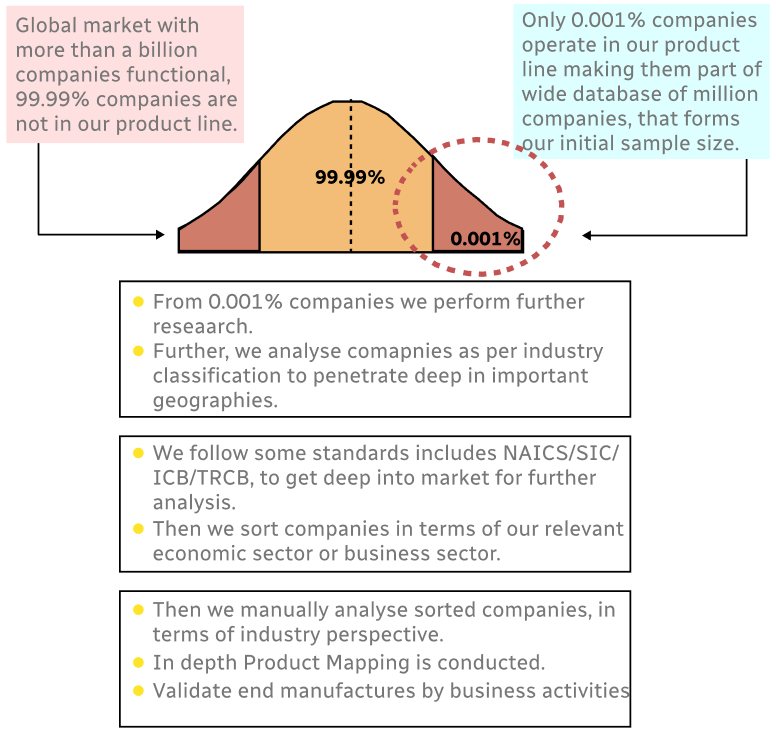
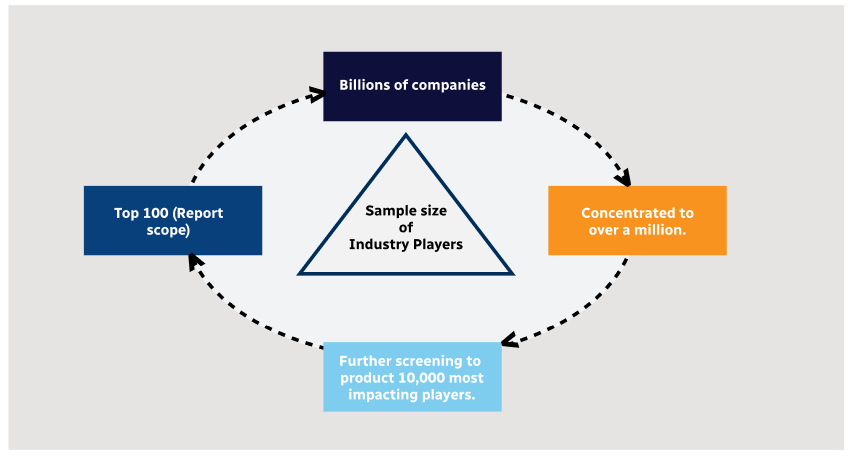
Step 1 - Identification of Relevant Samples Size from Population Database
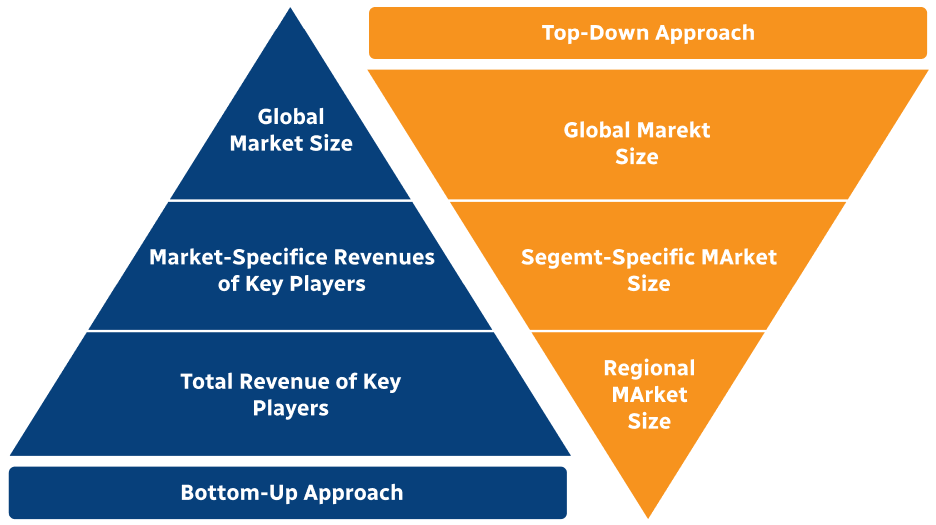
Step 2 - Approaches for Defining Global Market Size (Value, Volume* & Price*)
Note*: In applicable scenarios
Step 3 - Data Sources
Primary Research
- Web Analytics
- Survey Reports
- Research Institute
- Latest Research Reports
- Opinion Leaders
Secondary Research
- Annual Reports
- White Paper
- Latest Press Release
- Industry Association
- Paid Database
- Investor Presentations
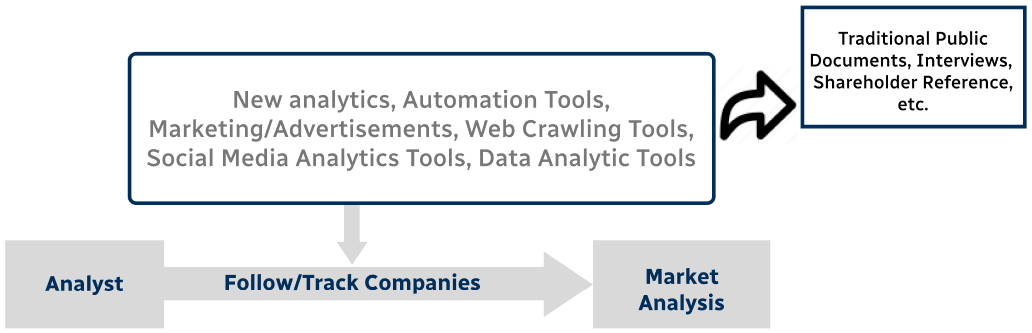
Step 4 - Data Triangulation
Involves using different sources of information in order to increase the validity of a study
These sources are likely to be stakeholders in a program - participants, other researchers, program staff, other community members, and so on.
Then we put all data in single framework & apply various statistical tools to find out the dynamic on the market.
During the analysis stage, feedback from the stakeholder groups would be compared to determine areas of agreement as well as areas of divergence


