


Key Insights
The global Reverse Osmosis (RO) cleaner market is projected for substantial growth, estimated to reach $7.87 billion by 2033, expanding from an estimated $4.5 billion in 2025. This trajectory represents a Compound Annual Growth Rate (CAGR) of 8.2% between the 2025 base year and 2033. The primary driver is the increasing demand for purified water across residential, commercial, and industrial sectors. RO systems are critical for industrial wastewater treatment and seawater desalination, further fueling market expansion. Key growth factors include stringent environmental regulations, rising concerns over water scarcity, and the adoption of efficient and cost-effective RO technology in emerging economies. The expanding industrial base, particularly in pharmaceuticals, food & beverage, and manufacturing, necessitates advanced water purification, directly benefiting the RO cleaner market.
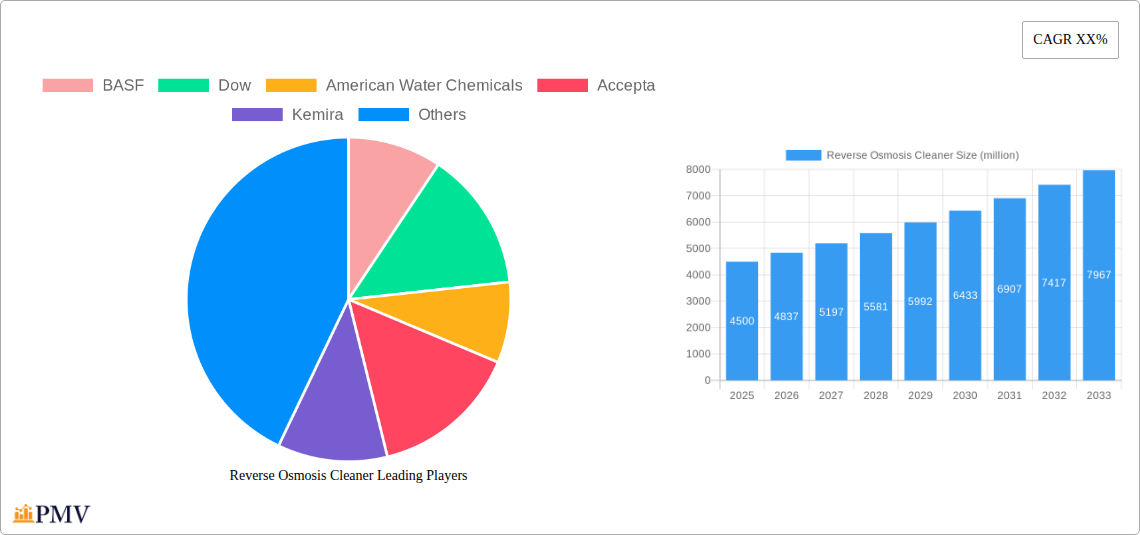
Reverse Osmosis Cleaner Market Size (In Billion)

The market is segmented by cleaner type into acidic, alkaline, and neutral. Acidic and alkaline formulations are expected to lead due to their effectiveness against common RO membrane issues like scale and biofouling. In terms of application, industrial wastewater treatment and seawater desalination will be the largest contributors, supported by infrastructure development and the need for sustainable water management. Domestic and commercial pure water production also forms a significant segment. Emerging trends include the development of eco-friendly cleaners, advanced formulations with enhanced efficiency and reduced membrane damage, and the integration of smart monitoring systems. While high initial RO system costs and alternative treatment methods may pose some challenges, the inherent advantages of RO technology and ongoing innovation in cleaners are expected to drive a dynamic market.
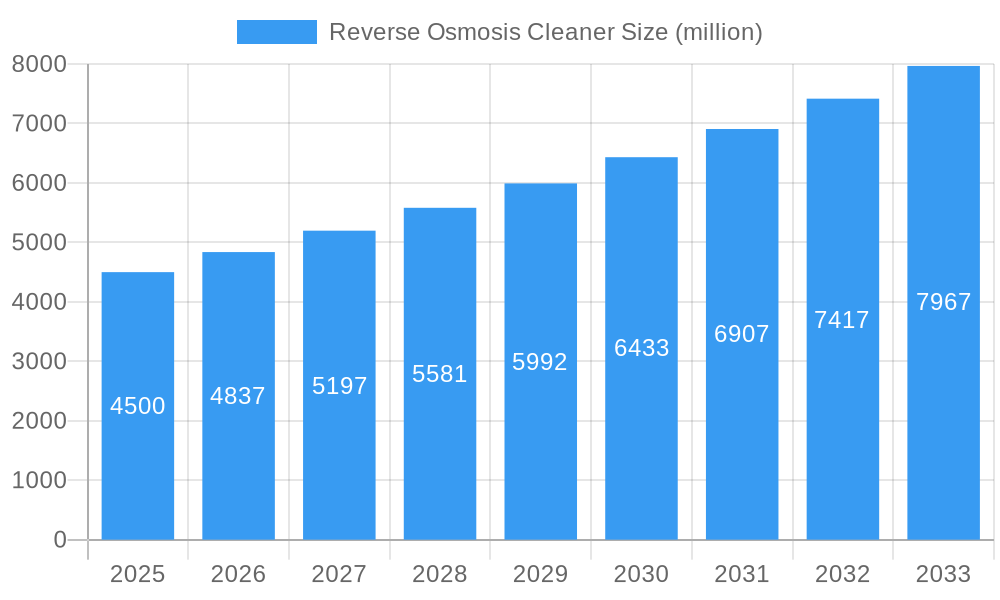
Reverse Osmosis Cleaner Company Market Share
This comprehensive market analysis covers the global Reverse Osmosis Cleaner market from 2019 to 2033, with a base year of 2025. It examines market structure, competitive landscape, industry trends, dominant segments, product innovation, growth drivers, challenges, key players, significant developments, and strategic outlook. This report provides actionable intelligence for stakeholders in the expanding reverse osmosis cleaner industry.
Reverse Osmosis Cleaner Market Structure & Competitive Dynamics
The global Reverse Osmosis Cleaner market is characterized by a moderately fragmented structure, with a significant presence of both large multinational corporations and specialized regional players. Market concentration is influenced by ongoing research and development investments, patent landscapes, and strategic alliances. The innovation ecosystem thrives on advancements in chemical formulations, eco-friendly solutions, and enhanced cleaning efficiencies for RO membranes. Regulatory frameworks, particularly concerning environmental discharge standards and chemical safety, play a crucial role in shaping market access and product development. Potential product substitutes, such as alternative membrane cleaning technologies or advanced water pre-treatment methods, are continuously being evaluated for their efficacy and cost-effectiveness. End-user trends are leaning towards demand for high-performance, sustainable, and cost-efficient cleaning solutions that extend membrane lifespan and reduce operational downtime. Mergers and acquisitions (M&A) activities, valued in the hundreds of millions, are prevalent as companies seek to expand their product portfolios, geographical reach, and technological capabilities. Key M&A deal values are estimated to be in the range of $500 million to $1.2 billion, driving consolidation and market consolidation. Market share distribution among top players is expected to shift dynamically due to technological breakthroughs and strategic partnerships.
Reverse Osmosis Cleaner Industry Trends & Insights
The Reverse Osmosis Cleaner industry is experiencing robust growth, projected at a Compound Annual Growth Rate (CAGR) of approximately 7.8% during the forecast period of 2025–2033. This expansion is primarily fueled by the escalating global demand for purified water, driven by population growth, increasing industrialization, and stringent wastewater discharge regulations. Technological disruptions are at the forefront, with continuous innovation in chemical formulations aimed at enhancing cleaning efficacy, reducing membrane fouling, and improving sustainability. The development of novel, biodegradable, and low-toxicity cleaning agents is a significant trend, aligning with growing environmental consciousness among end-users. Consumer preferences are increasingly shifting towards solutions that offer extended membrane life, minimized downtime, and reduced operational costs. Industry players are responding by investing heavily in R&D to develop specialized cleaners for various RO membrane types and applications, from industrial wastewater treatment to high-purity water production in pharmaceuticals and electronics. The competitive dynamics are intensifying, with companies focusing on product differentiation, strategic partnerships, and geographic expansion to capture market share. Market penetration is expected to increase significantly, particularly in emerging economies with developing water infrastructure and growing industrial sectors. The global market size for reverse osmosis cleaners is projected to reach $8.5 billion by 2033, up from an estimated $3.2 billion in 2024. Key growth drivers include the expanding desalination sector, the need for efficient industrial wastewater treatment, and the continuous requirement for ultrapure water in advanced manufacturing processes. The trend towards digital integration in water treatment facilities also presents opportunities for smart cleaning solutions and predictive maintenance, further influencing industry trends.
Dominant Markets & Segments in Reverse Osmosis Cleaner
The Pure Water Production segment is projected to maintain its dominance in the Reverse Osmosis Cleaner market, driven by the relentless global demand for potable water and the expansion of water purification infrastructure. This segment is expected to contribute over 35% of the total market revenue by 2033. Key drivers include:
- Growing Population & Urbanization: Increased demand for safe drinking water in rapidly urbanizing areas.
- Stringent Water Quality Standards: Government regulations mandating higher purity levels for municipal and industrial water.
- Growth in Food & Beverage and Pharmaceutical Industries: These sectors require exceptionally pure water for their production processes, necessitating regular RO membrane cleaning.
- Economic Policies: Government initiatives and investments in water infrastructure projects worldwide.
Within the Industrial Wastewater Treatment segment, the market is experiencing substantial growth due to increasingly stringent environmental regulations and the growing need for water recycling and reuse in manufacturing processes. This segment is anticipated to capture a market share of approximately 30% by 2033. Key drivers include:
- Environmental Regulations: Strict discharge limits for industrial effluents, pushing industries to invest in advanced treatment technologies.
- Water Scarcity & Reuse Initiatives: Growing pressure on industries to conserve water and implement closed-loop systems.
- Manufacturing Sector Expansion: Increased industrial output across sectors like chemicals, textiles, and mining, generating significant wastewater volumes.
- Technological Advancements: Development of specialized cleaners for complex industrial wastewater compositions.
The Seawater Desalination segment, while currently a significant contributor, is projected to experience a slightly slower but steady growth rate compared to the other segments, driven by its critical role in water-scarce coastal regions. This segment is expected to hold around 25% of the market share by 2033. Key drivers include:
- Water Scarcity in Arid Regions: Coastal nations heavily rely on desalination to meet their water demands.
- Falling Desalination Costs: Technological advancements and economies of scale are making desalination more cost-competitive.
- Investment in Water Security: Governments are prioritizing investments in desalination projects to ensure water security.
The Others segment, encompassing applications in laboratories, niche industrial processes, and specialized water treatment systems, is expected to grow at a healthy pace, driven by innovation and emerging applications.
In terms of product types, the Alkaline cleaner segment is anticipated to lead, accounting for over 40% of the market by 2033, due to its effectiveness in removing organic foulants and biofouling. The Acidic cleaner segment, crucial for removing inorganic scale and metal oxides, will remain a strong contender, with a projected market share of around 35%. The Neutral cleaner segment, favored for its milder impact on membranes and its use in sensitive applications, will also see steady growth, contributing approximately 25% to the market. The dominance of these segments is further influenced by the specific requirements of different RO membrane materials and operational conditions, leading to tailored product development and market strategies.
Reverse Osmosis Cleaner Product Innovations
Recent product innovations in the Reverse Osmosis Cleaner market focus on enhancing cleaning efficiency, improving environmental sustainability, and extending RO membrane lifespan. Developments include the introduction of low-toxicity, biodegradable formulations that minimize environmental impact while effectively removing a wide range of foulants, including organic matter, inorganic scale, and biological growth. Advanced chemistries are being developed to target specific types of fouling, offering customized cleaning solutions for diverse industrial applications and membrane materials. Competitive advantages are being gained through improved cleaning cycles, reduced water consumption during cleaning, and enhanced safety profiles for operators. The integration of smart cleaning technologies, which optimize cleaning schedules based on real-time performance data, is also a growing trend, leading to more efficient and cost-effective operations.
Report Segmentation & Scope
This report segments the Reverse Osmosis Cleaner market by Application into:
- Pure Water Production: This segment focuses on applications requiring high-purity water for potable, pharmaceutical, and semiconductor industries. Market size for this segment is projected to reach $3 billion by 2033, with a CAGR of 8.2%. Competitive dynamics involve specialized formulations for ultra-pure water systems.
- Industrial Wastewater Treatment: This segment covers the use of RO cleaners in treating effluents from various industrial sectors like chemicals, textiles, and food & beverage. Projected market size is $2.5 billion by 2033, with a CAGR of 7.9%. Growth is driven by stringent environmental regulations and water recycling initiatives.
- Seawater Desalination: This segment addresses the cleaning of RO membranes used in converting seawater into freshwater. Market size is estimated at $2.1 billion by 2033, with a CAGR of 7.5%. Key drivers include water scarcity and falling desalination costs.
- Others: This segment includes niche applications in laboratories, specialized manufacturing, and research facilities. Projected market size is $0.9 billion by 2033, with a CAGR of 7.0%.
The market is also segmented by Type:
- Acidic: Estimated market size of $2.9 billion by 2033, with a CAGR of 7.7%. Effective for scale and metal oxide removal.
- Alkaline: Estimated market size of $3.4 billion by 2033, with a CAGR of 8.0%. Dominant for organic and biofouling removal.
- Neutral: Estimated market size of $2.2 billion by 2033, with a CAGR of 7.2%. Preferred for sensitive membranes and specific applications.
Key Drivers of Reverse Osmosis Cleaner Growth
The global Reverse Osmosis Cleaner market is propelled by several significant growth drivers. Firstly, the escalating global demand for clean water, driven by population growth and increasing industrialization, necessitates the efficient operation and maintenance of RO systems, thereby boosting the demand for effective cleaners. Secondly, stringent environmental regulations worldwide are mandating better wastewater treatment and water recycling, pushing industries to invest in advanced RO technologies and their associated cleaning solutions. Thirdly, technological advancements in RO membrane materials and cleaning chemistries are leading to the development of more efficient, sustainable, and cost-effective cleaning agents, which in turn stimulates market growth. The expanding seawater desalination sector, vital for water security in arid regions, also represents a substantial growth avenue. Furthermore, growing awareness among end-users about the importance of regular membrane cleaning for optimal performance and extended lifespan is a crucial economic factor influencing market expansion.
Challenges in the Reverse Osmosis Cleaner Sector
Despite its robust growth, the Reverse Osmosis Cleaner sector faces several challenges. Regulatory hurdles, particularly concerning the disposal of spent cleaning chemicals and the approval of new formulations, can impact market entry and product development timelines. Supply chain disruptions, as witnessed globally, can affect the availability and cost of raw materials, impacting production and pricing strategies. Intense competitive pressures from both established players and emerging companies can lead to price wars and reduced profit margins. Furthermore, the development of alternative water treatment technologies or membrane materials that require less frequent or less aggressive cleaning could pose a long-term threat. The need for specialized training and handling procedures for certain cleaning chemicals can also be a barrier for smaller enterprises.
Leading Players in the Reverse Osmosis Cleaner Market
- BASF
- Dow
- American Water Chemicals
- Accepta
- Kemira
- Pacific Water Technology
- Snowate
- Shandong Kairui Chemistry
- Shandong Taihe Technologies
- Beijing Bluestar Cleaning
- Prio
- JESDE
- Jiangsu Jiuwu Hi-Tech
- Zaozhuang Jialu Chemical
- Haideneng (Tianjin) Environmental Protection Technology
- Jiangsu Chaoran Chemical
Key Developments in Reverse Osmosis Cleaner Sector
- 2023 March: Shandong Kairui Chemistry launched a new line of eco-friendly RO cleaners with enhanced biodegradability, targeting the European market.
- 2022 December: Dow announced a strategic partnership with American Water Chemicals to develop innovative RO membrane cleaning solutions for the industrial sector.
- 2022 September: Accepta expanded its product portfolio with the introduction of specialized neutral cleaners for sensitive RO membranes in the pharmaceutical industry.
- 2021 November: Kemira acquired a leading specialty chemical provider, enhancing its capabilities in water treatment solutions, including RO cleaners.
- 2021 May: Snowate developed a novel fouling detection system that integrates with their RO cleaners for optimized cleaning schedules.
Strategic Reverse Osmosis Cleaner Market Outlook
The strategic outlook for the Reverse Osmosis Cleaner market remains exceptionally positive, driven by continuous technological advancements and increasing global emphasis on water security and sustainability. The market is poised for significant growth, with opportunities arising from the expanding desalination sector, growing industrialization in emerging economies, and the increasing demand for ultra-pure water in high-tech industries. Companies that focus on developing advanced, eco-friendly cleaning formulations, leveraging digital technologies for smart cleaning solutions, and establishing strong global distribution networks will be well-positioned for success. Strategic collaborations and acquisitions will continue to play a vital role in consolidating market share and expanding technological capabilities. The emphasis on circular economy principles and resource efficiency will further drive innovation in this sector, creating a dynamic and evolving market landscape.
Reverse Osmosis Cleaner Segmentation
-
1. Application
- 1.1. Pure Water Production
- 1.2. Industrial Wastewater Treatment
- 1.3. Seawater Desalination
- 1.4. Others
-
2. Types
- 2.1. Acidic
- 2.2. Alkaline
- 2.3. Neutral
Reverse Osmosis Cleaner Segmentation By Geography
-
1. North America
- 1.1. United States
- 1.2. Canada
- 1.3. Mexico
-
2. South America
- 2.1. Brazil
- 2.2. Argentina
- 2.3. Rest of South America
-
3. Europe
- 3.1. United Kingdom
- 3.2. Germany
- 3.3. France
- 3.4. Italy
- 3.5. Spain
- 3.6. Russia
- 3.7. Benelux
- 3.8. Nordics
- 3.9. Rest of Europe
-
4. Middle East & Africa
- 4.1. Turkey
- 4.2. Israel
- 4.3. GCC
- 4.4. North Africa
- 4.5. South Africa
- 4.6. Rest of Middle East & Africa
-
5. Asia Pacific
- 5.1. China
- 5.2. India
- 5.3. Japan
- 5.4. South Korea
- 5.5. ASEAN
- 5.6. Oceania
- 5.7. Rest of Asia Pacific
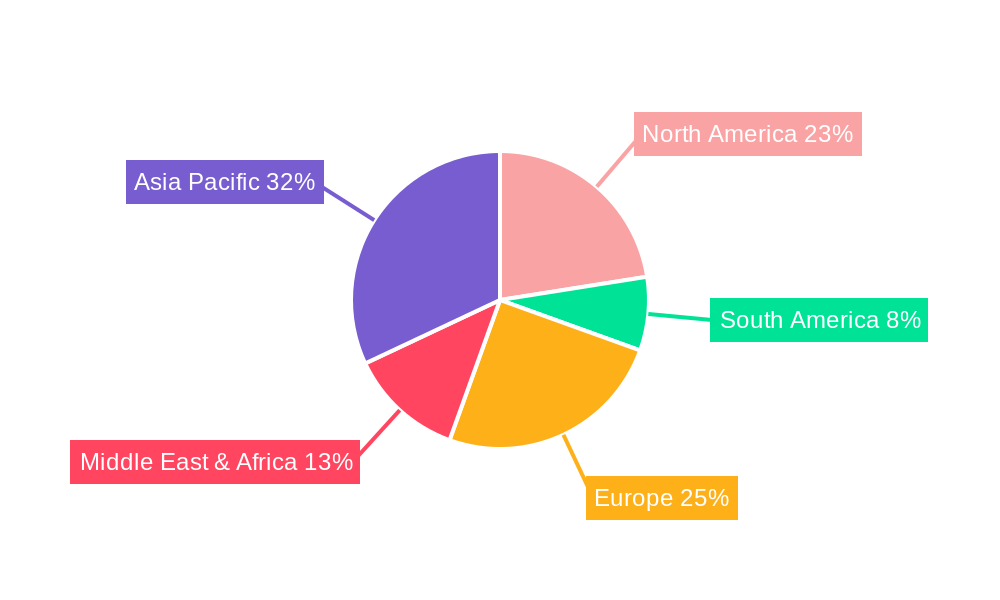
Reverse Osmosis Cleaner Regional Market Share
Geographic Coverage of Reverse Osmosis Cleaner
Reverse Osmosis Cleaner REPORT HIGHLIGHTS
| Aspects | Details |
|---|---|
| Study Period | 2020-2034 |
| Base Year | 2025 |
| Estimated Year | 2026 |
| Forecast Period | 2026-2034 |
| Historical Period | 2020-2025 |
| Growth Rate | CAGR of 8.2% from 2020-2034 |
| Segmentation |
|
Table of Contents
- 1. Introduction
- 1.1. Research Scope
- 1.2. Market Segmentation
- 1.3. Research Methodology
- 1.4. Definitions and Assumptions
- 2. Executive Summary
- 2.1. Introduction
- 3. Market Dynamics
- 3.1. Introduction
- 3.2. Market Drivers
- 3.3. Market Restrains
- 3.4. Market Trends
- 4. Market Factor Analysis
- 4.1. Porters Five Forces
- 4.2. Supply/Value Chain
- 4.3. PESTEL analysis
- 4.4. Market Entropy
- 4.5. Patent/Trademark Analysis
- 5. Global Reverse Osmosis Cleaner Analysis, Insights and Forecast, 2020-2032
- 5.1. Market Analysis, Insights and Forecast - by Application
- 5.1.1. Pure Water Production
- 5.1.2. Industrial Wastewater Treatment
- 5.1.3. Seawater Desalination
- 5.1.4. Others
- 5.2. Market Analysis, Insights and Forecast - by Types
- 5.2.1. Acidic
- 5.2.2. Alkaline
- 5.2.3. Neutral
- 5.3. Market Analysis, Insights and Forecast - by Region
- 5.3.1. North America
- 5.3.2. South America
- 5.3.3. Europe
- 5.3.4. Middle East & Africa
- 5.3.5. Asia Pacific
- 5.1. Market Analysis, Insights and Forecast - by Application
- 6. North America Reverse Osmosis Cleaner Analysis, Insights and Forecast, 2020-2032
- 6.1. Market Analysis, Insights and Forecast - by Application
- 6.1.1. Pure Water Production
- 6.1.2. Industrial Wastewater Treatment
- 6.1.3. Seawater Desalination
- 6.1.4. Others
- 6.2. Market Analysis, Insights and Forecast - by Types
- 6.2.1. Acidic
- 6.2.2. Alkaline
- 6.2.3. Neutral
- 6.1. Market Analysis, Insights and Forecast - by Application
- 7. South America Reverse Osmosis Cleaner Analysis, Insights and Forecast, 2020-2032
- 7.1. Market Analysis, Insights and Forecast - by Application
- 7.1.1. Pure Water Production
- 7.1.2. Industrial Wastewater Treatment
- 7.1.3. Seawater Desalination
- 7.1.4. Others
- 7.2. Market Analysis, Insights and Forecast - by Types
- 7.2.1. Acidic
- 7.2.2. Alkaline
- 7.2.3. Neutral
- 7.1. Market Analysis, Insights and Forecast - by Application
- 8. Europe Reverse Osmosis Cleaner Analysis, Insights and Forecast, 2020-2032
- 8.1. Market Analysis, Insights and Forecast - by Application
- 8.1.1. Pure Water Production
- 8.1.2. Industrial Wastewater Treatment
- 8.1.3. Seawater Desalination
- 8.1.4. Others
- 8.2. Market Analysis, Insights and Forecast - by Types
- 8.2.1. Acidic
- 8.2.2. Alkaline
- 8.2.3. Neutral
- 8.1. Market Analysis, Insights and Forecast - by Application
- 9. Middle East & Africa Reverse Osmosis Cleaner Analysis, Insights and Forecast, 2020-2032
- 9.1. Market Analysis, Insights and Forecast - by Application
- 9.1.1. Pure Water Production
- 9.1.2. Industrial Wastewater Treatment
- 9.1.3. Seawater Desalination
- 9.1.4. Others
- 9.2. Market Analysis, Insights and Forecast - by Types
- 9.2.1. Acidic
- 9.2.2. Alkaline
- 9.2.3. Neutral
- 9.1. Market Analysis, Insights and Forecast - by Application
- 10. Asia Pacific Reverse Osmosis Cleaner Analysis, Insights and Forecast, 2020-2032
- 10.1. Market Analysis, Insights and Forecast - by Application
- 10.1.1. Pure Water Production
- 10.1.2. Industrial Wastewater Treatment
- 10.1.3. Seawater Desalination
- 10.1.4. Others
- 10.2. Market Analysis, Insights and Forecast - by Types
- 10.2.1. Acidic
- 10.2.2. Alkaline
- 10.2.3. Neutral
- 10.1. Market Analysis, Insights and Forecast - by Application
- 11. Competitive Analysis
- 11.1. Global Market Share Analysis 2025
- 11.2. Company Profiles
- 11.2.1 BASF
- 11.2.1.1. Overview
- 11.2.1.2. Products
- 11.2.1.3. SWOT Analysis
- 11.2.1.4. Recent Developments
- 11.2.1.5. Financials (Based on Availability)
- 11.2.2 Dow
- 11.2.2.1. Overview
- 11.2.2.2. Products
- 11.2.2.3. SWOT Analysis
- 11.2.2.4. Recent Developments
- 11.2.2.5. Financials (Based on Availability)
- 11.2.3 American Water Chemicals
- 11.2.3.1. Overview
- 11.2.3.2. Products
- 11.2.3.3. SWOT Analysis
- 11.2.3.4. Recent Developments
- 11.2.3.5. Financials (Based on Availability)
- 11.2.4 Accepta
- 11.2.4.1. Overview
- 11.2.4.2. Products
- 11.2.4.3. SWOT Analysis
- 11.2.4.4. Recent Developments
- 11.2.4.5. Financials (Based on Availability)
- 11.2.5 Kemira
- 11.2.5.1. Overview
- 11.2.5.2. Products
- 11.2.5.3. SWOT Analysis
- 11.2.5.4. Recent Developments
- 11.2.5.5. Financials (Based on Availability)
- 11.2.6 Pacific Water Technology
- 11.2.6.1. Overview
- 11.2.6.2. Products
- 11.2.6.3. SWOT Analysis
- 11.2.6.4. Recent Developments
- 11.2.6.5. Financials (Based on Availability)
- 11.2.7 Snowate
- 11.2.7.1. Overview
- 11.2.7.2. Products
- 11.2.7.3. SWOT Analysis
- 11.2.7.4. Recent Developments
- 11.2.7.5. Financials (Based on Availability)
- 11.2.8 Shandong Kairui Chemistry
- 11.2.8.1. Overview
- 11.2.8.2. Products
- 11.2.8.3. SWOT Analysis
- 11.2.8.4. Recent Developments
- 11.2.8.5. Financials (Based on Availability)
- 11.2.9 Shandong Taihe Technologies
- 11.2.9.1. Overview
- 11.2.9.2. Products
- 11.2.9.3. SWOT Analysis
- 11.2.9.4. Recent Developments
- 11.2.9.5. Financials (Based on Availability)
- 11.2.10 Beijing Bluestar Cleaning
- 11.2.10.1. Overview
- 11.2.10.2. Products
- 11.2.10.3. SWOT Analysis
- 11.2.10.4. Recent Developments
- 11.2.10.5. Financials (Based on Availability)
- 11.2.11 Prio
- 11.2.11.1. Overview
- 11.2.11.2. Products
- 11.2.11.3. SWOT Analysis
- 11.2.11.4. Recent Developments
- 11.2.11.5. Financials (Based on Availability)
- 11.2.12 JESDE
- 11.2.12.1. Overview
- 11.2.12.2. Products
- 11.2.12.3. SWOT Analysis
- 11.2.12.4. Recent Developments
- 11.2.12.5. Financials (Based on Availability)
- 11.2.13 Jiangsu Jiuwu Hi-Tech
- 11.2.13.1. Overview
- 11.2.13.2. Products
- 11.2.13.3. SWOT Analysis
- 11.2.13.4. Recent Developments
- 11.2.13.5. Financials (Based on Availability)
- 11.2.14 Zaozhuang Jialu Chemical
- 11.2.14.1. Overview
- 11.2.14.2. Products
- 11.2.14.3. SWOT Analysis
- 11.2.14.4. Recent Developments
- 11.2.14.5. Financials (Based on Availability)
- 11.2.15 Haideneng (Tianjin) Environmental Protection Technology
- 11.2.15.1. Overview
- 11.2.15.2. Products
- 11.2.15.3. SWOT Analysis
- 11.2.15.4. Recent Developments
- 11.2.15.5. Financials (Based on Availability)
- 11.2.16 Jiangsu Chaoran Chemical
- 11.2.16.1. Overview
- 11.2.16.2. Products
- 11.2.16.3. SWOT Analysis
- 11.2.16.4. Recent Developments
- 11.2.16.5. Financials (Based on Availability)
- 11.2.1 BASF
List of Figures
- Figure 1: Global Reverse Osmosis Cleaner Revenue Breakdown (billion, %) by Region 2025 & 2033
- Figure 2: North America Reverse Osmosis Cleaner Revenue (billion), by Application 2025 & 2033
- Figure 3: North America Reverse Osmosis Cleaner Revenue Share (%), by Application 2025 & 2033
- Figure 4: North America Reverse Osmosis Cleaner Revenue (billion), by Types 2025 & 2033
- Figure 5: North America Reverse Osmosis Cleaner Revenue Share (%), by Types 2025 & 2033
- Figure 6: North America Reverse Osmosis Cleaner Revenue (billion), by Country 2025 & 2033
- Figure 7: North America Reverse Osmosis Cleaner Revenue Share (%), by Country 2025 & 2033
- Figure 8: South America Reverse Osmosis Cleaner Revenue (billion), by Application 2025 & 2033
- Figure 9: South America Reverse Osmosis Cleaner Revenue Share (%), by Application 2025 & 2033
- Figure 10: South America Reverse Osmosis Cleaner Revenue (billion), by Types 2025 & 2033
- Figure 11: South America Reverse Osmosis Cleaner Revenue Share (%), by Types 2025 & 2033
- Figure 12: South America Reverse Osmosis Cleaner Revenue (billion), by Country 2025 & 2033
- Figure 13: South America Reverse Osmosis Cleaner Revenue Share (%), by Country 2025 & 2033
- Figure 14: Europe Reverse Osmosis Cleaner Revenue (billion), by Application 2025 & 2033
- Figure 15: Europe Reverse Osmosis Cleaner Revenue Share (%), by Application 2025 & 2033
- Figure 16: Europe Reverse Osmosis Cleaner Revenue (billion), by Types 2025 & 2033
- Figure 17: Europe Reverse Osmosis Cleaner Revenue Share (%), by Types 2025 & 2033
- Figure 18: Europe Reverse Osmosis Cleaner Revenue (billion), by Country 2025 & 2033
- Figure 19: Europe Reverse Osmosis Cleaner Revenue Share (%), by Country 2025 & 2033
- Figure 20: Middle East & Africa Reverse Osmosis Cleaner Revenue (billion), by Application 2025 & 2033
- Figure 21: Middle East & Africa Reverse Osmosis Cleaner Revenue Share (%), by Application 2025 & 2033
- Figure 22: Middle East & Africa Reverse Osmosis Cleaner Revenue (billion), by Types 2025 & 2033
- Figure 23: Middle East & Africa Reverse Osmosis Cleaner Revenue Share (%), by Types 2025 & 2033
- Figure 24: Middle East & Africa Reverse Osmosis Cleaner Revenue (billion), by Country 2025 & 2033
- Figure 25: Middle East & Africa Reverse Osmosis Cleaner Revenue Share (%), by Country 2025 & 2033
- Figure 26: Asia Pacific Reverse Osmosis Cleaner Revenue (billion), by Application 2025 & 2033
- Figure 27: Asia Pacific Reverse Osmosis Cleaner Revenue Share (%), by Application 2025 & 2033
- Figure 28: Asia Pacific Reverse Osmosis Cleaner Revenue (billion), by Types 2025 & 2033
- Figure 29: Asia Pacific Reverse Osmosis Cleaner Revenue Share (%), by Types 2025 & 2033
- Figure 30: Asia Pacific Reverse Osmosis Cleaner Revenue (billion), by Country 2025 & 2033
- Figure 31: Asia Pacific Reverse Osmosis Cleaner Revenue Share (%), by Country 2025 & 2033
List of Tables
- Table 1: Global Reverse Osmosis Cleaner Revenue billion Forecast, by Application 2020 & 2033
- Table 2: Global Reverse Osmosis Cleaner Revenue billion Forecast, by Types 2020 & 2033
- Table 3: Global Reverse Osmosis Cleaner Revenue billion Forecast, by Region 2020 & 2033
- Table 4: Global Reverse Osmosis Cleaner Revenue billion Forecast, by Application 2020 & 2033
- Table 5: Global Reverse Osmosis Cleaner Revenue billion Forecast, by Types 2020 & 2033
- Table 6: Global Reverse Osmosis Cleaner Revenue billion Forecast, by Country 2020 & 2033
- Table 7: United States Reverse Osmosis Cleaner Revenue (billion) Forecast, by Application 2020 & 2033
- Table 8: Canada Reverse Osmosis Cleaner Revenue (billion) Forecast, by Application 2020 & 2033
- Table 9: Mexico Reverse Osmosis Cleaner Revenue (billion) Forecast, by Application 2020 & 2033
- Table 10: Global Reverse Osmosis Cleaner Revenue billion Forecast, by Application 2020 & 2033
- Table 11: Global Reverse Osmosis Cleaner Revenue billion Forecast, by Types 2020 & 2033
- Table 12: Global Reverse Osmosis Cleaner Revenue billion Forecast, by Country 2020 & 2033
- Table 13: Brazil Reverse Osmosis Cleaner Revenue (billion) Forecast, by Application 2020 & 2033
- Table 14: Argentina Reverse Osmosis Cleaner Revenue (billion) Forecast, by Application 2020 & 2033
- Table 15: Rest of South America Reverse Osmosis Cleaner Revenue (billion) Forecast, by Application 2020 & 2033
- Table 16: Global Reverse Osmosis Cleaner Revenue billion Forecast, by Application 2020 & 2033
- Table 17: Global Reverse Osmosis Cleaner Revenue billion Forecast, by Types 2020 & 2033
- Table 18: Global Reverse Osmosis Cleaner Revenue billion Forecast, by Country 2020 & 2033
- Table 19: United Kingdom Reverse Osmosis Cleaner Revenue (billion) Forecast, by Application 2020 & 2033
- Table 20: Germany Reverse Osmosis Cleaner Revenue (billion) Forecast, by Application 2020 & 2033
- Table 21: France Reverse Osmosis Cleaner Revenue (billion) Forecast, by Application 2020 & 2033
- Table 22: Italy Reverse Osmosis Cleaner Revenue (billion) Forecast, by Application 2020 & 2033
- Table 23: Spain Reverse Osmosis Cleaner Revenue (billion) Forecast, by Application 2020 & 2033
- Table 24: Russia Reverse Osmosis Cleaner Revenue (billion) Forecast, by Application 2020 & 2033
- Table 25: Benelux Reverse Osmosis Cleaner Revenue (billion) Forecast, by Application 2020 & 2033
- Table 26: Nordics Reverse Osmosis Cleaner Revenue (billion) Forecast, by Application 2020 & 2033
- Table 27: Rest of Europe Reverse Osmosis Cleaner Revenue (billion) Forecast, by Application 2020 & 2033
- Table 28: Global Reverse Osmosis Cleaner Revenue billion Forecast, by Application 2020 & 2033
- Table 29: Global Reverse Osmosis Cleaner Revenue billion Forecast, by Types 2020 & 2033
- Table 30: Global Reverse Osmosis Cleaner Revenue billion Forecast, by Country 2020 & 2033
- Table 31: Turkey Reverse Osmosis Cleaner Revenue (billion) Forecast, by Application 2020 & 2033
- Table 32: Israel Reverse Osmosis Cleaner Revenue (billion) Forecast, by Application 2020 & 2033
- Table 33: GCC Reverse Osmosis Cleaner Revenue (billion) Forecast, by Application 2020 & 2033
- Table 34: North Africa Reverse Osmosis Cleaner Revenue (billion) Forecast, by Application 2020 & 2033
- Table 35: South Africa Reverse Osmosis Cleaner Revenue (billion) Forecast, by Application 2020 & 2033
- Table 36: Rest of Middle East & Africa Reverse Osmosis Cleaner Revenue (billion) Forecast, by Application 2020 & 2033
- Table 37: Global Reverse Osmosis Cleaner Revenue billion Forecast, by Application 2020 & 2033
- Table 38: Global Reverse Osmosis Cleaner Revenue billion Forecast, by Types 2020 & 2033
- Table 39: Global Reverse Osmosis Cleaner Revenue billion Forecast, by Country 2020 & 2033
- Table 40: China Reverse Osmosis Cleaner Revenue (billion) Forecast, by Application 2020 & 2033
- Table 41: India Reverse Osmosis Cleaner Revenue (billion) Forecast, by Application 2020 & 2033
- Table 42: Japan Reverse Osmosis Cleaner Revenue (billion) Forecast, by Application 2020 & 2033
- Table 43: South Korea Reverse Osmosis Cleaner Revenue (billion) Forecast, by Application 2020 & 2033
- Table 44: ASEAN Reverse Osmosis Cleaner Revenue (billion) Forecast, by Application 2020 & 2033
- Table 45: Oceania Reverse Osmosis Cleaner Revenue (billion) Forecast, by Application 2020 & 2033
- Table 46: Rest of Asia Pacific Reverse Osmosis Cleaner Revenue (billion) Forecast, by Application 2020 & 2033
Frequently Asked Questions
1. What is the projected Compound Annual Growth Rate (CAGR) of the Reverse Osmosis Cleaner?
The projected CAGR is approximately 8.2%.
2. Which companies are prominent players in the Reverse Osmosis Cleaner?
Key companies in the market include BASF, Dow, American Water Chemicals, Accepta, Kemira, Pacific Water Technology, Snowate, Shandong Kairui Chemistry, Shandong Taihe Technologies, Beijing Bluestar Cleaning, Prio, JESDE, Jiangsu Jiuwu Hi-Tech, Zaozhuang Jialu Chemical, Haideneng (Tianjin) Environmental Protection Technology, Jiangsu Chaoran Chemical.
3. What are the main segments of the Reverse Osmosis Cleaner?
The market segments include Application, Types.
4. Can you provide details about the market size?
The market size is estimated to be USD 7.87 billion as of 2022.
5. What are some drivers contributing to market growth?
N/A
6. What are the notable trends driving market growth?
N/A
7. Are there any restraints impacting market growth?
N/A
8. Can you provide examples of recent developments in the market?
N/A
9. What pricing options are available for accessing the report?
Pricing options include single-user, multi-user, and enterprise licenses priced at USD 4900.00, USD 7350.00, and USD 9800.00 respectively.
10. Is the market size provided in terms of value or volume?
The market size is provided in terms of value, measured in billion.
11. Are there any specific market keywords associated with the report?
Yes, the market keyword associated with the report is "Reverse Osmosis Cleaner," which aids in identifying and referencing the specific market segment covered.
12. How do I determine which pricing option suits my needs best?
The pricing options vary based on user requirements and access needs. Individual users may opt for single-user licenses, while businesses requiring broader access may choose multi-user or enterprise licenses for cost-effective access to the report.
13. Are there any additional resources or data provided in the Reverse Osmosis Cleaner report?
While the report offers comprehensive insights, it's advisable to review the specific contents or supplementary materials provided to ascertain if additional resources or data are available.
14. How can I stay updated on further developments or reports in the Reverse Osmosis Cleaner?
To stay informed about further developments, trends, and reports in the Reverse Osmosis Cleaner, consider subscribing to industry newsletters, following relevant companies and organizations, or regularly checking reputable industry news sources and publications.
Methodology
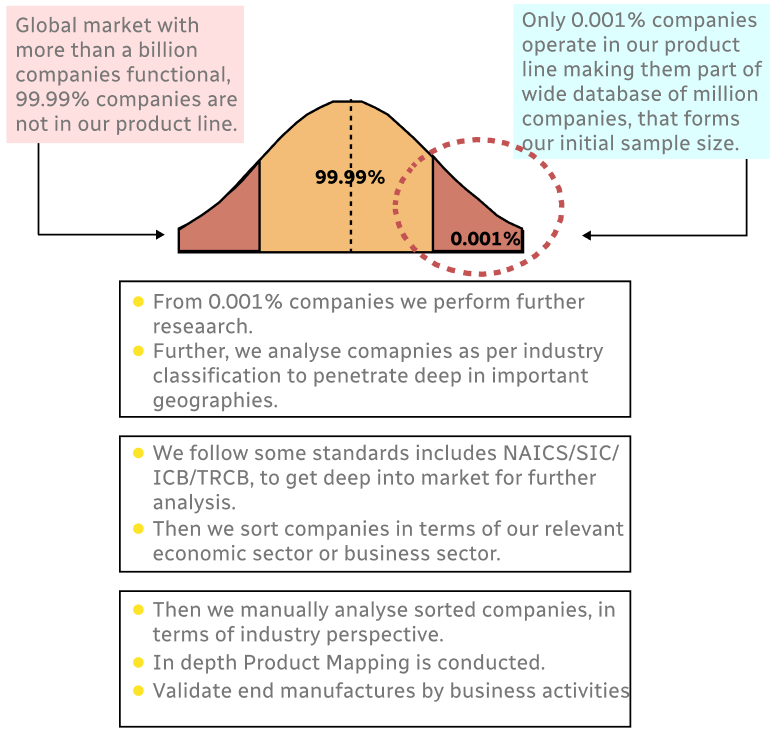
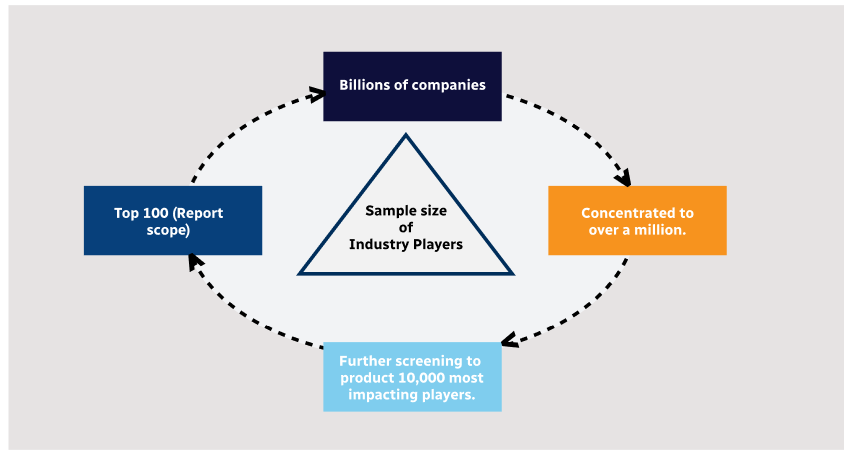
Step 1 - Identification of Relevant Samples Size from Population Database
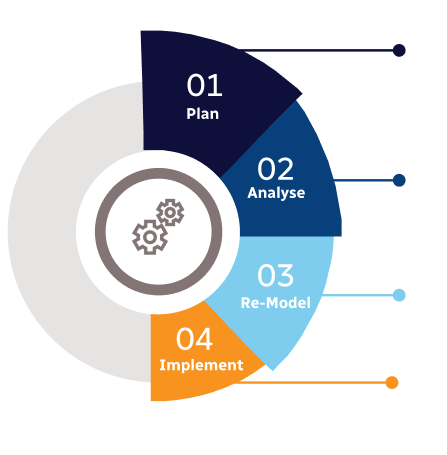
Step 2 - Approaches for Defining Global Market Size (Value, Volume* & Price*)
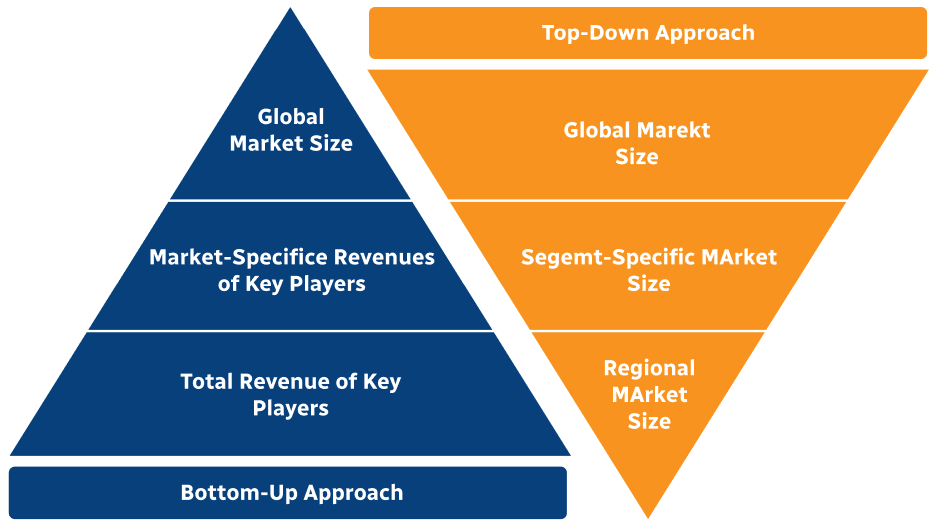
Note*: In applicable scenarios
Step 3 - Data Sources
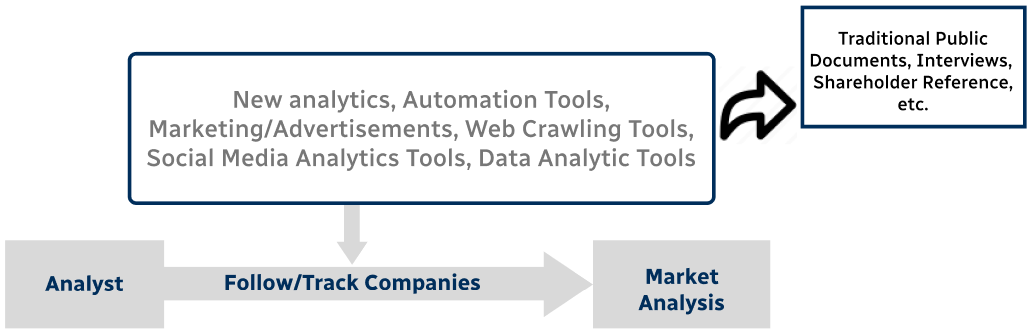
Primary Research
- Web Analytics
- Survey Reports
- Research Institute
- Latest Research Reports
- Opinion Leaders
Secondary Research
- Annual Reports
- White Paper
- Latest Press Release
- Industry Association
- Paid Database
- Investor Presentations
Step 4 - Data Triangulation
Involves using different sources of information in order to increase the validity of a study
These sources are likely to be stakeholders in a program - participants, other researchers, program staff, other community members, and so on.
Then we put all data in single framework & apply various statistical tools to find out the dynamic on the market.
During the analysis stage, feedback from the stakeholder groups would be compared to determine areas of agreement as well as areas of divergence