


Key Insights
The global Non-Destructive Testing (NDT) Software market is poised for significant expansion, estimated at approximately $1.5 billion in 2025 and projected to grow at a Compound Annual Growth Rate (CAGR) of around 10% through 2033. This robust growth is primarily fueled by the increasing adoption of advanced NDT techniques across critical industries like Oil and Gas, Energy and Electricity, and Aerospace and Defense. The escalating demand for enhanced safety regulations, the need for early detection of material defects to prevent catastrophic failures, and the continuous drive for operational efficiency are key market drivers. Furthermore, the growing complexity of manufactured components and the increasing integration of digital technologies, including IoT and AI for real-time data analysis and predictive maintenance, are further propelling market advancements. This evolving landscape necessitates sophisticated software solutions capable of managing vast amounts of inspection data, facilitating remote monitoring, and ensuring compliance with stringent quality standards.
-Software.png&w=1920&q=75)
Non Destructive Testing (NDT) Software Market Size (In Billion)

The market is broadly segmented by application, with Oil and Gas and Energy and Electricity sectors expected to represent the largest share due to the continuous need for asset integrity management and the inherent risks associated with these industries. The Aerospace and Defense sector also presents substantial opportunities, driven by the stringent safety requirements and the development of advanced aircraft and defense systems. In terms of type, while regular software solutions cater to a wide range of NDT applications, the demand for customized software tailored to specific industry needs and unique inspection challenges is on the rise. Key players such as Baker Hughes, Zetec, Inc., and Olympus IMS are at the forefront, investing in research and development to offer innovative solutions that enhance data acquisition, analysis, and reporting capabilities. However, challenges such as the high initial cost of advanced NDT software and the need for specialized training to operate them could pose moderate restraints to market growth. The competitive landscape is characterized by strategic collaborations, mergers, and acquisitions aimed at expanding product portfolios and geographical reach.
-Software.png&w=1920&q=75)
Non Destructive Testing (NDT) Software Company Market Share
This comprehensive Non Destructive Testing (NDT) Software market research report delves into the intricate landscape of NDT software solutions, providing in-depth analysis and actionable insights for stakeholders. Covering a study period from 2019 to 2033, with a base year of 2025, this report offers a detailed examination of market structure, competitive dynamics, industry trends, product innovations, and strategic outlooks. We explore the critical role of NDT software in ensuring asset integrity and safety across key sectors such as Oil and Gas, Energy and Electricity, Aerospace and Defense, and Other industries. The report meticulously analyzes Regular Software and Customized Software segments, identifying dominant markets and key growth drivers. With projected market sizes in the hundreds of millions and a robust CAGR, this report is an essential resource for understanding the evolving NDT software ecosystem.
Non Destructive Testing (NDT) Software Market Structure & Competitive Dynamics
The Non Destructive Testing (NDT) Software market exhibits a dynamic structure influenced by technological advancements, increasing regulatory compliance demands, and a growing emphasis on asset integrity management. Market concentration varies across different software types and application segments. Key players like DÜRR NDT, Zetec, Inc., Baker Hughes, Eddyfi Technologies, and Olympus IMS are at the forefront, driving innovation through integrated solutions. The innovation ecosystem is robust, with companies leveraging cloud computing, AI, and machine learning to enhance data acquisition, analysis, and reporting capabilities. Regulatory frameworks play a crucial role, mandating stringent inspection standards, which in turn fuels the demand for sophisticated NDT software. Product substitutes, while existing, often lack the comprehensive data management and analysis features offered by specialized NDT software. End-user trends reveal a growing preference for integrated platforms that streamline workflow and improve decision-making. Mergers and acquisitions (M&A) activities are prevalent as larger entities seek to consolidate market share and expand their service offerings. Recent M&A deals have valued companies in the range of tens to hundreds of millions, signaling significant consolidation potential. The market is characterized by a blend of established giants and agile startups, fostering a competitive yet collaborative environment.
Non Destructive Testing (NDT) Software Industry Trends & Insights
The global Non Destructive Testing (NDT) Software market is experiencing robust growth, projected to reach USD 2,500 million by 2033, with a Compound Annual Growth Rate (CAGR) of 12.5% during the forecast period (2025–2033). This expansion is primarily driven by the increasing need for asset integrity management and safety assurance across critical industries such as Oil and Gas, Energy and Electricity, and Aerospace and Defense. Technological disruptions are reshaping the NDT software landscape. The integration of Artificial Intelligence (AI) and Machine Learning (ML) is revolutionizing data analysis, enabling faster and more accurate defect detection, characterization, and prediction of equipment failure. Cloud-based NDT software solutions are gaining significant traction, offering enhanced accessibility, scalability, and collaborative capabilities for geographically dispersed teams. The adoption of IoT devices for real-time data collection and remote monitoring is further augmenting the demand for sophisticated NDT software. Consumer preferences are shifting towards user-friendly interfaces, automated reporting features, and integrated data management systems that can seamlessly handle large volumes of inspection data. Companies are investing heavily in R&D to develop advanced algorithms for signal processing, image analysis, and predictive maintenance. The competitive dynamics are intense, with key players like Baker Hughes, Zetec, Inc., and Olympus IMS continuously innovating their product portfolios. Strategic partnerships and collaborations are becoming more common as companies aim to leverage each other's expertise and expand their market reach. The market penetration of advanced NDT software is steadily increasing, driven by the recognition of its long-term cost-saving benefits and its role in mitigating operational risks. The increasing complexity of modern infrastructure and the aging of existing assets also contribute to the sustained demand for effective NDT solutions.
Dominant Markets & Segments in Non Destructive Testing (NDT) Software
The Non Destructive Testing (NDT) Software market demonstrates significant regional and segment-specific dominance.
Dominant Application Segment: The Oil and Gas sector stands as a leading application segment, projected to hold a market share of over 35% by 2033. This dominance is attributed to the continuous need for rigorous inspection of pipelines, drilling equipment, and offshore structures to ensure operational safety and prevent environmental hazards. Economic policies promoting energy independence and infrastructure development in key oil-producing regions further bolster this segment.
Leading Region: North America currently leads the NDT software market, capturing approximately 30% of the global share. This leadership is driven by a mature industrial base, significant investments in aerospace and defense, and stringent safety regulations. The presence of major industry players like Baker Hughes and Mistras Group, coupled with strong government initiatives for infrastructure modernization, reinforces its dominant position.
Emerging Growth Markets: Asia Pacific is expected to witness the highest CAGR, driven by rapid industrialization, significant investments in renewable energy projects, and a growing aerospace manufacturing hub. Countries like China and India are key contributors to this growth.
Type Dominance: While Regular Software currently holds a larger market share due to its widespread availability and adoption, the Customized Software segment is experiencing a faster growth rate. This surge is fueled by the increasing demand for tailored solutions that address unique industry-specific challenges and integrate seamlessly with existing operational workflows. For instance, specialized NDT software for complex aerospace components or specific energy grid infrastructure often requires customization.
Key Drivers for Dominance:
- Stringent Regulatory Compliance: Mandates in industries like Aerospace and Defense necessitate advanced NDT solutions, driving market growth in these sectors.
- Infrastructure Development: Global investments in new infrastructure, particularly in energy and transportation, create a consistent demand for NDT services and software.
- Technological Adoption: The willingness of industries to adopt new technologies like AI and cloud computing for improved inspection efficiency and data analysis supports the growth of sophisticated NDT software.
- Asset Integrity Management: The aging of existing industrial assets across sectors necessitates proactive maintenance and inspection, directly driving the need for reliable NDT software.
Non Destructive Testing (NDT) Software Product Innovations
Recent product innovations in NDT software focus on enhancing data analytics, improving user experience, and enabling greater automation. Companies are integrating AI-powered defect recognition algorithms for faster and more accurate flaw identification in ultrasonic, radiographic, and eddy current testing data. Cloud-based platforms, such as those offered by Floodlight Software and Eclipse Scientific, are becoming increasingly prevalent, facilitating seamless data sharing, remote collaboration, and real-time asset monitoring. The development of intuitive user interfaces and automated reporting tools by players like Sonatest Ltd and YXLON International GmbH streamlines the inspection workflow, reducing training time and improving efficiency. Integration with IoT devices for enhanced data acquisition and predictive maintenance capabilities are also key innovation trends.
Report Segmentation & Scope
This report segments the Non Destructive Testing (NDT) Software market based on key application areas and software types.
Application Segments:
- Oil and Gas: This segment encompasses software used for inspecting pipelines, exploration equipment, and refining facilities. Expected market size in 2025: USD 550 million. Growth is driven by ongoing exploration activities and the need for asset integrity in challenging environments.
- Energy and Electricity: This segment covers software for power generation plants, transmission lines, and renewable energy infrastructure. Expected market size in 2025: USD 480 million. Key drivers include grid modernization and the increasing demand for reliable energy supply.
- Aerospace and Defense: This segment focuses on software for inspecting aircraft components, defense equipment, and spacecraft. Expected market size in 2025: USD 350 million. This segment is characterized by high-quality standards and advanced technological requirements.
- Others: This broad category includes sectors like manufacturing, automotive, and infrastructure. Expected market size in 2025: USD 320 million. Growth here is tied to general industrial expansion and quality control measures.
Types of Software:
- Regular Software: Standardized NDT software solutions available off-the-shelf. Expected market size in 2025: USD 1,100 million. This segment is driven by broad applicability and lower initial investment.
- Customized Software: Tailored NDT software developed to meet specific client requirements. Expected market size in 2025: USD 600 million. This segment is growing faster due to the increasing complexity of industry needs and the demand for specialized functionalities.
Key Drivers of Non Destructive Testing (NDT) Software Growth
The growth of the Non Destructive Testing (NDT) Software market is propelled by several interconnected factors:
- Stringent Safety Regulations: Mandates for asset integrity and worker safety across industries like Oil and Gas, Aerospace and Defense, and Energy and Electricity necessitate the use of advanced NDT solutions, driving software adoption.
- Aging Infrastructure: The increasing age of critical infrastructure worldwide, including pipelines, power grids, and manufacturing equipment, demands proactive inspection and maintenance, directly boosting the need for sophisticated NDT software for damage detection and lifespan prediction.
- Technological Advancements: Integration of AI, Machine Learning, IoT, and cloud computing into NDT software enhances data analysis, improves accuracy, enables remote monitoring, and streamlines reporting, making these solutions more attractive and effective.
- Focus on Operational Efficiency and Cost Reduction: NDT software helps in early detection of defects, preventing costly failures and unplanned downtime. This focus on operational efficiency and long-term cost savings is a significant growth driver.
- Growth in Key End-Use Industries: Expansion in sectors like renewable energy, advanced manufacturing, and infrastructure development directly translates to increased demand for NDT services and the software that supports them.
Challenges in the Non Destructive Testing (NDT) Software Sector
Despite the robust growth, the Non Destructive Testing (NDT) Software sector faces several challenges:
- High Initial Investment: The cost of advanced NDT software, coupled with the necessary hardware and training, can be a significant barrier for small and medium-sized enterprises (SMEs), limiting widespread adoption.
- Integration Complexity: Integrating new NDT software with existing legacy systems and workflows can be complex and time-consuming, requiring substantial IT resources and expertise.
- Skilled Workforce Gap: A shortage of trained and experienced NDT professionals who can effectively operate and interpret data from advanced software solutions poses a challenge to market growth.
- Data Security and Privacy Concerns: As NDT software handles sensitive asset data, ensuring robust data security and compliance with privacy regulations is paramount, requiring continuous investment in cybersecurity measures.
- Standardization and Interoperability: The lack of universal standards for data formats and interoperability between different NDT software platforms can hinder seamless data exchange and collaboration across projects.
Leading Players in the Non Destructive Testing (NDT) Software Market
- DÜRR NDT
- Zetec, Inc.
- Baker Hughes
- MicroSoft
- Adobe Systems Inc
- Eclipse Scientific
- Floodlight Software
- YXLON International GmbH
- TWI
- Sonatest Ltd
- Mistras Group
- Eddyfi Technologies
- Spinnsol
- Olympus Ims
- Waygate Technologies
Key Developments in Non Destructive Testing (NDT) Software Sector
- 2023: Olympus IMS launched advanced phased array software with enhanced data visualization and reporting capabilities, improving inspection efficiency for complex geometries.
- 2023: Eddyfi Technologies acquired a specialist in eddy current array technology, strengthening its product portfolio in electromagnetic testing solutions.
- 2022: Baker Hughes introduced a cloud-based platform for centralized NDT data management, enabling real-time asset monitoring and predictive maintenance.
- 2022: Zetec, Inc. released updated software for its advanced phased array UT systems, offering improved beam steering and signal processing for critical applications.
- 2021: Waygate Technologies expanded its digital inspection offerings with AI-driven anomaly detection in its inspection data analysis software.
- 2020: Mistras Group announced strategic partnerships to integrate AI and machine learning into its NDT data analysis and reporting services.
- 2019: DÜRR NDT launched an integrated software solution for radiographic testing, streamlining the entire inspection workflow from image acquisition to reporting.
Strategic Non Destructive Testing (NDT) Software Market Outlook
The future outlook for the Non Destructive Testing (NDT) Software market is exceptionally positive, driven by the increasing adoption of digital technologies and the persistent global demand for asset integrity and safety assurance. Key growth accelerators include the further integration of AI and machine learning for predictive analytics, the expansion of cloud-based solutions for enhanced accessibility and collaboration, and the development of more user-friendly, automated software platforms. Strategic opportunities lie in catering to the evolving needs of the renewable energy sector, supporting the expansion of advanced manufacturing, and providing customized solutions for increasingly complex industrial assets. Companies that can offer comprehensive, integrated digital inspection workflows, combining data acquisition, analysis, and reporting, will be best positioned for future success. The market is ripe for strategic partnerships and M&A activities aimed at consolidating expertise and expanding service offerings, particularly in emerging economies.
Non Destructive Testing (NDT) Software Segmentation
-
1. Application
- 1.1. Oil and Gas
- 1.2. Energy and Electricity
- 1.3. Aerospace and Defense
- 1.4. Others
-
2. Types
- 2.1. Regular Software
- 2.2. Customized Software
Non Destructive Testing (NDT) Software Segmentation By Geography
-
1. North America
- 1.1. United States
- 1.2. Canada
- 1.3. Mexico
-
2. South America
- 2.1. Brazil
- 2.2. Argentina
- 2.3. Rest of South America
-
3. Europe
- 3.1. United Kingdom
- 3.2. Germany
- 3.3. France
- 3.4. Italy
- 3.5. Spain
- 3.6. Russia
- 3.7. Benelux
- 3.8. Nordics
- 3.9. Rest of Europe
-
4. Middle East & Africa
- 4.1. Turkey
- 4.2. Israel
- 4.3. GCC
- 4.4. North Africa
- 4.5. South Africa
- 4.6. Rest of Middle East & Africa
-
5. Asia Pacific
- 5.1. China
- 5.2. India
- 5.3. Japan
- 5.4. South Korea
- 5.5. ASEAN
- 5.6. Oceania
- 5.7. Rest of Asia Pacific
-Software.png&w=1920&q=75)
Non Destructive Testing (NDT) Software Regional Market Share
Geographic Coverage of Non Destructive Testing (NDT) Software
Non Destructive Testing (NDT) Software REPORT HIGHLIGHTS
| Aspects | Details |
|---|---|
| Study Period | 2020-2034 |
| Base Year | 2025 |
| Estimated Year | 2026 |
| Forecast Period | 2026-2034 |
| Historical Period | 2020-2025 |
| Growth Rate | CAGR of XX% from 2020-2034 |
| Segmentation |
|
Table of Contents
- 1. Introduction
- 1.1. Research Scope
- 1.2. Market Segmentation
- 1.3. Research Methodology
- 1.4. Definitions and Assumptions
- 2. Executive Summary
- 2.1. Introduction
- 3. Market Dynamics
- 3.1. Introduction
- 3.2. Market Drivers
- 3.3. Market Restrains
- 3.4. Market Trends
- 4. Market Factor Analysis
- 4.1. Porters Five Forces
- 4.2. Supply/Value Chain
- 4.3. PESTEL analysis
- 4.4. Market Entropy
- 4.5. Patent/Trademark Analysis
- 5. Global Non Destructive Testing (NDT) Software Analysis, Insights and Forecast, 2020-2032
- 5.1. Market Analysis, Insights and Forecast - by Application
- 5.1.1. Oil and Gas
- 5.1.2. Energy and Electricity
- 5.1.3. Aerospace and Defense
- 5.1.4. Others
- 5.2. Market Analysis, Insights and Forecast - by Types
- 5.2.1. Regular Software
- 5.2.2. Customized Software
- 5.3. Market Analysis, Insights and Forecast - by Region
- 5.3.1. North America
- 5.3.2. South America
- 5.3.3. Europe
- 5.3.4. Middle East & Africa
- 5.3.5. Asia Pacific
- 5.1. Market Analysis, Insights and Forecast - by Application
- 6. North America Non Destructive Testing (NDT) Software Analysis, Insights and Forecast, 2020-2032
- 6.1. Market Analysis, Insights and Forecast - by Application
- 6.1.1. Oil and Gas
- 6.1.2. Energy and Electricity
- 6.1.3. Aerospace and Defense
- 6.1.4. Others
- 6.2. Market Analysis, Insights and Forecast - by Types
- 6.2.1. Regular Software
- 6.2.2. Customized Software
- 6.1. Market Analysis, Insights and Forecast - by Application
- 7. South America Non Destructive Testing (NDT) Software Analysis, Insights and Forecast, 2020-2032
- 7.1. Market Analysis, Insights and Forecast - by Application
- 7.1.1. Oil and Gas
- 7.1.2. Energy and Electricity
- 7.1.3. Aerospace and Defense
- 7.1.4. Others
- 7.2. Market Analysis, Insights and Forecast - by Types
- 7.2.1. Regular Software
- 7.2.2. Customized Software
- 7.1. Market Analysis, Insights and Forecast - by Application
- 8. Europe Non Destructive Testing (NDT) Software Analysis, Insights and Forecast, 2020-2032
- 8.1. Market Analysis, Insights and Forecast - by Application
- 8.1.1. Oil and Gas
- 8.1.2. Energy and Electricity
- 8.1.3. Aerospace and Defense
- 8.1.4. Others
- 8.2. Market Analysis, Insights and Forecast - by Types
- 8.2.1. Regular Software
- 8.2.2. Customized Software
- 8.1. Market Analysis, Insights and Forecast - by Application
- 9. Middle East & Africa Non Destructive Testing (NDT) Software Analysis, Insights and Forecast, 2020-2032
- 9.1. Market Analysis, Insights and Forecast - by Application
- 9.1.1. Oil and Gas
- 9.1.2. Energy and Electricity
- 9.1.3. Aerospace and Defense
- 9.1.4. Others
- 9.2. Market Analysis, Insights and Forecast - by Types
- 9.2.1. Regular Software
- 9.2.2. Customized Software
- 9.1. Market Analysis, Insights and Forecast - by Application
- 10. Asia Pacific Non Destructive Testing (NDT) Software Analysis, Insights and Forecast, 2020-2032
- 10.1. Market Analysis, Insights and Forecast - by Application
- 10.1.1. Oil and Gas
- 10.1.2. Energy and Electricity
- 10.1.3. Aerospace and Defense
- 10.1.4. Others
- 10.2. Market Analysis, Insights and Forecast - by Types
- 10.2.1. Regular Software
- 10.2.2. Customized Software
- 10.1. Market Analysis, Insights and Forecast - by Application
- 11. Competitive Analysis
- 11.1. Global Market Share Analysis 2025
- 11.2. Company Profiles
- 11.2.1 DÜRR NDT
- 11.2.1.1. Overview
- 11.2.1.2. Products
- 11.2.1.3. SWOT Analysis
- 11.2.1.4. Recent Developments
- 11.2.1.5. Financials (Based on Availability)
- 11.2.2 Zetec
- 11.2.2.1. Overview
- 11.2.2.2. Products
- 11.2.2.3. SWOT Analysis
- 11.2.2.4. Recent Developments
- 11.2.2.5. Financials (Based on Availability)
- 11.2.3 Inc.
- 11.2.3.1. Overview
- 11.2.3.2. Products
- 11.2.3.3. SWOT Analysis
- 11.2.3.4. Recent Developments
- 11.2.3.5. Financials (Based on Availability)
- 11.2.4 Baker Hughes
- 11.2.4.1. Overview
- 11.2.4.2. Products
- 11.2.4.3. SWOT Analysis
- 11.2.4.4. Recent Developments
- 11.2.4.5. Financials (Based on Availability)
- 11.2.5 MicroSoft
- 11.2.5.1. Overview
- 11.2.5.2. Products
- 11.2.5.3. SWOT Analysis
- 11.2.5.4. Recent Developments
- 11.2.5.5. Financials (Based on Availability)
- 11.2.6 Adobe Systems Inc
- 11.2.6.1. Overview
- 11.2.6.2. Products
- 11.2.6.3. SWOT Analysis
- 11.2.6.4. Recent Developments
- 11.2.6.5. Financials (Based on Availability)
- 11.2.7 Eclipse Scientific
- 11.2.7.1. Overview
- 11.2.7.2. Products
- 11.2.7.3. SWOT Analysis
- 11.2.7.4. Recent Developments
- 11.2.7.5. Financials (Based on Availability)
- 11.2.8 Floodlight Software
- 11.2.8.1. Overview
- 11.2.8.2. Products
- 11.2.8.3. SWOT Analysis
- 11.2.8.4. Recent Developments
- 11.2.8.5. Financials (Based on Availability)
- 11.2.9 YXLON International GmbH
- 11.2.9.1. Overview
- 11.2.9.2. Products
- 11.2.9.3. SWOT Analysis
- 11.2.9.4. Recent Developments
- 11.2.9.5. Financials (Based on Availability)
- 11.2.10 TWI
- 11.2.10.1. Overview
- 11.2.10.2. Products
- 11.2.10.3. SWOT Analysis
- 11.2.10.4. Recent Developments
- 11.2.10.5. Financials (Based on Availability)
- 11.2.11 Sonatest Ltd
- 11.2.11.1. Overview
- 11.2.11.2. Products
- 11.2.11.3. SWOT Analysis
- 11.2.11.4. Recent Developments
- 11.2.11.5. Financials (Based on Availability)
- 11.2.12 Mistras Group
- 11.2.12.1. Overview
- 11.2.12.2. Products
- 11.2.12.3. SWOT Analysis
- 11.2.12.4. Recent Developments
- 11.2.12.5. Financials (Based on Availability)
- 11.2.13 Eddyfi Technologies
- 11.2.13.1. Overview
- 11.2.13.2. Products
- 11.2.13.3. SWOT Analysis
- 11.2.13.4. Recent Developments
- 11.2.13.5. Financials (Based on Availability)
- 11.2.14 Spinnsol
- 11.2.14.1. Overview
- 11.2.14.2. Products
- 11.2.14.3. SWOT Analysis
- 11.2.14.4. Recent Developments
- 11.2.14.5. Financials (Based on Availability)
- 11.2.15 Olympus Ims
- 11.2.15.1. Overview
- 11.2.15.2. Products
- 11.2.15.3. SWOT Analysis
- 11.2.15.4. Recent Developments
- 11.2.15.5. Financials (Based on Availability)
- 11.2.16 Waygate Technologies
- 11.2.16.1. Overview
- 11.2.16.2. Products
- 11.2.16.3. SWOT Analysis
- 11.2.16.4. Recent Developments
- 11.2.16.5. Financials (Based on Availability)
- 11.2.1 DÜRR NDT
List of Figures
- Figure 1: Global Non Destructive Testing (NDT) Software Revenue Breakdown (million, %) by Region 2025 & 2033
- Figure 2: North America Non Destructive Testing (NDT) Software Revenue (million), by Application 2025 & 2033
- Figure 3: North America Non Destructive Testing (NDT) Software Revenue Share (%), by Application 2025 & 2033
- Figure 4: North America Non Destructive Testing (NDT) Software Revenue (million), by Types 2025 & 2033
- Figure 5: North America Non Destructive Testing (NDT) Software Revenue Share (%), by Types 2025 & 2033
- Figure 6: North America Non Destructive Testing (NDT) Software Revenue (million), by Country 2025 & 2033
- Figure 7: North America Non Destructive Testing (NDT) Software Revenue Share (%), by Country 2025 & 2033
- Figure 8: South America Non Destructive Testing (NDT) Software Revenue (million), by Application 2025 & 2033
- Figure 9: South America Non Destructive Testing (NDT) Software Revenue Share (%), by Application 2025 & 2033
- Figure 10: South America Non Destructive Testing (NDT) Software Revenue (million), by Types 2025 & 2033
- Figure 11: South America Non Destructive Testing (NDT) Software Revenue Share (%), by Types 2025 & 2033
- Figure 12: South America Non Destructive Testing (NDT) Software Revenue (million), by Country 2025 & 2033
- Figure 13: South America Non Destructive Testing (NDT) Software Revenue Share (%), by Country 2025 & 2033
- Figure 14: Europe Non Destructive Testing (NDT) Software Revenue (million), by Application 2025 & 2033
- Figure 15: Europe Non Destructive Testing (NDT) Software Revenue Share (%), by Application 2025 & 2033
- Figure 16: Europe Non Destructive Testing (NDT) Software Revenue (million), by Types 2025 & 2033
- Figure 17: Europe Non Destructive Testing (NDT) Software Revenue Share (%), by Types 2025 & 2033
- Figure 18: Europe Non Destructive Testing (NDT) Software Revenue (million), by Country 2025 & 2033
- Figure 19: Europe Non Destructive Testing (NDT) Software Revenue Share (%), by Country 2025 & 2033
- Figure 20: Middle East & Africa Non Destructive Testing (NDT) Software Revenue (million), by Application 2025 & 2033
- Figure 21: Middle East & Africa Non Destructive Testing (NDT) Software Revenue Share (%), by Application 2025 & 2033
- Figure 22: Middle East & Africa Non Destructive Testing (NDT) Software Revenue (million), by Types 2025 & 2033
- Figure 23: Middle East & Africa Non Destructive Testing (NDT) Software Revenue Share (%), by Types 2025 & 2033
- Figure 24: Middle East & Africa Non Destructive Testing (NDT) Software Revenue (million), by Country 2025 & 2033
- Figure 25: Middle East & Africa Non Destructive Testing (NDT) Software Revenue Share (%), by Country 2025 & 2033
- Figure 26: Asia Pacific Non Destructive Testing (NDT) Software Revenue (million), by Application 2025 & 2033
- Figure 27: Asia Pacific Non Destructive Testing (NDT) Software Revenue Share (%), by Application 2025 & 2033
- Figure 28: Asia Pacific Non Destructive Testing (NDT) Software Revenue (million), by Types 2025 & 2033
- Figure 29: Asia Pacific Non Destructive Testing (NDT) Software Revenue Share (%), by Types 2025 & 2033
- Figure 30: Asia Pacific Non Destructive Testing (NDT) Software Revenue (million), by Country 2025 & 2033
- Figure 31: Asia Pacific Non Destructive Testing (NDT) Software Revenue Share (%), by Country 2025 & 2033
List of Tables
- Table 1: Global Non Destructive Testing (NDT) Software Revenue million Forecast, by Application 2020 & 2033
- Table 2: Global Non Destructive Testing (NDT) Software Revenue million Forecast, by Types 2020 & 2033
- Table 3: Global Non Destructive Testing (NDT) Software Revenue million Forecast, by Region 2020 & 2033
- Table 4: Global Non Destructive Testing (NDT) Software Revenue million Forecast, by Application 2020 & 2033
- Table 5: Global Non Destructive Testing (NDT) Software Revenue million Forecast, by Types 2020 & 2033
- Table 6: Global Non Destructive Testing (NDT) Software Revenue million Forecast, by Country 2020 & 2033
- Table 7: United States Non Destructive Testing (NDT) Software Revenue (million) Forecast, by Application 2020 & 2033
- Table 8: Canada Non Destructive Testing (NDT) Software Revenue (million) Forecast, by Application 2020 & 2033
- Table 9: Mexico Non Destructive Testing (NDT) Software Revenue (million) Forecast, by Application 2020 & 2033
- Table 10: Global Non Destructive Testing (NDT) Software Revenue million Forecast, by Application 2020 & 2033
- Table 11: Global Non Destructive Testing (NDT) Software Revenue million Forecast, by Types 2020 & 2033
- Table 12: Global Non Destructive Testing (NDT) Software Revenue million Forecast, by Country 2020 & 2033
- Table 13: Brazil Non Destructive Testing (NDT) Software Revenue (million) Forecast, by Application 2020 & 2033
- Table 14: Argentina Non Destructive Testing (NDT) Software Revenue (million) Forecast, by Application 2020 & 2033
- Table 15: Rest of South America Non Destructive Testing (NDT) Software Revenue (million) Forecast, by Application 2020 & 2033
- Table 16: Global Non Destructive Testing (NDT) Software Revenue million Forecast, by Application 2020 & 2033
- Table 17: Global Non Destructive Testing (NDT) Software Revenue million Forecast, by Types 2020 & 2033
- Table 18: Global Non Destructive Testing (NDT) Software Revenue million Forecast, by Country 2020 & 2033
- Table 19: United Kingdom Non Destructive Testing (NDT) Software Revenue (million) Forecast, by Application 2020 & 2033
- Table 20: Germany Non Destructive Testing (NDT) Software Revenue (million) Forecast, by Application 2020 & 2033
- Table 21: France Non Destructive Testing (NDT) Software Revenue (million) Forecast, by Application 2020 & 2033
- Table 22: Italy Non Destructive Testing (NDT) Software Revenue (million) Forecast, by Application 2020 & 2033
- Table 23: Spain Non Destructive Testing (NDT) Software Revenue (million) Forecast, by Application 2020 & 2033
- Table 24: Russia Non Destructive Testing (NDT) Software Revenue (million) Forecast, by Application 2020 & 2033
- Table 25: Benelux Non Destructive Testing (NDT) Software Revenue (million) Forecast, by Application 2020 & 2033
- Table 26: Nordics Non Destructive Testing (NDT) Software Revenue (million) Forecast, by Application 2020 & 2033
- Table 27: Rest of Europe Non Destructive Testing (NDT) Software Revenue (million) Forecast, by Application 2020 & 2033
- Table 28: Global Non Destructive Testing (NDT) Software Revenue million Forecast, by Application 2020 & 2033
- Table 29: Global Non Destructive Testing (NDT) Software Revenue million Forecast, by Types 2020 & 2033
- Table 30: Global Non Destructive Testing (NDT) Software Revenue million Forecast, by Country 2020 & 2033
- Table 31: Turkey Non Destructive Testing (NDT) Software Revenue (million) Forecast, by Application 2020 & 2033
- Table 32: Israel Non Destructive Testing (NDT) Software Revenue (million) Forecast, by Application 2020 & 2033
- Table 33: GCC Non Destructive Testing (NDT) Software Revenue (million) Forecast, by Application 2020 & 2033
- Table 34: North Africa Non Destructive Testing (NDT) Software Revenue (million) Forecast, by Application 2020 & 2033
- Table 35: South Africa Non Destructive Testing (NDT) Software Revenue (million) Forecast, by Application 2020 & 2033
- Table 36: Rest of Middle East & Africa Non Destructive Testing (NDT) Software Revenue (million) Forecast, by Application 2020 & 2033
- Table 37: Global Non Destructive Testing (NDT) Software Revenue million Forecast, by Application 2020 & 2033
- Table 38: Global Non Destructive Testing (NDT) Software Revenue million Forecast, by Types 2020 & 2033
- Table 39: Global Non Destructive Testing (NDT) Software Revenue million Forecast, by Country 2020 & 2033
- Table 40: China Non Destructive Testing (NDT) Software Revenue (million) Forecast, by Application 2020 & 2033
- Table 41: India Non Destructive Testing (NDT) Software Revenue (million) Forecast, by Application 2020 & 2033
- Table 42: Japan Non Destructive Testing (NDT) Software Revenue (million) Forecast, by Application 2020 & 2033
- Table 43: South Korea Non Destructive Testing (NDT) Software Revenue (million) Forecast, by Application 2020 & 2033
- Table 44: ASEAN Non Destructive Testing (NDT) Software Revenue (million) Forecast, by Application 2020 & 2033
- Table 45: Oceania Non Destructive Testing (NDT) Software Revenue (million) Forecast, by Application 2020 & 2033
- Table 46: Rest of Asia Pacific Non Destructive Testing (NDT) Software Revenue (million) Forecast, by Application 2020 & 2033
Frequently Asked Questions
1. What is the projected Compound Annual Growth Rate (CAGR) of the Non Destructive Testing (NDT) Software?
The projected CAGR is approximately XX%.
2. Which companies are prominent players in the Non Destructive Testing (NDT) Software?
Key companies in the market include DÜRR NDT, Zetec, Inc., Baker Hughes, MicroSoft, Adobe Systems Inc, Eclipse Scientific, Floodlight Software, YXLON International GmbH, TWI, Sonatest Ltd, Mistras Group, Eddyfi Technologies, Spinnsol, Olympus Ims, Waygate Technologies.
3. What are the main segments of the Non Destructive Testing (NDT) Software?
The market segments include Application, Types.
4. Can you provide details about the market size?
The market size is estimated to be USD XXX million as of 2022.
5. What are some drivers contributing to market growth?
N/A
6. What are the notable trends driving market growth?
N/A
7. Are there any restraints impacting market growth?
N/A
8. Can you provide examples of recent developments in the market?
N/A
9. What pricing options are available for accessing the report?
Pricing options include single-user, multi-user, and enterprise licenses priced at USD 2900.00, USD 4350.00, and USD 5800.00 respectively.
10. Is the market size provided in terms of value or volume?
The market size is provided in terms of value, measured in million.
11. Are there any specific market keywords associated with the report?
Yes, the market keyword associated with the report is "Non Destructive Testing (NDT) Software," which aids in identifying and referencing the specific market segment covered.
12. How do I determine which pricing option suits my needs best?
The pricing options vary based on user requirements and access needs. Individual users may opt for single-user licenses, while businesses requiring broader access may choose multi-user or enterprise licenses for cost-effective access to the report.
13. Are there any additional resources or data provided in the Non Destructive Testing (NDT) Software report?
While the report offers comprehensive insights, it's advisable to review the specific contents or supplementary materials provided to ascertain if additional resources or data are available.
14. How can I stay updated on further developments or reports in the Non Destructive Testing (NDT) Software?
To stay informed about further developments, trends, and reports in the Non Destructive Testing (NDT) Software, consider subscribing to industry newsletters, following relevant companies and organizations, or regularly checking reputable industry news sources and publications.
Methodology
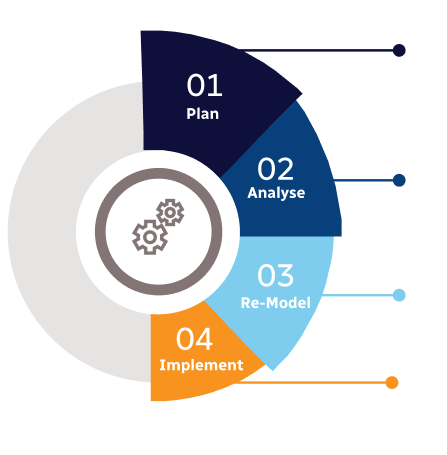
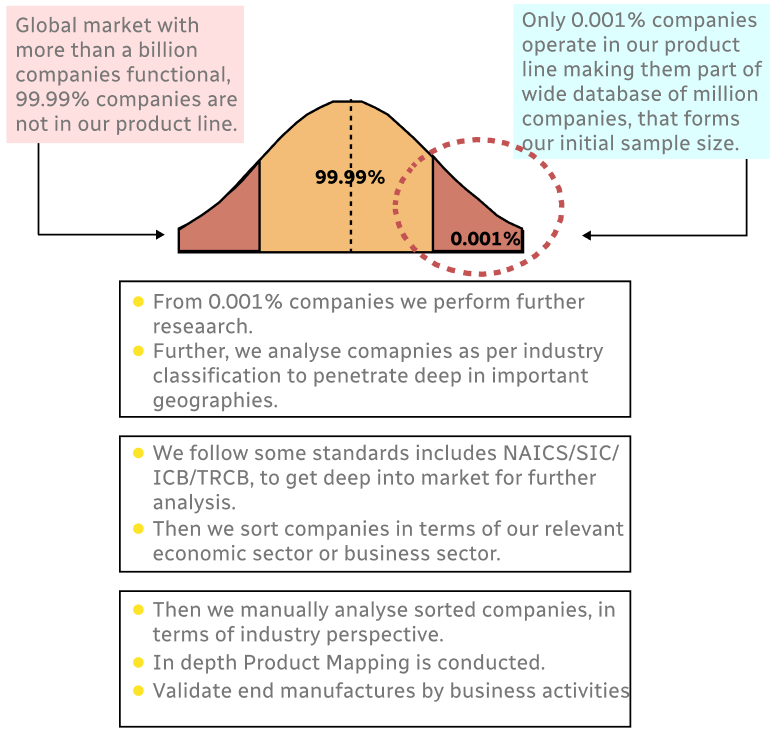
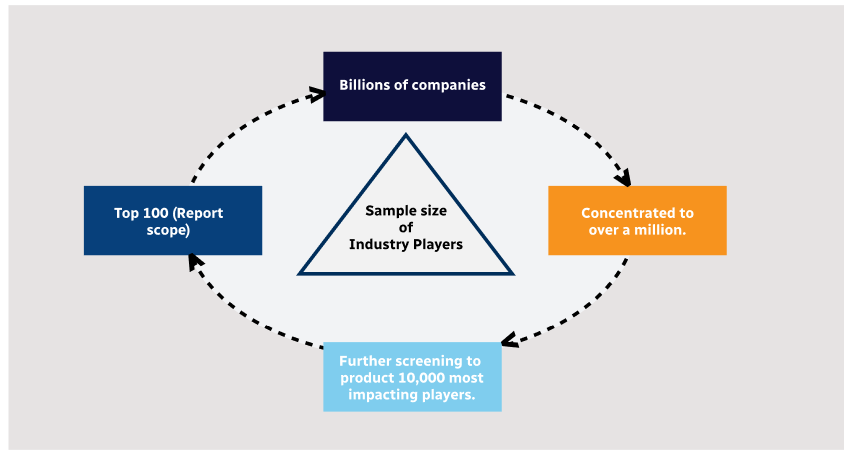
Step 1 - Identification of Relevant Samples Size from Population Database
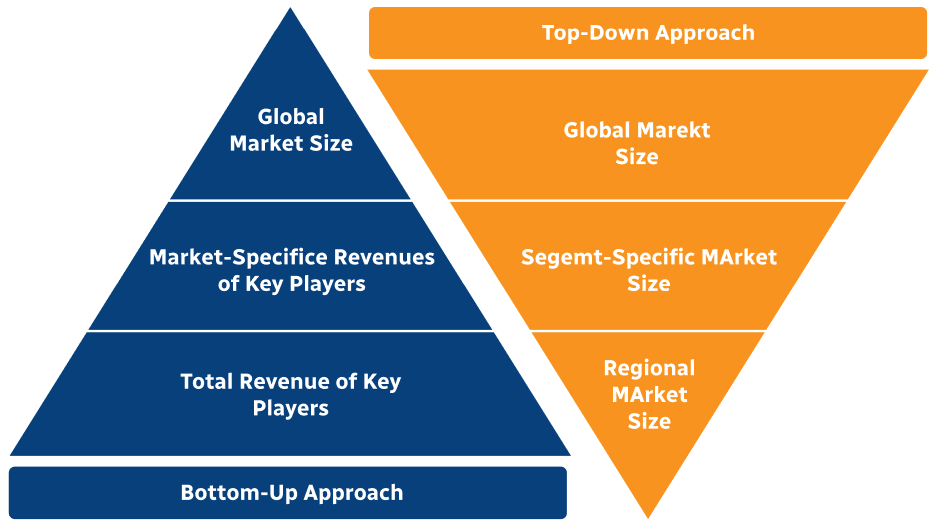
Step 2 - Approaches for Defining Global Market Size (Value, Volume* & Price*)
Note*: In applicable scenarios
Step 3 - Data Sources
Primary Research
- Web Analytics
- Survey Reports
- Research Institute
- Latest Research Reports
- Opinion Leaders
Secondary Research
- Annual Reports
- White Paper
- Latest Press Release
- Industry Association
- Paid Database
- Investor Presentations
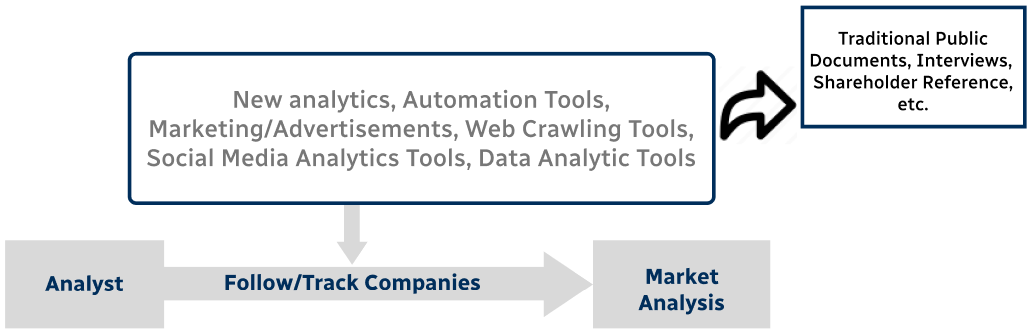
Step 4 - Data Triangulation
Involves using different sources of information in order to increase the validity of a study
These sources are likely to be stakeholders in a program - participants, other researchers, program staff, other community members, and so on.
Then we put all data in single framework & apply various statistical tools to find out the dynamic on the market.
During the analysis stage, feedback from the stakeholder groups would be compared to determine areas of agreement as well as areas of divergence