



Key Insights
The Malaysia Data Center Networking Market is poised for substantial growth, projected to reach a valuation of 301.32 million by the end of the forecast period. Driven by an impressive CAGR of 11.60%, this expansion reflects the nation's escalating demand for robust and scalable data infrastructure. Key factors fueling this growth include the burgeoning digital economy, the increasing adoption of cloud computing services, and the government's commitment to fostering a digitally advanced nation. The expansion of hyperscale data centers, coupled with the continuous upgrades and build-outs of enterprise data centers, is creating significant opportunities for networking solutions. The demand for high-performance Ethernet switches and routers is particularly strong, as organizations seek to enhance data transfer speeds and network reliability. Furthermore, the growing emphasis on data security and the need for efficient data management are driving the adoption of Storage Area Networks (SAN) and Application Delivery Controllers (ADC). The expansion of 5G technology deployment also necessitates enhanced networking capabilities within data centers to support the increased traffic and low latency requirements.

Malaysia Data Center Networking Market Market Size (In Million)

The market is also being shaped by evolving technological trends, such as the increasing adoption of Software-Defined Networking (SDN) and Network Functions Virtualization (NFV), which offer greater flexibility, agility, and cost-efficiency in data center operations. The integration of artificial intelligence (AI) and machine learning (ML) for network management and optimization is another significant trend. While the market presents immense opportunities, it also faces certain challenges. The initial capital investment required for advanced networking equipment can be a restraint for some smaller enterprises. Additionally, the shortage of skilled IT professionals capable of managing and maintaining complex data center networks might pose a hurdle. However, the increasing availability of managed services and the growing focus on training and consulting are expected to mitigate these challenges. The IT & Telecommunication sector, followed by BFSI and Government, are expected to be the leading end-user segments, reflecting their critical reliance on advanced data center networking for their operations and service delivery.

Malaysia Data Center Networking Market Company Market Share

Here's the SEO-optimized, detailed report description for the Malaysia Data Center Networking Market, designed for high search visibility and industry engagement:
This in-depth report provides a definitive analysis of the Malaysia Data Center Networking Market, offering critical insights into its structure, competitive landscape, and future trajectory. Spanning the historical period of 2019-2024 and projecting growth through 2033, with a base and estimated year of 2025, this study is an indispensable resource for stakeholders seeking to understand and capitalize on this dynamic sector. We delve into the intricate details of market segmentation by Components (Ethernet Switches, Routers, Storage Area Network (SAN), Application Delivery Controllers (ADC), and Other Networking Equipment), Services (Installation & Integration, Training & Consulting, and Support & Maintenance), and End-Users (IT & Telecommunication, BFSI, Government, Media & Entertainment, and Other End-Users). Leveraging million values for all financial metrics, this report is meticulously crafted to offer actionable intelligence, identifying key growth drivers, emerging trends, and potential challenges.
Malaysia Data Center Networking Market Market Structure & Competitive Dynamics
The Malaysia Data Center Networking Market exhibits a complex and evolving structure, characterized by a blend of established global players and burgeoning local entities. Market concentration is influenced by the significant investment required for advanced networking infrastructure, leading to a degree of dominance by key vendors. However, the innovation ecosystem is vibrant, fueled by the rapid adoption of cloud computing, 5G deployment, and the increasing demand for high-speed, low-latency connectivity. Regulatory frameworks, though evolving, generally support foreign investment and technological advancement, creating a conducive environment for growth. Product substitutes are limited within core data center networking functions, emphasizing the critical role of specialized solutions. End-user trends reveal a strong inclination towards scalable, secure, and efficient networking solutions, driving demand for advanced Ethernet Switches and Software-Defined Networking (SDN) capabilities. Merger and acquisition (M&A) activities, while not consistently high in reported values, indicate strategic consolidation and technology acquisition to enhance market position.
- Market Concentration: Dominated by a few key global vendors, with increasing participation from regional players.
- Innovation Ecosystem: Driven by advancements in cloud infrastructure, AI, IoT, and 5G, fostering rapid technological adoption.
- Regulatory Frameworks: Supportive policies encouraging digital transformation and foreign direct investment in infrastructure.
- Product Substitutes: Limited for core networking functions, with focus on integration and optimization of existing technologies.
- End-User Trends: High demand for agility, scalability, security, and cost-efficiency in networking solutions.
- M&A Activities: Strategic acquisitions focused on technology integration and market expansion, with deal values projected to grow.
Malaysia Data Center Networking Market Industry Trends & Insights
The Malaysia Data Center Networking Market is poised for substantial growth, projected to experience a Compound Annual Growth Rate (CAGR) of approximately 12.5% between 2025 and 2033. This surge is primarily attributed to the escalating adoption of digital transformation initiatives across various industries, coupled with the burgeoning demand for cloud services, big data analytics, and the Internet of Things (IoT). The Malaysian government's commitment to fostering a robust digital economy, exemplified by initiatives like the MyDIGITAL blueprint, acts as a significant catalyst, encouraging investment in state-of-the-art data center infrastructure. Technological disruptions, including the widespread deployment of 400 Gigabit Ethernet (GbE) and beyond, the integration of AI and machine learning in network management for predictive analytics and automation, and the increasing adoption of Software-Defined Networking (SDN) and Network Functions Virtualization (NFV), are reshaping the market landscape. Consumer preferences are shifting towards hyperscale and edge computing solutions that offer enhanced performance, reduced latency, and greater flexibility. Competitive dynamics are intense, with leading players continuously innovating to offer more efficient, secure, and cost-effective networking solutions. The rise of colocation data centers and hyperscale cloud providers is further augmenting the demand for high-performance networking equipment.
The market penetration of advanced networking technologies, such as Ethernet Switches with higher port densities and speeds, and sophisticated Application Delivery Controllers (ADCs), is rapidly increasing. The shift towards a more decentralized network architecture, driven by edge computing, presents new opportunities for specialized networking hardware and software. Furthermore, the growing emphasis on cybersecurity is propelling the adoption of integrated security features within networking devices and the deployment of advanced security services. The continuous evolution of data processing requirements, particularly for AI and machine learning workloads, necessitates network infrastructure capable of handling massive data volumes and ultra-low latency. This trend is driving innovation in areas like programmable networking and high-performance interconnects.
Dominant Markets & Segments in Malaysia Data Center Networking Market
Within the Malaysia Data Center Networking Market, the IT & Telecommunication segment consistently emerges as the dominant end-user, driven by the foundational role of data centers in providing cloud services, mobile connectivity, and digital infrastructure. The increasing demand for robust and scalable networking solutions to support the growing subscriber base and the rollout of advanced technologies like 5G is a key driver. Following closely is the BFSI (Banking, Financial Services, and Insurance) sector, which relies heavily on secure, reliable, and high-performance networking for transaction processing, data analytics, and regulatory compliance. The continuous digital transformation within BFSI institutions further amplifies this demand. The Government sector, propelled by initiatives for e-governance and smart city development, also represents a significant and growing segment, requiring secure and efficient data management and communication networks.
Component: By Product:
- Ethernet Switches: The leading product segment, driven by the need for high-speed data transfer, scalability, and the adoption of 100 GbE, 200 GbE, and 400 GbE technologies. Key drivers include the expansion of hyperscale data centers and the increasing bandwidth requirements of modern applications.
- Routers: Essential for inter-data center connectivity and internet peering, with growth fueled by the expansion of network infrastructure and the increasing volume of network traffic.
- Storage Area Network (SAN): Crucial for high-performance data storage and retrieval, experiencing steady growth as data volumes continue to escalate.
- Application Delivery Controllers (ADC): Gaining prominence for optimizing application performance, security, and availability, driven by the rise of cloud-native applications and the need for robust load balancing.
- Other Networking Equipment: Encompassing a range of specialized devices essential for modern data center operations, showing consistent demand.
Component: By Services:
- Installation & Integration: A crucial service segment, witnessing strong demand as new data center facilities are built and existing ones are upgraded. Economic policies promoting infrastructure development directly impact this segment.
- Support & Maintenance: Experiencing continuous demand due to the mission-critical nature of data center operations and the need for uninterrupted service.
- Training & Consulting: Growing in importance as organizations seek expertise in managing complex networking environments and adopting new technologies.
End-User:
- IT & Telecommunication: Dominant segment due to extensive data center infrastructure and high bandwidth demands.
- BFSI: Strong growth driven by digital transformation, security needs, and regulatory compliance.
- Government: Increasing adoption for e-governance and smart city initiatives, requiring secure and reliable networking.
- Media & Entertainment: Experiencing significant demand for high-speed networking to support content delivery and streaming services.
Malaysia Data Center Networking Market Product Innovations
Product innovations in the Malaysia Data Center Networking Market are characterized by a relentless pursuit of higher speeds, lower latency, enhanced programmability, and improved energy efficiency. The introduction of modular switches with scalable fabric architectures, such as Cisco’s Nexus 9800 Series, exemplifies this trend, allowing for flexible upgrades and support for cutting-edge port speeds like 400 GE. Similarly, advancements in wide-area networking (WAN) solutions, like Arista Networks' WAN Routing System, are crucial for modernizing federated and software-defined networks, offering improved transit capabilities and simplified management. These innovations are driven by the demand for cloud-native environments, edge computing, and the ever-increasing volume of data generated by AI and IoT applications, providing competitive advantages to vendors who can deliver on performance, scalability, and intelligent management.
Report Segmentation & Scope
This report segments the Malaysia Data Center Networking Market across key categories to provide a granular understanding of market dynamics. The Component segmentation includes By Product, encompassing Ethernet Switches, Routers, Storage Area Network (SAN), Application Delivery Controllers (ADC), and Other Networking Equipment. The By Services segmentation covers Installation & Integration, Training & Consulting, and Support & Maintenance. The End-User segmentation details the market across IT & Telecommunication, BFSI, Government, Media & Entertainment, and Other End-User. Each segment is analyzed for its market size, projected growth, and competitive landscape, offering comprehensive insights into specific areas of opportunity and challenge within the Malaysian data center networking ecosystem.
Key Drivers of Malaysia Data Center Networking Market Growth
Several key factors are propelling the growth of the Malaysia Data Center Networking Market. The sustained investment in digital transformation initiatives across industries, aiming to enhance efficiency and customer experience, is a primary driver. The burgeoning adoption of cloud computing, both public and private, necessitates robust and scalable networking infrastructure to support increased data traffic and processing demands. The continuous expansion of 5G networks requires high-bandwidth, low-latency connectivity solutions, directly benefiting data center networking. Furthermore, the Malaysian government's strategic focus on developing a digital economy, including smart city projects and e-governance, is creating significant demand for advanced networking capabilities. The increasing prevalence of IoT devices and big data analytics further intensifies the need for high-performance data center networks.
Challenges in the Malaysia Data Center Networking Market Sector
Despite the positive growth trajectory, the Malaysia Data Center Networking Market faces certain challenges. The significant capital expenditure required for deploying and upgrading high-performance networking infrastructure can be a barrier, particularly for smaller enterprises. Intense competition among global and regional vendors can lead to pricing pressures and reduced profit margins. Supply chain disruptions, as experienced globally in recent years, can impact the availability and lead times of critical networking components. Evolving cybersecurity threats necessitate continuous investment in advanced security features and protocols, adding to operational costs. Additionally, a shortage of skilled professionals with expertise in modern data center networking technologies can hinder efficient deployment and management, impacting market adoption rates.
Leading Players in the Malaysia Data Center Networking Market Market
- Broadcom Corp
- IBM Corporation
- H3C Technologies Co Ltd
- Arista Networks Inc
- Dell EMC
- Cisco Systems Inc
- HP Development Company L P
- Extreme Networks Inc
- NEC Corporation
- Huawei Technologies Co Ltd
- VMware Inc
- Schneider Electric
- Intel Corporation
Key Developments in Malaysia Data Center Networking Market Sector
- June 2023: Cisco’s Nexus 9800 Series modular switches expand the Cisco Nexus 9000 Series portfolio with a new chassis architecture to include a combination of several first-generation line cards and fabrics modules, allowing it to scale from 57 Tbps up to 115 Tbps. Line cards that now offer 400 GE or 100 GE ports and higher speeds can be supported by each line card slot on the chassis. This development enhances scalability and performance, catering to the growing demand for high-bandwidth data center networking.
- March 2023: Arista Networks announced the release of the Arista WAN Routing System, which combines three new networking offerings, including carrier/cloud-neutral internet transit capabilities, enterprise-class routing platforms, and the CloudVision Pathfinder Service to simplify and improve customer-wide area networks. This System delivers the architecture, features, and media to modernize federated and software-defined wide-area networks, impacting enterprise connectivity and cloud access.
Strategic Malaysia Data Center Networking Market Market Outlook
The strategic outlook for the Malaysia Data Center Networking Market remains exceptionally positive, driven by ongoing digital transformation and the country's ambition to become a regional digital hub. Growth accelerators include the increasing demand for hyperscale and edge computing infrastructure, fueled by AI, IoT, and 5G deployments. The continuous evolution of networking technologies, such as higher speed Ethernet, advanced SDN/NFV solutions, and intelligent network automation, presents significant opportunities for vendors. Strategic partnerships between technology providers, cloud service providers, and colocation data centers will be crucial for market expansion. Furthermore, government initiatives promoting data sovereignty and localized data processing are expected to spur further investment in domestic data center facilities, thereby driving demand for sophisticated networking solutions. The market is ripe for innovation in areas like network security, energy-efficient hardware, and AI-driven network management.
Malaysia Data Center Networking Market Segmentation
-
1. Component
-
1.1. By Product
- 1.1.1. Ethernet Switches
- 1.1.2. Router
- 1.1.3. Storage Area Network (SAN)
- 1.1.4. Application Delivery Controller (ADC)
-
1.1.5. Other Networking Equipment
- 1.1.5.1. Includin
-
1.2. By Services
- 1.2.1. Installation & Integration
- 1.2.2. Training & Consulting
- 1.2.3. Support & Maintenance
-
1.1. By Product
-
2. End-User
- 2.1. IT & Telecommunication
- 2.2. BFSI
- 2.3. Government
- 2.4. Media & Entertainment
- 2.5. Other End-User
Malaysia Data Center Networking Market Segmentation By Geography
- 1. Malaysia

Malaysia Data Center Networking Market Regional Market Share

Geographic Coverage of Malaysia Data Center Networking Market
Malaysia Data Center Networking Market REPORT HIGHLIGHTS
| Aspects | Details |
|---|---|
| Study Period | 2020-2034 |
| Base Year | 2025 |
| Estimated Year | 2026 |
| Forecast Period | 2026-2034 |
| Historical Period | 2020-2025 |
| Growth Rate | CAGR of 11.60% from 2020-2034 |
| Segmentation |
|
Table of Contents
- 1. Introduction
- 1.1. Research Scope
- 1.2. Market Segmentation
- 1.3. Research Methodology
- 1.4. Definitions and Assumptions
- 2. Executive Summary
- 2.1. Introduction
- 3. Market Dynamics
- 3.1. Introduction
- 3.2. Market Drivers
- 3.2.1. Increasing Adoption of Cloud-Based Services; Advent of 5G Networks Drives Market Growth
- 3.3. Market Restrains
- 3.3.1. Cybersecurity Threats and Ransomware Attacks
- 3.4. Market Trends
- 3.4.1. Telecommunication Holds the Major Share.
- 4. Market Factor Analysis
- 4.1. Porters Five Forces
- 4.2. Supply/Value Chain
- 4.3. PESTEL analysis
- 4.4. Market Entropy
- 4.5. Patent/Trademark Analysis
- 5. Malaysia Data Center Networking Market Analysis, Insights and Forecast, 2020-2032
- 5.1. Market Analysis, Insights and Forecast - by Component
- 5.1.1. By Product
- 5.1.1.1. Ethernet Switches
- 5.1.1.2. Router
- 5.1.1.3. Storage Area Network (SAN)
- 5.1.1.4. Application Delivery Controller (ADC)
- 5.1.1.5. Other Networking Equipment
- 5.1.1.5.1. Includin
- 5.1.2. By Services
- 5.1.2.1. Installation & Integration
- 5.1.2.2. Training & Consulting
- 5.1.2.3. Support & Maintenance
- 5.1.1. By Product
- 5.2. Market Analysis, Insights and Forecast - by End-User
- 5.2.1. IT & Telecommunication
- 5.2.2. BFSI
- 5.2.3. Government
- 5.2.4. Media & Entertainment
- 5.2.5. Other End-User
- 5.3. Market Analysis, Insights and Forecast - by Region
- 5.3.1. Malaysia
- 5.1. Market Analysis, Insights and Forecast - by Component
- 6. Competitive Analysis
- 6.1. Market Share Analysis 2025
- 6.2. Company Profiles
- 6.2.1 Broadcom Corp
- 6.2.1.1. Overview
- 6.2.1.2. Products
- 6.2.1.3. SWOT Analysis
- 6.2.1.4. Recent Developments
- 6.2.1.5. Financials (Based on Availability)
- 6.2.2 IBM Corporation
- 6.2.2.1. Overview
- 6.2.2.2. Products
- 6.2.2.3. SWOT Analysis
- 6.2.2.4. Recent Developments
- 6.2.2.5. Financials (Based on Availability)
- 6.2.3 H3C Technologies Co Ltd
- 6.2.3.1. Overview
- 6.2.3.2. Products
- 6.2.3.3. SWOT Analysis
- 6.2.3.4. Recent Developments
- 6.2.3.5. Financials (Based on Availability)
- 6.2.4 Arista Networks Inc
- 6.2.4.1. Overview
- 6.2.4.2. Products
- 6.2.4.3. SWOT Analysis
- 6.2.4.4. Recent Developments
- 6.2.4.5. Financials (Based on Availability)
- 6.2.5 Dell EMC
- 6.2.5.1. Overview
- 6.2.5.2. Products
- 6.2.5.3. SWOT Analysis
- 6.2.5.4. Recent Developments
- 6.2.5.5. Financials (Based on Availability)
- 6.2.6 Cisco Systems Inc
- 6.2.6.1. Overview
- 6.2.6.2. Products
- 6.2.6.3. SWOT Analysis
- 6.2.6.4. Recent Developments
- 6.2.6.5. Financials (Based on Availability)
- 6.2.7 HP Development Company L P
- 6.2.7.1. Overview
- 6.2.7.2. Products
- 6.2.7.3. SWOT Analysis
- 6.2.7.4. Recent Developments
- 6.2.7.5. Financials (Based on Availability)
- 6.2.8 Extreme Networks Inc
- 6.2.8.1. Overview
- 6.2.8.2. Products
- 6.2.8.3. SWOT Analysis
- 6.2.8.4. Recent Developments
- 6.2.8.5. Financials (Based on Availability)
- 6.2.9 NEC Corporation
- 6.2.9.1. Overview
- 6.2.9.2. Products
- 6.2.9.3. SWOT Analysis
- 6.2.9.4. Recent Developments
- 6.2.9.5. Financials (Based on Availability)
- 6.2.10 Huawei Technologies Co Ltd
- 6.2.10.1. Overview
- 6.2.10.2. Products
- 6.2.10.3. SWOT Analysis
- 6.2.10.4. Recent Developments
- 6.2.10.5. Financials (Based on Availability)
- 6.2.11 VMware Inc
- 6.2.11.1. Overview
- 6.2.11.2. Products
- 6.2.11.3. SWOT Analysis
- 6.2.11.4. Recent Developments
- 6.2.11.5. Financials (Based on Availability)
- 6.2.12 Schneider Electric
- 6.2.12.1. Overview
- 6.2.12.2. Products
- 6.2.12.3. SWOT Analysis
- 6.2.12.4. Recent Developments
- 6.2.12.5. Financials (Based on Availability)
- 6.2.13 Intel Corporation
- 6.2.13.1. Overview
- 6.2.13.2. Products
- 6.2.13.3. SWOT Analysis
- 6.2.13.4. Recent Developments
- 6.2.13.5. Financials (Based on Availability)
- 6.2.1 Broadcom Corp
List of Figures
- Figure 1: Malaysia Data Center Networking Market Revenue Breakdown (Million, %) by Product 2025 & 2033
- Figure 2: Malaysia Data Center Networking Market Share (%) by Company 2025
List of Tables
- Table 1: Malaysia Data Center Networking Market Revenue Million Forecast, by Component 2020 & 2033
- Table 2: Malaysia Data Center Networking Market Revenue Million Forecast, by End-User 2020 & 2033
- Table 3: Malaysia Data Center Networking Market Revenue Million Forecast, by Region 2020 & 2033
- Table 4: Malaysia Data Center Networking Market Revenue Million Forecast, by Component 2020 & 2033
- Table 5: Malaysia Data Center Networking Market Revenue Million Forecast, by End-User 2020 & 2033
- Table 6: Malaysia Data Center Networking Market Revenue Million Forecast, by Country 2020 & 2033
Frequently Asked Questions
1. What is the projected Compound Annual Growth Rate (CAGR) of the Malaysia Data Center Networking Market?
The projected CAGR is approximately 11.60%.
2. Which companies are prominent players in the Malaysia Data Center Networking Market?
Key companies in the market include Broadcom Corp, IBM Corporation, H3C Technologies Co Ltd, Arista Networks Inc, Dell EMC, Cisco Systems Inc, HP Development Company L P, Extreme Networks Inc, NEC Corporation, Huawei Technologies Co Ltd, VMware Inc, Schneider Electric, Intel Corporation.
3. What are the main segments of the Malaysia Data Center Networking Market?
The market segments include Component, End-User.
4. Can you provide details about the market size?
The market size is estimated to be USD 301.32 Million as of 2022.
5. What are some drivers contributing to market growth?
Increasing Adoption of Cloud-Based Services; Advent of 5G Networks Drives Market Growth.
6. What are the notable trends driving market growth?
Telecommunication Holds the Major Share..
7. Are there any restraints impacting market growth?
Cybersecurity Threats and Ransomware Attacks.
8. Can you provide examples of recent developments in the market?
June 2023: Cisco’s Nexus 9800 Series modular switches expand the Cisco Nexus 9000 Series portfolio with a new chassis architecture to include a combination of several first-generation line cards and fabrics modules, allowing it to scale from 57 Tbps up to 115 Tbps. Line cards that now offer 400 GE or 100 GE ports and higher speeds can be supported by each line card slot on the chassis.
9. What pricing options are available for accessing the report?
Pricing options include single-user, multi-user, and enterprise licenses priced at USD 3800, USD 4500, and USD 5800 respectively.
10. Is the market size provided in terms of value or volume?
The market size is provided in terms of value, measured in Million.
11. Are there any specific market keywords associated with the report?
Yes, the market keyword associated with the report is "Malaysia Data Center Networking Market," which aids in identifying and referencing the specific market segment covered.
12. How do I determine which pricing option suits my needs best?
The pricing options vary based on user requirements and access needs. Individual users may opt for single-user licenses, while businesses requiring broader access may choose multi-user or enterprise licenses for cost-effective access to the report.
13. Are there any additional resources or data provided in the Malaysia Data Center Networking Market report?
While the report offers comprehensive insights, it's advisable to review the specific contents or supplementary materials provided to ascertain if additional resources or data are available.
14. How can I stay updated on further developments or reports in the Malaysia Data Center Networking Market?
To stay informed about further developments, trends, and reports in the Malaysia Data Center Networking Market, consider subscribing to industry newsletters, following relevant companies and organizations, or regularly checking reputable industry news sources and publications.
Methodology
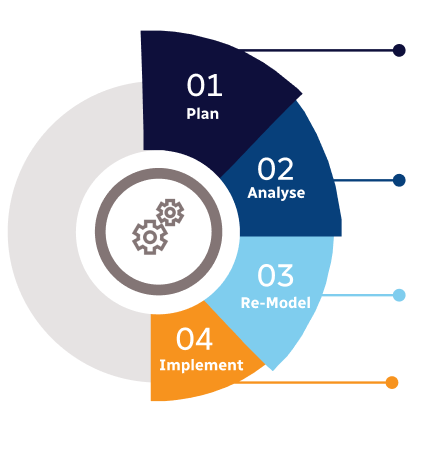
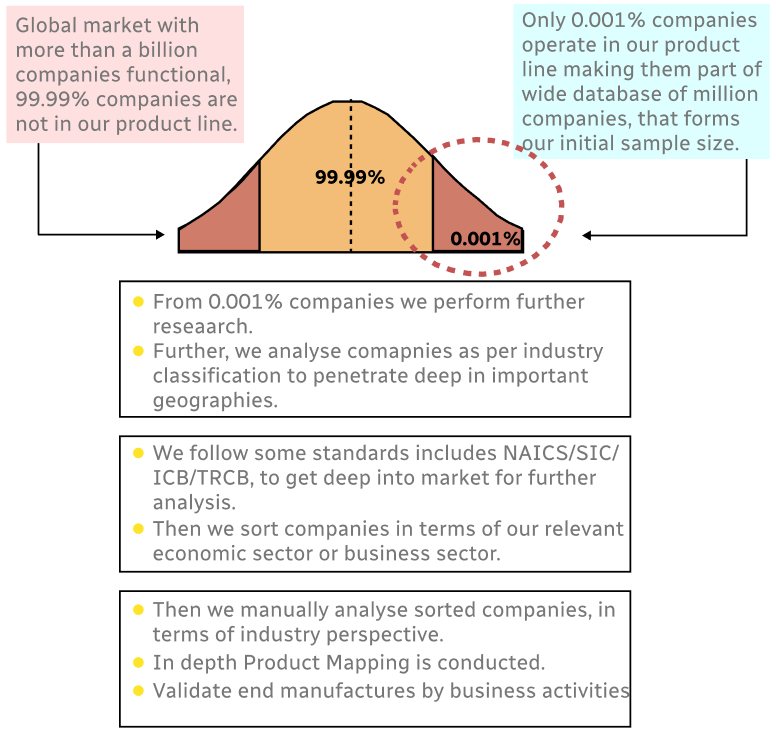
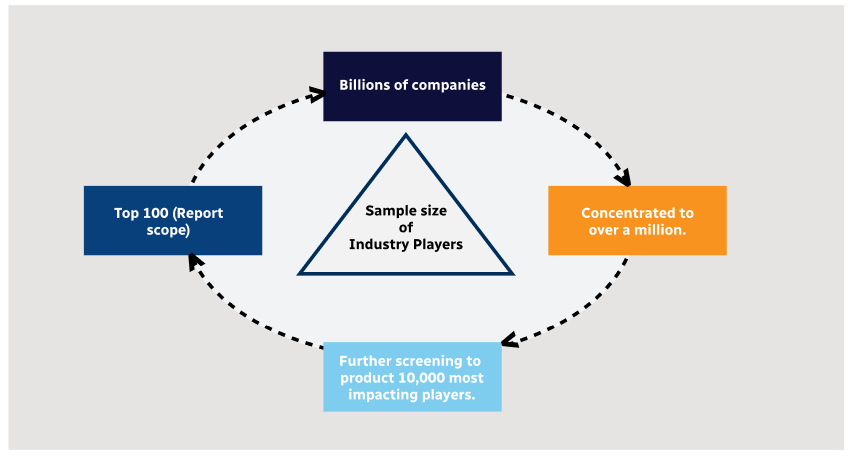
Step 1 - Identification of Relevant Samples Size from Population Database
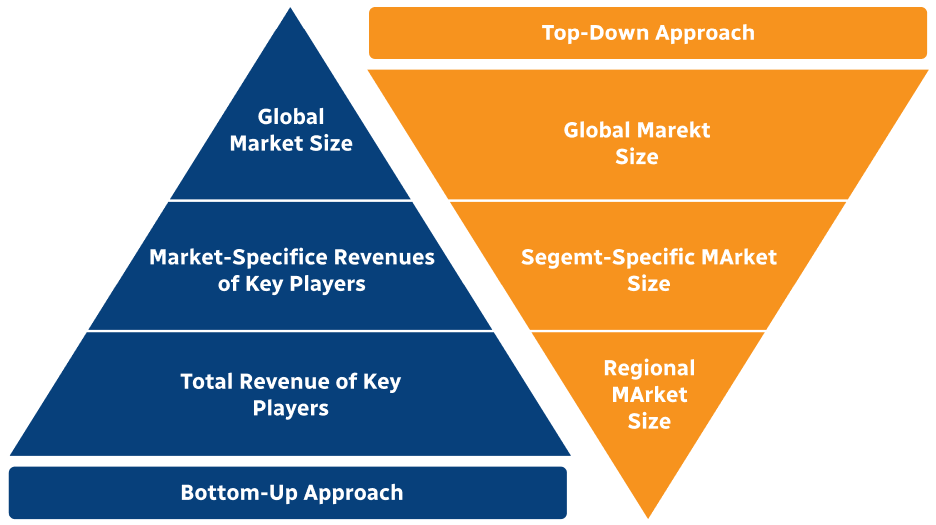
Step 2 - Approaches for Defining Global Market Size (Value, Volume* & Price*)
Note*: In applicable scenarios
Step 3 - Data Sources
Primary Research
- Web Analytics
- Survey Reports
- Research Institute
- Latest Research Reports
- Opinion Leaders
Secondary Research
- Annual Reports
- White Paper
- Latest Press Release
- Industry Association
- Paid Database
- Investor Presentations
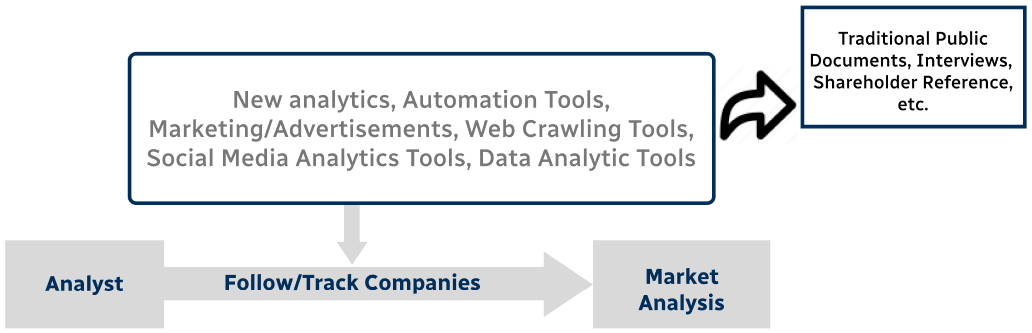
Step 4 - Data Triangulation
Involves using different sources of information in order to increase the validity of a study
These sources are likely to be stakeholders in a program - participants, other researchers, program staff, other community members, and so on.
Then we put all data in single framework & apply various statistical tools to find out the dynamic on the market.
During the analysis stage, feedback from the stakeholder groups would be compared to determine areas of agreement as well as areas of divergence


