


Key Insights
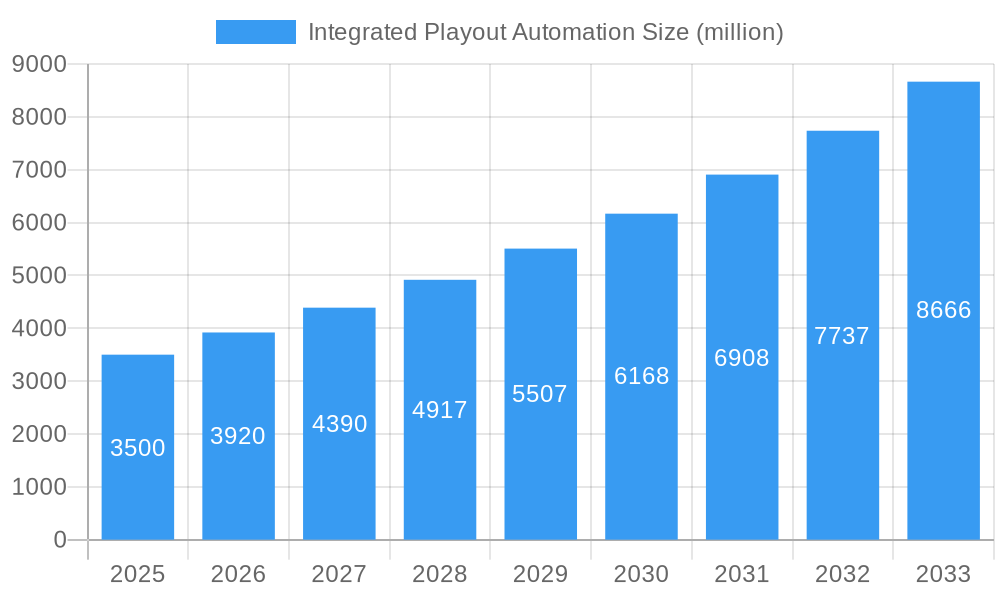
The global Integrated Playout Automation market is poised for substantial growth, projected to reach an estimated market size of approximately $3,500 million by 2025, with a Compound Annual Growth Rate (CAGR) of roughly 12% during the forecast period of 2025-2033. This expansion is primarily driven by the escalating demand for streamlined broadcast operations, enhanced efficiency in content delivery, and the increasing adoption of advanced technologies like AI and cloud-based solutions within the media and entertainment industry. Key applications such as Sports, News, and Entertainment are significant contributors, leveraging integrated playout automation to manage complex workflows, reduce operational costs, and deliver dynamic content to a wider audience. The shift towards IP-based infrastructure and the growing need for multi-platform content distribution further fuel market momentum.
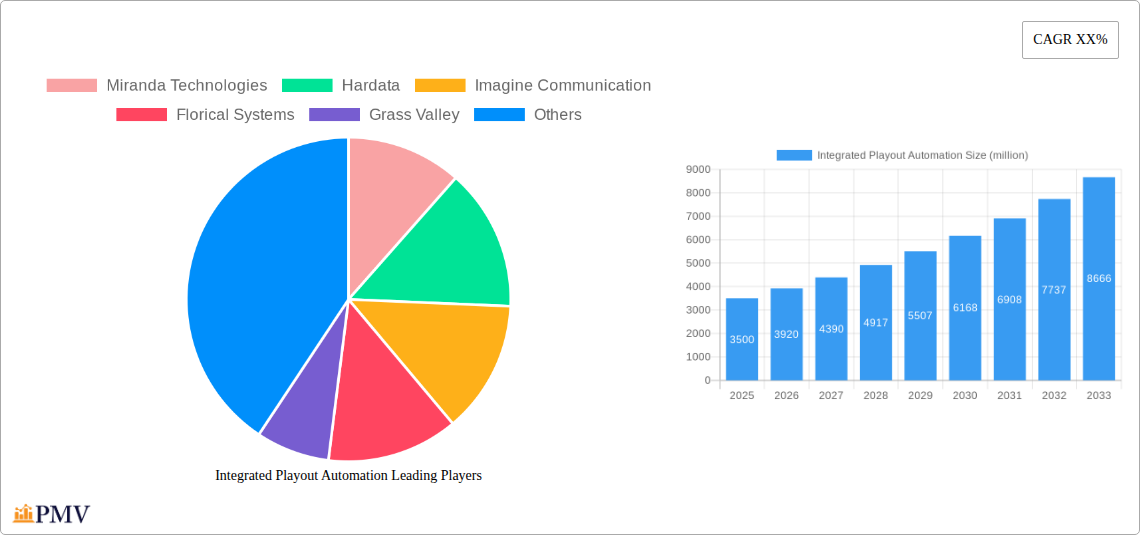
Integrated Playout Automation Market Size (In Billion)

The market is characterized by robust technological advancements and strategic collaborations among leading players. While the hardware segment continues to hold a significant share, the software segment is witnessing rapid growth due to its flexibility, scalability, and cost-effectiveness. Restraints such as the high initial investment for integrated systems and the need for skilled personnel to manage these advanced solutions may temper growth in certain segments. However, emerging economies and the continuous evolution of broadcast standards are expected to present lucrative opportunities. Companies like Miranda Technologies, Imagine Communication, and Grass Valley are at the forefront, offering innovative solutions that cater to the evolving needs of broadcasters, including live telecasts and advertisement management, solidifying the market's trajectory towards a more automated and efficient broadcast ecosystem.
Integrated Playout Automation Company Market Share
Unlock the Future of Broadcasting: The Definitive Integrated Playout Automation Market Report (2019–2033)
Dive deep into the dynamic world of integrated playout automation, a critical technology revolutionizing media workflows. This comprehensive report, spanning the historical period of 2019–2024, the base year of 2025, and a robust forecast period of 2025–2033, provides unparalleled insights into market trends, competitive landscapes, and future growth trajectories. Discover how news automation, sports broadcasting automation, and entertainment playout solutions are being shaped by cutting-edge advancements and evolving viewer demands. With a projected market size exceeding several million by 2025, this report is an indispensable resource for stakeholders seeking to navigate and capitalize on this rapidly expanding industry.
Integrated Playout Automation Market Structure & Competitive Dynamics
The integrated playout automation market exhibits a moderately concentrated structure, characterized by the presence of both established industry giants and agile innovators. Key players like Imagine Communication, Grass Valley, and Harmonic hold significant market share, driven by their extensive product portfolios and robust R&D investments. The innovation ecosystem is vibrant, with continuous development in cloud-based solutions, AI-driven content management, and workflow optimization. Regulatory frameworks, while generally supportive of technological advancement, can introduce complexities regarding content distribution and data security. Product substitutes, such as manual playout systems and less integrated automation solutions, are gradually being phased out as the benefits of comprehensive integration become more apparent. End-user trends reveal a strong demand for increased efficiency, reduced operational costs, and enhanced content delivery across multiple platforms. Mergers and acquisitions (M&A) are a notable feature, with deal values reaching into the millions, as larger companies seek to acquire specialized technologies and expand their market reach. For example, strategic acquisitions in the software playout automation segment are reshaping competitive dynamics, with M&A activity valued at approximately xx million.
- Market Concentration: Dominated by a few key players, with increasing consolidation.
- Innovation Ecosystem: Driven by AI, cloud computing, and IP-based workflows.
- Regulatory Frameworks: Focus on content compliance, data privacy, and broadcast standards.
- Product Substitutes: Declining relevance of manual and less integrated systems.
- End-User Trends: Emphasis on efficiency, cost reduction, and multi-platform delivery.
- M&A Activities: Strategic acquisitions to enhance technological capabilities and market share, with estimated deal values in the millions.
Integrated Playout Automation Industry Trends & Insights
The integrated playout automation industry is poised for substantial growth, driven by a confluence of factors that are fundamentally transforming broadcast operations. The market is experiencing a significant upward trajectory, with a projected Compound Annual Growth Rate (CAGR) of xx% over the forecast period. This expansion is fueled by the relentless pursuit of operational efficiency and cost optimization by broadcasters worldwide. The increasing adoption of software-defined playout and cloud-native solutions is a major technological disruption, offering greater flexibility, scalability, and accessibility compared to traditional hardware-centric models. Consumer preferences are shifting towards on-demand content consumption and personalized viewing experiences, compelling broadcasters to implement more sophisticated automation for dynamic channel management and ad insertion. Competitive dynamics are intensifying, with companies differentiating themselves through advanced analytics, AI-powered content scheduling, and seamless integration with other broadcast systems. Market penetration for advanced broadcast automation solutions is expected to reach xx% by 2030, a testament to the growing reliance on these technologies. The integration of AI in content verification, metadata management, and audience segmentation is becoming a standard expectation, pushing the boundaries of what automated playout can achieve. The growth is also bolstered by the increasing complexity of content delivery chains and the need for real-time adjustments in live broadcasting, particularly in sectors like live telecasts.
Dominant Markets & Segments in Integrated Playout Automation
The integrated playout automation market is experiencing robust growth across several key regions and application segments. North America currently leads the market, driven by its early adoption of advanced broadcast technologies, a mature media industry, and significant investments in infrastructure upgrades. Within applications, News and Sports segments are dominant drivers, owing to the critical need for real-time content delivery, rapid response capabilities, and complex scheduling requirements in these fast-paced environments. The Entertainment segment also showcases considerable growth, fueled by the demand for sophisticated scheduling and the automation of diverse content formats. The Others segment, encompassing Advertisements and Live Telecasts, further contributes to market expansion due to its inherent need for precision and immediate execution. In terms of types, Software solutions are experiencing a more rapid growth rate than Hardware, reflecting the industry's shift towards flexible, scalable, and cloud-based infrastructures.
- Leading Region: North America, characterized by technological adoption and infrastructure investment.
- Key Drivers: Government initiatives supporting digital media, high consumer demand for varied content, and strong presence of major broadcasting networks.
- Dominant Application Segments:
- News: Critical for real-time updates, breaking news automation, and rapid content integration.
- Sports: Essential for live event scheduling, instant replays, and dynamic advertising during live broadcasts.
- Entertainment: Powers efficient scheduling of movies, series, and other programmed content.
- Others (Advertisements, Live Telecasts): Crucial for precise ad insertion and seamless execution of live programming.
- Dominant Product Type:
- Software: Leading in growth due to its flexibility, scalability, and cloud-readiness.
- Hardware: Still a significant segment, often integrated with software solutions, particularly for critical infrastructure.
Integrated Playout Automation Product Innovations
Product innovation in integrated playout automation is primarily focused on enhancing efficiency, intelligence, and adaptability. Companies are actively developing AI-powered scheduling algorithms that optimize content flow and maximize advertising revenue. Cloud-native solutions are gaining traction, offering unparalleled scalability and remote management capabilities. Advancements in IP-based workflows and virtualized playout are enabling greater flexibility and reducing reliance on specialized hardware. These innovations provide a competitive advantage by streamlining operations, reducing manual intervention, and enabling broadcasters to deliver more diverse content across multiple platforms with greater precision and cost-effectiveness, supporting critical functions like advertisement insertion automation.
Report Segmentation & Scope
This report meticulously segments the integrated playout automation market to provide granular insights. The segmentation covers key application areas, including Sports, News, Entertainment, and Others (which encompasses Advertisements and Live Telecasts). Each of these application segments is projected to witness growth driven by specific industry demands, with the News and Sports segments expected to lead in terms of market size due to their real-time operational needs. The report also categorizes the market by Types: Hardware and Software. The Software segment is anticipated to exhibit a higher growth rate, reflecting the industry's transition towards more agile and scalable solutions. The scope encompasses a detailed analysis of market size, growth projections, and competitive dynamics within each of these defined segments.
- Application Segmentation:
- Sports: Growth driven by live event broadcasting demands and increased advertising opportunities.
- News: Expansion fueled by the need for rapid dissemination of information and real-time updates.
- Entertainment: Development spurred by the increasing volume and variety of content.
- Others (Advertisements, Live Telecasts): Significant growth due to the critical need for precise scheduling and immediate broadcast execution.
- Type Segmentation:
- Hardware: Focus on integrated systems and specialized broadcast equipment.
- Software: Rapid growth projected for flexible, cloud-based, and AI-driven solutions.
Key Drivers of Integrated Playout Automation Growth
The growth of the integrated playout automation market is propelled by several interconnected factors. The increasing demand for operational efficiency and cost reduction across media organizations is a primary driver, as automation significantly minimizes manual labor and associated expenses. Technological advancements, particularly in AI and machine learning, are enabling more intelligent and sophisticated playout solutions, leading to improved content management and delivery. The growing complexity of content delivery across multiple platforms (broadcast, streaming, social media) necessitates robust automation to manage diverse workflows. Furthermore, the expanding landscape of live broadcasting, including sports events and live telecasts, creates an urgent need for real-time, error-free playout capabilities, directly boosting the adoption of live broadcast automation.
- Efficiency & Cost Reduction: Automation streamlines workflows, reducing operational expenses.
- Technological Advancements: AI, ML, and cloud computing enhance playout capabilities.
- Multi-Platform Delivery: Need for integrated systems to manage diverse distribution channels.
- Growth in Live Broadcasting: Increased demand for real-time, precise playout for live events and telecasts.
Challenges in the Integrated Playout Automation Sector
Despite its robust growth, the integrated playout automation sector faces certain challenges. High initial investment costs for advanced automation systems can be a barrier for smaller broadcasters. The integration of new systems with existing legacy infrastructure can be complex and time-consuming, requiring significant technical expertise. Cybersecurity threats and the need for robust data protection are growing concerns in an increasingly connected broadcast environment. Furthermore, the pace of technological change can lead to rapid obsolescence, requiring continuous investment in upgrades and training to stay competitive. Skills gaps in operating and maintaining advanced automation systems also present a challenge.
- High Initial Investment: Cost can be prohibitive for smaller entities.
- Integration Complexity: Challenges in merging new systems with existing infrastructure.
- Cybersecurity Risks: Protecting sensitive broadcast data and systems is paramount.
- Rapid Technological Evolution: Need for continuous updates and training to maintain competitiveness.
- Skills Gap: Shortage of personnel proficient in advanced automation operations.
Leading Players in the Integrated Playout Automation Market
The integrated playout automation market is shaped by a competitive landscape featuring leading technology providers and solution integrators. Key companies driving innovation and market growth include:
- Miranda Technologies
- Hardata
- Imagine Communication
- Florical Systems
- Grass Valley
- Harmonic
- SAM
- Evertz Microsystems
- Cinegy
- BroadStream
- ENCO Systems
- Deyan Automation Systems
- Itochu Cable Systems
- Amagi Corporation
- Pebble Beach Systems
Key Developments in Integrated Playout Automation Sector
- 2023/Q4: Launch of AI-powered content scheduling and optimization tools by Imagine Communication, enhancing ad revenue maximization and workflow efficiency.
- 2024/Q1: Grass Valley introduces a new cloud-native playout solution, offering unparalleled scalability and flexibility for broadcasters.
- 2024/Q2: Harmonic announces advancements in its IP-based playout infrastructure, focusing on real-time delivery and reduced latency for live events.
- 2024/Q3: Pebble Beach Systems unveils a significant update to its automation platform, incorporating enhanced features for multi-channel operations and disaster recovery.
- 2025/Q1: Cinegy expands its offerings with integrated AI-driven metadata generation for automated content tagging and searchability.
- 2025/Q2: Evertz Microsystems demonstrates enhanced integration capabilities with IP infrastructure, facilitating seamless transitions for broadcasters.
Strategic Integrated Playout Automation Market Outlook
The strategic outlook for the integrated playout automation market is overwhelmingly positive, driven by continued technological innovation and evolving industry demands. Future growth will be fueled by the widespread adoption of AI and machine learning for predictive analytics, content personalization, and intelligent workflow management. The migration towards cloud-based and virtualized playout solutions will accelerate, offering greater agility and cost-effectiveness. Emerging technologies like 5G will further enhance real-time content delivery, opening new avenues for live broadcasting automation. Strategic partnerships and ongoing M&A activities are expected to consolidate the market, leading to more comprehensive and integrated offerings. Businesses that can effectively leverage these trends and offer robust, scalable, and intelligent playout automation solutions will be best positioned for long-term success.
Integrated Playout Automation Segmentation
-
1. Application
- 1.1. Sports
- 1.2. News
- 1.3. Entertainment
- 1.4. Others (Advertisements, Live Telecasts, etc.)
-
2. Types
- 2.1. Hardware
- 2.2. Software
Integrated Playout Automation Segmentation By Geography
-
1. North America
- 1.1. United States
- 1.2. Canada
- 1.3. Mexico
-
2. South America
- 2.1. Brazil
- 2.2. Argentina
- 2.3. Rest of South America
-
3. Europe
- 3.1. United Kingdom
- 3.2. Germany
- 3.3. France
- 3.4. Italy
- 3.5. Spain
- 3.6. Russia
- 3.7. Benelux
- 3.8. Nordics
- 3.9. Rest of Europe
-
4. Middle East & Africa
- 4.1. Turkey
- 4.2. Israel
- 4.3. GCC
- 4.4. North Africa
- 4.5. South Africa
- 4.6. Rest of Middle East & Africa
-
5. Asia Pacific
- 5.1. China
- 5.2. India
- 5.3. Japan
- 5.4. South Korea
- 5.5. ASEAN
- 5.6. Oceania
- 5.7. Rest of Asia Pacific
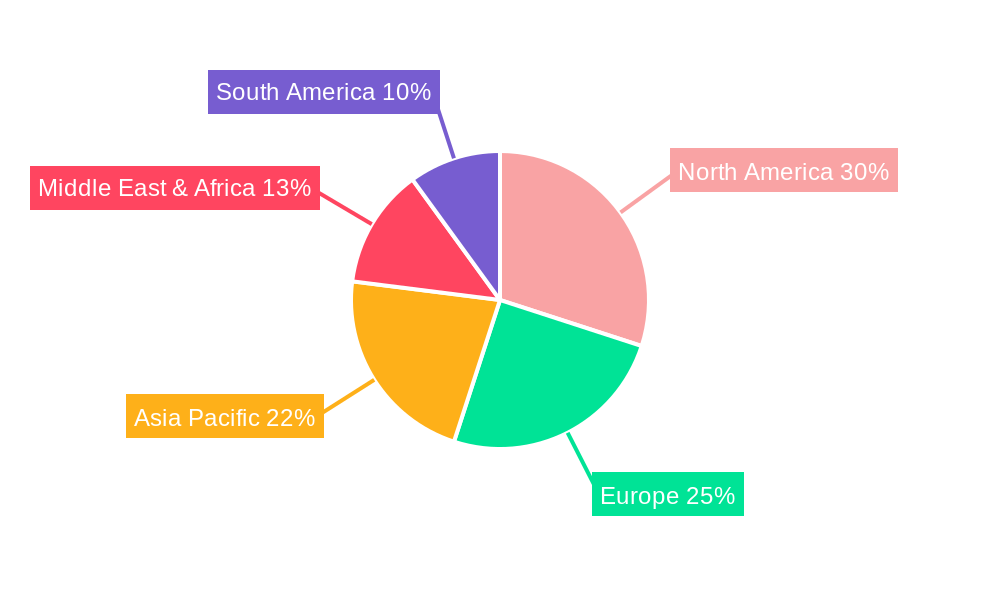
Integrated Playout Automation Regional Market Share
Geographic Coverage of Integrated Playout Automation
Integrated Playout Automation REPORT HIGHLIGHTS
| Aspects | Details |
|---|---|
| Study Period | 2020-2034 |
| Base Year | 2025 |
| Estimated Year | 2026 |
| Forecast Period | 2026-2034 |
| Historical Period | 2020-2025 |
| Growth Rate | CAGR of 9.79% from 2020-2034 |
| Segmentation |
|
Table of Contents
- 1. Introduction
- 1.1. Research Scope
- 1.2. Market Segmentation
- 1.3. Research Methodology
- 1.4. Definitions and Assumptions
- 2. Executive Summary
- 2.1. Introduction
- 3. Market Dynamics
- 3.1. Introduction
- 3.2. Market Drivers
- 3.3. Market Restrains
- 3.4. Market Trends
- 4. Market Factor Analysis
- 4.1. Porters Five Forces
- 4.2. Supply/Value Chain
- 4.3. PESTEL analysis
- 4.4. Market Entropy
- 4.5. Patent/Trademark Analysis
- 5. Global Integrated Playout Automation Analysis, Insights and Forecast, 2020-2032
- 5.1. Market Analysis, Insights and Forecast - by Application
- 5.1.1. Sports
- 5.1.2. News
- 5.1.3. Entertainment
- 5.1.4. Others (Advertisements, Live Telecasts, etc.)
- 5.2. Market Analysis, Insights and Forecast - by Types
- 5.2.1. Hardware
- 5.2.2. Software
- 5.3. Market Analysis, Insights and Forecast - by Region
- 5.3.1. North America
- 5.3.2. South America
- 5.3.3. Europe
- 5.3.4. Middle East & Africa
- 5.3.5. Asia Pacific
- 5.1. Market Analysis, Insights and Forecast - by Application
- 6. North America Integrated Playout Automation Analysis, Insights and Forecast, 2020-2032
- 6.1. Market Analysis, Insights and Forecast - by Application
- 6.1.1. Sports
- 6.1.2. News
- 6.1.3. Entertainment
- 6.1.4. Others (Advertisements, Live Telecasts, etc.)
- 6.2. Market Analysis, Insights and Forecast - by Types
- 6.2.1. Hardware
- 6.2.2. Software
- 6.1. Market Analysis, Insights and Forecast - by Application
- 7. South America Integrated Playout Automation Analysis, Insights and Forecast, 2020-2032
- 7.1. Market Analysis, Insights and Forecast - by Application
- 7.1.1. Sports
- 7.1.2. News
- 7.1.3. Entertainment
- 7.1.4. Others (Advertisements, Live Telecasts, etc.)
- 7.2. Market Analysis, Insights and Forecast - by Types
- 7.2.1. Hardware
- 7.2.2. Software
- 7.1. Market Analysis, Insights and Forecast - by Application
- 8. Europe Integrated Playout Automation Analysis, Insights and Forecast, 2020-2032
- 8.1. Market Analysis, Insights and Forecast - by Application
- 8.1.1. Sports
- 8.1.2. News
- 8.1.3. Entertainment
- 8.1.4. Others (Advertisements, Live Telecasts, etc.)
- 8.2. Market Analysis, Insights and Forecast - by Types
- 8.2.1. Hardware
- 8.2.2. Software
- 8.1. Market Analysis, Insights and Forecast - by Application
- 9. Middle East & Africa Integrated Playout Automation Analysis, Insights and Forecast, 2020-2032
- 9.1. Market Analysis, Insights and Forecast - by Application
- 9.1.1. Sports
- 9.1.2. News
- 9.1.3. Entertainment
- 9.1.4. Others (Advertisements, Live Telecasts, etc.)
- 9.2. Market Analysis, Insights and Forecast - by Types
- 9.2.1. Hardware
- 9.2.2. Software
- 9.1. Market Analysis, Insights and Forecast - by Application
- 10. Asia Pacific Integrated Playout Automation Analysis, Insights and Forecast, 2020-2032
- 10.1. Market Analysis, Insights and Forecast - by Application
- 10.1.1. Sports
- 10.1.2. News
- 10.1.3. Entertainment
- 10.1.4. Others (Advertisements, Live Telecasts, etc.)
- 10.2. Market Analysis, Insights and Forecast - by Types
- 10.2.1. Hardware
- 10.2.2. Software
- 10.1. Market Analysis, Insights and Forecast - by Application
- 11. Competitive Analysis
- 11.1. Global Market Share Analysis 2025
- 11.2. Company Profiles
- 11.2.1 Miranda Technologies
- 11.2.1.1. Overview
- 11.2.1.2. Products
- 11.2.1.3. SWOT Analysis
- 11.2.1.4. Recent Developments
- 11.2.1.5. Financials (Based on Availability)
- 11.2.2 Hardata
- 11.2.2.1. Overview
- 11.2.2.2. Products
- 11.2.2.3. SWOT Analysis
- 11.2.2.4. Recent Developments
- 11.2.2.5. Financials (Based on Availability)
- 11.2.3 Imagine Communication
- 11.2.3.1. Overview
- 11.2.3.2. Products
- 11.2.3.3. SWOT Analysis
- 11.2.3.4. Recent Developments
- 11.2.3.5. Financials (Based on Availability)
- 11.2.4 Florical Systems
- 11.2.4.1. Overview
- 11.2.4.2. Products
- 11.2.4.3. SWOT Analysis
- 11.2.4.4. Recent Developments
- 11.2.4.5. Financials (Based on Availability)
- 11.2.5 Grass Valley
- 11.2.5.1. Overview
- 11.2.5.2. Products
- 11.2.5.3. SWOT Analysis
- 11.2.5.4. Recent Developments
- 11.2.5.5. Financials (Based on Availability)
- 11.2.6 Harmonic
- 11.2.6.1. Overview
- 11.2.6.2. Products
- 11.2.6.3. SWOT Analysis
- 11.2.6.4. Recent Developments
- 11.2.6.5. Financials (Based on Availability)
- 11.2.7 SAM
- 11.2.7.1. Overview
- 11.2.7.2. Products
- 11.2.7.3. SWOT Analysis
- 11.2.7.4. Recent Developments
- 11.2.7.5. Financials (Based on Availability)
- 11.2.8 Evertz Microsystems
- 11.2.8.1. Overview
- 11.2.8.2. Products
- 11.2.8.3. SWOT Analysis
- 11.2.8.4. Recent Developments
- 11.2.8.5. Financials (Based on Availability)
- 11.2.9 Cinegy
- 11.2.9.1. Overview
- 11.2.9.2. Products
- 11.2.9.3. SWOT Analysis
- 11.2.9.4. Recent Developments
- 11.2.9.5. Financials (Based on Availability)
- 11.2.10 BroadStream
- 11.2.10.1. Overview
- 11.2.10.2. Products
- 11.2.10.3. SWOT Analysis
- 11.2.10.4. Recent Developments
- 11.2.10.5. Financials (Based on Availability)
- 11.2.11 ENCO Systems
- 11.2.11.1. Overview
- 11.2.11.2. Products
- 11.2.11.3. SWOT Analysis
- 11.2.11.4. Recent Developments
- 11.2.11.5. Financials (Based on Availability)
- 11.2.12 Deyan Automation Systems
- 11.2.12.1. Overview
- 11.2.12.2. Products
- 11.2.12.3. SWOT Analysis
- 11.2.12.4. Recent Developments
- 11.2.12.5. Financials (Based on Availability)
- 11.2.13 Itochu Cable Systems
- 11.2.13.1. Overview
- 11.2.13.2. Products
- 11.2.13.3. SWOT Analysis
- 11.2.13.4. Recent Developments
- 11.2.13.5. Financials (Based on Availability)
- 11.2.14 Amagi Corporation
- 11.2.14.1. Overview
- 11.2.14.2. Products
- 11.2.14.3. SWOT Analysis
- 11.2.14.4. Recent Developments
- 11.2.14.5. Financials (Based on Availability)
- 11.2.15 Pebble Beach Systems
- 11.2.15.1. Overview
- 11.2.15.2. Products
- 11.2.15.3. SWOT Analysis
- 11.2.15.4. Recent Developments
- 11.2.15.5. Financials (Based on Availability)
- 11.2.1 Miranda Technologies
List of Figures
- Figure 1: Global Integrated Playout Automation Revenue Breakdown (undefined, %) by Region 2025 & 2033
- Figure 2: North America Integrated Playout Automation Revenue (undefined), by Application 2025 & 2033
- Figure 3: North America Integrated Playout Automation Revenue Share (%), by Application 2025 & 2033
- Figure 4: North America Integrated Playout Automation Revenue (undefined), by Types 2025 & 2033
- Figure 5: North America Integrated Playout Automation Revenue Share (%), by Types 2025 & 2033
- Figure 6: North America Integrated Playout Automation Revenue (undefined), by Country 2025 & 2033
- Figure 7: North America Integrated Playout Automation Revenue Share (%), by Country 2025 & 2033
- Figure 8: South America Integrated Playout Automation Revenue (undefined), by Application 2025 & 2033
- Figure 9: South America Integrated Playout Automation Revenue Share (%), by Application 2025 & 2033
- Figure 10: South America Integrated Playout Automation Revenue (undefined), by Types 2025 & 2033
- Figure 11: South America Integrated Playout Automation Revenue Share (%), by Types 2025 & 2033
- Figure 12: South America Integrated Playout Automation Revenue (undefined), by Country 2025 & 2033
- Figure 13: South America Integrated Playout Automation Revenue Share (%), by Country 2025 & 2033
- Figure 14: Europe Integrated Playout Automation Revenue (undefined), by Application 2025 & 2033
- Figure 15: Europe Integrated Playout Automation Revenue Share (%), by Application 2025 & 2033
- Figure 16: Europe Integrated Playout Automation Revenue (undefined), by Types 2025 & 2033
- Figure 17: Europe Integrated Playout Automation Revenue Share (%), by Types 2025 & 2033
- Figure 18: Europe Integrated Playout Automation Revenue (undefined), by Country 2025 & 2033
- Figure 19: Europe Integrated Playout Automation Revenue Share (%), by Country 2025 & 2033
- Figure 20: Middle East & Africa Integrated Playout Automation Revenue (undefined), by Application 2025 & 2033
- Figure 21: Middle East & Africa Integrated Playout Automation Revenue Share (%), by Application 2025 & 2033
- Figure 22: Middle East & Africa Integrated Playout Automation Revenue (undefined), by Types 2025 & 2033
- Figure 23: Middle East & Africa Integrated Playout Automation Revenue Share (%), by Types 2025 & 2033
- Figure 24: Middle East & Africa Integrated Playout Automation Revenue (undefined), by Country 2025 & 2033
- Figure 25: Middle East & Africa Integrated Playout Automation Revenue Share (%), by Country 2025 & 2033
- Figure 26: Asia Pacific Integrated Playout Automation Revenue (undefined), by Application 2025 & 2033
- Figure 27: Asia Pacific Integrated Playout Automation Revenue Share (%), by Application 2025 & 2033
- Figure 28: Asia Pacific Integrated Playout Automation Revenue (undefined), by Types 2025 & 2033
- Figure 29: Asia Pacific Integrated Playout Automation Revenue Share (%), by Types 2025 & 2033
- Figure 30: Asia Pacific Integrated Playout Automation Revenue (undefined), by Country 2025 & 2033
- Figure 31: Asia Pacific Integrated Playout Automation Revenue Share (%), by Country 2025 & 2033
List of Tables
- Table 1: Global Integrated Playout Automation Revenue undefined Forecast, by Application 2020 & 2033
- Table 2: Global Integrated Playout Automation Revenue undefined Forecast, by Types 2020 & 2033
- Table 3: Global Integrated Playout Automation Revenue undefined Forecast, by Region 2020 & 2033
- Table 4: Global Integrated Playout Automation Revenue undefined Forecast, by Application 2020 & 2033
- Table 5: Global Integrated Playout Automation Revenue undefined Forecast, by Types 2020 & 2033
- Table 6: Global Integrated Playout Automation Revenue undefined Forecast, by Country 2020 & 2033
- Table 7: United States Integrated Playout Automation Revenue (undefined) Forecast, by Application 2020 & 2033
- Table 8: Canada Integrated Playout Automation Revenue (undefined) Forecast, by Application 2020 & 2033
- Table 9: Mexico Integrated Playout Automation Revenue (undefined) Forecast, by Application 2020 & 2033
- Table 10: Global Integrated Playout Automation Revenue undefined Forecast, by Application 2020 & 2033
- Table 11: Global Integrated Playout Automation Revenue undefined Forecast, by Types 2020 & 2033
- Table 12: Global Integrated Playout Automation Revenue undefined Forecast, by Country 2020 & 2033
- Table 13: Brazil Integrated Playout Automation Revenue (undefined) Forecast, by Application 2020 & 2033
- Table 14: Argentina Integrated Playout Automation Revenue (undefined) Forecast, by Application 2020 & 2033
- Table 15: Rest of South America Integrated Playout Automation Revenue (undefined) Forecast, by Application 2020 & 2033
- Table 16: Global Integrated Playout Automation Revenue undefined Forecast, by Application 2020 & 2033
- Table 17: Global Integrated Playout Automation Revenue undefined Forecast, by Types 2020 & 2033
- Table 18: Global Integrated Playout Automation Revenue undefined Forecast, by Country 2020 & 2033
- Table 19: United Kingdom Integrated Playout Automation Revenue (undefined) Forecast, by Application 2020 & 2033
- Table 20: Germany Integrated Playout Automation Revenue (undefined) Forecast, by Application 2020 & 2033
- Table 21: France Integrated Playout Automation Revenue (undefined) Forecast, by Application 2020 & 2033
- Table 22: Italy Integrated Playout Automation Revenue (undefined) Forecast, by Application 2020 & 2033
- Table 23: Spain Integrated Playout Automation Revenue (undefined) Forecast, by Application 2020 & 2033
- Table 24: Russia Integrated Playout Automation Revenue (undefined) Forecast, by Application 2020 & 2033
- Table 25: Benelux Integrated Playout Automation Revenue (undefined) Forecast, by Application 2020 & 2033
- Table 26: Nordics Integrated Playout Automation Revenue (undefined) Forecast, by Application 2020 & 2033
- Table 27: Rest of Europe Integrated Playout Automation Revenue (undefined) Forecast, by Application 2020 & 2033
- Table 28: Global Integrated Playout Automation Revenue undefined Forecast, by Application 2020 & 2033
- Table 29: Global Integrated Playout Automation Revenue undefined Forecast, by Types 2020 & 2033
- Table 30: Global Integrated Playout Automation Revenue undefined Forecast, by Country 2020 & 2033
- Table 31: Turkey Integrated Playout Automation Revenue (undefined) Forecast, by Application 2020 & 2033
- Table 32: Israel Integrated Playout Automation Revenue (undefined) Forecast, by Application 2020 & 2033
- Table 33: GCC Integrated Playout Automation Revenue (undefined) Forecast, by Application 2020 & 2033
- Table 34: North Africa Integrated Playout Automation Revenue (undefined) Forecast, by Application 2020 & 2033
- Table 35: South Africa Integrated Playout Automation Revenue (undefined) Forecast, by Application 2020 & 2033
- Table 36: Rest of Middle East & Africa Integrated Playout Automation Revenue (undefined) Forecast, by Application 2020 & 2033
- Table 37: Global Integrated Playout Automation Revenue undefined Forecast, by Application 2020 & 2033
- Table 38: Global Integrated Playout Automation Revenue undefined Forecast, by Types 2020 & 2033
- Table 39: Global Integrated Playout Automation Revenue undefined Forecast, by Country 2020 & 2033
- Table 40: China Integrated Playout Automation Revenue (undefined) Forecast, by Application 2020 & 2033
- Table 41: India Integrated Playout Automation Revenue (undefined) Forecast, by Application 2020 & 2033
- Table 42: Japan Integrated Playout Automation Revenue (undefined) Forecast, by Application 2020 & 2033
- Table 43: South Korea Integrated Playout Automation Revenue (undefined) Forecast, by Application 2020 & 2033
- Table 44: ASEAN Integrated Playout Automation Revenue (undefined) Forecast, by Application 2020 & 2033
- Table 45: Oceania Integrated Playout Automation Revenue (undefined) Forecast, by Application 2020 & 2033
- Table 46: Rest of Asia Pacific Integrated Playout Automation Revenue (undefined) Forecast, by Application 2020 & 2033
Frequently Asked Questions
1. What is the projected Compound Annual Growth Rate (CAGR) of the Integrated Playout Automation?
The projected CAGR is approximately 9.79%.
2. Which companies are prominent players in the Integrated Playout Automation?
Key companies in the market include Miranda Technologies, Hardata, Imagine Communication, Florical Systems, Grass Valley, Harmonic, SAM, Evertz Microsystems, Cinegy, BroadStream, ENCO Systems, Deyan Automation Systems, Itochu Cable Systems, Amagi Corporation, Pebble Beach Systems.
3. What are the main segments of the Integrated Playout Automation?
The market segments include Application, Types.
4. Can you provide details about the market size?
The market size is estimated to be USD XXX N/A as of 2022.
5. What are some drivers contributing to market growth?
N/A
6. What are the notable trends driving market growth?
N/A
7. Are there any restraints impacting market growth?
N/A
8. Can you provide examples of recent developments in the market?
N/A
9. What pricing options are available for accessing the report?
Pricing options include single-user, multi-user, and enterprise licenses priced at USD 4900.00, USD 7350.00, and USD 9800.00 respectively.
10. Is the market size provided in terms of value or volume?
The market size is provided in terms of value, measured in N/A.
11. Are there any specific market keywords associated with the report?
Yes, the market keyword associated with the report is "Integrated Playout Automation," which aids in identifying and referencing the specific market segment covered.
12. How do I determine which pricing option suits my needs best?
The pricing options vary based on user requirements and access needs. Individual users may opt for single-user licenses, while businesses requiring broader access may choose multi-user or enterprise licenses for cost-effective access to the report.
13. Are there any additional resources or data provided in the Integrated Playout Automation report?
While the report offers comprehensive insights, it's advisable to review the specific contents or supplementary materials provided to ascertain if additional resources or data are available.
14. How can I stay updated on further developments or reports in the Integrated Playout Automation?
To stay informed about further developments, trends, and reports in the Integrated Playout Automation, consider subscribing to industry newsletters, following relevant companies and organizations, or regularly checking reputable industry news sources and publications.
Methodology
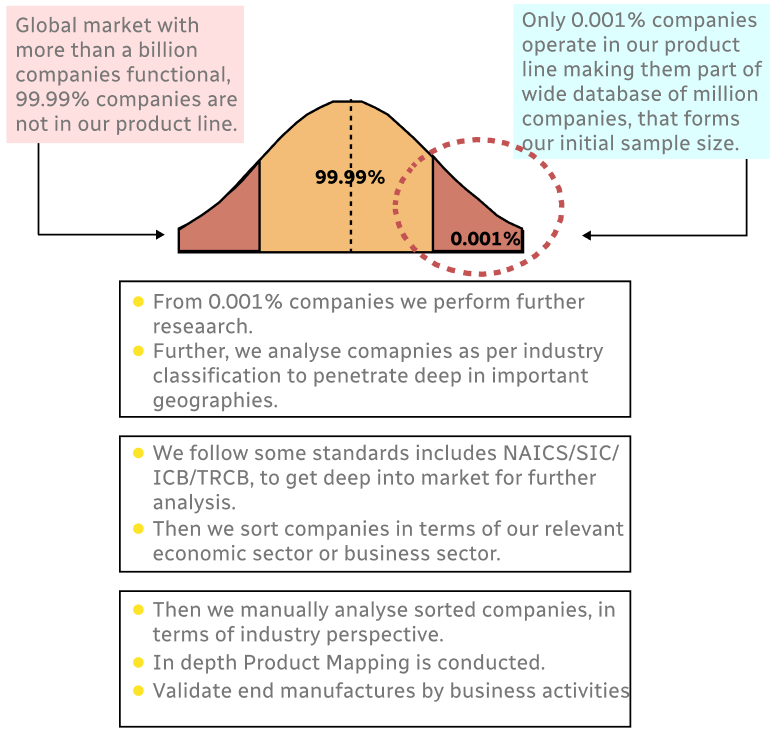
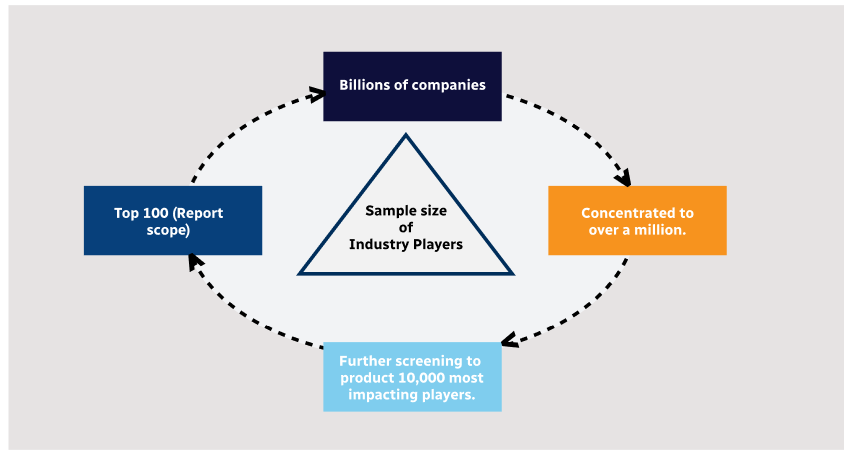
Step 1 - Identification of Relevant Samples Size from Population Database
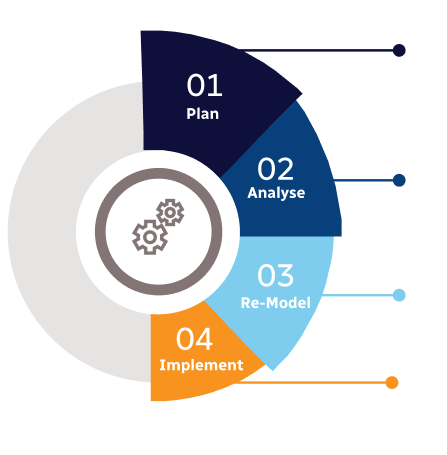
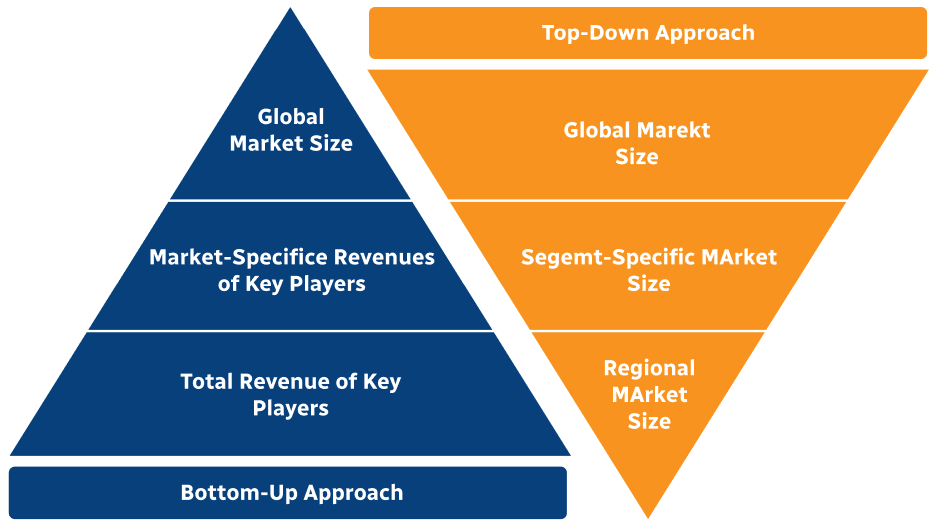
Step 2 - Approaches for Defining Global Market Size (Value, Volume* & Price*)
Note*: In applicable scenarios
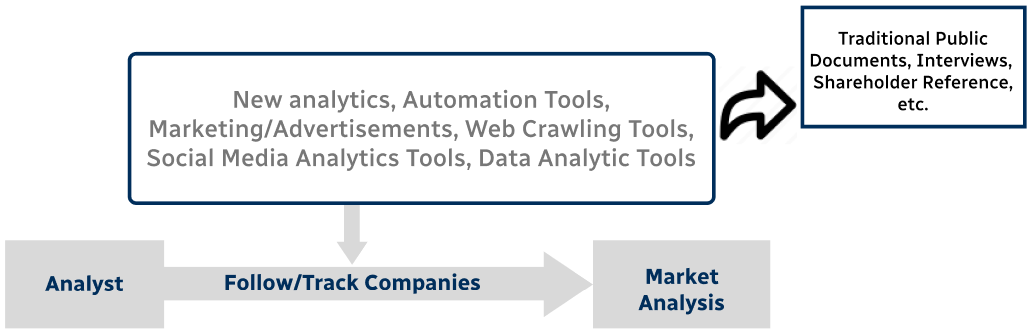
Step 3 - Data Sources
Primary Research
- Web Analytics
- Survey Reports
- Research Institute
- Latest Research Reports
- Opinion Leaders
Secondary Research
- Annual Reports
- White Paper
- Latest Press Release
- Industry Association
- Paid Database
- Investor Presentations
Step 4 - Data Triangulation
Involves using different sources of information in order to increase the validity of a study
These sources are likely to be stakeholders in a program - participants, other researchers, program staff, other community members, and so on.
Then we put all data in single framework & apply various statistical tools to find out the dynamic on the market.
During the analysis stage, feedback from the stakeholder groups would be compared to determine areas of agreement as well as areas of divergence