



Key Insights
The Germany Electric Vehicle (EV) Battery Separator Market is poised for substantial growth, with an estimated market size of 56.77 Million in 2025. This growth is fueled by a remarkable 18.00% Compound Annual Growth Rate (CAGR) projected through 2033. The primary drivers for this expansion include the robust adoption of electric vehicles in Germany, supported by government incentives and a strong consumer push towards sustainable transportation solutions. Furthermore, continuous advancements in battery technology, particularly the increasing demand for higher energy density and safer battery designs, necessitate sophisticated battery separators. The market's segmentation reveals a significant reliance on Lithium-ion battery technology, which dominates the EV landscape. Consequently, the demand for advanced separators compatible with Lithium-ion chemistries, primarily made from Polypropylene and Polyethylene, is expected to surge. Key industry players are actively investing in research and development to enhance separator performance, focusing on improved thermal stability, ionic conductivity, and mechanical strength.

Germany Electric Vehicle Battery Separator Market Market Size (In Million)

While the market shows immense promise, certain restraints could influence the pace of growth. These include the high cost of advanced separator materials and the complexities associated with the manufacturing process, which can impact overall battery production costs. Supply chain disruptions and the availability of raw materials also present potential challenges. However, these are being actively addressed through strategic partnerships and vertical integration by leading companies. The competitive landscape is characterized by the presence of established global players and emerging innovators, all striving to capture market share through technological differentiation and strategic collaborations. Germany, as a leading automotive hub and a strong proponent of EV adoption, is a crucial market within the broader European EV battery separator ecosystem, with significant opportunities for both material suppliers and separator manufacturers.

Germany Electric Vehicle Battery Separator Market Company Market Share

This in-depth report provides a strategic analysis of the Germany Electric Vehicle Battery Separator Market, a critical component in the rapidly expanding electric vehicle (EV) industry. Covering the historical period from 2019 to 2024, the base year of 2025, and a forecast period extending to 2033, this study offers invaluable insights into market dynamics, key players, segmentation, and future growth trajectories. Leveraging high-ranking keywords such as "EV battery separator Germany," "lithium-ion battery separator," "polypropylene separator," and "electric mobility Germany," this report is optimized for search visibility and designed to engage automotive manufacturers, battery producers, material suppliers, investors, and industry analysts.
Germany Electric Vehicle Battery Separator Market Market Structure & Competitive Dynamics
The Germany Electric Vehicle Battery Separator Market is characterized by a moderately concentrated structure, with a few dominant players and a growing number of specialized manufacturers. Innovation plays a pivotal role, driven by the relentless pursuit of enhanced battery performance, safety, and cost-effectiveness. Regulatory frameworks, particularly those from the European Union and Germany, are increasingly influencing market entry and product standards, pushing for sustainable and high-performance EV battery separator materials. Product substitutes, while limited for high-performance lithium-ion batteries, are continuously being explored, emphasizing the need for continuous R&D. End-user trends, heavily influenced by government incentives for EV adoption and consumer demand for longer range and faster charging, directly impact the demand for advanced battery separators. Merger and acquisition (M&A) activities, though not extensively documented with specific deal values in this segment, are anticipated to increase as companies seek to secure supply chains and gain market share. Key players are actively investing in expanding production capacities and developing next-generation separator technologies to cater to the burgeoning German EV market.
Germany Electric Vehicle Battery Separator Market Industry Trends & Insights
The Germany Electric Vehicle Battery Separator Market is experiencing robust growth, primarily fueled by the escalating adoption of electric vehicles across the nation. A significant trend is the increasing demand for advanced battery separators that enhance energy density, improve thermal management, and ensure the safety of lithium-ion batteries. The market is projected to witness a compound annual growth rate (CAGR) of approximately xx% during the forecast period. This surge is propelled by Germany's strategic commitment to decarbonization and its strong position as a leading automotive manufacturing hub. Technological disruptions, such as the development of thinner yet more robust separators, ceramic-coated separators, and novel composite materials, are reshaping the competitive landscape. Consumer preferences are shifting towards EVs with longer driving ranges and faster charging capabilities, creating a direct demand for higher-performance lithium-ion battery separators. Competitive dynamics are intense, with established global players and emerging German innovators vying for market leadership. The German EV industry's growth directly correlates with the increasing penetration of battery separators, making it a key market for global suppliers. Investment in domestic battery production, including separator manufacturing, is a prominent trend.
Dominant Markets & Segments in Germany Electric Vehicle Battery Separator Market
The Germany Electric Vehicle Battery Separator Market is dominated by segments catering to high-performance applications, driven by automotive industry demands.
Battery Type Dominance:
- Lithium-ion: This segment reigns supreme, accounting for the vast majority of the market share. The rapid growth of electric vehicles, particularly battery electric vehicles (BEVs) and plug-in hybrid electric vehicles (PHEVs), directly translates to an overwhelming demand for lithium-ion battery separators in Germany. Economic policies supporting EV subsidies and charging infrastructure development further bolster this segment. The continuous innovation in lithium-ion battery chemistries, like NMC and LFP, necessitates advanced separator solutions to meet their specific performance and safety requirements.
- Lead-acid: While historically significant for conventional vehicles, the lead-acid battery segment's share in the EV context is negligible and declining. Its role is primarily limited to auxiliary power systems in some hybrid vehicles.
- Other Battery Type: This category remains a niche, with emerging battery technologies like solid-state batteries still in early stages of commercialization for mainstream EVs. However, future growth potential exists as R&D progresses.
Material Type Dominance:
- Polypropylene (PP): This material is a cornerstone in the Germany EV battery separator market, offering a good balance of cost-effectiveness, chemical resistance, and mechanical properties for lithium-ion batteries. Its widespread adoption is driven by its established manufacturing processes and compatibility with various electrolyte formulations.
- Polyethylene (PE): Often used in conjunction with or as an alternative to polypropylene, polyethylene separators are favored for their enhanced thermal shutdown properties, contributing to battery safety. The demand for PE separators is rising as safety regulations become more stringent.
- Other Material Types: This includes advanced materials like ceramic-coated polymers, non-woven fabrics, and novel composite materials that offer superior performance characteristics such as higher porosity, better electrolyte wettability, and improved thermal stability. The development and adoption of these advanced materials are crucial for next-generation battery technologies and represent a significant growth avenue in the German electric vehicle battery market.
Germany Electric Vehicle Battery Separator Market Product Innovations
Product innovations in the Germany Electric Vehicle Battery Separator Market are focused on enhancing safety, energy density, and charging speeds. Developments include thinner yet stronger separators that maximize active material space within the battery cell, ceramic-coated separators for superior thermal resistance, and separators with improved electrolyte uptake for faster ion transport. These innovations are critical for meeting the demands of advanced battery chemistries like LFP and NMC, enabling longer vehicle ranges and quicker charging times. Competitive advantages are gained through proprietary manufacturing techniques that yield separators with consistent pore structures and high mechanical integrity, crucial for preventing dendrite formation and internal short circuits.
Report Segmentation & Scope
This report segments the Germany Electric Vehicle Battery Separator Market based on key differentiating factors to provide a granular analysis.
Battery Type:
- Lithium-ion: This segment is expected to exhibit the highest growth rate, driven by the automotive sector's transition to electric mobility. Market size for this segment is projected to reach xx Million by 2033.
- Lead-acid: This segment represents a diminishing market share within the context of EV battery separators.
- Other Battery Type: This segment, while currently small, holds potential for future growth as new battery technologies mature.
Material Type:
- Polypropylene: This remains the dominant material, with its market size estimated at xx Million in 2025, growing steadily.
- Polyethylene: This material is gaining traction due to its safety features, with projected market growth indicating its increasing importance.
- Other Material Types: This includes advanced and novel materials, representing a high-growth segment with increasing investment and research.
Key Drivers of Germany Electric Vehicle Battery Separator Market Growth
Several factors are propelling the growth of the Germany Electric Vehicle Battery Separator Market.
- Government Policies & Incentives: Strong government support for EV adoption through subsidies, tax breaks, and infrastructure development directly fuels demand for batteries and, consequently, battery separators.
- Technological Advancements: Continuous innovation in battery technology, including improvements in separator materials and manufacturing processes, is crucial for enhancing EV performance and safety.
- Automotive Industry Transition: The global shift of automotive manufacturers towards electric vehicle production significantly boosts the demand for EV components like battery separators.
- Growing Environmental Awareness: Increasing consumer awareness and concern for environmental sustainability are driving the adoption of electric vehicles.
Challenges in the Germany Electric Vehicle Battery Separator Market Sector
Despite the strong growth prospects, the Germany Electric Vehicle Battery Separator Market faces certain challenges.
- Supply Chain Volatility: Disruptions in the supply of raw materials and dependence on global supply chains can impact production and pricing.
- Cost Pressures: The high cost of advanced separator materials and manufacturing processes can be a barrier to widespread adoption, especially for entry-level EVs.
- Competition from International Players: Intense competition from established international manufacturers can put pressure on domestic players' market share.
- Rapid Technological Obsolescence: The fast-paced evolution of battery technology means that separators developed today might become obsolete in a few years, requiring continuous R&D investment.
Leading Players in the Germany Electric Vehicle Battery Separator Market Market
- Contemporary Amperex Technology Co
- SK Innovation Co Ltd
- Asahi Kasei Corporation
- Bruckner Maschinenbau GmbH
- Coperion GmbH
- Toray Industries Europe GmbH
- Delfort Germany GmbH
- SEMCORP Advanced Materials Group
- Sepion Technologies
- List Not Exhaustive
Key Developments in Germany Electric Vehicle Battery Separator Market Sector
- June 2024: In 2023, Germany reaffirmed its status as the world's second-largest producer of electric vehicles, following China, as reported by the German Association of the Automotive Industry (VDA). The VDA highlighted that Germany rolled out 1.27 million electric and plug-in hybrid vehicles in 2023, with a significant 995,000 being fully electric. This surge in production underscores the escalating demand for electric vehicle battery separators in Germany.
- September 2023: Contemporary Amperex Technology Co., Limited (CATL), a prominent Chinese manufacturer of battery separators, has announced its intention to produce the state-of-the-art Shenxing battery at its facility in Germany, CATL Thuringia GmbH (CATT). The Shenxing battery, a lithium-iron phosphate (LFP) variant known for its ultra-fast charging capabilities, can extend a vehicle's range by 400 km with just a 10-minute charge. Innovations in the Shenxing encompass a new graphite anode, an updated electrolyte formulation, a thinner yet safer separator, and improved ion transport. Furthermore, the battery is engineered to produce less heat and features an advanced battery management system (BMS).
Strategic Germany Electric Vehicle Battery Separator Market Market Outlook
The strategic outlook for the Germany Electric Vehicle Battery Separator Market is highly positive, driven by the unabated growth of electric mobility. Future market potential is amplified by Germany's commitment to establishing a robust domestic battery manufacturing ecosystem. Strategic opportunities lie in the development of next-generation separators for solid-state batteries and advanced lithium-ion chemistries, as well as in enhancing the sustainability and recyclability of separator materials. Partnerships between battery manufacturers, material suppliers, and automotive OEMs will be crucial for capitalizing on emerging trends and solidifying Germany's position as a leader in the European EV battery market. The ongoing transition to electric vehicles ensures sustained demand for high-quality, safe, and efficient battery separators.
Germany Electric Vehicle Battery Separator Market Segmentation
-
1. Battery Type
- 1.1. Lithium-ion
- 1.2. Lead-acid
- 1.3. Other Battery Type
-
2. Material Type
- 2.1. Polypropylene
- 2.2. Polyethylene
- 2.3. Other Material Types
Germany Electric Vehicle Battery Separator Market Segmentation By Geography
- 1. Germany

Germany Electric Vehicle Battery Separator Market Regional Market Share

Geographic Coverage of Germany Electric Vehicle Battery Separator Market
Germany Electric Vehicle Battery Separator Market REPORT HIGHLIGHTS
| Aspects | Details |
|---|---|
| Study Period | 2020-2034 |
| Base Year | 2025 |
| Estimated Year | 2026 |
| Forecast Period | 2026-2034 |
| Historical Period | 2020-2025 |
| Growth Rate | CAGR of 18.00% from 2020-2034 |
| Segmentation |
|
Table of Contents
- 1. Introduction
- 1.1. Research Scope
- 1.2. Market Segmentation
- 1.3. Research Methodology
- 1.4. Definitions and Assumptions
- 2. Executive Summary
- 2.1. Introduction
- 3. Market Dynamics
- 3.1. Introduction
- 3.2. Market Drivers
- 3.2.1. 4.; The Growing Adoption of Electric Vehicles4.; Favorable Government Policies4.; Decreasing Price of Lithium-ion Batteries
- 3.3. Market Restrains
- 3.3.1. 4.; The Growing Adoption of Electric Vehicles4.; Favorable Government Policies4.; Decreasing Price of Lithium-ion Batteries
- 3.4. Market Trends
- 3.4.1. Lithium-ion Battery Segment is Expected to Dominate the Market
- 4. Market Factor Analysis
- 4.1. Porters Five Forces
- 4.2. Supply/Value Chain
- 4.3. PESTEL analysis
- 4.4. Market Entropy
- 4.5. Patent/Trademark Analysis
- 5. Germany Electric Vehicle Battery Separator Market Analysis, Insights and Forecast, 2020-2032
- 5.1. Market Analysis, Insights and Forecast - by Battery Type
- 5.1.1. Lithium-ion
- 5.1.2. Lead-acid
- 5.1.3. Other Battery Type
- 5.2. Market Analysis, Insights and Forecast - by Material Type
- 5.2.1. Polypropylene
- 5.2.2. Polyethylene
- 5.2.3. Other Material Types
- 5.3. Market Analysis, Insights and Forecast - by Region
- 5.3.1. Germany
- 5.1. Market Analysis, Insights and Forecast - by Battery Type
- 6. Competitive Analysis
- 6.1. Market Share Analysis 2025
- 6.2. Company Profiles
- 6.2.1 Contemporary Amperex Technology Co
- 6.2.1.1. Overview
- 6.2.1.2. Products
- 6.2.1.3. SWOT Analysis
- 6.2.1.4. Recent Developments
- 6.2.1.5. Financials (Based on Availability)
- 6.2.2 SK Innovation Co Ltd
- 6.2.2.1. Overview
- 6.2.2.2. Products
- 6.2.2.3. SWOT Analysis
- 6.2.2.4. Recent Developments
- 6.2.2.5. Financials (Based on Availability)
- 6.2.3 Asahi Kasei Corporation
- 6.2.3.1. Overview
- 6.2.3.2. Products
- 6.2.3.3. SWOT Analysis
- 6.2.3.4. Recent Developments
- 6.2.3.5. Financials (Based on Availability)
- 6.2.4 Bruckner Maschinenbau GmbH
- 6.2.4.1. Overview
- 6.2.4.2. Products
- 6.2.4.3. SWOT Analysis
- 6.2.4.4. Recent Developments
- 6.2.4.5. Financials (Based on Availability)
- 6.2.5 Coperion GmbH
- 6.2.5.1. Overview
- 6.2.5.2. Products
- 6.2.5.3. SWOT Analysis
- 6.2.5.4. Recent Developments
- 6.2.5.5. Financials (Based on Availability)
- 6.2.6 Toray Industries Europe GmbH
- 6.2.6.1. Overview
- 6.2.6.2. Products
- 6.2.6.3. SWOT Analysis
- 6.2.6.4. Recent Developments
- 6.2.6.5. Financials (Based on Availability)
- 6.2.7 Delfort Germany GmbH
- 6.2.7.1. Overview
- 6.2.7.2. Products
- 6.2.7.3. SWOT Analysis
- 6.2.7.4. Recent Developments
- 6.2.7.5. Financials (Based on Availability)
- 6.2.8 SEMCORP Advanced Materials Group
- 6.2.8.1. Overview
- 6.2.8.2. Products
- 6.2.8.3. SWOT Analysis
- 6.2.8.4. Recent Developments
- 6.2.8.5. Financials (Based on Availability)
- 6.2.9 Sepion Technologies*List Not Exhaustive 6 4 List of Other Prominent Companies6 5 Market Ranking/Share (%) Analysi
- 6.2.9.1. Overview
- 6.2.9.2. Products
- 6.2.9.3. SWOT Analysis
- 6.2.9.4. Recent Developments
- 6.2.9.5. Financials (Based on Availability)
- 6.2.1 Contemporary Amperex Technology Co
List of Figures
- Figure 1: Germany Electric Vehicle Battery Separator Market Revenue Breakdown (Million, %) by Product 2025 & 2033
- Figure 2: Germany Electric Vehicle Battery Separator Market Share (%) by Company 2025
List of Tables
- Table 1: Germany Electric Vehicle Battery Separator Market Revenue Million Forecast, by Battery Type 2020 & 2033
- Table 2: Germany Electric Vehicle Battery Separator Market Volume Million Forecast, by Battery Type 2020 & 2033
- Table 3: Germany Electric Vehicle Battery Separator Market Revenue Million Forecast, by Material Type 2020 & 2033
- Table 4: Germany Electric Vehicle Battery Separator Market Volume Million Forecast, by Material Type 2020 & 2033
- Table 5: Germany Electric Vehicle Battery Separator Market Revenue Million Forecast, by Region 2020 & 2033
- Table 6: Germany Electric Vehicle Battery Separator Market Volume Million Forecast, by Region 2020 & 2033
- Table 7: Germany Electric Vehicle Battery Separator Market Revenue Million Forecast, by Battery Type 2020 & 2033
- Table 8: Germany Electric Vehicle Battery Separator Market Volume Million Forecast, by Battery Type 2020 & 2033
- Table 9: Germany Electric Vehicle Battery Separator Market Revenue Million Forecast, by Material Type 2020 & 2033
- Table 10: Germany Electric Vehicle Battery Separator Market Volume Million Forecast, by Material Type 2020 & 2033
- Table 11: Germany Electric Vehicle Battery Separator Market Revenue Million Forecast, by Country 2020 & 2033
- Table 12: Germany Electric Vehicle Battery Separator Market Volume Million Forecast, by Country 2020 & 2033
Frequently Asked Questions
1. What is the projected Compound Annual Growth Rate (CAGR) of the Germany Electric Vehicle Battery Separator Market?
The projected CAGR is approximately 18.00%.
2. Which companies are prominent players in the Germany Electric Vehicle Battery Separator Market?
Key companies in the market include Contemporary Amperex Technology Co, SK Innovation Co Ltd, Asahi Kasei Corporation, Bruckner Maschinenbau GmbH, Coperion GmbH, Toray Industries Europe GmbH, Delfort Germany GmbH, SEMCORP Advanced Materials Group, Sepion Technologies*List Not Exhaustive 6 4 List of Other Prominent Companies6 5 Market Ranking/Share (%) Analysi.
3. What are the main segments of the Germany Electric Vehicle Battery Separator Market?
The market segments include Battery Type, Material Type.
4. Can you provide details about the market size?
The market size is estimated to be USD 56.77 Million as of 2022.
5. What are some drivers contributing to market growth?
4.; The Growing Adoption of Electric Vehicles4.; Favorable Government Policies4.; Decreasing Price of Lithium-ion Batteries.
6. What are the notable trends driving market growth?
Lithium-ion Battery Segment is Expected to Dominate the Market.
7. Are there any restraints impacting market growth?
4.; The Growing Adoption of Electric Vehicles4.; Favorable Government Policies4.; Decreasing Price of Lithium-ion Batteries.
8. Can you provide examples of recent developments in the market?
June 2024: In 2023, Germany reaffirmed its status as the world's second-largest producer of electric vehicles, following China, as reported by the German Association of the Automotive Industry (VDA). The VDA highlighted that Germany rolled out 1.27 million electric and plug-in hybrid vehicles in 2023, with a significant 995,000 being fully electric. This surge in production underscores the escalating demand for electric vehicle battery separators in Germany.September 2023: Contemporary Amperex Technology Co., Limited (CATL), a prominent Chinese manufacturer of battery separators, has announced its intention to produce the state-of-the-art Shenxing battery at its facility in Germany, CATL Thuringia GmbH (CATT). The Shenxing battery, a lithium-iron phosphate (LFP) variant known for its ultra-fast charging capabilities, can extend a vehicle's range by 400 km with just a 10-minute charge. Innovations in the Shenxing encompass a new graphite anode, an updated electrolyte formulation, a thinner yet safer separator, and improved ion transport. Furthermore, the battery is engineered to produce less heat and features an advanced battery management system (BMS).
9. What pricing options are available for accessing the report?
Pricing options include single-user, multi-user, and enterprise licenses priced at USD 3800, USD 4500, and USD 5800 respectively.
10. Is the market size provided in terms of value or volume?
The market size is provided in terms of value, measured in Million and volume, measured in Million.
11. Are there any specific market keywords associated with the report?
Yes, the market keyword associated with the report is "Germany Electric Vehicle Battery Separator Market," which aids in identifying and referencing the specific market segment covered.
12. How do I determine which pricing option suits my needs best?
The pricing options vary based on user requirements and access needs. Individual users may opt for single-user licenses, while businesses requiring broader access may choose multi-user or enterprise licenses for cost-effective access to the report.
13. Are there any additional resources or data provided in the Germany Electric Vehicle Battery Separator Market report?
While the report offers comprehensive insights, it's advisable to review the specific contents or supplementary materials provided to ascertain if additional resources or data are available.
14. How can I stay updated on further developments or reports in the Germany Electric Vehicle Battery Separator Market?
To stay informed about further developments, trends, and reports in the Germany Electric Vehicle Battery Separator Market, consider subscribing to industry newsletters, following relevant companies and organizations, or regularly checking reputable industry news sources and publications.
Methodology
Step 1 - Identification of Relevant Samples Size from Population Database
Step 2 - Approaches for Defining Global Market Size (Value, Volume* & Price*)
Note*: In applicable scenarios
Step 3 - Data Sources
Primary Research
- Web Analytics
- Survey Reports
- Research Institute
- Latest Research Reports
- Opinion Leaders
Secondary Research
- Annual Reports
- White Paper
- Latest Press Release
- Industry Association
- Paid Database
- Investor Presentations
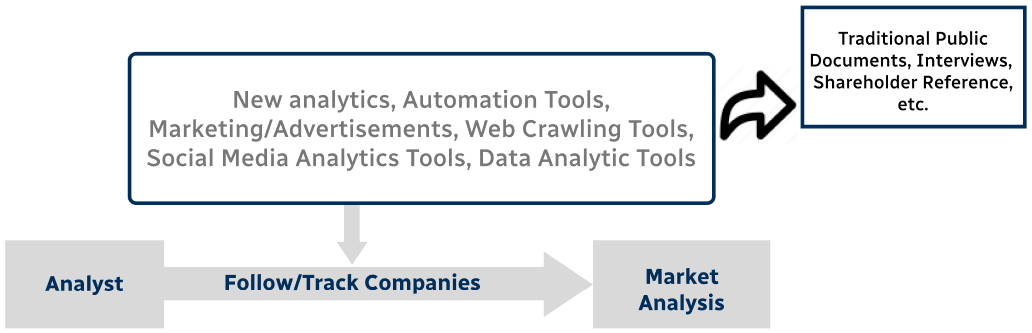
Step 4 - Data Triangulation
Involves using different sources of information in order to increase the validity of a study
These sources are likely to be stakeholders in a program - participants, other researchers, program staff, other community members, and so on.
Then we put all data in single framework & apply various statistical tools to find out the dynamic on the market.
During the analysis stage, feedback from the stakeholder groups would be compared to determine areas of agreement as well as areas of divergence


