


Key Insights
The Emerging Non-Volatile Memory (NVM) market is poised for significant expansion, projected to reach an estimated market size of approximately $15,000 million by 2025, with a robust Compound Annual Growth Rate (CAGR) of around 20% anticipated over the forecast period extending to 2033. This accelerated growth is primarily driven by the insatiable demand for higher density, faster performance, and lower power consumption in memory solutions across a multitude of sectors. Key applications such as Military & Aerospace, Industrial automation, and Telecommunication are at the forefront, requiring advanced NVM technologies to handle massive data volumes and enable real-time processing. The Healthcare sector is also emerging as a significant growth area, with the need for reliable and persistent data storage in medical devices and patient records. The evolution of advanced technologies like 3D Xpoint, MRAM, and ReRAM are key enablers, offering compelling alternatives to traditional memory, particularly where endurance and speed are paramount.
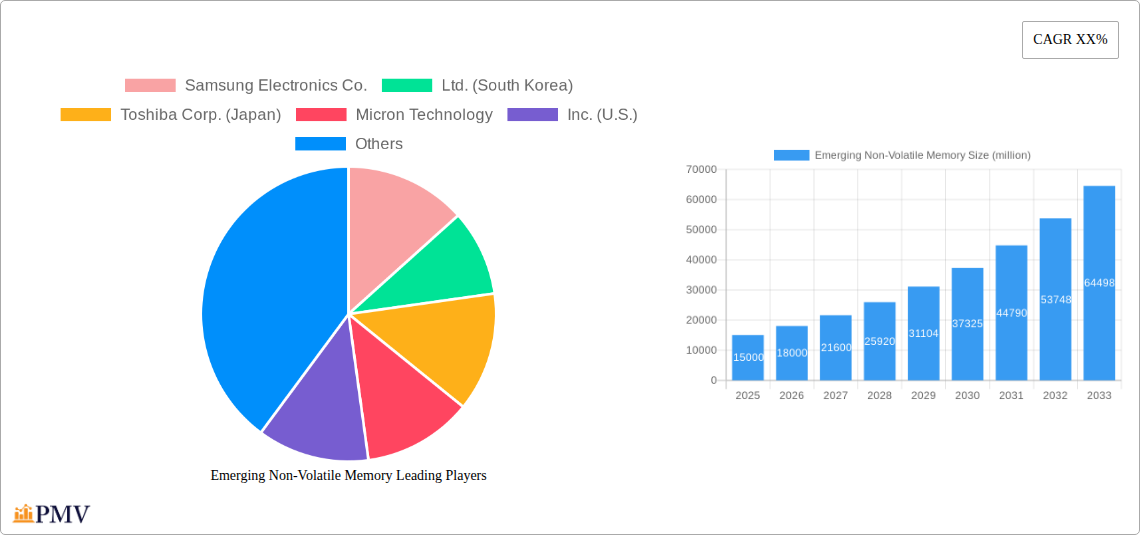
Emerging Non-Volatile Memory Market Size (In Billion)

The market landscape is characterized by intense innovation and strategic collaborations among major players like Samsung Electronics, Toshiba, Micron Technology, and SK Hynix, alongside specialized emerging NVM companies such as Everspin Technologies and Nantero. These companies are heavily investing in R&D to refine existing technologies and develop next-generation NVM solutions. Restrains such as high manufacturing costs for some advanced NVM types and the need for standardization across different applications are present, but the overarching trend towards data-intensive applications, the proliferation of IoT devices, and the advancement of AI and machine learning are expected to outweigh these challenges. The Asia Pacific region, led by China and South Korea, is expected to dominate the market in terms of both production and consumption due to its strong electronics manufacturing base and rapid adoption of new technologies, while North America and Europe remain crucial markets driven by their advanced industrial and defense sectors.
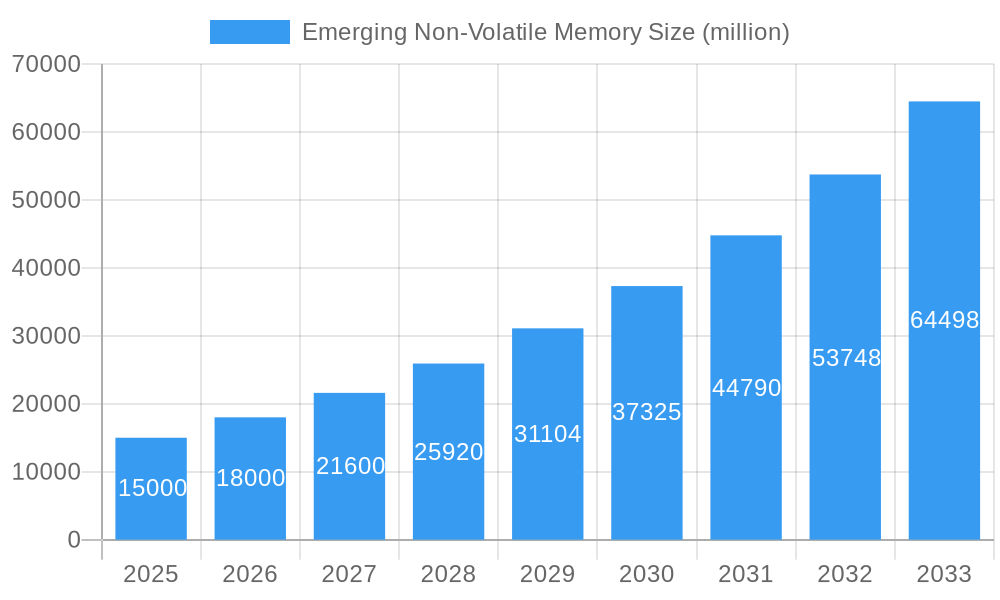
Emerging Non-Volatile Memory Company Market Share
Emerging Non-Volatile Memory Market: In-Depth Analysis and Future Outlook (2019-2033)
This comprehensive report delivers an in-depth analysis of the global emerging non-volatile memory market, a rapidly evolving sector crucial for next-generation computing, AI, IoT, and data storage. Spanning the historical period (2019–2024), base year (2025), and forecast period (2025–2033), this report provides critical insights into market dynamics, growth drivers, technological innovations, and competitive landscapes. With an estimated market size projected to reach several million by 2033, understanding the nuances of 3D NAND, MRAM, STT-RAM, FRAM, RERAM, 3D Xpoint, and Nano RAM is paramount for stakeholders. We delve into applications across Military & Aerospace, Industrial, Telecommunication, Energy & Power, Healthcare, Agricultural, and Retail sectors, highlighting key players like Samsung Electronics Co., Ltd., Toshiba Corp., Micron Technology, Inc., SK Hynix, Inc., and Western Digital Corp., among others. This report is your definitive guide to navigating the opportunities and challenges in the advanced memory technologies space.
Emerging Non-Volatile Memory Market Structure & Competitive Dynamics
The emerging non-volatile memory market is characterized by a dynamic and evolving competitive landscape, driven by significant technological advancements and increasing demand across diverse applications. Market concentration is high among a few dominant players, including Samsung Electronics Co., Ltd., Toshiba Corp., Micron Technology, Inc., and SK Hynix, Inc., which collectively hold a substantial market share, estimated to be over 70%. These giants invest heavily in research and development, fueling innovation in 3D NAND and exploring next-generation technologies like MRAM and 3D Xpoint.
The innovation ecosystem is robust, with a continuous flow of new product introductions and process refinements aimed at improving performance, density, and power efficiency. Intel Corporation and Western Digital Corp. have also been significant contributors, particularly in technologies like 3D Xpoint. Smaller, agile companies such as Adesto Technologies Corp., Everspin Technologies, Inc., and Nantero Inc. are carving out niches, focusing on specific memory types like FRAM, MRAM, and Nano RAM, and often collaborating with larger entities or seeking strategic partnerships to scale their operations.
Regulatory frameworks, while not overly restrictive, primarily focus on data security and industry standards, indirectly influencing the adoption of more robust and secure memory solutions. Product substitutes are limited, as emerging non-volatile memory technologies offer unique advantages in speed, endurance, and power consumption that traditional memory types cannot match for high-performance applications. End-user trends are strongly leaning towards embedded systems, IoT devices, and AI accelerators, where low power consumption and high read/write speeds are critical.
Mergers and acquisitions (M&A) activities, though less frequent than in more mature markets, play a crucial role in consolidation and technology acquisition. For instance, potential acquisitions of smaller, innovative memory startups by established players are common strategies to gain access to cutting-edge intellectual property. While specific deal values vary, these strategic moves aim to bolster market share and accelerate the commercialization of promising new memory technologies. The overall market structure is a blend of intense competition among established giants and strategic collaborations and acquisitions aimed at capturing emerging opportunities.
Emerging Non-Volatile Memory Industry Trends & Insights
The emerging non-volatile memory industry is experiencing robust growth, propelled by an insatiable demand for faster, denser, and more power-efficient storage solutions across a spectrum of high-tech applications. A primary market growth driver is the exponential increase in data generation from the Internet of Things (IoT), artificial intelligence (AI), and big data analytics, which necessitate advanced memory capabilities beyond traditional DRAM and NAND flash. These burgeoning fields are creating a significant pull for MRAM, STT-RAM, FRAM, RERAM, and 3D Xpoint due to their superior performance characteristics, including higher endurance, faster read/write speeds, and lower power consumption, often achieving a CAGR of over 15% in specific segments.
Technological disruptions are occurring at an accelerated pace. The evolution of 3D NAND continues with increasing layer counts, offering higher densities at lower costs, but the market is increasingly looking towards non-volatility and speed advantages. Novel materials and fabrication techniques are being explored for technologies like Nano RAM and advanced RERAM, promising breakthroughs in performance and scalability. Consumer preferences, while not always directly dictating the adoption of these specialized memory types, indirectly influence the market by driving demand for more powerful and feature-rich electronic devices. High-end smartphones, wearable technology, and automotive electronics are increasingly incorporating these advanced memory solutions to handle complex processing tasks and data storage requirements.
Competitive dynamics are fierce, with major semiconductor manufacturers like Samsung Electronics Co., Ltd., Micron Technology, Inc., and SK Hynix, Inc. investing billions in R&D to secure leadership in next-generation memory. Companies like Intel Corporation and Western Digital Corp., with their 3D Xpoint technology, are also significant players in the high-performance storage segment. The market penetration of specific emerging non-volatile memory technologies varies; for instance, MRAM is gaining traction in embedded applications and industrial automation, while 3D Xpoint is targeting data centers and high-performance computing. The ongoing advancements in manufacturing processes and the exploration of new applications in areas like neuromorphic computing and edge AI are set to further fuel market expansion, with projections indicating a sustained upward trajectory in market size and adoption rates over the next decade. The continuous innovation in memory cell structures and materials ensures that the industry remains at the forefront of technological progress, driving the digital transformation across all sectors.
Dominant Markets & Segments in Emerging Non-Volatile Memory
The emerging non-volatile memory market exhibits significant regional and segment-specific dominance, driven by distinct technological demands and economic policies. North America, particularly the United States, is a leading region due to its robust technological innovation ecosystem, substantial investments in R&D by key players like Micron Technology, Inc. and Intel Corporation, and a strong presence of end-user industries such as Military & Aerospace and Healthcare. The U.S. government's focus on advanced manufacturing and defense technologies further bolsters demand for high-performance and secure memory solutions.
Within the Application segments, Industrial and Telecommunication are projected to be dominant, owing to the increasing adoption of Industry 4.0 technologies, automation, and the rollout of 5G infrastructure. These sectors require memory with high endurance, reliability, and speed for critical control systems, data processing, and communication networks. The Military & Aerospace sector also represents a significant market, driven by the demand for ruggedized, high-performance memory for defense systems, satellites, and advanced avionics, where data integrity and operational continuity are paramount.
In terms of Types, 3D NAND continues to hold a dominant position due to its established manufacturing infrastructure and cost-effectiveness for high-density storage. However, the growth potential for emerging non-volatile memory types is substantial. Magnetoresistive Random Access Memory (MRAM) and Spin-Transfer Torque Random Access Memory (STT-RAM) are gaining considerable traction, particularly for embedded applications, microcontrollers, and high-speed data caching, due to their non-volatility, speed, and endurance advantages. Resistive Random Access Memory (RERAM) and Ferroelectric RAM (FRAM) are also showing promising growth, finding applications in areas requiring low power consumption and high reliability. 3D Xpoint has carved out a significant niche in the high-performance computing and data center markets, offering a new tier of memory between DRAM and traditional storage.
The dominance of these segments is supported by key drivers such as increasing demand for edge computing, the proliferation of AI and machine learning workloads, and the need for greater data processing efficiency. Economic policies promoting technological advancement and infrastructure development in areas like telecommunications and smart manufacturing further fuel this dominance.
Emerging Non-Volatile Memory Product Innovations
Emerging non-volatile memory technologies are at the forefront of innovation, with continuous product developments enhancing performance, power efficiency, and density. Companies are actively developing advanced MRAM and STT-RAM variants for applications requiring faster data access and higher endurance than traditional NOR flash, making them ideal for embedded systems and IoT devices. Innovations in 3D NAND continue to push layer counts higher, improving storage density for consumer electronics and data centers. Furthermore, research into new materials and architectures for RERAM, FRAM, and Nano RAM promises breakthroughs in byte-addressable non-volatile storage, potentially enabling entirely new computing paradigms. 3D Xpoint continues to evolve, aiming to offer even faster data transfer rates and lower latency for high-performance computing and AI workloads. These product innovations are driven by the need for memory solutions that can keep pace with the demands of increasingly complex digital applications, providing competitive advantages through improved speed, reliability, and energy efficiency.
Report Segmentation & Scope
This report meticulously segments the emerging non-volatile memory market across key categories to provide a granular understanding of market dynamics.
- Application Segmentation: The market is analyzed across Military & Aerospace, Industrial, Telecommunication, Energy & Power, Healthcare, Agricultural, and Retail sectors. Each segment's unique demands for memory characteristics like endurance, speed, and power consumption are detailed, with growth projections and market sizes estimated based on adoption rates and end-user industry trends.
- Type Segmentation: We extensively cover the following memory types: 3D NAND, Magnetoresistive Random Access Memory (MRAM), Spin-Transfer Torque Random Access Memory (STT-RAM), Ferroelectric RAM (FRAM), Resistive Random Access Memory (RERAM), 3D Xpoint, and Nano RAM, along with a segment for 'Others'. For each type, we provide insights into their technological advantages, market penetration, competitive landscape, and future growth potential.
The scope of this report encompasses a comprehensive analysis from 2019 to 2033, with a detailed examination of the base year (2025) and a robust forecast period (2025–2033).
Key Drivers of Emerging Non-Volatile Memory Growth
The growth of the emerging non-volatile memory market is propelled by several interconnected factors.
- Explosive Data Growth: The proliferation of IoT devices, AI applications, and big data analytics is generating unprecedented volumes of data, demanding faster, more efficient, and non-volatile storage solutions.
- Advancements in AI and Machine Learning: These fields require memory technologies that can handle rapid data processing, high endurance for constant read/write cycles, and low latency, making emerging NVMs crucial.
- Edge Computing Expansion: The need for localized data processing and decision-making in edge devices necessitates embedded non-volatile memory with low power consumption and high performance.
- Technological Superiority: Emerging NVMs offer significant advantages over traditional memory, including faster speeds, higher endurance, lower power consumption, and byte-addressability, opening new application possibilities.
- Industry 4.0 and Smart Manufacturing: The increasing automation and connectivity in industrial settings require highly reliable and fast memory for control systems and data logging.
Challenges in the Emerging Non-Volatile Memory Sector
Despite significant growth potential, the emerging non-volatile memory sector faces several challenges.
- High Development and Manufacturing Costs: Advanced memory technologies often involve complex fabrication processes, leading to high initial investment and production costs, which can impact market adoption.
- Scalability Hurdles: Achieving high densities and mass production for some emerging technologies, like Nano RAM or advanced RERAM, can present manufacturing and scaling challenges.
- Competition from Mature Technologies: While offering superior performance, emerging NVMs must compete with established and cost-effective technologies like DRAM and NAND flash in certain applications.
- Interoperability and Standardization: Ensuring seamless integration and compatibility across different systems and platforms can be a complex undertaking for novel memory technologies.
- Supply Chain Volatility: Geopolitical factors and the specialized nature of raw materials and manufacturing equipment can lead to supply chain disruptions.
Leading Players in the Emerging Non-Volatile Memory Market
- Samsung Electronics Co.,Ltd.
- Toshiba Corp.
- Micron Technology, Inc.
- SK Hynix, Inc.
- Western Digital Corp.
- Adesto Technologies Corp.
- Intel Corporation.
- Microchip Technology, Inc.
- Fujitsu Ltd.
- Everspin Technologies, Inc.
- Viking Technologes Ltd.
- Crossbar Inc.
- Nantero Inc.
- Kilopass Technology Inc.
Key Developments in Emerging Non-Volatile Memory Sector
- 2023/2024: Continued advancements in MRAM technology, with increased density and improved write speeds for embedded applications in IoT and automotive sectors.
- 2023: Further refinement of 3D Xpoint technology, focusing on cost reduction and broader adoption in enterprise storage solutions.
- 2022: Significant progress in Nano RAM research, demonstrating potential for ultra-high density and low-power storage solutions.
- 2021: Increased focus on RERAM and FRAM for specialized applications in industrial automation and medical devices requiring high reliability and low power.
- 2020: Expansion of 3D NAND layer counts, driving higher capacities and lower costs for consumer electronics and data centers.
- 2019: Growing industry interest and investment in emerging non-volatile memory technologies for AI accelerators and neuromorphic computing.
Strategic Emerging Non-Volatile Memory Market Outlook
The strategic outlook for the emerging non-volatile memory market is exceptionally bright, driven by the relentless pursuit of higher performance, greater efficiency, and novel functionalities in electronic systems. The ongoing integration of AI, edge computing, and IoT across all industries will continue to be a primary growth accelerator, creating sustained demand for advanced memory solutions. Strategic opportunities lie in the development of memory-centric computing architectures, where memory is not just a passive storage component but an active participant in computation. Furthermore, the increasing need for secure and tamper-proof data storage in sensitive applications like defense and healthcare will favor emerging non-volatile memories with enhanced security features. Collaborations between semiconductor manufacturers, device creators, and software developers will be critical in unlocking the full potential of these technologies and driving their widespread adoption, leading to a transformative impact on the future of computing and data management.
Emerging Non-Volatile Memory Segmentation
-
1. Application
- 1.1. Military & Aerospace
- 1.2. Industrial
- 1.3. Telecommunication
- 1.4. Energy & Power
- 1.5. Healthcare
- 1.6. Agricultural
- 1.7. Retail
-
2. Types
- 2.1. 3D NAND
- 2.2. Magnetoresistive Random Access Memory (MRAM)
- 2.3. Spin-Transfer Torque Random Access Memory (STT-RAM)
- 2.4. Ferroelectric RAM (FRAM)
- 2.5. Resistive Random Access Memory (RERAM)
- 2.6. 3D Xpoint
- 2.7. Nano RAM
- 2.8. Others
Emerging Non-Volatile Memory Segmentation By Geography
-
1. North America
- 1.1. United States
- 1.2. Canada
- 1.3. Mexico
-
2. South America
- 2.1. Brazil
- 2.2. Argentina
- 2.3. Rest of South America
-
3. Europe
- 3.1. United Kingdom
- 3.2. Germany
- 3.3. France
- 3.4. Italy
- 3.5. Spain
- 3.6. Russia
- 3.7. Benelux
- 3.8. Nordics
- 3.9. Rest of Europe
-
4. Middle East & Africa
- 4.1. Turkey
- 4.2. Israel
- 4.3. GCC
- 4.4. North Africa
- 4.5. South Africa
- 4.6. Rest of Middle East & Africa
-
5. Asia Pacific
- 5.1. China
- 5.2. India
- 5.3. Japan
- 5.4. South Korea
- 5.5. ASEAN
- 5.6. Oceania
- 5.7. Rest of Asia Pacific
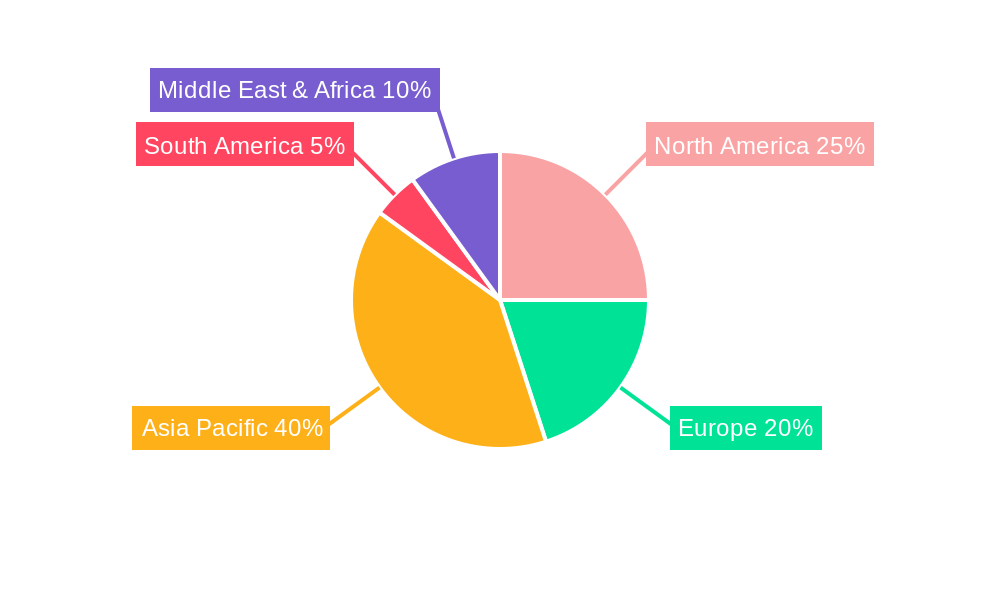
Emerging Non-Volatile Memory Regional Market Share
Geographic Coverage of Emerging Non-Volatile Memory
Emerging Non-Volatile Memory REPORT HIGHLIGHTS
| Aspects | Details |
|---|---|
| Study Period | 2020-2034 |
| Base Year | 2025 |
| Estimated Year | 2026 |
| Forecast Period | 2026-2034 |
| Historical Period | 2020-2025 |
| Growth Rate | CAGR of 11.1% from 2020-2034 |
| Segmentation |
|
Table of Contents
- 1. Introduction
- 1.1. Research Scope
- 1.2. Market Segmentation
- 1.3. Research Methodology
- 1.4. Definitions and Assumptions
- 2. Executive Summary
- 2.1. Introduction
- 3. Market Dynamics
- 3.1. Introduction
- 3.2. Market Drivers
- 3.3. Market Restrains
- 3.4. Market Trends
- 4. Market Factor Analysis
- 4.1. Porters Five Forces
- 4.2. Supply/Value Chain
- 4.3. PESTEL analysis
- 4.4. Market Entropy
- 4.5. Patent/Trademark Analysis
- 5. Global Emerging Non-Volatile Memory Analysis, Insights and Forecast, 2020-2032
- 5.1. Market Analysis, Insights and Forecast - by Application
- 5.1.1. Military & Aerospace
- 5.1.2. Industrial
- 5.1.3. Telecommunication
- 5.1.4. Energy & Power
- 5.1.5. Healthcare
- 5.1.6. Agricultural
- 5.1.7. Retail
- 5.2. Market Analysis, Insights and Forecast - by Types
- 5.2.1. 3D NAND
- 5.2.2. Magnetoresistive Random Access Memory (MRAM)
- 5.2.3. Spin-Transfer Torque Random Access Memory (STT-RAM)
- 5.2.4. Ferroelectric RAM (FRAM)
- 5.2.5. Resistive Random Access Memory (RERAM)
- 5.2.6. 3D Xpoint
- 5.2.7. Nano RAM
- 5.2.8. Others
- 5.3. Market Analysis, Insights and Forecast - by Region
- 5.3.1. North America
- 5.3.2. South America
- 5.3.3. Europe
- 5.3.4. Middle East & Africa
- 5.3.5. Asia Pacific
- 5.1. Market Analysis, Insights and Forecast - by Application
- 6. North America Emerging Non-Volatile Memory Analysis, Insights and Forecast, 2020-2032
- 6.1. Market Analysis, Insights and Forecast - by Application
- 6.1.1. Military & Aerospace
- 6.1.2. Industrial
- 6.1.3. Telecommunication
- 6.1.4. Energy & Power
- 6.1.5. Healthcare
- 6.1.6. Agricultural
- 6.1.7. Retail
- 6.2. Market Analysis, Insights and Forecast - by Types
- 6.2.1. 3D NAND
- 6.2.2. Magnetoresistive Random Access Memory (MRAM)
- 6.2.3. Spin-Transfer Torque Random Access Memory (STT-RAM)
- 6.2.4. Ferroelectric RAM (FRAM)
- 6.2.5. Resistive Random Access Memory (RERAM)
- 6.2.6. 3D Xpoint
- 6.2.7. Nano RAM
- 6.2.8. Others
- 6.1. Market Analysis, Insights and Forecast - by Application
- 7. South America Emerging Non-Volatile Memory Analysis, Insights and Forecast, 2020-2032
- 7.1. Market Analysis, Insights and Forecast - by Application
- 7.1.1. Military & Aerospace
- 7.1.2. Industrial
- 7.1.3. Telecommunication
- 7.1.4. Energy & Power
- 7.1.5. Healthcare
- 7.1.6. Agricultural
- 7.1.7. Retail
- 7.2. Market Analysis, Insights and Forecast - by Types
- 7.2.1. 3D NAND
- 7.2.2. Magnetoresistive Random Access Memory (MRAM)
- 7.2.3. Spin-Transfer Torque Random Access Memory (STT-RAM)
- 7.2.4. Ferroelectric RAM (FRAM)
- 7.2.5. Resistive Random Access Memory (RERAM)
- 7.2.6. 3D Xpoint
- 7.2.7. Nano RAM
- 7.2.8. Others
- 7.1. Market Analysis, Insights and Forecast - by Application
- 8. Europe Emerging Non-Volatile Memory Analysis, Insights and Forecast, 2020-2032
- 8.1. Market Analysis, Insights and Forecast - by Application
- 8.1.1. Military & Aerospace
- 8.1.2. Industrial
- 8.1.3. Telecommunication
- 8.1.4. Energy & Power
- 8.1.5. Healthcare
- 8.1.6. Agricultural
- 8.1.7. Retail
- 8.2. Market Analysis, Insights and Forecast - by Types
- 8.2.1. 3D NAND
- 8.2.2. Magnetoresistive Random Access Memory (MRAM)
- 8.2.3. Spin-Transfer Torque Random Access Memory (STT-RAM)
- 8.2.4. Ferroelectric RAM (FRAM)
- 8.2.5. Resistive Random Access Memory (RERAM)
- 8.2.6. 3D Xpoint
- 8.2.7. Nano RAM
- 8.2.8. Others
- 8.1. Market Analysis, Insights and Forecast - by Application
- 9. Middle East & Africa Emerging Non-Volatile Memory Analysis, Insights and Forecast, 2020-2032
- 9.1. Market Analysis, Insights and Forecast - by Application
- 9.1.1. Military & Aerospace
- 9.1.2. Industrial
- 9.1.3. Telecommunication
- 9.1.4. Energy & Power
- 9.1.5. Healthcare
- 9.1.6. Agricultural
- 9.1.7. Retail
- 9.2. Market Analysis, Insights and Forecast - by Types
- 9.2.1. 3D NAND
- 9.2.2. Magnetoresistive Random Access Memory (MRAM)
- 9.2.3. Spin-Transfer Torque Random Access Memory (STT-RAM)
- 9.2.4. Ferroelectric RAM (FRAM)
- 9.2.5. Resistive Random Access Memory (RERAM)
- 9.2.6. 3D Xpoint
- 9.2.7. Nano RAM
- 9.2.8. Others
- 9.1. Market Analysis, Insights and Forecast - by Application
- 10. Asia Pacific Emerging Non-Volatile Memory Analysis, Insights and Forecast, 2020-2032
- 10.1. Market Analysis, Insights and Forecast - by Application
- 10.1.1. Military & Aerospace
- 10.1.2. Industrial
- 10.1.3. Telecommunication
- 10.1.4. Energy & Power
- 10.1.5. Healthcare
- 10.1.6. Agricultural
- 10.1.7. Retail
- 10.2. Market Analysis, Insights and Forecast - by Types
- 10.2.1. 3D NAND
- 10.2.2. Magnetoresistive Random Access Memory (MRAM)
- 10.2.3. Spin-Transfer Torque Random Access Memory (STT-RAM)
- 10.2.4. Ferroelectric RAM (FRAM)
- 10.2.5. Resistive Random Access Memory (RERAM)
- 10.2.6. 3D Xpoint
- 10.2.7. Nano RAM
- 10.2.8. Others
- 10.1. Market Analysis, Insights and Forecast - by Application
- 11. Competitive Analysis
- 11.1. Global Market Share Analysis 2025
- 11.2. Company Profiles
- 11.2.1 Samsung Electronics Co.
- 11.2.1.1. Overview
- 11.2.1.2. Products
- 11.2.1.3. SWOT Analysis
- 11.2.1.4. Recent Developments
- 11.2.1.5. Financials (Based on Availability)
- 11.2.2 Ltd. (South Korea)
- 11.2.2.1. Overview
- 11.2.2.2. Products
- 11.2.2.3. SWOT Analysis
- 11.2.2.4. Recent Developments
- 11.2.2.5. Financials (Based on Availability)
- 11.2.3 Toshiba Corp. (Japan)
- 11.2.3.1. Overview
- 11.2.3.2. Products
- 11.2.3.3. SWOT Analysis
- 11.2.3.4. Recent Developments
- 11.2.3.5. Financials (Based on Availability)
- 11.2.4 Micron Technology
- 11.2.4.1. Overview
- 11.2.4.2. Products
- 11.2.4.3. SWOT Analysis
- 11.2.4.4. Recent Developments
- 11.2.4.5. Financials (Based on Availability)
- 11.2.5 Inc. (U.S.)
- 11.2.5.1. Overview
- 11.2.5.2. Products
- 11.2.5.3. SWOT Analysis
- 11.2.5.4. Recent Developments
- 11.2.5.5. Financials (Based on Availability)
- 11.2.6 SK Hynix
- 11.2.6.1. Overview
- 11.2.6.2. Products
- 11.2.6.3. SWOT Analysis
- 11.2.6.4. Recent Developments
- 11.2.6.5. Financials (Based on Availability)
- 11.2.7 Inc. (South Korea)
- 11.2.7.1. Overview
- 11.2.7.2. Products
- 11.2.7.3. SWOT Analysis
- 11.2.7.4. Recent Developments
- 11.2.7.5. Financials (Based on Availability)
- 11.2.8 Western Digital Corp. (U.S.)
- 11.2.8.1. Overview
- 11.2.8.2. Products
- 11.2.8.3. SWOT Analysis
- 11.2.8.4. Recent Developments
- 11.2.8.5. Financials (Based on Availability)
- 11.2.9 Adesto Technologies Corp. (U.S.)
- 11.2.9.1. Overview
- 11.2.9.2. Products
- 11.2.9.3. SWOT Analysis
- 11.2.9.4. Recent Developments
- 11.2.9.5. Financials (Based on Availability)
- 11.2.10 Intel Corporation. (U.S.)
- 11.2.10.1. Overview
- 11.2.10.2. Products
- 11.2.10.3. SWOT Analysis
- 11.2.10.4. Recent Developments
- 11.2.10.5. Financials (Based on Availability)
- 11.2.11 Microchip Technology
- 11.2.11.1. Overview
- 11.2.11.2. Products
- 11.2.11.3. SWOT Analysis
- 11.2.11.4. Recent Developments
- 11.2.11.5. Financials (Based on Availability)
- 11.2.12 Inc. (U.S.)
- 11.2.12.1. Overview
- 11.2.12.2. Products
- 11.2.12.3. SWOT Analysis
- 11.2.12.4. Recent Developments
- 11.2.12.5. Financials (Based on Availability)
- 11.2.13 Fujitsu Ltd. (Japan)
- 11.2.13.1. Overview
- 11.2.13.2. Products
- 11.2.13.3. SWOT Analysis
- 11.2.13.4. Recent Developments
- 11.2.13.5. Financials (Based on Availability)
- 11.2.14 Everspin Technologies
- 11.2.14.1. Overview
- 11.2.14.2. Products
- 11.2.14.3. SWOT Analysis
- 11.2.14.4. Recent Developments
- 11.2.14.5. Financials (Based on Availability)
- 11.2.15 Inc. (U.S.)
- 11.2.15.1. Overview
- 11.2.15.2. Products
- 11.2.15.3. SWOT Analysis
- 11.2.15.4. Recent Developments
- 11.2.15.5. Financials (Based on Availability)
- 11.2.16 Viking Technologes Ltd. (U.S.)
- 11.2.16.1. Overview
- 11.2.16.2. Products
- 11.2.16.3. SWOT Analysis
- 11.2.16.4. Recent Developments
- 11.2.16.5. Financials (Based on Availability)
- 11.2.17 Crossbar Inc. (U.S.)
- 11.2.17.1. Overview
- 11.2.17.2. Products
- 11.2.17.3. SWOT Analysis
- 11.2.17.4. Recent Developments
- 11.2.17.5. Financials (Based on Availability)
- 11.2.18 Nantero Inc. (U.S.)
- 11.2.18.1. Overview
- 11.2.18.2. Products
- 11.2.18.3. SWOT Analysis
- 11.2.18.4. Recent Developments
- 11.2.18.5. Financials (Based on Availability)
- 11.2.19 Kilopass Technology Inc. (U.S.)
- 11.2.19.1. Overview
- 11.2.19.2. Products
- 11.2.19.3. SWOT Analysis
- 11.2.19.4. Recent Developments
- 11.2.19.5. Financials (Based on Availability)
- 11.2.1 Samsung Electronics Co.
List of Figures
- Figure 1: Global Emerging Non-Volatile Memory Revenue Breakdown (undefined, %) by Region 2025 & 2033
- Figure 2: North America Emerging Non-Volatile Memory Revenue (undefined), by Application 2025 & 2033
- Figure 3: North America Emerging Non-Volatile Memory Revenue Share (%), by Application 2025 & 2033
- Figure 4: North America Emerging Non-Volatile Memory Revenue (undefined), by Types 2025 & 2033
- Figure 5: North America Emerging Non-Volatile Memory Revenue Share (%), by Types 2025 & 2033
- Figure 6: North America Emerging Non-Volatile Memory Revenue (undefined), by Country 2025 & 2033
- Figure 7: North America Emerging Non-Volatile Memory Revenue Share (%), by Country 2025 & 2033
- Figure 8: South America Emerging Non-Volatile Memory Revenue (undefined), by Application 2025 & 2033
- Figure 9: South America Emerging Non-Volatile Memory Revenue Share (%), by Application 2025 & 2033
- Figure 10: South America Emerging Non-Volatile Memory Revenue (undefined), by Types 2025 & 2033
- Figure 11: South America Emerging Non-Volatile Memory Revenue Share (%), by Types 2025 & 2033
- Figure 12: South America Emerging Non-Volatile Memory Revenue (undefined), by Country 2025 & 2033
- Figure 13: South America Emerging Non-Volatile Memory Revenue Share (%), by Country 2025 & 2033
- Figure 14: Europe Emerging Non-Volatile Memory Revenue (undefined), by Application 2025 & 2033
- Figure 15: Europe Emerging Non-Volatile Memory Revenue Share (%), by Application 2025 & 2033
- Figure 16: Europe Emerging Non-Volatile Memory Revenue (undefined), by Types 2025 & 2033
- Figure 17: Europe Emerging Non-Volatile Memory Revenue Share (%), by Types 2025 & 2033
- Figure 18: Europe Emerging Non-Volatile Memory Revenue (undefined), by Country 2025 & 2033
- Figure 19: Europe Emerging Non-Volatile Memory Revenue Share (%), by Country 2025 & 2033
- Figure 20: Middle East & Africa Emerging Non-Volatile Memory Revenue (undefined), by Application 2025 & 2033
- Figure 21: Middle East & Africa Emerging Non-Volatile Memory Revenue Share (%), by Application 2025 & 2033
- Figure 22: Middle East & Africa Emerging Non-Volatile Memory Revenue (undefined), by Types 2025 & 2033
- Figure 23: Middle East & Africa Emerging Non-Volatile Memory Revenue Share (%), by Types 2025 & 2033
- Figure 24: Middle East & Africa Emerging Non-Volatile Memory Revenue (undefined), by Country 2025 & 2033
- Figure 25: Middle East & Africa Emerging Non-Volatile Memory Revenue Share (%), by Country 2025 & 2033
- Figure 26: Asia Pacific Emerging Non-Volatile Memory Revenue (undefined), by Application 2025 & 2033
- Figure 27: Asia Pacific Emerging Non-Volatile Memory Revenue Share (%), by Application 2025 & 2033
- Figure 28: Asia Pacific Emerging Non-Volatile Memory Revenue (undefined), by Types 2025 & 2033
- Figure 29: Asia Pacific Emerging Non-Volatile Memory Revenue Share (%), by Types 2025 & 2033
- Figure 30: Asia Pacific Emerging Non-Volatile Memory Revenue (undefined), by Country 2025 & 2033
- Figure 31: Asia Pacific Emerging Non-Volatile Memory Revenue Share (%), by Country 2025 & 2033
List of Tables
- Table 1: Global Emerging Non-Volatile Memory Revenue undefined Forecast, by Application 2020 & 2033
- Table 2: Global Emerging Non-Volatile Memory Revenue undefined Forecast, by Types 2020 & 2033
- Table 3: Global Emerging Non-Volatile Memory Revenue undefined Forecast, by Region 2020 & 2033
- Table 4: Global Emerging Non-Volatile Memory Revenue undefined Forecast, by Application 2020 & 2033
- Table 5: Global Emerging Non-Volatile Memory Revenue undefined Forecast, by Types 2020 & 2033
- Table 6: Global Emerging Non-Volatile Memory Revenue undefined Forecast, by Country 2020 & 2033
- Table 7: United States Emerging Non-Volatile Memory Revenue (undefined) Forecast, by Application 2020 & 2033
- Table 8: Canada Emerging Non-Volatile Memory Revenue (undefined) Forecast, by Application 2020 & 2033
- Table 9: Mexico Emerging Non-Volatile Memory Revenue (undefined) Forecast, by Application 2020 & 2033
- Table 10: Global Emerging Non-Volatile Memory Revenue undefined Forecast, by Application 2020 & 2033
- Table 11: Global Emerging Non-Volatile Memory Revenue undefined Forecast, by Types 2020 & 2033
- Table 12: Global Emerging Non-Volatile Memory Revenue undefined Forecast, by Country 2020 & 2033
- Table 13: Brazil Emerging Non-Volatile Memory Revenue (undefined) Forecast, by Application 2020 & 2033
- Table 14: Argentina Emerging Non-Volatile Memory Revenue (undefined) Forecast, by Application 2020 & 2033
- Table 15: Rest of South America Emerging Non-Volatile Memory Revenue (undefined) Forecast, by Application 2020 & 2033
- Table 16: Global Emerging Non-Volatile Memory Revenue undefined Forecast, by Application 2020 & 2033
- Table 17: Global Emerging Non-Volatile Memory Revenue undefined Forecast, by Types 2020 & 2033
- Table 18: Global Emerging Non-Volatile Memory Revenue undefined Forecast, by Country 2020 & 2033
- Table 19: United Kingdom Emerging Non-Volatile Memory Revenue (undefined) Forecast, by Application 2020 & 2033
- Table 20: Germany Emerging Non-Volatile Memory Revenue (undefined) Forecast, by Application 2020 & 2033
- Table 21: France Emerging Non-Volatile Memory Revenue (undefined) Forecast, by Application 2020 & 2033
- Table 22: Italy Emerging Non-Volatile Memory Revenue (undefined) Forecast, by Application 2020 & 2033
- Table 23: Spain Emerging Non-Volatile Memory Revenue (undefined) Forecast, by Application 2020 & 2033
- Table 24: Russia Emerging Non-Volatile Memory Revenue (undefined) Forecast, by Application 2020 & 2033
- Table 25: Benelux Emerging Non-Volatile Memory Revenue (undefined) Forecast, by Application 2020 & 2033
- Table 26: Nordics Emerging Non-Volatile Memory Revenue (undefined) Forecast, by Application 2020 & 2033
- Table 27: Rest of Europe Emerging Non-Volatile Memory Revenue (undefined) Forecast, by Application 2020 & 2033
- Table 28: Global Emerging Non-Volatile Memory Revenue undefined Forecast, by Application 2020 & 2033
- Table 29: Global Emerging Non-Volatile Memory Revenue undefined Forecast, by Types 2020 & 2033
- Table 30: Global Emerging Non-Volatile Memory Revenue undefined Forecast, by Country 2020 & 2033
- Table 31: Turkey Emerging Non-Volatile Memory Revenue (undefined) Forecast, by Application 2020 & 2033
- Table 32: Israel Emerging Non-Volatile Memory Revenue (undefined) Forecast, by Application 2020 & 2033
- Table 33: GCC Emerging Non-Volatile Memory Revenue (undefined) Forecast, by Application 2020 & 2033
- Table 34: North Africa Emerging Non-Volatile Memory Revenue (undefined) Forecast, by Application 2020 & 2033
- Table 35: South Africa Emerging Non-Volatile Memory Revenue (undefined) Forecast, by Application 2020 & 2033
- Table 36: Rest of Middle East & Africa Emerging Non-Volatile Memory Revenue (undefined) Forecast, by Application 2020 & 2033
- Table 37: Global Emerging Non-Volatile Memory Revenue undefined Forecast, by Application 2020 & 2033
- Table 38: Global Emerging Non-Volatile Memory Revenue undefined Forecast, by Types 2020 & 2033
- Table 39: Global Emerging Non-Volatile Memory Revenue undefined Forecast, by Country 2020 & 2033
- Table 40: China Emerging Non-Volatile Memory Revenue (undefined) Forecast, by Application 2020 & 2033
- Table 41: India Emerging Non-Volatile Memory Revenue (undefined) Forecast, by Application 2020 & 2033
- Table 42: Japan Emerging Non-Volatile Memory Revenue (undefined) Forecast, by Application 2020 & 2033
- Table 43: South Korea Emerging Non-Volatile Memory Revenue (undefined) Forecast, by Application 2020 & 2033
- Table 44: ASEAN Emerging Non-Volatile Memory Revenue (undefined) Forecast, by Application 2020 & 2033
- Table 45: Oceania Emerging Non-Volatile Memory Revenue (undefined) Forecast, by Application 2020 & 2033
- Table 46: Rest of Asia Pacific Emerging Non-Volatile Memory Revenue (undefined) Forecast, by Application 2020 & 2033
Frequently Asked Questions
1. What is the projected Compound Annual Growth Rate (CAGR) of the Emerging Non-Volatile Memory?
The projected CAGR is approximately 11.1%.
2. Which companies are prominent players in the Emerging Non-Volatile Memory?
Key companies in the market include Samsung Electronics Co., Ltd. (South Korea), Toshiba Corp. (Japan), Micron Technology, Inc. (U.S.), SK Hynix, Inc. (South Korea), Western Digital Corp. (U.S.), Adesto Technologies Corp. (U.S.), Intel Corporation. (U.S.), Microchip Technology, Inc. (U.S.), Fujitsu Ltd. (Japan), Everspin Technologies, Inc. (U.S.), Viking Technologes Ltd. (U.S.), Crossbar Inc. (U.S.), Nantero Inc. (U.S.), Kilopass Technology Inc. (U.S.).
3. What are the main segments of the Emerging Non-Volatile Memory?
The market segments include Application, Types.
4. Can you provide details about the market size?
The market size is estimated to be USD XXX N/A as of 2022.
5. What are some drivers contributing to market growth?
N/A
6. What are the notable trends driving market growth?
N/A
7. Are there any restraints impacting market growth?
N/A
8. Can you provide examples of recent developments in the market?
N/A
9. What pricing options are available for accessing the report?
Pricing options include single-user, multi-user, and enterprise licenses priced at USD 2900.00, USD 4350.00, and USD 5800.00 respectively.
10. Is the market size provided in terms of value or volume?
The market size is provided in terms of value, measured in N/A.
11. Are there any specific market keywords associated with the report?
Yes, the market keyword associated with the report is "Emerging Non-Volatile Memory," which aids in identifying and referencing the specific market segment covered.
12. How do I determine which pricing option suits my needs best?
The pricing options vary based on user requirements and access needs. Individual users may opt for single-user licenses, while businesses requiring broader access may choose multi-user or enterprise licenses for cost-effective access to the report.
13. Are there any additional resources or data provided in the Emerging Non-Volatile Memory report?
While the report offers comprehensive insights, it's advisable to review the specific contents or supplementary materials provided to ascertain if additional resources or data are available.
14. How can I stay updated on further developments or reports in the Emerging Non-Volatile Memory?
To stay informed about further developments, trends, and reports in the Emerging Non-Volatile Memory, consider subscribing to industry newsletters, following relevant companies and organizations, or regularly checking reputable industry news sources and publications.
Methodology
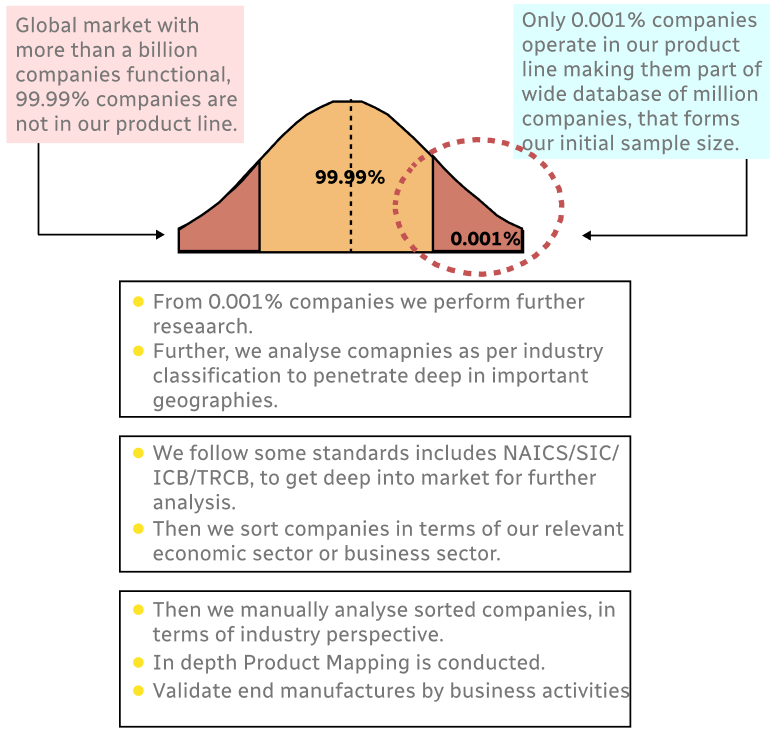
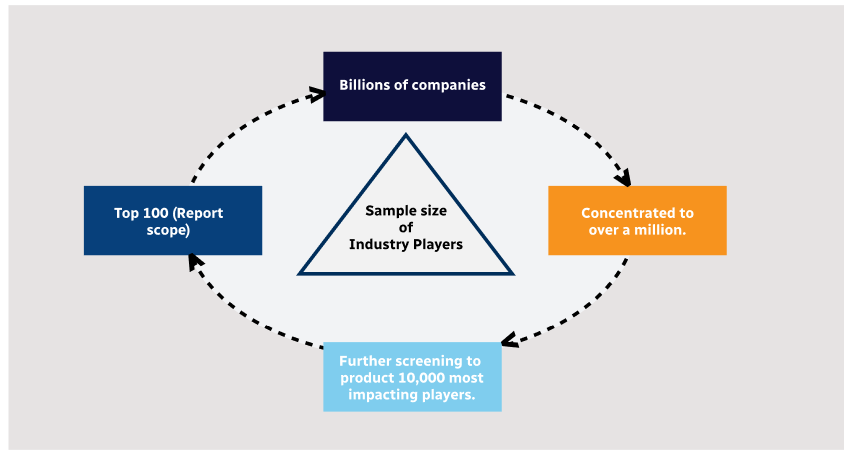
Step 1 - Identification of Relevant Samples Size from Population Database
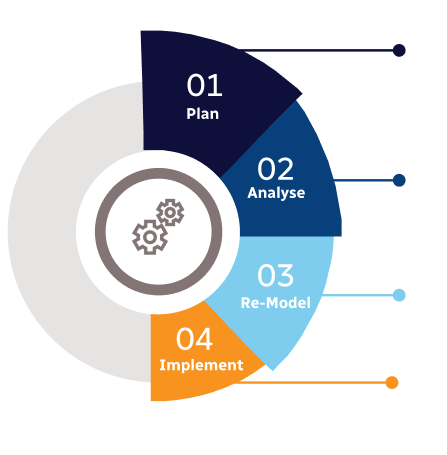
Step 2 - Approaches for Defining Global Market Size (Value, Volume* & Price*)
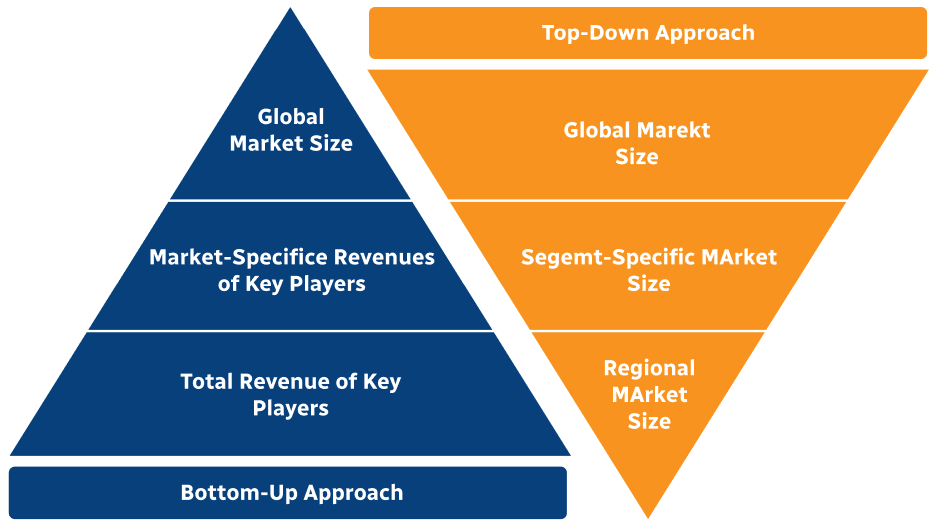
Note*: In applicable scenarios
Step 3 - Data Sources
Primary Research
- Web Analytics
- Survey Reports
- Research Institute
- Latest Research Reports
- Opinion Leaders
Secondary Research
- Annual Reports
- White Paper
- Latest Press Release
- Industry Association
- Paid Database
- Investor Presentations
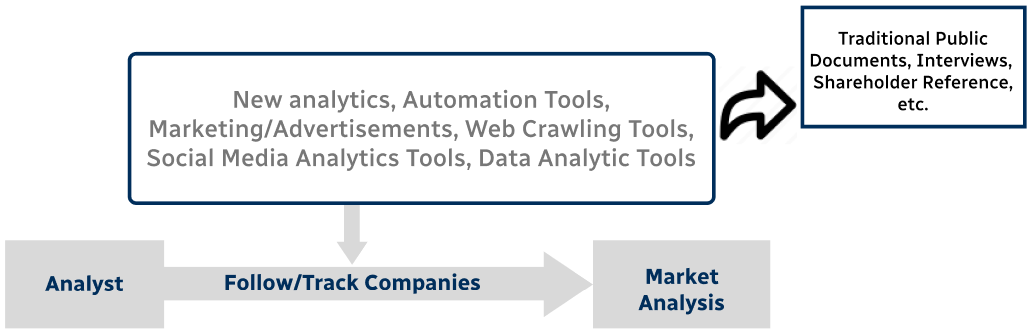
Step 4 - Data Triangulation
Involves using different sources of information in order to increase the validity of a study
These sources are likely to be stakeholders in a program - participants, other researchers, program staff, other community members, and so on.
Then we put all data in single framework & apply various statistical tools to find out the dynamic on the market.
During the analysis stage, feedback from the stakeholder groups would be compared to determine areas of agreement as well as areas of divergence