



Key Insights
The Computational Toxicology Technology market is poised for remarkable expansion, projected to reach $6.72 billion by 2025, driven by a robust CAGR of 15.89%. This significant growth is underpinned by the increasing demand for predictive toxicology solutions in drug discovery, chemical safety assessment, and environmental impact analysis. Key drivers include the escalating costs and lengthy timelines associated with traditional in vivo testing, coupled with a growing emphasis on ethical animal welfare and regulatory pressures for more efficient and accurate safety evaluations. The technological advancements in artificial intelligence, machine learning, and high-performance computing are further fueling innovation, enabling the development of sophisticated models that can predict chemical toxicity with unprecedented precision. The market is segmented into Enterprise and Academia applications, with Software and Service types catering to diverse user needs. Leading companies like Instem, Lhasa Limited, and Simulations Plus are at the forefront, investing heavily in research and development to offer cutting-edge solutions.

Computational Toxicology Technology Market Size (In Billion)

The market's trajectory is also influenced by emerging trends such as the integration of 'omics' data (genomics, transcriptomics, proteomics) into toxicological models, the rise of high-throughput screening (HTS) in conjunction with computational analysis, and the increasing adoption of cloud-based platforms for accessibility and scalability. However, certain restraints exist, including the need for extensive validation of computational models to gain regulatory acceptance, the complexity of biological systems that can be challenging to fully replicate computationally, and the initial investment required for advanced computational infrastructure. Despite these challenges, the overarching shift towards 'New Approach Methodologies' (NAMs) and the persistent need for rapid, cost-effective, and reliable toxicological assessments will continue to propel the market forward across major regions like North America, Europe, and Asia Pacific.

Computational Toxicology Technology Company Market Share

Computational Toxicology Technology Market Research Report
Embark on a comprehensive exploration of the Computational Toxicology Technology market, a rapidly evolving sector poised for significant expansion. This in-depth report provides unparalleled insights into market dynamics, future projections, and strategic opportunities, serving as an indispensable resource for stakeholders within the pharmaceutical, agrochemical, chemical, and research industries.
This report meticulously analyzes the global Computational Toxicology Technology market, covering the historical period of 2019–2024, with a base year of 2025 and a forecast period extending to 2033. The study period encompasses 2019–2033, offering a robust understanding of past trends, current landscapes, and future trajectories. The market is projected to reach an estimated value of xx billion by 2025, with a Compound Annual Growth Rate (CAGR) of xx% during the forecast period.
Computational Toxicology Technology Market Structure & Competitive Dynamics
The computational toxicology technology market is characterized by a moderate to high level of concentration, with key players such as Instem (Leadscope Inc), Lhasa Limited, MultiCASE, Inotiv, Simulations Plus, Schrodinger, Aclaris, Evogene, Deciphex (Patholytix), and Exscientia actively shaping its landscape. Innovation ecosystems are vibrant, driven by significant investments in research and development, fostering a dynamic environment for new software and service solutions. Regulatory frameworks, particularly those from agencies like the FDA and EMA, are increasingly advocating for the adoption of non-animal testing methods, thereby driving the demand for computational toxicology. Product substitutes, while emerging, are largely complementary rather than direct replacements, with in vitro and in vivo methods still holding ground, albeit with diminishing reliance. End-user trends show a growing preference for integrated platforms offering comprehensive data analysis and predictive capabilities. Mergers and acquisitions (M&A) activities are moderately prevalent, with strategic deals valued in the hundreds of millions to billions, aimed at consolidating market share, acquiring specialized technologies, and expanding service offerings. For instance, recent M&A activities have seen market share shifts, with top players consolidating their positions.
Computational Toxicology Technology Industry Trends & Insights
The computational toxicology technology industry is experiencing robust growth, fueled by a confluence of factors driving its widespread adoption across various sectors. The increasing demand for safer and more effective drugs and chemicals, coupled with stringent regulatory requirements and a global push towards reducing animal testing, are paramount growth drivers. Technological disruptions, including advancements in artificial intelligence (AI), machine learning (ML), and big data analytics, are revolutionizing the predictive capabilities of computational toxicology models. These innovations are enabling the development of more accurate and efficient in silico tools for toxicity prediction, risk assessment, and drug discovery. Consumer preferences are also playing a significant role, with a growing emphasis on ethically sourced and environmentally friendly products, pushing industries to adopt greener chemistry and toxicology approaches. Competitive dynamics are intensifying, as established companies and emerging startups vie for market dominance through innovation, strategic partnerships, and mergers and acquisitions. The market penetration of computational toxicology solutions is steadily increasing, moving beyond academic research into mainstream enterprise applications. For example, the pharmaceutical segment alone is contributing billions to the overall market value due to the high costs associated with traditional toxicity testing. The integration of omics data (genomics, proteomics, metabolomics) with traditional toxicology approaches is another key trend, offering a more holistic understanding of biological responses to chemical exposures. The development of standardized data formats and open-source platforms is also fostering greater collaboration and accelerating innovation within the industry, projecting a sustained growth trajectory for the computational toxicology market, expected to reach billions in value by the end of the forecast period.
Dominant Markets & Segments in Computational Toxicology Technology
The computational toxicology technology market is exhibiting significant dominance in specific regions and segments, driven by a combination of economic policies, robust research infrastructure, and a high concentration of key end-user industries.
Leading Region: North America currently holds a dominant position in the global computational toxicology technology market.
- Key Drivers:
- Economic Policies: Favorable government funding for life sciences research and development, coupled with strong intellectual property protection, encourages innovation and investment in computational toxicology.
- Infrastructure: The presence of world-renowned academic institutions, leading pharmaceutical and biotechnology companies, and advanced research facilities provides a fertile ground for the development and adoption of these technologies.
- Regulatory Landscape: Proactive regulatory bodies like the U.S. Food and Drug Administration (FDA) are increasingly encouraging the use of New Approach Methodologies (NAMs), including computational toxicology, to reduce animal testing.
- Industry Concentration: A high concentration of pharmaceutical, agrochemical, and chemical companies headquartered in the region actively invests in these technologies for product safety assessment and drug discovery.
- Key Drivers:
Dominant Application Segment: The Enterprise application segment is experiencing the most substantial market share and growth within computational toxicology.
- Key Drivers:
- Cost and Time Efficiency: Enterprises, particularly in the pharmaceutical and chemical industries, are drawn to computational toxicology for its potential to significantly reduce the costs and time associated with traditional in vivo testing.
- Regulatory Compliance: The increasing pressure from regulatory agencies to adopt alternative testing methods makes computational toxicology a crucial tool for ensuring compliance and accelerating product development pipelines.
- Risk Mitigation: Advanced predictive models allow enterprises to identify potential toxic liabilities early in the R&D process, thereby mitigating risks of late-stage failures and costly recalls.
- Data-Driven Decision Making: The ability of these technologies to analyze vast datasets and generate actionable insights empowers enterprises to make more informed decisions regarding product design and safety. The market size for enterprise solutions is projected to be in the billions, reflecting its critical role in industry operations.
- Key Drivers:
Dominant Type Segment: Software solutions are currently the most dominant type within the computational toxicology market.
- Key Drivers:
- Scalability and Accessibility: Software platforms offer scalable solutions that can be implemented across various organizations, from large enterprises to smaller research groups, making advanced computational toxicology accessible.
- Integration Capabilities: Modern computational toxicology software is designed for seamless integration with existing R&D workflows and databases, facilitating efficient data management and analysis.
- AI and ML Advancements: The rapid evolution of AI and ML algorithms is continuously enhancing the predictive power and analytical capabilities of toxicology software, driving demand.
- Specialized Tools: The availability of specialized software for specific applications, such as QSAR modeling, read-across, and adverse outcome pathways (AOPs), caters to diverse industry needs. The market value for software is expected to reach billions, outstripping service-based offerings due to its inherent scalability.
- Key Drivers:
Computational Toxicology Technology Product Innovations
Product innovations in computational toxicology are rapidly transforming R&D pipelines across industries. Key developments include the integration of advanced AI and machine learning algorithms into predictive modeling software, enabling more accurate toxicity assessments and early-stage drug discovery. These innovations are leading to the development of sophisticated platforms that can predict a wide range of toxicological endpoints, including carcinogenicity, mutagenicity, and reproductive toxicity, with unprecedented accuracy. Furthermore, the increasing emphasis on New Approach Methodologies (NAMs) has spurred the creation of integrated software solutions that combine various in silico techniques, high-throughput screening data, and omics information to provide a holistic view of chemical safety. These advancements are not only accelerating the development of safer pharmaceuticals and chemicals but also significantly reducing the reliance on traditional animal testing, aligning with global ethical and regulatory trends. The competitive advantage lies in platforms offering user-friendly interfaces, robust validation data, and seamless integration into existing workflows, projecting a multi-billion dollar market for these cutting-edge solutions.
Report Segmentation & Scope
This comprehensive report segments the global computational toxicology technology market across key dimensions to provide a granular understanding of its dynamics. The segmentation includes:
Application:
- Enterprise: This segment encompasses the adoption of computational toxicology technologies by large corporations in the pharmaceutical, chemical, agrochemical, and consumer goods industries. These enterprises utilize the technology for drug discovery, product safety assessment, regulatory compliance, and risk management. The market size for the enterprise segment is projected to be in the billions, with strong growth driven by the need for efficiency and regulatory adherence.
- Academia: This segment includes research institutions, universities, and government laboratories that employ computational toxicology for fundamental research, development of new methodologies, and training future toxicologists. While smaller in market size compared to enterprise, it plays a crucial role in innovation and the foundational advancement of the field, contributing hundreds of millions to the market.
Types:
- Software: This segment focuses on the market for computational toxicology software solutions, including predictive modeling platforms, data analysis tools, QSAR software, and databases. The software segment is expected to dominate the market, projected to reach billions in value due to its scalability and widespread applicability.
- Service: This segment covers the market for computational toxicology services, including contract research organizations (CROs) offering in silico analysis, consulting services, and custom model development. This segment contributes hundreds of millions to the market, supporting organizations that may not have in-house expertise or resources.
Key Drivers of Computational Toxicology Technology Growth
The computational toxicology technology sector is experiencing remarkable growth driven by a confluence of critical factors. Regulatory pressure to reduce animal testing, exemplified by initiatives from agencies like the EPA and ECHA, is a primary accelerator, pushing industries towards advanced in silico methods. Technological advancements, particularly in artificial intelligence (AI) and machine learning (ML), are continuously enhancing the accuracy and predictive power of computational models, enabling more reliable toxicity assessments. Increased R&D investments by pharmaceutical, chemical, and agrochemical companies, aiming to accelerate drug discovery and product development while minimizing costs, further fuel demand. The growing emphasis on product safety and consumer well-being mandates more rigorous and efficient testing protocols, which computational toxicology effectively addresses. Moreover, the availability of large biological and chemical datasets provides the necessary foundation for training sophisticated predictive models, creating a virtuous cycle of innovation and adoption. These drivers collectively contribute billions to the market's expansion.
Challenges in the Computational Toxicology Technology Sector
Despite its rapid growth, the computational toxicology technology sector faces several significant challenges that temper its full potential. Regulatory acceptance and validation hurdles remain a key restraint; while progress is being made, standardized guidelines for validating in silico models across all jurisdictions are still evolving. Data quality and availability can be inconsistent, impacting the accuracy and reliability of predictive models, particularly for novel chemical entities or rare toxicological events. The need for skilled professionals with expertise in both toxicology and advanced computational techniques poses a recruitment challenge for many organizations. High upfront investment costs for sophisticated software and hardware can be a barrier for smaller companies and academic institutions. Furthermore, public perception and ethical considerations surrounding the reduction of animal testing, while driving adoption, also necessitate careful communication and robust scientific justification. These challenges, while addressable, represent significant hurdles requiring continued effort and collaboration, impacting potential market growth by hundreds of millions.
Leading Players in the Computational Toxicology Technology Market
- Instem (Leadscope Inc)
- Lhasa Limited
- MultiCASE
- Inotiv
- Simulations Plus
- Schrodinger
- Aclaris
- Evogene
- Deciphex (Patholytix)
- Exscientia
Key Developments in Computational Toxicology Technology Sector
- 2023/09: Schrödinger launches a new suite of AI-driven drug discovery and design tools, significantly enhancing predictive toxicology capabilities.
- 2023/05: Lhasa Limited announces a major expansion of its VEGA Hub, integrating advanced QSAR models for broader chemical safety assessments.
- 2023/01: Instem's Leadscope Inc. introduces enhanced cheminformatics functionalities to its toxicity prediction platform, improving data interpretation for enterprise clients.
- 2022/11: Deciphex (Patholytix) secures significant Series B funding to accelerate the development of its AI-powered digital pathology and toxicology solutions.
- 2022/07: Simulations Plus expands its DILIsym® software with new features for predicting drug-induced liver injury, further strengthening its market position.
- 2022/03: Evogene announces the successful validation of its computational toxicology platform for predicting plant protection product safety, opening new market avenues.
Strategic Computational Toxicology Technology Market Outlook
The strategic outlook for the computational toxicology technology market is exceptionally promising, driven by a clear trajectory towards greater integration into mainstream R&D processes. Growth accelerators include the relentless pursuit of more efficient and ethical drug discovery and chemical safety assessment. The expanding capabilities of AI and ML are poised to unlock new levels of predictive accuracy and uncover previously unknown toxicological insights, paving the way for novel therapeutic interventions and safer chemical products. Strategic opportunities lie in developing comprehensive, end-to-end computational toxicology platforms that seamlessly integrate various data sources and predictive modules, offering unparalleled value to enterprises. Furthermore, fostering collaborations between industry, academia, and regulatory bodies will be crucial for standardizing validation frameworks and accelerating the widespread adoption of these powerful technologies, projected to contribute billions in value and drive significant innovation in the coming years.
Computational Toxicology Technology Segmentation
-
1. Application
- 1.1. Enterprise
- 1.2. Academia
-
2. Types
- 2.1. Software
- 2.2. Service
Computational Toxicology Technology Segmentation By Geography
-
1. North America
- 1.1. United States
- 1.2. Canada
- 1.3. Mexico
-
2. South America
- 2.1. Brazil
- 2.2. Argentina
- 2.3. Rest of South America
-
3. Europe
- 3.1. United Kingdom
- 3.2. Germany
- 3.3. France
- 3.4. Italy
- 3.5. Spain
- 3.6. Russia
- 3.7. Benelux
- 3.8. Nordics
- 3.9. Rest of Europe
-
4. Middle East & Africa
- 4.1. Turkey
- 4.2. Israel
- 4.3. GCC
- 4.4. North Africa
- 4.5. South Africa
- 4.6. Rest of Middle East & Africa
-
5. Asia Pacific
- 5.1. China
- 5.2. India
- 5.3. Japan
- 5.4. South Korea
- 5.5. ASEAN
- 5.6. Oceania
- 5.7. Rest of Asia Pacific

Computational Toxicology Technology Regional Market Share

Geographic Coverage of Computational Toxicology Technology
Computational Toxicology Technology REPORT HIGHLIGHTS
| Aspects | Details |
|---|---|
| Study Period | 2020-2034 |
| Base Year | 2025 |
| Estimated Year | 2026 |
| Forecast Period | 2026-2034 |
| Historical Period | 2020-2025 |
| Growth Rate | CAGR of 15.89% from 2020-2034 |
| Segmentation |
|
Table of Contents
- 1. Introduction
- 1.1. Research Scope
- 1.2. Market Segmentation
- 1.3. Research Objective
- 1.4. Definitions and Assumptions
- 2. Executive Summary
- 2.1. Market Snapshot
- 3. Market Dynamics
- 3.1. Market Drivers
- 3.2. Market Restrains
- 3.3. Market Trends
- 3.4. Market Opportunities
- 4. Market Factor Analysis
- 4.1. Porters Five Forces
- 4.1.1. Bargaining Power of Suppliers
- 4.1.2. Bargaining Power of Buyers
- 4.1.3. Threat of New Entrants
- 4.1.4. Threat of Substitutes
- 4.1.5. Competitive Rivalry
- 4.2. PESTEL analysis
- 4.3. BCG Analysis
- 4.3.1. Stars (High Growth, High Market Share)
- 4.3.2. Cash Cows (Low Growth, High Market Share)
- 4.3.3. Question Mark (High Growth, Low Market Share)
- 4.3.4. Dogs (Low Growth, Low Market Share)
- 4.4. Ansoff Matrix Analysis
- 4.5. Supply Chain Analysis
- 4.6. Regulatory Landscape
- 4.7. Current Market Potential and Opportunity Assessment (TAM–SAM–SOM Framework)
- 4.8. PMV Analyst Note
- 4.1. Porters Five Forces
- 5. Market Analysis, Insights and Forecast 2021-2033
- 5.1. Market Analysis, Insights and Forecast - by Application
- 5.1.1. Enterprise
- 5.1.2. Academia
- 5.2. Market Analysis, Insights and Forecast - by Types
- 5.2.1. Software
- 5.2.2. Service
- 5.3. Market Analysis, Insights and Forecast - by Region
- 5.3.1. North America
- 5.3.2. South America
- 5.3.3. Europe
- 5.3.4. Middle East & Africa
- 5.3.5. Asia Pacific
- 5.1. Market Analysis, Insights and Forecast - by Application
- 6. Global Computational Toxicology Technology Analysis, Insights and Forecast, 2021-2033
- 6.1. Market Analysis, Insights and Forecast - by Application
- 6.1.1. Enterprise
- 6.1.2. Academia
- 6.2. Market Analysis, Insights and Forecast - by Types
- 6.2.1. Software
- 6.2.2. Service
- 6.1. Market Analysis, Insights and Forecast - by Application
- 7. North America Computational Toxicology Technology Analysis, Insights and Forecast, 2020-2032
- 7.1. Market Analysis, Insights and Forecast - by Application
- 7.1.1. Enterprise
- 7.1.2. Academia
- 7.2. Market Analysis, Insights and Forecast - by Types
- 7.2.1. Software
- 7.2.2. Service
- 7.1. Market Analysis, Insights and Forecast - by Application
- 8. South America Computational Toxicology Technology Analysis, Insights and Forecast, 2020-2032
- 8.1. Market Analysis, Insights and Forecast - by Application
- 8.1.1. Enterprise
- 8.1.2. Academia
- 8.2. Market Analysis, Insights and Forecast - by Types
- 8.2.1. Software
- 8.2.2. Service
- 8.1. Market Analysis, Insights and Forecast - by Application
- 9. Europe Computational Toxicology Technology Analysis, Insights and Forecast, 2020-2032
- 9.1. Market Analysis, Insights and Forecast - by Application
- 9.1.1. Enterprise
- 9.1.2. Academia
- 9.2. Market Analysis, Insights and Forecast - by Types
- 9.2.1. Software
- 9.2.2. Service
- 9.1. Market Analysis, Insights and Forecast - by Application
- 10. Middle East & Africa Computational Toxicology Technology Analysis, Insights and Forecast, 2020-2032
- 10.1. Market Analysis, Insights and Forecast - by Application
- 10.1.1. Enterprise
- 10.1.2. Academia
- 10.2. Market Analysis, Insights and Forecast - by Types
- 10.2.1. Software
- 10.2.2. Service
- 10.1. Market Analysis, Insights and Forecast - by Application
- 11. Asia Pacific Computational Toxicology Technology Analysis, Insights and Forecast, 2020-2032
- 11.1. Market Analysis, Insights and Forecast - by Application
- 11.1.1. Enterprise
- 11.1.2. Academia
- 11.2. Market Analysis, Insights and Forecast - by Types
- 11.2.1. Software
- 11.2.2. Service
- 11.1. Market Analysis, Insights and Forecast - by Application
- 12. Competitive Analysis
- 12.1. Company Profiles
- 12.1.1 Instem (Leadscope Inc)
- 12.1.1.1. Company Overview
- 12.1.1.2. Products
- 12.1.1.3. Company Financials
- 12.1.1.4. SWOT Analysis
- 12.1.2 Lhasa Limited
- 12.1.2.1. Company Overview
- 12.1.2.2. Products
- 12.1.2.3. Company Financials
- 12.1.2.4. SWOT Analysis
- 12.1.3 MultiCASE
- 12.1.3.1. Company Overview
- 12.1.3.2. Products
- 12.1.3.3. Company Financials
- 12.1.3.4. SWOT Analysis
- 12.1.4 Inotiv
- 12.1.4.1. Company Overview
- 12.1.4.2. Products
- 12.1.4.3. Company Financials
- 12.1.4.4. SWOT Analysis
- 12.1.5 Simulations Plus
- 12.1.5.1. Company Overview
- 12.1.5.2. Products
- 12.1.5.3. Company Financials
- 12.1.5.4. SWOT Analysis
- 12.1.6 Schrodinger
- 12.1.6.1. Company Overview
- 12.1.6.2. Products
- 12.1.6.3. Company Financials
- 12.1.6.4. SWOT Analysis
- 12.1.7 Aclaris
- 12.1.7.1. Company Overview
- 12.1.7.2. Products
- 12.1.7.3. Company Financials
- 12.1.7.4. SWOT Analysis
- 12.1.8 Evogene
- 12.1.8.1. Company Overview
- 12.1.8.2. Products
- 12.1.8.3. Company Financials
- 12.1.8.4. SWOT Analysis
- 12.1.9 Deciphex (Patholytix)
- 12.1.9.1. Company Overview
- 12.1.9.2. Products
- 12.1.9.3. Company Financials
- 12.1.9.4. SWOT Analysis
- 12.1.10 Exscientia
- 12.1.10.1. Company Overview
- 12.1.10.2. Products
- 12.1.10.3. Company Financials
- 12.1.10.4. SWOT Analysis
- 12.1.1 Instem (Leadscope Inc)
- 12.2. Market Entropy
- 12.2.1 Company's Key Areas Served
- 12.2.2 Recent Developments
- 12.3. Company Market Share Analysis 2025
- 12.3.1 Top 5 Companies Market Share Analysis
- 12.3.2 Top 3 Companies Market Share Analysis
- 12.4. List of Potential Customers
- 13. Research Methodology
List of Figures
- Figure 1: Global Computational Toxicology Technology Revenue Breakdown (billion, %) by Region 2025 & 2033
- Figure 2: North America Computational Toxicology Technology Revenue (billion), by Application 2025 & 2033
- Figure 3: North America Computational Toxicology Technology Revenue Share (%), by Application 2025 & 2033
- Figure 4: North America Computational Toxicology Technology Revenue (billion), by Types 2025 & 2033
- Figure 5: North America Computational Toxicology Technology Revenue Share (%), by Types 2025 & 2033
- Figure 6: North America Computational Toxicology Technology Revenue (billion), by Country 2025 & 2033
- Figure 7: North America Computational Toxicology Technology Revenue Share (%), by Country 2025 & 2033
- Figure 8: South America Computational Toxicology Technology Revenue (billion), by Application 2025 & 2033
- Figure 9: South America Computational Toxicology Technology Revenue Share (%), by Application 2025 & 2033
- Figure 10: South America Computational Toxicology Technology Revenue (billion), by Types 2025 & 2033
- Figure 11: South America Computational Toxicology Technology Revenue Share (%), by Types 2025 & 2033
- Figure 12: South America Computational Toxicology Technology Revenue (billion), by Country 2025 & 2033
- Figure 13: South America Computational Toxicology Technology Revenue Share (%), by Country 2025 & 2033
- Figure 14: Europe Computational Toxicology Technology Revenue (billion), by Application 2025 & 2033
- Figure 15: Europe Computational Toxicology Technology Revenue Share (%), by Application 2025 & 2033
- Figure 16: Europe Computational Toxicology Technology Revenue (billion), by Types 2025 & 2033
- Figure 17: Europe Computational Toxicology Technology Revenue Share (%), by Types 2025 & 2033
- Figure 18: Europe Computational Toxicology Technology Revenue (billion), by Country 2025 & 2033
- Figure 19: Europe Computational Toxicology Technology Revenue Share (%), by Country 2025 & 2033
- Figure 20: Middle East & Africa Computational Toxicology Technology Revenue (billion), by Application 2025 & 2033
- Figure 21: Middle East & Africa Computational Toxicology Technology Revenue Share (%), by Application 2025 & 2033
- Figure 22: Middle East & Africa Computational Toxicology Technology Revenue (billion), by Types 2025 & 2033
- Figure 23: Middle East & Africa Computational Toxicology Technology Revenue Share (%), by Types 2025 & 2033
- Figure 24: Middle East & Africa Computational Toxicology Technology Revenue (billion), by Country 2025 & 2033
- Figure 25: Middle East & Africa Computational Toxicology Technology Revenue Share (%), by Country 2025 & 2033
- Figure 26: Asia Pacific Computational Toxicology Technology Revenue (billion), by Application 2025 & 2033
- Figure 27: Asia Pacific Computational Toxicology Technology Revenue Share (%), by Application 2025 & 2033
- Figure 28: Asia Pacific Computational Toxicology Technology Revenue (billion), by Types 2025 & 2033
- Figure 29: Asia Pacific Computational Toxicology Technology Revenue Share (%), by Types 2025 & 2033
- Figure 30: Asia Pacific Computational Toxicology Technology Revenue (billion), by Country 2025 & 2033
- Figure 31: Asia Pacific Computational Toxicology Technology Revenue Share (%), by Country 2025 & 2033
List of Tables
- Table 1: Global Computational Toxicology Technology Revenue billion Forecast, by Application 2020 & 2033
- Table 2: Global Computational Toxicology Technology Revenue billion Forecast, by Types 2020 & 2033
- Table 3: Global Computational Toxicology Technology Revenue billion Forecast, by Region 2020 & 2033
- Table 4: Global Computational Toxicology Technology Revenue billion Forecast, by Application 2020 & 2033
- Table 5: Global Computational Toxicology Technology Revenue billion Forecast, by Types 2020 & 2033
- Table 6: Global Computational Toxicology Technology Revenue billion Forecast, by Country 2020 & 2033
- Table 7: United States Computational Toxicology Technology Revenue (billion) Forecast, by Application 2020 & 2033
- Table 8: Canada Computational Toxicology Technology Revenue (billion) Forecast, by Application 2020 & 2033
- Table 9: Mexico Computational Toxicology Technology Revenue (billion) Forecast, by Application 2020 & 2033
- Table 10: Global Computational Toxicology Technology Revenue billion Forecast, by Application 2020 & 2033
- Table 11: Global Computational Toxicology Technology Revenue billion Forecast, by Types 2020 & 2033
- Table 12: Global Computational Toxicology Technology Revenue billion Forecast, by Country 2020 & 2033
- Table 13: Brazil Computational Toxicology Technology Revenue (billion) Forecast, by Application 2020 & 2033
- Table 14: Argentina Computational Toxicology Technology Revenue (billion) Forecast, by Application 2020 & 2033
- Table 15: Rest of South America Computational Toxicology Technology Revenue (billion) Forecast, by Application 2020 & 2033
- Table 16: Global Computational Toxicology Technology Revenue billion Forecast, by Application 2020 & 2033
- Table 17: Global Computational Toxicology Technology Revenue billion Forecast, by Types 2020 & 2033
- Table 18: Global Computational Toxicology Technology Revenue billion Forecast, by Country 2020 & 2033
- Table 19: United Kingdom Computational Toxicology Technology Revenue (billion) Forecast, by Application 2020 & 2033
- Table 20: Germany Computational Toxicology Technology Revenue (billion) Forecast, by Application 2020 & 2033
- Table 21: France Computational Toxicology Technology Revenue (billion) Forecast, by Application 2020 & 2033
- Table 22: Italy Computational Toxicology Technology Revenue (billion) Forecast, by Application 2020 & 2033
- Table 23: Spain Computational Toxicology Technology Revenue (billion) Forecast, by Application 2020 & 2033
- Table 24: Russia Computational Toxicology Technology Revenue (billion) Forecast, by Application 2020 & 2033
- Table 25: Benelux Computational Toxicology Technology Revenue (billion) Forecast, by Application 2020 & 2033
- Table 26: Nordics Computational Toxicology Technology Revenue (billion) Forecast, by Application 2020 & 2033
- Table 27: Rest of Europe Computational Toxicology Technology Revenue (billion) Forecast, by Application 2020 & 2033
- Table 28: Global Computational Toxicology Technology Revenue billion Forecast, by Application 2020 & 2033
- Table 29: Global Computational Toxicology Technology Revenue billion Forecast, by Types 2020 & 2033
- Table 30: Global Computational Toxicology Technology Revenue billion Forecast, by Country 2020 & 2033
- Table 31: Turkey Computational Toxicology Technology Revenue (billion) Forecast, by Application 2020 & 2033
- Table 32: Israel Computational Toxicology Technology Revenue (billion) Forecast, by Application 2020 & 2033
- Table 33: GCC Computational Toxicology Technology Revenue (billion) Forecast, by Application 2020 & 2033
- Table 34: North Africa Computational Toxicology Technology Revenue (billion) Forecast, by Application 2020 & 2033
- Table 35: South Africa Computational Toxicology Technology Revenue (billion) Forecast, by Application 2020 & 2033
- Table 36: Rest of Middle East & Africa Computational Toxicology Technology Revenue (billion) Forecast, by Application 2020 & 2033
- Table 37: Global Computational Toxicology Technology Revenue billion Forecast, by Application 2020 & 2033
- Table 38: Global Computational Toxicology Technology Revenue billion Forecast, by Types 2020 & 2033
- Table 39: Global Computational Toxicology Technology Revenue billion Forecast, by Country 2020 & 2033
- Table 40: China Computational Toxicology Technology Revenue (billion) Forecast, by Application 2020 & 2033
- Table 41: India Computational Toxicology Technology Revenue (billion) Forecast, by Application 2020 & 2033
- Table 42: Japan Computational Toxicology Technology Revenue (billion) Forecast, by Application 2020 & 2033
- Table 43: South Korea Computational Toxicology Technology Revenue (billion) Forecast, by Application 2020 & 2033
- Table 44: ASEAN Computational Toxicology Technology Revenue (billion) Forecast, by Application 2020 & 2033
- Table 45: Oceania Computational Toxicology Technology Revenue (billion) Forecast, by Application 2020 & 2033
- Table 46: Rest of Asia Pacific Computational Toxicology Technology Revenue (billion) Forecast, by Application 2020 & 2033
Frequently Asked Questions
1. What is the projected Compound Annual Growth Rate (CAGR) of the Computational Toxicology Technology?
The projected CAGR is approximately 15.89%.
2. Which companies are prominent players in the Computational Toxicology Technology?
Key companies in the market include Instem (Leadscope Inc), Lhasa Limited, MultiCASE, Inotiv, Simulations Plus, Schrodinger, Aclaris, Evogene, Deciphex (Patholytix), Exscientia.
3. What are the main segments of the Computational Toxicology Technology?
The market segments include Application, Types.
4. Can you provide details about the market size?
The market size is estimated to be USD 6.72 billion as of 2022.
5. What are some drivers contributing to market growth?
N/A
6. What are the notable trends driving market growth?
N/A
7. Are there any restraints impacting market growth?
N/A
8. Can you provide examples of recent developments in the market?
N/A
9. What pricing options are available for accessing the report?
Pricing options include single-user, multi-user, and enterprise licenses priced at USD 4900.00, USD 7350.00, and USD 9800.00 respectively.
10. Is the market size provided in terms of value or volume?
The market size is provided in terms of value, measured in billion.
11. Are there any specific market keywords associated with the report?
Yes, the market keyword associated with the report is "Computational Toxicology Technology," which aids in identifying and referencing the specific market segment covered.
12. How do I determine which pricing option suits my needs best?
The pricing options vary based on user requirements and access needs. Individual users may opt for single-user licenses, while businesses requiring broader access may choose multi-user or enterprise licenses for cost-effective access to the report.
13. Are there any additional resources or data provided in the Computational Toxicology Technology report?
While the report offers comprehensive insights, it's advisable to review the specific contents or supplementary materials provided to ascertain if additional resources or data are available.
14. How can I stay updated on further developments or reports in the Computational Toxicology Technology?
To stay informed about further developments, trends, and reports in the Computational Toxicology Technology, consider subscribing to industry newsletters, following relevant companies and organizations, or regularly checking reputable industry news sources and publications.
Methodology
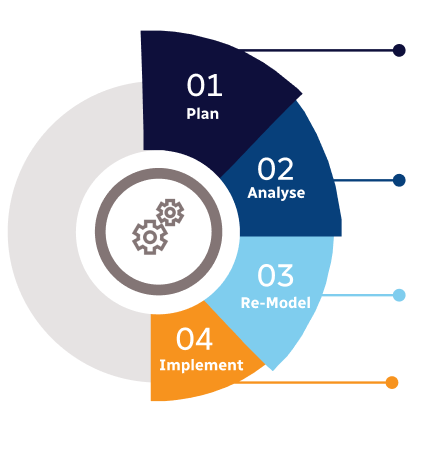
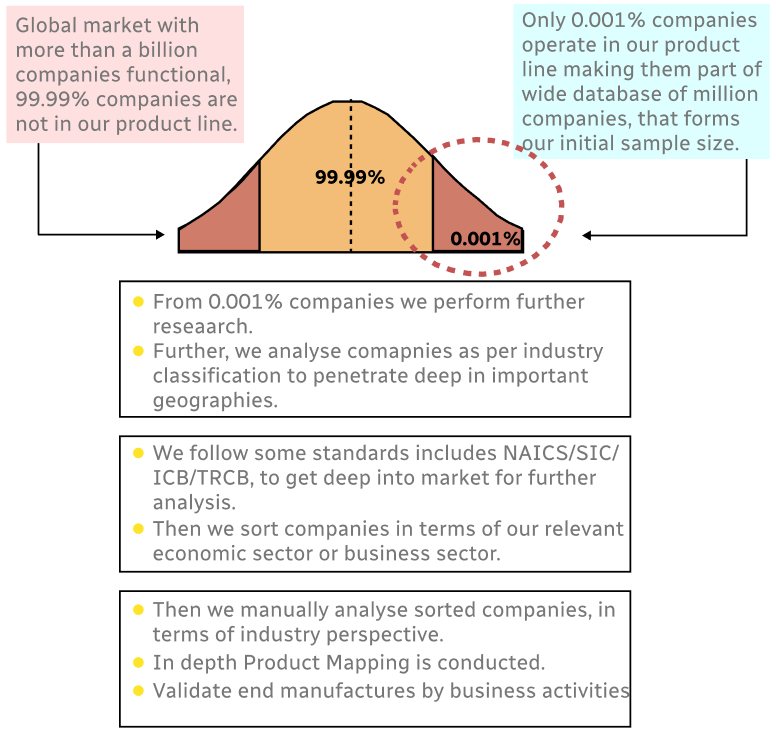
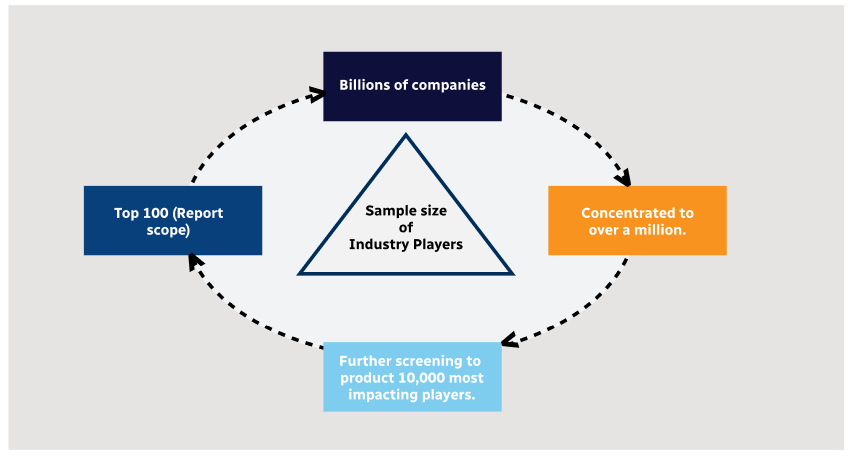
Step 1 - Identification of Relevant Samples Size from Population Database
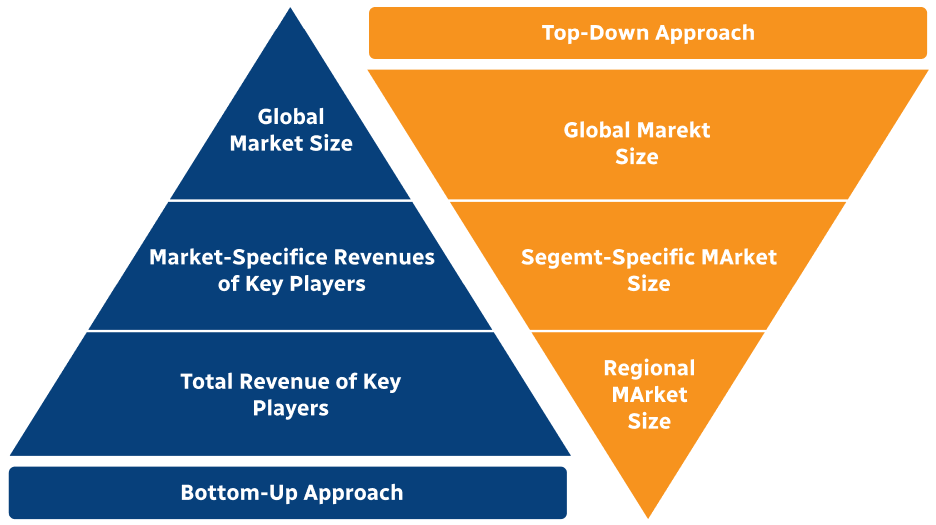
Step 2 - Approaches for Defining Global Market Size (Value, Volume* & Price*)
Note*: In applicable scenarios
Step 3 - Data Sources
Primary Research
- Web Analytics
- Survey Reports
- Research Institute
- Latest Research Reports
- Opinion Leaders
Secondary Research
- Annual Reports
- White Paper
- Latest Press Release
- Industry Association
- Paid Database
- Investor Presentations
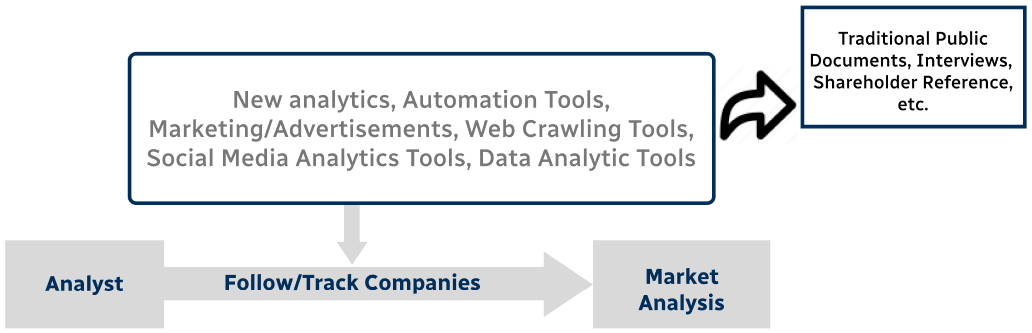
Step 4 - Data Triangulation
Involves using different sources of information in order to increase the validity of a study
These sources are likely to be stakeholders in a program - participants, other researchers, program staff, other community members, and so on.
Then we put all data in single framework & apply various statistical tools to find out the dynamic on the market.
During the analysis stage, feedback from the stakeholder groups would be compared to determine areas of agreement as well as areas of divergence


