


Key Insights
The Cloud 5G Radio Access Network (RAN) market is poised for substantial growth, projected to reach an estimated USD 55,000 million by 2025, with a robust Compound Annual Growth Rate (CAGR) of 22% through 2033. This expansion is fundamentally driven by the increasing demand for enhanced mobile broadband, ultra-reliable low-latency communication, and massive machine-type communication services inherent to 5G deployments. Key catalysts for this surge include the burgeoning adoption of virtualised network functions, enabling greater flexibility and scalability for telecom operators, and the strategic shift towards centralized RAN architectures that promise improved efficiency and cost savings. Enterprises are actively exploring cloud-native RAN solutions to support a diverse range of applications, from industrial IoT and smart cities to enhanced mobile gaming and immersive augmented reality experiences. This technological evolution is critical for meeting the escalating data traffic demands and delivering the high-performance connectivity required for next-generation digital services.

Cloud 5G Radio Access Network Market Size (In Billion)

The market dynamics are further shaped by significant trends such as the development of Open RAN technologies, fostering interoperability and vendor diversity, and the integration of AI and machine learning for intelligent network management and optimization. While the path forward is promising, the market faces certain restraints, including the complexity of integrating new cloud-native solutions with existing legacy infrastructure and the initial capital investment required for widespread adoption. Security concerns surrounding cloud-based deployments and the need for skilled personnel to manage these advanced networks also present challenges. However, the ongoing investment in 5G infrastructure by major players like Intel, Nokia, Ericsson, Huawei, and Samsung, coupled with strategic partnerships and research initiatives, is actively addressing these hurdles. The market's segmentation reveals a strong focus on both Enterprise and Telecom Operator applications, with Virtualization Technology and Centralization Technology dominating the types of solutions being implemented. Geographically, Asia Pacific, led by China and India, is expected to be a key growth engine, closely followed by North America and Europe, reflecting global investments in advanced wireless infrastructure.

Cloud 5G Radio Access Network Company Market Share
Cloud 5G Radio Access Network Market Research Report: Detailed Description
This comprehensive report offers an in-depth analysis of the global Cloud 5G Radio Access Network (RAN) market, providing critical insights for stakeholders navigating this rapidly evolving technological landscape. Covering the study period of 2019–2033, with a base year of 2025, our research delves into market structure, competitive dynamics, industry trends, dominant markets, product innovations, segmentation, key growth drivers, challenges, leading players, key developments, and a strategic market outlook. We leverage extensive data and expert analysis to deliver actionable intelligence for enterprises and telecom operators alike. The report provides a granular view of virtualization and centralization technologies within the Cloud 5G RAN ecosystem.
Cloud 5G Radio Access Network Market Structure & Competitive Dynamics
The Cloud 5G RAN market exhibits a dynamic and evolving competitive landscape. Market concentration varies across regions, with some areas dominated by a few key players while others showcase a more fragmented structure. Innovation ecosystems are thriving, driven by significant R&D investments from major technology providers. Regulatory frameworks play a crucial role in shaping market access and deployment strategies, influencing competition and the adoption of new technologies. Product substitutes are emerging, primarily from advancements in edge computing and private 5G solutions, necessitating continuous innovation for incumbent Cloud 5G RAN providers. End-user trends are heavily influenced by the demand for enhanced mobile broadband, ultra-reliable low-latency communication, and massive machine-type communication, driving the adoption of Cloud 5G RAN for its flexibility and scalability. Mergers and acquisitions (M&A) activities are prevalent, with deal values often in the hundreds of millions of dollars, as companies seek to consolidate market share, acquire complementary technologies, and expand their global footprint. For instance, recent M&A activities have focused on integrating virtual RAN functionalities and expanding service provider partnerships.
- Market Concentration: Moderate to high in developed markets, with a trend towards consolidation.
- Innovation Ecosystems: Strong focus on Open RAN, network function virtualization (NFV), and software-defined networking (SDN).
- Regulatory Frameworks: Impacting spectrum allocation, network slicing, and cybersecurity mandates.
- Product Substitutes: Edge computing platforms, private 5G networks, and alternative wireless technologies.
- End-User Trends: Demand for low latency, high bandwidth, and massive connectivity is a primary driver.
- M&A Activities: Strategic acquisitions aimed at technology integration and market expansion, with reported deal values in the hundreds of millions.
Cloud 5G Radio Access Network Industry Trends & Insights
The Cloud 5G RAN market is experiencing robust growth, projected to achieve a Compound Annual Growth Rate (CAGR) of approximately xx% over the forecast period (2025–2033). This expansion is fueled by several key market growth drivers, including the escalating demand for high-speed, low-latency mobile connectivity across consumer and enterprise segments. The widespread deployment of 5G networks globally necessitates agile and scalable RAN architectures, making Cloud 5G RAN solutions indispensable. Technological disruptions, such as the maturation of virtualization technologies and the increasing adoption of Open RAN principles, are fundamentally reshaping the network infrastructure. These disruptions enable greater flexibility, reduced costs, and accelerated innovation cycles for telecom operators and enterprises. Consumer preferences are shifting towards immersive experiences like enhanced mobile broadband (eMBB), augmented reality (AR), and virtual reality (VR), all of which heavily rely on the performance capabilities offered by 5G and Cloud 5G RAN. The competitive dynamics are characterized by intense innovation, strategic partnerships, and a growing emphasis on ecosystem development. As market penetration of 5G services increases, the demand for advanced Cloud 5G RAN solutions that can support diverse use cases, from industrial automation to smart cities, will continue to accelerate. The ongoing shift from hardware-centric to software-centric network architectures is a significant trend, enabling dynamic resource allocation and efficient service delivery. The evolution of cloud-native principles within the RAN further enhances its adaptability and resilience, paving the way for new revenue streams and business models for service providers. The integration of AI and machine learning for network automation and optimization is also a key trend, promising to revolutionize network management and performance.
Dominant Markets & Segments in Cloud 5G Radio Access Network
North America currently stands as a dominant region in the Cloud 5G RAN market, driven by significant investments in 5G infrastructure by major telecom operators and a strong presence of technology innovators. Within North America, the United States leads in terms of market size and adoption rates, propelled by supportive government initiatives and a competitive landscape that encourages rapid deployment of advanced wireless technologies.
Application Segments:
- Enterprises: This segment is witnessing substantial growth due to the increasing adoption of private 5G networks and the demand for mission-critical applications requiring low latency and high bandwidth.
- Key Drivers: Industrial automation, smart manufacturing, logistics optimization, and the need for enhanced workplace connectivity. Economic policies promoting digital transformation and the development of smart industries are significant accelerators.
- Dominance Analysis: Enterprises are increasingly leveraging Cloud 5G RAN for localized private networks that offer secure, reliable, and high-performance connectivity tailored to specific operational needs. This includes applications in sectors like manufacturing, healthcare, and logistics, where real-time data processing and autonomous operations are crucial.
- Telecom Operators: This remains the largest segment, as operators worldwide invest heavily in upgrading their existing 4G networks to 5G and embrace cloud-native architectures for their RAN.
- Key Drivers: The need to reduce operational expenditures (OpEx) and capital expenditures (CapEx), enhance network agility, and support a growing subscriber base with diverse service demands. Infrastructure development projects and government mandates for 5G deployment are pivotal.
- Dominance Analysis: Telecom operators are at the forefront of Cloud 5G RAN adoption, driven by the imperative to deliver enhanced mobile broadband, ultra-reliable low-latency communication, and massive machine-type communication services. Their strategic investments in virtualizing their RAN infrastructure enable them to achieve greater scalability, flexibility, and cost efficiencies in network deployment and management.
Types of Technologies:
- Virtualization Technology: This is a key enabler of Cloud 5G RAN, allowing for the decoupling of hardware and software and enabling flexible deployment of RAN functions on commodity servers.
- Key Drivers: Cost savings through the use of general-purpose hardware, increased agility in deploying and scaling network functions, and the ability to run multiple services on a shared infrastructure.
- Dominance Analysis: Virtualization is fundamental to the Cloud 5G RAN paradigm, enabling network function virtualization (NFV) and software-defined networking (SDN) principles. This allows operators to deploy RAN functions as software instances on cloud infrastructure, offering unprecedented flexibility in resource allocation and service provisioning.
- Centralization Technology: This refers to the consolidation of certain RAN functions closer to the core network, leading to improved efficiency and reduced latency.
- Key Drivers: Enhanced resource pooling, simplified network management, and optimized backhaul traffic.
- Dominance Analysis: Centralization, alongside virtualization, contributes to the overall efficiency and performance of Cloud 5G RAN. By consolidating processing at centralized locations, operators can achieve better utilization of resources and simplify management, crucial for deploying dense 5G networks.
Cloud 5G Radio Access Network Product Innovations
Product innovation in the Cloud 5G RAN space is rapidly advancing, focusing on Open RAN architectures, containerized network functions, and AI-driven network automation. Companies are developing modular and interoperable RAN components that can be deployed on commercial off-the-shelf (COTS) hardware, reducing vendor lock-in and fostering a more competitive ecosystem. These innovations offer significant competitive advantages by enabling greater flexibility, cost-effectiveness, and faster service deployment. The integration of advanced software features, such as network slicing and dynamic spectrum sharing, is enhancing the performance and adaptability of Cloud 5G RAN solutions to meet diverse use cases.
Report Segmentation & Scope
This report segments the Cloud 5G Radio Access Network market across key application and technology types. The Application segmentation includes Enterprises, which are increasingly adopting private 5G for specialized needs, and Telecom Operators, the primary drivers of public 5G network build-outs. The Types segmentation encompasses Virtualization Technology, fundamental to cloud-native RAN deployments, and Centralization Technology, crucial for optimizing network operations. Growth projections for each segment are detailed, with market sizes estimated for the forecast period, and competitive dynamics within each are analyzed to provide a comprehensive understanding of the market landscape.
Key Drivers of Cloud 5G Radio Access Network Growth
The growth of the Cloud 5G RAN market is propelled by several interconnected factors. The relentless demand for enhanced mobile broadband (eMBB) services, including high-definition video streaming and immersive gaming, necessitates the superior performance offered by 5G. Furthermore, the burgeoning Internet of Things (IoT) ecosystem, with its requirement for massive machine-type communication (mMTC), is driving the need for scalable and efficient network infrastructure. The critical imperative for ultra-reliable low-latency communication (URLLC) in industrial automation, autonomous vehicles, and remote surgery applications is another significant growth catalyst. Regulatory support for 5G deployment, including spectrum allocation and favorable policies, is accelerating infrastructure build-outs globally. Technological advancements, such as the maturity of NFV and SDN, coupled with the rise of Open RAN, are fostering innovation and reducing deployment costs, making Cloud 5G RAN solutions more accessible and attractive.
Challenges in the Cloud 5G Radio Access Network Sector
Despite its promising growth trajectory, the Cloud 5G RAN sector faces several challenges. Regulatory hurdles related to spectrum availability and licensing can impede rapid deployment. Supply chain complexities and potential shortages of critical components can impact the timely delivery of infrastructure. Intense competitive pressures among established vendors and emerging players drive down margins. The intricate integration of diverse virtualized network functions and ensuring interoperability within Open RAN ecosystems present technical challenges. Security concerns associated with distributed and cloud-native network architectures require robust cybersecurity measures. The substantial upfront investment required for 5G infrastructure deployment and the need for skilled personnel to manage complex cloud-native environments also pose significant barriers.
Leading Players in the Cloud 5G Radio Access Network Market
- Intel
- Casa Systems
- Samsung
- ZTE
- Nokia Corporation
- Qualcomm Technologies
- Cisco Systems
- Huawei
- Dali Wireless
- Telefonaktiebolaget LM Ericsson
Key Developments in Cloud 5G Radio Access Network Sector
- 2023/XX: Introduction of enhanced Open RAN solutions by leading vendors, emphasizing interoperability and cost efficiency.
- 2022/XX: Significant advancements in virtualization platforms supporting containerized 5G RAN functions, enabling greater flexibility and scalability.
- 2021/XX: Increased focus on AI-driven network automation for Cloud 5G RAN management, leading to improved performance and reduced operational costs.
- 2020/XX: Major telecom operators announce strategic partnerships for the deployment of virtualized RAN, accelerating the adoption of Cloud 5G RAN architectures.
- 2019/XX: Early-stage research and development into cloud-native 5G RAN technologies gain momentum, laying the groundwork for future innovations.
Strategic Cloud 5G Radio Access Network Market Outlook
The strategic outlook for the Cloud 5G RAN market is overwhelmingly positive, characterized by sustained growth and continuous innovation. The increasing adoption of edge computing and the development of specialized 5G applications for industries such as manufacturing, healthcare, and transportation will serve as significant growth accelerators. The ongoing evolution towards fully disaggregated and open RAN architectures will foster greater vendor diversity and promote a more competitive market. Strategic opportunities lie in developing tailored solutions for enterprise private networks and supporting the rollout of network slicing to deliver premium services. Continuous investment in R&D for advanced features like AI-powered network optimization and enhanced security protocols will be crucial for market leadership. The global expansion of 5G networks, coupled with the increasing demand for data-intensive services, will continue to drive the adoption of flexible and scalable Cloud 5G RAN solutions.
Cloud 5G Radio Access Network Segmentation
-
1. Application
- 1.1. Enterprises
- 1.2. Telecom Operators
-
2. Types
- 2.1. Virtualization Technology
- 2.2. Centralization Technology
Cloud 5G Radio Access Network Segmentation By Geography
-
1. North America
- 1.1. United States
- 1.2. Canada
- 1.3. Mexico
-
2. South America
- 2.1. Brazil
- 2.2. Argentina
- 2.3. Rest of South America
-
3. Europe
- 3.1. United Kingdom
- 3.2. Germany
- 3.3. France
- 3.4. Italy
- 3.5. Spain
- 3.6. Russia
- 3.7. Benelux
- 3.8. Nordics
- 3.9. Rest of Europe
-
4. Middle East & Africa
- 4.1. Turkey
- 4.2. Israel
- 4.3. GCC
- 4.4. North Africa
- 4.5. South Africa
- 4.6. Rest of Middle East & Africa
-
5. Asia Pacific
- 5.1. China
- 5.2. India
- 5.3. Japan
- 5.4. South Korea
- 5.5. ASEAN
- 5.6. Oceania
- 5.7. Rest of Asia Pacific
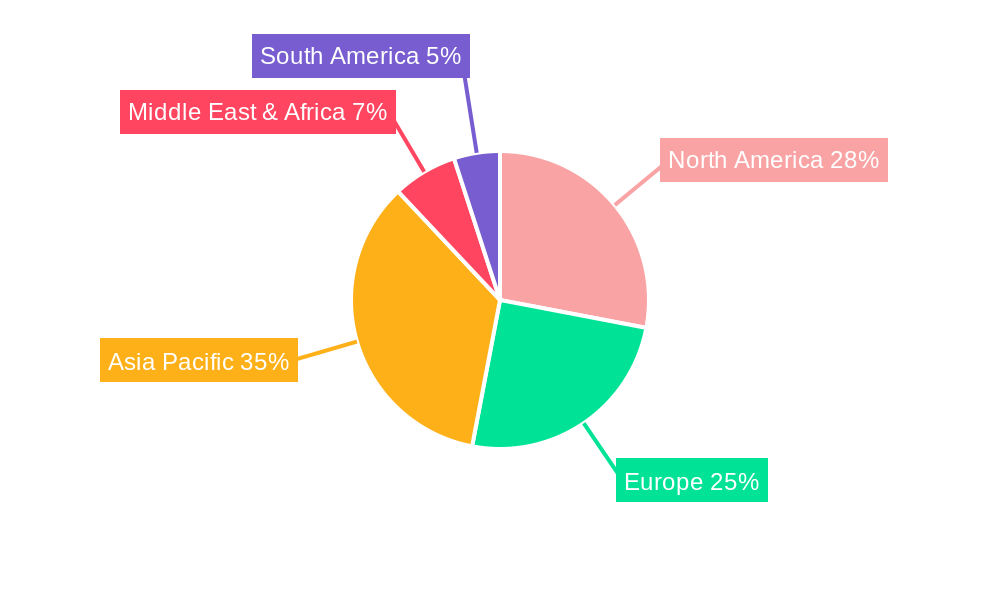
Cloud 5G Radio Access Network Regional Market Share
Geographic Coverage of Cloud 5G Radio Access Network
Cloud 5G Radio Access Network REPORT HIGHLIGHTS
| Aspects | Details |
|---|---|
| Study Period | 2020-2034 |
| Base Year | 2025 |
| Estimated Year | 2026 |
| Forecast Period | 2026-2034 |
| Historical Period | 2020-2025 |
| Growth Rate | CAGR of 17.6% from 2020-2034 |
| Segmentation |
|
Table of Contents
- 1. Introduction
- 1.1. Research Scope
- 1.2. Market Segmentation
- 1.3. Research Methodology
- 1.4. Definitions and Assumptions
- 2. Executive Summary
- 2.1. Introduction
- 3. Market Dynamics
- 3.1. Introduction
- 3.2. Market Drivers
- 3.3. Market Restrains
- 3.4. Market Trends
- 4. Market Factor Analysis
- 4.1. Porters Five Forces
- 4.2. Supply/Value Chain
- 4.3. PESTEL analysis
- 4.4. Market Entropy
- 4.5. Patent/Trademark Analysis
- 5. Global Cloud 5G Radio Access Network Analysis, Insights and Forecast, 2020-2032
- 5.1. Market Analysis, Insights and Forecast - by Application
- 5.1.1. Enterprises
- 5.1.2. Telecom Operators
- 5.2. Market Analysis, Insights and Forecast - by Types
- 5.2.1. Virtualization Technology
- 5.2.2. Centralization Technology
- 5.3. Market Analysis, Insights and Forecast - by Region
- 5.3.1. North America
- 5.3.2. South America
- 5.3.3. Europe
- 5.3.4. Middle East & Africa
- 5.3.5. Asia Pacific
- 5.1. Market Analysis, Insights and Forecast - by Application
- 6. North America Cloud 5G Radio Access Network Analysis, Insights and Forecast, 2020-2032
- 6.1. Market Analysis, Insights and Forecast - by Application
- 6.1.1. Enterprises
- 6.1.2. Telecom Operators
- 6.2. Market Analysis, Insights and Forecast - by Types
- 6.2.1. Virtualization Technology
- 6.2.2. Centralization Technology
- 6.1. Market Analysis, Insights and Forecast - by Application
- 7. South America Cloud 5G Radio Access Network Analysis, Insights and Forecast, 2020-2032
- 7.1. Market Analysis, Insights and Forecast - by Application
- 7.1.1. Enterprises
- 7.1.2. Telecom Operators
- 7.2. Market Analysis, Insights and Forecast - by Types
- 7.2.1. Virtualization Technology
- 7.2.2. Centralization Technology
- 7.1. Market Analysis, Insights and Forecast - by Application
- 8. Europe Cloud 5G Radio Access Network Analysis, Insights and Forecast, 2020-2032
- 8.1. Market Analysis, Insights and Forecast - by Application
- 8.1.1. Enterprises
- 8.1.2. Telecom Operators
- 8.2. Market Analysis, Insights and Forecast - by Types
- 8.2.1. Virtualization Technology
- 8.2.2. Centralization Technology
- 8.1. Market Analysis, Insights and Forecast - by Application
- 9. Middle East & Africa Cloud 5G Radio Access Network Analysis, Insights and Forecast, 2020-2032
- 9.1. Market Analysis, Insights and Forecast - by Application
- 9.1.1. Enterprises
- 9.1.2. Telecom Operators
- 9.2. Market Analysis, Insights and Forecast - by Types
- 9.2.1. Virtualization Technology
- 9.2.2. Centralization Technology
- 9.1. Market Analysis, Insights and Forecast - by Application
- 10. Asia Pacific Cloud 5G Radio Access Network Analysis, Insights and Forecast, 2020-2032
- 10.1. Market Analysis, Insights and Forecast - by Application
- 10.1.1. Enterprises
- 10.1.2. Telecom Operators
- 10.2. Market Analysis, Insights and Forecast - by Types
- 10.2.1. Virtualization Technology
- 10.2.2. Centralization Technology
- 10.1. Market Analysis, Insights and Forecast - by Application
- 11. Competitive Analysis
- 11.1. Global Market Share Analysis 2025
- 11.2. Company Profiles
- 11.2.1 Intel
- 11.2.1.1. Overview
- 11.2.1.2. Products
- 11.2.1.3. SWOT Analysis
- 11.2.1.4. Recent Developments
- 11.2.1.5. Financials (Based on Availability)
- 11.2.2 Casa Systems
- 11.2.2.1. Overview
- 11.2.2.2. Products
- 11.2.2.3. SWOT Analysis
- 11.2.2.4. Recent Developments
- 11.2.2.5. Financials (Based on Availability)
- 11.2.3 Samsung
- 11.2.3.1. Overview
- 11.2.3.2. Products
- 11.2.3.3. SWOT Analysis
- 11.2.3.4. Recent Developments
- 11.2.3.5. Financials (Based on Availability)
- 11.2.4 ZTE
- 11.2.4.1. Overview
- 11.2.4.2. Products
- 11.2.4.3. SWOT Analysis
- 11.2.4.4. Recent Developments
- 11.2.4.5. Financials (Based on Availability)
- 11.2.5 Nokia Corporation
- 11.2.5.1. Overview
- 11.2.5.2. Products
- 11.2.5.3. SWOT Analysis
- 11.2.5.4. Recent Developments
- 11.2.5.5. Financials (Based on Availability)
- 11.2.6 Qualcomm Technologies
- 11.2.6.1. Overview
- 11.2.6.2. Products
- 11.2.6.3. SWOT Analysis
- 11.2.6.4. Recent Developments
- 11.2.6.5. Financials (Based on Availability)
- 11.2.7 Cisco Systems
- 11.2.7.1. Overview
- 11.2.7.2. Products
- 11.2.7.3. SWOT Analysis
- 11.2.7.4. Recent Developments
- 11.2.7.5. Financials (Based on Availability)
- 11.2.8 Huawei
- 11.2.8.1. Overview
- 11.2.8.2. Products
- 11.2.8.3. SWOT Analysis
- 11.2.8.4. Recent Developments
- 11.2.8.5. Financials (Based on Availability)
- 11.2.9 Dali Wireless
- 11.2.9.1. Overview
- 11.2.9.2. Products
- 11.2.9.3. SWOT Analysis
- 11.2.9.4. Recent Developments
- 11.2.9.5. Financials (Based on Availability)
- 11.2.10 Telefonaktiebolaget
- 11.2.10.1. Overview
- 11.2.10.2. Products
- 11.2.10.3. SWOT Analysis
- 11.2.10.4. Recent Developments
- 11.2.10.5. Financials (Based on Availability)
- 11.2.11 Ericsson
- 11.2.11.1. Overview
- 11.2.11.2. Products
- 11.2.11.3. SWOT Analysis
- 11.2.11.4. Recent Developments
- 11.2.11.5. Financials (Based on Availability)
- 11.2.1 Intel
List of Figures
- Figure 1: Global Cloud 5G Radio Access Network Revenue Breakdown (undefined, %) by Region 2025 & 2033
- Figure 2: North America Cloud 5G Radio Access Network Revenue (undefined), by Application 2025 & 2033
- Figure 3: North America Cloud 5G Radio Access Network Revenue Share (%), by Application 2025 & 2033
- Figure 4: North America Cloud 5G Radio Access Network Revenue (undefined), by Types 2025 & 2033
- Figure 5: North America Cloud 5G Radio Access Network Revenue Share (%), by Types 2025 & 2033
- Figure 6: North America Cloud 5G Radio Access Network Revenue (undefined), by Country 2025 & 2033
- Figure 7: North America Cloud 5G Radio Access Network Revenue Share (%), by Country 2025 & 2033
- Figure 8: South America Cloud 5G Radio Access Network Revenue (undefined), by Application 2025 & 2033
- Figure 9: South America Cloud 5G Radio Access Network Revenue Share (%), by Application 2025 & 2033
- Figure 10: South America Cloud 5G Radio Access Network Revenue (undefined), by Types 2025 & 2033
- Figure 11: South America Cloud 5G Radio Access Network Revenue Share (%), by Types 2025 & 2033
- Figure 12: South America Cloud 5G Radio Access Network Revenue (undefined), by Country 2025 & 2033
- Figure 13: South America Cloud 5G Radio Access Network Revenue Share (%), by Country 2025 & 2033
- Figure 14: Europe Cloud 5G Radio Access Network Revenue (undefined), by Application 2025 & 2033
- Figure 15: Europe Cloud 5G Radio Access Network Revenue Share (%), by Application 2025 & 2033
- Figure 16: Europe Cloud 5G Radio Access Network Revenue (undefined), by Types 2025 & 2033
- Figure 17: Europe Cloud 5G Radio Access Network Revenue Share (%), by Types 2025 & 2033
- Figure 18: Europe Cloud 5G Radio Access Network Revenue (undefined), by Country 2025 & 2033
- Figure 19: Europe Cloud 5G Radio Access Network Revenue Share (%), by Country 2025 & 2033
- Figure 20: Middle East & Africa Cloud 5G Radio Access Network Revenue (undefined), by Application 2025 & 2033
- Figure 21: Middle East & Africa Cloud 5G Radio Access Network Revenue Share (%), by Application 2025 & 2033
- Figure 22: Middle East & Africa Cloud 5G Radio Access Network Revenue (undefined), by Types 2025 & 2033
- Figure 23: Middle East & Africa Cloud 5G Radio Access Network Revenue Share (%), by Types 2025 & 2033
- Figure 24: Middle East & Africa Cloud 5G Radio Access Network Revenue (undefined), by Country 2025 & 2033
- Figure 25: Middle East & Africa Cloud 5G Radio Access Network Revenue Share (%), by Country 2025 & 2033
- Figure 26: Asia Pacific Cloud 5G Radio Access Network Revenue (undefined), by Application 2025 & 2033
- Figure 27: Asia Pacific Cloud 5G Radio Access Network Revenue Share (%), by Application 2025 & 2033
- Figure 28: Asia Pacific Cloud 5G Radio Access Network Revenue (undefined), by Types 2025 & 2033
- Figure 29: Asia Pacific Cloud 5G Radio Access Network Revenue Share (%), by Types 2025 & 2033
- Figure 30: Asia Pacific Cloud 5G Radio Access Network Revenue (undefined), by Country 2025 & 2033
- Figure 31: Asia Pacific Cloud 5G Radio Access Network Revenue Share (%), by Country 2025 & 2033
List of Tables
- Table 1: Global Cloud 5G Radio Access Network Revenue undefined Forecast, by Application 2020 & 2033
- Table 2: Global Cloud 5G Radio Access Network Revenue undefined Forecast, by Types 2020 & 2033
- Table 3: Global Cloud 5G Radio Access Network Revenue undefined Forecast, by Region 2020 & 2033
- Table 4: Global Cloud 5G Radio Access Network Revenue undefined Forecast, by Application 2020 & 2033
- Table 5: Global Cloud 5G Radio Access Network Revenue undefined Forecast, by Types 2020 & 2033
- Table 6: Global Cloud 5G Radio Access Network Revenue undefined Forecast, by Country 2020 & 2033
- Table 7: United States Cloud 5G Radio Access Network Revenue (undefined) Forecast, by Application 2020 & 2033
- Table 8: Canada Cloud 5G Radio Access Network Revenue (undefined) Forecast, by Application 2020 & 2033
- Table 9: Mexico Cloud 5G Radio Access Network Revenue (undefined) Forecast, by Application 2020 & 2033
- Table 10: Global Cloud 5G Radio Access Network Revenue undefined Forecast, by Application 2020 & 2033
- Table 11: Global Cloud 5G Radio Access Network Revenue undefined Forecast, by Types 2020 & 2033
- Table 12: Global Cloud 5G Radio Access Network Revenue undefined Forecast, by Country 2020 & 2033
- Table 13: Brazil Cloud 5G Radio Access Network Revenue (undefined) Forecast, by Application 2020 & 2033
- Table 14: Argentina Cloud 5G Radio Access Network Revenue (undefined) Forecast, by Application 2020 & 2033
- Table 15: Rest of South America Cloud 5G Radio Access Network Revenue (undefined) Forecast, by Application 2020 & 2033
- Table 16: Global Cloud 5G Radio Access Network Revenue undefined Forecast, by Application 2020 & 2033
- Table 17: Global Cloud 5G Radio Access Network Revenue undefined Forecast, by Types 2020 & 2033
- Table 18: Global Cloud 5G Radio Access Network Revenue undefined Forecast, by Country 2020 & 2033
- Table 19: United Kingdom Cloud 5G Radio Access Network Revenue (undefined) Forecast, by Application 2020 & 2033
- Table 20: Germany Cloud 5G Radio Access Network Revenue (undefined) Forecast, by Application 2020 & 2033
- Table 21: France Cloud 5G Radio Access Network Revenue (undefined) Forecast, by Application 2020 & 2033
- Table 22: Italy Cloud 5G Radio Access Network Revenue (undefined) Forecast, by Application 2020 & 2033
- Table 23: Spain Cloud 5G Radio Access Network Revenue (undefined) Forecast, by Application 2020 & 2033
- Table 24: Russia Cloud 5G Radio Access Network Revenue (undefined) Forecast, by Application 2020 & 2033
- Table 25: Benelux Cloud 5G Radio Access Network Revenue (undefined) Forecast, by Application 2020 & 2033
- Table 26: Nordics Cloud 5G Radio Access Network Revenue (undefined) Forecast, by Application 2020 & 2033
- Table 27: Rest of Europe Cloud 5G Radio Access Network Revenue (undefined) Forecast, by Application 2020 & 2033
- Table 28: Global Cloud 5G Radio Access Network Revenue undefined Forecast, by Application 2020 & 2033
- Table 29: Global Cloud 5G Radio Access Network Revenue undefined Forecast, by Types 2020 & 2033
- Table 30: Global Cloud 5G Radio Access Network Revenue undefined Forecast, by Country 2020 & 2033
- Table 31: Turkey Cloud 5G Radio Access Network Revenue (undefined) Forecast, by Application 2020 & 2033
- Table 32: Israel Cloud 5G Radio Access Network Revenue (undefined) Forecast, by Application 2020 & 2033
- Table 33: GCC Cloud 5G Radio Access Network Revenue (undefined) Forecast, by Application 2020 & 2033
- Table 34: North Africa Cloud 5G Radio Access Network Revenue (undefined) Forecast, by Application 2020 & 2033
- Table 35: South Africa Cloud 5G Radio Access Network Revenue (undefined) Forecast, by Application 2020 & 2033
- Table 36: Rest of Middle East & Africa Cloud 5G Radio Access Network Revenue (undefined) Forecast, by Application 2020 & 2033
- Table 37: Global Cloud 5G Radio Access Network Revenue undefined Forecast, by Application 2020 & 2033
- Table 38: Global Cloud 5G Radio Access Network Revenue undefined Forecast, by Types 2020 & 2033
- Table 39: Global Cloud 5G Radio Access Network Revenue undefined Forecast, by Country 2020 & 2033
- Table 40: China Cloud 5G Radio Access Network Revenue (undefined) Forecast, by Application 2020 & 2033
- Table 41: India Cloud 5G Radio Access Network Revenue (undefined) Forecast, by Application 2020 & 2033
- Table 42: Japan Cloud 5G Radio Access Network Revenue (undefined) Forecast, by Application 2020 & 2033
- Table 43: South Korea Cloud 5G Radio Access Network Revenue (undefined) Forecast, by Application 2020 & 2033
- Table 44: ASEAN Cloud 5G Radio Access Network Revenue (undefined) Forecast, by Application 2020 & 2033
- Table 45: Oceania Cloud 5G Radio Access Network Revenue (undefined) Forecast, by Application 2020 & 2033
- Table 46: Rest of Asia Pacific Cloud 5G Radio Access Network Revenue (undefined) Forecast, by Application 2020 & 2033
Frequently Asked Questions
1. What is the projected Compound Annual Growth Rate (CAGR) of the Cloud 5G Radio Access Network?
The projected CAGR is approximately 17.6%.
2. Which companies are prominent players in the Cloud 5G Radio Access Network?
Key companies in the market include Intel, Casa Systems, Samsung, ZTE, Nokia Corporation, Qualcomm Technologies, Cisco Systems, Huawei, Dali Wireless, Telefonaktiebolaget, Ericsson.
3. What are the main segments of the Cloud 5G Radio Access Network?
The market segments include Application, Types.
4. Can you provide details about the market size?
The market size is estimated to be USD XXX N/A as of 2022.
5. What are some drivers contributing to market growth?
N/A
6. What are the notable trends driving market growth?
N/A
7. Are there any restraints impacting market growth?
N/A
8. Can you provide examples of recent developments in the market?
N/A
9. What pricing options are available for accessing the report?
Pricing options include single-user, multi-user, and enterprise licenses priced at USD 4900.00, USD 7350.00, and USD 9800.00 respectively.
10. Is the market size provided in terms of value or volume?
The market size is provided in terms of value, measured in N/A.
11. Are there any specific market keywords associated with the report?
Yes, the market keyword associated with the report is "Cloud 5G Radio Access Network," which aids in identifying and referencing the specific market segment covered.
12. How do I determine which pricing option suits my needs best?
The pricing options vary based on user requirements and access needs. Individual users may opt for single-user licenses, while businesses requiring broader access may choose multi-user or enterprise licenses for cost-effective access to the report.
13. Are there any additional resources or data provided in the Cloud 5G Radio Access Network report?
While the report offers comprehensive insights, it's advisable to review the specific contents or supplementary materials provided to ascertain if additional resources or data are available.
14. How can I stay updated on further developments or reports in the Cloud 5G Radio Access Network?
To stay informed about further developments, trends, and reports in the Cloud 5G Radio Access Network, consider subscribing to industry newsletters, following relevant companies and organizations, or regularly checking reputable industry news sources and publications.
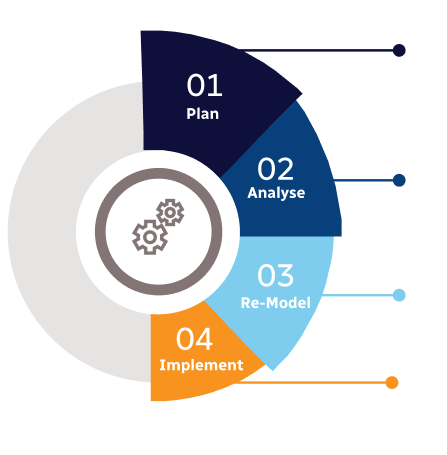
Methodology
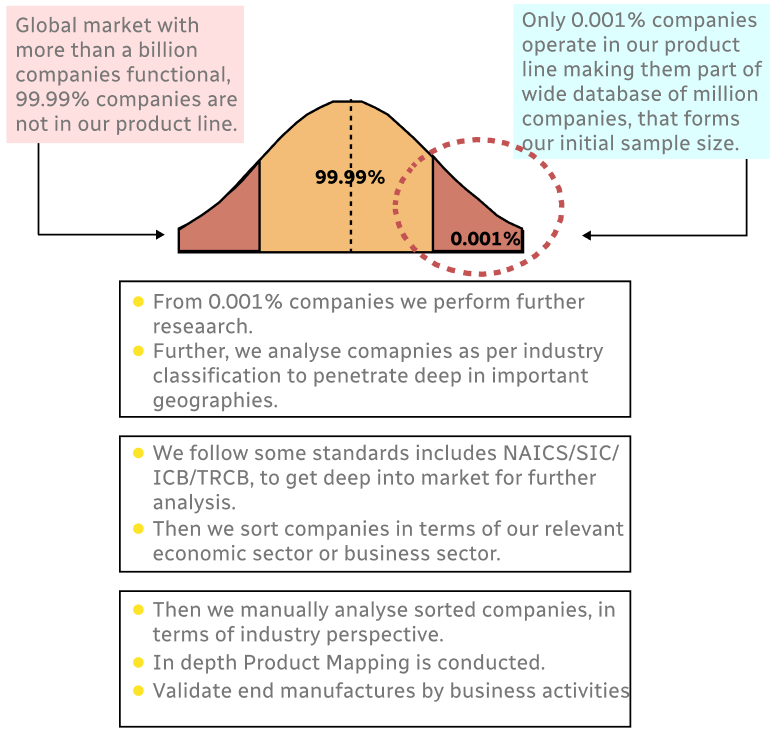
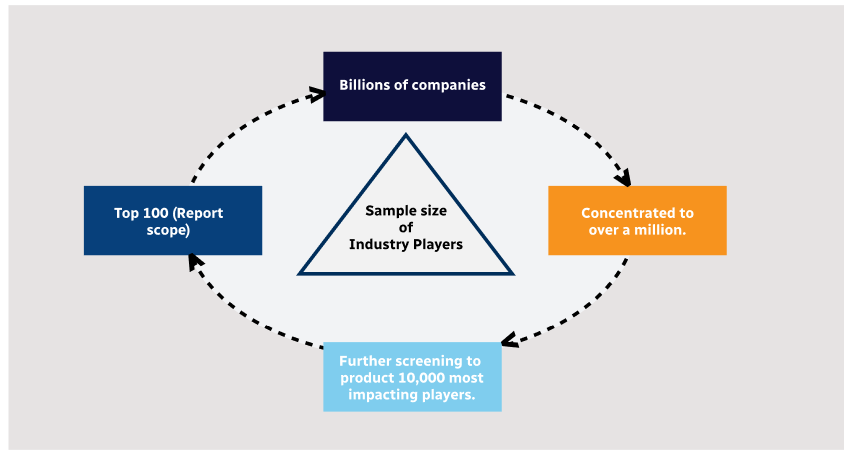
Step 1 - Identification of Relevant Samples Size from Population Database
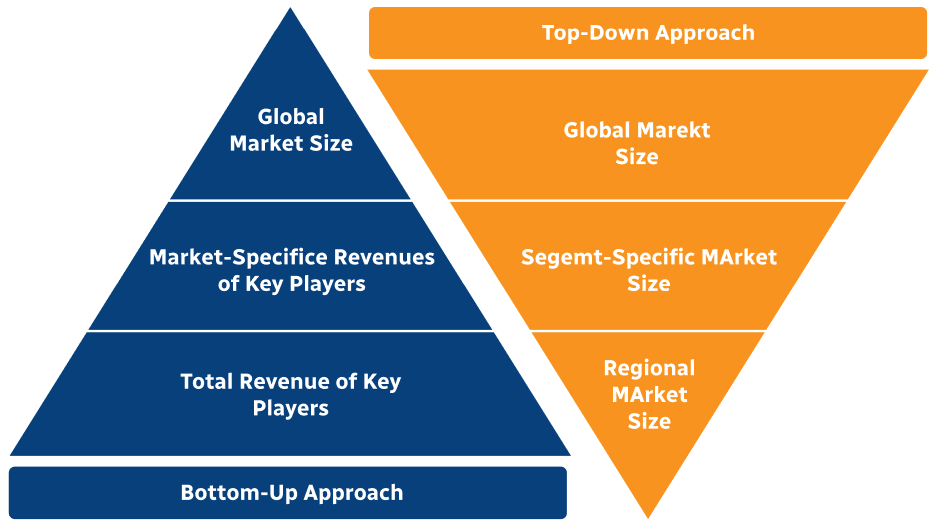
Step 2 - Approaches for Defining Global Market Size (Value, Volume* & Price*)
Note*: In applicable scenarios
Step 3 - Data Sources
Primary Research
- Web Analytics
- Survey Reports
- Research Institute
- Latest Research Reports
- Opinion Leaders
Secondary Research
- Annual Reports
- White Paper
- Latest Press Release
- Industry Association
- Paid Database
- Investor Presentations
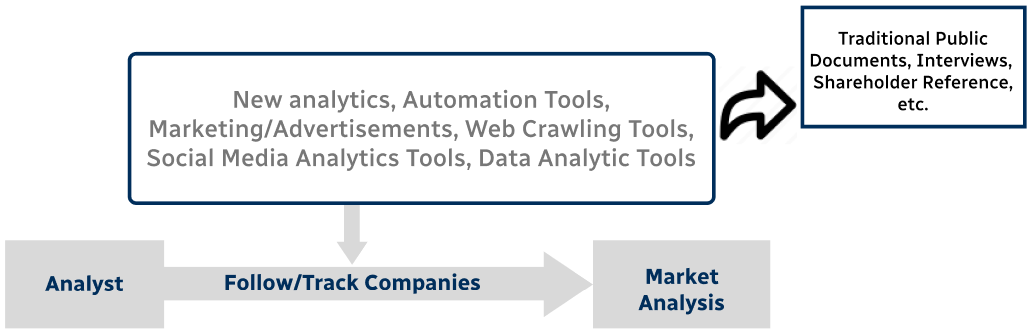
Step 4 - Data Triangulation
Involves using different sources of information in order to increase the validity of a study
These sources are likely to be stakeholders in a program - participants, other researchers, program staff, other community members, and so on.
Then we put all data in single framework & apply various statistical tools to find out the dynamic on the market.
During the analysis stage, feedback from the stakeholder groups would be compared to determine areas of agreement as well as areas of divergence