



Key Insights
The China Satellite Imagery Services Market is poised for remarkable expansion, projected to reach USD 14.44 billion in 2025. This growth is fueled by an impressive Compound Annual Growth Rate (CAGR) of 21.1% during the forecast period of 2025-2033. Key drivers behind this surge include the increasing adoption of geospatial data for sophisticated mapping and land surveying, the escalating demand for effective natural resource management, and the critical need for enhanced surveillance and security applications across various sectors. Furthermore, the growing emphasis on environmental conservation and research, coupled with the indispensable role of satellite imagery in disaster management and intelligence gathering, are powerful accelerators for market penetration. The integration of advanced technologies like AI and IoT with satellite data is also creating new avenues for innovation and service delivery, further bolstering market prospects.

China Satellite Imagery Services Market Market Size (In Billion)

The market's segmentation reveals a dynamic landscape driven by diverse applications and end-users. In terms of applications, Geospatial Data Acquisition and Mapping, Natural Resource Management, and Surveillance and Security are emerging as leading segments, reflecting their immediate and tangible benefits. Disaster Management and Conservation and Research are also witnessing significant traction due to heightened awareness and governmental initiatives. From an end-user perspective, Government, Military and Defense, and Transportation and Logistics sectors are substantial contributors, leveraging satellite imagery for strategic planning, operational efficiency, and national security. The Construction, Forestry and Agriculture industries are also increasingly integrating these services for improved project planning, yield optimization, and resource monitoring. Leading companies such as Airbus, China National Space Administration, and CHANG GUANG SATELLITE TECHNOLOGY CO LTD are at the forefront, driving technological advancements and market expansion.

China Satellite Imagery Services Market Company Market Share

This in-depth report provides a detailed analysis of the China Satellite Imagery Services Market, encompassing a comprehensive study from 2019 to 2033. With a base year of 2025 and a robust forecast period extending to 2033, this research offers critical insights into market dynamics, key players, and future growth trajectories for the Chinese satellite data and imagery sector. The study meticulously examines geospatial data acquisition and mapping, natural resource management, surveillance and security, conservation and research, disaster management, and intelligence applications, serving diverse end-users including government, construction, transportation and logistics, military and defense, forestry and agriculture, and other end-users. The report highlights significant industry developments, including the BRICS remote sensing satellite constellation agreement and the strategic deployment of synthetic aperture radar (SAR) satellite images, underscoring the growing demand and evolving landscape of China's space economy.
China Satellite Imagery Services Market Market Structure & Competitive Dynamics
The China Satellite Imagery Services Market is characterized by a dynamic and evolving competitive landscape, with a moderate to high level of market concentration driven by a mix of established state-owned enterprises and burgeoning private technology firms. Innovation ecosystems are rapidly maturing, fueled by significant government investment in space technology and the development of advanced satellite constellations. Key players are actively engaged in research and development to enhance resolution, spectral capabilities, and processing speeds of satellite imagery. Regulatory frameworks, while evolving, play a crucial role in shaping market access and data sharing protocols, particularly concerning sensitive national security applications. Product substitutes are emerging, including high-altitude drones and advanced aerial photography, though satellite imagery retains its advantage in large-scale, consistent coverage. End-user trends indicate a growing demand for real-time data, predictive analytics, and integrated geospatial solutions, pushing vendors to offer more sophisticated value-added services. Mergers and acquisitions (M&A) activities, though not extensively publicized, are anticipated to increase as larger entities seek to consolidate market share and acquire niche technological expertise. Specific M&A deal values remain largely undisclosed, but the strategic importance of satellite imagery intelligence suggests significant investment in this area. The market share distribution is complex, with state-backed entities holding substantial sway in critical national projects, while private companies are carving out significant niches in commercial applications.
China Satellite Imagery Services Market Industry Trends & Insights
The China Satellite Imagery Services Market is experiencing robust growth, driven by an increasing imperative for national development and security, projected to grow at a Compound Annual Growth Rate (CAGR) of approximately 12.5% during the forecast period. Technological disruptions are at the forefront of this expansion. The proliferation of high-resolution optical satellites, the advancement of Synthetic Aperture Radar (SAR) technology for all-weather imaging capabilities, and the increasing integration of Artificial Intelligence (AI) and Machine Learning (ML) for data analysis are fundamentally reshaping the market. Consumer preferences are shifting towards on-demand access to processed and analyzed geospatial data, moving beyond raw imagery. This demand is fueled by applications in precision agriculture, urban planning, environmental monitoring, and infrastructure development. Competitive dynamics are intense, with both domestic and international players vying for market share. Chinese companies are increasingly focusing on developing proprietary technologies and building comprehensive service ecosystems to cater to domestic needs and expand globally. The Belt and Road Initiative (BRI), for example, presents significant opportunities for Chinese satellite imagery providers to support infrastructure projects across participating nations, driving demand for services like geospatial data acquisition and mapping and natural resource management. The increasing adoption of cloud-based platforms for data storage and processing is also a key trend, enhancing accessibility and scalability for end-users. Furthermore, the development of integrated satellite constellations combining optical, SAR, and other sensor types is enabling more comprehensive data collection and analysis, catering to a wider range of complex applications, from disaster management to intelligence gathering.
Dominant Markets & Segments in China Satellite Imagery Services Market
The Government sector is a dominant end-user in the China Satellite Imagery Services Market, driven by national strategic interests, extensive infrastructure development projects, and the need for robust surveillance and security capabilities. Government initiatives, such as the development of smart cities and the management of vast territories, necessitate accurate and comprehensive geospatial data acquisition and mapping. The Military and Defense segment also holds significant sway, leveraging satellite imagery for intelligence, reconnaissance, and operational planning. The country's commitment to modernizing its defense capabilities directly translates into a high demand for advanced surveillance and security and intelligence applications derived from satellite data.
Dominant Application: Geospatial Data Acquisition and Mapping
- Key Drivers: Rapid urbanization, large-scale infrastructure projects (e.g., high-speed rail, new airports), urban planning initiatives, and land use surveys.
- Dominance Analysis: The continuous need for up-to-date and high-precision mapping data for urban development, rural planning, and resource allocation makes this segment indispensable. The government's active role in managing land resources and urban expansion significantly boosts demand for detailed topographic and thematic mapping services.
Dominant End-User: Government
- Key Drivers: National security mandates, environmental protection policies, disaster preparedness and response, agricultural subsidies, and economic planning.
- Dominance Analysis: Government agencies are major procurers of satellite imagery services for a wide array of functions, from monitoring agricultural output and natural resources to managing disaster relief efforts and ensuring border security. Their procurement power and long-term strategic vision ensure consistent demand.
Emerging Application: Disaster Management
- Key Drivers: Increased frequency and intensity of natural disasters (floods, earthquakes, typhoons), need for real-time damage assessment, and effective post-disaster recovery planning.
- Dominance Analysis: While still growing, the disaster management segment is gaining prominence due to the country's vulnerability to natural calamities. Satellite imagery plays a crucial role in early warning systems, damage assessment, and guiding relief operations.
Emerging End-User: Construction
- Key Drivers: Large-scale infrastructure projects, monitoring construction progress, site selection, and environmental impact assessments for new developments.
- Dominance Analysis: The booming construction sector, particularly in urban and infrastructure development, relies heavily on satellite data for project planning, monitoring, and compliance, contributing to the demand for precise geospatial data acquisition and mapping.
China Satellite Imagery Services Market Product Innovations
Product innovations in the China Satellite Imagery Services Market are primarily focused on enhancing data quality, accessibility, and analytical capabilities. This includes the development of satellites with ultra-high resolution optical sensors and advanced SAR systems capable of penetrating cloud cover and operating in all weather conditions. AI and ML integration is revolutionizing data processing, enabling automated feature extraction, change detection, and predictive modeling. Innovations are also geared towards creating integrated platforms that offer end-to-end solutions, from raw data acquisition to actionable insights, catering to specific application needs in natural resource management and surveillance and security. The competitive advantage lies in offering customized solutions with faster turnaround times and higher accuracy, meeting the evolving demands of diverse end-users.
Report Segmentation & Scope
This report provides a comprehensive segmentation of the China Satellite Imagery Services Market. The Application segment is dissected into Geospatial Data Acquisition and Mapping, Natural Resource Management, Surveillance and Security, Conservation and Research, Disaster Management, and Intelligence. Each application segment is analyzed for its market size, growth projections, and competitive dynamics. Similarly, the End-User segment is broken down into Government, Construction, Transportation and Logistics, Military and Defense, Forestry and Agriculture, and Other End-Users. The scope of the report covers the historical period (2019–2024), base year (2025), estimated year (2025), and forecast period (2025–2033), offering a detailed market outlook.
Key Drivers of China Satellite Imagery Services Market Growth
Several key factors are propelling the China Satellite Imagery Services Market forward. The government's strategic focus on developing a robust space economy and enhancing national technological capabilities is a primary driver. Significant investments in satellite technology, including the launch of new constellations and upgrades to existing ones, are expanding data availability and quality. Increasing demand for geospatial intelligence from sectors like military and defense, agriculture, and environmental monitoring is creating substantial market opportunities. Furthermore, the ongoing push for digitalization across industries, coupled with the need for efficient natural resource management and effective disaster management, are also significant growth accelerators for satellite data and imagery services. The growing application in infrastructure development for the Belt and Road Initiative further amplifies demand.
Challenges in the China Satellite Imagery Services Market Sector
Despite its strong growth potential, the China Satellite Imagery Services Market faces certain challenges. Regulatory hurdles related to data access, sharing, and national security can sometimes slow down market development and international collaboration. The supply chain for specialized components and advanced satellite technology can be complex and subject to geopolitical influences. Intense competitive pressures from both domestic and international players necessitate continuous innovation and cost optimization. Ensuring the ethical and secure use of sensitive geospatial data is also a growing concern. The significant upfront investment required for satellite development and operation can also be a barrier for smaller companies.
Leading Players in the China Satellite Imagery Services Market Market
- 21st Century Space Technology Application Co Ltd
- Airbus
- Beijing Space View Technology Co Ltd
- China Siwei Surveying and Mapping Technology Co LTD
- China National Space Administration
- Mapbox
- Beijing Zero Map Information Technology Co Ltd
- CHANG GUANG SATELLITE TECHNOLOGY CO LTD
- National Satellite Meteorological Center
- HEAD Aerospace Group
Key Developments in China Satellite Imagery Services Market Sector
- June 2023: China awarded a contract to share satellite imagery data with BRICS countries after signing an agreement on Cooperation on the BRICS Remote Sensing Satellite Constellation. China shared 400 scenes of satellite imagery data with BRICS countries, totaling 1.5 TB, creating business opportunities for Chinese vendors and supporting the growth of the satellite imagery services market in China.
- January 2023: Spacety, a Chinese Space Science and Technology Research Institute, provided synthetic aperture radar satellite images of Ukraine to Terra Tech, a Russia-based technology firm, for its war activities in the Russia and Ukraine conflicts. This development highlights the military applications of Chinese companies' satellite imagery services and fuels the country's market growth due to their expertise.
Strategic China Satellite Imagery Services Market Market Outlook
The strategic outlook for the China Satellite Imagery Services Market is exceptionally promising, driven by a confluence of government support, technological advancements, and burgeoning demand across critical sectors. The continuous expansion of China's satellite constellations, coupled with the integration of AI for advanced data analytics, will unlock new application frontiers and enhance the value proposition for end-users. The Belt and Road Initiative presents a significant avenue for market expansion, providing substantial opportunities for Chinese firms to offer comprehensive geospatial solutions for infrastructure development and resource management in partner countries. Strategic partnerships and collaborations are expected to play a crucial role in navigating regulatory landscapes and expanding global reach. The market is poised for sustained growth, further solidifying China's position as a global leader in satellite technology and services.
China Satellite Imagery Services Market Segmentation
-
1. Application
- 1.1. Geospatial Data Acquisition and Mapping
- 1.2. Natural Resource Management
- 1.3. Surveillance and Security
- 1.4. Conservation and Research
- 1.5. Disaster Management
- 1.6. Intelligence
-
2. End-User
- 2.1. Government
- 2.2. Construction
- 2.3. Transportation and Logistics
- 2.4. Military and Defense
- 2.5. Forestry and Agriculture
- 2.6. Other End-Users
China Satellite Imagery Services Market Segmentation By Geography
- 1. China

China Satellite Imagery Services Market Regional Market Share

Geographic Coverage of China Satellite Imagery Services Market
China Satellite Imagery Services Market REPORT HIGHLIGHTS
| Aspects | Details |
|---|---|
| Study Period | 2020-2034 |
| Base Year | 2025 |
| Estimated Year | 2026 |
| Forecast Period | 2026-2034 |
| Historical Period | 2020-2025 |
| Growth Rate | CAGR of 21.1% from 2020-2034 |
| Segmentation |
|
Table of Contents
- 1. Introduction
- 1.1. Research Scope
- 1.2. Market Segmentation
- 1.3. Research Methodology
- 1.4. Definitions and Assumptions
- 2. Executive Summary
- 2.1. Introduction
- 3. Market Dynamics
- 3.1. Introduction
- 3.2. Market Drivers
- 3.2.1. The country's Investments in Space Technology and Defence; Adoption of Big Data and Imagery Analytics
- 3.3. Market Restrains
- 3.3.1. High Cost of Satellite Imaging Data Acquisition and Processing; High-resolution Images Offered by Other Imaging Technologies
- 3.4. Market Trends
- 3.4.1. The country's Investments in Space Technology and Defense Drives Market Growth.
- 4. Market Factor Analysis
- 4.1. Porters Five Forces
- 4.2. Supply/Value Chain
- 4.3. PESTEL analysis
- 4.4. Market Entropy
- 4.5. Patent/Trademark Analysis
- 5. China Satellite Imagery Services Market Analysis, Insights and Forecast, 2020-2032
- 5.1. Market Analysis, Insights and Forecast - by Application
- 5.1.1. Geospatial Data Acquisition and Mapping
- 5.1.2. Natural Resource Management
- 5.1.3. Surveillance and Security
- 5.1.4. Conservation and Research
- 5.1.5. Disaster Management
- 5.1.6. Intelligence
- 5.2. Market Analysis, Insights and Forecast - by End-User
- 5.2.1. Government
- 5.2.2. Construction
- 5.2.3. Transportation and Logistics
- 5.2.4. Military and Defense
- 5.2.5. Forestry and Agriculture
- 5.2.6. Other End-Users
- 5.3. Market Analysis, Insights and Forecast - by Region
- 5.3.1. China
- 5.1. Market Analysis, Insights and Forecast - by Application
- 6. Competitive Analysis
- 6.1. Market Share Analysis 2025
- 6.2. Company Profiles
- 6.2.1 21st Century Space Technology Application Co Ltd
- 6.2.1.1. Overview
- 6.2.1.2. Products
- 6.2.1.3. SWOT Analysis
- 6.2.1.4. Recent Developments
- 6.2.1.5. Financials (Based on Availability)
- 6.2.2 Airbus
- 6.2.2.1. Overview
- 6.2.2.2. Products
- 6.2.2.3. SWOT Analysis
- 6.2.2.4. Recent Developments
- 6.2.2.5. Financials (Based on Availability)
- 6.2.3 Beijing Space View Technology Co Ltd
- 6.2.3.1. Overview
- 6.2.3.2. Products
- 6.2.3.3. SWOT Analysis
- 6.2.3.4. Recent Developments
- 6.2.3.5. Financials (Based on Availability)
- 6.2.4 China Siwei Surveying and Mapping Technology Co LTD
- 6.2.4.1. Overview
- 6.2.4.2. Products
- 6.2.4.3. SWOT Analysis
- 6.2.4.4. Recent Developments
- 6.2.4.5. Financials (Based on Availability)
- 6.2.5 China National Space Administration
- 6.2.5.1. Overview
- 6.2.5.2. Products
- 6.2.5.3. SWOT Analysis
- 6.2.5.4. Recent Developments
- 6.2.5.5. Financials (Based on Availability)
- 6.2.6 Mapbox
- 6.2.6.1. Overview
- 6.2.6.2. Products
- 6.2.6.3. SWOT Analysis
- 6.2.6.4. Recent Developments
- 6.2.6.5. Financials (Based on Availability)
- 6.2.7 Beijing Zero Map Information Technology Co Ltd
- 6.2.7.1. Overview
- 6.2.7.2. Products
- 6.2.7.3. SWOT Analysis
- 6.2.7.4. Recent Developments
- 6.2.7.5. Financials (Based on Availability)
- 6.2.8 CHANG GUANG SATELLITE TECHNOLOGY CO LTD
- 6.2.8.1. Overview
- 6.2.8.2. Products
- 6.2.8.3. SWOT Analysis
- 6.2.8.4. Recent Developments
- 6.2.8.5. Financials (Based on Availability)
- 6.2.9 National Satellite Meteorological Center
- 6.2.9.1. Overview
- 6.2.9.2. Products
- 6.2.9.3. SWOT Analysis
- 6.2.9.4. Recent Developments
- 6.2.9.5. Financials (Based on Availability)
- 6.2.10 HEAD Aerospace Group
- 6.2.10.1. Overview
- 6.2.10.2. Products
- 6.2.10.3. SWOT Analysis
- 6.2.10.4. Recent Developments
- 6.2.10.5. Financials (Based on Availability)
- 6.2.1 21st Century Space Technology Application Co Ltd
List of Figures
- Figure 1: China Satellite Imagery Services Market Revenue Breakdown (undefined, %) by Product 2025 & 2033
- Figure 2: China Satellite Imagery Services Market Share (%) by Company 2025
List of Tables
- Table 1: China Satellite Imagery Services Market Revenue undefined Forecast, by Application 2020 & 2033
- Table 2: China Satellite Imagery Services Market Revenue undefined Forecast, by End-User 2020 & 2033
- Table 3: China Satellite Imagery Services Market Revenue undefined Forecast, by Region 2020 & 2033
- Table 4: China Satellite Imagery Services Market Revenue undefined Forecast, by Application 2020 & 2033
- Table 5: China Satellite Imagery Services Market Revenue undefined Forecast, by End-User 2020 & 2033
- Table 6: China Satellite Imagery Services Market Revenue undefined Forecast, by Country 2020 & 2033
Frequently Asked Questions
1. What is the projected Compound Annual Growth Rate (CAGR) of the China Satellite Imagery Services Market ?
The projected CAGR is approximately 21.1%.
2. Which companies are prominent players in the China Satellite Imagery Services Market ?
Key companies in the market include 21st Century Space Technology Application Co Ltd, Airbus, Beijing Space View Technology Co Ltd, China Siwei Surveying and Mapping Technology Co LTD, China National Space Administration, Mapbox, Beijing Zero Map Information Technology Co Ltd, CHANG GUANG SATELLITE TECHNOLOGY CO LTD, National Satellite Meteorological Center, HEAD Aerospace Group.
3. What are the main segments of the China Satellite Imagery Services Market ?
The market segments include Application, End-User.
4. Can you provide details about the market size?
The market size is estimated to be USD XXX N/A as of 2022.
5. What are some drivers contributing to market growth?
The country's Investments in Space Technology and Defence; Adoption of Big Data and Imagery Analytics.
6. What are the notable trends driving market growth?
The country's Investments in Space Technology and Defense Drives Market Growth..
7. Are there any restraints impacting market growth?
High Cost of Satellite Imaging Data Acquisition and Processing; High-resolution Images Offered by Other Imaging Technologies.
8. Can you provide examples of recent developments in the market?
June 2023: The country awarded a contract to share satellite Imagery data with BRICS countries after the signing of an agreement on Cooperation on the BRICS Remote Sensing Satellite Constellation and shared 400 scenes of satellite imagery data with the BRICS countries, with the total volume amounting to 1.5 TB, which supports the growth of satellite imagery services market in China by creating a business opportunity for the Chinese vendors.
9. What pricing options are available for accessing the report?
Pricing options include single-user, multi-user, and enterprise licenses priced at USD 3800, USD 4500, and USD 5800 respectively.
10. Is the market size provided in terms of value or volume?
The market size is provided in terms of value, measured in N/A.
11. Are there any specific market keywords associated with the report?
Yes, the market keyword associated with the report is "China Satellite Imagery Services Market ," which aids in identifying and referencing the specific market segment covered.
12. How do I determine which pricing option suits my needs best?
The pricing options vary based on user requirements and access needs. Individual users may opt for single-user licenses, while businesses requiring broader access may choose multi-user or enterprise licenses for cost-effective access to the report.
13. Are there any additional resources or data provided in the China Satellite Imagery Services Market report?
While the report offers comprehensive insights, it's advisable to review the specific contents or supplementary materials provided to ascertain if additional resources or data are available.
14. How can I stay updated on further developments or reports in the China Satellite Imagery Services Market ?
To stay informed about further developments, trends, and reports in the China Satellite Imagery Services Market , consider subscribing to industry newsletters, following relevant companies and organizations, or regularly checking reputable industry news sources and publications.
Methodology
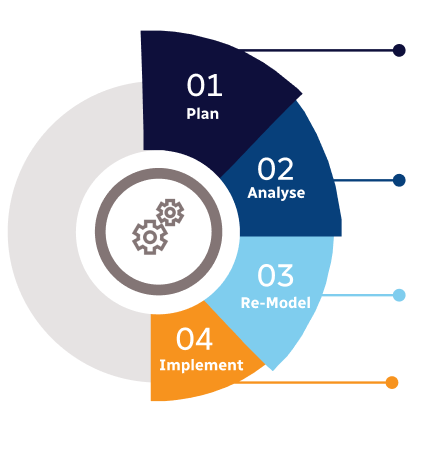
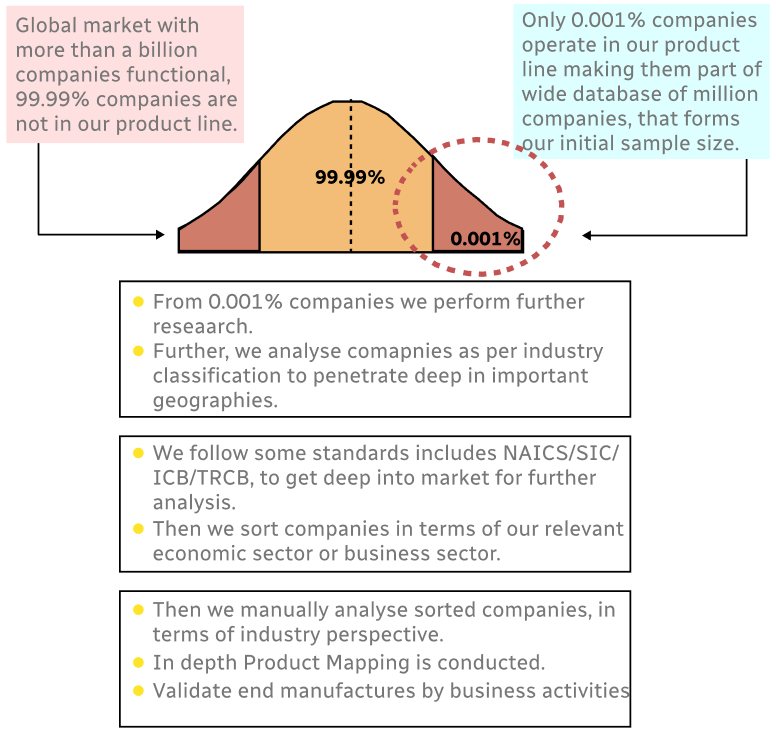
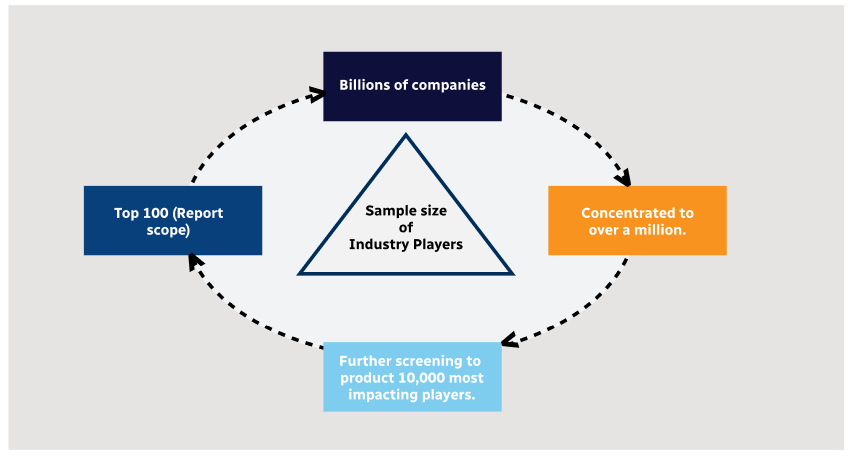
Step 1 - Identification of Relevant Samples Size from Population Database
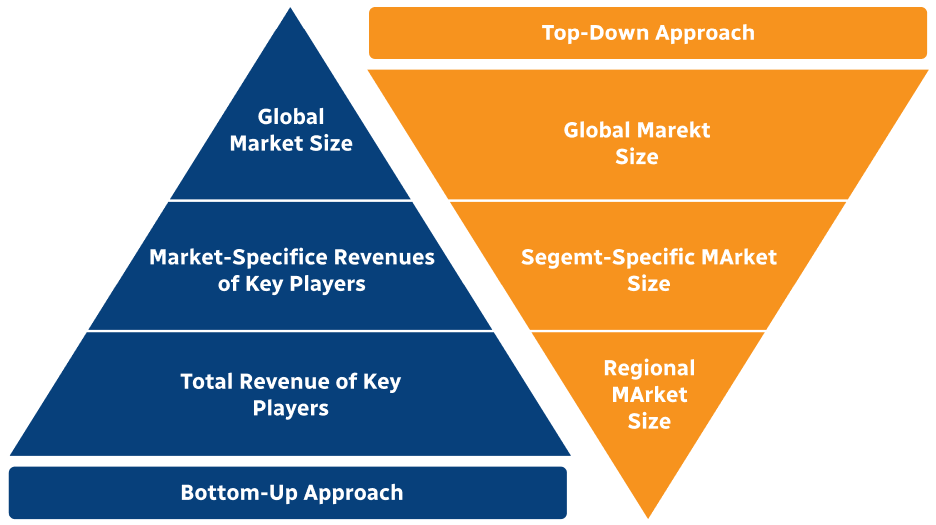
Step 2 - Approaches for Defining Global Market Size (Value, Volume* & Price*)
Note*: In applicable scenarios
Step 3 - Data Sources
Primary Research
- Web Analytics
- Survey Reports
- Research Institute
- Latest Research Reports
- Opinion Leaders
Secondary Research
- Annual Reports
- White Paper
- Latest Press Release
- Industry Association
- Paid Database
- Investor Presentations
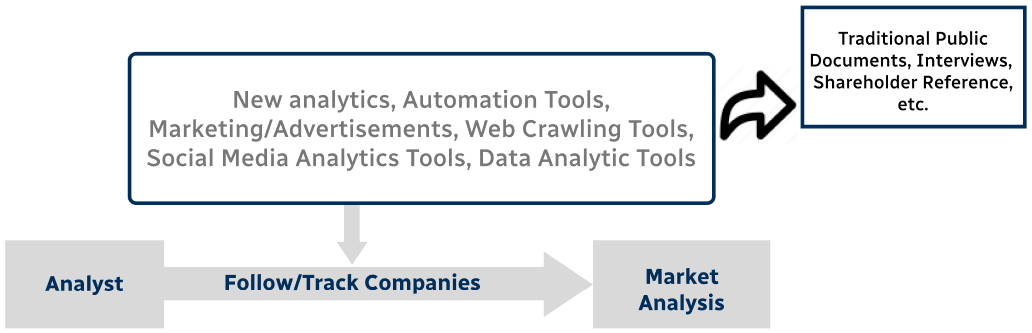
Step 4 - Data Triangulation
Involves using different sources of information in order to increase the validity of a study
These sources are likely to be stakeholders in a program - participants, other researchers, program staff, other community members, and so on.
Then we put all data in single framework & apply various statistical tools to find out the dynamic on the market.
During the analysis stage, feedback from the stakeholder groups would be compared to determine areas of agreement as well as areas of divergence


