


Key Insights
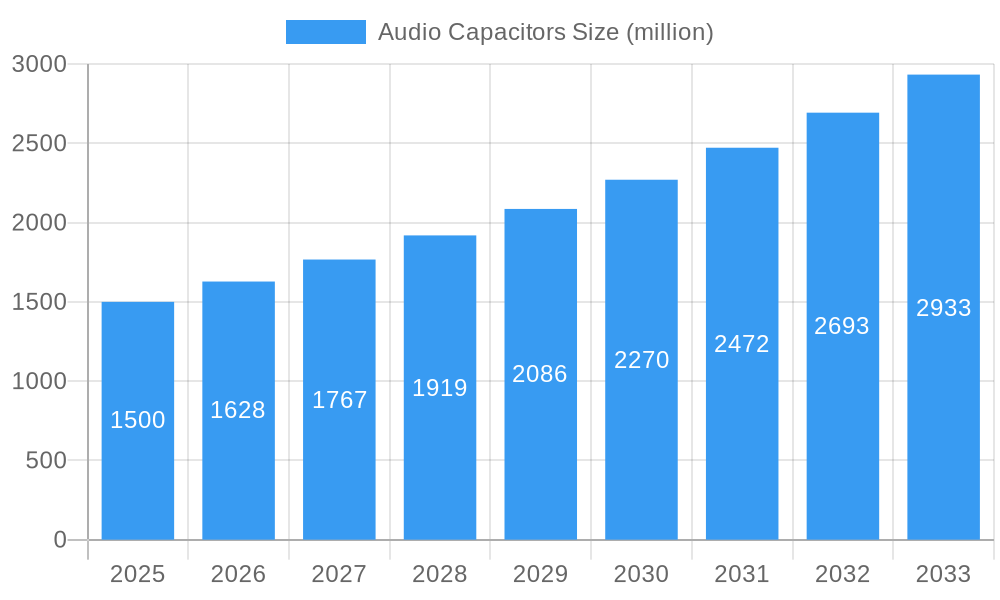
The global audio capacitors market is poised for significant expansion, projected to reach an estimated $1,500 million by 2025, with a robust Compound Annual Growth Rate (CAGR) of 8.5% anticipated throughout the forecast period of 2025-2033. This growth is primarily fueled by the burgeoning demand for high-fidelity audio experiences across a multitude of applications. The portable audio segment, encompassing smartphones, wireless earbuds, and portable speakers, is a major contributor, driven by consumer preference for on-the-go entertainment and the increasing integration of advanced audio processing in these devices. Similarly, the computer audio segment is experiencing a surge due to the growing popularity of gaming, content creation, and the widespread adoption of advanced sound cards and motherboards. The automotive audio sector is also a key growth driver, with manufacturers increasingly prioritizing premium sound systems to enhance the in-car experience and differentiate their vehicles. Furthermore, the home audio segment continues to evolve with the rise of smart home ecosystems and the demand for immersive sound solutions like soundbars and home theater systems.

Audio Capacitors Market Size (In Billion)

The market's expansion is further propelled by technological advancements in capacitor technology, leading to improved performance, smaller form factors, and enhanced durability. Innovations in film capacitors, offering superior linearity and lower distortion, are particularly gaining traction in audiophile-grade equipment. However, the market is not without its challenges. The fluctuating prices of raw materials, coupled with intense competition among established and emerging players, present potential restraints. Geopolitical factors and supply chain disruptions can also impact production and pricing. Despite these hurdles, the persistent consumer appetite for superior audio quality, coupled with the ongoing evolution of audio technology across various sectors, ensures a promising outlook for the audio capacitors market. Key players such as Nichicon, Panasonic, KEMET (YAGEO), and ELNA are actively investing in research and development to cater to the evolving demands of this dynamic industry.
Audio Capacitors Company Market Share
Comprehensive Audio Capacitors Market Report: Global Analysis, Trends, and Forecasts (2019-2033)
This in-depth report provides a detailed analysis of the global Audio Capacitors market, offering critical insights into market structure, competitive dynamics, emerging trends, and future growth trajectories. Leveraging extensive data spanning the historical period (2019–2024), base year (2025), and forecast period (2025–2033), this study is an indispensable resource for stakeholders seeking to navigate the complex landscape of audio capacitor solutions. We examine key segments including Portable Audio, Computer Audio, Home Audio, and Automotive Audio, alongside capacitor types such as Electrolytic Capacitors and Film Capacitors, to offer a holistic market view. With a projected market size in the millions and a robust CAGR, this report equips industry players with actionable intelligence for strategic decision-making.
Audio Capacitors Market Structure & Competitive Dynamics
The global Audio Capacitors market exhibits a moderate level of concentration, with key players such as Nichicon, Panasonic, KEMET (YAGEO), ELNA, and Nippon Chemi-Con holding significant market share. These established companies are characterized by substantial investment in research and development, driving innovation in capacitor technologies for enhanced audio fidelity and performance. The innovation ecosystem thrives on continuous product improvements, miniaturization, and increased efficiency. Regulatory frameworks, while present, are generally supportive of technological advancement, focusing on safety and environmental standards. Product substitutes, such as advanced digital signal processing (DSP) solutions, pose a challenge, but specialized audio capacitors continue to hold a distinct advantage in achieving nuanced sound reproduction. End-user trends are increasingly skewed towards high-fidelity audio experiences, driving demand for premium capacitor solutions across all application segments. Mergers and acquisitions (M&A) activities are observed, though often strategic in nature, aiming to consolidate market presence, acquire complementary technologies, or expand geographical reach. M&A deal values are in the tens to hundreds of millions, reflecting the strategic importance of acquiring specialized expertise or market access within the audio components sector.
Audio Capacitors Industry Trends & Insights
The Audio Capacitors industry is poised for significant growth, propelled by a confluence of technological advancements and evolving consumer demands. A key growth driver is the burgeoning demand for high-fidelity audio experiences across various consumer electronics. The proliferation of smart devices and the increasing emphasis on immersive sound in home entertainment systems, coupled with the growing sophistication of automotive audio systems, are fueling this demand. Technological disruptions, such as the development of advanced dielectric materials and improved manufacturing processes, are leading to capacitors with enhanced performance characteristics, including lower Equivalent Series Resistance (ESR) and improved capacitance stability. These advancements directly translate to superior audio quality, characterized by clearer sound, deeper bass, and a wider dynamic range. Consumer preferences are increasingly shifting towards miniaturization and energy efficiency, pushing manufacturers to develop smaller, more power-efficient capacitors without compromising on audio performance. The competitive landscape is characterized by intense innovation, with companies constantly vying to introduce next-generation audio capacitors that meet stringent audio quality benchmarks. Market penetration for high-performance audio capacitors is steadily increasing, especially within the premium segments of Portable Audio, Home Audio, and Automotive Audio. The market is projected to witness a Compound Annual Growth Rate (CAGR) in the mid-single digits over the forecast period, driven by these persistent trends. The global market size is estimated to reach several billion in the coming years, supported by sustained investment in audio R&D and a growing appreciation for high-quality sound reproduction.
Dominant Markets & Segments in Audio Capacitors
The global Audio Capacitors market is significantly influenced by regional economic policies and the robust infrastructure supporting consumer electronics manufacturing. Home Audio emerges as a dominant application segment, driven by the increasing consumer investment in sophisticated home theater systems, soundbars, and high-resolution audio players. The desire for an immersive listening experience at home fuels the demand for premium audio capacitors that deliver unparalleled sound fidelity. Within this segment, countries with a strong disposable income and a high adoption rate of advanced entertainment technologies, such as those in North America and Western Europe, represent key markets.
- Home Audio: This segment benefits from economic policies that encourage consumer spending on electronics and a well-developed retail infrastructure for audio-visual equipment. The increasing adoption of smart home technology also contributes to the demand for high-performance audio components. Economic growth in emerging economies further bolsters this segment, as more consumers gain access to premium audio solutions.
- Automotive Audio: The automotive sector is another critical driver, with manufacturers increasingly incorporating advanced audio systems as a key differentiator. Stringent emission regulations and the growing adoption of electric vehicles (EVs), which often require noise cancellation solutions, indirectly drive the demand for specialized capacitors. Countries with a strong automotive manufacturing base and a high per capita income for new vehicle purchases are leading this trend.
- Portable Audio: While often characterized by a demand for miniaturization, the portable audio segment, including high-resolution audio players and premium wireless earbuds, also contributes significantly to market growth. Technological advancements enabling better battery life and superior sound quality in compact devices are key drivers.
- Electrolytic Capacitors: This type of capacitor remains a dominant product category due to its cost-effectiveness and high capacitance values, making it suitable for power supply filtering and decoupling in a wide range of audio applications. Manufacturers are focusing on improving their performance in terms of ESR and lifespan, crucial for audio quality.
- Film Capacitors: Valued for their superior linearity, low distortion, and excellent high-frequency performance, film capacitors are increasingly sought after in high-end audio systems where sonic accuracy is paramount. The growth in this segment is driven by audiophile demand and the pursuit of reference-grade audio reproduction.
The dominance of these segments is further reinforced by ongoing technological advancements and the continuous push for higher audio performance across all consumer electronic categories.
Audio Capacitors Product Innovations
Product innovations in the Audio Capacitors market are primarily focused on enhancing sonic accuracy, reducing distortion, and improving signal integrity. Manufacturers are developing advanced film capacitor technologies using novel dielectric materials and optimized construction techniques to achieve exceptionally low equivalent series resistance (ESR) and superior transient response. Electrolytic capacitors are seeing advancements in metallization processes and electrolyte formulations, leading to extended lifespan and improved high-temperature performance without compromising audio quality. Miniaturization remains a key trend, with companies like Nichicon and Panasonic developing compact, high-performance capacitors that cater to the growing demand for smaller, more portable audio devices. These innovations provide a distinct competitive advantage by enabling manufacturers to design more compact, efficient, and sonically superior audio equipment, meeting the evolving demands of audiophiles and general consumers alike.
Report Segmentation & Scope
This report segmentations are based on critical market differentiators to provide a granular view of the Audio Capacitors landscape.
Application Segments: The report thoroughly analyzes the following application segments:
- Portable Audio: Characterized by demand for miniaturization, efficiency, and high-fidelity sound in devices like smartphones, wireless earbuds, and portable music players. Market size is estimated to be in the hundreds of millions, with a projected CAGR of xx% over the forecast period.
- Computer Audio: Encompassing onboard audio solutions, external sound cards, and high-fidelity PC speakers. This segment is driven by the growth of PC gaming and multimedia consumption, with an estimated market size in the hundreds of millions and a projected CAGR of xx%.
- Home Audio: This significant segment includes home theater systems, soundbars, Hi-Fi systems, and AV receivers. It represents the largest market share, projected to reach billions in size with a CAGR of xx%, driven by consumer demand for immersive entertainment.
- Automotive Audio: Focused on in-car audio systems, from standard factory-installed units to premium aftermarket solutions. The increasing sophistication of automotive infotainment systems fuels this segment's growth, with an estimated market size in the hundreds of millions and a projected CAGR of xx%.
- Others: This segment encompasses professional audio equipment, musical instruments, and niche audio applications, contributing a smaller but significant portion to the overall market.
Types Segments: The report also delves into the following capacitor types:
- Electrolytic Capacitors: Dominant in power supply filtering and decoupling due to their high capacitance density and cost-effectiveness. Expected market size in the hundreds of millions with a projected CAGR of xx%.
- Film Capacitors: Essential for their linearity, low distortion, and superior high-frequency performance, particularly in high-end audio circuits. This segment is growing, with an estimated market size in the hundreds of millions and a projected CAGR of xx%.
- Others: This includes various specialized capacitor technologies relevant to audio applications, contributing a smaller portion to the market.
Key Drivers of Audio Capacitors Growth
Several key drivers are propelling the growth of the Audio Capacitors market. The relentless pursuit of enhanced audio fidelity by consumers and professional users is a primary accelerator. Advancements in digital audio technologies, such as high-resolution audio formats, necessitate superior analog components like capacitors to preserve sound quality. The burgeoning consumer electronics market, particularly in emerging economies, fuels demand for audio capacitors across all application segments. Furthermore, the increasing integration of sophisticated audio systems in automotive applications, driven by the desire for in-car entertainment and noise cancellation, presents a significant growth avenue. Technological advancements in capacitor design, leading to improved performance characteristics like lower distortion and wider frequency response, are also crucial enablers.
Challenges in the Audio Capacitors Sector
Despite the robust growth, the Audio Capacitors sector faces several challenges. Price sensitivity in certain segments, especially consumer electronics, can limit the adoption of premium, high-performance capacitors. Supply chain disruptions, as experienced in recent years, can impact the availability and cost of raw materials, affecting production timelines and profitability. Intensifying competition among manufacturers, both established players and new entrants, puts pressure on profit margins. The emergence of advanced digital signal processing (DSP) technologies as an alternative means of achieving certain audio enhancements can also pose a competitive threat, although specialized capacitors remain indispensable for fundamental audio signal conditioning. Regulatory compliance, particularly concerning environmental standards and material sourcing, adds another layer of complexity.
Leading Players in the Audio Capacitors Market
- Nichicon
- Panasonic
- KEMET (YAGEO)
- ELNA
- Toshin Kogyo
- Nippon Chemi-Con
- Amtrans
- JB Capacitor
- CSI Technologies
- Mundorf
- SamYoung Electronics
- Audio Note
- ClarityCap (Charcroft Electronics)
- Dayton Audio
- Intertechnik
- Miflex
- Jiangsu Fala Electronics
- CapXon
- Kuan Kun Electronic
- Nantong Jianghai
- Man Yue Technology
Key Developments in Audio Capacitors Sector
- 2023: Nichicon launched a new series of high-performance electrolytic capacitors with ultra-low ESR for demanding audio applications.
- 2023: KEMET (YAGEO) expanded its film capacitor portfolio with advanced metallized polypropylene film capacitors offering enhanced transient response.
- 2022: Panasonic introduced compact, high-capacitance polymer capacitors designed for improved energy density in portable audio devices.
- 2022: ELNA announced advancements in its electrolytic capacitor technology, focusing on extended lifespan and improved reliability in high-temperature environments.
- 2021: Mundorf introduced its new "Mcap Supreme EVO Silver Gold" film capacitors, targeting the ultra-high-end audiophile market with superior sonic purity.
- 2020: Nippon Chemi-Con unveiled a new generation of aluminum electrolytic capacitors optimized for automotive audio systems, offering enhanced vibration resistance and thermal stability.
Strategic Audio Capacitors Market Outlook
The strategic outlook for the Audio Capacitors market remains exceptionally positive, driven by an unwavering consumer demand for superior audio experiences and continuous technological innovation. Growth accelerators include the ongoing integration of premium audio systems in the automotive sector and the increasing adoption of high-resolution audio formats across all consumer electronics. Opportunities lie in developing specialized capacitors for emerging applications like spatial audio and augmented reality sound. Strategic partnerships between capacitor manufacturers and audio equipment OEMs will be crucial for co-developing solutions that meet evolving performance benchmarks. Investment in R&D focused on advanced materials and manufacturing processes will continue to be a key differentiator, enabling companies to capture a larger share of this growing and dynamic market. The projected market expansion signifies a robust future for high-quality audio components.
Audio Capacitors Segmentation
-
1. Application
- 1.1. Portable Audio
- 1.2. Computer Audio
- 1.3. Home Audio
- 1.4. Automotive Audio
- 1.5. Others
-
2. Types
- 2.1. Electrolytic Capacitors
- 2.2. Film Capacitors
- 2.3. Others
Audio Capacitors Segmentation By Geography
-
1. North America
- 1.1. United States
- 1.2. Canada
- 1.3. Mexico
-
2. South America
- 2.1. Brazil
- 2.2. Argentina
- 2.3. Rest of South America
-
3. Europe
- 3.1. United Kingdom
- 3.2. Germany
- 3.3. France
- 3.4. Italy
- 3.5. Spain
- 3.6. Russia
- 3.7. Benelux
- 3.8. Nordics
- 3.9. Rest of Europe
-
4. Middle East & Africa
- 4.1. Turkey
- 4.2. Israel
- 4.3. GCC
- 4.4. North Africa
- 4.5. South Africa
- 4.6. Rest of Middle East & Africa
-
5. Asia Pacific
- 5.1. China
- 5.2. India
- 5.3. Japan
- 5.4. South Korea
- 5.5. ASEAN
- 5.6. Oceania
- 5.7. Rest of Asia Pacific

Audio Capacitors Regional Market Share
Geographic Coverage of Audio Capacitors
Audio Capacitors REPORT HIGHLIGHTS
| Aspects | Details |
|---|---|
| Study Period | 2020-2034 |
| Base Year | 2025 |
| Estimated Year | 2026 |
| Forecast Period | 2026-2034 |
| Historical Period | 2020-2025 |
| Growth Rate | CAGR of XX% from 2020-2034 |
| Segmentation |
|
Table of Contents
- 1. Introduction
- 1.1. Research Scope
- 1.2. Market Segmentation
- 1.3. Research Methodology
- 1.4. Definitions and Assumptions
- 2. Executive Summary
- 2.1. Introduction
- 3. Market Dynamics
- 3.1. Introduction
- 3.2. Market Drivers
- 3.3. Market Restrains
- 3.4. Market Trends
- 4. Market Factor Analysis
- 4.1. Porters Five Forces
- 4.2. Supply/Value Chain
- 4.3. PESTEL analysis
- 4.4. Market Entropy
- 4.5. Patent/Trademark Analysis
- 5. Global Audio Capacitors Analysis, Insights and Forecast, 2020-2032
- 5.1. Market Analysis, Insights and Forecast - by Application
- 5.1.1. Portable Audio
- 5.1.2. Computer Audio
- 5.1.3. Home Audio
- 5.1.4. Automotive Audio
- 5.1.5. Others
- 5.2. Market Analysis, Insights and Forecast - by Types
- 5.2.1. Electrolytic Capacitors
- 5.2.2. Film Capacitors
- 5.2.3. Others
- 5.3. Market Analysis, Insights and Forecast - by Region
- 5.3.1. North America
- 5.3.2. South America
- 5.3.3. Europe
- 5.3.4. Middle East & Africa
- 5.3.5. Asia Pacific
- 5.1. Market Analysis, Insights and Forecast - by Application
- 6. North America Audio Capacitors Analysis, Insights and Forecast, 2020-2032
- 6.1. Market Analysis, Insights and Forecast - by Application
- 6.1.1. Portable Audio
- 6.1.2. Computer Audio
- 6.1.3. Home Audio
- 6.1.4. Automotive Audio
- 6.1.5. Others
- 6.2. Market Analysis, Insights and Forecast - by Types
- 6.2.1. Electrolytic Capacitors
- 6.2.2. Film Capacitors
- 6.2.3. Others
- 6.1. Market Analysis, Insights and Forecast - by Application
- 7. South America Audio Capacitors Analysis, Insights and Forecast, 2020-2032
- 7.1. Market Analysis, Insights and Forecast - by Application
- 7.1.1. Portable Audio
- 7.1.2. Computer Audio
- 7.1.3. Home Audio
- 7.1.4. Automotive Audio
- 7.1.5. Others
- 7.2. Market Analysis, Insights and Forecast - by Types
- 7.2.1. Electrolytic Capacitors
- 7.2.2. Film Capacitors
- 7.2.3. Others
- 7.1. Market Analysis, Insights and Forecast - by Application
- 8. Europe Audio Capacitors Analysis, Insights and Forecast, 2020-2032
- 8.1. Market Analysis, Insights and Forecast - by Application
- 8.1.1. Portable Audio
- 8.1.2. Computer Audio
- 8.1.3. Home Audio
- 8.1.4. Automotive Audio
- 8.1.5. Others
- 8.2. Market Analysis, Insights and Forecast - by Types
- 8.2.1. Electrolytic Capacitors
- 8.2.2. Film Capacitors
- 8.2.3. Others
- 8.1. Market Analysis, Insights and Forecast - by Application
- 9. Middle East & Africa Audio Capacitors Analysis, Insights and Forecast, 2020-2032
- 9.1. Market Analysis, Insights and Forecast - by Application
- 9.1.1. Portable Audio
- 9.1.2. Computer Audio
- 9.1.3. Home Audio
- 9.1.4. Automotive Audio
- 9.1.5. Others
- 9.2. Market Analysis, Insights and Forecast - by Types
- 9.2.1. Electrolytic Capacitors
- 9.2.2. Film Capacitors
- 9.2.3. Others
- 9.1. Market Analysis, Insights and Forecast - by Application
- 10. Asia Pacific Audio Capacitors Analysis, Insights and Forecast, 2020-2032
- 10.1. Market Analysis, Insights and Forecast - by Application
- 10.1.1. Portable Audio
- 10.1.2. Computer Audio
- 10.1.3. Home Audio
- 10.1.4. Automotive Audio
- 10.1.5. Others
- 10.2. Market Analysis, Insights and Forecast - by Types
- 10.2.1. Electrolytic Capacitors
- 10.2.2. Film Capacitors
- 10.2.3. Others
- 10.1. Market Analysis, Insights and Forecast - by Application
- 11. Competitive Analysis
- 11.1. Global Market Share Analysis 2025
- 11.2. Company Profiles
- 11.2.1 Nichicon
- 11.2.1.1. Overview
- 11.2.1.2. Products
- 11.2.1.3. SWOT Analysis
- 11.2.1.4. Recent Developments
- 11.2.1.5. Financials (Based on Availability)
- 11.2.2 Panasonic
- 11.2.2.1. Overview
- 11.2.2.2. Products
- 11.2.2.3. SWOT Analysis
- 11.2.2.4. Recent Developments
- 11.2.2.5. Financials (Based on Availability)
- 11.2.3 KEMET (YAGEO)
- 11.2.3.1. Overview
- 11.2.3.2. Products
- 11.2.3.3. SWOT Analysis
- 11.2.3.4. Recent Developments
- 11.2.3.5. Financials (Based on Availability)
- 11.2.4 ELNA
- 11.2.4.1. Overview
- 11.2.4.2. Products
- 11.2.4.3. SWOT Analysis
- 11.2.4.4. Recent Developments
- 11.2.4.5. Financials (Based on Availability)
- 11.2.5 Toshin Kogyo
- 11.2.5.1. Overview
- 11.2.5.2. Products
- 11.2.5.3. SWOT Analysis
- 11.2.5.4. Recent Developments
- 11.2.5.5. Financials (Based on Availability)
- 11.2.6 Nippon Chemi-Con
- 11.2.6.1. Overview
- 11.2.6.2. Products
- 11.2.6.3. SWOT Analysis
- 11.2.6.4. Recent Developments
- 11.2.6.5. Financials (Based on Availability)
- 11.2.7 Amtrans
- 11.2.7.1. Overview
- 11.2.7.2. Products
- 11.2.7.3. SWOT Analysis
- 11.2.7.4. Recent Developments
- 11.2.7.5. Financials (Based on Availability)
- 11.2.8 JB Capacitor
- 11.2.8.1. Overview
- 11.2.8.2. Products
- 11.2.8.3. SWOT Analysis
- 11.2.8.4. Recent Developments
- 11.2.8.5. Financials (Based on Availability)
- 11.2.9 CSI Technologies
- 11.2.9.1. Overview
- 11.2.9.2. Products
- 11.2.9.3. SWOT Analysis
- 11.2.9.4. Recent Developments
- 11.2.9.5. Financials (Based on Availability)
- 11.2.10 Mundorf
- 11.2.10.1. Overview
- 11.2.10.2. Products
- 11.2.10.3. SWOT Analysis
- 11.2.10.4. Recent Developments
- 11.2.10.5. Financials (Based on Availability)
- 11.2.11 SamYoung Electronics
- 11.2.11.1. Overview
- 11.2.11.2. Products
- 11.2.11.3. SWOT Analysis
- 11.2.11.4. Recent Developments
- 11.2.11.5. Financials (Based on Availability)
- 11.2.12 Audio Note
- 11.2.12.1. Overview
- 11.2.12.2. Products
- 11.2.12.3. SWOT Analysis
- 11.2.12.4. Recent Developments
- 11.2.12.5. Financials (Based on Availability)
- 11.2.13 ClarityCap (Charcroft Electronics)
- 11.2.13.1. Overview
- 11.2.13.2. Products
- 11.2.13.3. SWOT Analysis
- 11.2.13.4. Recent Developments
- 11.2.13.5. Financials (Based on Availability)
- 11.2.14 Dayton Audio
- 11.2.14.1. Overview
- 11.2.14.2. Products
- 11.2.14.3. SWOT Analysis
- 11.2.14.4. Recent Developments
- 11.2.14.5. Financials (Based on Availability)
- 11.2.15 Intertechnik
- 11.2.15.1. Overview
- 11.2.15.2. Products
- 11.2.15.3. SWOT Analysis
- 11.2.15.4. Recent Developments
- 11.2.15.5. Financials (Based on Availability)
- 11.2.16 Miflex
- 11.2.16.1. Overview
- 11.2.16.2. Products
- 11.2.16.3. SWOT Analysis
- 11.2.16.4. Recent Developments
- 11.2.16.5. Financials (Based on Availability)
- 11.2.17 Jiangsu Fala Electronics
- 11.2.17.1. Overview
- 11.2.17.2. Products
- 11.2.17.3. SWOT Analysis
- 11.2.17.4. Recent Developments
- 11.2.17.5. Financials (Based on Availability)
- 11.2.18 CapXon
- 11.2.18.1. Overview
- 11.2.18.2. Products
- 11.2.18.3. SWOT Analysis
- 11.2.18.4. Recent Developments
- 11.2.18.5. Financials (Based on Availability)
- 11.2.19 Kuan Kun Electronic
- 11.2.19.1. Overview
- 11.2.19.2. Products
- 11.2.19.3. SWOT Analysis
- 11.2.19.4. Recent Developments
- 11.2.19.5. Financials (Based on Availability)
- 11.2.20 Nantong Jianghai
- 11.2.20.1. Overview
- 11.2.20.2. Products
- 11.2.20.3. SWOT Analysis
- 11.2.20.4. Recent Developments
- 11.2.20.5. Financials (Based on Availability)
- 11.2.21 Man Yue Technology
- 11.2.21.1. Overview
- 11.2.21.2. Products
- 11.2.21.3. SWOT Analysis
- 11.2.21.4. Recent Developments
- 11.2.21.5. Financials (Based on Availability)
- 11.2.1 Nichicon
List of Figures
- Figure 1: Global Audio Capacitors Revenue Breakdown (million, %) by Region 2025 & 2033
- Figure 2: North America Audio Capacitors Revenue (million), by Application 2025 & 2033
- Figure 3: North America Audio Capacitors Revenue Share (%), by Application 2025 & 2033
- Figure 4: North America Audio Capacitors Revenue (million), by Types 2025 & 2033
- Figure 5: North America Audio Capacitors Revenue Share (%), by Types 2025 & 2033
- Figure 6: North America Audio Capacitors Revenue (million), by Country 2025 & 2033
- Figure 7: North America Audio Capacitors Revenue Share (%), by Country 2025 & 2033
- Figure 8: South America Audio Capacitors Revenue (million), by Application 2025 & 2033
- Figure 9: South America Audio Capacitors Revenue Share (%), by Application 2025 & 2033
- Figure 10: South America Audio Capacitors Revenue (million), by Types 2025 & 2033
- Figure 11: South America Audio Capacitors Revenue Share (%), by Types 2025 & 2033
- Figure 12: South America Audio Capacitors Revenue (million), by Country 2025 & 2033
- Figure 13: South America Audio Capacitors Revenue Share (%), by Country 2025 & 2033
- Figure 14: Europe Audio Capacitors Revenue (million), by Application 2025 & 2033
- Figure 15: Europe Audio Capacitors Revenue Share (%), by Application 2025 & 2033
- Figure 16: Europe Audio Capacitors Revenue (million), by Types 2025 & 2033
- Figure 17: Europe Audio Capacitors Revenue Share (%), by Types 2025 & 2033
- Figure 18: Europe Audio Capacitors Revenue (million), by Country 2025 & 2033
- Figure 19: Europe Audio Capacitors Revenue Share (%), by Country 2025 & 2033
- Figure 20: Middle East & Africa Audio Capacitors Revenue (million), by Application 2025 & 2033
- Figure 21: Middle East & Africa Audio Capacitors Revenue Share (%), by Application 2025 & 2033
- Figure 22: Middle East & Africa Audio Capacitors Revenue (million), by Types 2025 & 2033
- Figure 23: Middle East & Africa Audio Capacitors Revenue Share (%), by Types 2025 & 2033
- Figure 24: Middle East & Africa Audio Capacitors Revenue (million), by Country 2025 & 2033
- Figure 25: Middle East & Africa Audio Capacitors Revenue Share (%), by Country 2025 & 2033
- Figure 26: Asia Pacific Audio Capacitors Revenue (million), by Application 2025 & 2033
- Figure 27: Asia Pacific Audio Capacitors Revenue Share (%), by Application 2025 & 2033
- Figure 28: Asia Pacific Audio Capacitors Revenue (million), by Types 2025 & 2033
- Figure 29: Asia Pacific Audio Capacitors Revenue Share (%), by Types 2025 & 2033
- Figure 30: Asia Pacific Audio Capacitors Revenue (million), by Country 2025 & 2033
- Figure 31: Asia Pacific Audio Capacitors Revenue Share (%), by Country 2025 & 2033
List of Tables
- Table 1: Global Audio Capacitors Revenue million Forecast, by Application 2020 & 2033
- Table 2: Global Audio Capacitors Revenue million Forecast, by Types 2020 & 2033
- Table 3: Global Audio Capacitors Revenue million Forecast, by Region 2020 & 2033
- Table 4: Global Audio Capacitors Revenue million Forecast, by Application 2020 & 2033
- Table 5: Global Audio Capacitors Revenue million Forecast, by Types 2020 & 2033
- Table 6: Global Audio Capacitors Revenue million Forecast, by Country 2020 & 2033
- Table 7: United States Audio Capacitors Revenue (million) Forecast, by Application 2020 & 2033
- Table 8: Canada Audio Capacitors Revenue (million) Forecast, by Application 2020 & 2033
- Table 9: Mexico Audio Capacitors Revenue (million) Forecast, by Application 2020 & 2033
- Table 10: Global Audio Capacitors Revenue million Forecast, by Application 2020 & 2033
- Table 11: Global Audio Capacitors Revenue million Forecast, by Types 2020 & 2033
- Table 12: Global Audio Capacitors Revenue million Forecast, by Country 2020 & 2033
- Table 13: Brazil Audio Capacitors Revenue (million) Forecast, by Application 2020 & 2033
- Table 14: Argentina Audio Capacitors Revenue (million) Forecast, by Application 2020 & 2033
- Table 15: Rest of South America Audio Capacitors Revenue (million) Forecast, by Application 2020 & 2033
- Table 16: Global Audio Capacitors Revenue million Forecast, by Application 2020 & 2033
- Table 17: Global Audio Capacitors Revenue million Forecast, by Types 2020 & 2033
- Table 18: Global Audio Capacitors Revenue million Forecast, by Country 2020 & 2033
- Table 19: United Kingdom Audio Capacitors Revenue (million) Forecast, by Application 2020 & 2033
- Table 20: Germany Audio Capacitors Revenue (million) Forecast, by Application 2020 & 2033
- Table 21: France Audio Capacitors Revenue (million) Forecast, by Application 2020 & 2033
- Table 22: Italy Audio Capacitors Revenue (million) Forecast, by Application 2020 & 2033
- Table 23: Spain Audio Capacitors Revenue (million) Forecast, by Application 2020 & 2033
- Table 24: Russia Audio Capacitors Revenue (million) Forecast, by Application 2020 & 2033
- Table 25: Benelux Audio Capacitors Revenue (million) Forecast, by Application 2020 & 2033
- Table 26: Nordics Audio Capacitors Revenue (million) Forecast, by Application 2020 & 2033
- Table 27: Rest of Europe Audio Capacitors Revenue (million) Forecast, by Application 2020 & 2033
- Table 28: Global Audio Capacitors Revenue million Forecast, by Application 2020 & 2033
- Table 29: Global Audio Capacitors Revenue million Forecast, by Types 2020 & 2033
- Table 30: Global Audio Capacitors Revenue million Forecast, by Country 2020 & 2033
- Table 31: Turkey Audio Capacitors Revenue (million) Forecast, by Application 2020 & 2033
- Table 32: Israel Audio Capacitors Revenue (million) Forecast, by Application 2020 & 2033
- Table 33: GCC Audio Capacitors Revenue (million) Forecast, by Application 2020 & 2033
- Table 34: North Africa Audio Capacitors Revenue (million) Forecast, by Application 2020 & 2033
- Table 35: South Africa Audio Capacitors Revenue (million) Forecast, by Application 2020 & 2033
- Table 36: Rest of Middle East & Africa Audio Capacitors Revenue (million) Forecast, by Application 2020 & 2033
- Table 37: Global Audio Capacitors Revenue million Forecast, by Application 2020 & 2033
- Table 38: Global Audio Capacitors Revenue million Forecast, by Types 2020 & 2033
- Table 39: Global Audio Capacitors Revenue million Forecast, by Country 2020 & 2033
- Table 40: China Audio Capacitors Revenue (million) Forecast, by Application 2020 & 2033
- Table 41: India Audio Capacitors Revenue (million) Forecast, by Application 2020 & 2033
- Table 42: Japan Audio Capacitors Revenue (million) Forecast, by Application 2020 & 2033
- Table 43: South Korea Audio Capacitors Revenue (million) Forecast, by Application 2020 & 2033
- Table 44: ASEAN Audio Capacitors Revenue (million) Forecast, by Application 2020 & 2033
- Table 45: Oceania Audio Capacitors Revenue (million) Forecast, by Application 2020 & 2033
- Table 46: Rest of Asia Pacific Audio Capacitors Revenue (million) Forecast, by Application 2020 & 2033
Frequently Asked Questions
1. What is the projected Compound Annual Growth Rate (CAGR) of the Audio Capacitors?
The projected CAGR is approximately XX%.
2. Which companies are prominent players in the Audio Capacitors?
Key companies in the market include Nichicon, Panasonic, KEMET (YAGEO), ELNA, Toshin Kogyo, Nippon Chemi-Con, Amtrans, JB Capacitor, CSI Technologies, Mundorf, SamYoung Electronics, Audio Note, ClarityCap (Charcroft Electronics), Dayton Audio, Intertechnik, Miflex, Jiangsu Fala Electronics, CapXon, Kuan Kun Electronic, Nantong Jianghai, Man Yue Technology.
3. What are the main segments of the Audio Capacitors?
The market segments include Application, Types.
4. Can you provide details about the market size?
The market size is estimated to be USD XXX million as of 2022.
5. What are some drivers contributing to market growth?
N/A
6. What are the notable trends driving market growth?
N/A
7. Are there any restraints impacting market growth?
N/A
8. Can you provide examples of recent developments in the market?
N/A
9. What pricing options are available for accessing the report?
Pricing options include single-user, multi-user, and enterprise licenses priced at USD 2900.00, USD 4350.00, and USD 5800.00 respectively.
10. Is the market size provided in terms of value or volume?
The market size is provided in terms of value, measured in million.
11. Are there any specific market keywords associated with the report?
Yes, the market keyword associated with the report is "Audio Capacitors," which aids in identifying and referencing the specific market segment covered.
12. How do I determine which pricing option suits my needs best?
The pricing options vary based on user requirements and access needs. Individual users may opt for single-user licenses, while businesses requiring broader access may choose multi-user or enterprise licenses for cost-effective access to the report.
13. Are there any additional resources or data provided in the Audio Capacitors report?
While the report offers comprehensive insights, it's advisable to review the specific contents or supplementary materials provided to ascertain if additional resources or data are available.
14. How can I stay updated on further developments or reports in the Audio Capacitors?
To stay informed about further developments, trends, and reports in the Audio Capacitors, consider subscribing to industry newsletters, following relevant companies and organizations, or regularly checking reputable industry news sources and publications.
Methodology
Step 1 - Identification of Relevant Samples Size from Population Database
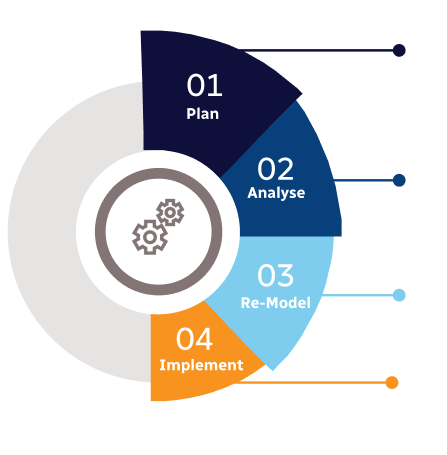
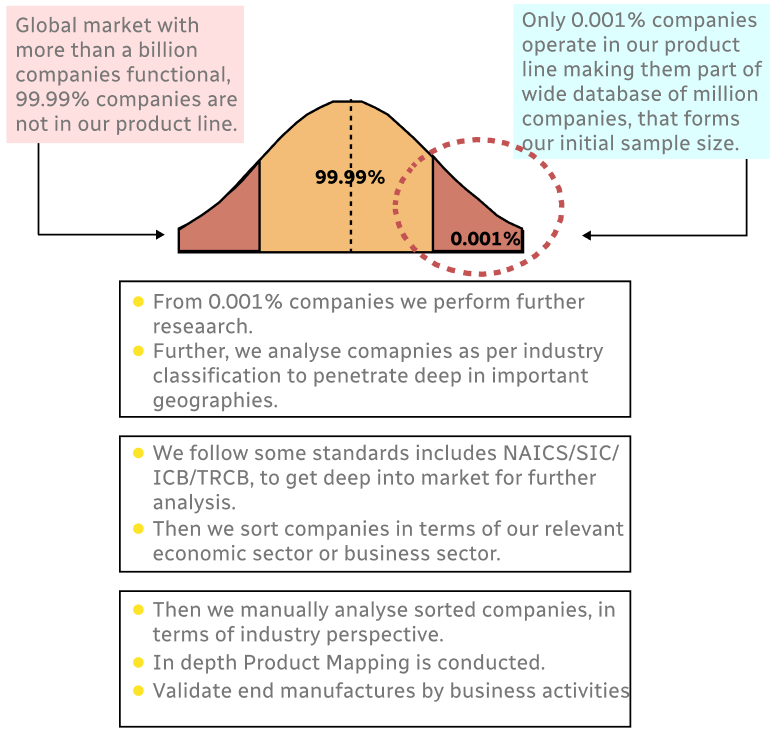
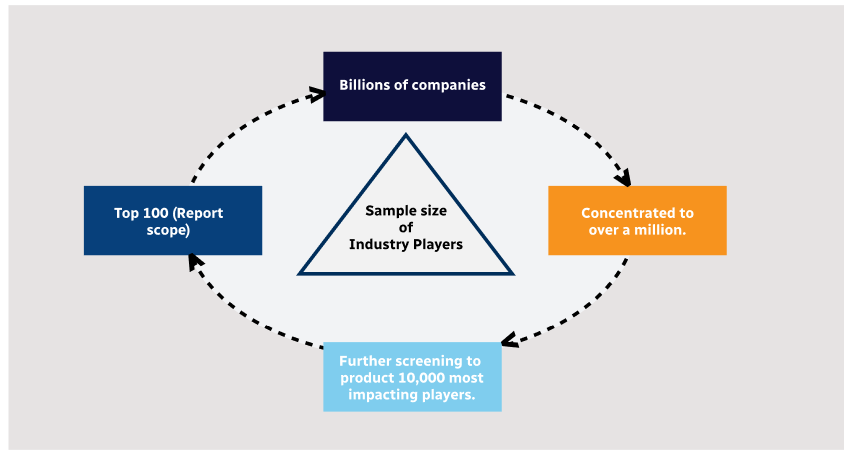
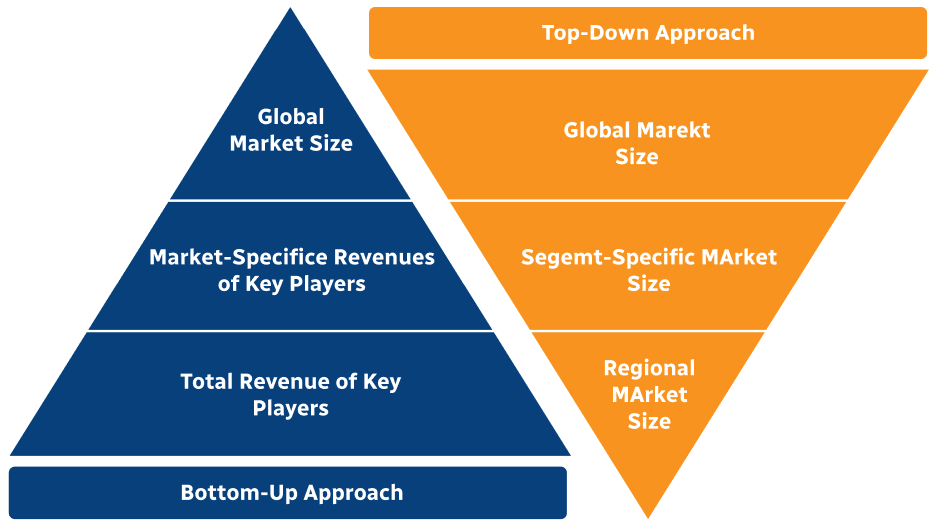
Step 2 - Approaches for Defining Global Market Size (Value, Volume* & Price*)
Note*: In applicable scenarios
Step 3 - Data Sources
Primary Research
- Web Analytics
- Survey Reports
- Research Institute
- Latest Research Reports
- Opinion Leaders
Secondary Research
- Annual Reports
- White Paper
- Latest Press Release
- Industry Association
- Paid Database
- Investor Presentations
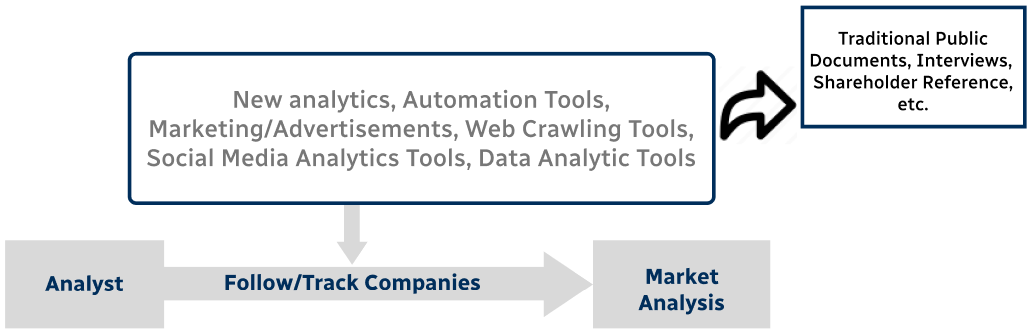
Step 4 - Data Triangulation
Involves using different sources of information in order to increase the validity of a study
These sources are likely to be stakeholders in a program - participants, other researchers, program staff, other community members, and so on.
Then we put all data in single framework & apply various statistical tools to find out the dynamic on the market.
During the analysis stage, feedback from the stakeholder groups would be compared to determine areas of agreement as well as areas of divergence