


Key Insights
The global Ambulatory Surgery Center (ASC) market is poised for substantial growth, projected to reach an estimated USD 99,650 million by 2025, expanding at a Compound Annual Growth Rate (CAGR) of 4.9% through 2033. This robust expansion is fueled by several key drivers, including the increasing demand for minimally invasive procedures, favorable reimbursement policies for outpatient surgeries, and a growing preference among patients for convenient, cost-effective, and less disruptive healthcare options. The rising prevalence of chronic diseases and the aging global population also contribute significantly to the demand for specialized surgical interventions that can be performed in an ASC setting, minimizing hospital stays and associated risks. Furthermore, technological advancements in surgical equipment and techniques are enabling a wider range of complex procedures to be safely and effectively conducted in outpatient facilities, further bolstering market growth.
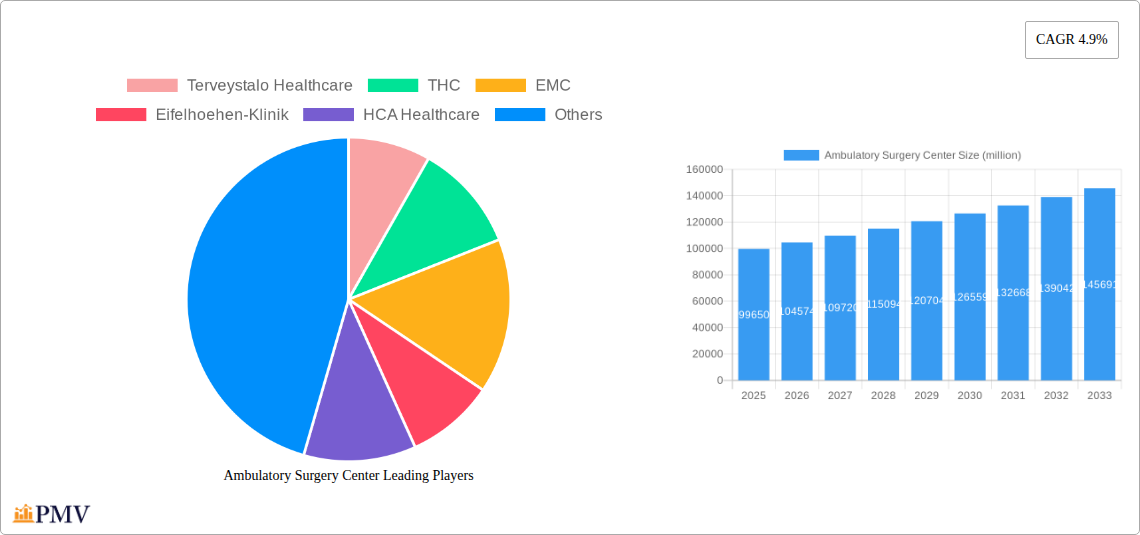
Ambulatory Surgery Center Market Size (In Billion)

The ASC market is segmented by application into key areas such as Ophthalmology, Pain Management, Gastroenterology, and Orthopedics, with Ophthalmology and Orthopedics expected to lead the charge due to the high volume of procedures performed in these specialties. Single-specialty centers are anticipated to maintain a strong presence, catering to specific patient needs, while multi-specialty centers are likely to gain traction by offering a broader spectrum of services. Geographically, North America is expected to continue its dominance in the ASC market, driven by advanced healthcare infrastructure, high patient awareness, and supportive regulatory frameworks. Europe and the Asia Pacific region are also projected to witness significant growth, influenced by expanding healthcare access, increasing disposable incomes, and the adoption of outpatient surgical models. Key players like HCA Healthcare, Terveystalo Healthcare, and EMC are actively expanding their presence and service offerings to capitalize on these market trends.
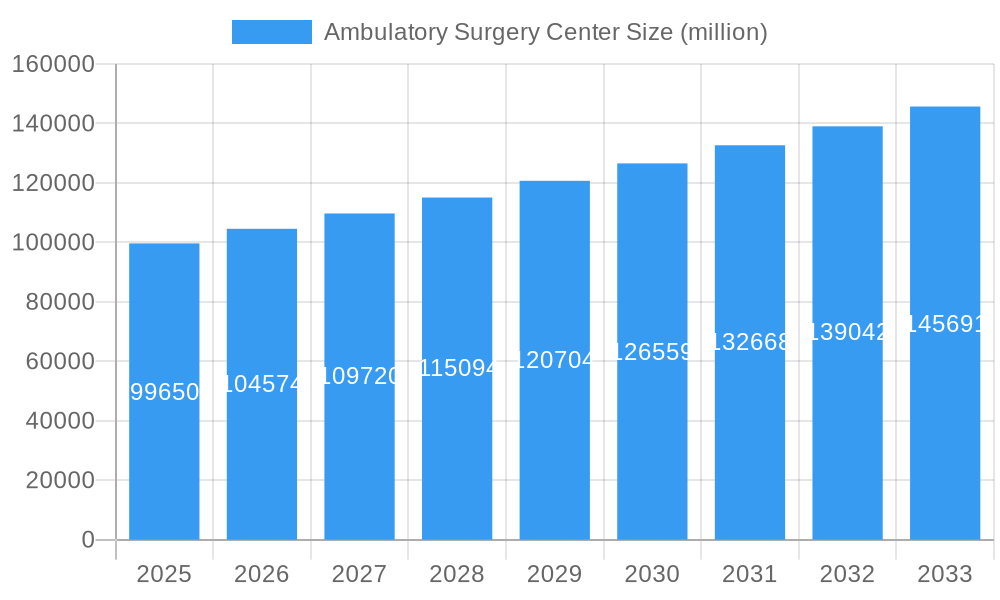
Ambulatory Surgery Center Company Market Share
This in-depth market research report provides a detailed analysis of the global Ambulatory Surgery Center (ASC) market, encompassing its structure, competitive dynamics, industry trends, dominant segments, and future outlook. With a study period spanning from 2019 to 2033, including a base year of 2025 and a forecast period from 2025 to 2033, this report offers actionable insights for stakeholders seeking to navigate the evolving ASC landscape. The report analyzes market concentration, innovation ecosystems, regulatory frameworks, product substitutes, end-user trends, and Mergers & Acquisitions (M&A) activities. It highlights leading companies such as Terveystalo Healthcare, THC, EMC, Eifelhoehen-Klinik, HCA Healthcare, Bambino Gesù, Royal Berkshire, Institut Jules Bordet, L’Institut Curie, Heidelberg, Schonklinik, Northway, Le CHU de Toulouse, Maurizio Bufalini, and Asklepios. Key application segments include Ophthalmology, Pain Management, Gastroenterology, Orthopedics, and Others, while types analyzed are Single-specialty Centers and Multi-specialty Centers.
Ambulatory Surgery Center Market Structure & Competitive Dynamics
The global Ambulatory Surgery Center market exhibits a dynamic structure characterized by a growing number of specialized and multi-specialty centers. Market concentration varies regionally, with mature markets often displaying higher consolidation. Innovation ecosystems are thriving, driven by advancements in minimally invasive techniques, robotic surgery, and patient-centric care models. Regulatory frameworks play a pivotal role, influencing accreditation, reimbursement policies, and operational standards for ASCs. Product substitutes, while present in some procedural areas, are increasingly being integrated within the ASC model due to cost-effectiveness and patient convenience. End-user trends strongly favor outpatient care, driven by patient preference for shorter recovery times and lower healthcare costs.
- Market Concentration: Moderate to high in developed economies, with significant presence of large healthcare networks.
- Innovation Ecosystems: Rapid adoption of new surgical technologies and digital health solutions.
- Regulatory Frameworks: Stringent accreditation processes and evolving reimbursement landscapes.
- Product Substitutes: Limited for specialized procedures, but traditional hospital settings represent a substitute for some cases.
- End-User Trends: Increasing demand for convenient, cost-effective, and minimally invasive surgical options.
- M&A Activities: Active, with strategic acquisitions aimed at expanding service portfolios and geographic reach. Recent M&A deal values are estimated to be in the range of several hundred million dollars annually across the industry.
Ambulatory Surgery Center Industry Trends & Insights
The Ambulatory Surgery Center industry is experiencing robust growth, driven by a confluence of technological advancements, favorable demographic shifts, and evolving healthcare delivery models. The increasing prevalence of chronic diseases requiring surgical intervention, coupled with an aging global population, fuels consistent demand for surgical procedures. Furthermore, the push towards value-based healthcare and the inherent cost-efficiency of ASCs compared to traditional hospitals are significant growth accelerators. Technological disruptions, including the adoption of advanced diagnostic tools, robotic-assisted surgery, and telehealth for pre- and post-operative care, are enhancing the capabilities and appeal of ASCs. Consumer preferences are increasingly leaning towards outpatient settings due to benefits such as reduced infection risk, quicker recovery, and greater convenience. Competitive dynamics are intensifying as both independent centers and integrated health systems expand their ASC footprints. The market penetration of ASCs is steadily rising across various specialties, indicating a structural shift in surgical care delivery. The Compound Annual Growth Rate (CAGR) for the ASC market is projected to be in the XX% range for the forecast period.
Dominant Markets & Segments in Ambulatory Surgery Center
North America, particularly the United States, currently dominates the global Ambulatory Surgery Center market, driven by established reimbursement policies, advanced healthcare infrastructure, and a high adoption rate of outpatient procedures. Within North America, the Orthopedics segment demonstrates significant dominance, owing to the rising incidence of orthopedic conditions and the suitability of many orthopedic procedures for outpatient settings. The Ophthalmology segment also holds a substantial market share, with a high volume of routine procedures like cataract surgeries being performed in ASCs. Pain Management is another key segment experiencing rapid expansion, driven by the increasing prevalence of chronic pain conditions. Gastroenterology procedures, such as endoscopies, are also a significant contributor to ASC revenue.
- Leading Region: North America (specifically the USA)
- Key Drivers: Favorable reimbursement policies, high patient acceptance of outpatient care, strong presence of specialized ASCs, robust healthcare infrastructure.
- Dominant Application Segment: Orthopedics
- Key Drivers: Growing incidence of musculoskeletal disorders, increasing demand for joint replacement surgeries, advancements in minimally invasive orthopedic techniques, cost-effectiveness of ASCs for these procedures.
- Dominant Type: Multi-specialty Centers
- Key Drivers: Operational efficiencies, broader service offerings catering to diverse patient needs, ability to leverage shared resources and expertise, economies of scale.
- Other Significant Application Segments:
- Ophthalmology: High volume of cataract surgeries, low complication rates, rapid patient recovery.
- Pain Management: Rising prevalence of chronic pain, increasing demand for interventional pain procedures.
- Gastroenterology: Routine diagnostic and therapeutic procedures like colonoscopies and endoscopies.
Ambulatory Surgery Center Product Innovations
Product innovations in the Ambulatory Surgery Center market are predominantly focused on enhancing patient outcomes, improving procedural efficiency, and expanding the range of services offered in outpatient settings. Advancements in minimally invasive surgical instruments, robotic-assisted surgery platforms, and specialized implants are transforming complex procedures into same-day surgeries. The integration of advanced imaging technologies and AI-powered diagnostic tools is also enabling earlier and more accurate diagnoses, further supporting the ASC model. These innovations provide competitive advantages by allowing ASCs to attract more patients, offer a wider array of treatments, and achieve better clinical results with shorter recovery times, aligning perfectly with market demand for convenient and effective surgical care.
Report Segmentation & Scope
This report meticulously segments the global Ambulatory Surgery Center market across key application areas and center types to provide a granular understanding of market dynamics. The Ophthalmology segment is projected to grow at a CAGR of XX% and is expected to reach a market size of several billion dollars by 2033, driven by the high volume of cataract surgeries. Pain Management is anticipated to exhibit a robust CAGR of XX%, with its market size reaching hundreds of millions of dollars, fueled by the increasing demand for interventional pain therapies. The Gastroenterology segment is expected to grow at XX% CAGR, contributing several hundred million dollars in market value. Orthopedics is poised for significant expansion at a XX% CAGR, with its market size projected to exceed a billion dollars, due to the growing adoption of outpatient joint and spine procedures. The Others segment, encompassing various specialties, will also contribute to overall market growth. In terms of center types, Single-specialty Centers are expected to maintain steady growth, while Multi-specialty Centers are anticipated to lead in terms of market share and growth rate, benefiting from economies of scale and broader service offerings.
Key Drivers of Ambulatory Surgery Center Growth
The Ambulatory Surgery Center market is propelled by several key drivers, including technological advancements, favorable economic conditions, and evolving regulatory landscapes. Technological innovations in minimally invasive surgery, robotic assistance, and improved anesthetic techniques enable a wider range of complex procedures to be performed safely and effectively in outpatient settings. Economically, the inherent cost-effectiveness of ASCs compared to hospitals, coupled with increasing healthcare expenditure and a growing emphasis on value-based care, drives patient and payer preference. Regulatory bodies and government initiatives that support outpatient care and streamline accreditation processes also play a crucial role. For instance, policy changes that expand Medicare coverage for ASC-performed procedures directly contribute to market growth.
- Technological Advancements: Adoption of minimally invasive techniques, robotic surgery, and advanced imaging.
- Cost-Effectiveness: ASCs offer a lower-cost alternative to hospital-based procedures.
- Patient Preference: Demand for convenience, reduced infection risk, and faster recovery times.
- Favorable Reimbursement Policies: Expansion of coverage for ASC services by payers.
- Aging Population: Increased prevalence of conditions requiring surgical intervention.
Challenges in the Ambulatory Surgery Center Sector
Despite its robust growth trajectory, the Ambulatory Surgery Center sector faces several challenges that could impact its expansion. Regulatory hurdles, including stringent accreditation requirements and evolving compliance standards, can pose barriers to entry and increase operational costs. Supply chain disruptions, particularly for specialized medical equipment and pharmaceuticals, can affect service delivery and availability. Intense competitive pressure from both established hospital systems and other ASCs necessitates continuous innovation and cost management. Furthermore, the availability of skilled healthcare professionals, including surgeons and nursing staff, can be a limiting factor in certain regions. Public perception and the occasional need for urgent transfer to a hospital setting for unforeseen complications can also present challenges, although the industry is actively working to mitigate these risks.
- Regulatory Compliance: Navigating complex and changing accreditation and licensing requirements.
- Staffing Shortages: Recruiting and retaining qualified surgeons, nurses, and support staff.
- Reimbursement Uncertainty: Fluctuations in payer reimbursement rates and policies.
- Technological Integration Costs: Significant investment required for adopting new surgical technologies.
- Cybersecurity Threats: Protecting sensitive patient data in an increasingly digital environment.
Leading Players in the Ambulatory Surgery Center Market
- Terveystalo Healthcare
- THC
- EMC
- Eifelhoehen-Klinik
- HCA Healthcare
- Bambino Gesù
- Royal Berkshire
- Institut Jules Bordet
- L’Institut Curie
- Heidelberg
- Schonklinik
- Northway
- Le CHU de Toulouse
- Maurizio Bufalini
- Asklepios
Key Developments in Ambulatory Surgery Center Sector
- 2023: HCA Healthcare announces expansion of its outpatient surgical services, opening new ASC facilities in key growth markets.
- 2023: Terveystalo Healthcare enhances its digital patient engagement platform, offering virtual pre-operative consultations for ASC procedures.
- 2022: Northway invests in robotic-assisted surgery technology for its orthopedic ASCs, improving precision and patient outcomes.
- 2022: Eifelhoehen-Klinik expands its gastroenterology services at its ambulatory surgery center, incorporating advanced diagnostic endoscopy.
- 2021: Several leading ASCs, including those operated by Asklepios and Schonklinik, report significant increases in same-day surgical case volumes post-pandemic.
- 2020: Bambino Gesù and Institut Jules Bordet focus on optimizing patient flow and reducing wait times in their pediatric ambulatory surgery centers.
Strategic Ambulatory Surgery Center Market Outlook
The strategic outlook for the Ambulatory Surgery Center market remains exceptionally positive, driven by ongoing demographic shifts and the persistent demand for efficient and cost-effective healthcare solutions. Future growth will be fueled by the expansion of service lines into more complex procedures, the wider adoption of advanced medical technologies like AI and personalized medicine, and the increasing integration of ASCs into larger healthcare networks. Key strategic opportunities lie in capitalizing on the growing demand for elective surgeries, enhancing patient experience through digital integration and personalized care, and exploring new geographic markets. Partnerships and collaborations between ASCs, technology providers, and payers will be crucial for navigating the evolving healthcare landscape and securing long-term growth and market leadership. The market is projected to continue its upward trajectory, offering substantial returns for strategically positioned players.
Ambulatory Surgery Center Segmentation
-
1. Application
- 1.1. Ophthalmology
- 1.2. Pain Management
- 1.3. Gastroenterology
- 1.4. Orthopedics
- 1.5. Others
-
2. Types
- 2.1. Single-specialty Centers
- 2.2. Multi-specialty Centers
Ambulatory Surgery Center Segmentation By Geography
-
1. North America
- 1.1. United States
- 1.2. Canada
- 1.3. Mexico
-
2. South America
- 2.1. Brazil
- 2.2. Argentina
- 2.3. Rest of South America
-
3. Europe
- 3.1. United Kingdom
- 3.2. Germany
- 3.3. France
- 3.4. Italy
- 3.5. Spain
- 3.6. Russia
- 3.7. Benelux
- 3.8. Nordics
- 3.9. Rest of Europe
-
4. Middle East & Africa
- 4.1. Turkey
- 4.2. Israel
- 4.3. GCC
- 4.4. North Africa
- 4.5. South Africa
- 4.6. Rest of Middle East & Africa
-
5. Asia Pacific
- 5.1. China
- 5.2. India
- 5.3. Japan
- 5.4. South Korea
- 5.5. ASEAN
- 5.6. Oceania
- 5.7. Rest of Asia Pacific
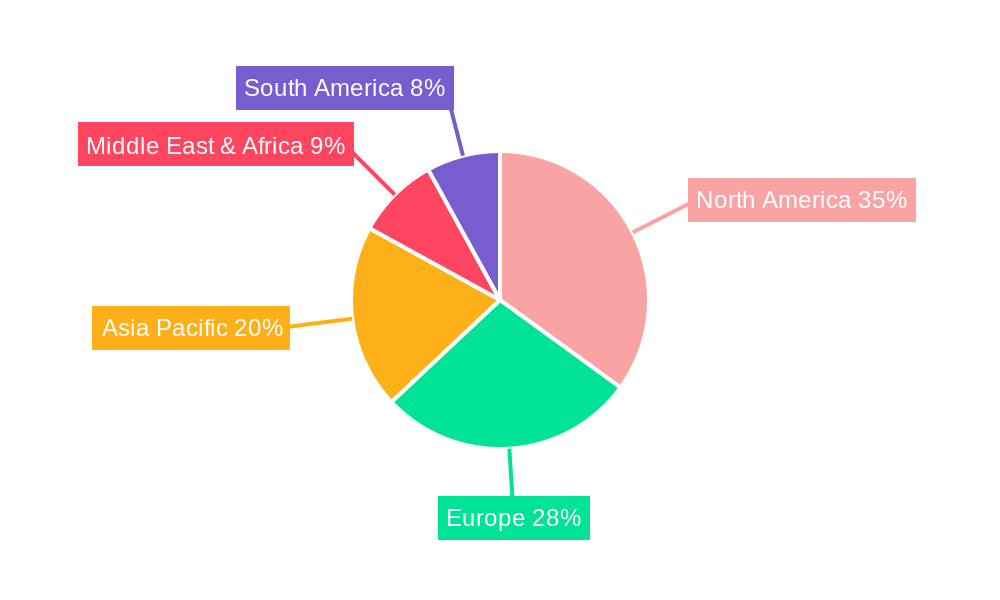
Ambulatory Surgery Center Regional Market Share
Geographic Coverage of Ambulatory Surgery Center
Ambulatory Surgery Center REPORT HIGHLIGHTS
| Aspects | Details |
|---|---|
| Study Period | 2020-2034 |
| Base Year | 2025 |
| Estimated Year | 2026 |
| Forecast Period | 2026-2034 |
| Historical Period | 2020-2025 |
| Growth Rate | CAGR of 4.9% from 2020-2034 |
| Segmentation |
|
Table of Contents
- 1. Introduction
- 1.1. Research Scope
- 1.2. Market Segmentation
- 1.3. Research Methodology
- 1.4. Definitions and Assumptions
- 2. Executive Summary
- 2.1. Introduction
- 3. Market Dynamics
- 3.1. Introduction
- 3.2. Market Drivers
- 3.3. Market Restrains
- 3.4. Market Trends
- 4. Market Factor Analysis
- 4.1. Porters Five Forces
- 4.2. Supply/Value Chain
- 4.3. PESTEL analysis
- 4.4. Market Entropy
- 4.5. Patent/Trademark Analysis
- 5. Global Ambulatory Surgery Center Analysis, Insights and Forecast, 2020-2032
- 5.1. Market Analysis, Insights and Forecast - by Application
- 5.1.1. Ophthalmology
- 5.1.2. Pain Management
- 5.1.3. Gastroenterology
- 5.1.4. Orthopedics
- 5.1.5. Others
- 5.2. Market Analysis, Insights and Forecast - by Types
- 5.2.1. Single-specialty Centers
- 5.2.2. Multi-specialty Centers
- 5.3. Market Analysis, Insights and Forecast - by Region
- 5.3.1. North America
- 5.3.2. South America
- 5.3.3. Europe
- 5.3.4. Middle East & Africa
- 5.3.5. Asia Pacific
- 5.1. Market Analysis, Insights and Forecast - by Application
- 6. North America Ambulatory Surgery Center Analysis, Insights and Forecast, 2020-2032
- 6.1. Market Analysis, Insights and Forecast - by Application
- 6.1.1. Ophthalmology
- 6.1.2. Pain Management
- 6.1.3. Gastroenterology
- 6.1.4. Orthopedics
- 6.1.5. Others
- 6.2. Market Analysis, Insights and Forecast - by Types
- 6.2.1. Single-specialty Centers
- 6.2.2. Multi-specialty Centers
- 6.1. Market Analysis, Insights and Forecast - by Application
- 7. South America Ambulatory Surgery Center Analysis, Insights and Forecast, 2020-2032
- 7.1. Market Analysis, Insights and Forecast - by Application
- 7.1.1. Ophthalmology
- 7.1.2. Pain Management
- 7.1.3. Gastroenterology
- 7.1.4. Orthopedics
- 7.1.5. Others
- 7.2. Market Analysis, Insights and Forecast - by Types
- 7.2.1. Single-specialty Centers
- 7.2.2. Multi-specialty Centers
- 7.1. Market Analysis, Insights and Forecast - by Application
- 8. Europe Ambulatory Surgery Center Analysis, Insights and Forecast, 2020-2032
- 8.1. Market Analysis, Insights and Forecast - by Application
- 8.1.1. Ophthalmology
- 8.1.2. Pain Management
- 8.1.3. Gastroenterology
- 8.1.4. Orthopedics
- 8.1.5. Others
- 8.2. Market Analysis, Insights and Forecast - by Types
- 8.2.1. Single-specialty Centers
- 8.2.2. Multi-specialty Centers
- 8.1. Market Analysis, Insights and Forecast - by Application
- 9. Middle East & Africa Ambulatory Surgery Center Analysis, Insights and Forecast, 2020-2032
- 9.1. Market Analysis, Insights and Forecast - by Application
- 9.1.1. Ophthalmology
- 9.1.2. Pain Management
- 9.1.3. Gastroenterology
- 9.1.4. Orthopedics
- 9.1.5. Others
- 9.2. Market Analysis, Insights and Forecast - by Types
- 9.2.1. Single-specialty Centers
- 9.2.2. Multi-specialty Centers
- 9.1. Market Analysis, Insights and Forecast - by Application
- 10. Asia Pacific Ambulatory Surgery Center Analysis, Insights and Forecast, 2020-2032
- 10.1. Market Analysis, Insights and Forecast - by Application
- 10.1.1. Ophthalmology
- 10.1.2. Pain Management
- 10.1.3. Gastroenterology
- 10.1.4. Orthopedics
- 10.1.5. Others
- 10.2. Market Analysis, Insights and Forecast - by Types
- 10.2.1. Single-specialty Centers
- 10.2.2. Multi-specialty Centers
- 10.1. Market Analysis, Insights and Forecast - by Application
- 11. Competitive Analysis
- 11.1. Global Market Share Analysis 2025
- 11.2. Company Profiles
- 11.2.1 Terveystalo Healthcare
- 11.2.1.1. Overview
- 11.2.1.2. Products
- 11.2.1.3. SWOT Analysis
- 11.2.1.4. Recent Developments
- 11.2.1.5. Financials (Based on Availability)
- 11.2.2 THC
- 11.2.2.1. Overview
- 11.2.2.2. Products
- 11.2.2.3. SWOT Analysis
- 11.2.2.4. Recent Developments
- 11.2.2.5. Financials (Based on Availability)
- 11.2.3 EMC
- 11.2.3.1. Overview
- 11.2.3.2. Products
- 11.2.3.3. SWOT Analysis
- 11.2.3.4. Recent Developments
- 11.2.3.5. Financials (Based on Availability)
- 11.2.4 Eifelhoehen-Klinik
- 11.2.4.1. Overview
- 11.2.4.2. Products
- 11.2.4.3. SWOT Analysis
- 11.2.4.4. Recent Developments
- 11.2.4.5. Financials (Based on Availability)
- 11.2.5 HCA Healthcare
- 11.2.5.1. Overview
- 11.2.5.2. Products
- 11.2.5.3. SWOT Analysis
- 11.2.5.4. Recent Developments
- 11.2.5.5. Financials (Based on Availability)
- 11.2.6 Bambino Gesù
- 11.2.6.1. Overview
- 11.2.6.2. Products
- 11.2.6.3. SWOT Analysis
- 11.2.6.4. Recent Developments
- 11.2.6.5. Financials (Based on Availability)
- 11.2.7 Royal Berkshire
- 11.2.7.1. Overview
- 11.2.7.2. Products
- 11.2.7.3. SWOT Analysis
- 11.2.7.4. Recent Developments
- 11.2.7.5. Financials (Based on Availability)
- 11.2.8 Institut Jules Bordet
- 11.2.8.1. Overview
- 11.2.8.2. Products
- 11.2.8.3. SWOT Analysis
- 11.2.8.4. Recent Developments
- 11.2.8.5. Financials (Based on Availability)
- 11.2.9 L’Institut Curie
- 11.2.9.1. Overview
- 11.2.9.2. Products
- 11.2.9.3. SWOT Analysis
- 11.2.9.4. Recent Developments
- 11.2.9.5. Financials (Based on Availability)
- 11.2.10 Heidelberg
- 11.2.10.1. Overview
- 11.2.10.2. Products
- 11.2.10.3. SWOT Analysis
- 11.2.10.4. Recent Developments
- 11.2.10.5. Financials (Based on Availability)
- 11.2.11 Schonklinik
- 11.2.11.1. Overview
- 11.2.11.2. Products
- 11.2.11.3. SWOT Analysis
- 11.2.11.4. Recent Developments
- 11.2.11.5. Financials (Based on Availability)
- 11.2.12 Northway
- 11.2.12.1. Overview
- 11.2.12.2. Products
- 11.2.12.3. SWOT Analysis
- 11.2.12.4. Recent Developments
- 11.2.12.5. Financials (Based on Availability)
- 11.2.13 Le CHU de Toulouse
- 11.2.13.1. Overview
- 11.2.13.2. Products
- 11.2.13.3. SWOT Analysis
- 11.2.13.4. Recent Developments
- 11.2.13.5. Financials (Based on Availability)
- 11.2.14 Maurizio Bufalini
- 11.2.14.1. Overview
- 11.2.14.2. Products
- 11.2.14.3. SWOT Analysis
- 11.2.14.4. Recent Developments
- 11.2.14.5. Financials (Based on Availability)
- 11.2.15 Asklepios
- 11.2.15.1. Overview
- 11.2.15.2. Products
- 11.2.15.3. SWOT Analysis
- 11.2.15.4. Recent Developments
- 11.2.15.5. Financials (Based on Availability)
- 11.2.1 Terveystalo Healthcare
List of Figures
- Figure 1: Global Ambulatory Surgery Center Revenue Breakdown (million, %) by Region 2025 & 2033
- Figure 2: North America Ambulatory Surgery Center Revenue (million), by Application 2025 & 2033
- Figure 3: North America Ambulatory Surgery Center Revenue Share (%), by Application 2025 & 2033
- Figure 4: North America Ambulatory Surgery Center Revenue (million), by Types 2025 & 2033
- Figure 5: North America Ambulatory Surgery Center Revenue Share (%), by Types 2025 & 2033
- Figure 6: North America Ambulatory Surgery Center Revenue (million), by Country 2025 & 2033
- Figure 7: North America Ambulatory Surgery Center Revenue Share (%), by Country 2025 & 2033
- Figure 8: South America Ambulatory Surgery Center Revenue (million), by Application 2025 & 2033
- Figure 9: South America Ambulatory Surgery Center Revenue Share (%), by Application 2025 & 2033
- Figure 10: South America Ambulatory Surgery Center Revenue (million), by Types 2025 & 2033
- Figure 11: South America Ambulatory Surgery Center Revenue Share (%), by Types 2025 & 2033
- Figure 12: South America Ambulatory Surgery Center Revenue (million), by Country 2025 & 2033
- Figure 13: South America Ambulatory Surgery Center Revenue Share (%), by Country 2025 & 2033
- Figure 14: Europe Ambulatory Surgery Center Revenue (million), by Application 2025 & 2033
- Figure 15: Europe Ambulatory Surgery Center Revenue Share (%), by Application 2025 & 2033
- Figure 16: Europe Ambulatory Surgery Center Revenue (million), by Types 2025 & 2033
- Figure 17: Europe Ambulatory Surgery Center Revenue Share (%), by Types 2025 & 2033
- Figure 18: Europe Ambulatory Surgery Center Revenue (million), by Country 2025 & 2033
- Figure 19: Europe Ambulatory Surgery Center Revenue Share (%), by Country 2025 & 2033
- Figure 20: Middle East & Africa Ambulatory Surgery Center Revenue (million), by Application 2025 & 2033
- Figure 21: Middle East & Africa Ambulatory Surgery Center Revenue Share (%), by Application 2025 & 2033
- Figure 22: Middle East & Africa Ambulatory Surgery Center Revenue (million), by Types 2025 & 2033
- Figure 23: Middle East & Africa Ambulatory Surgery Center Revenue Share (%), by Types 2025 & 2033
- Figure 24: Middle East & Africa Ambulatory Surgery Center Revenue (million), by Country 2025 & 2033
- Figure 25: Middle East & Africa Ambulatory Surgery Center Revenue Share (%), by Country 2025 & 2033
- Figure 26: Asia Pacific Ambulatory Surgery Center Revenue (million), by Application 2025 & 2033
- Figure 27: Asia Pacific Ambulatory Surgery Center Revenue Share (%), by Application 2025 & 2033
- Figure 28: Asia Pacific Ambulatory Surgery Center Revenue (million), by Types 2025 & 2033
- Figure 29: Asia Pacific Ambulatory Surgery Center Revenue Share (%), by Types 2025 & 2033
- Figure 30: Asia Pacific Ambulatory Surgery Center Revenue (million), by Country 2025 & 2033
- Figure 31: Asia Pacific Ambulatory Surgery Center Revenue Share (%), by Country 2025 & 2033
List of Tables
- Table 1: Global Ambulatory Surgery Center Revenue million Forecast, by Application 2020 & 2033
- Table 2: Global Ambulatory Surgery Center Revenue million Forecast, by Types 2020 & 2033
- Table 3: Global Ambulatory Surgery Center Revenue million Forecast, by Region 2020 & 2033
- Table 4: Global Ambulatory Surgery Center Revenue million Forecast, by Application 2020 & 2033
- Table 5: Global Ambulatory Surgery Center Revenue million Forecast, by Types 2020 & 2033
- Table 6: Global Ambulatory Surgery Center Revenue million Forecast, by Country 2020 & 2033
- Table 7: United States Ambulatory Surgery Center Revenue (million) Forecast, by Application 2020 & 2033
- Table 8: Canada Ambulatory Surgery Center Revenue (million) Forecast, by Application 2020 & 2033
- Table 9: Mexico Ambulatory Surgery Center Revenue (million) Forecast, by Application 2020 & 2033
- Table 10: Global Ambulatory Surgery Center Revenue million Forecast, by Application 2020 & 2033
- Table 11: Global Ambulatory Surgery Center Revenue million Forecast, by Types 2020 & 2033
- Table 12: Global Ambulatory Surgery Center Revenue million Forecast, by Country 2020 & 2033
- Table 13: Brazil Ambulatory Surgery Center Revenue (million) Forecast, by Application 2020 & 2033
- Table 14: Argentina Ambulatory Surgery Center Revenue (million) Forecast, by Application 2020 & 2033
- Table 15: Rest of South America Ambulatory Surgery Center Revenue (million) Forecast, by Application 2020 & 2033
- Table 16: Global Ambulatory Surgery Center Revenue million Forecast, by Application 2020 & 2033
- Table 17: Global Ambulatory Surgery Center Revenue million Forecast, by Types 2020 & 2033
- Table 18: Global Ambulatory Surgery Center Revenue million Forecast, by Country 2020 & 2033
- Table 19: United Kingdom Ambulatory Surgery Center Revenue (million) Forecast, by Application 2020 & 2033
- Table 20: Germany Ambulatory Surgery Center Revenue (million) Forecast, by Application 2020 & 2033
- Table 21: France Ambulatory Surgery Center Revenue (million) Forecast, by Application 2020 & 2033
- Table 22: Italy Ambulatory Surgery Center Revenue (million) Forecast, by Application 2020 & 2033
- Table 23: Spain Ambulatory Surgery Center Revenue (million) Forecast, by Application 2020 & 2033
- Table 24: Russia Ambulatory Surgery Center Revenue (million) Forecast, by Application 2020 & 2033
- Table 25: Benelux Ambulatory Surgery Center Revenue (million) Forecast, by Application 2020 & 2033
- Table 26: Nordics Ambulatory Surgery Center Revenue (million) Forecast, by Application 2020 & 2033
- Table 27: Rest of Europe Ambulatory Surgery Center Revenue (million) Forecast, by Application 2020 & 2033
- Table 28: Global Ambulatory Surgery Center Revenue million Forecast, by Application 2020 & 2033
- Table 29: Global Ambulatory Surgery Center Revenue million Forecast, by Types 2020 & 2033
- Table 30: Global Ambulatory Surgery Center Revenue million Forecast, by Country 2020 & 2033
- Table 31: Turkey Ambulatory Surgery Center Revenue (million) Forecast, by Application 2020 & 2033
- Table 32: Israel Ambulatory Surgery Center Revenue (million) Forecast, by Application 2020 & 2033
- Table 33: GCC Ambulatory Surgery Center Revenue (million) Forecast, by Application 2020 & 2033
- Table 34: North Africa Ambulatory Surgery Center Revenue (million) Forecast, by Application 2020 & 2033
- Table 35: South Africa Ambulatory Surgery Center Revenue (million) Forecast, by Application 2020 & 2033
- Table 36: Rest of Middle East & Africa Ambulatory Surgery Center Revenue (million) Forecast, by Application 2020 & 2033
- Table 37: Global Ambulatory Surgery Center Revenue million Forecast, by Application 2020 & 2033
- Table 38: Global Ambulatory Surgery Center Revenue million Forecast, by Types 2020 & 2033
- Table 39: Global Ambulatory Surgery Center Revenue million Forecast, by Country 2020 & 2033
- Table 40: China Ambulatory Surgery Center Revenue (million) Forecast, by Application 2020 & 2033
- Table 41: India Ambulatory Surgery Center Revenue (million) Forecast, by Application 2020 & 2033
- Table 42: Japan Ambulatory Surgery Center Revenue (million) Forecast, by Application 2020 & 2033
- Table 43: South Korea Ambulatory Surgery Center Revenue (million) Forecast, by Application 2020 & 2033
- Table 44: ASEAN Ambulatory Surgery Center Revenue (million) Forecast, by Application 2020 & 2033
- Table 45: Oceania Ambulatory Surgery Center Revenue (million) Forecast, by Application 2020 & 2033
- Table 46: Rest of Asia Pacific Ambulatory Surgery Center Revenue (million) Forecast, by Application 2020 & 2033
Frequently Asked Questions
1. What is the projected Compound Annual Growth Rate (CAGR) of the Ambulatory Surgery Center?
The projected CAGR is approximately 4.9%.
2. Which companies are prominent players in the Ambulatory Surgery Center?
Key companies in the market include Terveystalo Healthcare, THC, EMC, Eifelhoehen-Klinik, HCA Healthcare, Bambino Gesù, Royal Berkshire, Institut Jules Bordet, L’Institut Curie, Heidelberg, Schonklinik, Northway, Le CHU de Toulouse, Maurizio Bufalini, Asklepios.
3. What are the main segments of the Ambulatory Surgery Center?
The market segments include Application, Types.
4. Can you provide details about the market size?
The market size is estimated to be USD 99650 million as of 2022.
5. What are some drivers contributing to market growth?
N/A
6. What are the notable trends driving market growth?
N/A
7. Are there any restraints impacting market growth?
N/A
8. Can you provide examples of recent developments in the market?
N/A
9. What pricing options are available for accessing the report?
Pricing options include single-user, multi-user, and enterprise licenses priced at USD 2900.00, USD 4350.00, and USD 5800.00 respectively.
10. Is the market size provided in terms of value or volume?
The market size is provided in terms of value, measured in million.
11. Are there any specific market keywords associated with the report?
Yes, the market keyword associated with the report is "Ambulatory Surgery Center," which aids in identifying and referencing the specific market segment covered.
12. How do I determine which pricing option suits my needs best?
The pricing options vary based on user requirements and access needs. Individual users may opt for single-user licenses, while businesses requiring broader access may choose multi-user or enterprise licenses for cost-effective access to the report.
13. Are there any additional resources or data provided in the Ambulatory Surgery Center report?
While the report offers comprehensive insights, it's advisable to review the specific contents or supplementary materials provided to ascertain if additional resources or data are available.
14. How can I stay updated on further developments or reports in the Ambulatory Surgery Center?
To stay informed about further developments, trends, and reports in the Ambulatory Surgery Center, consider subscribing to industry newsletters, following relevant companies and organizations, or regularly checking reputable industry news sources and publications.
Methodology
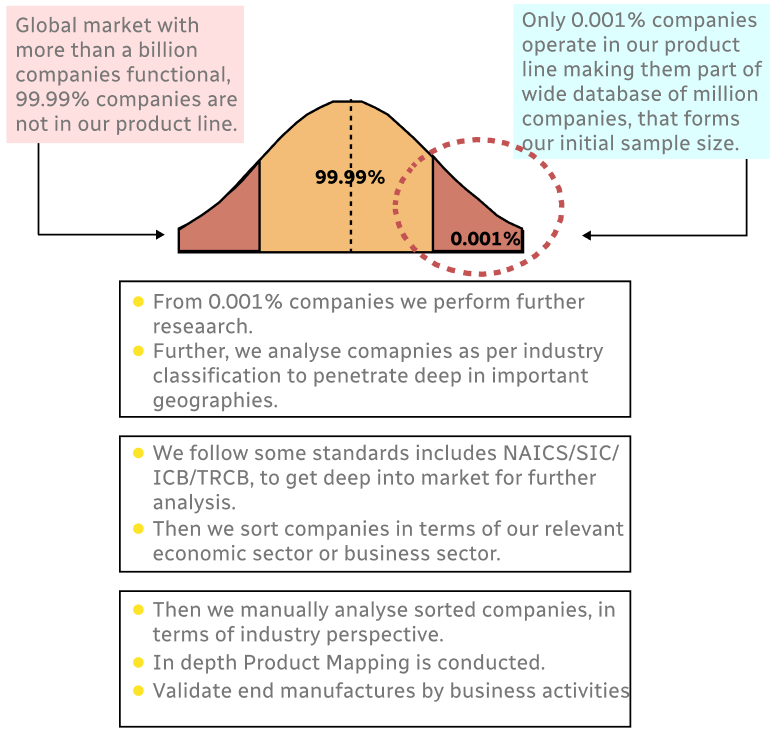
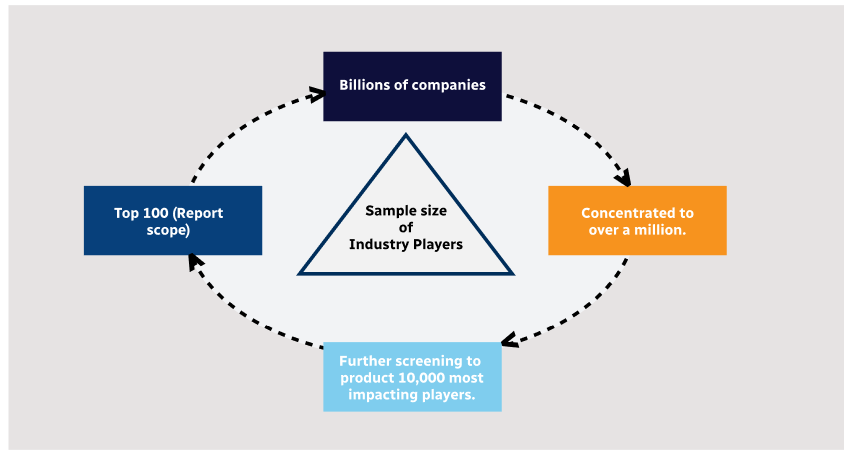
Step 1 - Identification of Relevant Samples Size from Population Database
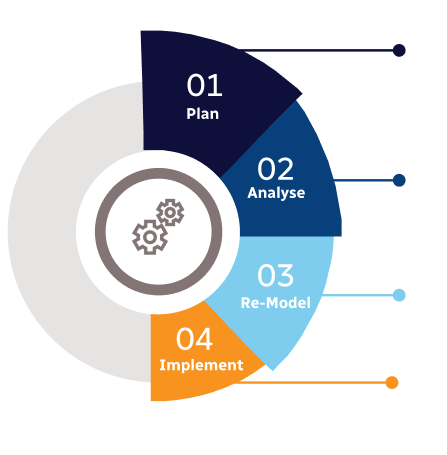
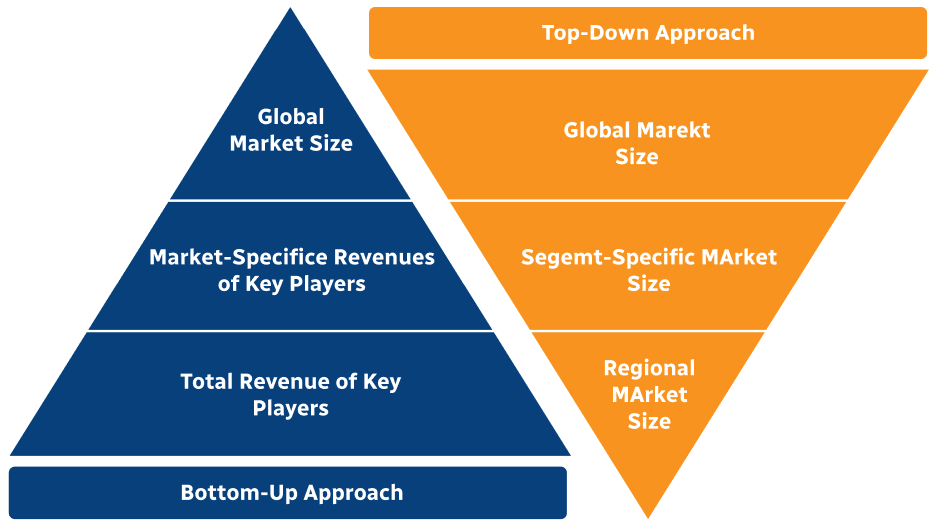
Step 2 - Approaches for Defining Global Market Size (Value, Volume* & Price*)
Note*: In applicable scenarios
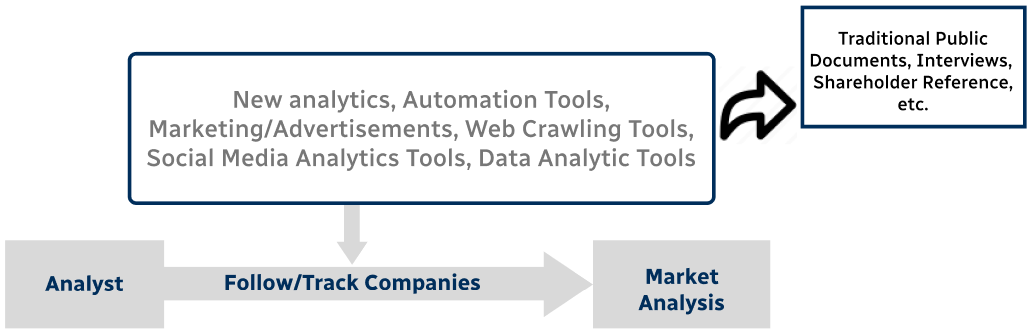
Step 3 - Data Sources
Primary Research
- Web Analytics
- Survey Reports
- Research Institute
- Latest Research Reports
- Opinion Leaders
Secondary Research
- Annual Reports
- White Paper
- Latest Press Release
- Industry Association
- Paid Database
- Investor Presentations
Step 4 - Data Triangulation
Involves using different sources of information in order to increase the validity of a study
These sources are likely to be stakeholders in a program - participants, other researchers, program staff, other community members, and so on.
Then we put all data in single framework & apply various statistical tools to find out the dynamic on the market.
During the analysis stage, feedback from the stakeholder groups would be compared to determine areas of agreement as well as areas of divergence